

















Lyndonville fireworks delivers big booms, colorful explosions in sky

Photos by Tom Rivers
LYNDONVILLE – A tree is a silhouette in front of the Lyndonville school while multiple fireworks lit up the sky during a fireworks show on Sunday night
The Lyndonville Lions Club hires Young Explosives for the show, and it is one of the biggest displays in Western New York.
Last year’s fireworks show was cancelled due to ovid-19 restrictions on social gatherings. This year the restrictions were lifted with rising vaccination rates and declining Covid cases.

Fireworks are reflected in the water at the Johnson Creek pond in front of the school on Sunday night during a 40-minute fireworks show.

The fireworks explode in the sky with the steeple of the Lyndonville United Methodist Church in the foreground.

Food vendors were busy in the school parking lot, including this one serving funnel cakes.

Fireworks are launched from the back of the school property near the softball field.

The top of the Presbyterian Church is shown with fireworks going off in the background.

Henry Symmons, 13, of Albion twirls a sparkler before the fireworks show.

Fireworks are reflected in the back of a truck parked on the school campus near the baseball field.

Another photo shows the reflection in the water at Johnson Creek. That spot near the backyard of the Yates Community Library is a popular place to watch the fireworks.
Return to top
Lyndonville happy to welcome people back to celebrate the Fourth
Photos by Tom Rivers
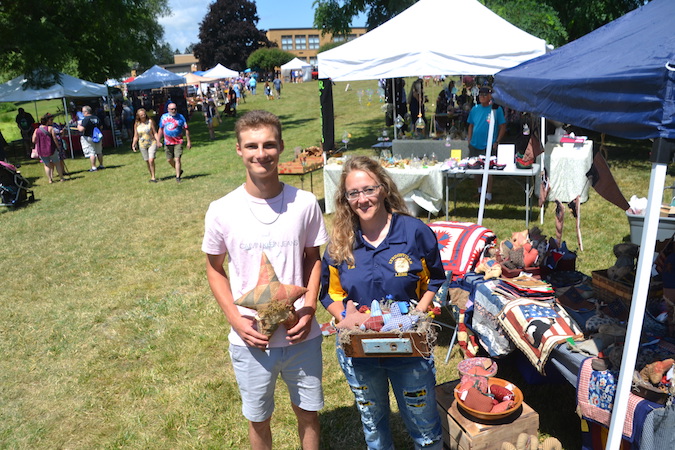
LYNDONVILLE – Hannah Pollard and her nephew Hayden Woodroe are pictured at the Lyndonville school grounds today for the arts & crafts show. Pollard organized the crafts show with help from her nephew. She is also a vendor, selling products from her business, Catherine Street Quilts.
There are about 40 craft vendors at the show today, which is part of the Fourth of July celebration in Lyndonville.
There is a big crowd of people back in Lyndonville today to celebrate the Fourth. Last year’s holiday celebration organized by the Lyndonville Lions Club was cancelled for the first time in 46 years due to the Covid-19 restrictions.
Some highlights later today include The Who Dats performing from 7 p.m. until the start of the fireworks show at 10 p.m. by Young Explosives. The school grounds will be open for the fireworks show.
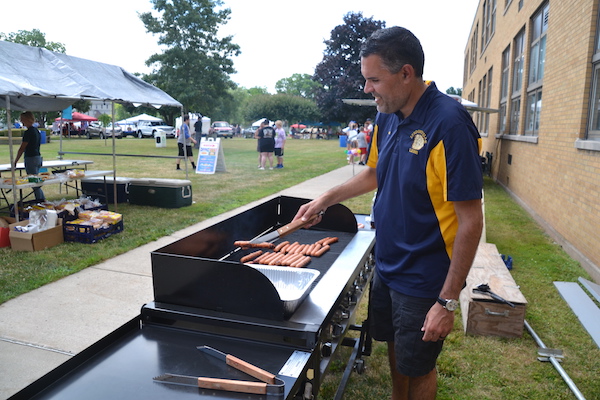
Jason Smith, a member of the Lions Club and Lyndonville school district superintendent, grills hot dogs for the Lions Club booth.
The Lions Club is grateful to be hosting the festival again today. Most of the activities are back with the notable exception of the parade.
“It’s absolutely wonderful,” Bruce Schmidt, Lions Club president, said about the return of the festival. “It’s great to see people come out and participate.”

Jeff Johnson of the Lions Club raises the American flag with Dylan Kage of the Honor Guard to start the Fourth of the July celebration in Lyndonville. (Click here to see a video of the flag-raising.)

Keystone Club Police Pipes & Drums head to the flag pole for the flag-raising ceremony. The group also played a concert at noon.

Bob Burtwell (center) and Scott Goetze, members of the Honor Guard and American Legion in Lyndonville, stand at attention during the flag-raising ceremony.

There are several new vendors in the arts and crafts show, with many people taking up hobbies during the pandemic and turning them into small businesses.
Lisa and her husband Kelly Liston are show at their display as part of HateCuddler Craftworks. Mrs. Liston started making home-made candles and soap with all-natural ingredients. The products have been popular and the Listons have been selling them at local farmers’ markets.
“We started the business in our house and it has just exploded,” said Mrs. Liston.
She makes the products in several different scents.
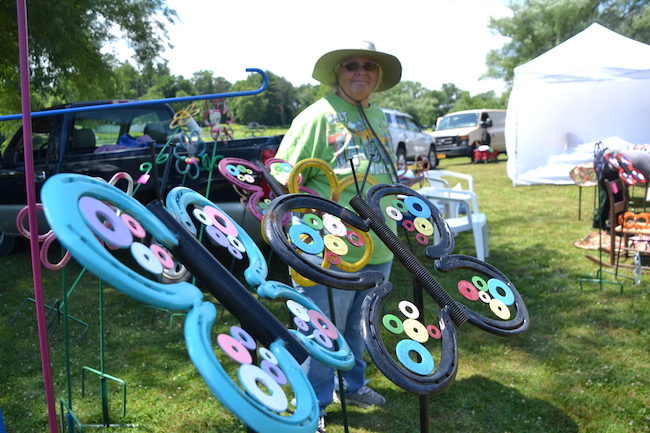
Deanna Papp of Lyndonville is selling creations made with recycled horseshoes by her husband, Al Papp. Deanna Papp and Judy Larkin paint the horseshoe artwork.
Mr. Papp, owner of a welding company, has been making the horseshoe creation for about four years. He makes animals , flowers, pumpkins with a beagle the most popular one.
Mrs. Papp said this is their first show of the season after all of them cancelled last year due to Covid restrictions.
“I love it now that you can get out and see people,” she said.
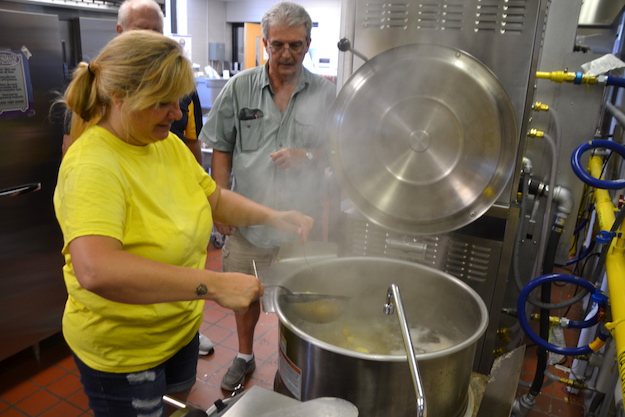
Michelle Higgins cooks the potatoes for the chicken barbecue dinners. Bill Jurinich is in back. The Lions Club sold all 500 of those dinners with chicken, baked beans and salt potatoes.

The Lions Club prepared 300 pounds of potatoes for the dinners.
Return to top
Sunday Morning Positive Perks from your Sassy Small Town Missus

Ragged Old Flag
It was 1974 when Johnny Cash penned the song Ragged Old Flag as a way to express to the American people that the flag and country had survived countless trying times.
He wanted to assure the honorable citizens of our great country that with faith, patriotism and the goodness of the American people that America was a country to be celebrated and proud of.
This July 4th America will become 245 years young. Babes in the woods compared to other countries whose histories consist of millenniums rather than centuries. The song begins with a town that appears to be in need of repair to a passing visitor. When the visitor shares his perception to a local old timer, the old timer sees the wear and tear of the community and its beloved “Ragged Old Flag” as a reason for pride, not a reason for shame. The old timer doesn’t want to brag, but shares with the visitor why he is proud of that “Ragged Old Flag.” He invites the visitor to sit a bit and hear his reasoning and the visitor listens.
As he tells it, the flag received its first hole when Washington took it across the Delaware. From there the flag has persevered and stayed strong even though it has been attacked with powder burns, cut with a sword, received a hole in it and even had blood shed on it. From time to time the Old Flag has been commissioned to go to war as a symbol of our nation’s steadfastness and grit.
Occasionally, she has hung limp and low and worn thin, but with faith and a patriotic spirit the Old Girl always holds her head high and never lets her people down. There have been times when Americans have let the Ragged Old Flag down by burning it and times when the government for which she stands for is engulfed in scandal. Even though she flies high, each scar and wrinkle on her fabric only deepens her value.
It tells the story of a nation that through its freedom and patriotic spirit survives times of challenge. It takes it’s lessons and grows more beautiful over time, not raggedy. In the end the old timer decides that he will proudly brag about The Old Flag. Each day he will treat her right, raise her up proudly and care for her always.
This flag is not just thread and fabric, but it’s the symbol of the greatest asset mankind can have, freedom. Treasure it, honor it and fight for it when required. Always be proud of the Ragged Old Flag. The colors of the flag are symbolic. Red symbolizes hardiness and valor, white symbolizes purity and innocence, and blue represents vigilance, perseverance and justice.
Our constitution gifts us many freedoms. Depending on your life situation some freedoms will be more valuable to you than others, but never discount others’ valued freedoms they hold necessary and dear to heart. For me freedom is about choice, the ability to protect oneself and having the right to self sustain. Song link.
What does freedom mean to you? To see our flag visit my blog online (click here) and catch up on Weekly Photo Perks and past Sunday posts. Like and share your comments.
Truly,
Debbie London
Historic Childs: Early Education, a feature on 12 public schools in the Town of Gaines
6 of the schools were built of cobblestone, and 11 of 12 are still standing
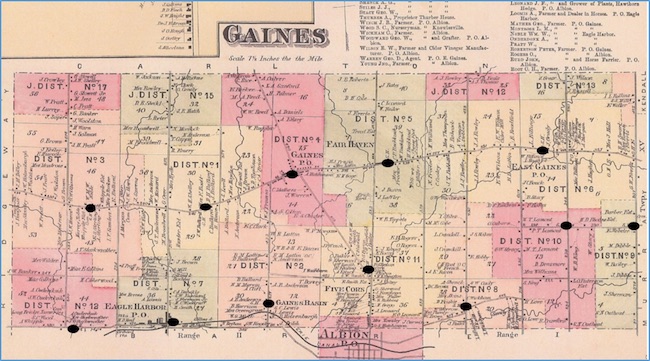
By Doug Farley, Cobblestone Museum Director – Vol. 2 No. 26
This article is in memory of Janice Barnum Thaine (1927-2013) and Ruth Thaine Applegate (1914-1984) who spent many years retelling the old stories and providing much of the information on this subject.
As families began to settle in the Town of Gaines, the need to educate their children was close to the top of the list of things “to-do.” By 1813, a decision was reached to organize a school. It was further agreed that Orrin Gleason would teach the children in a 12’ log building on the Gates property near the corner of Eagle Harbor Road and the Ridge.
A short while later, another school was opened at the Belmont property between Gaines and Childs to accommodate the children living in that area. More and more people moved into the town and an ongoing concern was to provide schools to accommodate the children who arrived with their parents. A rule of thumb was a student shouldn’t have to walk more than a mile each way, to and from school. The schools were at first, very simple, sometimes just log cabins, some without such “niceties” as an outhouse. The schools used a slightly different system than used today to raise funds to pay the teacher and provide fuel for heating, a tax was placed on the families whose children used the schools.
By the mid-19th century these early crude buildings had been replaced by more substantial structures, some of which are still in existence today. Eventually 12 school districts were established in the Town of Gaines. The northern portion of Gaines was serviced by school districts in the Town of Carlton including Districts 12, 13, 15 and 17. In total, six of the 12 schools in Gaines were built with cobblestone, a statistic that appears to be unmatched by any other township. Five of the original six cobblestone schools are still in existence today.
In the early 20th century, New York State had by then established the standards that pertained to all schools in the state. Local residents lost much of their self-determination as to what was taught or how funds would be raised, with the burden of taxation now spread out over all property owners in a district, not just the families of students attending the schools.
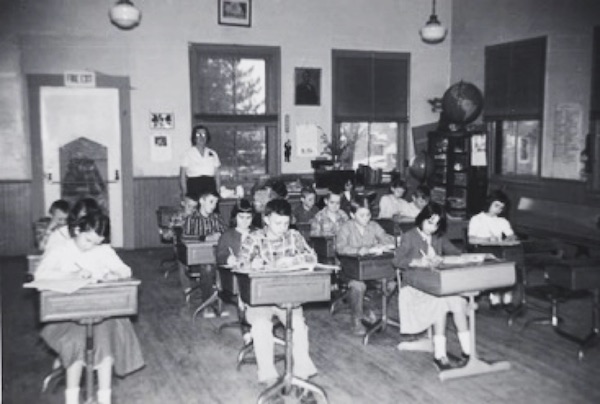
Beginning in the 1920s, the twelve small school districts in the town were closed, one by one as “centralization” took place. By 1953, the Albion Central School District was complete and the small districts were eliminated. A few of the old school buildings remained active as part of the larger Albion Central District. The last of the “hangers-on” was the former Eagle Harbor #7, shown above in 1953, which closed in 1963.
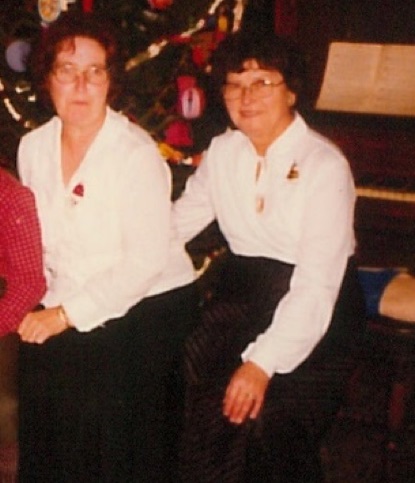
The fond memories of thousands of former country school students like Janice Barnum Thaine, left, or teachers like Ruth Thaine Applegate, shown right, can never be completely retold. Everyone has their own special set of recollections and friendships made.
Janice Thaine recalled: “I remember the school picnics, the field trips that really were trips to a field, the entertainments provided to parents and the community at each holiday, and especially Christmas. I enjoyed the baseball games, the state tests that came twice a year from Albany and we had to pass in order to be promoted. I remember the teacher asking us to behave whenever the District Superintendent appeared at the door.
“I like sharing my school lunches, making May flower baskets, tipping over neighborhood outhouses on Halloween, riding our bikes, roller skating or walking to and from school each day or hanging around outside the school while our parents attended the Annual School Meeting, hoping to find out if the present teacher might be replaced next year. We also tried to get everyone to write in our autograph book, working in the school newspaper and of course, above all, doing our assigned lessons! All of this was done under the watchful eye and loving care of the one room schoolhouse teacher.”
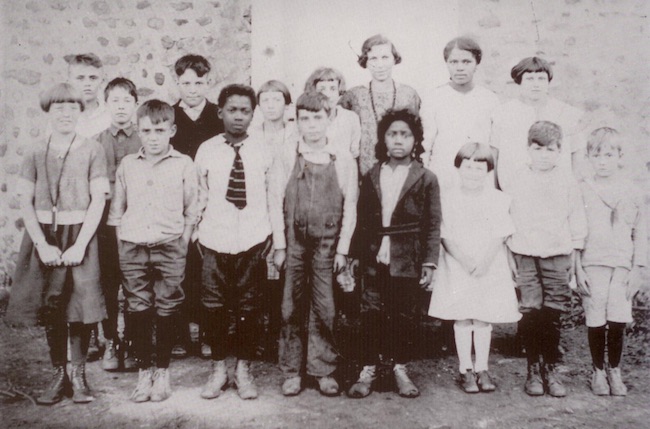
Photo courtesy Orleans County Historian
If you were to take a tour today and look for all twelve school houses in the Town of Gaines you could still find eleven. Some have stood the test of time very well, and some are just shadows of bygone glory. Only one is completely gone. District #1 School is a cobblestone building, located next to Frenchy’s Appliance store at 13592 Ridge Road. The class photo for 1924-25 is shown.
Front Row: Lilian Lacey, Louis Hollenbeck, Augustus (Gus) Watts, Harold Rush, Linwood Watts, Pauline Hollenbeck, Luther Rush and John Lacey.
Back Row: Morris Hollenbeck, LaVerne Morrison, Gordon Wakefield, Frieda Hollenbeck (Hobbs), Helen Rush (Brust), Clara Hall (Rorick), Mary Watts (teacher) and Grace Neal (Draper).
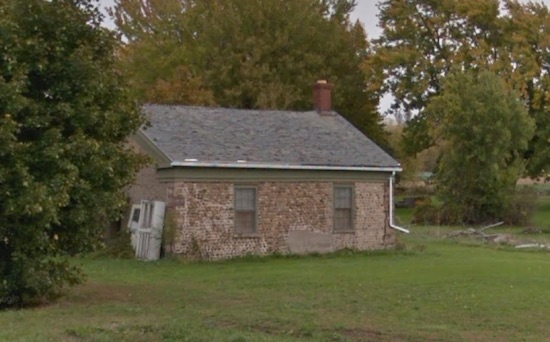
Jacqueline and Bill Bixler recently acquired the District #1 Cobblestone School and have been busy restoring it for use as a residence.
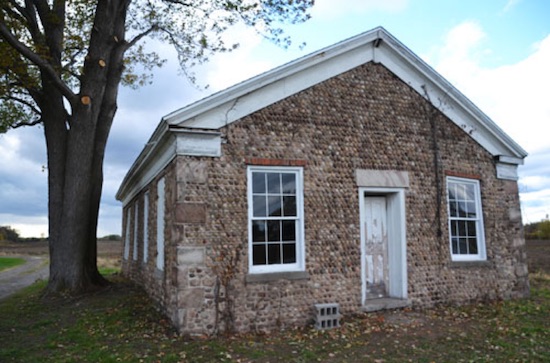
District #2 Cobblestone School on Gaines Basin Road was used as a one room schoolhouse from 1832 until 1942. This picture was taken in 2015 just prior to complete restoration.
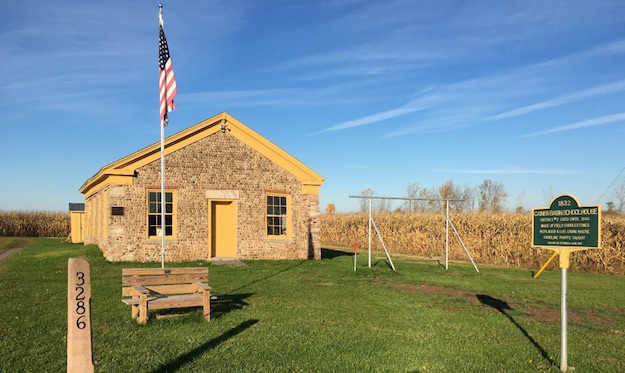
A sparkling gem today, Gaines Basin District #2 school, built in 1832 has become a huge preservation/restoration success story. This Cobblestone Schoolhouse just north of the Erie Canal stands as a memorial to recently deceased historian, Al Capurso, who spearheaded the acquisition of this property, and to the history conscious men and women of the Orleans County Historical Association who restored it to become a State and National Register historic showcase. Special thanks, as well, to Jim Panek, who donated this school-turned-farm storage building to the Association. It is the oldest documented cobblestone building in our region.
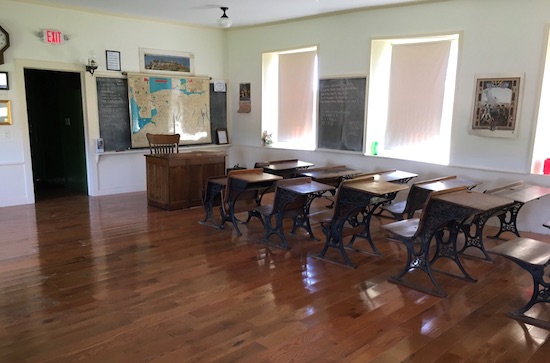
The interior of District #2 is equally impressive as the outside. OCHA has plans to use the space for meetings, history programs and small social gatherings.
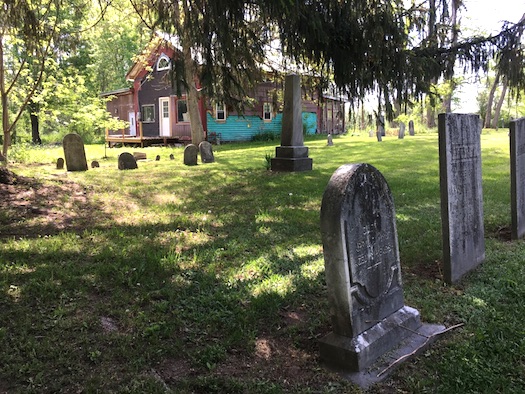
District #3 Schoolhouse is located next to the West Gaines Cemetery, on the south side of Ridge Road. The current owner is restoring the building. The adjoining cemetery has been inactive for nearly a century.
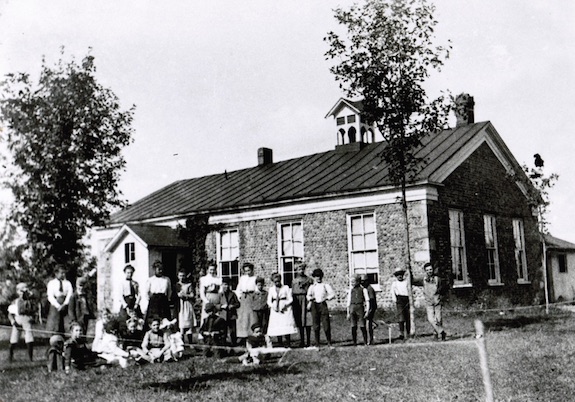
Students and teachers are shown at the Gaines District #4 Cobblestone School at the corner of Routes 104 and 279 around 1905. The Trustee of this school assumed the title to the property on July 9, 1844 for the sum of $65.
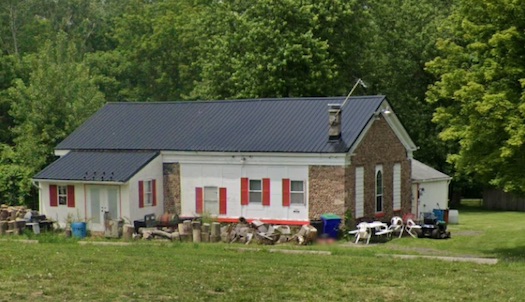
A more recent view of the District #4 Cobblestone schoolhouse is shown here as a motorcycle clubhouse.
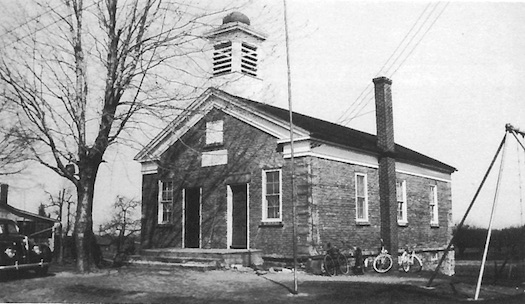
The Childs District #5 Cobblestone Schoolhouse as it appeared on April 21, 1942. The school continued for another decade and is a National Historic Landmark today.
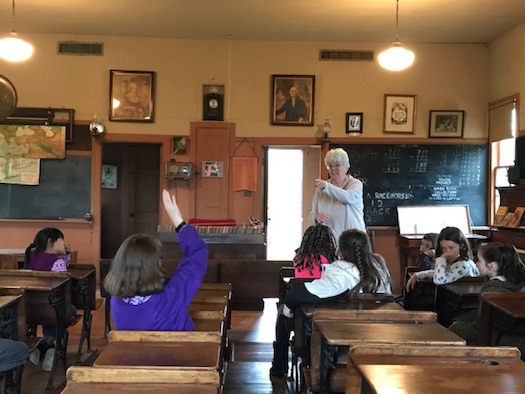
The Cobblestone Museum conducts tours in the District #5 schoolhouse which is preserved and looks just like it did when the students last attended in 1952. Docent Sandy Heise speaks to a group of students inside the school in this 2019 photo.
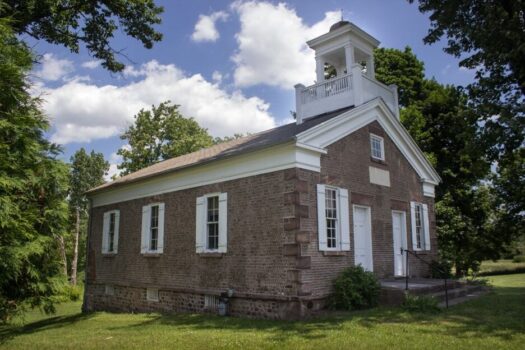
An unusual feature of the District #5 structure is that it is actually a wood plank building with a veneer of cobblestones.
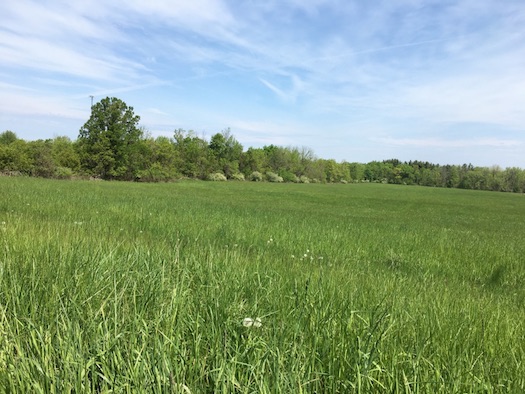
District #6 School is the only one of the original 12 district schools in Gaines that is completely gone today. It was located on the north side of the Ridge Road west of Kent Road. The structure was later used for farm storage and then was removed in more recent times.
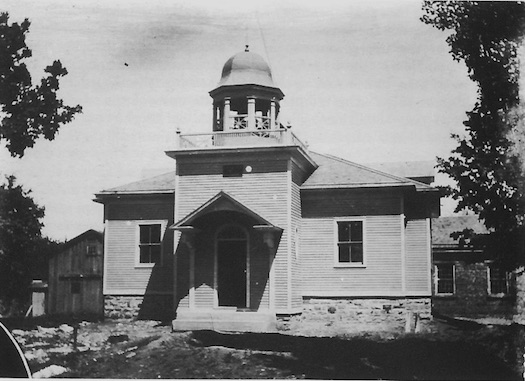
District #7 in Eagle Harbor had at least three structures that were used as schools over the years. The first school was a simple log cabin, followed by a cobblestone building (shown to right of photo) and then a wooden structure (front) under construction here in 1900, which in later years served as a Post Office and Community Center. The cobblestone building was torn down once the new wooden building was complete.
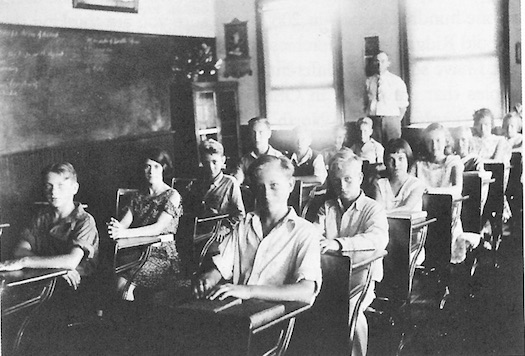
This photo of District #7 in Eagle Harbor was taken in 1931.
Left Row, Front to Back: Victor Whiting, Ruth Emery, Robert Webber, Cleon Whiting, Avery Brooks (or Dean), Adeline Bielicki and Harry Whiting.
Right Row: Robert Brooks, Nicholas Condoluci, Leona Licht, Caryl Hill, Jean Sullivan, Louise Cooper and Alice Briggs.
Standing: J. Howard Pratt, Teacher.
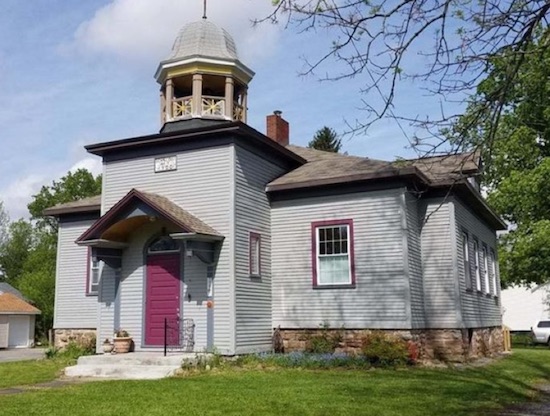
Today, District #7 Schoolhouse is a private residence.
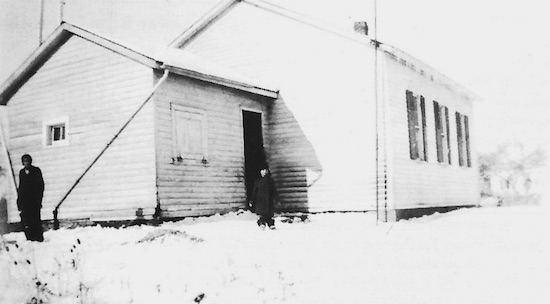
This 1934 photo shows the Rudd’s Corners District #8 school in the early 1900s.
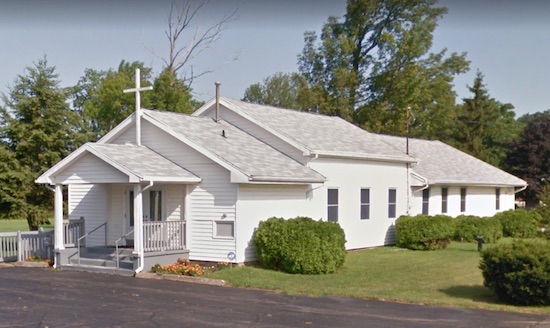
District #8 Rudd’s Corners School at the intersection of Crandall and Zig Zag Roads, has received several additions and is used today as the Shiloh Baptist Church. The section shown above with the higher roof was the actual original schoolhouse.
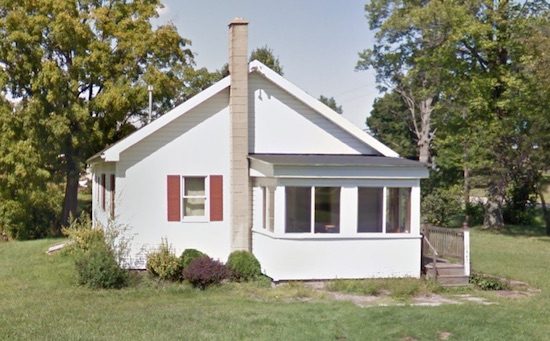
District #9 on the northwest corner of the intersection of Transit and Transit Church Roads is a private home today.
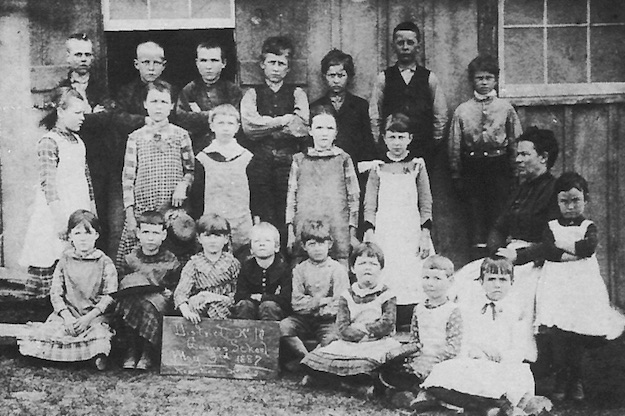
Students of District #10 in East Gaines pose with their teacher, Kate Smith on May 3, 1887. We are not sure the students posed by the schoolhouse but rather some other building.
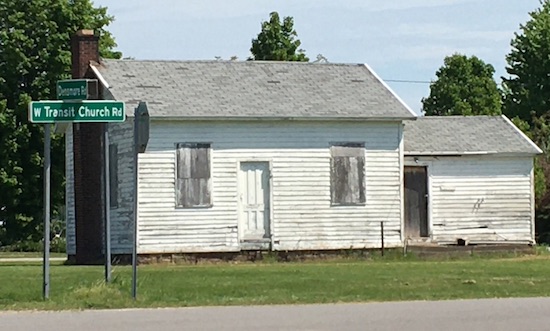
District #10 located at the crossroads of W. Transit Church and Densmore Roads is found today at the Kast Farm and is used for farm purposes.
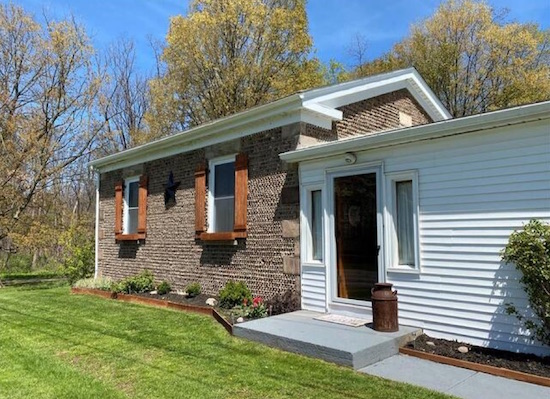
District #11 Cobblestone School at Five Corners is a private residence today. Note the date stone in the cobblestone gable reads 1846.
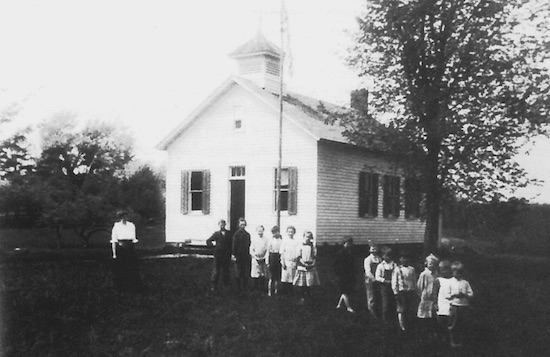
This schoolhouse, Eagle Harbor District #12, was located west of Eagle Harbor near the corner of Knowlesville and Kenyonville Roads. Students are shown with their teacher, Helen Seivert (Mrs. Louis Basinait).
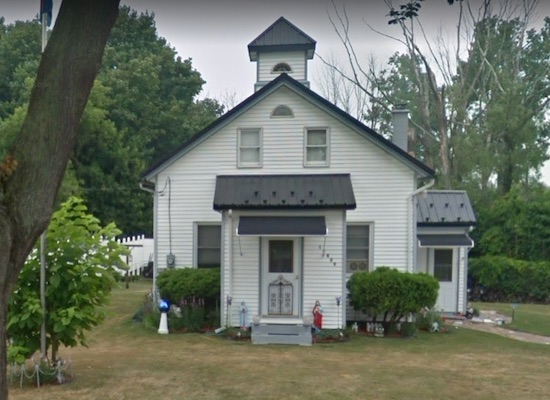
Completing the tour we find District #12 on the north side of Eagle Harbor-Knowlesville Road, just east of Kenyonville Road, which has also become a home today.
Return to top
Forecast for Fourth: Sunny with high of 76

It will be a sunny Fourth of July in Orleans County, and there won’t be oppressive heat. Today is forecast for a high of 76, according to the National Weather Service in Buffalo.
It will get hotter on Monday with a high near 90, followed by a high near 89 on Tuesday.
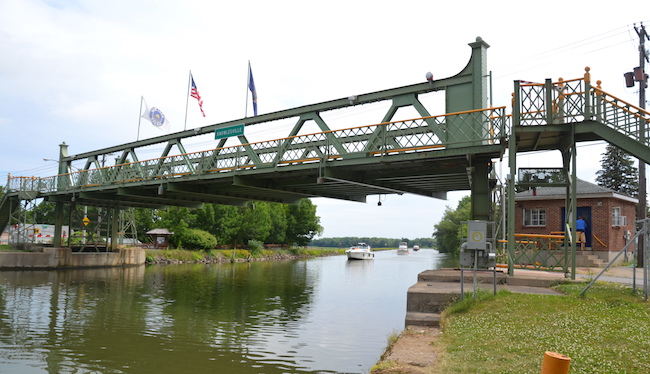
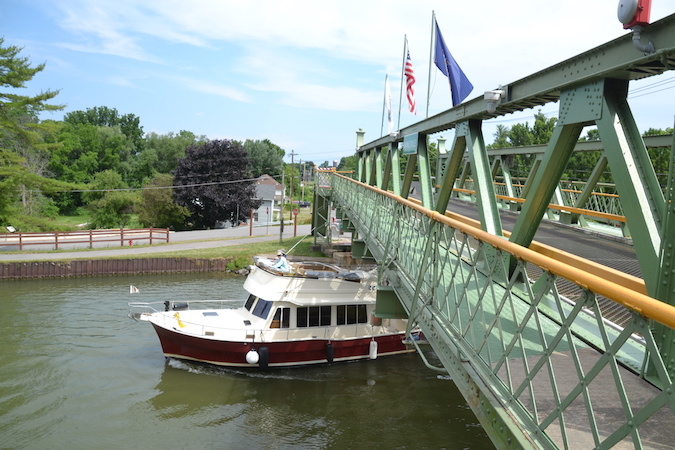
These boaters approach the lift bridge in Knowlesville on Thursday. This is one of seven lift bridges in Orleans County, the most of any county is the state. There are 16 lift bridges total on the canal, which are all on the western section of the historic waterway.
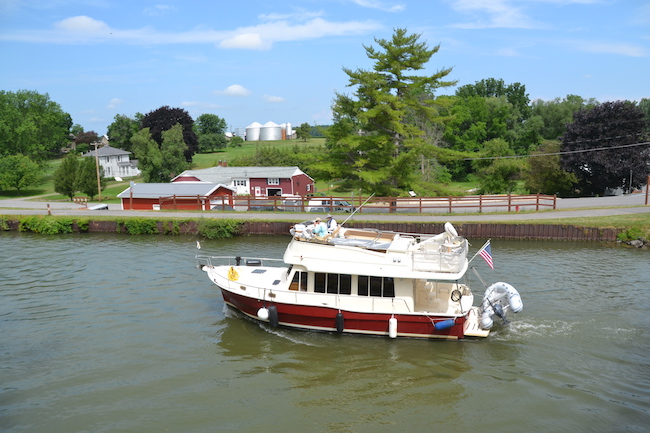
This boat passes along the canal with a farm scene in the background.
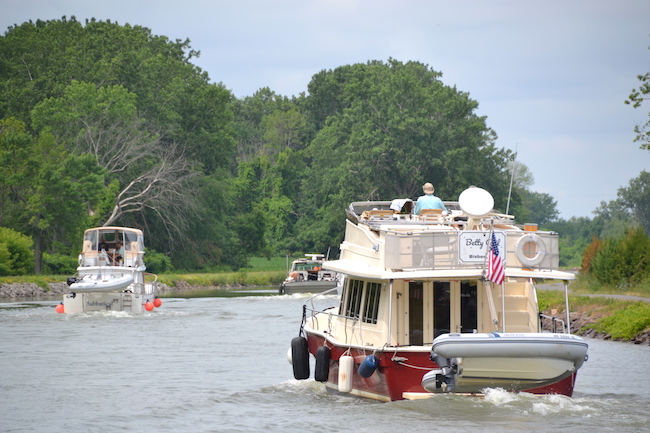
The boaters are headed west towards Medina in this photo on Thursday.
Return to top
Local artist finishes Erie Canal themed mural in Brockport
Provided photo
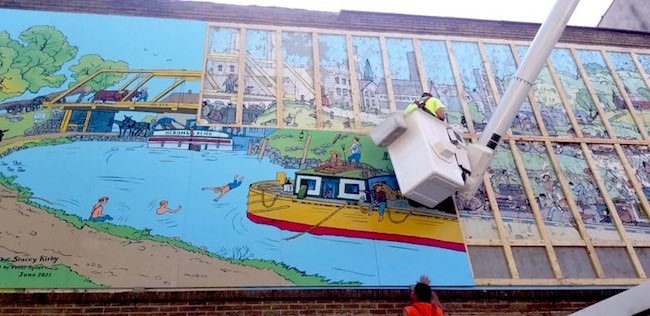
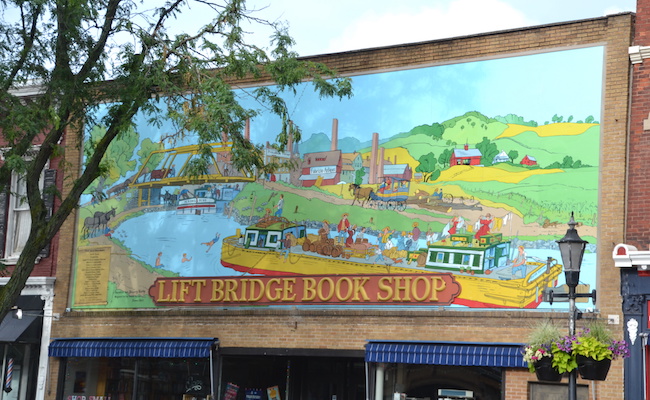
BROCKPORT – The Brockport DPW works on installing a mural on the Lift Bridge Book Shop earlier this week. Stacey Kirby Steward, an Albion native, painted the mural, which replaces one from 2010 which had deteriorated on the book store at 45 Main St.
Photos by Tom Rivers:
Kirby Steward painted the mural from an illustration of a children’s book, The Erie Canal, by Peter Spier. That book was originally published by Doubleday and remains in print by Herons Bend Productions.
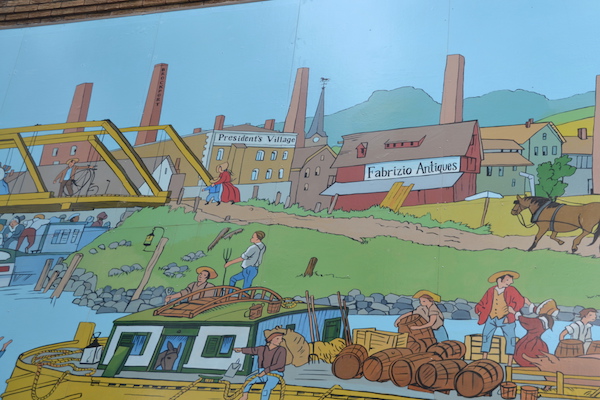
Kirby Steward provided more detail in her mural than the previous one, which included work from more than one artist.
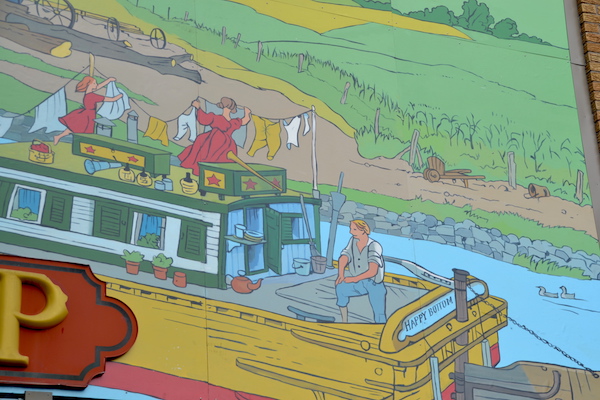
The book’s story highlights the lyrics of the well-known canal song, “Low Bridge, Everybody Down” and includes many watercolor paintings.
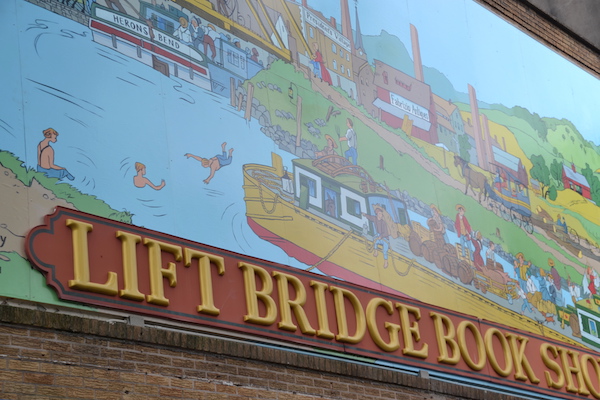
The mural is 44 1/2 feet long and 15 1/2 feet high. There are 22 panels that are each 4 by 8 feet.
“This is the first time I’ve recreated another artist’s work,” Kirby Seward said. “It was fun to explore the design. There is so much nuance and detail. It was fun to try a completely different style.”
Kirby Steward also painted the “Welcome to Brockport” on the Main Street railroad bridge and created a scene of canal construction that is featured on the Department of Public Works Building.
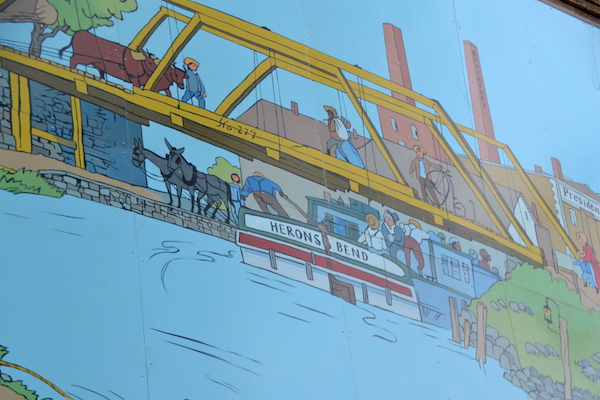
The project is supported by an Erie Canalway IMPACT! Grant and other community donations.
Return to top
Sheriff praises BOCES program for helping people attain diplomas

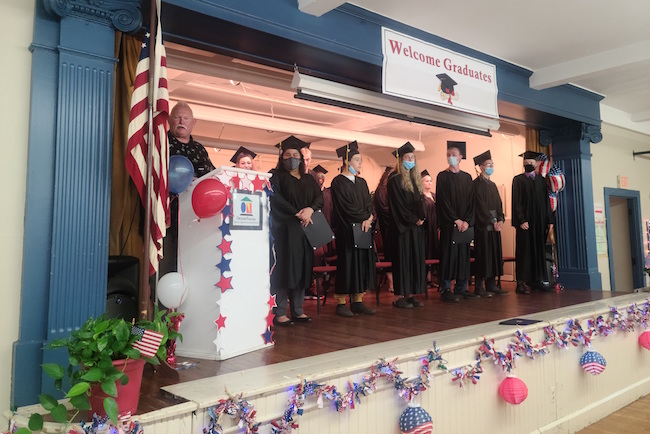
Photo courtesy of Orleans County Sheriff’s Office: Jeff Smith, an instructor in the Orleans-Niagara BOCES adult/continuing education program, congratulates graduates for receiving their diplomas on June 21 in Medina.
Press Release, Orleans County Sheriff Chris Bourke and Jail Superintendent Scott Wilson
MEDINA – The Orleans-Niagara BOCES graduated 45 students from their continuing/adult education program on June 21. The graduates include seven people incarcerated at the Orleans County Jail.
The graduation ceremony was held at the Holy Trinity Roman Catholic Church in Medina. Each graduate received a diploma that was presented by the instructors and the administration of program.
The continuing/Adult Education Program have been very successful in providing instruction to prepare participants with the necessary skills to take the Test Assessing Secondary Completion Examinations (TASC).
This program was formally known as the General Education Development Program (GED). Students that are enrolled are required to take a nine-hour examination in order to receive a diploma.
In 2014, the Orleans County Sheriff’s Office collaborated with the O-N BOCES to provide educational services to individuals that are incarcerated at the Orleans County Jail. The primary goals of this collaboration effort is to successfully graduate students in order to instill a sense of accomplishment and to provide the individuals with a greater chance of becoming gainfully employed. This also has a direct impact on breaking the cycle of incarceration in order to become a productive citizen of Orleans County.
The continuing/adult education program has been extremely successful at the Orleans County Jail with over 26 graduates, including the seven that graduated on June 21. Sheriff Christopher Bourke has strongly supported the efforts of this program and has provided inmates with an opportunity to complete the program. Any inmate who has been released is allowed to return to the jail to take the TASC examination.
The Orleans County Sheriff’s Office would like to recognize all of the individuals who graduated on June 21 and especially those individual who demonstrated the determination to attend classes while incarcerated and successfully graduate from the program with a formal diploma.
In addition, the Orleans County Sheriff’s Office would like to recognize Jeff Smith for his efforts with instructing students at the jail and preparing them for the TASC examination. His dedication to the program has greatly improved the success rate of graduation.
Return to top
BOCES offering new path for high school equivalency diploma
Press Release, Orleans/Niagara BOCES
MEDINA – Do you want to earn your high school equivalency diploma, but don’t have time to attend class? This pathway to a diploma allows clients to complete work at home, the library or wherever there is a computer and internet.
Flexible scheduling means the participant can earn a high school diploma while employed, enrolled in job training, or managing other commitments.
The National External Diploma Program is a competency-based, applied performance assessment system that allows adults to demonstrate their ability in a series of simulations that parallel job and life situations. Participants demonstrate mastery of ten content areas by completing multiple performance tasks, validating knowledge and technology skills.
To date, 15 adults in Orleans County have obtained their HSE diploma through the National External Diploma Program, while continuing to work or managing other commitments.
Is the program right for you? Successful clients in the NEDP possess the following:
- Academic skills at the 9th grade level or above (remediation is available)
- Strong time-management skills
- Strong digital literacy skills
- Solid organizational skills
- Self-direction and motivation
What are some of the benefits of the National External Diploma Program?
- Easily accessible web-based program
- Usually completed in 6 to 12 months
- Convenient places to complete most of your work (home, library or a place of your choice.)
- Self-paced and not timed
- Confidential
- Dedicated staff who are invested in your success
- Supportive tutorials and resource materials
- Allows clients to obtain a high school equivalency diploma through demonstration of specific competencies, rather than a standardized test
For more information contact Carolyn (cgraff@onboces.org) or Melinda (mgrimble@onboces.org).
We also offer tradition TASC (formerly known as GED) classes. Do you have passing Regents scores? If so, you receive credit for every Regents subject that you passed.
For more information contact Mrs. Smith or Ms. Johnson at (585) 798-1420 for classes in the Medina area or Mrs. Behrend at (716) 462-1054 for classes in the Albion/Holley area.
Return to top
Jacobs after visit to Texas says finish wall along southern border, better fund Border Patrol
Press Release, Congressman Chris Jacobs
WASHINGTON, DC – Congressman Chris Jacobs (NY-27) returned yesterday from a trip to McAllen, Texas with Former President Trump to observe the crisis at our southern border.
“The was my third trip to the southern border, and my second time touring the Rio Grande Valley section. When I was here in 2019, the successful policies implemented by President Trump were working effectively to deter illegal immigration, and Border Patrol were supported and given the resources needed to protect our border,” Jacobs said. “Now it is a completely different story. The Biden administration’s decision to end ‘Remain in Mexico,’ reinstate catch and release, and halt border wall construction have sent a message to the cartels that our border is open season, and they are taking advantage of it.”
President Biden first paused the Migrant Protection Protocols (Remain in Mexico) in early January and later terminated the program entirely. Similarly, using an executive order, President Biden halted construction of the southern border wall despite congressional funds already being appropriated toward construction.
The Department of Homeland Security (DHS) has reported three consecutive months of 170,000+ apprehensions of illegal immigrants. In May alone there were over 180,000 encounters, representing a new 20-year record. Last week it was also reported that in the Rio Grande Valley alone, Border Patrol had already encountered more large groups in FY21 than the previous two years combined.
On the trip Jacobs, members of the Republican Study Committee, Texas Governor Abbott, and Former President Trump met with Border Patrol agents and toured unfinished sections of the wall. In addition, Jacobs and other members were taken on a nighttime excursion of the border where they encountered numerous migrant groups, including many unaccompanied minors, trafficked by the cartels, being picked up by Customs and Border Patrol (CBP).
“The most disturbing observation from this entire trip is how the cartels are taking advantage of the Biden administration’s weakened policies at the southern border and exploiting thousands of children,” Jacobs said. “CBP agents described how it has become common practice in this region for the cartel to traffic and abandon a large group of children at one gap in the wall to occupy Border Patrol agents while they then move to another gap to smuggle drugs and dangerous criminals across the border. It is truly a disturbing humanitarian and national security crisis that Border Patrol is working tirelessly to confront under strenuous circumstances. Without engagement and support starting at the top, they are limited on what they can do.”
“The Biden-Harris administration needs to get serious about fixing the crisis they created and continue to ignore,” Jacobs said. “Finishing the wall, giving more resources to Border Patrol agents on the ground, and reinstating successful Trump policies will have a profound effect on stemming this crisis and securing our southern border.”
Return to top
Appointments filling up to use kayaks, hydro-bikes for free in Medina
 Return to top

Photos by Tom Rivers: Lt. Gov. Kathy Hochul rows in a kayak in Medina on June 15 to promote a free kayaking program in the Erie Canal. She was joined in kayaks by Brian Stratton, state canal director; Greg Reed, director of the Orleans County YMCA; and Mike Sidari, Medina mayor.
MEDINA – The appointments have been filling up to use kayaks and hydro-bikes for free this summer in Medina. However, there are still many open slots.
The State Canal Corp. announced the 8-week program on June 15, in an event that included Lt. Gov. Kathy Hochul and State Canal Commissioner Brian Stratton, who both were in Medina for the announcement. They both tried kayaking in the canal that day, and Stratton even rode a hydro-bike.
Medina is one of five canal communities offering free “On the Canals” outdoor excursions this summer as part of the state’s Reimagine the Canals initiative. The other communities in the program include Macedon, Waterloo, Savannah and Amsterdam.
Stratton said the state is pushing to make the canal a bigger impact in the canal towns. Hochul on June 15 said the state is making a big tourism push to get New Yorkers and out-of-staters to vacation and experience sites all over the Empire State. She believes Medina will appeal to many people, especially with a historic downtown filled with local businesses.
In the new program offering kayaks and hydro-bikes, the New York Power Authority (which oversees the canal) will partner with the Orleans County YMCA. The hydro-bikes and kayaks are available to rent with appointments made online. The YMCA will lead excursions at Glenwood Lake and the Canal.
Click here to make an appointment.
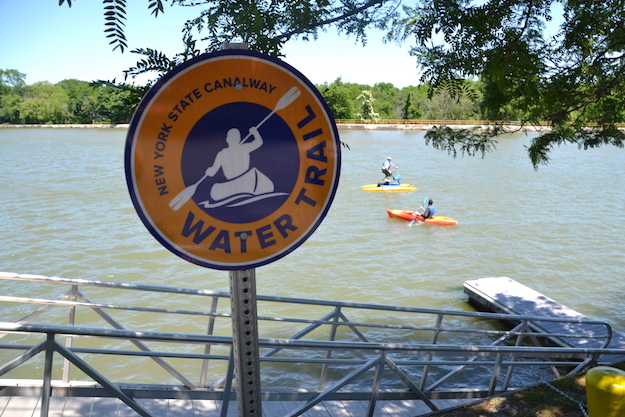
Brian Stratton, state canal director, is on the hydro-bike and Greg Reed, Orleans County YMCA, is in the kayak in this photo on June 15 at Medina’s Canal Basin.

Follett family donates collection of music books to Hoag Library

 Return to top
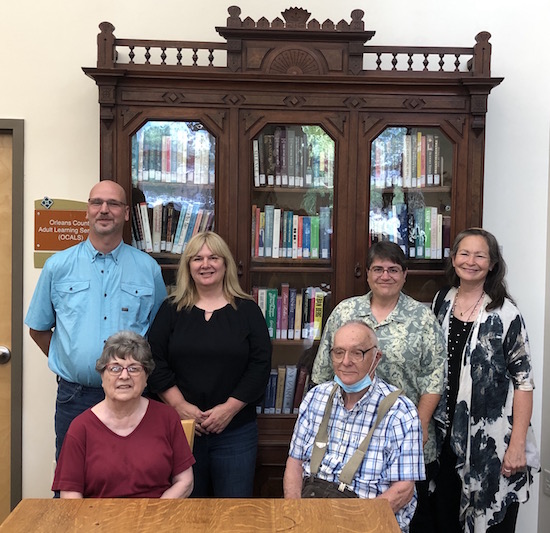
Photos courtesy of Hoag Library: Pictured include George and Marie Follett, who are seated. In back from left include Eric Coontz, Susan Follett Delamarter, Karen Follett and Erica Helm.
ALBION – Friends and family of George and Marie Follett on Wednesday gathered at Hoag Library to dedicate the “George and Marie Follett Music Collection” now housed at Hoag Library and available for circulation within the NIOGA Library System.
Karen Follett donated the 200 music books in honor of her parents, George and Marie Follett. Those books include biographies, books on theory and form, and music history.
The couple, which just celebrated their 60th wedding anniversary, both worked for Albion Central School. Mr. Follett was a school psychologist and Mrs. Follett was a music teacher.
Library Director Betty Sue Miller thanked the family for making this valuable and unique asset available to the community, while others in attendance shared how George and Marie’s love of music impacted their lives.
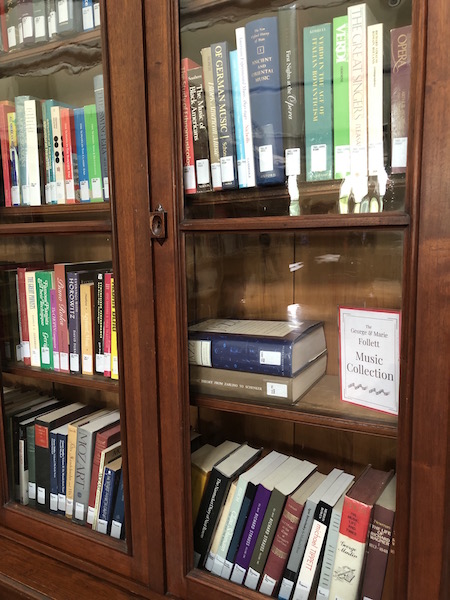
“The Follett Music Collection is given in honor of George & Marie Follett, two long-time members of the Albion community who have devoted their careers to education, inspiring many with their love of music,” the display notes. “An avid fan of Mozart, Beethoven and Brahms, George’s love of music enriched his years as a school psychologist and teacher of the occasional music appreciation course. Marie taught music to generations of students in the Albion Central Schools, and helped build secure foundations for the continued excellence of music programs throughout the district.”
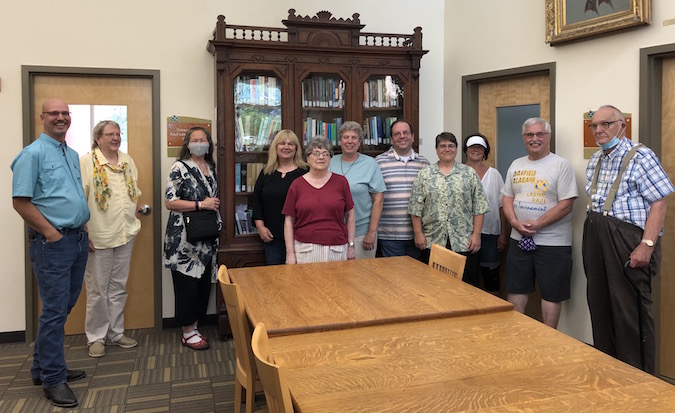
The Follett family was joined by library staff, board members and two former students – Susan Boring and Gary Simboli – who went on to become music teachers.
Lyndonville school resource officer ends year with safe driving message for students

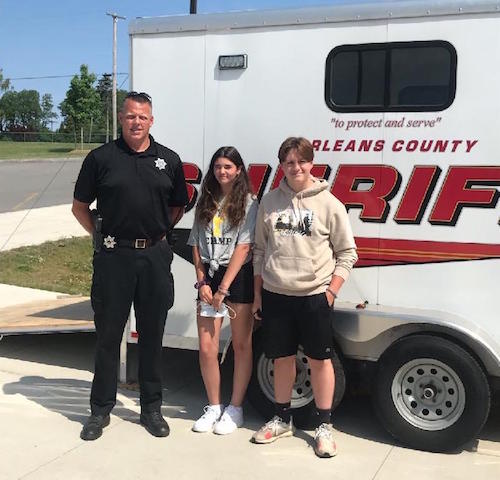
Photos courtesy of Orleans County Sheriff’s Office: Deputy Jason Barnum, school resource officer at Lyndonville, stressed the importance of safe driving for students.
Press Release, Orleans County Sheriff Chris Bourke
LYNDONVILLE – Orleans County Sheriff’s School Resource Deputy Jason Barnum finished up a great 2020-2021 year at the Lyndonville School District.
In the last few weeks of the school year, Deputy Barnum provided information and guidance to High School students with learners’ permits and driver’s licenses. Deputy Barnum emphasized the importance of safe driving and not using drugs or alcohol beverages before getting behind the wheel of a motor vehicle.
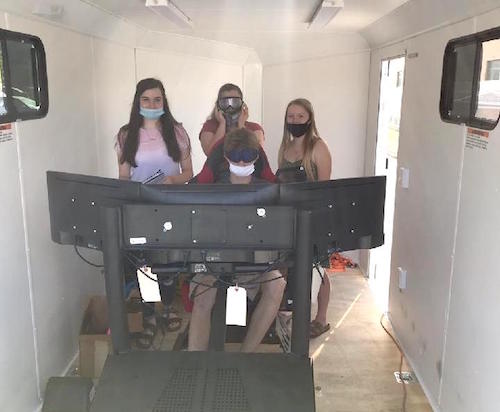
Deputy Barnum brought the Sheriff’s Office Driving Simulator System and pedal cars to the school. These systems allow drivers to wear goggles that simulate being under the influence of various intoxicating substances and see the problems they cause for operators.
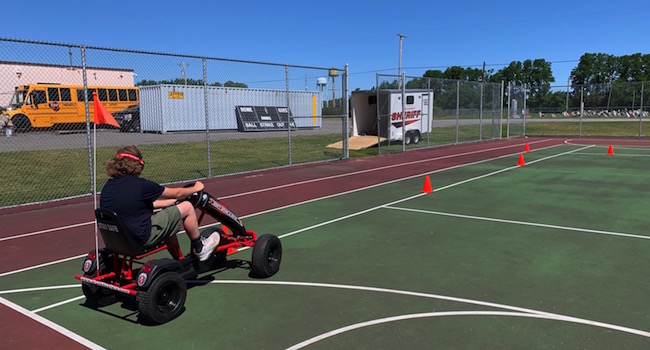
Students drove the pedal cars through a course with the goggles on.
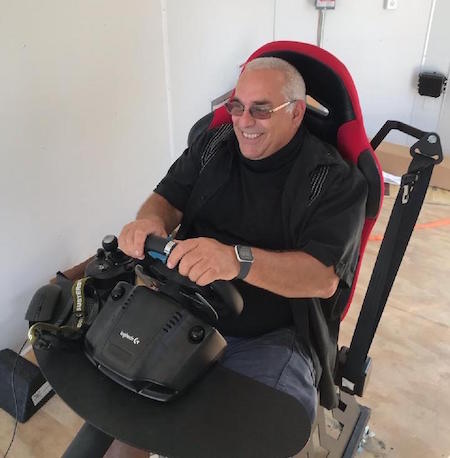
Retiring technology teacher Jeff Gress tries the driving simulator.
The Orleans County Sheriff’s Office would like to wish all students in the county a safe summer vacation.
Return to top
5 more bronze statues added to lock tender tribute
Lockport display celebrates 19th century canal workers
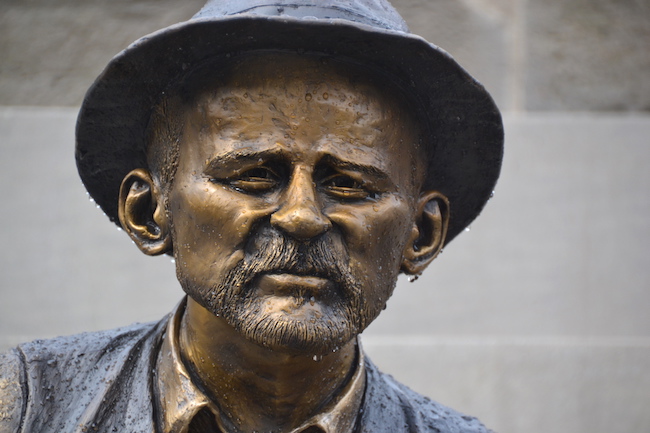
Photos by Tom Rivers
LOCKPORT – The top photo shows one of five new bronze statues that will be dedicated on Saturday morning in Lockport at 10 a.m. It is phase two of a life-size Lock Tenders Tribute Monument in Lockport. This statue is of Ira McCoy, a lock tender who lived on Juniper Street in Lockport. He lived from 1859 to 1943 and also owned a book-binding business and was a Lockport city alderman.
Some of the descendants of the tenders are expected at Saturday’s 10 a.m. dedication.
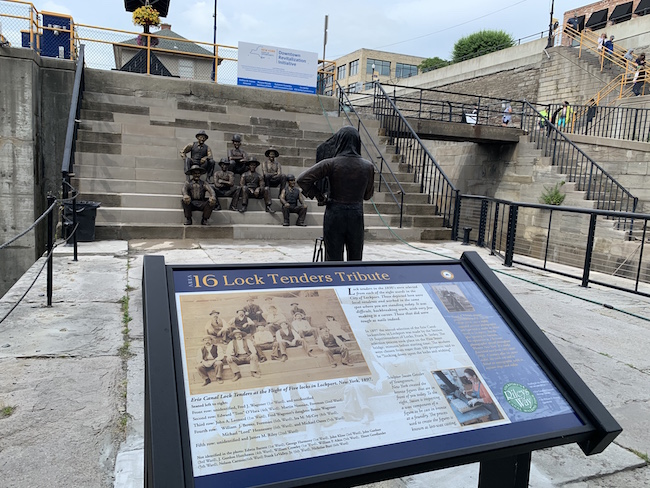
The Lock Tenders tribute now includes eight bronze statues with six more to come. The statues are based on a photo of the tenders in 1897.
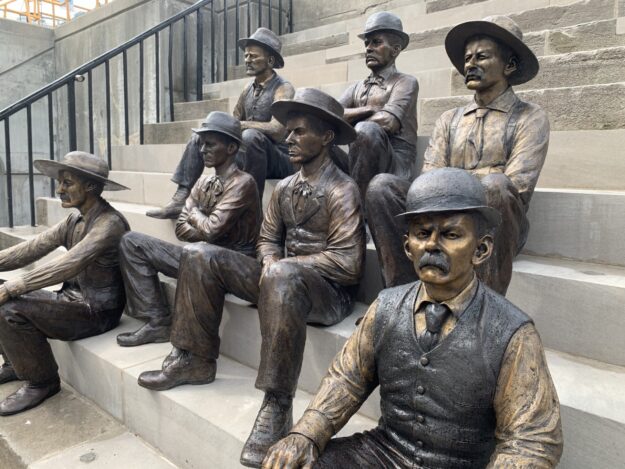
Susan Geissler, an artist from Youngstown, has created the statues of the tenders. There are currently seven statues of the tenders and the photographer, Frank B. Clench. The display will add a statue of the girl in the photo who was a daughter of one of the tenders, and five more of the lock workers.
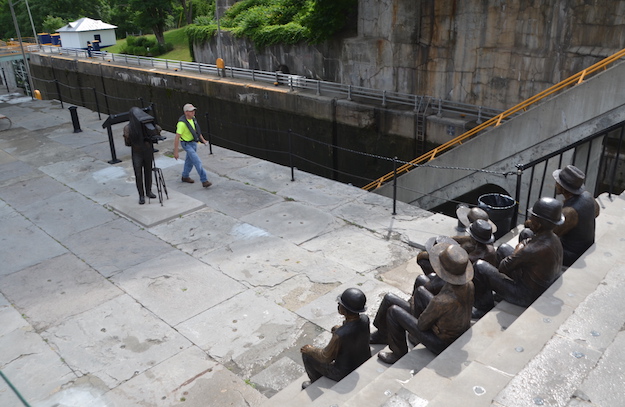
The statues are installed on the stairs in the Lockport Locks where the tenders were photographed nearly 125 years ago.
The lock tenders were picked in the 1890s from the eight wards in the City of Lockport. The ones in the photo are local residents who worked in the same spot on the steps where the bronze figures are located.
“It was difficult backbreaking work, with very few making it a career,” according to an interpretive panel at the site. “Those that did were tough as nails indeed.”
The lock tenders worked 12-hour days and were responsible for opening and closing the locks so boats could pass through safely. They also worked on maintenance at the site.
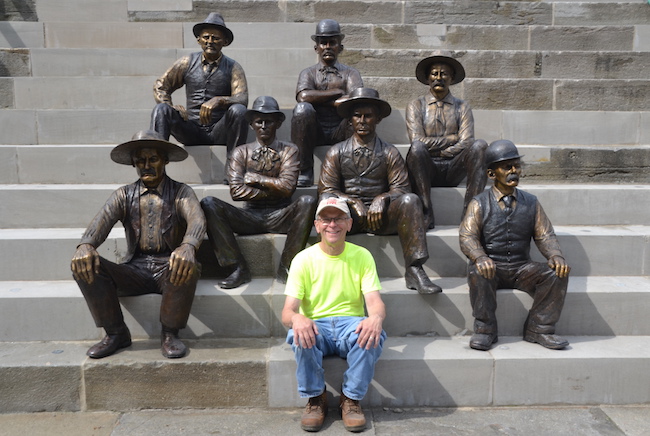
David Kinyon, president of the Lockport Locks Heritage District Corp., sits with the statues on Thursday morning. He said many people stop by each day to get their photos with the statues. He loves to see people interacting with the figures.
“People love to come here and hang out with them,” he said about the statues. “They come down here and sit with them.”
The entire 14-piece monument is a $1.4 million project. The remaining six statues should be in place well before the 200th anniversary celebration of the opening of the Erie Canal, a 363-mile-long canal that opened in 1825. Kenyon said the lock tender display is part of an effort to make the locks a bigger destination and tourism attraction.
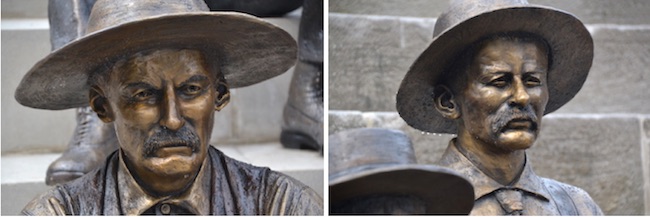
The new statues include the likenesses of Fred Wagoner, left, and John Leonard.
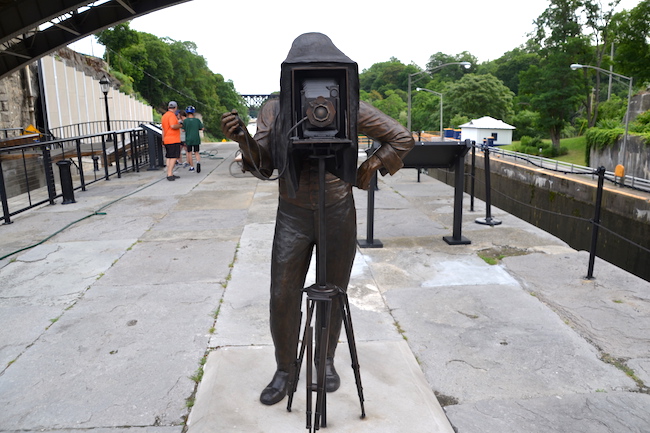
Artist Susan Geissler created a statue of photographer Frank B. Clench at work in 1897. His photograph of the lock tenders inspired the display of bronze statues.
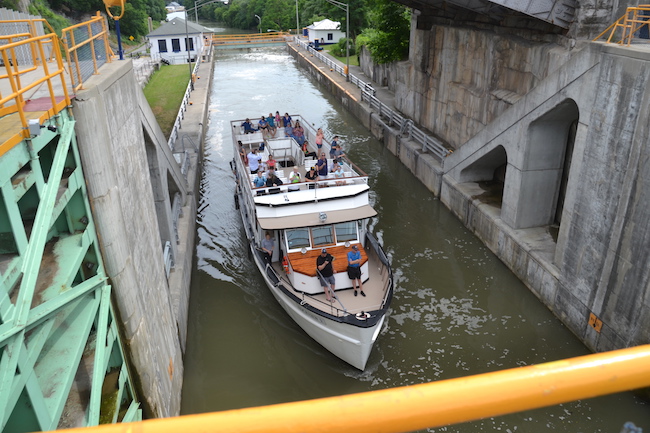
This boat passes through one of the locks in Lockport on Thursday morning. The boat would be raised up in the water. Click here to see a video of the boat passes through a lock.
Return to top