












Press Release, Genesee & Orleans County Health Departments
November is designated as Lung Cancer Awareness month, a global effort to reduce stigma for a disease that affects both smokers and non‐smokers and takes more lives annually than breast, prostate, colon and pancreatic cancers – combined.
Smoking is the most common cause of lung cancer, but lung cancer can occur in people that have never smoked. Other risk factors including being exposed to secondhand smoke, having a family history of lung cancer, exposure to asbestos, and exposure to radon gas. According to the Environmental Protection Agency (EPA), an estimate of 21,000 Americans die from radon-related lung cancer every year.
The leading cause of lung cancer amongst non-smokers is radon exposure. Radon is a clear, odorless, tasteless radioactive gas that is naturally found in the Earth. Radon dissolves in groundwater, and forms pockets under homes and buildings.
The primary method of radon exposure is through cracks in home foundations, new or old. In fact, one fifth of all houses in the United States have dangerous levels of radon. According to the EPA, if you smoke and live in a home with high radon levels, your risk for developing lung cancer significantly increases.
Homes with a radon level over 4 picocuries per liter of air (pCi/l) need to be evaluated by a Certified Radon Mitigator to determine the type of radon reduction system that may need to be installed.
“By knowing your homes radon level and reducing it if necessary, you can protect you and your family,” said Paul Pettit, Public Health Director for Genesee and Orleans County Health Departments (GO Health).
Testing for radon is fast and inexpensive, and is the only way to determine the radon levels in your home. GO Health encourages residents to test for radon when buying a home, doing a major renovation, every 2 years if there is a mitigation system installed or every 5 years otherwise.
When purchasing a new house, make sure the seller completes a radon test kit and has the results available. If you are building a new home, make sure to have radon-resistant construction features installed and tested prior to moving in.
You can purchase a short-term radon test kit from your local hardware store or through a radon-testing laboratory.
For more information about radon visit, click here.
‘A small amount of fentanyl, smaller than the tip of a pencil can kill someone. This is a serious issue that impacts our children, our families and our community.’ – Paul Pettit, public health director
Press Release, Genesee & Orleans County Health Departments
The United States has passed a grim, heartbreaking milestone: a record number of Americans are dying as a result of a drug overdose.
Between April 2020 and April 2021, drugs – mostly synthetic opioids such as fentanyl – took the lives of more than 100,000 of our sons and daughters, loved ones and neighbors, community members, and friends. During the same 12-month period, eleven people died in Genesee County from opioid overdoses, and fentanyl was involved in all of these deaths.
This rise in opioid overdoses across the U.S. is largely due to illicit fentanyl contaminating street drugs. Pharmaceutical fentanyl is a synthetic opioid that is FDA-approved as a patch or lozenge for the treatment of severe pain.
Fentanyl is at least 50 times more potent than heroin. Most recent cases of fentanyl-related harm, overdose, and death in the U.S. are linked to illegally made fentanyl that is mixed into drugs like counterfeit painkillers and benzodiazepines, heroin, cocaine and methamphetamine. Fentanyl has also been detected in fake pills that look like candy.


“A small amount of fentanyl, smaller than the tip of a pencil can kill someone,” stated Paul Pettit, Public Health Director for Genesee and Orleans County Health Departments (GO Health). “This is a serious issue that impacts our children, our families and our community.”
Because we have an unregulated and criminalized drug supply, there is no way to tell if a street drug someone is using is 100% safe. This means that someone may use a product that they believe their body is able to tolerate, but it may actually be much stronger than they expect due to being contaminated with fentanyl, without knowing.
The opioid crisis is not confined to a particular subset of our population. The epidemic affects wealthy and poor, black and white, rural and urban, and every corner of Genesee County.
HEALing Our Communities
The street drug supply has always been unpredictable and inconsistent – this is especially true now. People who use drugs should assume overdose risk no matter what drug they’re using, and practice as much harm reduction as consistently possible. Our community should also practice harm reduction strategies by:
Knowing the signs of an overdose.
Carrying naloxone and knowing how to use it.
Looking out for others in the community and administering naloxone if you suspect an overdose!
By following these harm reduction strategies, together, we can HEAL our communities and reduce preventable overdose deaths.
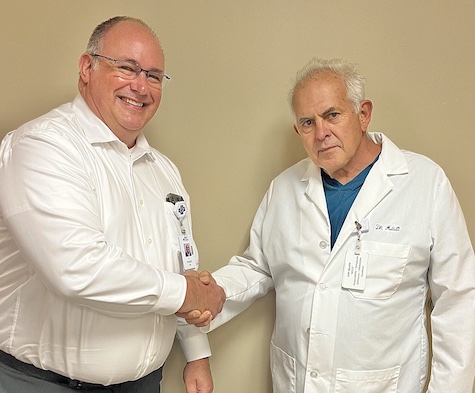
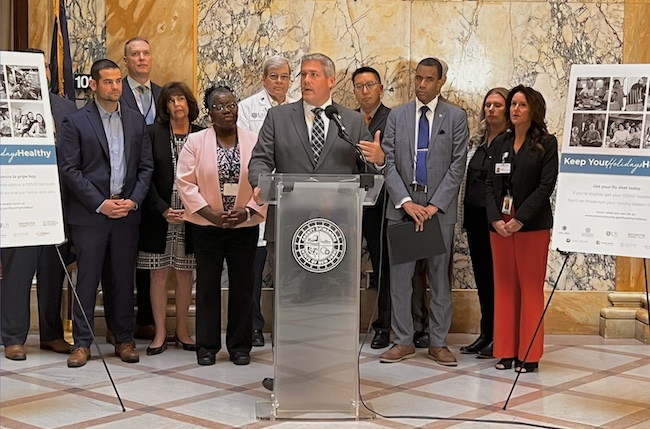
Photos by Tom Rivers: Orleans County Legislator Don Allport, left, last week presents a proclamation celebrating the 10-year partnership of the Genesee and Orleans County Health Departments. Allport shakes hands with Paul Pettit, public health director of GO health; Ron Mannella, Weights and Measures director for the two counties; and Kristine Voss, epidemiology coordinator for the two counties.
By Tom Rivers, Editor Posted 1 November 2022 at 9:48 am
ALBION – The County Legislatures in both Genesee and Orleans counties last week celebrated a 10-year partnership among the two counties with shared public health services.
The two counties combined employ about 50 employees in public health. Each county has its own health department, but they share seven department heads, including Paul Pettit as the public health director. The two counties also have a merged Board of Health.
One county can also pull from another county if there is a staffing need, such as a vaccination clinic. Working as integrated departments has allowed the two departments to better balance surges over the past 2 1/2 years with Covid testing, vaccinations and providing communications in a cohesive manner, county officials said.
Paul Pettit, the public health director for the two counties, recalled when 10 years the initial resolution for shared services was approved by the Orleans County Legislature in Albion, and then later that evening by the Genesee County Legislature in Batavia. Pettit drove from Albion to Batavia to be on hand for what turned out to be historic resolutions.
Orleans and Genesee officials have shared with other counties around the state and nation about the partnership, advising how others could do it, too. But Pettit said he doesn’t know of another long-lasting partnership among two counties.
He praised the staff at GO Health and also the elected leadership and county administration in both counties for making the agreement work.
“We couldn’t do it without the support of the Orleans County Legislature and Genesee County Legislature,” Pettit said. “There is trust between the two counties. We’ve been forward-thinking.”
He noted the partnership has continued even with changes on the legislature and with the top administrators in each county.
Orleans County Legislator Don Allport thanks staff members at the local health departments for their service. From left include Paul Pettit, public health director of GO health; Ron Mannella, Weights and Measures director for the two counties; and Kristine Voss, epidemiology coordinator for the two counties, Nola Goodrich-Kresse, public information officer; Kim Castricone, administrative officer; Carrie Doty, principal financial clerk; and Sherri Bensley, case manager.
“Whereas, the residents of Genesee and Orleans counties have benefitted fiscally and operationally in the ongoing agreement,” according to a resolution signed last week by Lynne Johnson, chairwoman of the Orleans County Legislature, and Rochelle Stein, chairwoman of the Genesee County Legislature.
Genesee and Orleans Health Departments (GO health) have received joint county grants for public health initiatives in the two counties. The partnership has allowed the two counties to fill workforce gaps, drive efficiencies and look for innovative ways to advance the two-county collaboration, according to a proclamation from both legislatures.
The two counties look forward to working together “for the foreseeable future.” The two county legislatures urged the community to celebrate the 10-year milestone of integrated services and better opportunities in public health.
Stein, during remarks on Wednesday, said she is impressed how the partnership has grown over the decade.
“We do want more for our communities,” Stein said. “We couldn’t be prouder of the staff with their dedication to serve both counties.”
By Ginny Kropf, correspondent Posted 29 October 2022 at 9:12 am
Provided photos: Alissa Blount, left, and certified nursing assistant Ronnie DePaul display the pumpkins they created for Orleans Community Health’s first pumpkin decorating contest. They are in the hospital lobby, where visitors can vote on their favorite one.
MEDINA – The Orleans Community Health system is celebrating Halloween with its first-ever pumpkin-decorating contest.
Last week, Kristin Grose from Human Resources and Scott Robinson from Community Partners distributed 25 pumpkins to different Orleans Community Health departments and encouraged them to decorate them. This included the Albion Healthcare Center, dialysis centers in Batavia and Medina and the hospital’s different departments.
The pumpkins are now on display in Medina Memorial Hospital lobby, where the community is being asked to vote on their favorite pumpkin while visiting the hospital. The pumpkins have also been posted on the hospital’s Facebook page, where they can be voted on there through Halloween.
The winning department will get a pizza party, according to Alissa Blount, a nurse from the second floor.
Ronnie DePaul, a certified nursing assistant on the second floor, painted her pumpkin pink and created a pig with three piglets made from tiny butternut squash. Appropriately, pink is the color associated with October as breast cancer awareness month.
“Overall this is fun,” Robinson said. “We want patients to see something that’s a little more festive when they come for appointments. Internally, it’s an enjoyable competition for bragging rights.”
The winning pumpkin will be announced Monday on Halloween.
“This and other holiday related events are returning this year, such as breakfast with Santa in December,” Robinson said. “This seemed like a great way to kick off the fun.”
A row of uniquely decorated pumpkins on display in the lobby of Medina Memorial Hospital includes an “IV patient,” a patchwork pumpkin and a pumpkin pig with her butternut squash piglets.
Press Release, Genesee & Orleans County Health Departments
BATAVIA – The Genesee and Orleans County Health Departments (GO Health) recently received a grant from the National Association of County and City Health Officials to learn more about the intersection of trauma, suicide, overdose and health.
There will be a conference to help understand how these issues influence our communities and help us work toward becoming a Trauma-informed Care GOW Region.
To that end, GO Health is coordinating a Trauma & Resiliency Conference on Nov. 9 at Batavia Downs from 8:30 a.m. to 3 p.m. This conference will be looking at what Adverse Childhood Experiences (ACEs) are, ACEs data from Genesee, Orleans and Wyoming counties, and what it means to be a trauma-informed care community.
If you are in education, behavioral health, mental health, department of social services, law enforcement, the court system, probation, human services, etc. please take the time to register now. Seating may be limited.
For more information or to register, click here. Registration is required before Nov. 2.
27 people in county died from drug overdoses from 2017-2021
By Mike Pettinella, GCASA Publicist
The local public health director says there is no time to waste in the effort to combat the opioid epidemic in Orleans County.
Paul Pettit
“The opioid epidemic has become a very urgent and serious public health and safety issue, and, without question, the entire human services network needs to come together to prevent more overdoses and deaths,” said Paul Pettit, public health director for Genesee and Orleans counties. “This has been something that has continued to play in our community over the last six plus years now and has become an issue that we’ve really focused in on.”
Pettit said the health department works in collaboration with substance use agencies, such as Genesee/Orleans Council on Alcoholism and Substance Abuse, along with mental health clinics and law enforcement to prevent overdoses. And, that work is becoming more and more challenging.
Opioids, whether it be heroin or prescription drugs such as Oxycodone, are being laced with fentanyl, a lethal synthetic substance being smuggled into the United States through cartels based in Mexico.
Last year, more than 100,000 Americans lost their lives due to fentanyl, which, on average, is about 50 times stronger than heroin and 100 times stronger than morphine. A dose as small as 2 milligrams can be deadly.
“Originally used as a prescription painkiller, fentanyl quickly became a popular choice for drug abuse because of its strength compared to other substances,” said GCASA Executive Director John Bennett. “Counterfeit Percocet, Oxycontin, and other drugs often contain fentanyl.”
Pettit agreed, adding that drug dealers are pushing fentanyl, which is cheaper and easier to access.
“Many of the opioid-related fatalities and overdoses are showing fentanyl in the autopsy results,” he said. “Now, that’s the number one killer and, hopefully, we will be able to get ahead of it, build capacity and put systems in place to help folks that are struggling with addiction.”
In Orleans County, 27 people died from opioid overdose from 2017-21. In 2018, the rate of overdose deaths jumped to 27.1 per 100,000 – much higher than state and national averages. That number prompted health department officials and others to allocate more resources to the problem.
“Sadly, today, drug overdose is actually the leading cause of injury mortality in the United States,” Pettit said.
Digging deeper into the data for the county, in 2020, 26 people were treated in hospital emergency rooms for opioid overdoses, and in 2021, that number increased to 31.
More than 450 Orleans County residents were admitted to New York State Office of Addiction Supports and Services-certified treatment programs over the past three years – 73 in 2019, 228 in 2020 and 174 in 2021. It should be noted that the numbers in 2020 and the first part of 2021 were not typical due to Covid-19.
In a move to increase awareness and community action, the health department helped institute the GOW Opioid Task Force, a three-county initiative to inform the public of the dangers of opioids and to develop strategies to deter use of opioids.
“We have put together an annual Community Health Improvement Plan, working with our healthcare systems, and have identified MEB, which is mental, emotional and behavioral health, as one of the focus areas,” Pettit reported. “And the primary reason for that was really around the drastic spike in opioid related overdoses and overdose deaths.”
Pettit said his department has enlisted services of epidemiologists “to get a handle on real-time data and to try to understand what’s going on in the community.”
“That’s why we’ve really focused in on this area and when we do get grants – when we have the opportunity to invest resources, we’re doing it where we’re going to get the most bang for the buck.”
He said that training more people in how to administer Naloxone to reverse an overdose is crucial to the task force’s success.
“We know that Naloxone training — getting more of that out in the community — saves lives. So, we’re working to get it into people’s homes and into businesses. We’re working to expand Naloxone across the community, replicating a program that already is in place in Genesee County,” he said.
Pettit said the health department supports the Public Service Assisted Addiction & Recovery Initiative in Genesee County – a partnership between substance use providers and law enforcement – and would hope that a similar program could be established in Orleans County.
“That, plus the placement of Naloxone boxes that we’re trying to replicate here in Orleans County,” he said. “I’ve been talking with the sheriff and other law enforcement to see if there’s something we can potentially roll out here but we’re not quite there yet. Maybe we’ll start a pilot test program and go from there. It’s definitely worth the time and effort.”
Press Release, Genesee and Orleans County Health Departments
October 23-29 is National Lead Poisoning Prevention Week, which is a call to bring together individuals, organizations, industry, and government to increase lead poisoning prevention awareness in an effort to reduce childhood exposure to lead.
About 3.3 million American households, including 2.1 million low-income households that have children under six years of age, live in homes containing lead exposure hazards. According to the 2021 American Community Survey, approximately 74% (30,000) of housing units in Genesee and Orleans counties were built before 1978 and may have lead exposure hazards.
“Childhood lead exposure is a significant issue in Genesee and Orleans counties because of the large number of older homes that may contain lead-based paint, which is the main source of exposure in children,” stated Darren Brodie, Environmental Health Director of Genesee and Orleans County Health Departments (GO Health). “Lead is a toxic element that can cause damage to the brain and nervous system when it is absorbed into the body.”
Lead poisoning is preventable. The key is to stop children from coming into contact with lead hazards before poisoning occurs. Children can be exposed to lead by swallowing or breathing in lead dust created by old paint that has cracked and chipped, eating paint chips, or chewing on surfaces coated with lead-based paint such as windowsills. Lead exposure in children can cause learning and behavior problems, slow growth and development, and cause hearing and speech problems. These effects may be permanent and can continue into adulthood.
New York State requires health care providers to obtain a blood lead test for all children at age 1 and again at age 2. Health care providers are also required to assess all children ages 6 months to 6 years for risk of lead exposure.
Below is a table that shows local screening rates among children in Genesee and Orleans counties from 2021.
We encourage parents and community members to educate themselves about the dangers of lead exposure by reviewing the three key themes of National Lead Poisoning Prevention Week:
1. Get the Facts!
Any exposure to lead hazards can be serious, especially for children. The only safe blood lead level is zero!
The most common source of lead exposure in children is through eating dust particles or paint chips so small that they may not be visible to the naked eye.
The most common sources of lead in drinking water are lead pipes, faucets and fixtures.
Other sources of lead could include metal toys, wooden toys or furniture painted with lead-based paint, metal jewelry, lead-glazed pottery or porcelain, some candles, spices, and even make-up.
2. Get your Home Tested!
Many homes built before 1978 have lead-based paint. If your home was built before 1978, you should get it tested for lead paint.
If you rent, ask your landlord to have your home or apartment tested.
Contact GO Health for more information on getting your home tested.
3. Get your Child Tested!
Children’s blood lead levels tend to increase from 6 to 12 months of age and tend to peak at 18 to 24 months.
A simple blood test is the only way to find out if your child has been poisoned by exposure to lead.
Most children with detectable levels of lead in their blood have no obvious symptoms.
Blood lead tests are also recommended for pregnant women who think they may have been exposed to lead.
“Please contact your health care provider and make it a priority get your child tested for lead,” Brodie said. “Early detection is the key to preventing long-term health problems.”
In January 2019, the Genesee County Health Department received a $1.3 million federal grant from the Department of Housing and Urban Development to address lead-based paint hazards in homes and apartments in Genesee and Orleans counties.
“This funding can be used specifically for lead-based paint repair activities as well as other health-related home repairs,” stated Gabrielle Lanich, Lead Program Coordinator for GO Health. “Eligible homeowners and property managers with qualified tenants may apply to receive these funds.”
Contact the Genesee County Health Department for eligibility information. For more information on the HUD program, other lead prevention programs, to obtain an application or to determine if your family and home fits the criteria, contact GO Health’s lead program staff at the Genesee County Health Department at 344-2580 ext.5555 or Health.GOlead@co.genesee.ny.us.
You can also visit the GO Health website at www.GOHealthNY.org. Program staff can quickly determine your initial eligibility, and will help to guide you through the application process.
To learn more about the New York State Lead Poisoning Prevention program, click here.
By Tom Rivers, Editor Posted 20 October 2022 at 8:59 am
Charts from Genesee and Orleans County Health Departments
Orleans and Genesee counties combined continue to see about 200 confirmed Covid cases each week.
In recent weeks the confirmed cases in Orleans and Genesee combined include 183 from Oct. 12-18, 191 from Oct. 5-11, 203 from Sept. 28 to Oct. 4, 199 from Sept. 21-27, and 202 from Sept. 14-20. The two counties are both ranked as medium for community Covid level by the federal CDC.
The seven-day positivity rate state-wide is at 6.65 percent ending on Oct. 18. Orleans and Genesee are in the nine-county Finger Lakes Region, where the positivity rate is at 7.51 percent.
The seven-day positivity averages for the Finger Lakes counties includes:
Orleans, 7.1 percent
Genesee, 7.4 percent
Livingston, 9.8 percent
Monroe, 7.1 percent
Ontario, 9.3 percent
Seneca, 8.5 percent
Wayne, 6.8 percent
Wyoming, 9.9 percent
Yates, 6.2 percent
The Capital Region and North Country both have the highest positivity rates at 10.03 percent, while New York City is the lowest at 5.63 percent.
Gov. Kathy Hochul continues to urge people to get vaccinated and boosted to help fight off serious cases of Covid.
“As the weather across the state continues to cool, New Yorkers must remain vigilant and be sure to use the tools that are available to keep themselves, their loved ones, and their communities safe and healthy,” Hochul said. “Take advantage of the vaccine by staying up to date on doses. Test before gatherings or travel and if you test positive, talk to your doctor about potential treatment options.”
Hochul on Wednesday also announced that children ages 5 and older may now receive the bivalent booster shots that are recommended to increase protection against Covid.
Governor Kathy Hochul announced on Wednesday that children ages 5 and older may now receive the bivalent booster shots that are recommended to increase protection against Covid-19.
The state Department of Health updated its guidance this week after the U.S. Food and Drug Administration amended its emergency use authorization and the Centers for Disease Control and Prevention’s updated its clinical guidance, which collectively will allow more children to safely boost their immunity against Covid-19.
“Being able to provide the bivalent boosters to an even greater number of children throughout the state will expand protection against the Omicron variants, as we collectively work to stay up to date with these safe, effective vaccinations,” Hochul said. “I encourage all eligible New Yorkers to get these boosters to protect themselves, their families, their children, and our communities from this virus as we head into the cold weather months.”
In accordance with FDA’s authorization and CDC’s recommendations for use, the state Department of Health New Yorkers 5 years and older should receive the bivalent booster dose at least two months after completing their initial vaccine series or following their last booster or additional vaccine dose.
Eligible children 5 years and older can receive the Pfizer-BioNTech bivalent booster and those 6 years and older can receive Moderna’s bivalent booster. Viruses commonly mutate over time, so scientists update a vaccine’s composition to be as effective as possible in protecting against the strain circulating.
New York State Department of Health Commissioner Dr. Mary T. Bassett said, “The new bivalent booster is the first available made to target the currently circulating Omicron subvariants, offering the most important protection for children and adults yet. Getting all your shots is the best way to prevent serious illness and hospitalization. Parents and guardians, please get yourselves and your children boosted as soon as eligible.”
As noted by CDC, the new boosters add Omicron BA.4 and BA.5 spike protein components to the vaccine, helping to restore protection that has waned previously and targeting recent variants that are more transmissible and immune-evading. The shots are expected to meaningfully reduce New Yorkers’ chances of getting severe illness from Covid-19, including being hospitalized or even death.
More than 1 million Covid-19 deaths have been reported in the United States. Nearly 75,000 New Yorkers have died from the infection since the onset of the pandemic in 2020.
In addition to recommending bivalent boosters for all who are eligible, the Department of Heath continues to urge parents and guardians to have any of their children who are six months old and up complete their primary vaccine series as soon as possible. Receiving the initial doses are necessary to be eligible for a booster two months later.
Booster doses are free and available statewide. Supply is increasing each week as orders by providers continue to be filled by vaccine manufacturers. To schedule a shot, New Yorkers should contact a health care provider, local pharmacy, or county health department.
New Yorkers can also visit vaccines.gov, text their ZIP code to 438829, or call 1-800-232-0233 to find nearby locations. At vaccines.gov, after entering a 5-digit ZIP Code, New Yorkers can click “Updated Vaccines” and select the bivalent booster type by age they are seeking to book an appointment for themselves or their children.
Provided photo: Speakers at today’s GOW Opioid Task Force meeting include, from left: Christen Foley, Emily Penrose, Deputy Ken Quackenbush and Investigator Ryan DeLong.
Posted 18 October 2022 at 4:14 pm
By Mike Pettinella, GCASA Publicist
BATAVIA – Those on the front lines in the battle against the opioid epidemic are unified in their message: Fentanyl is wreaking havoc across the United States, including right here in Genesee, Orleans and Wyoming counties.
“We’re seeing the human toll that fentanyl is having on our communities,” said Investigator Ryan DeLong of the Genesee County Sheriff’s Office, one of four speakers at this morning’s GOW Opioid Task Force meeting. “Probably everyone in this room has been affected (by substance use) by a family member or friend.”
DeLong and Deputy Ken Quackenbush, both trained as Drug Recognition Experts, spoke on what local law enforcement is dealing with as the scourge of fentanyl – a synthetic, prescription opioid that is 50 times stronger that heroin – has found its way, mostly from Rochester, into the rural counties.
They were joined by Emily Penrose, an epidemiologist with the Genesee County Health Department, who reported data on opioid-related deaths in Genesee and Orleans, and Christen Foley, task force coordinator, who described the basics of fentanyl and the telling signs of an overdose.
About 35 people attended the quarterly meeting at The Recovery Station, operated by Genesee/Orleans Council on Alcoholism and Substance Abuse, on Clinton Street Road.
DeLong and Quackenbush said that they are encountering scores of people using fentanyl through their road patrols and other drug crackdown initiatives. DeLong noted that the opioid is usually packaged in a wax envelope, about an inch square, but recently, they are finding it mixed with other substances for smoking purposes.
While police used to deal with heroin and other stimulants, Quackenbush said that he has “never seen heroin or seen heroin come back on a toxicology report” in his six years with the sheriff’s office.
“It’s always fentanyl,” he said.
Fentanyl is being distributed in both powder and pill form, with some pills in bright colors to mimic candy, the officers said. DeLong said fentanyl is much cheaper than heroin – a factor leading to its widespread use. Last year, more than 100,000 Americans died of opioid overdose.
DeLong explained that law enforcement is staying up to date in several ways on the drugs coming into the United States:
Through regular emails from the federal government on packaging, quantities, forms and trends;
Through communication among all local and regional police agencies;
Through pro-active policing such as traffic stops and field testing of seizures (confirmed by lab results);
Through narcotics trainings at both the “macro and local levels.”
“Every deputy carries and is trained in the administration of Naloxone (popular brand name, Narcan) and we respond to overdose calls for service along with EMS (Emergency Management Services) and fire (personnel),” DeLong said. “We’re also involved in the Public Safety Assisted Addiction and Recovery Initiative, where we link individuals to services through GCASA peer recovery advocates (without criminal implications) and conduct Drug Take-Back programs throughout the year.”
Penrose presented charts that showed a spike in opioid deaths in both Genesee and Orleans counties in 2017 and 2018 – both rates per 100,000 people well above the national average. She said the rate has decreased in the past three years but continues to be cause for concern.
“We’ve seen a big raise in fentanyl-related deaths since 2014, where before that, the overdose deaths mostly stemmed from heroin,” she said. “Additionally, we’ve seen fentanyl in stimulants such as cocaine, methamphetamine, ecstasy and bath salts.”
As far as leading causes of death in the U.S., unintentional injuries – including poisoning from alcohol and drugs – is the leading cause of death in every age group from 1 through 44.
“When you look deeper into unintentional injuries, we see that poisoning is the No. 1 cause for the 25-34, 35-44, 45-54 and 55-64 age groups – and that’s fentanyl,” she stated.
The health department is currently involved in a new initiative, HEALing Genesee, which is working to prevent overdose death through education and awareness, increasing access to Naloxone (which saves the lives of people experiencing an overdose) and safe prescribing practices.
The GOW Opioid Task Force, in conjunction with GCASA, regularly schedules trainings in Naloxone administration, Foley said.
“We encourage as many people as possible to get trained in how to administer Naloxone,” she said, noting that just 2 milligrams of fentanyl are considered a lethal dose in most people. “It’s important to know the signs of an overdose, which including drowsiness or unconsciousness, slow or shallow breathing, choking sounds or skin tone changes.”
For more information about Naloxone training or the task force, contact Foley at 585-815-1863.
GO Health has brought in grants to expand services, reduce costs
Press Release, Genesee and Orleans County Health Departments
The Genesee and Orleans County Health Departments (GO Health) are celebrating 10 years of working collaboratively through their cross-jurisdictional shared services arrangement.
This initiative was the first of its kind in New York State and is at the forefront of providing best practices for local governments looking to become more efficient through sharing services.
The shared services began as a PILOT project for two years and was part of a national initiative funded by the Robert Wood Johnson Foundation that helped establish the Center of Sharing Public Health Services (www.phsharing.org). Following the first two years, the benefits, both fiscally and operationally have resulted in an ongoing agreement by Genesee and Orleans counties to continue forward with sharing public health services.
“The Genesee County Legislature saw this collaboration as an opportunity for our residents to be served by high quality staff, which is key to improving the quality of healthy living in Genesee and Orleans counties,” stated Shelley Stein, Genesee County Legislative Chair. “Since the beginning of this venture, both counties have made significant progress and now have shared services with the Youth Bureau and Weights and Measures. These shared services reduce local taxes and lower cost of governments. Additionally, across New York State our best practices and case studies have been studied by other counties seeking to cut costs for their residents.”
“The cross-jurisdictional collaboration to create the shared Genesee and Orleans County Health Departments, now known as GO Health, was a transforming idea of two legislative bodies,” stated Lynne Johnson, Orleans County Legislative Chair. “This would not have been achieved if it weren’t for the faith we had in Public Health Director, Paul Pettit to lead the initiative.”
The support and technical assistance of the Center for Sharing Public Health Services for our integrated health departments helped identify the value for our leaders and provide the financial support to jump-start the collaboration.
The New York State Department of Health (NYSDOH) also added their support to the pilot project of joining resources, which lead to the benefit of residents in both of our counties, and is key to our ongoing success.
Working together has helped fill workforce gaps, provide natural redundancy and attract additional candidates for vacant positions. The public health staff in both counties have become more creative and have worked together on several joint projects, including, but not limited to, a joint strategic plan, workforce development plan, quality improvement, branding and communication plan, and working on a joint application to become nationally accredited through the Public Health Accreditation Board as GO Health.
This collaboration has also seen an increase in the services we are able to offer our residents due to the ability to be more competitive with grant applications with a combined population of almost 100,000 residents. GO Health has been very successful in applying for and receiving approximately $7.5 million in grant funds since we began joint applications 10 years ago. These funds have helped to reduce county costs while enhancing services to county residents.
Paul Pettit
GO Health has regionalized service delivery further and is also the recipient of a Housing and Urban Development (HUD) grant and Centers for Disease Control and Prevention (CDC) Lead Poisoning Prevention and Remediation grant in collaboration with Wyoming and Livingston Counties (GLOW region). These lead grants are going to assist residents to reduce lead poisoning and remediate hazards in their homes. GO Health has also benefited from three CDC Public Health Associate Program fellows that spend a two-year assignment working in both counties at little cost to the counties.
“Seeing all that we have accomplished over the past 10 years shows that our initial goals were on target,” Pettit said. “We continue to look at innovative ways to advance our collaboration, drive efficiencies, and be fiscally responsible. Where we are today with our integrated operations is a testament to the buy in and hard work of our county administration, the GO Health leadership team, and all the public health staff. The staff have been instrumental in the success of our work as they operate as a team, share ideas, deliver services, and promote health as a cohesive unit.”
The Covid-19 pandemic response put our integrated departments to the test. Having the ability to work together through sharing employees helped balance the surges over the past couple of years and was essential to meet the needs of contact tracing, administering Covid-19 testing and eventually vaccinations in both counties. One of the most effective benefits of our shared response was with public communications and messaging which allowed us to reduce redundancies and leverage staffing to push information across our shared media.
“We recognize our public health staff for their hard work and dedication throughout the pandemic and over the past 10 years,” said Johnson of the Orleans County Legislature. “We look forward to seeing what they can accomplish in the years to come.”
“Throughout the pandemic, I was able to volunteer my time at clinics and experience firsthand how caring and committed our health department staff are,” said Stein of the Genesee County Legislature. “Watching folks mature into highly functioning teams with only one goal – serve and care for the health and recovery of our residents. I am in awe of the dedication to public service that was very evident in each member of GO Health each day. They are a true gift to our communities. The GO Health partnership gives us the opportunity for health specialists here at home to be comparable with urban counties. I am grateful to know them. Our shining stars!”
“Looking forward, we expect to see GO Health continue to mature and provide further savings and enhanced service delivery to our residents,” said Pettit, public health director. “GO Health is in the final stages of becoming a nationally accredited health department, which is planned for mid-2023. GO Health will continue to integrate and serve as chief health strategists in our communities. We look forward to serving both counties as GO Health- onward.”
By Ginny Kropf, correspondent Posted 13 October 2022 at 1:23 pm
Photo by Ginny Kropf: Lyndonville native Megan Johnson is the new director of Orleans Community Health Foundation. She began her duties on Monday.
MEDINA – The new director of Orleans Community Health Foundation couldn’t be happier to be working in her native Orleans County.
Megan Johnson took over on Monday from Heather Smith, who left to accept a position at Niagara University.
Johnson was born and raised in Lyndonville, a daughter of Roger and Wendy Thering. She graduated from Lyndonville High School and Brockport State College. She lived in Lockport for 15 years before moving to Medina in 2020 with her husband Clay Johnson, also a Lyndonville native.
“I’ve always lived in the area, but I love Orleans County and really wanted to come back and serve my community,” Johnson said.
After college Johnson held positions in marketing and development with several non-profits, including Connects Life, the Summit Center and most recently New Directions Youth and Family Services.
Johnson has a son and step-daughter and said she really wanted to raise her children here. She also acknowledged the importance of the hospital in her home community.
“The hospital is such an integral part of the community,” she said. “I think it’s really important to have the services offered here available locally. That’s what really excites me about this position.”
Johnson said she is just getting her feet wet, but she’s excited to jump right into the job to continue old ideas and develop new ones. Her first challenge is wrapping up plans for Treasure Island, the Foundation’s annual fundraiser scheduled Nov. 5 at Shelby Fire Hall.
“I intend to finish the year as planned and in 2023 perhaps create some new events,” she said. “One goal is to develop programs to draw younger supporters to the hospital.”
Her first week has been busy, and she’s still meeting people in the hospital, she said.
“I loved growing up in Orleans County and I am very excited to be back,” Johnson said. “The people here rise up to the occasion when needed. I hope people realize the value of what we have here so they don’t have to go outside the community for healthcare.”
Oak Orchard Health has earned The Joint Commission’s Gold Seal of Approval for Ambulatory Care and Behavioral Health Accreditation by demonstrating continuous compliance with its performance standards.
The Gold Seal is a symbol of quality that reflects a healthcare organization’s commitment to providing safe and quality patient care.
Oak Orchard Health underwent a rigorous, unannounced onsite review on June 14-16. During the visit, a team of Joint Commission reviewers evaluated compliance with Ambulatory Care and Behavioral Health standards spanning several areas including leadership, quality and safety measures, environment of care, infection prevention and control, emergency management, medication management, and rights and responsibilities of the individual.
“This is a comprehensive accreditation and our team stepped up to demonstrate our commitment to our patients confirmed through this Gold Seal of Approval,” said Karen Kinter, CEO of Oak Orchard Health.
The Joint Commission’s standards are developed in consultation with healthcare experts and providers, measurement experts, and patients. They are informed by scientific literature and expert consensus to help healthcare organizations measure, assess and improve performance. The surveyors also conducted onsite observations and interviews.
“As a private accreditor, The Joint Commission surveys health care organizations to protect the public by identifying deficiencies in care and working with those organizations to correct them as quickly and sustainably as possible,” says Mark Pelletier, RN, MS, chief operating officer, Accreditation and Certification Operations, and chief nursing executive, The Joint Commission. “We commend Oak Orchard Health for its continuous quality improvement efforts in patient safety and quality of care.”
To obtain this accreditation, the clinical leadership, managers, and line staff had to focus on the 15 categories of standards that applied to OOH and develop processes and procedures to meet them. We also underwent training to address and meet the JCAHO standards.
About Oak Orchard Health
Originally founded in 1973, Oak Orchard Health has grown from a migrant health project into an integrated health center with multiple locations providing health care services including primary care, pediatric care, vision care, dental care, behavioral health, as well as nutrition and outreach services for everyone located in the communities they serve. Oak Orchard Health is a recognized patient-centered medical home and 501(c) nonprofit Federally Qualified Health Center (FQHC) located in the towns of Albion, Alexander, Batavia, Brockport, Corfu, Hornell, Lyndonville, Medina, and Warsaw, New York. With the addition of the Mobile Medical Unit and Mobile Dental Unit, we will further increase access to care for our patients. To learn more about Oak Orchard Health at www.oakorchardhealth.org.
For more information, please visit The Joint Commission website.
BROCKPORT — Oak Orchard Health has named an Albion woman as interim CEO. Karen Kinter previously served as Oak Orchard’s chief financial officer for ten years.
She most recently worked at Rochester Regional Health as Vice President of the Specialty Revenue Program and CEO of RRH Federally Qualified Health Centers. Oak Orchard officials said Kinter brings a well-established background in Federally Qualified Health Centers and is an Executive Leader with over 20 years of Senior Leadership experience.
Locally, she may be best known as the owner of the Cone Zone in Albion with her husband Chris Kinter.
In her primary role over her time with RRH, she has achieved growth and sustainability of federal and state programs across multiple hospitals, Oak Orchard stated in a press release announcing her as interim CEO. She has developed and executed program expansion through optimization of revenue, internal controls and improved efficiencies, Oak Orchard stated.
“We are delighted to welcome Karen Kinter to Oak Orchard Health,” said Karen Watt, chair of the board for Oak Orchard Health. “She brings a wealth of knowledge with more than 20 years of experience in healthcare, including 15 years at Federally Qualified Health Centers. She is the perfect fit for us.”
Kinter earned a Master of Business Administration from the SIMON Business School at the University of Rochester and her bachelor’s degree from Medaille College in Buffalo. She volunteers on the board of the Genesee-Orleans Ministry of Concern and Regional Health Reach’s Homeless Program.
About Oak Orchard Health
Originally founded in 1973, Oak Orchard Health has grown from a migrant health project into an integrated health center with multiple locations providing health care services including primary care, pediatric care, vision care, dental care, behavioral health, as well as nutrition and outreach services for everyone located in the communities they serve. Oak Orchard Health is a recognized patient-centered medical home and 501(c) nonprofit Federally Qualified Health Center located in the towns of Albion, Alexander, Batavia, Brockport, Corfu, Hornell, Lyndonville, Medina and Warsaw.
By Mary Richards, FNP, Oak Orchard Health in Warsaw
Most everyone knows a friend or family member who has been diagnosed with breast cancer. That is because breast cancer is the leading cause of cancer deaths in American women, except for lung cancer. It can occur at any age, but the risk goes up as you get older. Because of certain risk factors, some women may have a greater chance of having breast cancer than others, according to the American Cancer Society.
Schedule your mammogram today!
Many women with breast cancer have no symptoms which is why it is important to get a regular mammogram. The American Cancer Society recommends women start at age 40 for their yearly breast cancer screening. Should you have a family history of breast cancer you may need to get your mammogram earlier, particularly if that family member was under 40 years of age and in your immediate family (sister, mother). If that is the case, you may want to start mammograms at 35. With that family history of breast or ovarian cancer, you may be eligible at age 25+ for the BRCA1 and BRCA2 gene mutation test. According to the Mayo Clinic, the BRCA gene test is offered to those who are likely to have an inherited mutation based on personal or family history of breast cancer or ovarian cancer. Talk to your health care provider about this option.
What causes Breast Cancer?
With about 1 in 8 women getting breast cancer during their life, it is important to look at what causes it. Though there are no definitive answers for every case of breast cancer, we do know that there are known risk factors. They are lifestyle related or genetic. A risk factor can increase your chance of getting it, but that is not for sure. Here are just a few according to the American Cancer Society:
Drinking alcohol is linked to an increased risk of breast cancer. The risk increases with the amount of alcohol consumed. Women who have one alcoholic drink a day have a small (about 7% to 10%) increase in risk compared with those who do not drink, while women who have two to three drinks a day have about a 20% higher risk. Alcohol is linked to an increased risk of other types of cancer, too.
Being overweight or obese. Having more fat tissue after menopause can raise estrogen levels and increase the chances of getting breast cancer. Women who are overweight also tend to have higher blood insulin levels. Higher insulin levels have been linked to some cancers, including breast cancer. However, weight is a complex topic when it comes to a link to cancer. You should talk with your provider if you have questions.
Not being physically active. The American Cancer Society recommends that adults get 150 to 300 minutes of moderate-intensity or 75 to 150 minutes of vigorous-intensity activity each week (or a combination of these). Getting to or going over the upper limit of 300 minutes is ideal.
You can help reduce your risk of cancer by making healthy choices like eating right, staying active, and not smoking. It is also important to follow recommended screening guidelines, which can help detect certain cancers early. And never let paying for your mammogram stop you from getting one. Contact Oak Orchard Health at (585) 637-3905 and we can help you find financial support.