By Tom Rivers, Editor Posted 29 June 2021 at 5:36 pm
Photos by Tom Rivers
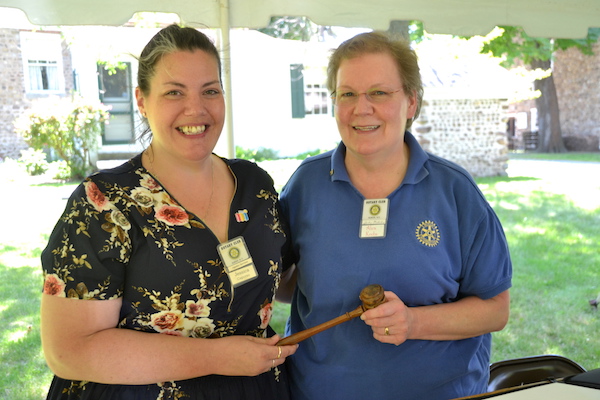
GAINES – Jessica Capurso, left, is handed the president’s gavel last week from outgoing president Alex Krebs during a Rotary Club meeting held outside under a tent at the Cobblestone Museum.
Capurso works as director of Outreach, Education and Marketing at Community Partners for Orleans Community Health.
It was a difficult year for the Rotary Club, with the club meeting through Zoom video conferencing and most of its fundraisers and community events cancelled due to Covid-19.
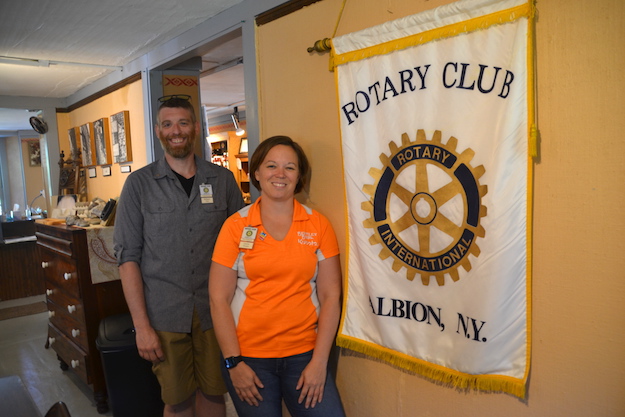
The club recently returned to in-person meetings for Thursdays at lunch. Those are currently being held at the Cobblestone Museum. People can still participate through Zoom.
The Rotary Club is looking forward to its upcoming golf tournament on July 15 at Shelridge Country Club. Golfers can still sign up at $90. Call or text (585) 703-3159 or (585) 261-2307 for more information. Proceeds from the tournament will go towards the Leadership Orleans program and a transportation program through Office for the Aging.
The Rotary Club also recently welcomed two new members – Robert Batt and Laura Olinger. Batt is executive director of the Cornell Cooperative Extension of Orleans County and Olinger is owner and president of Bentley Brothers.
The changing of the guard meeting last week included a remembrance for four people who have recently passed away who were influential with the Rotary Club.
The club reflected on the lives of the late Ed Fancher, Al Capurso and Rollie Kast, who were all dedicated community members. The club also highlighted the late Patricia Shelp, wife of long-time Rotarian Brad Shelp. Mrs. Shelp was a Paul Harris Fellow, Rotary’s highest award. She was a dedicated Albion school teacher, speech therapist and librarian.
“All loved their families and the community and exemplified the Rotary motto of ‘Service Above Self,’” said Rotarian Bonnie Malakie.
WASHINGTON, D.C. – Congressman Chris Jacobs (NY-27) is joining members of the Republican Study Committee and Texas Governor Greg Abbott for a trip tomorrow to the southern border with Former President Trump.
“The Biden-Harris administration has completely failed to properly secure our southern border, and their efforts to roll back successful policies put in place by President Trump have resulted in a massive crisis,” Jacobs said. “Under their watch, we have seen three consecutive months of 170,000-plus illegal encounters, record-setting drug seizures, and spikes in human trafficking. Their actions have emboldened the cartels and harmed the safety and security of border communities and our nation.”
Jacobs will be traveling to McAllen, Texas in the Rio Grande Valley sector. This sector is consistently considered the epicenter for illegal entries, in part due to the intense terrain and dense forest cover. On their trip, Jacobs, RSC members, President Trump, and Governor Abbott will be briefed by border patrol and receive a tour of the southern border.
Jacobs had previously traveled to McAllen, Texas in 2019, where he met with border patrol agents and toured the southern border and detention facilities.
“After seeing this section of the southern border two years ago during the Trump administration, I am looking forward to returning and receiving an update on how the situation has unfolded under President Biden’s watch,” Jacobs said. “Securing our southern border and enacting smart policies requires lawmakers to see the crisis first-hand and hear directly from those on the ground. I look forward to a productive and informational experience, and I am honored to be joining President Trump for this critical trip.”
By Tom Rivers, Editor Posted 29 June 2021 at 2:55 pm
MEDINA – The Village Board intends to seek a state grant to add lights to two canal bridges, the spans on Horan Road and Glenwood Avenue.
Before the village seeks state funding to light up the bridges, the village first agreed to spend $3,500 to have Bergmann, a Rochester engineering and architectural firm, develop a concept plan and cost estimates for the lighting.
That plan will look at the best type of lights for the project and how they should be positioned on the bridges, which are both just over a century old.
The lights could be set up to display different colors to highlights events and holidays, said Mayor Mike Sidari.
Village officials would also like to have lights strewn on the Glenwood Avenue Bridge. Those lights could have different colors to highlight different holidays and events. Seneca Falls lights up its canal bridge and those images, with the bridge reflected in the water, are featured in many tourism promotions in that community.
Medina had a committee work on a Local Waterfront Revitalization Plan. That group concluded the initiative about two years ago.
Some of the recommendations in the LWRP include:
elevated platform near the Medina Waterfalls so the public can get a better view of that attraction. The platform would go from the towpath and extend north.
more trails in the community, allowing people to enjoy the water resources
new lights on the canal bridges
streetscape enhancements
better signage at the four main entrances leading into the village
façade improvements on the backs of buildings that face the canal. The LWRP lists a goal for more rear-facing faces patios, outdoor dining and awnings.
improved public parking, in particular the large municipal lot by Church Street and East Center Street. That lot could be improved with its layout and appearance.
Village officials have said LWRP is a critical document for developing a plan, both short-term and long-term, for the waterfront and also to help Medina pursue public and private investment for projects to make the waterfront and nearby areas more attractive.
With the report from Bergmann, Mayor Sidari said Medina intends to apply for state funding for the lights on the bridges this year through the CFA (Consolidated Funding Application) process. Click here for more information on the CFA.
ALBION – Nadine P. Hanlon, Orleans County Clerk, is pleased to announce that the County Clerk’s Office and DMV are now authorized NYS Thruway E-ZPass On-the Go retail locations.
Drivers can purchase E-ZPass On-the-Go Tags for $25 for passenger vehicles at the County Clerk’s Office or at our DMV. Once purchased, the Tag must be registered with E-ZPass, either online or with a toll free customer service telephone number, before using it. The full $25 payment is moved to an EZ Pass account.
“The County Clerk’s Office is always looking for ways to provide beneficial services to our community,” Hanlon said. “We hope that by becoming a retail location it will be more convenient for people to purchase a tag especially by those who wish to travel using the NYS Thruway and/or are traveling through fifteen additional states that take EZ Pass.”
With the new cashless tolling on the NYS Thruway, tolls by mail customers will pay 30% above the NY E-ZPass toll rate, in addition to a $2 administrative surcharge per billing statement.
EZ Pass On-the-Go Tags also make the perfect gift, especially for that high school graduate who will be traveling back and forth to college.
It is important for E-ZPass customers to be aware that not having their E-ZPass properly mounted, will result in their tag not reading properly while traveling on the Thruway, and could be charged the tolls by mail toll rate.
For further information, contact the Orleans County Clerk’s office at 589-5334 or click here for the E-ZPass website.
ALBION – As the school year was wrapping up, so too did three service-learning projects in Ronald L. Sodoma Elementary School.
Melody Vanacore, Sarah Jones, and Kyle Syck were in charge of creating Little Free Libraries, Amanda Flagler and her students researched birds and created birdhouses for the nature trail, and finally Kyle Syck and Eric Johns have been working on maintaining the nature trail.
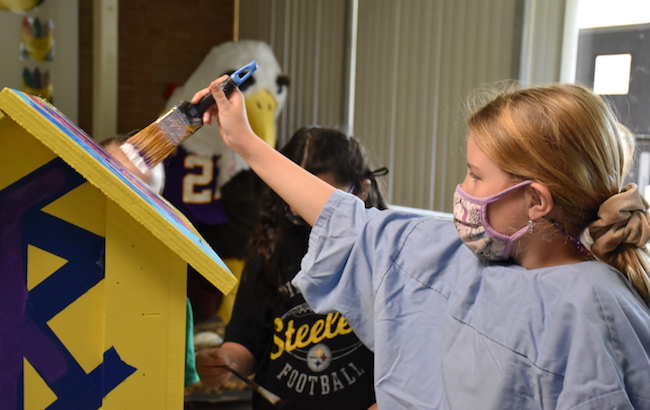
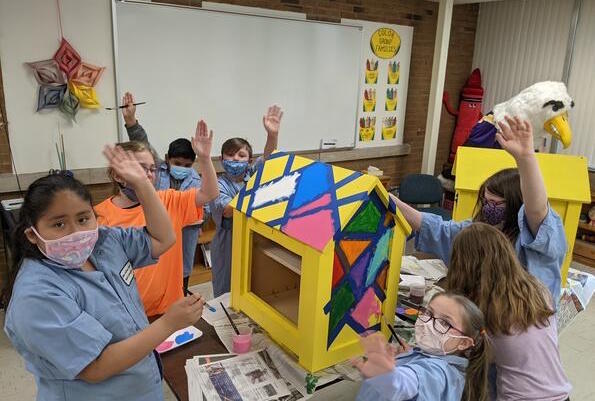
The Little Free Libraries were created from recycled materials by Mr. Syck’s high school woodworking class. Syck, Jones, and Vanacore planned what the libraries would look like and what they would need, sourcing the materials from leftover pieces of other projects. Third-graders then painted the libraries and helped to fill them with donations from the community and the school.
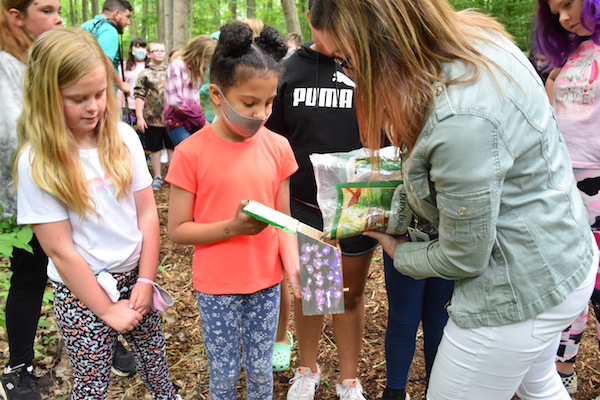
One of the libraries will be outside the Elementary School by the second grade door, one outside the school’s East Gym, and one on the nature trail.
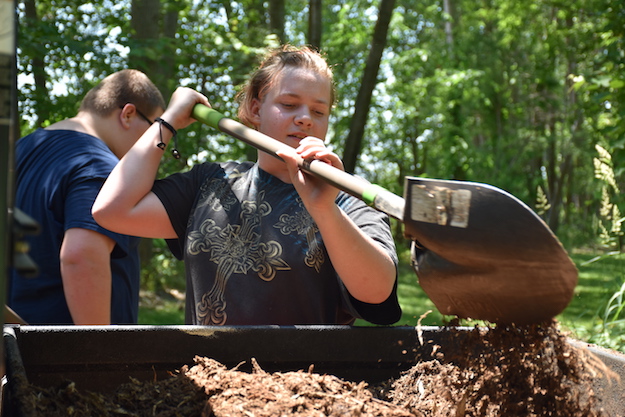
A student in Mr. Kyle Syck’s class works on the nature trail.
The nature trail is currently being maintained as part of a second service-learning project by Mr. Syck, Mr. Johns, Elementary School Assistant Principal Kevin Beaumont, and some high school students. This is phase one of a progressive project which will take years to complete. The students and staff have worked on widening the trail, putting down wood chips, and have removed trees, rocks and other debris from the trail.
According to Mr. Syck, in addition to the community using the trail, the Purple Eagle Cross Country team uses the trail for practice and mentioned that they would sometimes trip due to it being uneven and tripping hazards for the runners. Seeking a solution, Mr. Syck and his students reached out to potential donors for truckloads of wood chips. While they waited for the donations, Albion FFA donated bales of hay to put down before the chips. Moving forward, Mr. Syck says he and Mr. Johns plan to add identification signs for some of the trees lining the trail.
These students and teacher Amanda Flagler created birdhouses for the nature trail.
In addition to a Little Free Library being placed along the nature trail, Mrs. Flagler’s fourth-graders have hung bird feeders along a mile of the circuit. The students researched local birds that frequent the woods and worked on painting and decorating the birdhouses. Mrs. LeBaron’s class joined Mrs. Flagler’s students as they placed the houses and helped to identify any birds they saw along the way.
Every year, the district asks our new teachers to complete a service-learning project before they are able to get approved for tenure. All of these projects are sponsored and coordinated by Albion Central School District’s Service-Learning program.
These students work on the Little Free Library project.
By Ginny Kropf, correspondent Posted 29 June 2021 at 10:15 am
Photos by Ginny Kropf: John Woodams stands among his rows of hops bines, which will be ready to harvest in September.
KENDALL – John and Kim Woodams are not only one of the most unusual business owners to graduate from the Microenterprise Assistance Program, but they are one of the few in the area to operate a hops farm.
John Woodams of Kendall, who works full time as a spindle grinder for Gleason Works in Rochester, started raising hops on the family farm five years ago. The farm was started by his grandfather, who bought it during the Depression for $100. The transaction was completed on the courthouse steps in Albion, John said.
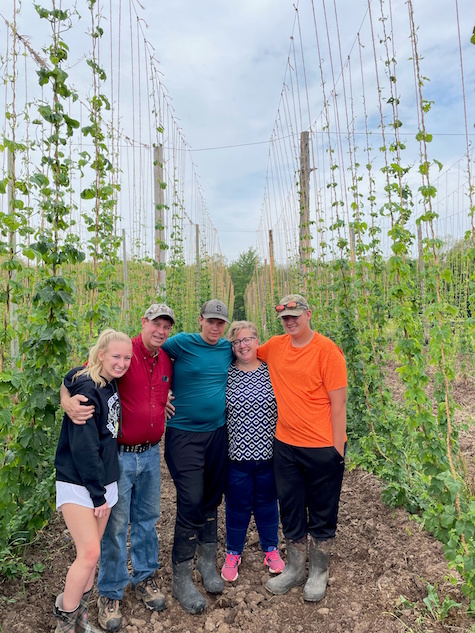
Photo courtesy of the Woodams family: The Woodams family from Kendall is shown in their hops field. From left is Elizabeth, John, Eric, Kim and Ethan.
The farm was then handed down to his father, Richard, who started growing Christmas trees in 1987. John took it over and kept the Christmas tree business, but decided to add hops when he heard about them, quite by accident.
One year a customer who came to get a Christmas tree mentioned that his brother was a taster for Coors beer, and the conversation turned to raising hops. Hops used to be a big crop in the area during the 1800s and early 1900s, John said. But they got a disease, and there weren’t the chemicals then to treat them, so the hops all died out.
Woodams explained hops is the base for beer – a bittering agent which is added to malt to offset its sweetness.
There are different varieties and tastes of hops, Woodams said. He talked to a supplier in Michigan, who helped get him started raising hops. With help from his wife Kim, sons Ethan and Eric and daughter Elizabeth, the family planted 10 acres of hops, or 5,000 “bines” as they are called. Each one had to be tied on a 21-foot string. The strings are then tied onto a trellis which stretches across the entire 10 acres.
Raising hops is very labor intensive, John said. Besides planting each bine individually and then tying it to the string, they have to be sprayed and the ground treated to maintain its rich soil.
“There a lot of manual labor,” Kim said. “In the spring, we have to ‘train’ the bines to climb the string, or ‘coir’ as it is called.”
Besides helping in the field, driving tractor and twisting the vines, Kim is bookkeeper for their operation.
Hops produce a green pine cone, which is picked off the bines by a harvester, usually in September. Each bine is fed into the harvester, which strips off the cones. The cones go into apple crates and are put in a storage barn where dryers dry them down by 90 percent to 10 percent.
The bines produce a small harvest the first and second years, John said. It is generally not until the fourth year they produce a full harvest. He said each plant grows 20 pounds of hops.
John said he heard about the Microenterprise Assistance Program from Jim Whipple, who is now retired as chief executive officer of the Orleans Economic Development Agency.
“I was looking to put a business plan together and he suggested we talk to Diane Blanchard,” John said. “The class provided a lot of information on how to set up a business plan, project cash flow and determine profit and loss.”
He also praised Jon Costello, who is a mentor to the Microenterprise classes.
“He was a real asset to us,” John said.
Rows of hops are tied on string which is strung from 21-foot wires in their hops field.
By Tom Rivers, Editor Posted 29 June 2021 at 9:06 am
Photo by Tom Rivers: These boats are tied up for the evening last night in Medina at the Canal Basin.
There is another heat advisory today for Orleans County, two days after there was one. Today the advisory is in effect from noon to 8 p.m. with the heat index values in the mid to upper 90s.
The advisory also includes Niagara, Monroe, Wayne, northern Cayuga, Oswego, Genesee, Livingston and Ontario counties. The advisory has been expanded to include Erie and Chautauqua counties.
The National Weather Service in Buffalo encourages people to drink plenty of fluids, stay in an air-conditioned room, stay out of the sun, and check up on relatives and neighbors.
Today’s high temperature is forecast to reach 89 degrees.
“Take extra precautions if you work or spend time outside,” the Weather Service said. “When possible reschedule strenuous activities to early morning or evening. Know the signs and symptoms of heat exhaustion and heat stroke. Wear lightweight and loose fitting clothing when possible. To reduce risk during outdoor work, the Occupational Safety and Health Administration recommends scheduling frequent rest breaks in shaded or air conditioned environments.”
After today’s partly sunny with a high of 89 degrees, the forecast then includes a high near 82 on Wednesday with a chance of showers and thunderstorms, and a mostly cloudy Thursday with a high near 76.
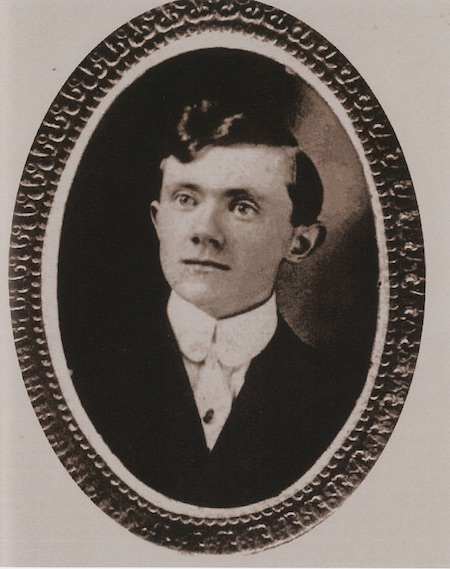
J. Howard Pratt c. 1910 – Courtesy Orleans County Historian
By Doug Farley, Cobblestone Museum Director
Vol. 2 No. 25
GAINES – This is the second article about historian J. Howard Pratt. Mr. Pratt was born on August 15, 1889. In 1980, at the age of 91, Howard sat for an audio recording session conducted by Orleans County Historical Association in 1980.
The following reminiscences have been transcribed from that session. The full audio and text file is available online.
Sickness, Quarantine and Vaccination
(As told by J. Howard Pratt – August 6, 1980.)
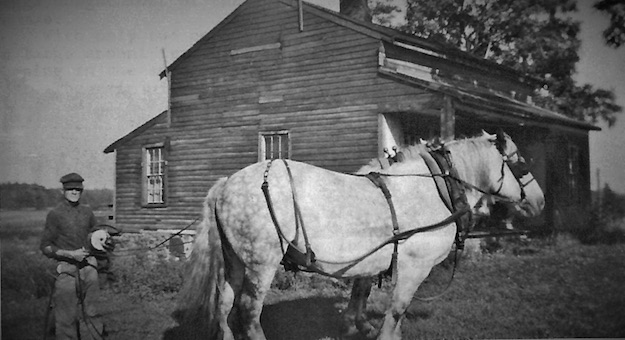
J. Howard Pratt at his family farm with his team of Percheron horses, c. 1920
Well the home today is much different and much is missing in the modern home compared to what it used to be when I was a boy. This old house was probably placed here and added to about 1845 and it’s been the home of the Pratt family, with my grandfather living and dying here, my uncle living here and I’ve been living here for 85 years; so it’s an old family home. The home is much different than today in the things that transpired within the home, too.
In the case of sickness, we had no great buildings and great hospitals to go to. The home was the hospital. It was the place where you lived and died. When you became sick, some of the family drove a horse to Gaines to get Doctor Eaman, or to Knowlesville to get a doctor from there, or from Eagle Harbor, or Waterport. All little towns had doctors in those olden days.
I’m going to take a typical case when I was sick because I remember going through all of these things: a sick boy, not too old. They sent for the doctor at Gaines, Dr. Eaman. He came and looked me all over and said, “I think Howard has got the Diphtheria.” Of course that alarmed my folks a great deal. My sister had gone to school so the doctor put a sign on the house: KEEP OUT – DIPHTHERIA. You were under quarantine and my sister could not come back from school to enter here.
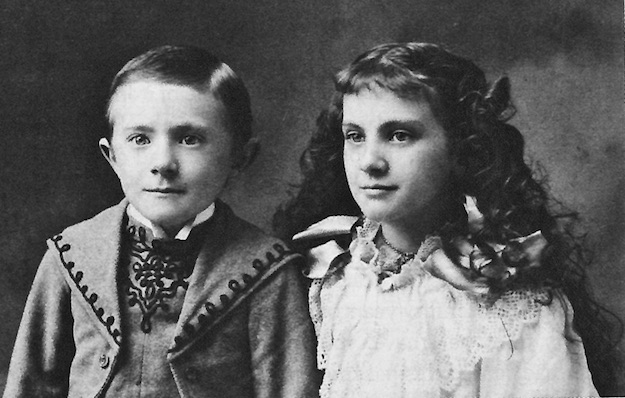
Howard Pratt age 4 and sister Florence age 9
My parents arranged with a neighbor east of us, Mrs. Warn. She agreed to care for Florence, my sister, until I was better or died. When Florence came home that evening, she couldn’t get into our house. She had to go to Mrs. Warn’s, and there she stayed over a month. Dr. Eaman was an old doctor at that time.
I can remember Dr. Earmon because he’d been here to our home several times before for different sickness. I remember he had a lot of medicine in his case. He’d give me a half a glass of water. He opened up his satchel and he took out a white powder. “Now I want a spoon,” and he put a spoonful of that white powder into the glass and stirred it up with the spoon and said, “He’s to take a teaspoon full of this every four hours.” That was my start on medicine.
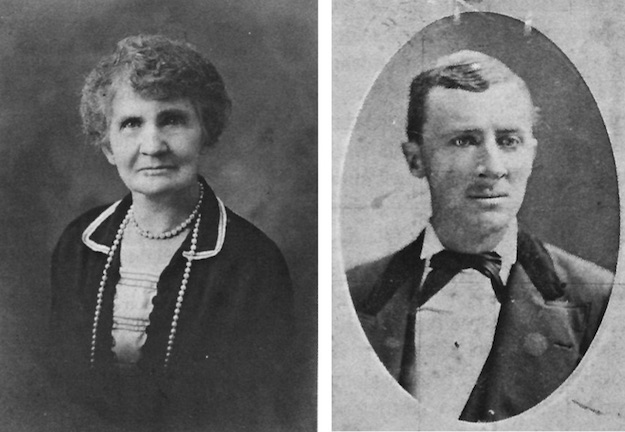
(Left) Mary Britt Pratt (J. Howard Pratt’s mother) and (Right) John Henry Pratt, father.
My folks were very alarmed over my sickness because the little girl across the road, near my age, had died within three months with Diphtheria. This alarmed my parents very much. So they hired a Practical Nurse. She was my father’s niece, Sarah Stevens who had gone from house to house; a Practical Nurse, not a Registered Nurse.
She learned it the hard way. She came and was here all the while that I was sick. She lived here and I remember one of the things she did, under the direction of the doctor: she took a newspaper, rolled it up and made a sort of a little horn. Then she put a teaspoon and a half of dry sulfur in the horn. She would hold her breath and say, “Now open your mouth.”
I would open my mouth and she would blow sulfur down my throat as I held my breath. I was not so sick that I didn’t know about what was going on. I’ll tell you, they tended to me night and day!
Someone stayed up all night. If you did not have a nurse, some of the neighbors would come in and do the night-trick, or part of the night-trick. Now after a while, I got along so they said that I was a little better and I commenced to gain and come back and I could eat more things. The doctor would come every day for a while, and then he came every other day, and at the last he would come every three or four days.
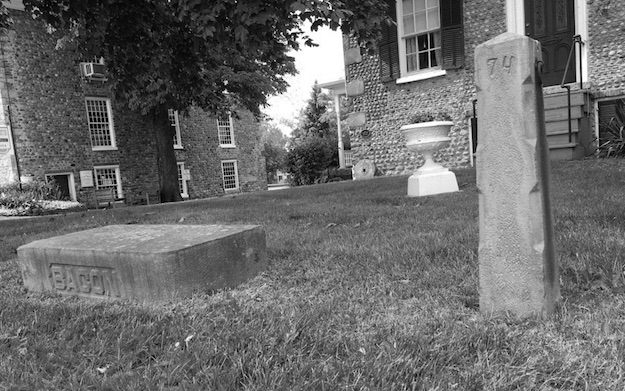
Hitching post at Cobblestone Museum
The doctor didn’t have a car. First, you drove the horse down to Gaines to call the doctor who went out and harnessed his horse. He would drive back and would tie his horse to the hitching post, and come in. I can remember several doctors tying their horses to that same hitching post. The doctor would charge two to three dollars; they were not very expensive.
After he’d been here once, if there was anybody else sick near here, he would make a circuit up this way and might go to two or three homes after leaving Gaines and traveling to the west. Then he would probably go through Knowlesville or Eagle Harbor, making a circuit and get back into Gaines, or he would go where-ever the next case called him. There was no telephone then. He couldn’t be re-directed from here by a telephone as he could in the later years. After a while I got better, the nurse was discharged and I got up. They took the sign off the house and Florence came home and we lived again as we had been living.
Many times there were lesser diseases: Whooping Cough, Measles, and things like that; colds and so on. In the case of lesser sickness, Mother was the nurse. She was the nurse for the household. She’d had lots of experience with the sickness. At that time they didn’t have as much medicine as today. The medicine you had in the home was Quinine, whiskey, hot water, and hot water bottles, Skunk’s Oil, and Mutton Tallow, which Lanolin is derived from. So when you had a cold, Mother was always on the job with something to break that cold up. We didn’t know whether it was going to be a cold or whether it was going to be the Grippe, so if they thought you were going to be real sick, or if you had any touch of fever, they would commence to load you with Quinine.
We had Quinine in bulk, a little bit of white powder. I remember Father always used to measure it out on the small blade of his jack-knife. It was bitter and we didn’t like to take it but we took it because I’d rather have the Quinine than we would being sick. Then it was followed by things that was hot, to heat you up. The older ones and even the younger children; they would take boiling hot water, as hot as you could drink, and they would put in about a tablespoon of whiskey in a whole cup of hot water, put sugar in it and then you had to drink it. You had to be in bed, and then we had hot water bottles placed around us; mostly glass fruit jars, around us with hot water. Now the idea was to get the patient to sweat. Whenever you can sweat you will break the Grippe or cold. I remember later doctors coming and giving me pills that caused me to sweat. Sometimes your undershirt would be just wringing wet.
I remember having the flu during WWI, and I remember we had Doctor Waters at that time. (Doctor) Earmon was dead, so Dr. Waters from Knowlesville came here. Tied his horse out to the hitching post and stopped on the stoop and put a handkerchief over his nostrils. It’s the only thing he could do to prevent catching the flu. He came in and he ladled out Quinine and things like that. They did not have, at that time, the medicine that would knock out the serious fevers that they have now.
When the sickness got into Pneumonia, they didn’t have anything that would knock the Pneumonia out at that time. If you got Pneumonia, your chances was only one in two or three that you would get through. That’s what the most of them died with. That’s what got the young and the old because lots of people in the 1920s died. It (flu) wasn’t a disease of the elderly people entirely; everyone had it. I can remember that when I got it, we had a new furnace just put in.
“If you got Pneumonia, your chances was only one in two or three that you would get through. That’s what the most of them died with.”
In addition to other medicine we had Skunk Oil. That was something that you would rub on. Now, that isn’t the Essence-of-Skunk that you can remember by smelling. It had no smell at all. I’ve got some here in the house if you want to try some. But that is good to rub on your chest. Mother would always put a Mustard Plaster on the chest and almost burn you to get the fire in there. I took the Skunk Oil and poured my hand full, like that, and wet my chest, just as if it was water, and rubbed it on there; got right down on my hands and knees and let the heat from the register drive it in, and when that was dry, I’d oil my chest and let it dry in; then I went to bed.
I took all the other medicine and in the morning my fever was relieved, my chest had loosened up. That was one of the things that they did. Now we didn’t have as hard a case of this old Grippe as they do now-a-days. Sometimes it was almost impossible to knock it out. But now of course they have good medicine and they will dope you with pills, even in your blood, if they want to catch you quick enough. Many of the diseases have been headed off by the doctors and their medicine.
In those days we had no vaccination for Diphtheria, not even for Smallpox. I was not vaccinated for Smallpox until I commenced teaching in 1911, and then you had to be vaccinated! And I had to keep that up when I was teaching in different places – being vaccinated every seven years. One time I was so sick with the vaccination that I had to get a substitute teacher.
Death and Funeral in the Home
(As told by J. Howard Pratt – August 6, 1980.)
All of the sicknesses didn’t come out as well as I did and oft times there were deaths in the houses. My Grandfather lived and died in this house and his funeral was here and he was buried from this house. Then, my Uncle Will lived here and he died here. Then when my father lived here, one of the maids, or the girl that worked for Mother, died here with Appendicitis. They didn’t call it Appendicitis, they called it ‘stoppage of the bowels.” Her life could have been saved if they knew what they do now about medicine and had hospitals and medicine to take care of her. Nothing seemed to help her that they gave her. They didn’t have anything that was worth anything anyway at that time.
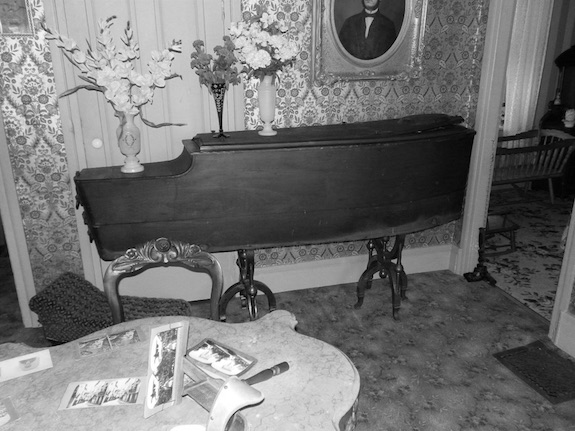
Body Cooler in Victorian Parlor at Cobblestone Museum Ward House. Used in pre-Civil War era, prior to today’s embalming process, to chill the deceased’s body during home visitation.
So, we had many deaths. My wife’s mother died in this house. My wife died here, some eight years ago. The body of the dead was not taken from the home. The Undertaker came here and laid them out in their good clothes. You would go to McNall’s, or whoever you were going to at that time, to select your casket. The family would look them over and order the casket. The undertaker would come here and bring the casket and put the body into the casket. The casket was placed usually in the parlor, in this room here to my right. (NOTE: Mr. Pratt is sitting in his dining room).
They didn’t embalm them as they do now, but they did just a little. Of course the crepe was on the door and there was a time of mourning for the people and many people would come here and call. Usually the third day was the day of the funeral. The Undertakers would come here with a vehicle; it wasn’t a wagon but it was a big cart and they brought lots of chairs, probably 50 extra chairs. They would set them up in your home. If you had lots of room they would fill two rooms with chairs and so when the crowd came, because there usually was a crowd to country funerals, there would be seats for all. But in small houses, I’ve seen the two main rooms of the house filled up and men standing outdoors listening, especially in Mrs. Neal’s which I will mention later.
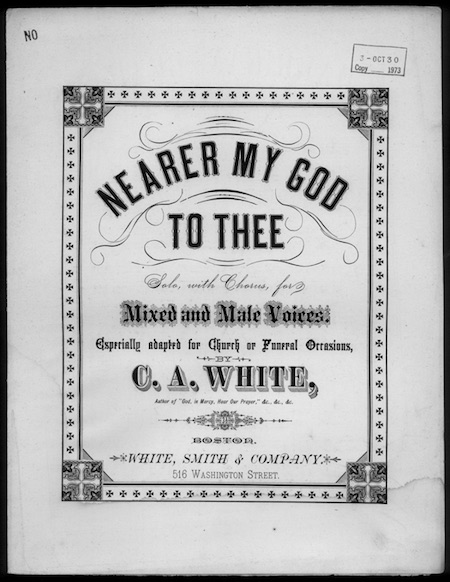
Well, the cost for the funeral was not over a quarter to what it is now. The minister came; you hired the minister that you were with from whatever church you believed in. He preached a sermon. Sometimes in the olden days they used to have singing. My father was a pretty good singer and he and Mrs. Stanley would sing at funerals and usually one song, probably three verses to the song. “Nearer My God to Thee” was one of the favorites.
The minister gave the prayers and readings from the Bible. The funerals were quite an event. The neighborhood stopped work and they all went to the home; even the men would stop work and go there. Some of them would be dressed up and some of them would be in their working clothes. But there was honor that they should go to a funeral, especially with the neighbors. The neighbors were much closer than they are today, and so they all gathered there.
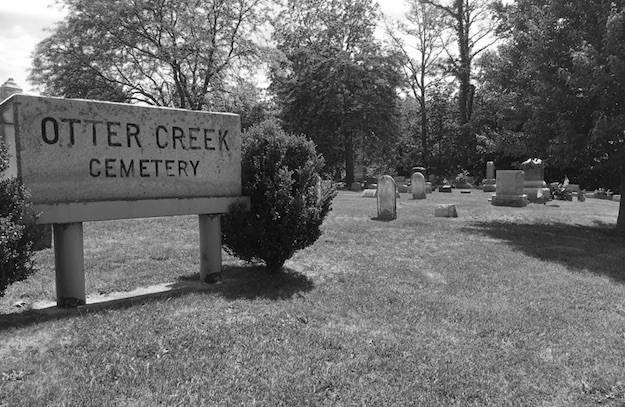
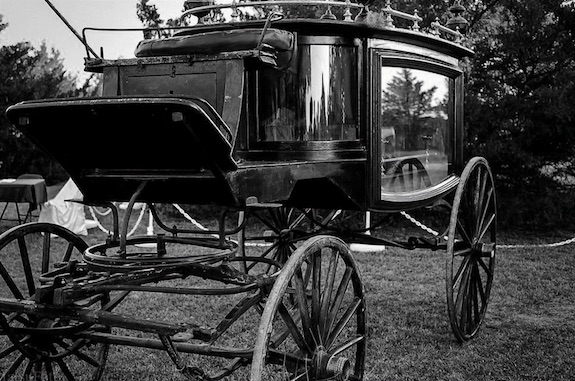
Now, I want to take up the funeral of Mrs. Neal. She lived down just east of the burying ground, the Otter Creek Burying Ground, about two-tenths of a mile. You go down there and I think Hollenbeck lives there now. Mrs. Neal lived there and I remember going to that funeral because I was quite a young man at that time and the men – there were so many at the funeral that we couldn’t all go in; the men and myself stayed outside. The door was open, it was in the summertime, and we could hear a little bit of the sermon but not too much of it. But of course we knew when they got through. And then, when the funeral was ended, the hearse, which was a horse-drawn vehicle, usually with black horses, there was glass on three sides of the hearse, the back was glass, and the casket was put in the hearse.
Usually there was four pall-bearers, or six if it was a large, heavy person; but that was the usual number, and they were put into the hearse and then they would drive ahead. The minister would go first and then the hearse, and then they would stop a little bit and then the very close relatives would get into a buggy (wagon) or carriage, and they would pull up next to the hearse.
The husband or the wife, whichever one was living, and their children, and then the next nearest relatives, and then the farther relatives from there until the friends ended up the funeral procession. But they would wait until they all were loaded by stopping in the road. It’s two-tenths of a mile from where she lived, over to the burying ground and I remember distinctly that the head of the procession got over there and they were just loading up the last of the friends, showing that the procession was two-tenths of a mile long. That shows how many people went to one of these old country funerals. We thought it was necessary; we thought it was an honor to the dead and we always attended. If they were within a mile or two miles everybody went.
The neighbors would send in food during this time. Usually right after the death for a day or two, and the day of the funeral, the food was sent in. This is one of the things that we still remember about friends in the country. The family used to wear black and all the relatives wore black. If they had black dresses, they would always wear the black dresses. That was the sign of mourning. The other people wore dark clothes if they had them.
Veterans will lead opening ceremony, indoor seating will be available for chicken barbecue
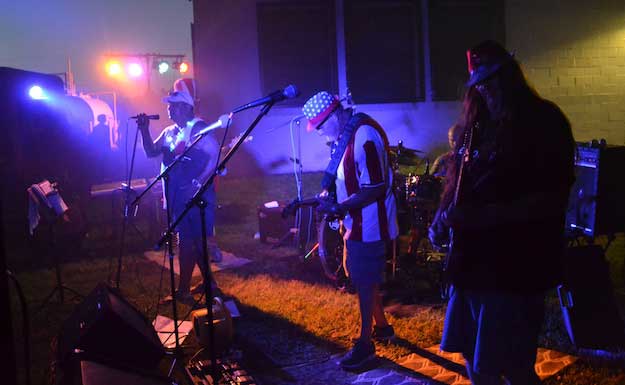
File photo by Tom Rivers: The Who Dats, shown performing on July 4, 2019, will be back this Sunday outside the school, playing for the crowd before the fireworks.
Press Release, Lyndonville Lions Club
LYNDONVILLE – With the further lifting of Covid-related restrictions, the Lyndonville Lions Club wishes to inform everyone of the final updates for this year’s 4th of July festivities in Lyndonville.
While there will be no Main Street Parade for this year, the Houseman-Tanner American Legion Color Guard will perform an opening ceremony on the front lawn at Lyndonville Central School beginning at 11 a.m. The annual Arts and Crafts show and the Lions hot dog fundraising tent also open at 11 a.m.
While previously announced as drive-thru/take-out only, the annual Lions chicken barbecue dinners will now be served in the Lyndonville Central Schools cafeteria where indoor seating and restrooms will also be available. Chicken dinners begin serving at 1 p.m. until sold out. Dinner tickets are still available at M&T Bank Lyndonville, Orleans Ford and Hartway Motors in Medina, at the door or from any Lions Club member. Tickets are $12 each.
Afternoon entertainment begins at noon with the Gates Keystone Club Police Pipes & Drums followed by the Mark Time Marchers at 1 p.m. and the Lyndonville Central School Jazz Band at 2pm. Various vendors will also be providing great food and refreshments all day long and into the evening and the Who Dats will be performing from 7 p.m. until the start of the evening fireworks show.
The fireworks display – the largest in the region – begins at 10 p.m. and the school grounds are now open to everyone for viewing the spectacular fireworks show. Even though the school grounds will be open, the display will still be “high shots” this year. The rain date for the fireworks is July 5th at 10 p.m. The Lyndonville Lions wish everyone a safe and fun holiday and look forward to seeing you all in Lyndonville on the Fourth!
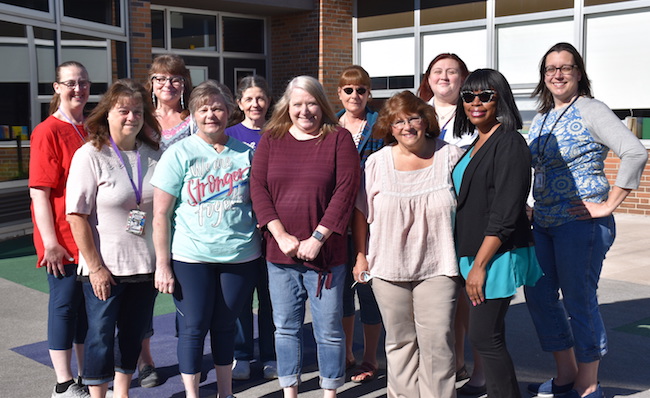
Photos courtesy of Albion Central School: Secretaries and teacher aides at the Ronald L. Sodoma Elementary School are pictured recently. The district named the aides and secretaries the “Educators of the Year” for all of their extra effort during the Covid-19 pandemic.
Press Release, Albion Central School
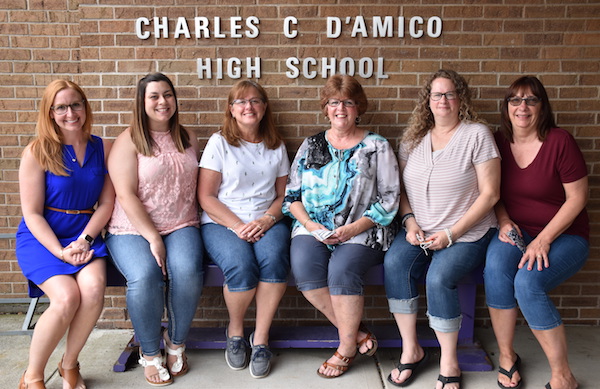
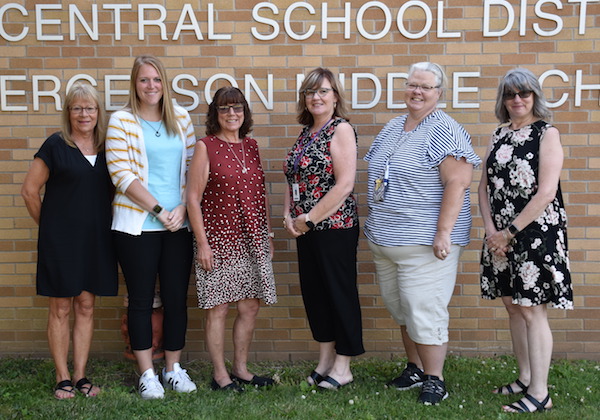
ALBION – Albion Central Schools is pleased to announce the Educator of the Year Award has been presented to secretaries and teacher aides throughout the district.
To say this year has been challenging would be an understatement. For many, the ongoing pandemic brought with it a lot of anxiety, the fear of the unknown, and uncertainty for our students, their families and our staff.
While many schools across the nation closed, Albion was able to remain open. Our aides and secretaries stepped up, without hesitation, time and time again. Every day they have gone above and beyond to provide a sense of normalcy in abnormal circumstances, creating a safe and positive learning environment for our students and staff while balancing their regular duties, ensuring that the district continues to run smoothly.
At the end of the day, when we think of our Albion value statements and what they represent, we think of these incredible individuals.
Our 2020-2021 Educators of the Year are Stacey Andrews, Dawn Brower, Christine Capstick, Amy Castricone, Rachel Coolbaugh, Cassandra Dash, Karen Dibley, Sue Dick, Beth Dunn, Kristin Ferris, Elisha Hill, Cindy Ishmael, Deborah Jones, Linda Lewis, Renee Liberti, Nancy Lowery, Laura Marek, Sarah McCormick, Sue Ann McGaffick, Katie McGaffick, Terri Monacelli, Nancy Moore, Tammy Neal, Julie Norman, Pam Sargent, Laura Simboli, Christina Snook, Diane Stirk, Jessica Tracy, Lisa Tucker, Sue Webster, Sarah Williams, Tosha Williams, and Betsy Wolcott.
Thank you all for your dedication to our students, staff and community.
This group includes secretaries and teacher aides at the Charles D’Amico High School.
This photo shows secretaries and teacher aides at the Carl I. Bergerson Middle School in Albion.
All 3 vaccines available at clinics in Albion, Batavia
Press Release, Genesee and Orleans County Health Departments
This week, Genesee and Orleans County Health Departments (GO Health) are hosting Covid-19 vaccination clinics at their respective health departments.
For the first time, each clinic will offer all three vaccines, Pfizer, Moderna and Johnson & Johnson (J&J). The Pfizer vaccine is available for anyone 12 years of age and older and the J&J and Moderna vaccine is available for anyone 18 years of age and older. J&J is one dose and Moderna and Pfizer are two doses.
• Genesee County will hold its vaccination clinic on Wednesday, June 30, from 1:30p.m. to 3:30 p.m. at 3837 West Main Street Rd. in Batavia.
• Orleans County will hold its clinic on Thursday, July 1, from 1:30 p.m. to 3:30 p.m. at the County Office Building, 14016 State Route 31, Suite 101.
Both clinics are available for walk-ins and registration. If you are interested in making an appointment, visit the GO Health website by clicking here.
“We want to continue to provide opportunities for our residents to get vaccinated as we try to increase vaccination rates for each county,” stated Paul Pettit, Public Health Director for the two counties. “According to the Finger Lakes Vaccine Hub, Orleans County is currently at 51.2% and Genesee County is at 55.6% of population (12+) with at least one dose. Our goal is to vaccinate as many residents as possible.”
If you are a business/church/organization that is interested in hosting a vaccination clinic, please fill out the survey (click here) and one of our staff members will be in contact with you.
Rapid Testing: For those who are seeking testing, both health departments provide free rapid testing for those without symptoms at the respective Health Departments.
For Genesee County, a rapid test drive-through clinic is scheduled for June 30th from 10 a.m. to 10:30 a.m. at County Building #2, 3837 West Main St. Road, Batavia. Registration is required. To register for testing at the Genesee Test Clinic, click here.
For Orleans County, a rapid test clinic is scheduled for July 1st from 10 a.m. to 10:30 a.m. at the Orleans County Health Department at 14016 Rt. 31 West, Albion. Registration is required. To register for the Orleans Test Clinic, click here.
For Covid-19 inquiries, those that do not have internet, vaccine/testing registration assistance and questions related to testing and vaccines, please call (585) 344-2580 ext.5559 for Genesee County and (585) 589-2762 for Orleans County.
By Ginny Kropf, correspondent Posted 28 June 2021 at 12:32 pm
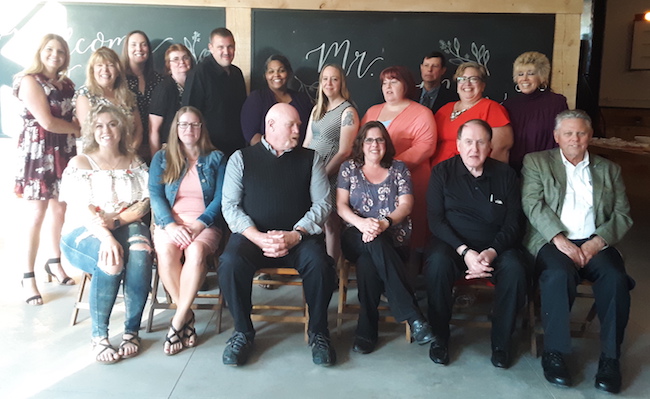
ALBION – This spring’s Microenterprise Assistance class graduated some of the most unique budding entrepreneurs since the program began.
The class of 13 brings the number of total graduates to 537, said MAP coordinator Diane Blanchard.
“It never ceases to amaze me the ideas they come up for new businesses,” Blanchard said.
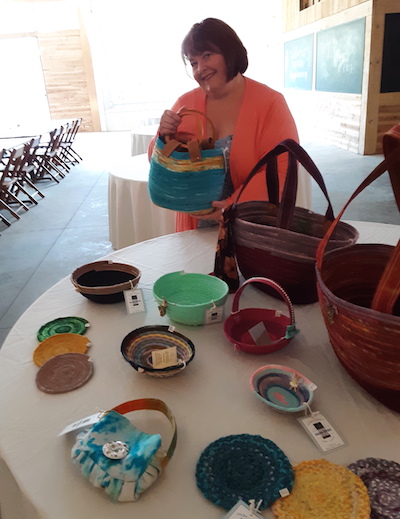
Laura Kemler, who completed the Microenterprise Assistance Program for the second time, displays some of hand-crafted items she sells in her Albion store.
One success story is that of Michelle and Rick Gallo who took the class several years ago, and in their second year in business of used auto parts and towing, they surpassed the million dollar mark. Michelle has returned twice to talk to a graduating class about how the MAP helped them succeed.
Another speaker was Laura Kemler, who started Laura Loxley Vintage Inspired store on Main Street in Albion.
“We set our sights big,” Kemler said to the June graduating class. “We started in the bedroom of our house and have seen substantial growth year after year.”
Laura took the class this spring for the second time, hoping to absorb the information she didn’t get the first time, she said. Laura trained at the Art Institute of Pittsburgh and has 33 years of sewing experience. Among her crafts is twisting rope and then shaping it into purses, baskets, place mats and other gift items. Her husband Kevin is involved in the business, doing the financial reports and updating her packaging.
Other graduates and their businesses are Sarah Ebbs, Pretty Sweet Bakery; Ayesha Kreutz, online horse tack sales; Jill Newman, Newhouse Breads Bakery; Adam and Amanda Petrie, electrostatic sanitizing and powerwashing; Nickie Poler Girardo, traveling mixologist, doing business as Last Call Cocktail Company; Tiffany Smith, 365 Fitness; Andrea Walton, who hopes to repurpose her parents’ farm in Medina as an entertainment center; Marjorie Steffen, Studio 11 Hair Salon; John Woodams, hops farm; and Kara Pitcher, bakery.
Sarah Ebbs took the spring class, although she has run Pretty Sweet Bakery at 117 North Liberty Street with her mother since 2019.
“We are known for mom’s sweet rolls and my sugar cookies,” Ebbs said.
She hopes taking the class will help her in her quest to borrow $15,000 for new equipment.
“Business kicked off big last year, even with Covid,” Ebbs said. “We offer everything from personalized cakes for birthdays, showers and weddings and we do cookie trays for all occasions, including cutouts, cinnamon rolls and scones, and so much more.”
Ayesha Kreutz decided on a business selling horse tack because she loves horses.
“I grew up around horses and was on a horse before I could walk,” she said. “I put myself through college training horses and teaching people how to ride.”
She sells tack, saddles and bits new, used and on consignment.
Jill Newman’s Newhouse Breads Bakery caters to the vegan market, offering options for healthier foods. She sells her goods at the Medina Farmer’s Market and Lynoaken Farms.
Tiffany Smith shared her plans for a fitness business, called 365 Fitness.
Marjorie Steffen has operated Studio 11 Hair Salon at 11 East Bank St. for 22 years. She has been a hairdresser for 30 years and hopes the Microenterprise program can help her update her equipment. She runs an all-around salon for all ages, offering tanning, waxing and nails.
One other participant in the Microenterprise program was Kerri Glover, who took the course online. She and her husband Cole run Maison Albion, (formerly the Pillars), a wedding and events venue on County House Road, Albion.
Food for the Microenterprise class was provided by yet another graduate of the program, Rebecca Alexander, who runs Dubby’s Wood Fired Pizza and food truck. She graduated from the June 2019 class.
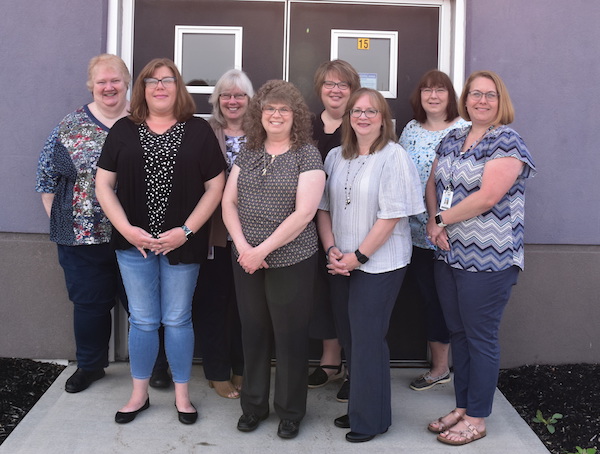
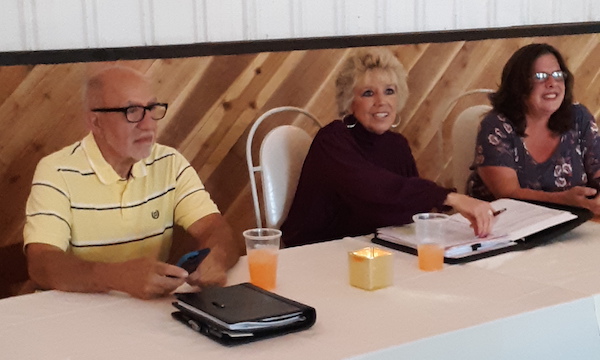
Seated at the head table during the Microenterprise graduation are, from left, retired mentor Sam Campanella; MAP coordinator Diane Blanchard; and instructor Dorothy Daniels.
By Tom Rivers, Editor Posted 28 June 2021 at 10:11 am
Joe Sidonio
MURRAY – Joe Sidonio has won the Republican primary for Murray town supervisor.
The final count this morning, which included 46 absentees ballots, gives Sidonio and 11-vote victory over Randy Bower, a retired Orleans County sheriff who is currently a Murray town councilman.
There were 513 in-person votes through nine days of early voting and on the June 22 primary. Sidonio had a 13-vote lead, 263 to 250.
But Bower still had a chance to win with 46 absentees ballot turned in. Bower received 24 votes through the absentees, compared to 22 for Sidonio.
That means Sidonio, the current town supervisor, will be on the November ballot with the Republican line. He also is endorsed by the Conservative Party.
Bower last November was elected to a three-year term as Murray town councilman. He will remain on the five-person board.
The final unofficial results from the other five towns with primaries – in-person and absentee votes – include:
Barre Town Councilman (2 positions)
• George McKenna, 162 in-person votes and 6 absentees for 168 total
• David Waters, 163 in-person and 4 absentees for 167 total
Tom McCabe, 146 in-person and 7 absentees for 153 total
Lynn Hill, 145 in-person and 8 absentee for 153 total
Carlton Town Clerk
• Karen Narburgh, 101 in-person and 14 absentee for 115 total
Dori Goetze, 66 in-person and 3 absentee for 69 total
Gaines Town Justice
• Charles Prentice Jr., 146 in-person and 16 absentees for 162 total
Henry Smith Jr., 48 in-person and 8 absentees for 56 total
Ridgeway Town Clerk
• Hannah Hill, 228 in-person and 10 absentees for 238 total votes
Laurie Kilburn, 75 in-person and 7 absentees for 82 total
E.J. Cox, 16 in-person and 2 absentees for 18 total
Ridgeway Town Councilman (2 positions)
• Cliff Barber, 249 in-person and 18 absentees for 267 total
• Jeff Toussaint, 255 in-person and 12 absentees for 267 total
David Stalker, 72 in-person and 9 absentees for 81 total
Shelby Town Councilman (2 positions)
• Stephen Seitz Sr., 172 in-person and 7 absentees for 179 total votes
• Edward Zelazny, 166 in-person and 10 absentees for 176 total
William Bacon, 143 in-person and 5 absentees for 148 total
By Ginny Kropf, correspondent Posted 28 June 2021 at 7:56 am
‘She’s a humanitarian and a mentor. She has been awesome to work with and for.’
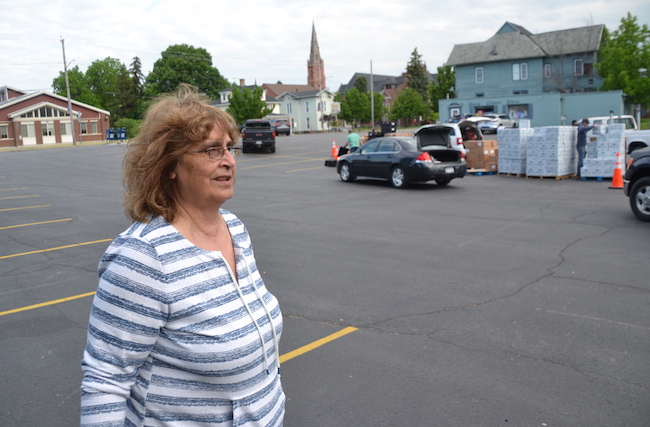
Photo by Tom Rivers: Annette Finch helps run a food distribution on June 11 in the parking lot of the Main Street Thrift Store. Finch helped organize those distributions that began in April 2020.
ALBION – After more than four decades as a dynamo for Community Action of Orleans and Genesee, Annette Finch has announced she will be scaling back and will be in semi-retirement beginning in July.
She started at Community Action 44 years ago in 1977 and has been director of Emergency Services since the late 1980s.
Finch, who will be 73 in October, has decided it’s time she slowed down, but she’s not ready to give up entirely. A team of co-workers will help pick up her slack as she cuts back.
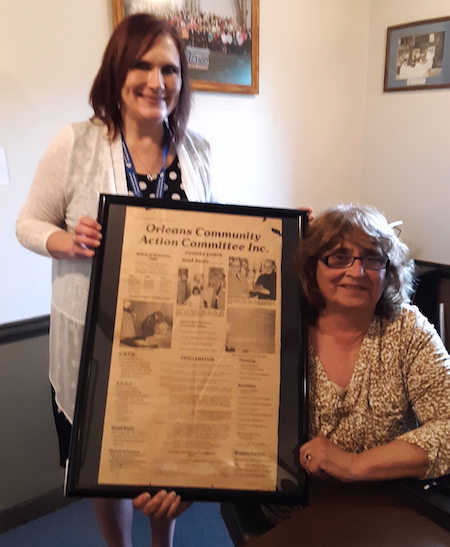
Photos by Ginny Kropf: Community Action’s director Renee Hungerford, standing, and Annette Finch, director of emergency services, hold a framed newspaper article written on the agency in its earlier years. Finch has announced she is scaling back her duties, effective in July.
Bonnie Malakie, who has worked at Head Start for 21 years, said Finch always had a real heart for people in need.
“At any time of the day or night or any day of week, Annette would stop what she was doing when someone was in need,” Malakie said. “She would advocate continuously for children, seniors and families. Our agency’s mission statement says, ‘To provide services with dignity and respect to help people become self-sufficient.’ Annette epitomizes that goal.”
Katrina Chaffee, director of operations and reporting, will pick up some of Finch’s emergency services cases.
Michelle Figueroa, case manager, first got to know Finch when she started volunteering in 2002.
“I really got to know her when I became case manager for Emergency Services,” Figueroa said. “Since then we have worked together in a lot of projects. Annette has a heart of gold. She’d do anything for anybody, including her staff.”
“What’s important to me is I have a lot of respect for my staff, and in return, they respect me,” Finch said.
Debbie Rothmund has worked in the Holley Community Center for 21 years.
“What a wonderful, caring and inspirational person Annette is,” Rothmund said. “She’s like a second mom. She’s my mentor. She taught me everything I need to know about helping people, and she’s always searching outside the box for ways to help people. She deserves to retire, but we will miss her. She is a great boss.”
Lisa Wittmeyer has been a case manager at the Batavia office for 20 years. She said Annette fits the Community Action mission to a “T”.
“She’s a humanitarian and a mentor,” Wittmeyer said. “She has been awesome to work with and for. We are going to miss her like crazy.”
Michelle George has been involved in running and growing the Main Street Store since its opening.
“Annette was the principal supporter for purchasing the building on Main Street in Albion and making it the Main Street Thrift Store,” George said. “She was proactive in every aspect of setting the store up, providing staff to get the work done to meet the deadline for opening. “Annette puts her heart and soul into the store, as she does for the many programs she directs,” George said. “She believes completely in the mission statement of Community Action. Her dedication to her job, to her staff and to the customers of Community Action is without parallel. Annette’s priorities have always been quality, compassion and helping others. She directs her programs with those qualities, and their ongoing success demonstrates her excellence in leadership.”
Heidi Wyant, transportation manager at CATS, echoed her co-workers sentiments about Finch.
“She has been a big asset to Community Action and we definitely will miss her,” Wyant said.
“If I have to give up my reins, I’m happy it will be someone like these girls,” Finch said.
Community Action’s director Renee Hungerford is confident the staff surrounding Finch will carry on in her style, with a little help from Finch along the way.
“I am excited about celebrating Annette’s accomplishments,” Hungerford said. “We are all one in this agency, and that’s the most important thing,” Hungerford said.
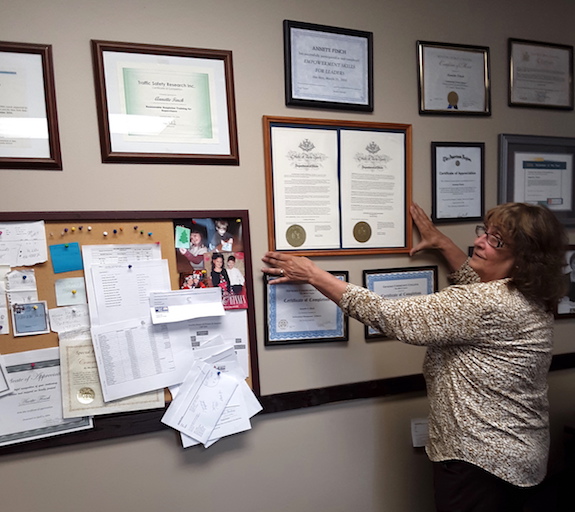
The wall in Annette Finch’s office at Community Action is lined with some of the numerous awards she has earned during her 44 years with the agency.
Albion born and raised, Finch graduated from Albion High School in 1966. She attended college to study business for a year and a half, and then went to cosmetology school for a while.
“But my real love was nursing,” she said. “Dr. Shifton wanted to put me through nursing school and I never did it.”
In the mid 1970s, she and Carri Blake started the Orleans County Office of the Aging.
In 1977, Community Action’s first director Charles Pulley asked Finch to join him as Nutrition Advocate, where she started a Traveling Nutrition Theater.
“It was a dynamite of a show,” Finch said. ”Fisher-Price gave us Muppet puppets and a stage. Volunteers worked behind the stage and we went to six area schools and talked about the four basic food groups.”
It was also during her years as a nutrition advocate that Finch started a garden project, where volunteers went to seniors’ homes, worked up a plot of ground and planted a garden for them.
“That was a good program,” Finch said.
Another program was Community Action Resource and Educational Services (CARES) where they went to isolated areas of the county, handing out food and applications for Food Stamps.
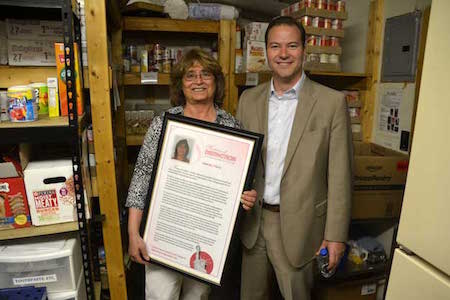
Photo by Tom Rivers: Annette Finch, director of emergency services at Community Action, is shown in the food pantry at Community Action with State Sen. Rob Ortt in June 2017 when she was honored as a “Women of Distinction” in New York, representing the 63rd Senate District that includes Orleans, Niagara and part of western Monroe counties. The award typically goes to women who own or lead businesses, high-powered political figures, college presidents and others in the limelight. Ortt said Finch, who has spent more than 40 years working with needy families, deserves the same status as the other Women of Distinction.
Finch was instrumental in starting the Clothing Depot on Bank Street in 1979. It was a small store front, Finch said, and people brought in clothing. It got bigger and bigger until they moved to Main Street.
In 1978, they were looking for something to do and Finch came up with a penny carnival across the street in the parking lot. That grew into the children’s carnival which Community Action did at Bullard Park every year until last year, Finch said.
After Loblaws closed in Albion and the building was empty, Community Action ran their first holiday program out of the store. That was in the early 1980s, and a plea was put out for toys, food and clothes.
“For the first several years, we delivered holiday baskets,” Finch said. “Now we have them come to us.”
Community Action also ran a transportation garage/repair shop on West State Street. They had a towing service, which was open to the public, but it ended after three or four years, Finch said.
Finch returned as Resource and Development director, developing fundraisers. She developed case managers and did marketing, talking to church and other groups about Community Action.
Genesee County started a Community Action in the mid 1980s and Genesee and Orleans merged.
Jim Scharping was Community Action’s director when the Holley Community Center was started.
Finch was involved with a kerosene heater program to help people who didn’t have heat.
She used to travel to Foodlink in Rochester and load up the van with English muffins, then drive around and give them to everybody.
The first program under Community Action was the CATS transportation program, which she has overseen for the last 15 years. Finch also took over Emergency Services in Orleans and Genesee counties.
While they were still located on Bank Street, Job Development’s Legal Services was under Community Action’s umbrella. In the early 1980s, the agency moved to its current location on East State Street. At that time, Sid Watts of Shelby worked under the housing program.
As an outreach worker for a time, Finch used to drive through the county, looking at homeowners’ yards. She could tell by the wash on the line and whether there were toys in the yard if kids lived there or not.
Finch recalls when they used to rent U-hauls to deliver surplus food, and volunteers from Cooperative Extension would drive all over the two counties four times a year, handing out cheese, flour, butter, corn meal and muffins.
Finch also connected with the Orleans Correctional Facility for a gardening program.
“They had all this land and they have the manpower, so I went and talked to the prison superintendent,” she said. “For about 20 years, they have been growing produce and bringing it here, and we hand it out to people.”
Hungerford, Community Action’s executive director, said Finch’s new part-time role, effective July 5, will be director of Fund Raising and Public Relations.
Finch said while she is not giving up, she was prompted to slow down a little.
“I still want to see the programs I have started keep growing, and there are still things I want to do,” she said.
Finch said she is proud of the awards she has received during the years, especially one from State Sen. Rob Ortt, when she was picked as a “Woman of Distinction” and recognized in the State Capitol.
Other prized awards were the Volunteer of the Year from the State Salvation Army and the Rosemary Fleming Memorial Award through the state of New York, given for providing administration and support services with commitment, professionalism and dedication to the mission of Community Action. She has also received citations from former State Sen. George Maziarz, Assemblyman Stephen Hawley and Lt. Gov. Kathy Hochul.
By Tom Rivers, Editor Posted 27 June 2021 at 3:31 pm
Photos courtesy of David Klafehn
KENDALL – Kendall graduates are seated in chairs on the school soccer field on Friday evening. Kendall celebrated commencement for 49 graduates in the Class of 2021 at Jurhs Field.
Normally the event is held the junior-senior high school auditorium but Covid-19 restrictions and changing guidelines from the state prompted the district to try a new venue. The soccer field has new bleachers.
Last year, when the crowd size was limited to 150 people for outdoors events, Kendall tried an outdoor ceremony at the firemen’s field. Most of the crowd was limited to staying near their vehicles. This time they were free to sit in the bleachers without masks.
Lauren Miller, one of the graduates, gave the invocation at the beginning of the program.
Willow Clark, an advanced scholar and honorary valedictorian, addressed her classmates.
Ken DeRoller, a graduate from Kendall in 1964, gave the commencement address. After a career at Kodak, DeRoller become an Orleans County legislator. He is a graduate of Leadership Orleans and an active member of the Kendall Lions Club. He urged the graduates to consider building a life in Kendall and Orleans County when they get older, and look for ways to be involved in the community.
DeRoller continued the school’s tradition of having a graduate address the class at commencement.
Carol D’Agostino, high school principal, is at left and Lisa Levett, president of the Board of Education, is at right. Julie Christensen, the district superintendent, also was on the stage. She served as master of ceremonies for the program.
Kendall class advisors Jack Kennan and Jeff Parizek released a lantern in memory of Richard J. Gilman Jr. He and his mother Joan Gilman died from carbon monoxide poisoning on April 18, 2018. Richard “RJ” would have graduated with the class this year.
Waylon Peet shares a reflection about his friend, Richard J. Gilman Jr.
The crowd watches the ceremony from the stands of the soccer stadium which recently received new bleachers as part of a capital project.
The senior chorus sang “Never Enough” from The Greatest Showman.
Ethan Kuhn gets a laugh while giving the salutatory address.
Madison Nardi decorated her cap for the commencement – “Now we breathe, We pick ourselves up, We make our family proud, and We raise our voice louder.”
Joseph Nettles, the valedictorian, gives his speech.
Class officers – Olivia Rice, Jacob Esposito, Ethan Kuhn and Joseph Nettles – lead the class in moving their tassels to symbolize their graduation.
The class gathered for a group photo before the ceremony.
Many of the graduates decorated their caps for the occasion.