









local history

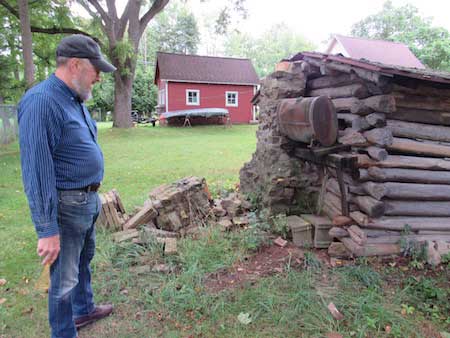
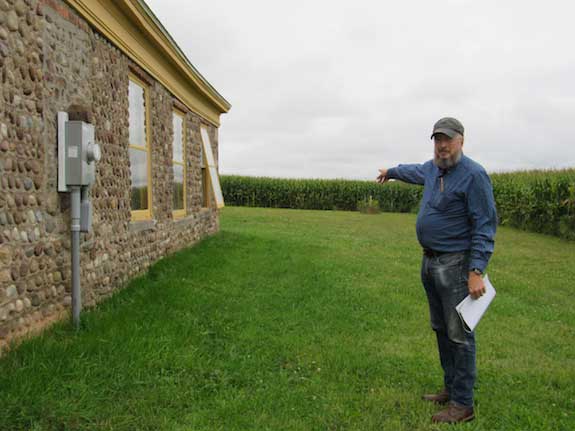
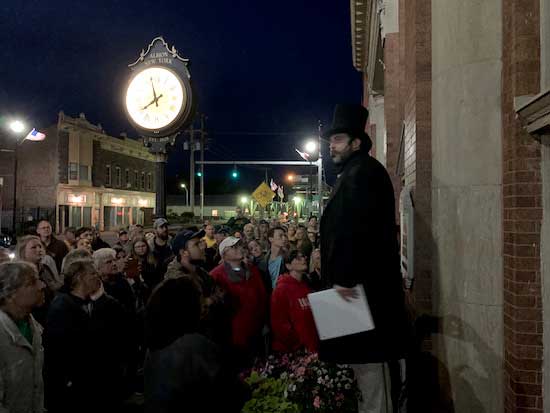
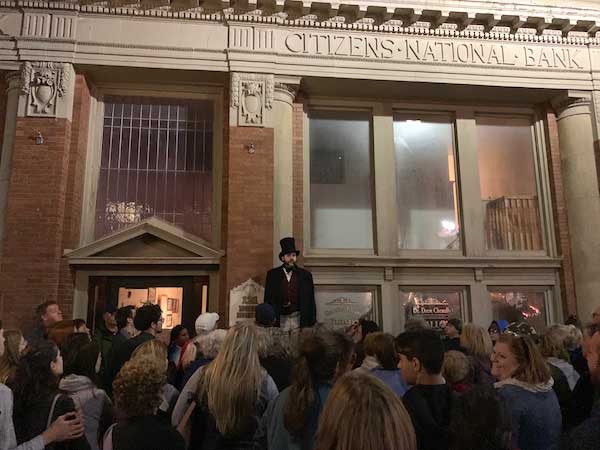
OC Heritage Fest expands to 2 weekends in September

Photos by Tom Rivers: John and Joe Dady perform by the canal in Albion with a boathouse in the background in this photo from June 2015. The brothers played bluegrass, Irish and folk music between the lift bridges on Main and Ingersoll streets. They will be in Medina on Sept. 14 as part of the Heartland Passage Tour, featuring a concert, stories and a showing of the Erie Canal Film, “Boom and Bust”.

By Tom Rivers, Editor Posted 2 July 2017 at 9:14 am

ALBION – A team of volunteers has been busy working on the second annual Orleans County Heritage Festival.

The event debuted over a weekend last September, and will be expanded to two weekends this time, running from Sept. 8-17.

“There are so many historic assets in Orleans County that it is hard to see them all in one weekend,” Derek Maxfield, a GCC history professor and festival organizer, told county legislators on Wednesday.

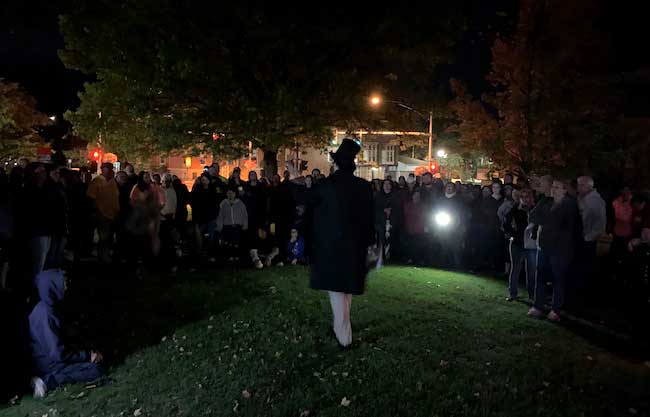
David Kreutz, an Abraham Lincoln presenter from Depew, was at last year’s debut Orleans County Heritage Festival with his “Penny Car,” which includes a vinyl wrap of Lincoln. Kreutz’s license plate reads “HNST ABE.” He has travelled 150,000 miles in his Lincoln car, attending events all over the country. Kreutz said the car functions as “a roving schoolhouse.” He is expected to be back at this year’s Heritage Festival along with a Thomas Jefferson impressionist.

The Heritage Festival starts on Sept. 8 with an opening celebration at Forrestel Farms in Medina. The historic farmstead includes the carriage step for John Ryan, who opened the first Medina Sandstone quarry in 1837, helping to establish a dominant industry in the county for a century.

The event at Forrestel at 4536 Soth Gravel Rd. includes a performance by City Fiddle, refreshments and a tour of farm.

Last year’s county-wide celebration of historically and culturally significant locations involved 29 sites including special programming at GCC’s Albion and Medina campus centers. Maxfield said about 500 people attended, and they received a collectible button and ribbon.

Another collectible button will be included in this year’s festival.

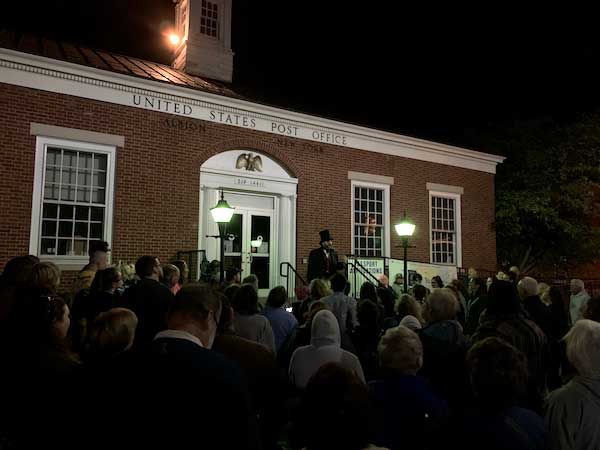
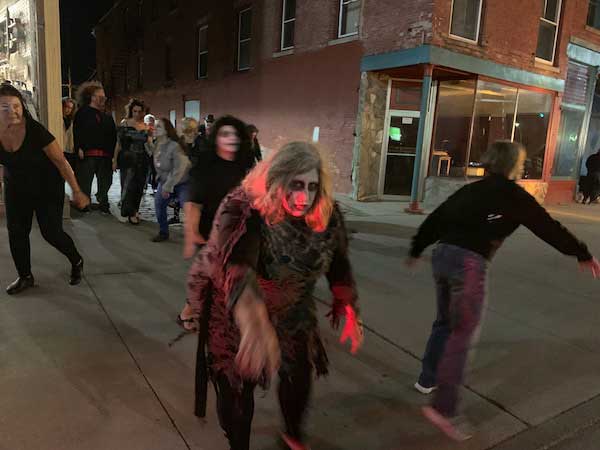
GCC’s Albion campus will host events the first weekend on “Ancestors, Legends & Lore” with will include presentations on Victorian Spiritualism.

The action shifts to the Medina campus the second weekend for a timeline festival. The timeline festival will include re-enactors, impressionists and artisans.

Local historic sites will be highlighted during the weekdays with an afternoon and evening event, Maxfield said.

Last year the debut festival highlighted historic cemeteries, farms, homes and other historic gems.

The new themes for this year include the following:

• Erie Canal – locations associated with the historic canal to celebrate the bicentennial of this extraordinary 19th century transportation system;

• Military – locations associated with the military history of Orleans County ranging from the French and Indian Wars through 20th Century Wars with special emphasis on the 100th anniversary of the U.S. entry into World War I;

• Cobblestone & Sandstone – locations associated with the substantial use of cobblestone and/or sandstone in the historic architecture;

• Legends and Lore, Spirits and Supernatural – locations associated with a history of spirits, supernatural and/or ghost activities.

Mayfield provided an update on the festival to county legislators on Wednesday. He was joined by Lynne Menz, the Orleans County Tourism coordinator.

“Hopefully we can continue it for years to come and build on it,” she said.

Other events during the festival include:

• WWII Victory Garden on Sept. 9 at Cornell Cooperative Ext./4H Fairgrounds. Join Master Gardeners for WWII Victory Garden tour and display.

• Cobblestone Museum, open both weekends with guided tours, scavenger hunts, hands-on arts & crafts, kids free.

• Medina Historical Society, open both Saturdays with unique local heritage items, WWI display.

• Daughters of the American Revolution, open both Saturdays in Albion for guided tours of Patriots House, displays of historic memorabilia.

• Hoag Library, open on Sept. 10 for display and lecture on WWI veterans who served from Orleans County.

• Hart House Hotel in Medina, open on Sept. 12 for guided Ghost Tours of Hart House Hotel and the former Newell Shirt Factory.

• Maplewood Cemetery in Clarendon, guided tours on Sept. 13.

• Hurd Orchards Luncheon & Tour on Sept. 14 – Experience Canal Boat kitchen cuisine and tour an historic canal siphon.

•  Heartland Passage Tour on Sept. 14 – Erie Canal Basin in Medina for songs and stories with The Dady Brothers, Dave Ruch, and the Erie Canal Film, “Boom and Bust”.

• WWI Era Music Concert on Sept. 15 at Lyndonville school district. Concert of WWI era music by 5th & 6th grade students of Orleans County.

• Genealogy Workshops on Sept. 9 at GCC in Albion and Sept. 16 at GCC in Medina – Search your ancestry with Orleans County Genealogical Society experts.

• Sandstone Society Hall of Fame, open on Sept. 16 at Medina City Hall. Guided tours of the Medina Sandstone Hall of Fame and visit inductees in Orleans County (self guided).

Return to top

July 4th marks bicentennial of Erie Canal construction

By Matthew Ballard, Orleans County Historian Posted 1 July 2017 at 9:00 am

“Overlooked Orleans” – Volume 3, Issue 27

The Erie Canal has a long and illustrious history spanning over two hundred years starting on July 4, 2017. As we hit the bicentennial of the construction of the Canal, I thought it would be fitting to write a series of articles about some of the more interesting Canal images within the Department of History’s collections.

I suspect that the passing of the July 4th anniversary will go without fanfare locally, but the eight years between the start of construction and official opening will provide many opportunities to celebrate the iconic waterway.

Dating back to 1699, the concept of constructing a waterway that would open the wilderness of New York to the rest of the world was first suggested by a French engineer named Sebastien Vauban. The radical idea remained in the minds of entrepreneurs and politicians throughout the 18th century, surfacing again after the establishment of the United States. It was not until the early 1800s that the idea became a reality under the governorship of DeWitt Clinton.

The canal, opening on October 25, 1825, represented a feat of engineering that only few could have ever imagined. Without the aid of steam equipment, men relied on hand tools and animal power to excavate the 40-foot-wide, 4-foot-deep ditch that spanned over 360 miles.

According to Cary Lattin, shipping rates for wheat dropped from $.25 per bushel to $5.00 per ton, earning Western New York the title of “The Break Basket of the World.” The old Niagara Frontier went on to produce much of the wheat consumed by the United States up until the start of the Civil War.

The massive drop in shipping costs resulted in the expansion of the canal system starting in 1835. Over the following decades, the waterway was widened to seventy feet and deepened to seven feet; entire sections were rebuilt, new locks constructed, aqueducts erected, and some sections rerouted. The newly expanded canal allowed for businessmen to operate larger packet boats, which in turn carried more tonnage from Lake Erie to the Hudson River.

This image was taken during the second expansion, which officially started in 1903 when the New York State Legislature introduced a plan to form the New York State Barge Canal. The photographer directed his camera westward looking towards Church Street in Medina. In the distance, you can see the Church Street Bridge that spanned the original canal; a packet boat is visible travelling eastbound towards Albion. Also visible are buildings that lined the “heel path,” or southern towpath of the canal, providing valuable goods and services to passing boats.

I find this image to be an outstanding reflection of the extensive knowledge of engineering required to complete the massive expansion in Orleans County during the 1910s. Guy derricks were constructed to raise stone and cement to the top of the large wooden frames assembled to form the enormous retaining walls seen along Medina’s towpath. The relative size of the workers gathered near the base of the retaining wall gives perspective to the size of the work being completed.

Although we see the presence of a steam locomotive to the left, used to draw raw materials to the job site, a team of horses is visible pulling a piece of equipment up the tracks to the right. The gentleman standing atop the embankment wearing a suit and hat appears to be a supervisor, observing the work of the men below. A thorough observation of the photograph reveals men standing at various points on the framework of the retaining wall and one man standing upon the wall’s concrete foundation, directing the guy derrick operator to move the scoop to the south. One of the workers appears to have caught the photographer out of the corner of his eye and stopped to watch him take the photograph.

The expansion, which was completed in Orleans County approximately between 1912 and 1918, widened the canal to 120 feet from 70 feet and deepened it from 7 feet to 12 feet.

The second photograph shows men working on a portion of the retaining wall closer to the terminal in Medina. The Church Street Bridge approach is visible to the left and the White Hotel is likely the most prominent and recognizable structure in the photograph.

Return to top

Immigrant ancestors showed incredible resilience building new lives in America

By Matthew Ballard, Orleans County Historian Posted 24 June 2017 at 12:09 pm

“Overlooked Orleans” – Volume 3, Issue 26

Dating back to the earliest years of the United States, immigration was a welcomed occurrence; the arrival of new European immigrants was believed to bring desirable traits that would strengthen American stock. Despite this early stance on a process that was of little concern to most Americans, groups surfaced with the intention of restricting or ending waves of immigration.

The emergence of the Know-Nothing Party of the 1840s and 1850s brings forth a “Gangs of New York” image to the minds of many. The exact level of activity of such groups in Orleans County is uncertain, but we do know that men such as John Hull White of Albion and Elisha Whalen of Medina were aligned with these political ideas. White, a Conservative Democrat in the years when Republicans considered themselves the “Party of Lincoln,” found it impossible to win an election in our Republican-dominated county.

An influx of Irish and German immigrants established an unfounded fear of the Catholic Church, while many of these immigrants flooded into the emerging sandstone quarries of our region, bringing with them a willingness to toil amidst dynamite and heavy stone. Shortly after came the laborers from the Norfolk region of southern England, who with pickaxe and shovel, filed into the ranks with the Irish and Germans. Minimal legislation meant no visas, no limitations, no need for connections to family already in the United States, nor guarantee of work.

The mass of immigrants from Southern and Eastern Europe starting in the 1860s and 1870s raised questions about the ongoing solvency of unrestricted immigration. With the passing of the Chinese Exclusion Act of 1882, the federal government established a solid stance on the limitation of specific immigrants, prohibiting any immigration of individuals from China. Additional laws passed over the following decades created the conditions experienced at places like Ellis Island, the conditions that so many genealogists read about.

Immigrants were no longer desirable, their genetic traits more likely to diminish the hearty stock of American citizens than strengthen. These new immigrants were viewed as unwilling to assimilate, preferring to gather in ethnic communities while retaining their cultural and religious practices. Their presence developed unfounded fears of disease, leading the federal government to limit access to those “likely to become a public charge,” polygamists, sexual deviants, anarchists, radicals, and the disabled.

Agents at ports of entry would observe immigrants for physical defects, limps, poor posture, feeble natures, weakness, and abnormal body shape, many feeling as though they could learn more about an immigrant’s physical condition from a few moments of unnoticed observation than they could through detailed medical examinations. These laws created the concept of the illegal immigrant, who concealed illness and disability, or lied about political beliefs to try their luck at a better life in a country determined to keep them out; until this point, there was no illegal immigration.

I found myself reflecting on this image of my great grandparents, taken on the day of their wedding in 1919, as I prepare to travel to their hometown of Wabcz, Kujawsko-Pomorskie in Poland. I often think of the hardships they endured. Frank Kaniecki, seated upon the table, was three years old when he arrived at Ellis Island with his parents and younger brother Paul. His mother, eight months pregnant, gave birth to a baby girl during the journey across the Atlantic, the baby dying several days later. One can imagine Frank’s father, Antoni, leading his grieving wife with two toddlers in tow through the lines of immigrants while agents observed their every move. Rose Romanski, standing with her hand on Frank’s shoulder, was only one year old when her parents brought her to America.

At the time this photograph was taken, both were celebrating their second marriage. Each lost their spouses to consumption, a condition that often ravaged the immigrant populations that labored in the quarries. Their marriage, one of necessity, ensured that the children from their previous marriages were cared for, eight in total. These families, arriving amidst the influx of new immigrants out of German-controlled Poland, found themselves fleeing ongoing pressure to destabilize the Catholic Church and suppress the Polish culture. Generally accepted within the community of Albion, Frank changed his last name from Kaniecki to Crane in the 1930s in the hopes of attracting more American customers to his grocery store in Albion’s Polonia.

As few of our ancestors would qualify for legal entry into the United States under the laws of today, we should be forever grateful that they were afforded the opportunity to start a new life in America. The resilience of our immigrant ancestors is an amazing thing.

Return to top

Pioneer Association was a large and impressive group, devoted to preserving early Orleans history

By Matthew Ballard, Orleans County Historian Posted 17 June 2017 at 8:37 am

“Overlooked Orleans” – Volume 3, Issue 25

ALBION – On June 25, 1859, the pioneer inhabitants of Orleans County converged upon Court House Square in Albion with the purpose of establishing an historic association.

The Pioneer Association, as it was known, was formulated upon a motion made by the Almanzor Hutchinson of Gaines, which set forth the permanent appointment of officers for the organization. Robert Anderson of Gaines was selected as president, vice presidents representing the nine townships were elected including Lansing Bailey of Barre, Alexander Coon of Shelby, Jeremiah Brown of Ridgeway, Gardner Gould of Carlton, Samuel Tappan of Yates, Shubael Lewis of Clarendon, Robert Clark of Kendall, Walter Fairfield of Gaines, and Aretus Pierce of Murray, as well as Asa Sanford as secretary, and Dr. Orson Nichoson as treasurer.

Residency was a requirement for membership within the Pioneer Association; only those who resided in Western New York prior to January 1, 1826, were eligible for admittance. In 1862, those who descended from pioneers were eligible to join as junior members per an amendment to the constitution. Members signed a roll and paid an initiation fee of fifty cents, therefore agreeing to pay twenty-five cents each year after. The most interesting article within the organization’s constitution was Article VI which read, “The association, by a vote of two-thirds present at a regular meeting may expel any member for habitual intemperance or grossly immoral conduct.” It appears that during the first several years of the organization’s existence, over 275 members were enrolled, consisting of the county’s earliest settlers who broke the virgin wilderness to establish themselves in this new region.

This photograph shows the membership of the Orleans County Pioneer Association on June 19, 1869 standing on North Main Street in Albion. The building that reads “Nichoson & Paine” was a drug store that was operated by Drs. Orson Nichoson and Lemuel C. Paine; the building is currently occupied by Snell Realty. The photo was taken as part of the eleventh annual meeting of the association, called to order by the president, Lyman Bates. The Rev. Mr. Elias Bacon opened the meeting with a prayer and the constitution was recited by Bates.

At an early point in the meeting, George P. Hopkins, a local photographer, invited the group to have this photograph taken in front of his studio on Main Street. The meeting was adjourned until 1:30 p.m. and Col. N. E. Darrow led the group, accompanied by a “martial band” under the direction of Israel Shipman. After the photograph was taken, the group proceeded to the Harrington House where they enjoyed a large dinner, eventually returning to the court house for an afternoon session.

I was visited recently by Tom Taber who was seeking out an original of this particular photograph. He pointed out that this image is one of two distinctly different snapshots of the Pioneer Association, likely taken within moments of one another. As if the juxtaposed photographs were part of a “Spot the Difference” puzzle, one could make out minor adjustments to the posture and locations of various individuals in the photograph.

This visit along with a recent chat with Dale Blissett during my Memorial Day tour of Mt. Albion Cemetery spurred me to take a closer look at this impressive image. In a photograph this size, it is difficult to point out particular men or women, but we do see the familiar faces of Elias Bacon, Robert Anderson, Lyman Bates, Nicholas Darrow, Orson Nichoson, and Seymour Murdock, just to name a few. One individual, hidden within the mass of people, is David Farnham of Ridgeway, who led the choir of veteran pioneer singers at the conclusion of the meeting.

If we observe closely, we catch a glimpse of a young lad waiving his hat, as if to be noticed by the photographer. In the middle of the photograph, a man has extended his derby upon a cane, and another man in the rear holds onto a step ladder, as if he stopped to sneak into the crowd.

What this photograph does not show is that a crowd had gathered to observe this special occasion, the mass of people located along the west side of Main Street carefully cropped out by Hopkins. It is believed that the photographer would have directed his camera out of the second story window, where his studio was located, to grab this fantastic view. One can only hope that someday, a labeled version of this image will surface to tell us who these weathered faces belong to.

Return to top

Cobblestone Museum presents preliminary plan for new visitor center

Courtesy of Cobblestone Museum: This rendering by Dean Architects of Depew shows a preliminary design for a new visitor center at the Cobblestone Museum.

By Tom Rivers, Editor Posted 16 June 2017 at 10:43 am

GAINES – The Cobblestone Museum is investigating a possible new 3,000-square-foot visitor center. The building would be on Route 104, behind the Ward House, which is next to the Cobblestone Universalist Church.

The spot for the visitor center currently has bathrooms, and an old outhouse used for storage. Those buildings would be moved if the visitor center moves forward, perhaps being relocated to the cobblestone schoolhouse down the road, said Jim Bonafini, the museum’s president.

“We’re casting the vision,” Bonafini said on Wednesday during a museum a meeting supporters at the DAR House in Albion.

The visitor center would serve as the office for the museum, with bathrooms and public meeting space. There would also be room for exhibits and displays.

The museum would like to partner with the county and have the site be used as a county visitor center, helping to inform visitors on the busy Route 104 corridor of other attractions and businesses in the county, Bonafini said.

The county appreciates the museum’s efforts to boost marketing and its presence in the community, said Lynne Menz, the county’s tourism director.

County officials are looking at a visitor center, whether in a county-owned building or partnering with other entities. The discussion is in the early stages, a county official said.

The museum, meanwhile, wants to raise its profile in the community and region. It sees the cobblestone buildings, most built in the 1800s, as a unique resource in western and central New York, with the museum grounds the focal point. The Cobblestone Museum has been declared a National Historical landmark, the only site in the county with that distinction.

The museum has a new video to help introduce people to the historic site. Click here to see the video by Oh!Davidsen Creative.

Return to top

Photo shows bustling railroad corridor in Albion in 1900

By Matthew Ballard, Orleans County Historian Posted 11 June 2017 at 8:03 am

“Overlooked Orleans” – Vol. 3, Issue 24

ALBION – This photograph, taken sometime around 1900, shows the New York Central Railroad crossing at Clinton Street in Albion looking east towards Main Street. The photographer is standing on the platform of the train station on Clinton Street in an attempt to showcase two important businesses in the vicinity.

On the right is the business of Morgan & Linson, started in 1887 by Benjamin Franklin Morgan who purchased the operation from Sheldon & Warner. Morgan, a son of William Pitts Morgan and native of Gaines, then brought Lyman Sewall Linson into a partnership in 1890.

Linson was an 1876 graduate of New York University who attended the University of Pennsylvania to study law before working out west in the railroad industry. His return to Albion and entrance into the partnership with Morgan likely brought a level of expertise required for shipping goods by way of rail. The pair dealt in coal, mason’s supplies (lime and cement), and produce, focusing specifically on the storage and shipment of apples and beans.

Morgan & Linson constructed additional coal sheds at this facility in 1900, which included the implementation of an elevator used to lift coal for storage in bins located on the upper floors of the building. Coal was then dropped down chutes and into wagons for delivery to homes throughout the area. Morgan’s death at New York City in 1909 following a lengthy illness led to the eventual dissolution of the partnership. In 1917, Guy Merrill, Platt LaMont, and Elbert Rowley formed the Morgan & Linson Cold Storage Company, Inc., taking over the property and operating the business; Linson retained partial interest in the company.

Around 1941 this building was devastated by a fire during a period of time in which the Atlantic Commission Company was leasing the facility to store onions. Workmen backed a cart into a kerosene stove, knocking it into a coal bin, which started a small fire. The flames were quickly extinguished and the men returned to work unloading a freight car outside. The flames reignited and the alarm was sounded. 50,000 bushels of onions were destroyed but thankfully the brick cold storage building and office was saved from obliteration. Eight firemen were stationed at the facility overnight to quell any flames that started up.

To the left is the Albion House, one of Albion’s larger hotels along with the Orleans House and Exchange Hotel. The photograph shows five young children seated on the front steps and two men seated on the corner of building adjacent to a sign that reads “Reed & Allen, American Rochester Beer;” likely the entrance to the bar. Attached to the tree out front is a sign that reads “Livery.” Like many hotels in the area, hackney cabs (horse drawn taxis) were offered to pick up or drop off visitors at various stops in Albion. The barn that housed the horses at the Albion House was sold in 1922 to Albert Foote, who relocated the building to his farm in Barre.

One other interesting item in this photograph is the small shed located along the railroad tracks; another is visible in the distance located along Main Street. These flagman’s shanties were an essential feature at railroad crossings. Approximately eight feet across and constructed in a hexagonal shape, the buildings contained a small coal burning stove, a bench seat, and a small stock of coal located under the bench. Men would sit inside of these shanties for eight hours each shift, three each day, exiting the building to stop road traffic as trains were crossing. Although the job seemed simple, it was frequently dangerous as flagmen were responsible for observing road and rail traffic simultaneously. In 1926, Thomas Coffey was struck and killed by a train while working as the flagman at this crossing. Negligence or lack of awareness was harmful, if not fatal.

An interesting news story appeared in papers throughout Western New York in 1908. Morgan & Linson’s office cat went missing and it was feared by the owners that the cat had climbed into a boxcar, only to be carried off to some far-off place. A telegram was sent immediately to Cincinnati, the next stop for the produce that was being shipped. Soon after the telegram was sent, a response was received notifying the owners that the tabby was found within one of the boxcars having survived eight days without food or water. To make the story more remarkable, the cat was returned to Albion by express train that same day.

I’m not sure what is more interesting, the fact that the cat was rapidly returned to Albion, or that this was considered “news” at the time!

Return to top

Beautiful home stood in Albion before being demolished to make room for Post Office

By Matthew Ballard, Orleans County Historian Posted 3 June 2017 at 8:33 am

“Overlooked Orleans” – Vol. 3, Issue 23

This postcard, sent February 27, 1912 to Mrs. D. C. Hopkins of Batavia, shows the Greek Revival house constructed for Alexis Ward in 1841. The postcard also shows the home of Alexander Stewart to the left. At the time this photograph was taken, the Buffalo, Lockport, and Rochester Trolley was in operation as the tracks are visible running through the center of State Street.

Alexis Ward was born at Addison, Vermont on May 18, 1802. His parents relocated to Cayuga County, New York when he was a very young boy and he attended the local schools in that vicinity before studying law at Auburn. He arrived at Albion in 1824, one year after his admittance to the bar, and was appointed Justice of the Peace shortly thereafter.

Ward was quite the “mover and shaker” in early Albion, playing an instrumental role in securing the charter for the Bank of Orleans, serving as the president of that institution for a number of years. As Caroline Phipps Achilles worked to open the Phipps Union Seminary in the early 1830s, Ward was an ardent supporter of that effort and the efforts to open the Albion Academy, always seeing the value in higher education.

He understood the value of the railroad, lobbying for the construction of the Rochester, Lockport, and Niagara Falls Railroad, which brought about the start of the Suspension Bridge Company in 1855. Numerous residents of Orleans County became charter stockholders in that venture, including John Proctor and William Swan, which brought considerable wealth to Albion.

The well-respected Ward was elected as the first president of the Village of Albion after its incorporation in 1828 and received an honorary A.M. degree (Artium Magister, or Master of Arts degree) from Middlebury College in 1836. Around the time his house was constructed, Ward was appointed to a two-man committee along with Lorenzo Burrows, charged with the task of locating a suitable location for a new cemetery. That site, now Mt. Albion Cemetery, was formally dedicated on September 7, 1843 on land purchased from Jacob Annis and Lyman Patterson.

On November 7, 1854, Ward was elected to the New York State Assembly to represent Orleans County for the 78th New York State Legislature. Unfortunately, he died on November 28th before he could take office. A special election was held on December 28, 1854 to fill his vacancy; Elisha Whalen, a merchant from Medina on the Know-Nothing ticket, served one term in office in Ward’s place.

This beautiful home, once located on the southwest corner of Main and State streets was demolished in 1936 to make way for the new Post Office. That building was constructed at a cost of $52,699.00 in the Colonial Revival style.

Return to top

Cobblestone Museum kicks off First Friday art show this evening

By Tom Rivers, Editor Posted 2 June 2017 at 4:04 pm

Photos by Tom Rivers

GAINES – Doug Farley, director of the Cobblestone Museum in the Gaines hamlet of Childs, is pictured in the gallery with mid to late 19th century paintings by folk art or naïve painters.

The museum is showing an exhibit of “Sunday Painters” featuring about 50 works by amateur artists. The display includes one work by a professional artist and attendees will be asked to guess which one was painted by a pro.

The First Friday reception will be from 6 to 8 p.m. today at the Cobblestone Church on Route 104, near the Route 98 intersection.

Bill Lattin, the retired museum director, will present a talk at 7 p.m. on many of the pieces of art. Farley will share about some of the new things happening at the Cobblestone Museum.

Some of the paintings in the exhibit include:

Moonlight on a Winter Pond

Oil on artist board c. 1905

Artist unknown

Loaned by Rene Schasel

The Old Distillery at Oak Orchard

1890

Fannie McCracken of Albion

Loaned by Lattin

Winter Landscape

Ogee frame & mirror 1845

Painted over in oil  1890

Artist unknown

Snow on the Roof, Fire in the Stove

Oil on Artist Board c. 1914

Artist unknown

For more on the museum, click here.

Return to top

Volunteers work to save old outhouse at Cobblestone Museum

By Tom Rivers, Editor Posted 28 May 2017 at 10:14 am

Photos by Tom Rivers

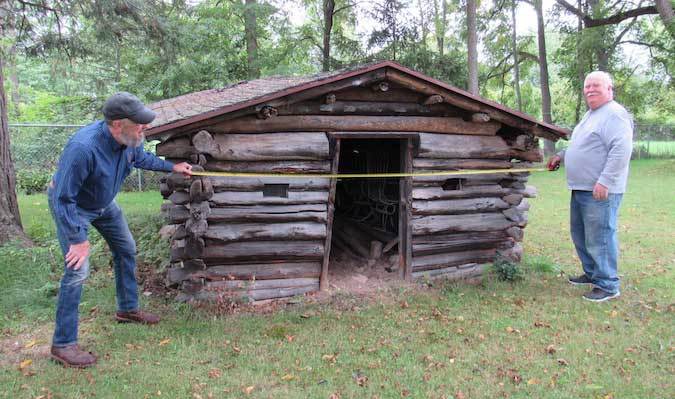
CHILDS –Cobblestone Museum volunteer Ken Capurso, left, President Jim Bonafini, center, and maintenance employee Bob Albanese work on an old outhouse from 1830 at the Cobblestone Museum. They are pictured on May 13, the first of several workbees to preserve the building.

The outhouse was originally built in about 1830. The outhouse, behind the Cobblestone Universalist Church, is the oldest structure at the museum. The church is next in line at 1834.

The old outhouse was derisively referred to as the “blue tarp building” by museum volunteers and staff. The blue tarp helped with the leaking roof and a rotting side wall.

But the museum felt it made a bad first impression, especially with the church hosting several weddings a year.

The Cobblestone team tore off the leaking roof and gave it new supports and a roof.

Jim Bonafini holds an original nail from the building. (The outhouse will likely be used for storage when the project is complete.)

Ken Capurso measures the length of the boards on the roof.

The cobblestone buildings at the museum get a lot of the attention – as they should – but the museum also includes six outhouses. One of the outhouses at the museum was used by Rufus Bullock and his family. Bullock grew up in Albion and went on to be the governor of Georgia during Reconstruction after the Civil War.

The new roof is on and the blue tarp is off, but there is still work to do on the outhouse.

The building is back is an oil house that was used for the original lighthouse at Point Breeze.

Return to top

Hotel in Albion was raided by sheriff for serving alcohol during Prohibition

By Matthew Ballard, Orleans County Historian Posted 27 May 2017 at 8:10 am

“Overlooked Orleans” – Vol. 3, Issue 22

ALBION – This photograph, taken around 1920, shows the dining room of the Orleans Hotel located on the southwest corner of East Bank and Platt streets.

After the Platt House burned in the early, Charles A. Harrington constructed this building in 1862/3 and operated it as a hotel. The business was originally known as the Orleans House, but records seem to indicate that the name changed to the Orleans Hotel in the 1890s when Anson R. Dunshee took ownership of the building.

Fresh on the coattails of the 18th Amendment, the United States was “enjoying” the consequences of Prohibition when this photograph was taken. Other interior photographs of the Orleans Hotel show a bar void of liquor bottles and barstools. It is no surprise, perhaps, that in 1922 the Orleans Hotel was one of six local businesses raided by Sheriff Scott Porter under the suspicion of selling illegal intoxicating liquor.

The manager of the hotel, Herbert S. Field, pleaded not guilty on a charge of “having maintained a common nuisance” where intoxicating liquor was sold in violation of the state. Bartender Sylvester Bragg was also charged in connection with the illegal sale of liquor; he pleaded not guilty to selling alcohol to Egbert Delano.

A typical stay at the Orleans Hotel would run a guest $2.00 to $2.50 per night and the building became a popular location for political conventions, reunions, business dinners, and parties for groups throughout Orleans County.

On March 8, 1920, President William Howard Taft stayed at the Orleans Hotel while visiting Albion as a guest of the Chamber of Commerce. At the time, Taft was a faculty member at Yale Law School, one year before his selection as Chief Justice of the Supreme Court.

On March 15, 1923 Anson Dunshee committed suicide in his home on Ingersoll Street by slitting his throat with a razor. The hotel closed its doors immediately following the tragedy and Albion remained practically void of hotel accommodations until William Lysitt leased the McMann Hotel on Main Street. Florida Dunshee, Anson’s widow, would later lease the Orleans Hotel to J. J. Collins.

Return to top

Fox from famed taxidermist in Clarendon refurbished and back on display

Photos by Tom Rivers: Carl Akeley was only 16 when he preserved this fox in Clarendon. Akeley would go on to become one of the world's most acclaimed taxidermists. The fox is on display at the Cobblestone Museum after a $6,000 refurbishment.

By Tom Rivers, Editor Posted 25 May 2017 at 3:51 pm

Cobblestone Museum has fox from Carl Akeley

Provided photo: Carl Akeley is pictured with a leopard in Africa that he killed with his bare hands after it attacked him.

GAINES – Two years ago, a fox in a display case at the Cobblestone Museum was missing an eye, with its fur matted. The animal, then about 135 years old, was in rough shape and wasn’t given a prominent spot at the Cobblestone Museum.

But it was an early example of Carl Akeley’s taxidermy work. Akeley, who grew up in Clarendon, stuffed the fox when he was 16. It was an ambitious effort after he started with birds. Akeley would become one of the world’s most renown taxidermists and remains an industry legend 153 years after his birth.

He earned acclaim after stuffing the giant elephant Jumbo, and made several trips to Africa, hunting animals and displaying them in New York City at Akeley’s Hall of Mammals in the American Museum of Natural History.

Locally, he gained renewed prominence three years ago when the Clarendon Historical Society celebrated his 150th birthday.

Jay Kirk, author of the Carl Akeley biography “Kingdom Under Glass,” was the featured speaker during a program about Akeley on May 21, 2014. Kirk chronicled Akeley’s life during the golden age of safaris in the early 20th Century.

Akeley’s adventures connected him with Theodore Roosevelt, P.T. Barnum and George Eastman. Akeley died in 1926 and is buried in Africa.

The taxidermist community worked with the Clarendon Historical Society last year to put a monument at Hillside Cemetery in honor of Akeley. Donors, many of them taxidermists around the world, contributed to have the $8,000 monument in Akeley’s honor. The monument is in the shape of the African continent and the stone is black African granite.

The memorial includes a quote from Akeley, who survived being mauled by an elephant and vicious bites on his arm from a leopard. “Death Wins! Bravo! But I Laugh In His Face As He Noses Me Out At The Wire.” The stone will note Akeley’s birth, May 19, 1864, and his death, Nov. 17, 1926.

When Clarendon made a big push to recognize Akeley, retired Orleans County Historian Bill Lattin told Clarendon Historian Mellisa Ierlan the Cobblestone Museum had an early example of Akeley’s work.

Provided photo: The Akeley fox had lost a lot of color and had deteriorated after more than a century. But the Clarendon Historical Society, Cobblestone Museum and other community members were determined to have the animal refurbished by a professional taxidermist.

The community was able to raise abut $6,000 to give the fox some needed attention. In July 2015, Ierlan took the fox to George Dante, a professional taxidermist in New Jersey. Dante, owner of Wildlife Preservations, gave the fox new life. When the case with the fox was opened, the fox’s missing eye was found. Dante put the eye back where it belonged.

He gave the fox a new tail, which had to be dyed to match the fox’s body. Dante also had to replace the fox’s feet and fill in some gaps by the ears.

He vacuumed the body and the fur popped back up. He also replaced the bird as part of the display. Akeley had the fox with feathers in its mouth. Dante kept the scene created originally by Akeley nearly 140 years ago.

Photo courtesy of Melissa Ierlan: John Janelli, left, is past president of the National Taxidermy Association. He is pictured with George Dante and the refurbished fox at Dante’s studio in New Jersey.

Irelan, the Clarendon historian, brought the fox back to Clarendon on May 10. The fox was on display in Clarendon for over a week during the kickoff of the Clarendon Historical Society’s season. On Monday, the fox returned to the Cobblestone Museum in the Proctor Room in the basement of the Cobblestone Universalist Church.

“It was in rough shape,” Ierlan said about the fox’s condition two years ago. “I knew George would do a good job but he exceeded our expectations. Carl would be proud.”

Doug Farley, the museum director, said there will likely be a reception and program about the fox in September as part of the Orleans County Heritage Festival in September.

This fox was stuffed by Carl Akeley nearly 140 years ago. It is back on display at the Cobblestone Museum after getting some needed attention. The fox used to be in Farmer’s Hall at the museum, but now is displayed inside the Cobblestone Universalist Church, the most prominent building at the museum on Route 104 in Gaines.

Return to top

One of oldest photos of Albion shows Empire Block before it burned in fire

By Matthew Ballard, Orleans County Historian Posted 20 May 2017 at 7:57 am

“Overlooked Orleans” – Vol. 3, Issue 21

ALBION – One of the oldest images of downtown Albion, this photograph shows a busy street scene at the intersection of Batavia Street and Canal Street (now North Main and East Bank). Per an 1857 map of the Village of Albion, the block at the intersection was owned by Willis P. Collins, a grain dealer from Connecticut.

As a self-sustaining community, businesses filled the first, second, and third stories of these buildings, providing residents with convenient options for obtaining essential goods and services.

On the first floor of the “Old Empire Block” was the store of W. Cole and Robert Sheldon, who operated a clothing business along with Martin Rawson and Fitch Collins. The appearance of signage hanging above the second floor windows shows the dentist office of Dr. J.S. Northrup. On the third floor, as indicated by the high-hanging signs, was the headquarters for the Orleans American, which was operated by David S. Bruner.

Moving further north along Main Street was the drug store of Drs. Orson Nichoson and Lemuel C. Paine, two local pioneer physicians; Snell Realty currently occupies this building. Also visible are stores belonging to William Close, a local shoemaker, and Jacob Hallenbake, a hardware merchant. Slightly visible is the iconic “Gothic Hall,” owned by grocer and baker Andrew Wall, as well as the large block owned by Roswell Smith Burrows.

The Empire Block burned on December 18, 1868, the cause of the fire being an ember from a stove within the store of Cole & Sheldon.

The conflagration left a total loss as follows:

Mr. Densmore, on building, $11,000 with $6,000 insurance

Cole & Sheldon, on goods, $12,000 with $6,000 insurance

Martin Rawson, on goods, $5,000 with no insurance

Orleans American, $6,000 with $2,500 insurance

John Bradshaw, hatter, on goods, $3,000 with no insurance

J.S. Northrup, $1,000 with no insurance

Fred Butler, tailor, on goods, $1,000 with no insurance

Collins Hill, owner of a nearby building, $3,000 with no insurance

Return to top

Albion native unveils new canal mural in Brockport

By Tom Rivers, Editor Posted 17 May 2017 at 9:58 am

Photos courtesy of Stacey Kirby

BROCKPORT – A new 40-foot-long mural was unveiled last Thursday in Brockport on the railroad overpass on Route 19.

Albion native Stacey Kirby created the mural, which was a project pushed by the village and Walk! Bike! Brockport!

“They were very interested in creating a gateway into the Village of Brockport,” Kirby said. “I think it’s very effective.”

The mural was unveiled to kick off Brockport’s fifth annual “Low Bridge High Water” festival to celebrate the start of a new canal season.

Kirby created scenes showing the canal from yesteryear.

Return to top

Historical marker will be dedicated Saturday for Revolutionary War soldier in Clarendon

Posted 15 May 2017 at 10:58 pm

Provided photos: An eventual settler of Clarendon, Lemuel Cook would earn the distinction of the oldest pensioner of the Revolution at the time of his death on May 20, 1866 at the age of 107.

Press Release, Orleans County History Department

CLARENDON – This Saturday at 10 a.m. the Orleans County Department of History in conjunction with the Orleans County Historical Association and Clarendon Historian will host a dedication ceremony for a new historic marker at the Cook Cemetery in Clarendon.

The Orleans Chapter Daughters of the American Revolution will participate with a wreath laying ceremony following the unveiling of the marker – the Rochester Chapter Sons of the American Revolution will offer a primitive gun salute dressed in patriot attire.

Lemuel Cook, a young man from Connecticut, enlisted with the 2nd Connecticut (Continental) Light Dragoons to serve for the duration of the American Revolution. During his service, he met Gen. George Washington on at least two occasions and saw action at the Battle of Brandywine and Yorktown. Cook migrated to North Bergen in 1821 and later to Clarendon around 1832, eventually settling on the South Holley Road near Munger Road, just a short distance from his final resting place.

Upon his death in 1866, Lemuel Cook was regarded as one of the oldest pensioners of the American Revolution, a title that genealogists and historians have challenged over the years. What is known for certain is that Cook was the last official pensioner of the war, the last surviving veteran of the war whose service was proven with discharge papers signed by Gen. Washington himself.

The marker for Lemuel Cook will be dedicated at 10 a.m. on Saturday.

Recently toppled by the massive windstorm in March, the Orleans Chapter DAR has generously supported efforts to reset Cook’s headstone, working with the Town of Clarendon and Brigden Memorials in Albion.

The program is free and open to the public.

The Department of History will begin the process for selecting the next spot for a historic marker following this program. Input from the community is appreciated and more information will be made available about the process.

Mount Albion tour planned for May 28

The Orleans County Department of History also will host a tour of Mt. Albion Cemetery over Memorial Day weekend on May 28th, starting at 2 p.m. The group will assemble at the cemetery chapel, departing at 2:05 p.m.

Although the tour will spotlight local veterans, not all of the stories will focus on military service. The tour is a prelude to the regularly scheduled series taking place Sunday afternoons in August. Wear comfortable shoes and dress for the weather; guests should expect the tour to last approximately 90-120 minutes and cover several sections of the cemetery.The tour is free and open to the public with no tickets required.

Cobblestone Museum kicks off new season on Sunday

Photo by Tom Rivers: Doug Farley, director of the Cobblestone Museum, is pictured with a “This Place Matters” banner in front of the Cobblestone Universalist Church at 14393 Ridge Rd. The banner is part of a national campaign to highlight historic sites by the National Trust for Historic Preservation. The Cobblestone Museum opens on Sunday with paintings, quilts and textiles on display, as well as the important artifacts in the museum buildings.

By Tom Rivers, Editor Posted 13 May 2017 at 9:42 am

Mothers are welcome to tour historic site and see exhibitions for free on May 14

CHILDS — Sunday is Mother’s Day, which is also the traditional kick off of a new season at the Cobblestone Museum.
The museum is opening a new season with an exhibit from “Sunday Painters of Yesteryear” and a display of coverlets and quilts from the museum’s and community members’ collections. Mothers will be welcomed to the historic complex for free, and also will be given a flower. Opening day is from 1 to 5 p.m.

The museum this year also is offering free admission throughout the season for children 12 and under who are accompanied by an adult.

The museum is a National Historic Landmark with a collection of more than a dozen structures near the intersection of routes 98 and 104. The Cobblestone Universalist Church, built in 1834, is the oldest cobblestone church in North America. The church will host the art exhibit and display of quilts and coverlets.

The museum has a new logo as part of a branding campaign.

The “Sunday Painters” feature more than 50 paintings from people with no formal training in art. The artists painted for fun, often on a Sunday. The paintings were collected by Rene Schasel and Bill Lattin, the retired museum director. (There will be a First Friday reception for the exhibit on June 2 in the evening.)

The museum hired a new director for this season. Doug Farley started on March 1. He said he has developed a greater appreciation for the museum’s local, regional and national importance.

“Now that I’m seeing the great asset that we have and its potential as a heritage tourism destination is exciting,” Farley said. “The museum tells of the influence from the opening of the Erie Canal. Farmers could afford to build nice houses because they had a market for their goods. It speaks of the great wealth of the area after the canal opened.”

Farley and the museum’s leaders would like to see the historic site have a greater role in promoting heritage tourism locally. The museum is planning a VIP celebration on June 14 to share a vision for the future, which would include a new visitor’s/welcome center for the area.

That building is eyed for behind the Ward House on Route 104, where current restrooms are located. If the project becomes a reality, Farley said those restrooms and a next-door outhouse could be relocated to the cobblestone schoolhouse down the road.

The June 14 event at the Daughters of the American Revolution is an opportunity for feedback on the visitor center, and to see if there would be community support for the project.

The museum is also working to keep up the existing historic structures. Some of the windows in the church will be repaired and repainted this year. The Ward House also is receiving new steps and drainage improvements to protect the building.

The museum is pursuing other grants and support to help maintain the historic site, including an engineering assessment of Farmers’ Hall on Route 98 near Proctor Brook.

The museum was established by the Cobblestone Society in 1960 and opened for its first tour in 1961.

For more information, click here.

Return to top