By Tom Rivers, Editor Posted 6 March 2021 at 5:45 pm
The $1.9 trillion “American Rescue Plan” that passed the U.S. Senate today includes nearly $8 million for the Orleans County government. The plan now goes to vote to the House of Representatives next week and then President Biden for his signature.
The New York State Association of Counties is praising the Senate for approving the funding, which includes $2.2 billion for 57 counties in the state. The funding is divvied up to counties based on population.
NYSAC said the funding amounts for local counties includes:
Orleans, $7,887,187
Genesee, $11,195,927
Livingston, $12,297,147
Wyoming, $7,790,825
Niagara, $40,905,985
Monroe, $144,986,083
Erie, $179,569,145
The New York State Association of Counties issued the following press release this afternoon:
After a year of fighting on the front lines of the COVID-19 pandemic, counties applaud the Senate’s passage of the $1.9 trillion American Rescue Plan and encourages swift adoption by the House of Representatives, according to the New York State Association of Counties (NYSAC).
The package, passed today, includes $350 billion in emergency funding for state, local and territorial governments, including $65 billion for counties, a restoration of $5 billion as championed by the Senate Majority Leader Charles Schumer. This emergency funding provides direct aid to counties, supporting the essential local government workers who have been on the front-line of the pandemic response.
“We commend our great Senate Majority Leader Charles Schumer and many members of the New York Congressional Delegation for fighting to ensure that our local governments get the help they deserve. This historic legislation supports the local heroes who have been fighting this pandemic on the front lines and also makes key investments in the future prosperity of our communities,” said NYSAC President Jack Marren, chairman of the Ontario County Board of Supervisors.
The American Rescue Plan includes $3.8 billion for the 57 counties ($2.2 billion) of New York State and New York City ($1.6 billion) based on population. New York City will receive another $4.0 billion through CDBG formula funding.
This funding can be used to respond to the public health emergency caused by the coronavirus as well as address the economic devastation that came with it, including assistance to households, small businesses and nonprofits, aid to impacted industries such as tourism, travel and hospitality. The funding may also be used to help governments provide services and make investments in water, sewer and broadband infrastructure.
“This is a victory for all of the counties in the State of New York and the residents we serve. In a time when so much of our politics is bitterly divided, county leaders from both ends of the political spectrum advocated for this package because it will help them help their communities recover from this pandemic,” said NYSCEA President and Dutchess County Executive Marcus Molinaro.
“We acknowledge the leadership of Senator Schumer and the members of New York’s Congressional Delegation who supported our local governments throughout this pandemic. Without our Senator Schumer, this package would not have included the federal assistance to counties and local governments. He has always been there for New Yorkers, and his resolve has only been strengthened during this this pandemic,” said NYSAC Executive Director Stephen Acquario.
$300 billion approved for state and local government
The U.S. Senate today, in a 50-49 vote, passed President Biden’s $1.9 trillion Covid relief bill.
The bill includes $1,400 checks for Americans with household incomes less than $150,000 or individuals earning less than $75,000 a year.
The legislation goes before the U.S. House of Representatives for a vote next week.
U.S. Sen. Kirsten Gillibrand, D-NY, issued this press release after the Senate voted in favor of the package, without any Republican support:
WASHINGTON, D.C. — Aided by aggressive action by U.S. Senator Kirsten Gillibrand, the Senate today passed the American Rescue Plan to support American families and small businesses, and deliver critical resources for public health, health care, economic recovery and essential services.
Gillibrand successfully negotiated the inclusion of several provisions in the relief package—she authored legislation to create a Health Force to aide vaccine distribution and deliver funding for cash-strapped state and local governments, and pushed for the inclusion of legislation that will strengthen small businesses, reopen schools, renew emergency paid leave provisions, and help families weather the ongoing economic crisis.
“The American Rescue Plan delivers comprehensive and robust relief to New York families. I’m proud it will provide more resources to New York’s health care system, workers, small businesses and families facing financial strain due to the public health and economic crisis,” said Senator Gillibrand. “I’m particularly proud that this bill includes a nearly $8 billion down payment for Health Force, my legislation to create a robust public health workforce to strengthen vaccination efforts.
“My colleagues and I fought hard to support our front line workers, strengthen vaccine rollout, help our schools safely reopen, bolster small businesses, and provide relief to the millions of Americans struggling to make ends meet. While there’s more work to be done to help America fully recover, this bill is a huge step to further address this crisis and I will continue working with my colleagues to help rebuild our economy.”
Senator Gillibrand fought for the following priorities for New Yorkers in the American Rescue Plan:
$7.66 billion for a new public health workforce based on her landmark “Health Force” legislation to expand the nation’s public health jobs and infrastructure and aid the country’s vaccine distribution campaign. Grants will be awarded to state, local, and territorial health departments in order to recruit, hire, and train individuals to prevent and respond to future public health emergencies, and respond to ongoing and future public health and health care needs. Senator Gillibrand authored the Health Force, Resilience Force, And Jobs To Fight COVID-19 Act, re-introduced it this year and has championed the proposal throughout the pandemic.
Expansion of federal emergency paid leave and paid leave tax credits. The American Rescue Plan provides $570 million in additional funding to support an additional 15 weeks of paid leave at $1,400 per week to all federal workers, including USPS employees, for COVID-19 related reasons for themselves and their families through September 2021. This includes vaccine appointments and complications, and school closures due to the pandemic. The bill also provides tax credits to employers that voluntarily offer two weeks of paid sick leave for COVID-19 illnesses and 10 weeks of paid family leave for pandemic related reasons through October 1. As Senate lead on the FAMILY Act, Senator Gillibrand has fought fiercely to enact emergency paid sick and family leave provisions that have prevented workers from having to choose between their paycheck or their health when they needed to stay home to care for themselves or a loved one during the pandemic.
More than $300 billion for state and local governments. Senator Gillibrand, alongside Majority Leader Schumer, has fought for months to deliver vital funding to New York’s state and local governments, which have had revenues slashed due to the pandemic. The funding will be used to pay for essential services, retain vital frontline workers, and offset lost revenues and increased costs from the COVID-19 emergency. Gillibrand and Schumer authored the Direct Support for Communities Act.
Extension of emergency SNAP increase and P-EBT benefits and $1 billion in nutrition assistance to Puerto Rico and territories. To address the hunger crisis caused by the pandemic, Gillibrand pushed the Senate to provide temporary increase in maximum SNAP benefits by 15% and extend the benefits through September, and extend the P-EBT program through the summer and expand eligibility. Gillibrand also pushed for and secured $1.135 billion in funding for state administration expenses associated with SNAP. Additionally, Gillibrand led Senate colleagues in a push to provide expeditious and fair implementation of the P-EBT Program in Puerto Rico and the U.S. territories.
Emergency increase in Women, Infants, and Children (WIC) Cash Value Vouchers up to $35 per month for women and children. Senator Gillibrand successfully fought for the inclusion of a vital CVV increase to support women and children for a four-month period during the pandemic.
More than $1.4 billion in funding to strengthen Older Americans Act (OAA) programs, including $775 million in funding for the OAA Nutrition Services and $460 million to support providers’ efforts to vaccinate older adults in the next coronavirus relief package. Senator Gillibrand led Senate colleagues’ request for $1.4 billion in funding for Older Americans Act (OAA) programs, including $750 million in funding for the OAA Nutrition Services and $480 million to support providers’ efforts to vaccinate older adults in the next coronavirus relief package. She also cosponsored the Continued Funding for Senior Services During COVID-19 Act, to deliver more than $1 billion to the aging network to continue providing essential services, such as meal delivery, vaccine outreach and programming and caregiver support.
$170 billion for K-12 schools and higher education to help implement CDC guidelines, repair and upgrade ventilation, hire more staff, purchase PPE, and cover budget holes for higher education. Senator Gillibrand cosponsored the Reopen and Rebuild America’s Schools Act of 2021 to invest more than $100 billion in grant funding to schools with facilities that pose health and safety risks to students and staff, allocate funding for updates to combat the spread of COVID-19, and expand access to reliable, high-speed broadband to continue digital learning.
Support for small businesses including an additional $7 billion for the Paycheck Protection Program (PPP), $25 billion for the Restaurant Revitalization Fund, and $1.25 billion for shuttered venue operators grant program. Throughout the last year, Senator Gillibrand has fought to support hard-hit small businesses, restaurants, and the hospitality industry across New York. Gillibrand successfully pushed for the inclusion of the Real Economic Support That Acknowledges Unique Restaurant Assistance Needed to Survive (RESTAURANTS) Act of 2020 to create the Revitalization Fund.
$40 billion in federal funding to stabilize child care providers as they work to safely reopen, including $25 billion to create an emergency stabilization fund for child care providers, $15 billion for the Child Care and Development Block Grant program, and $1 billion for Head Start funding. With nearly half of all child care providers closed due the pandemic, Gillibrand has stood with local leaders in Upstate New York to call for the inclusion of a $50 billion Child Care Stabilization Fund.
$3.5 billion for Substance Abuse Prevention and Treatment and Community Mental Health Block Grants. Senator Gillibrand fought to deliver resources for New York’s growing substance use epidemic throughout the COVID-19 crisis. She repeatedly pushed leadership to include robust funding for substance use disorder and mental health care services as Congress negotiated the last relief package, including a bicameral in support of $10 billion in funding for the Substance Abuse and Mental Health Services Administration (SAMHSA). Senator Gillibrand introduced the bipartisan, bicameral Family Support Services Act to create a $25 million grant program over five years to help nonprofits and community organizations provide support services to families with loved ones seeking addiction treatment.
$7.6 billion for Community Health Centers (CHCs), including federally qualified health center look-alikes and Native Hawaiian Health Centers. Throughout the pandemic, these health centers have provided their communities with testing, tracing, vaccine preparedness, and other health services with limited resources. Earlier this year, Senator Gillibrand called for $13.5 billion in federal funding to help CHCS prepare for and respond to public health crises.
$4.5 billion for the Low-Income Home Energy Assistance Program (LIHEAP). Senator Gillibrand has repeatedly pushed for resources to ensure New Yorkers can afford their utilities and urged Senate leadership to maintain House negotiated funding for LIHEAP. When millions of workers were laid off at the beginning of the pandemic, Senator Gillibrand fought alongside her colleagues to deliver $900 million in LIHEAP funding in the CARES Act. Gillibrand also successfully pushed the Trump administration to immediately release the emergency funding and send a vital lifeline to New Yorkers.
$49.5 million for the Family Violence Prevention Services Act programs to support domestic violence shelters and services for families and $250 million for child abuse prevention. In a bipartisan push, Senator Gillibrand urged Congressional leadership to provide support for domestic violence providers and organizations. Senator Gillibrand previously secured $45 million in funding in the CARES Act.
Extension of enhanced unemployment benefits. States across the country continue to report record high unemployment rates. As enhanced unemployment benefits were set to expire at the end of last year, Gillibrand called on Senate leadership to extend critical Pandemic Unemployment Assistance (PUA) and Pandemic Emergency Unemployment Compensation (PEUC) programs.
$30 billion in federal transit funding. Due to the sharp decrease in ridership and the economic shutdown, public transportation is in desperate need of relief to address devastating revenue losses. With public transportation services facing massive budget shortfalls, Gillibrand advocated for robust transit funding and sent a letter to Senate leadership to push for its inclusion in subsequent relief packages.
$45 billion for Homelessness and Affordable Housing Assistance, including $20.25 billion for Emergency Rental Assistance, $5 billion for emergency housing vouchers, $100 million for housing counseling, $100 million for rural housing emergency assistance, $9.961 billion for the Homeowner Assistance Fund, and $4.75 billion for Homelessness Assistance. Senator Gillibrand has fought for funding to support housing assistance for New Yorkers throughout the COVID-19 pandemic. She co-sponsored the Emergency Rental Assistance and Rental Market Stabilization Act of 2020 to help families and individuals pay their rent and back rent and the Public Health Emergency Shelter Act to respond to the needs of families and individuals experiencing homelessness during this crisis.
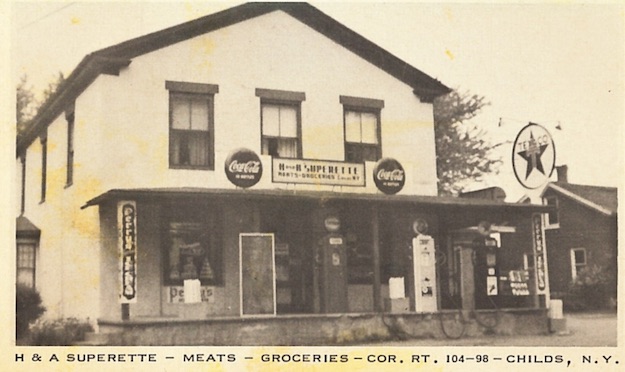
GAINES – Every community is enhanced by the presence of a grocery store providing the basic essentials for its residents. Throughout the 20th century, that presence was found in the hamlet of Childs in the H&A Superette. This longstanding enterprise owed its existence to Henry & Agnes Radzinski who were, of course, the namesake “H” and “A” in H&A Superette.
Their story begins in 1950 when Henry and Agnes purchased the former Balcom Brothers market at the intersection of Routes 104 and 98 in Childs. Ortis and Walter Balcom’s enterprise in Childs went back deep into the early history of Childs, and set the stage for the presence of a community store at that location that continues even to this day.
In reality, the Radzinski family’s mercantile experience goes back much earlier than 1950. Agnes (Daniels) Radzinski’s father, Adam Daniels, operated Daniels Provisions, a meat business that was located at 337 Caroline Street in Albion. Henry, and later his son Ron, born in 1934, trained in meat cutting at Daniels, a skill that would carry them both forward to form the basis of their own successful business together. Henry, was one of twelve children, which certainly provided him with a strong work ethic.
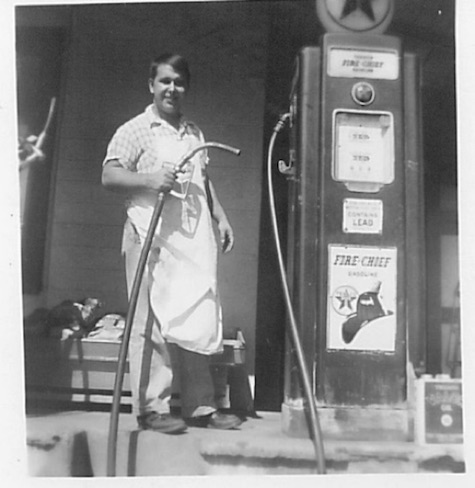
The H&A operated for its first decade in what family members now call the “old store.” It was similar to Balcom’s, but with a change in merchandising to create a “self-service” grocery store with an emphasis on fresh cut meats. Ron Radzinski is seen here pumping Texaco gas from the front porch of the old store.
Agnes Radzinski is behind the counter at the old store with her sister, Gertrude Kaniecki. At the time the old store was torn down, it was discovered that it actually had cobblestone walls. Historian Bill Lattin recalls, “Hank got in touch with me and told me to come see the discovery.” The old cobblestone walls had been covered with stucco at some point in the buildings early history. Bill said, “Henry felt bad but it was too late to save it.”
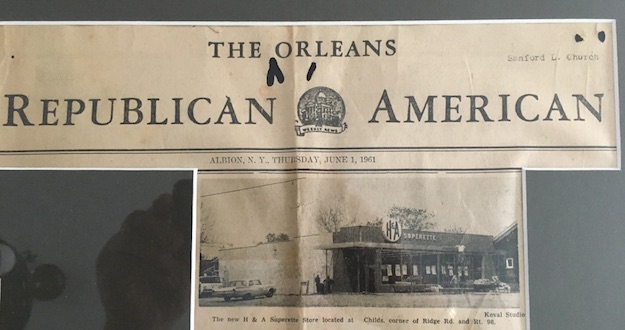
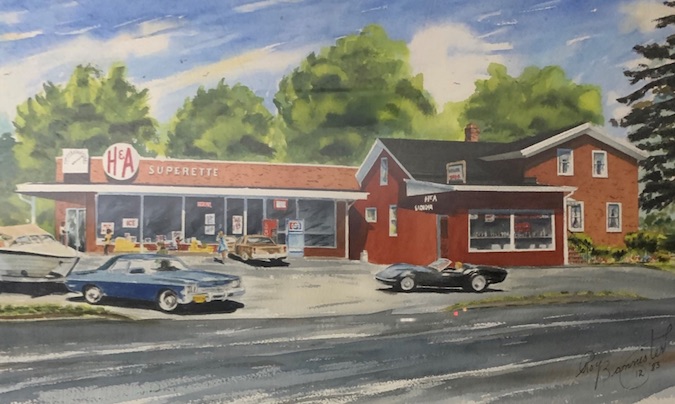
In 1961, after ten years of operation, the Radzinski’s reinvested into their business, to create what became known as the “new store.” The transition was nothing less than amazing. The change essentially involved building a new one-story building behind the earlier store, and then removing the old two-story building.
Painting by Roy Bannister of Carlton, 1983
The new store was built with concrete block construction with large glass windows in the front. The inside was painted in pastel shades of peach and green. A large meat case extended across the end of the store. A frozen food section and produce coolers ran along the sides. Besides groceries and meat, the store was well equipped with hardware, clothing and other necessities. The Radzinskis really wanted to provide a “one-stop” shopping experience in Childs.
Local contractors involved with the construction of the new store included Grillo & LaMartina, Ralph’s Plumbing & Heating, Canham Electric, Donald Rorick, Docks’ Flooring, Richard Shepard, and Maine Lumber.
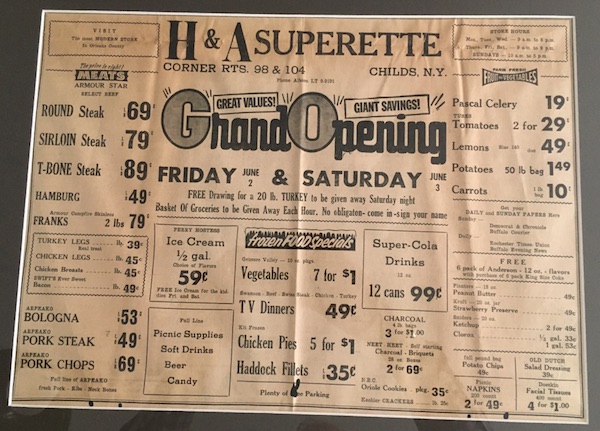
The official grand opening of the new store took place on June 1, 1961 as demonstrated by the newspaper ad as shown above. The new store had two cash registers, several aisles of grocery staples, a full service meat department, produce, as well as beer and cigarettes. The store purchased local whenever possible, including a longstanding arrangement with Bob Kelsey of Carlton to provide local fresh strawberries in season.
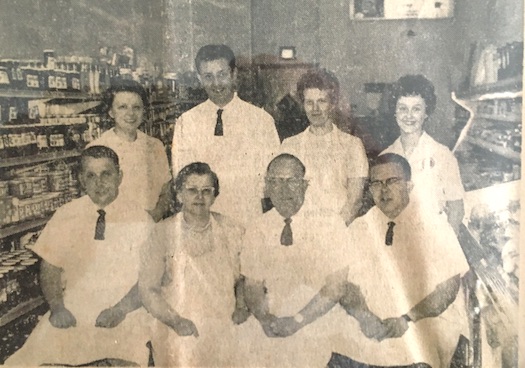
The grand opening staff, shown here in 1961 in their grocers’ white aprons, proudly recall that the store suffered no down time in the transition. One store or the other was open every day during the changeover. Bottom row: Ronald Radzinski, Agnes and Henry (Hank) Radzinski, and Daniel Radzinski. Back row: Gertrude Kaniecki and her son Roger Kaniecki, Pauline Radzinski and Marilyn Mack. Ronald and Daniel are sons of Mr. and Mrs. Henry Radzinski.
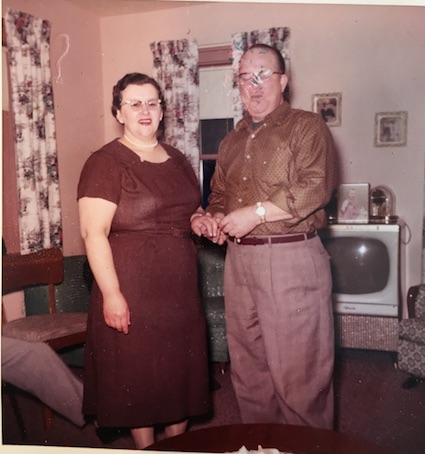
Henry and Agnes, seen here in 1959 on their 25th anniversary, transferred ownership of the store to their sons Ronald (Butch) and Danny in 1986. Ron continued to run the store until 1999. The H&A grew in popularity, largely due to the friendly neighborhood service it provided. A culture of service was the hallmark demonstrated by every member of the team that worked there.
The Radzinski family loomed large in the enterprise. In addition to Henry & Agnes, other family members included son Ron who cut meats, Ron’s son Mark who was taught to make Polish and Italian sausage, and Ron’s daughter Gayle who served as cashier. Ron’s wife, Pauline, though she was a career nurse, was sometimes seen running cash register when others were not available. The family connections at the H&A went on to include sons, sisters, brothers, grandchildren, nieces, nephews and more.
Anyone familiar with a “mom and pop” grocery store can attest to the fact that everyone in its employ has to learn to be a “jack-of-all-trades.” If not trimming produce or cutting meats, any employee may be called on to unload truck, stock shelves, run cash register, clean floors, shovel snow, and on-and-on.
Ron (Butch) Radzinski worked about 50 years in the grocery business. He only left it for about two years for military service in Germany after WWII. He built up a reputation as a friend to everyone that crossed his path. He even extended credit to his customers, if they needed it. He made sure no one went without. During and following his many years in business, Ron served as Town of Gaines Councilman, then Town Supervisor, and eventually Orleans County Legislator, where he served as Vice Chairman. Sadly, Ron passed away in 2020.
Mark Radzinski, born in 1959, got started working around his grandparents’ store as a young child, stocking shelves, cleaning up, and many other tasks. At age 16, he got an actual “job” at the store, even though he didn’t have an official paycheck to show for it, because, he said, “My Dad paid me cash.” He left the store for two years to attend college and then returned and worked at the H&A until 1999 when it closed.
Mark recalled, “My grandfather taught me to make sausage. Every year at Christmas I would make about 800 pounds of sausage for the holidays.” Following his years as a grocer, Mark worked for the Orleans County Highway Department for a year, followed by working for the Town of Gaines Highway Department, where he currently serves as Highway Superintendent.
Ron and Pauline’s daughter Gayle (Radzinski) Ashbery, born in 1958, worked in the store growing up, and then followed her father’s footsteps into public service, becoming, first, a Town of Carlton Councilmember and currently serving as Town Supervisor. Gayle recalled, “I worked at the store as a cashier, but also stocked shelves and swept the floor. The favorite memory I have is just talking to people and enjoying their company.”
Talking to people seemed to be what made the store so successful. It was the personal interactions between staff and customer that made the store a friendly place where folks enjoyed shopping and catching up on the latest news of the day. Former Cobblestone Museum Curator Bill Lattin offered, “You couldn’t ask for a better neighbor than the H&A and the Radzinski family.”
Bill recalled that on more than one occasion, Ron Radzinski went out of his way to help the Cobblestone Museum in its historic preservation mission. Bill said, “Ron tipped the balance and helped the museum acquire the brick bulding which had originally been part of the H&A property for many years.”
Both Mark and Gayle reflected on the many sights, sounds, and smells that provided customers a sensory experience in addition to a shopping experience at the H&A. Gayle said, “Agnes had a kitchen in the store and she always made lunch for the workers. I still remember the boiled hotdogs. Somehow, they tasted better then.”
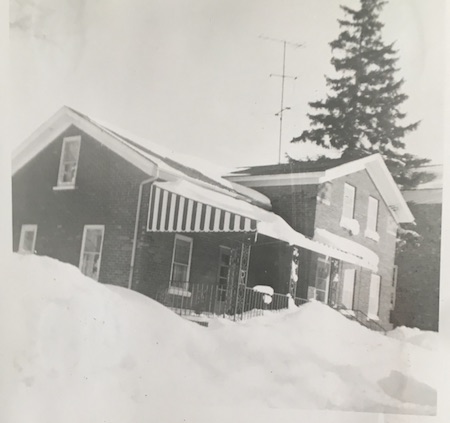
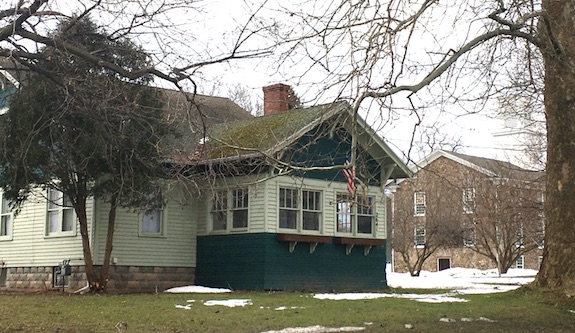
The H&A owned the neighboring brick house, built in 1836, seen here in the 1950s. Ron and Pauline Radzinski used the house as their residence from 1957 to 1965, at which time they built a new house on Oak Orchard Road in Childs. Following that period, Henry and Agnes moved into the house. Its proximity to the store must have been a mixed blessing, close to the store when attention was needed, and conversely creating a 24-hour, 365 days a year, on-call situation when troubles developed.
Gayle Ashbery, on a recent visit to the brick house remarked, “This is the wall that Mark and I scribbled on with crayon as kids. I think my parents must have forgiven us by now.”
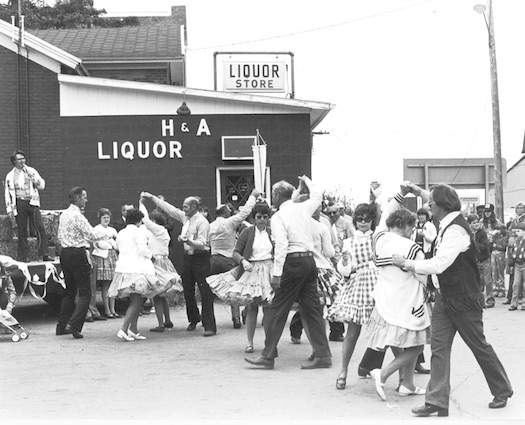
In later decades, the Radzinski’s remodeled the brick house, removing the porch and awning and building an addition at the front of the building seen here. With this addition, they opened the H&A Liquor store, as an adjunct to their successful superette. The photo shows a square dance in the H&A parking lot for the “Farmers’ Parade” in 1980.
The H&A legacy came to an end in 1998 when the business was sold to Dennis Piedmonte, who removed 18 feet from the front of the building and changed the format to a convenience store. The downsized market was known as “JP One”, and a second store opened later in Holley that was called “JP Two.” The store in Childs is currently operating as part of the “Crosby’s” chain.
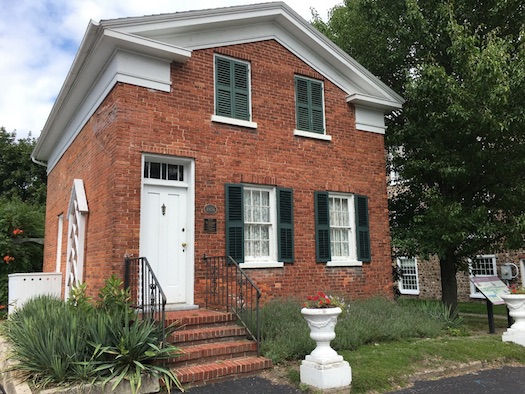
The Brick House (1836) became part of the Cobblestone Museum in 1998, after Ron Radzinski agreed to save the historic structure from the wrecking ball. The museum removed the liquor store and side addition, returning the building to its original 1836 configuration. Currently, the Museum’s office and Resource Room are located here.
In another family connection to Childs, Mark Radzinski and his wife Brenda, purchased the wood framed house directly behind the H&A as their first residence, early in their marriage in 1986. The young couple lived in that home until 2000, when they purchased a residence on Oak Orchard Road in Childs, near the home of Mark’s parents. Later, the Cobblestone Museum purchased the house, as seen here behind the Cobblestone Church, to provide rental income, additional museum parking and access to Route 98.
Mark Radzinski and his sister, Gayle, offered their thanks to many of the longtime employees at the H&A who went “over and above” to make the store a treasured community staple over the years. They thanked everyone, and specifically mentioned Gert (Daniels) Kaniecki, cashier; Jim and Bob Wells, who cut meat and made deliveries; and Patty Avino, cashier.
Also, they thanked the many, many customers that patronized the store for decades that made it all possible.
By Tom Rivers, Editor Posted 6 March 2021 at 8:28 am
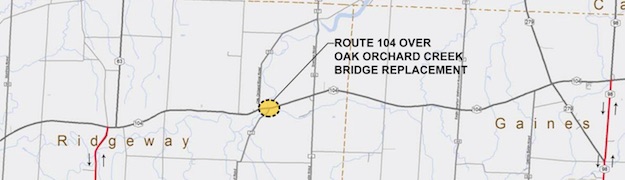
This map from the NYS Department of Transportation shows the location of the bridge on Route 104 over Oak Orchard Creek.
RIDGEWAY — The bridge on Route 104 over Oak Orchard Creek in Ridgeway will be closing to traffic on April 26 with an anticipated reopening in early September.
The bridge is being replaced by Union Concrete and Construction Corp. of West Seneca. The company advised Town of Ridgeway officials this week of the impending closure.
A detour will send larger trucks to Route 98 in Gaines-Albion, Route 31 from Albion to Medina and Route 63 from Ridgeway to Medina.
The $2.65 million bridge replacement is 80 percent funded by the federal government with the state paying the other 20 percent.
The new bridge will replace one from 1954. The new bridge is a single span multi-girder bridge featuring two 12-foot-wide travel lanes and two 6-foot-wide shoulders. New approaches will also be constructed as part of the project. The new bridge is expected to last at least 75 years.
BUFFALO – Congressman Chris Jacobs (NY-27) joined Assemblyman Dave DiPietro, R-East Aurora, at a news conference on Friday in Buffalo calling for New York schools to reopen for 100% in-person learning five days a week.
“The impact school closures have had on our children is devastating. A new report shows an estimated 3,000,000 children have gone missing from classes. Grades and test scores are slipping, and mental health problems are rising drastically,” Jacobs said. “Our teachers have worked hard, but they cannot overcome the inherent constraints of virtual learning, especially in rural areas with limited internet access. Kids need in-person education, social interaction, and full access to school resources and support systems.”
“The Biden administration has flip-flopped on this issue, and just last week, Democrats refused to help us advance policies that would fund an expedited return to school for our students. Republicans introduced over half a dozen amendments to the COVID relief package to open schools. Democrats rejected them unanimously,” Jacobs said. “In addition, we offered a motion to redirect $140 million away from subway construction to needed mental health services for at-risk students; once again, Democrats rejected this effort. We need to get politics out of the classroom and get kids back in. We know how to do this safely; let’s follow the science and open our schools.”
By Tom Rivers, Editor Posted 5 March 2021 at 4:52 pm
Active cases drop in past week from 148 to 108 in 2 counties
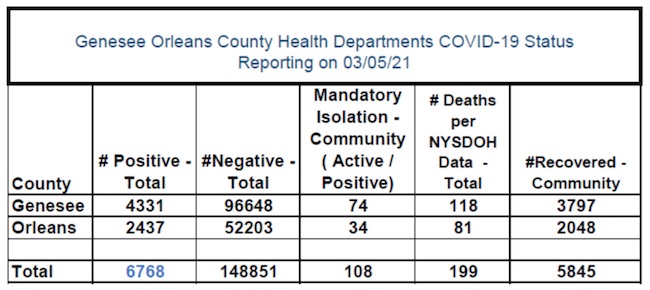
There are 16 new confirmed cases of Covid-19 reported today in Genesee and Orleans counties, bringing the total to 6,768 since last March in the two counties, the Genesee and Orleans County Health Departments said this afternoon.
In Orleans County there are 4 new positive cases reported today for a total of 2,437 cases in the pandemic. The new confirmed cases reside in the Central Region (Carlton, Gaines, Albion, Barre) and East Region (Kendall, Murray, Clarendon). The individuals are in their 20s, 30s and 60s.
Orleans is reporting 14 more of the previous positive individuals have recovered and been removed from the isolation list.
In Orleans, 2 of the current positive individuals are currently hospitalized.
In Genesee County there are 12 new positive cases reported today ,for a total of 4331 cases in the pandemic.
The new positive cases reside in the Central Region (Alexander, Batavia, Bethany, Elba, Oakfield) and East Region (Bergen, Byron, LeRoy, Pavilion, Stafford). The individuals are in the age groups of 0-19, 20s, 30s, 40s, 60s, 70s and 80s.
Genesee is reporting 19 more of the previous positive individuals have recovered and been removed from the isolation list.
There are currently 3 Genesee residents hospitalized due to Covid.
Active Cases: The number of active cases in the two counties declined from 148 a week ago to 108. In Orleans County, the active cases is down from 53 to 34 in the past seven days while in Genesee the number of active cases dropped from 95 to 74 in the past week.
There weren’t any Covid-related deaths reported in the two counties in the past week, according to the Genesee and Orleans County Health Departments.
By Tom Rivers, Editor Posted 5 March 2021 at 1:17 pm
Genesee, Orleans and Wyoming get about 25% of doses
BATAVIA – A mass vaccination clinic the next five days at Genesee Community College in Batavia was intended to help rural Genesee, Orleans and Wyoming counties catch up with their low Covid-19 vaccination rates.
The clinic was going to be exclusively for the three counties, but was changed by state officials to not include a residency restriction in those counties.
The local health departments have studied the registrations, which include the county of residence, and found only about 25 percent of the registrants are from one of the three counties.
“The purpose of our request (for the clinic) was to help increase our vaccination rate, and provide for our county residents who have been shorted throughout this pandemic,” said Paul Pettit, Public Health director for Genesee and Orleans counties. “This clinic assuredly did not significantly impact our rates. With only 864 of the 3,500 doses of vaccine remaining in our three counties, we are still well below the current state-wide vaccination rate. We will continue to seek additional allocations to bring parity for the counties’ vaccination rates.”
Erie County residents claimed 1,666 or 47.6 percent of the 3,500 spots. Niagara County residents took Niagara County 446 spots or 12.74% and Monroe County residents signed up for 326 spots or 9.31% of the total.
Among the three local rural counties Genesee County is filling 596 spots or 17.03%, with Orleans County taking 169 spots or 4.83% and Wyoming County getting 99 spots or 2.38%.
In addition, Livingston County is filling 73 spots or 2.09% and Ontario County residents claimed 45 spots or 1.29%. There were 15 other counties and out-of-state residents that each had less than 1%.
“After careful analysis of the registrations, what we expected to happen once we were told the clinic was open to anyone eligible, regardless of residency, did happen,” Pettit said.
The state website for registering for vaccines opened at 8 a.m. on Thursday and all 3,500 appointments were taken within 90 minutes for the Johnson & Johnson vaccine, which is the one shot vaccine.
“For those in the Genesee, Orleans and Wyoming region who were able to register for this weekend’s state-run temporary mass clinic we understand how challenging it was,” Pettit said. “For those who live in our GOW region and were shut out of this clinic, we will continue to advocate for vaccine for our residents.”
Assemblyman Steve Hawley issued this statement:
“This statewide free-for-all for vaccines is leaving rural New Yorkers behind, and is causing people from all throughout the state to come to our community to use up the small allocation of vaccines our community desperately needs,” Hawley said. “We need to be smarter about ensuring vaccines given to a community stay in that community, rather than allowing a statewide scramble for shots which keeps doses out of the arms of those who need them most in rural areas.”
By Tom Rivers, Editor Posted 5 March 2021 at 12:20 pm
Group also wants to honor adults who work and volunteer on behalf of children in Orleans
The Orleans County Youth Board wants to honor local youths for their community service and adults for their work on behalf of children in Orleans County.
The Youth Board for the past 39 years has recognized youth, usually about 20 each year for their outstanding community service or if they have taken on an extraordinary role in their family.
In addition to the youth awards, at least two adults will be honored for their service to young people.
The Helen R. Brinsmaid Memorial Youth Worker Award recognizes a youth-serving professional whose work surpasses normal expectations.
The Eileen Heye Adult Volunteer Recognition Award is given to an adult who provides service as a volunteer to Orleans County youth.
Nominations are due March 26. The form can be downloaded by clicking here. For information about this event, contact the Youth Bureau at 585-344-3960 or youthbureau@co.genesee.ny.us.
By Tom Rivers, Editor Posted 5 March 2021 at 11:56 am
Albion man allegedly fired shots at pizzeria in Carlton
ALBION – Orleans County Court has scheduled a jury trial next month, the first during the Covid-19 pandemic.
Scott Foley, 53, faces charges of reckless endangerment in the first degree, criminal possession of a weapon in the second degree.
Last September he rejected a plea offer with a cap of five years in state prison.
He allegedly fired two shots from a rifle on Jan. 2, 2020 at Roadies Pizzeria and Sports Bar on Route 98 in Carlton. One of the rounds was recovered inside the pizzeria and sports bar.
Foley was at Roadies and was asked to leave by one of the co-owners after a “disturbance,” DA Joe Cardone said in court on Feb. 20, 2020. Foley left and returned, allegedly shooting a rifle from the parking lot.
Cardone, in a previous court appearance, said Foley showed a depraved indifference to human life by firing the rifle twice from his vehicle in the parking lot.
In other cases recently in Orleans County Court:
• A Lyndonville man was arraigned on Feb. 10 for one count of aggravated cruelty to animals. Stacy Baker, 44, allegedly beat a 3-month-old pit bull to death last Aug. 10.
• A Buffalo man was arraigned on Feb. 24 for criminal sex act in the third degree and endangering the welfare of a child.
Edward Locks, 58, of Buffalo allegedly had sexual contact with a 16-year-old boy at the KOA campground in Ridgeway last August.
Health Commissioner asked to change guideline from current 6-foot separation
Press Release, Assemblyman Steve Hawley
Assemblyman Steve Hawley (R,C,I-Batavia) wrote a letter Thursday to state Health Commissioner Howard Zucker requesting that he and the Cuomo administration consider changing health guidelines to allow a 3-foot distance between students, as opposed to the current 6-foot standard.
This would allow students to return to classrooms full-time and end remote learning. The American Academy of Pediatrics has acknowledged that many nations have been able to re-open schools with a 3-foot standard in place, without increasing the spread of Covid-19 in the community.
Hawley believes that remote learning is in many ways harmful to the development of young students, as they are deprived of the opportunity to socialize with their peers and develop critical social skills. Hawley also raises the point that for many students, home is not an environment conducive to learning, and many students who face adverse circumstances at home rely on school as a place they know they can be kept safe and fed a nutritious meal.
“The safety of our children will always be our foremost priority, but it has become clear that remote learning is taking a toll on their development in a very concerning way,” said Hawley. “We have evidence to show that the 3-foot standard can be implemented safely, and should work quickly to get our kids back in schools full-time to minimize the negative consequences remote learning will have on our children and help them become the best young citizens they can be.”
File photo by Tom Rivers: This photo from Oct. 14, 2015 shows some of the 400-foot-high turbines in Sheldon, Wyoming County.
Governor Andrew M. Cuomo announced that new regulations have been adopted to dramatically accelerate the siting and construction of major renewable energy facilities across New York State.
Projects advanced under the new regulations, which are part of the Accelerated Renewable Energy Growth and Community Benefit Act, will help the state combat climate change and jumpstart its economic recovery from the Covid-19 pandemic. The Act and its implementing regulations will also drive progress toward the Governor’s nation-leading clean energy and climate goals – including the directive to obtain 70 percent of the state’s electricity from renewable sources by 2030 – as required under the state’s Climate Leadership and Community Protection Act.
“We’re working against the clock to protect New York State from the effects of climate change, and cutting red tape so that renewable energy sources can be built and distributed more easily is part of that effort,” Cuomo said. “These new regulations will dramatically reduce the time it takes for government to approve transformative renewable projects, helping us save the environment and fostering new jobs and investment to bring our economy back from Covid-19. New York has long been a national leader on the climate change front, and this is next in a series of concrete steps our state has taken to protect the planet.”
As part of the Act, New York State created the nation’s first Office of Renewable Energy Siting to improve and streamline the process for environmentally-responsible and cost-effective siting of large-scale renewable energy projects across New York while delivering significant benefits to local communities. The Act consolidates the environmental review and permitting of major renewable energy facilities larger than 25 megawatts in New York State and provides a single forum in which ORES will serve as a one-stop-shop for the coordinated and timely review of proposed major renewable energy facilities.
Through these regulations and streamlined process, ORES will play a critical role in meeting the State’s renewable energy goals, while also ensuring the protection of the environment and consideration of all pertinent social, and economic, and environmental factors in permitting of renewable energy such facilities. ORES must issue a permit within one year of the date on which an application is deemed complete and within six months if the facility is proposed to be located on brownfield, former commercial or industrial, landfill, former power plant, and abandoned or underutilized sites. New projects sized between 20 and 25 megawatts will also be able to opt-in to the ORES process.
“I greatly appreciate the public participation throughout the rulemaking process and look forward to working hand-in-hand with all stakeholders to implement the new regulations,” said ORES Acting Executive Director Houtan Moaveni. “New York is at the forefront of clean energy leadership. The adoption of the regulations today is further evidence of New York’s sustained commitment to both strike a balance between protecting our communities and the environment and spurring the need for faster renewables development.”
The Act requires ORES to create regulations to implement the statute within one year of its effective date. On September 16, 2020, ORES issued draft regulations and uniform standards and conditions for public comment pursuant to the State Administrative Procedure Act. ORES accepted public comments on the draft regulations from September 16, 2020 until December 7, 2020.
ORES received oral comments from nearly 200 individuals during public hearings and over 5,000 letters and emails containing comments and questions from various stakeholders. Transcripts of the public hearings and all public comments received are available by clicking here.
ORES reviewed all comments received during the hearings. After careful consideration and further analysis of all comments received, ORES made several non-substantive changes to address the comments and to clarify the proposed regulations in consultation with the New York State Department of Public Service, the Department of Environmental Conservation, the Department of Agriculture and Markets, and New York State the Office of Parks, Recreation & Historic Preservation. Copies of the assessment of public comments and the final regulations are available on the ORES website.
The regulations will encourage local governments and communities to participate in the permitting process by requiring project applicants to consult with local governments and community members before filing an application, provide public notices at various milestones throughout the permitting process and make application materials available in both electronic and paper format.
Draft siting permits will be subject to public review and comment and adjudicatory hearings will be required when significant and substantive issues are identified. Additionally, for each project, municipalities and community interveners will have access, as appropriate, to funds that will defray certain expenses incurred in their review of the project.
The new siting process provides a one-stop process with increased certainty and predictability to develop renewable energy projects in New York State. The ORES approach proactively addresses the key recurring issues in siting and permitting large-scale renewable projects, simplifying the permitting process. By creating a new siting process specifically designed for renewable energy facilities, the Act will accelerate new private investment and job growth in the green economy at a time when New Yorkers need it most. As the state seeks solutions to getting the economy back on track after overcoming the COVID-19 crisis, accelerating renewable energy construction will play a central role in the green economy.
New York State’s Nation-Leading Climate Plan
Governor Cuomo’s nation-leading climate agenda is the most aggressive climate and clean energy initiative in the nation, calling for an orderly and just transition to clean energy that creates jobs and continues fostering a green economy as New York State recovers from the COVID-19 pandemic.
Enshrined into law through the Climate Leadership and Community Protection Act, New York is on a path to achieving its mandated goal of a zero-emission electricity sector by 2040, including 70 percent renewable energy generation by 2030, and to reach economy wide carbon neutrality.
Under Governor Cuomo’s leadership, New York will build on this progress and reduce greenhouse gas emissions by 85 percent from 1990 levels by 2050, while ensuring that at least 35 percent with a goal of 40 percent of the benefits of clean energy investments benefit disadvantaged communities and advancing progress towards the state’s 2025 energy efficiency target of reducing on-site energy consumption by 185 trillion BTUs of end-use energy savings.
Indoor residential gatherings remain capped at 10 people
New York is easing some of the restrictions on the sizes of residential and social gatherings, except for indoor residential gatherings which remain capped at 10 people. Gov. Andrew Cuomo has said about 75 percent of the Covid spread has been from indoor residential gatherings.
Cuomo this week announced that outdoor residential gatherings of up to 25 people can be held beginning March 22. That is up from 10 people.
Non-residential social gatherings of up to 100 people can occur indoors and up to 200 people can occur outdoors beginning March 22. That is up from 50 people.
Cuomo also announced that beginning April 2, event, arts and entertainment venues can reopen at 33 percent capacity, up to 100 people indoors and up to 200 people outdoors.
If all attendees present proof of negative test prior to entry, capacity can increase up to 150 people indoors and up to 500 people outdoors. Social distancing and face coverings will be required by all attendees, as well as strict adherence to all applicable Department of Health guidance.
The Governor also announced domestic travelers to New York State who have been vaccinated no longer have to quarantine or test out within 90 days of their full vaccination.
“New Yorkers have done a tremendous job working to defeat Covid, and we’re gradually loosening restrictions as the numbers reduce and the public health improves,” Cuomo said. “It’s clear that if we remain vigilant, we will reach the light at the end of the tunnel.”
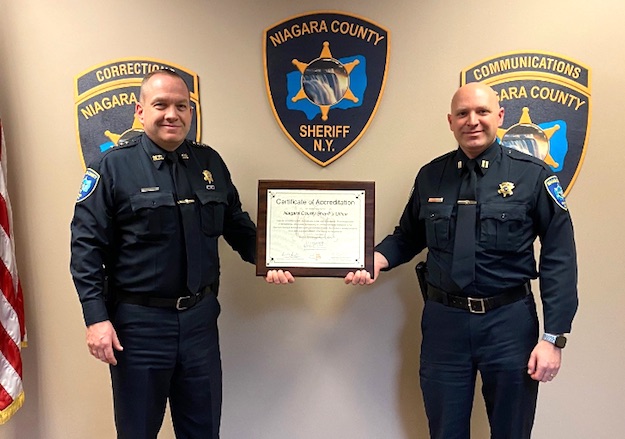
Photo courtesy of Niagara County Sheriff’s Office: Sheriff Michael J. Filicetti, left, and Captain Robert M. Richards, the Accreditation Program Manager, celebrate reaching the reaccreditation of the Criminal Division.
Press Release, Niagara County Sheriff’s Office
LOCKPORT – Sheriff Michael J. Filicetti announces that the Criminal Division of the Niagara County Sheriff’s Office has achieved re-accreditation from the New York State Department of Criminal Justice Services.
In January 2021, an independent accreditation assessor conducted a thorough review of the Sheriff’s Office and determined our agency was in full compliance with all standards set forth by the Accreditation Council. Some of these standards include administrative practices, operational procedures and training requirements.
On March 4, 2021, the New York State Law Enforcement Accreditation Council voted unanimously to approve the Niagara County Sheriff’s Office application for re-accreditation following a recommendation from the Council’s reassessment team.
Sheriff Michael J. Filicetti said “receiving this re-accreditation stands to affirm that the Niagara County Sheriff’s Office is a professional agency, meeting the standards set forth by the New York State Accreditation program. I am extremely proud of the men and woman of the Sheriff’s Office for leading the way in this endeavor.”
The Sheriff’s Office has been an accredited office since 2001 and this recent re-accreditation is valid through 2025. In addition, the Sheriff’s Office continues to maintain accreditation standards in the Corrections Division, Communications Division, Civil Division and Forensic Laboratory.
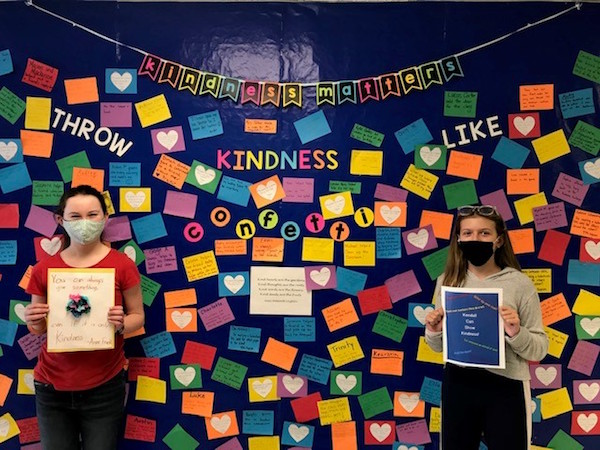
Provided photos: Pictured in front of the Kindness Display are Elementary Honor Society members Emily Brundage (left) and Adrianna Schiavone (right), holding signs they created to encourage kind behavior.
KENDALL – During the month of February, Honor Society members at Kendall Elementary School organized and implemented a Kindness Campaign.
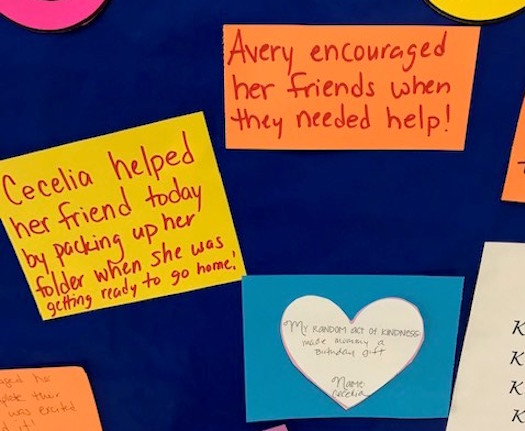
The theme was “Throw Kindness Like Confetti” and about 200 acts of kindness were recognized on the display.
Students, faculty, staff and administrators were encouraged to look for acts of kindness. When one was spotted, a description of the act and participants were written on colored paper.
Those colored pieces of paper became the kindness confetti and were hung on the display.
The display is outside the cafeteria covering a portion of the wall. Honor Society members also created signs to hang around the school to remind students of ways to be kind.





















 KENDALL – During the month of February, Honor Society members at Kendall Elementary School organized and implemented a Kindness Campaign.