By Tom Rivers, Editor Posted 1 November 2022 at 9:21 pm
HPC has struggled recently to have a quorum
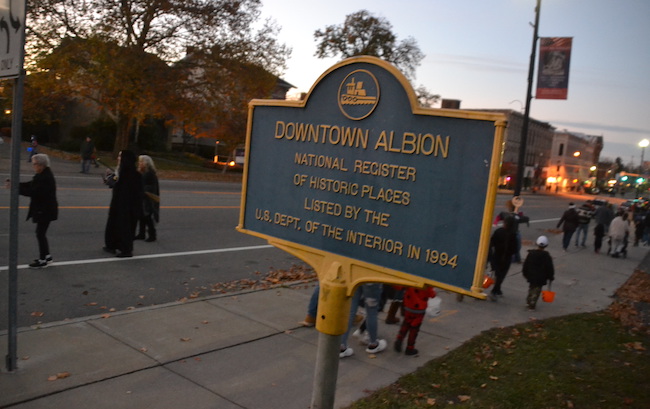
Photo by Tom Rivers: The Downtown Albion historic marker was recently moved from Waterman Park to near the municipal lot on Main Street next to the Presbyterian Church. This photo was taken Friday evening during Beggar’s Night.
ALBION – The leader of the Albion Historic Preservation Commission is asking the Village Board to reduce the HPC from seven to five members.
Mary Anne Braunbach, the commission chairwoman, said the HPC has struggled at some recent meetings to have a quorum. She doesn’t want to hold up projects in the historic district because the board doesn’t have enough participants for an official meeting.
With seven members, the commission needs at least four for a quorum. If the commission was reduced to five, only three would be needed to have a meeting. Braunbach said some members have been no-shows for several months.
Braunbach said the commission tries to be a resource to building owners looking to upgrade their facades or do other projects. The commission doesn’t want to be an obstacle, she said, but will push for property owners to meet the standard for the historic district.
“We want to let people know we’re working with them,” she told the Village Board last week. “We want to help people make the buildings look better and look historic.”
The village is working on a Main Street grant with several building owners doing projects on their sites. Albion also is looking at additional state funds that could result in significant work in the downtown.
Braunbach told the Village Board the commission wants to be involved in helping property owners plan projects and see them through completion.
By Tom Rivers, Editor Posted 1 November 2022 at 3:30 pm
Funding would ‘transform abandoned and neglected properties into modern, 21st century buildings’
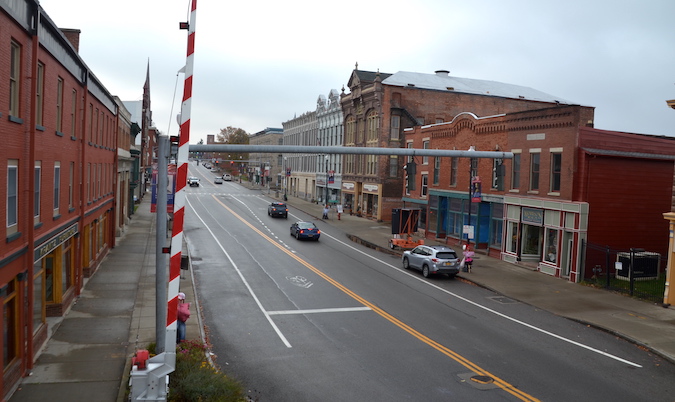
Photo by Tom Rivers: Downtown Albion is shown this morning. Some of the buildings on Main Street are vacant and in disrepair.
ALBION – The Village of Albion is discussing applying for a Restore New York grant that could bring up to $10 million to revitalize commercial and residential properties.
The village last Tuesday held a public meeting with property owners to try to gauge interest in the program. Jay Grasso, owner of G&G Municipal Consulting and Grant Writing, gave an overview of the program. He sees Albion as a strong contender to receive funding through Restore New York.
The village already meets the qualifications as an economically distressed community due to poverty levels and economic hardship. That means the village won’t need to do income surveys for a part of the village to qualify. The entire village meets that criteria, which means projects can be picked throughout the village and not just the downtown business district, like other state programs are focused on.
“Albion is in a unique situation with the distressed status,” Grasso told village officials.
That status makes Albion eligible for large state grants that could help jump-start the community’s transformation.
“This is real money,” he said. “I could see several million if we apply.”
Gov. Kathy Hochul announced today that a new round of $250 million in Restore NY funding is available. Municipalities need to submit an intent to apply form outlying possible projects by Nov. 30. A more thorough application would then be due by Jan. 27, 2023.
“Revitalizing our communities starts with investing in the historic buildings that have long formed the backbone and character of our neighborhoods,” Hochul said in a news release today. “Restore New York funding gives localities the resources to transform abandoned and neglected properties into modern, 21st century buildings. By helping to rebuild and strengthen communities across the state, we will stimulate local economies and continue to build back New York better and stronger.”
Restore NY funding can be used for vacant, abandoned, condemned or surplus buildings. These properties can be demolished, deconstructed, rehabilitated or reconstructed. The grant allows up to $70,000 per residential unit.
Emphasis will be placed on projects in economically distressed communities, projects that leverage other state or federal redevelopment funds and the project’s feasibility and readiness, Hochul’s office said today.
There is up to $10 million for a “special project” that could include several properties.
The program is administered by Empire State Development and is designed to help local governments revitalize their communities and encourage commercial investment, improve the local housing stock, put properties back on the tax rolls, and increase the local tax base.
Grasso, during a presentation to the Village Board last week, said he submitted an application to the state for two electric charging stations in the village’s municipal lot on East Bank Street across from the village office.
Grasso and village officials also are looking at grant options for cyber security at the sewer plant, fire department equipment and recruitment, and records management. Grasso also is urging village officials and buildings owners in the downtown to consider projects in the future for the NY Forward program for downtown revitalization.
‘A small amount of fentanyl, smaller than the tip of a pencil can kill someone. This is a serious issue that impacts our children, our families and our community.’ – Paul Pettit, public health director
Press Release, Genesee & Orleans County Health Departments
The United States has passed a grim, heartbreaking milestone: a record number of Americans are dying as a result of a drug overdose.
Between April 2020 and April 2021, drugs – mostly synthetic opioids such as fentanyl – took the lives of more than 100,000 of our sons and daughters, loved ones and neighbors, community members, and friends. During the same 12-month period, eleven people died in Genesee County from opioid overdoses, and fentanyl was involved in all of these deaths.
This rise in opioid overdoses across the U.S. is largely due to illicit fentanyl contaminating street drugs. Pharmaceutical fentanyl is a synthetic opioid that is FDA-approved as a patch or lozenge for the treatment of severe pain.
Fentanyl is at least 50 times more potent than heroin. Most recent cases of fentanyl-related harm, overdose, and death in the U.S. are linked to illegally made fentanyl that is mixed into drugs like counterfeit painkillers and benzodiazepines, heroin, cocaine and methamphetamine. Fentanyl has also been detected in fake pills that look like candy.
“A small amount of fentanyl, smaller than the tip of a pencil can kill someone,” stated Paul Pettit, Public Health Director for Genesee and Orleans County Health Departments (GO Health). “This is a serious issue that impacts our children, our families and our community.”
Because we have an unregulated and criminalized drug supply, there is no way to tell if a street drug someone is using is 100% safe. This means that someone may use a product that they believe their body is able to tolerate, but it may actually be much stronger than they expect due to being contaminated with fentanyl, without knowing.
The opioid crisis is not confined to a particular subset of our population. The epidemic affects wealthy and poor, black and white, rural and urban, and every corner of Genesee County.
HEALing Our Communities
The street drug supply has always been unpredictable and inconsistent – this is especially true now. People who use drugs should assume overdose risk no matter what drug they’re using, and practice as much harm reduction as consistently possible. Our community should also practice harm reduction strategies by:
Knowing the signs of an overdose.
Carrying naloxone and knowing how to use it.
Looking out for others in the community and administering naloxone if you suspect an overdose!
By following these harm reduction strategies, together, we can HEAL our communities and reduce preventable overdose deaths.
By Tom Rivers, Editor Posted 1 November 2022 at 12:14 pm
Press Release, NYS Department of Transportation
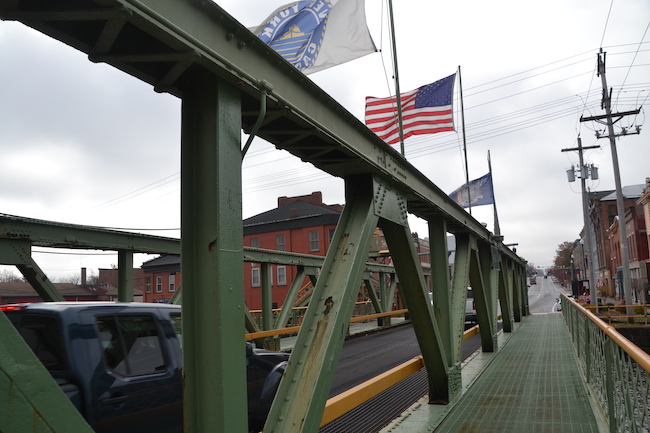
ALBION – New York State Department of Transportation Commissioner Marie Therese Dominguez today announced that work is slated to begin Monday, November 14 on a project to rehabilitate the State Route 98 lift bridge over the Erie Canal in the Village of Albion, Orleans County.
The project will modernize and extend the lifespan of this important structure, which was built in 1914, and enhance safety and resiliency along a vital travel route to the Village of Albion’s bustling business corridor and the vibrant tourism scene along the Erie Canal. State Route 98, which is also known as North Main Street in the village, also serves as an important conduit for the region’s agricultural products.
“The Erie Canal embodies the perseverance, innovation and ingenuity of New Yorkers and it’s important that our iconic canal bridges continue to reflect our history and serve our communities,” said Commissioner Dominguez. “That is why Governor Hochul and New York State DOT are making this critical investment into the State Route 98 bridge – an investment that will help ensure the long-term vitality of the region’s economy and the entire Albion community without compromising the bridge’s beloved character.”
Work on the bridge is part of a larger $28.3 million project that will also rehabilitate the State Route 19 Bridge over the Erie Canal in the Village of Brockport, which is slated for closure in April 2023. It also builds on NYSDOT’s prior success in modernizing and preserving the iconic structures along the canal, which includes a recently completed, $16.9 million project that rehabilitated similar bridges in the villages of Fairport and Spencerport.
The State Route 98 steel truss bridge serves as an important component to the historic Erie Canal, which is a registered National Historic Landmark. As part of the Canal, the bridge benefits from historical protections that ensure the bridge continues to look as it did early in the 20th century with its trusses and lift towers preserved. This project, will extend the bridge’s service life and better support motorists for a 21st century economy by:
Replacing bridge decks and portions of the truss system with high-strength, galvanized steel.
Modernizing mechanical and electrical components within the bridge’s lifting system.
Rehabilitating the bridge towers.
Installing new bridge rails.
Repainting the bridge, maintaining its current shade of green.
During construction, the bridge will be dismantled with individual trusses lifted and placed in the lot adjacent to the Canal, where the rehabilitation work will occur. When work is complete, it will be moved back into place over the Canal.
Due to the nature of this work, the roadway will be closed to motorists and pedestrians for roughly 18 months. A signed detour will be in place utilizing State Routes 31, 387 (Fancher Road), and 104 (Ridge Road). The Erie Canal Trailway will remain open for the duration of the project.
New York State Senate Minority Leader Robert Ortt said: “The Erie Canal and the bridges our residents use to traverse it are not only important parts of our regional history but are necessary components of residents’ daily commutes. The rehabilitation of the State Route 98 lift bridge and State Route 19 Bridge will ensure that the culturally significant components of our communities will continue to operate safely while remaining a viable method of transport for future generations. I welcome this $28.3 million investment by the NYS Department of Transportation and look forward to the project’s timely completion.”
Assemblyman Steve Hawley said: “The State Department of Transportation has been working hard to create safer and more efficient transit for individuals, emergency vehicles, school buses, businesses, and agriculture vehicles. We will be working closely with NYSDOT to assure this major project is completed as smoothly as possible.”
Village of Albion Mayor Angel Javier Jr. said: “Businesses and residents are eagerly waiting for the start and completion of the project. They are looking forward to a updated bridge that serves the community in the safest capacity. During this time the Village will work with local organizations to highlight the historic nature of the bridge through education, as well as planning activities in the space south of the bridge.”
New York State Canal Corporation Director Brian U. Stratton said: “The Canal Corporation is proud to collaborate with the Department of Transportation on this project as it rehabilitates a critical crossing over the Erie Canal within the Village of Albion and reinforces Governor Hochul’s commitment to investing in infrastructure, so it remains safe and reliable for generations to come. Lift bridges are iconic structures over the canal in Monroe, Orleans, and Niagara counties that connect canalside communities over the historic waterway and this work will improve safety for drivers, pedestrians, and boaters.”
By Tom Rivers, Editor Posted 1 November 2022 at 9:48 am
ALBION – The County Legislatures in both Genesee and Orleans counties last week celebrated a 10-year partnership among the two counties with shared public health services.
The two counties combined employ about 50 employees in public health. Each county has its own health department, but they share seven department heads, including Paul Pettit as the public health director. The two counties also have a merged Board of Health.
One county can also pull from another county if there is a staffing need, such as a vaccination clinic. Working as integrated departments has allowed the two departments to better balance surges over the past 2 1/2 years with Covid testing, vaccinations and providing communications in a cohesive manner, county officials said.
Paul Pettit, the public health director for the two counties, recalled when 10 years the initial resolution for shared services was approved by the Orleans County Legislature in Albion, and then later that evening by the Genesee County Legislature in Batavia. Pettit drove from Albion to Batavia to be on hand for what turned out to be historic resolutions.
Orleans and Genesee officials have shared with other counties around the state and nation about the partnership, advising how others could do it, too. But Pettit said he doesn’t know of another long-lasting partnership among two counties.
He praised the staff at GO Health and also the elected leadership and county administration in both counties for making the agreement work.
“We couldn’t do it without the support of the Orleans County Legislature and Genesee County Legislature,” Pettit said. “There is trust between the two counties. We’ve been forward-thinking.”
He noted the partnership has continued even with changes on the legislature and with the top administrators in each county.
Orleans County Legislator Don Allport thanks staff members at the local health departments for their service. From left include Paul Pettit, public health director of GO health; Ron Mannella, Weights and Measures director for the two counties; and Kristine Voss, epidemiology coordinator for the two counties, Nola Goodrich-Kresse, public information officer; Kim Castricone, administrative officer; Carrie Doty, principal financial clerk; and Sherri Bensley, case manager.
“Whereas, the residents of Genesee and Orleans counties have benefitted fiscally and operationally in the ongoing agreement,” according to a resolution signed last week by Lynne Johnson, chairwoman of the Orleans County Legislature, and Rochelle Stein, chairwoman of the Genesee County Legislature.
Genesee and Orleans Health Departments (GO health) have received joint county grants for public health initiatives in the two counties. The partnership has allowed the two counties to fill workforce gaps, drive efficiencies and look for innovative ways to advance the two-county collaboration, according to a proclamation from both legislatures.
The two counties look forward to working together “for the foreseeable future.” The two county legislatures urged the community to celebrate the 10-year milestone of integrated services and better opportunities in public health.
Stein, during remarks on Wednesday, said she is impressed how the partnership has grown over the decade.
“We do want more for our communities,” Stein said. “We couldn’t be prouder of the staff with their dedication to serve both counties.”
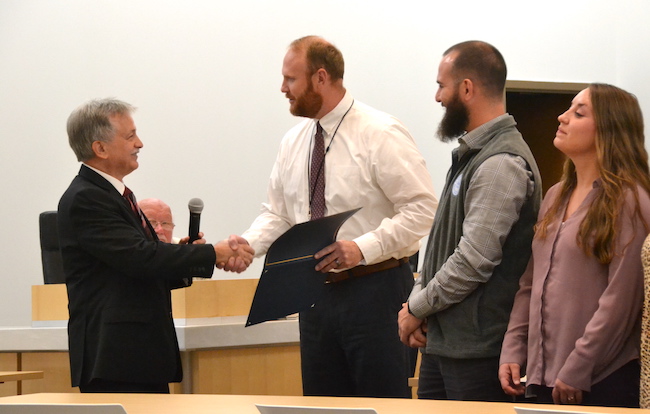
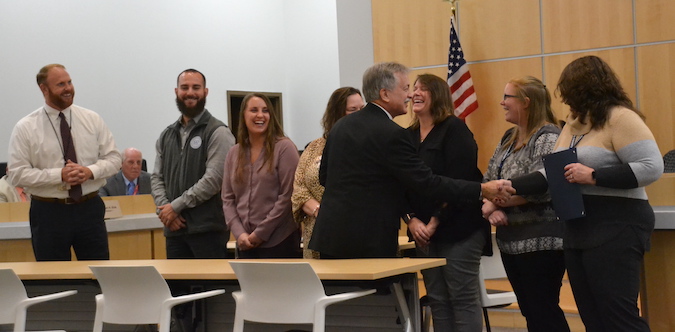
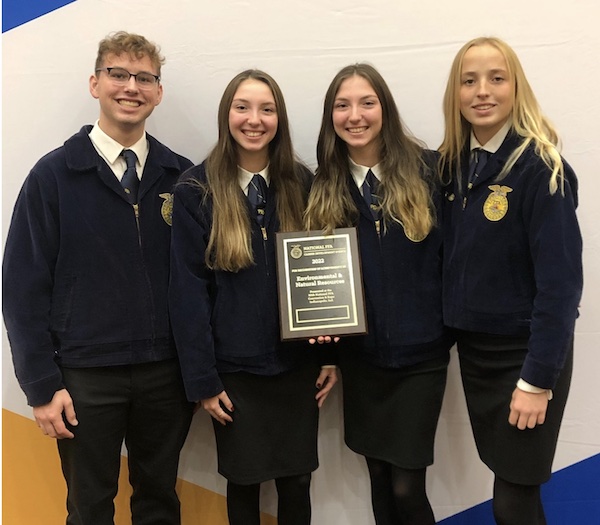
MIDDLEPORT – Last week, 12 Royalton-Hartland FFA members and their advisor, Matthew Sweeney, traveled to the 95th National FFA Convention & Expo in Indianapolis, Indiana. At the convention, each FFA member competed in a Career Development Event (CDE) competition. Career Development Events build on what is learned in agricultural classes and encourage members to put their knowledge into practice.
These events are designed to help a member prepare for a career in agriculture by testing and challenging the student’s technical, leadership, interpersonal and teamwork skills as well as their knowledge of the subject matter.
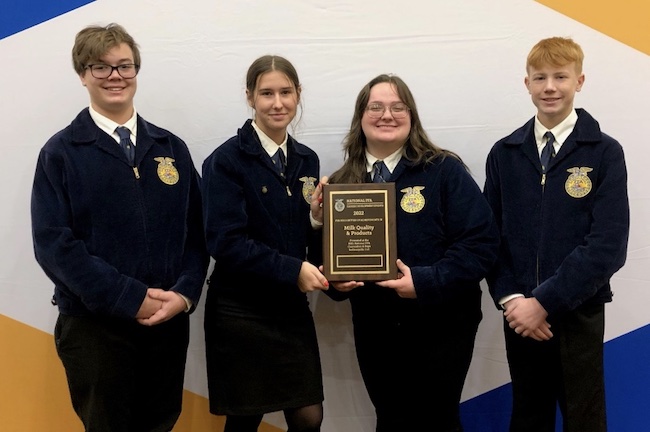
In Indianapolis, Royalton-Hartland FFA represented New York State in the Milk Quality & Products CDE, Nursery/Landscape CDE, and Environmental/Natural Resources CDE.
Roy-Hart’s Milk Quality & Products CDE finished 12th in the nation overall and 5th in the nation for the team activity presentation. The team earned a Silver Team Ranking. Individually the placings included Garrett Armenia – 40th Place – Gold Ranking; Sophia Santella – 54th Place – Silver Ranking; Vanessa Grant – 78th Place – Silver Ranking; and John Konstanty – 112th Place – Bronze Ranking.
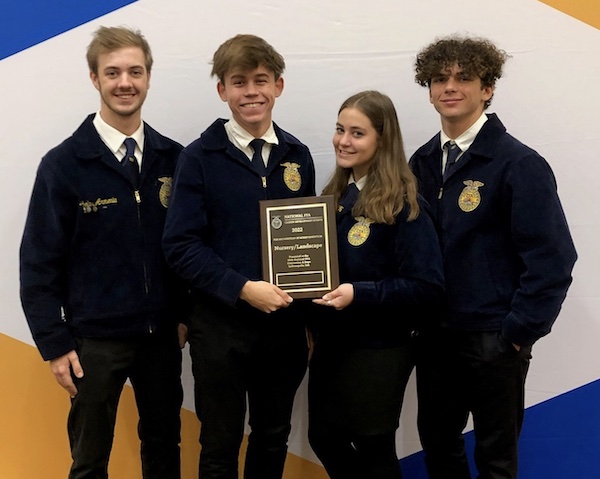
The Nursery/Landscape team includes Nicholas Armenia, Joshua Kennedy, Lorna Becker and Ronan Klug.
Nursery/Landscape CDE: Overall Team Placing: 17th in Nation for a Silver Team Ranking. Individual placings include Joshua Kennedy – 41st Place – Gold Ranking; Nicholas Armenia – 51st Place – Silver Ranking; Lorna Becker – 70th Place – Silver Ranking; and Ronan Klug – 136th Place – Bronze Ranking.
The Environmental/Natural Resources CDE includes Nathaniel Wolf, Shelby Sy, Jessica Sy and Cayla Burch.
The Environmental/Natural Resources CDE Overall Team Placing: 37th in Nation for a Bronze Ranking. Individual placings include Shelby Sy – 75th Place – Silver Ranking; Jessica Sy – 92th Place – Silver Ranking; Nathaniel Wolf – 111th Place – Bronze Ranking; and Cayla Burch – 138th Place – Bronze Ranking.
Since the re-introduction of the Royalton-Hartland FFA Chapter in 2014, this is the third time that Royalton-Hartland FFA members competed at the National Level. Advisor Matthew Sweeney praised these twelve FFA members for their hard work, commitment and dedication to preparing for these national contests.
“We spent many evening and weekend hours developing the knowledge, skills, and dispositions needed to be successful in these contests,” Sweeney said.
He is thrilled about the program’s success and excited for future of the Royalton-Hartland Agriculture Department and FFA Chapter.
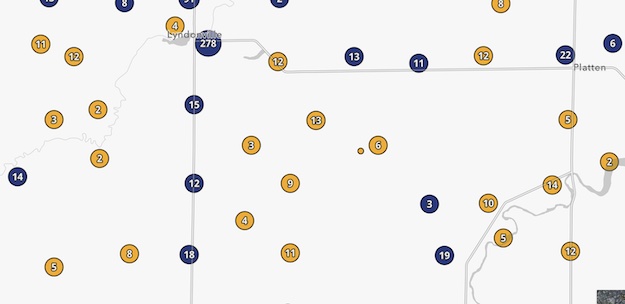
980 unserved in Orleans or 5.36%; Cattaraugus highest unserved in WNY at 21.44%
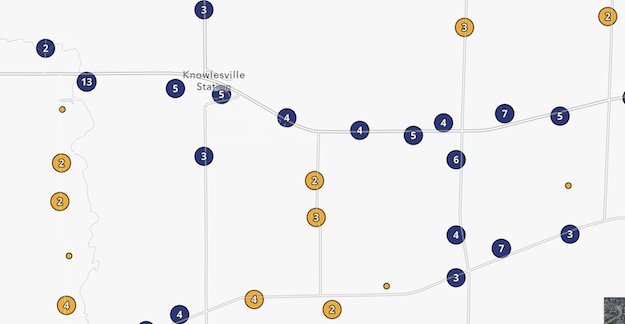
This area of the Town of Yates near Platten Road has several unserved areas (in yellow). Areas in blue are considered “served.”
Press Release, Gov. Kathy Hochul’s Office
Governor Kathy Hochul today announced that New York’s ConnectALL Office has submitted over 31,000 addresses from across the state to the Federal Communications Commission under the Broadband Data Collection challenge process.
The federal challenge process, which allows states to propose changes or updates to the FCC’s broadband maps, helps to better locate areas unserved or underserved by broadband. In doing so, these proposed changes inform federal funding decisions regarding broadband access and help to ensure that high-speed internet is available at every address in the country.
“Affordable, reliable broadband is an absolute necessity for accessing work, education, and important government services, and we can no longer afford to treat it like a luxury,” Governor Hochul said. “Thanks to our first-of-its-kind broadband mapping tool we have a clearer picture than ever about New York’s broadband needs and we are better able to advocate for federal funding and program support to fill those gaps. My administration remains committed to ensuring that families and businesses are well-connected to broadband, and I look forward to a continued partnership with local, state, and federal authorities to make high-speed internet available to all New Yorkers.”
The Commerce Department is expected to begin disbursing broadband funding from the Infrastructure Investment and Jobs Act (IIJA) to states and territories in late 2023 based largely on the proportion of unserved and underserved homes and businesses in each state, using maps created by the FCC. The FCC has begun by issuing a “map fabric” that is meant to include all addresses in the country, which they shared with all states and other stakeholders to challenge and improve.
This challenge was made possible due to New York’s first-of-its-kind, interactive broadband map (click here) launched earlier this year, which contains detailed information of the State’s broadband infrastructure down to the street-level. The challenge process is a critical step in determining New York’s funding allocation for broadband from the Infrastructure Investment and Jobs Act (IIJA). ConnectALL will continue to analyze the FCC maps.
The 31,798 records in the State’s challenge are all among the 138,598 addresses identified as unserved or underserved by the Department of Public Service’s (DPS) Broadband Assessment Program and include evidence that they meet the FCC’s definition for inclusion in the federal map. The ConnectALL Office collaborated with DPS and the Office of Information Technology Services (ITS) to analyze and challenge the FCC maps.
Editor’s Note: Orleans Hub checked the county data on the state’s map. Here are the breakdowns among Western New York counties:
Orleans: unserved at 5.36% (980), 0% as underserved (0), 94.94% as served (17,305)
Genesee: unserved at 5.26% (1,237), with another 0.14% as underserved (32), 94.6% as served (22,247)
Wyoming: unserved at 12.72% (2,138), with another 0.41% as underserved (69) and 86.87% as served (14,604)
Livingston: unserved at 10.14% (2,676), with another 0.70% as underserved (186) and 89.16% as served (23,538)
Monroe: unserved at 0.86% (2,600), with another 0.02% as underserved (52) and 99.12% served (299,935)
Niagara: unserved at 1.28% (1,205), with another 0% as underserved (0), 98.72% as served (93,063)
Erie: unserved at 0.93% (3,277), with another 0.16% as underserved (561), 98.92% as served (350,172)
Chautauqua: unserved at 3.61% (2,239), with another 1.93% as underserved (1,200), 94.45% as served (58,578)
Cattaraugus: unserved at 21.44% (8,715), with another 4.03% as underserved (1,639), 74.53% as served (30,303)
Allegany: unserved at 5.43% (1,379), with another 0.18% as underserved (45), 94.39% as served (23,960)
Empire State Development President, CEO and Commissioner Hope Knight said, “As we look to make broadband more affordable, accessible, and equitable, accurate maps are essential for the proper allocation of federal funding. New York State’s broadband mapping project provides clear and straightforward data on the State’s digital infrastructure and, by aligning the FCC maps with ours, we will ensure New York gets its fair share of federal dollars so every New Yorker has access to the internet when and where they need it.”
The initial map produced by New York’s Broadband Assessment Program was the result of months of field assessments conducted by the Public Service Commission in the state’s most remote areas, covering more than 80,000 miles. In order to collect accurate data, the Commission collaborated with 60 internet service providers and surveyed tens of thousands of New York consumers is continuing to collect broadband availability data from internet service providers and directly from New Yorkers to refine its map.
Prior to the creation of New York’s Broadband Assessment Program, New York, like most states, relied in part on federal data that only required broadband providers to deliver service to one address in a census block to designate the entire area as served. By collecting address-level data, New York is able to depict what locations are served, underserved, and unserved in a more granular way, which will aid in allocating state and federal funding.
Without this challenge, and unless the FCC updates its map, it will not be possible for the FCC to recognize those locations in New York as lacking broadband service and the state would miss out on much needed funding. The ConnectALL challenge could increase New York’s eligibility for a key source of IIJA funding by as much as 40 percent depending on the FCC’s and Commerce Department’s determinations.
The ConnectALL Office, along with DPS and the state’s team of GIS analysts, is continuing to analyze the FCC data to identify further potential challenges and is preparing to evaluate broadband availability data once the FCC releases that to the states.
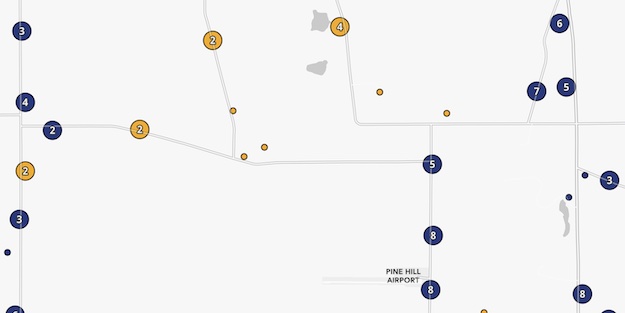
The state map identifies this part of Barre near Pine Hill with several unserved addresses.
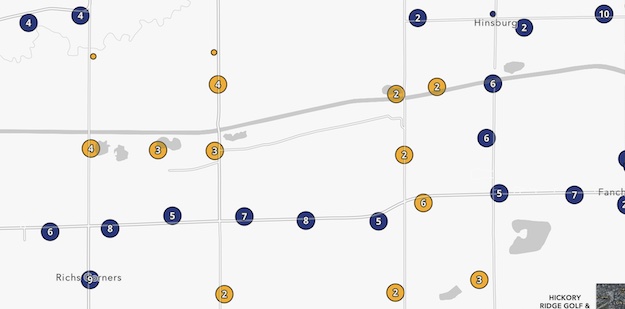
The Riches Corners Road area in Albion also has unserved areas for high-speed internet.
Parts of Knowlesville are also considered unserved on the state map.
Photos and information courtesy of Medina Mustang Band Boosters
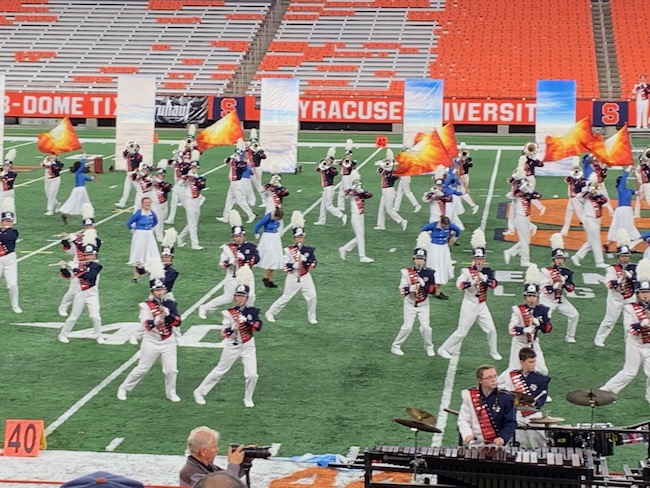
The Medina band finished third on Sunday in the SS1 class at the championships for New York State Field Band Conference. Medina’s score of 90.0was bested Mineola in 1st at 93.67 and New Hartford in 2nd at 93.15. There were 9 schools in the SS1 class.
The New York State Field Band Conference celebrated its 50th anniversary on Sunday with the championships at the JMA Dome (formerly the Syracuse Carrier Dome).
A total of 53 schools participated from around all of NYS including Northwestern from PA. The show in its entirety ran from 8 a.m. and concluded at 10:30 p.m. In addition to the competing bands the UB Thunder of the East and Syracuse’s Pride of the Orange gave exemplary performances to entertain the crowd and show students that their marching band career doesn’t have to end after high school.
Medina band representatives are presenting with the third-place award.
The National Class consisted of 9 competitors with Cicero-North Syracuse earning 1st place with a score of 96.80.
Other winners were Division Ave in SS3 with 88.40; Roslyn in SS2 with 89.07; Sachem in LS3 with 86.15 and Hicksville in LS2 with 89.45.
It was a busy week for the Medina students with lots of practices, a Senior Recognition ceremony at the high school on Wednesday topped off with a Dome breakfast on Sunday morning as a form of pep rally.
Director Matthew Jaeger addressed his students beforehand with words of encouragement reminding them of their accomplishments from the start of band camp in August to their performance at the Dome.
Their success for the season isn’t measured just by their standing at the Dome, but by their overall growth in the season and how they represent the school and the Medina community. They have much to be proud of. That sentiment was expressed by a number of people who were not from Medina but commented how much they’ve enjoyed Medina’s shows over the years.
By Tom Rivers, Editor Posted 31 October 2022 at 12:33 pm
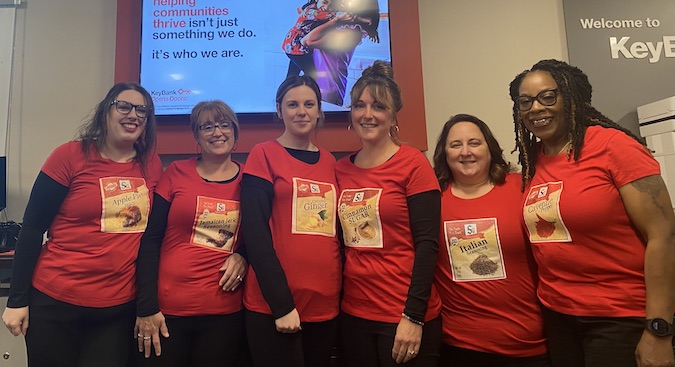
Provided photo: Staff at the Key Bank in Albion are dressed as the Spice Girls for Halloween today. Pictured from left include Kati Draper, Connie Harrison, Chelsea Snyder, Nicole Nawotka, Nancy MacPhee and Brenda Gabrielson.
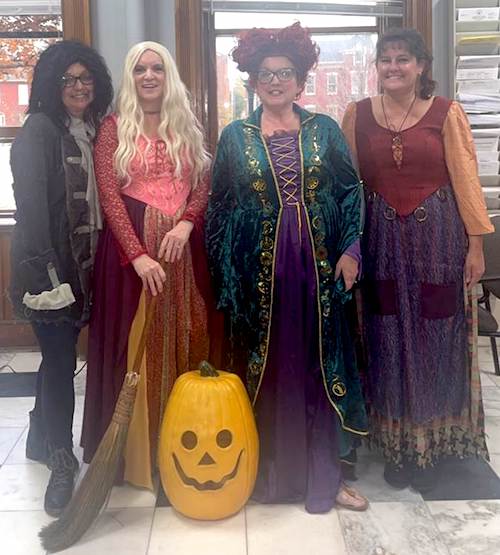
Staff at the Orleans County Clerk’s Office dressed up like characters from Hocus Pocus. Pictured from left include Kim Hazel, Nadine Hanlon, Tracy Cliff and Amy Albright.
Other businesses and organizations are welcome to send in photos of people in the Halloween spirit. Send photos with identification to tom@orleanshub.com or news@orleanshub.com.
By Ginny Kropf, correspondent Posted 31 October 2022 at 7:50 am
MEDINA – When the Butts-Clark American Legion Post signed up to participate in Medina’s Ale in Autumn Sept. 25, the Auxiliary decided to take advantage of the crowds and hold a fundraiser to benefit local veterans.
Auxiliary members Valerie Wells and Cathy Fox decided to hold a raffle and they began soliciting donations for a “Bucket of Booze.”
Local liquor stores made generous donations, Legion and Auxiliary members started donating, along with other friends.
When the day had ended, the Auxiliary had made more than $2,000.
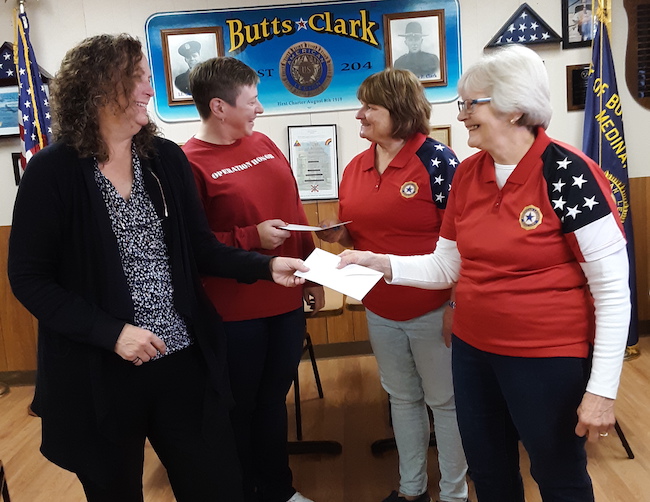
They chose two local causes which benefit veterans, and on Wednesday morning at the American Legion, $1,000 checks were presented to Nancy Traxler, director of the Orleans County Joint Veterans Council for their Veterans’ Van Service; and to Jenn Thom, co-founder and president of Operation Honor.
“This donation will help when we are ready to replace our next van,” Traxler said. “We have a van with 117,000 on it and it will be the next one we replace.”
Donated money also helps with office supplies, Traxler said.
The Veterans’ Van Service has 26 volunteers, who have clocked 3,054 hours this year to date, driving veterans to medical appointments. They have driven a combined 23,000 this year, Traxler said. Just in September they took 498 trips and drove 595 veterans to Buffalo, Batavia and other approved medical appointments.
She said the Veterans’ Administration pays for insurance, gas and maintenance on the vans, but the Joint Veterans’ Council has to buy the vans.
Donations to the van service can be made by sending a check to the Veterans’ Service Agency, 13996 Rt. 31 West, Albion.
Operation Honor is an organization co-founded by Thom and Sarah Surdel in 2017 to provide an opportunity for veterans to reach out for help with everyday needs.
“It is local and helps with such things as rent, utilities, building a handicap ramp or putting a vehicle on the road when a veteran can’t afford it,” Thom said.
Donations to Operation Honor can be made through their Website, Facebook or by calling Thom at (585) 532-6900.
Operation Honor’s biggest fundraiser of the year is their 5K walk/run, scheduled Nov. 12 at Junior Wilson Club.
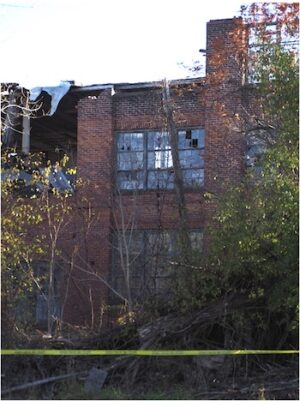
S.A. Cook & Co. in Medina is shown after the fire a week ago.
By Catherine Cooper, Orleans County Historian
Illuminating Orleans, Vol. 2, No. 36
MEDINA – The red-brick structure on East Avenue in Medina now stands roofless and forlorn.
A recent fire has prompted calls for demolition of the 70,000-square-foot complex.
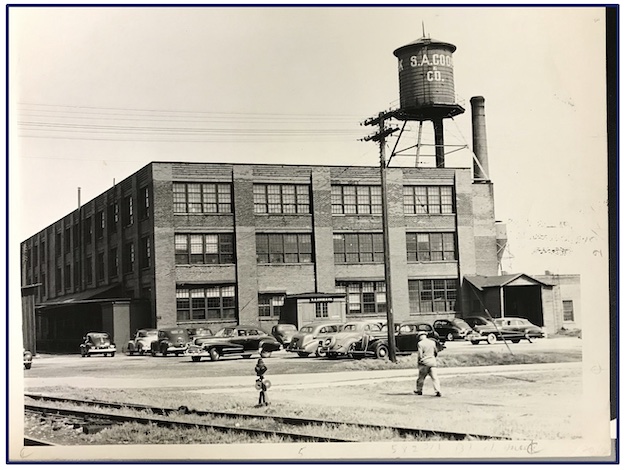
Built in 1911 to house the expanding S.A. Cook & Co. factory, the building once housed the largest industrial maker of rockers and chairs in the northeast.
Employing as many as 600 workers at one time, the company could rightly claim in a 1913 advertisement that “it was responsible in no small degree for the growth and advancement of Medina.”
(Editor’s Note: The 70,600-square-foot manufacturing site has been sold multiple times through the property tax auction, including in 2016 when it only fetched $100. The current owner – Open the Windows of Heaven, Apostolic Ministry – doesn’t have insurance on the building. The church group also doesn’t have the resources to make extensive repairs or to demo the site, village officials said. Medina is seeking state and federal funding to assist with the demolition of the three-story site.)
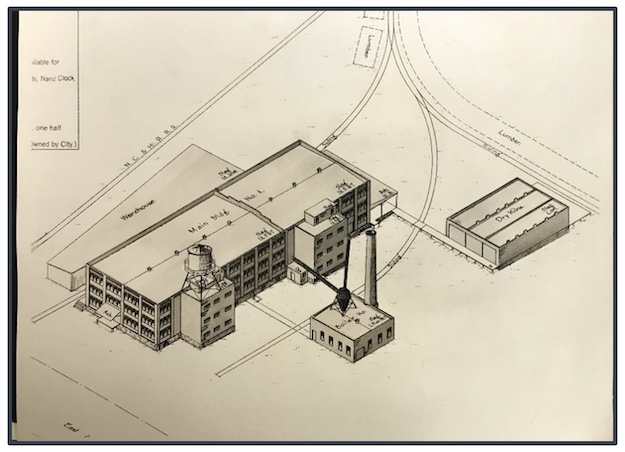
The plant’s location, adjacent to the railroad, facilitated the delivery of lumber and other raw materials as well as the shipping of finished products. The plant had its own boiler and drying kilns.
S.A. Cook & Co. furniture factory building plans
Over 5,000,000 feet of lumber were cut and used in the manufacturing process in 1912 and seventy-five carloads of coal were burned. It was estimated that one finished product was produced every 45 seconds and that the entire annual production would fill 564 freight cars. (Atlas of Niagara and Orleans Counties, 1913)
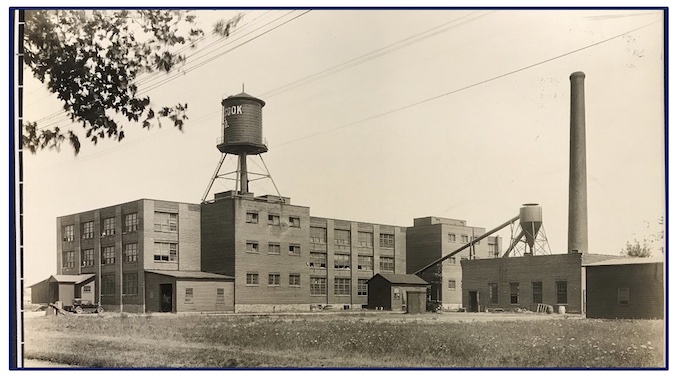
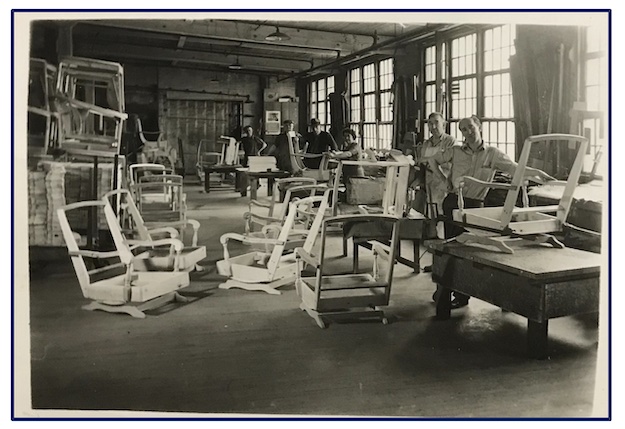
S.A. Cook & Co., 525 East Ave., Medina, 1920s view
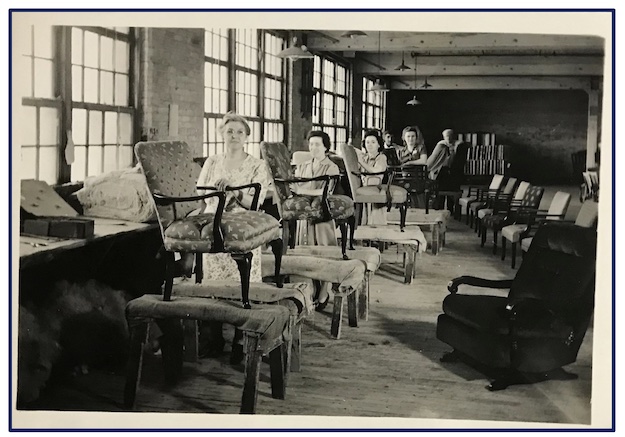
S.A. Cook & Co., 525 East Ave., Medina, late 1930s view
Furniture sales declined drastically during the Depression. S.A. Cook survived this period but production and empoyment declined. The impact of World War II further affected sales.
In 1965 J. Michaels Inc. of New York city purchased S.A. Cook & Co. to manufacture furniture for its stores. Production increased and employment rose to about 100. But the business model for the industry changed. North Carolina became the new center of furniture production and the cost of shipping lumber and raw materials to the northeast became prohibitive.
The company employed skilled upholsterers and craftsmen.
The Dunlap Tire & Rubber Co. of Buffalo introduced latex foam for use in seats and cushions in the 1930s.
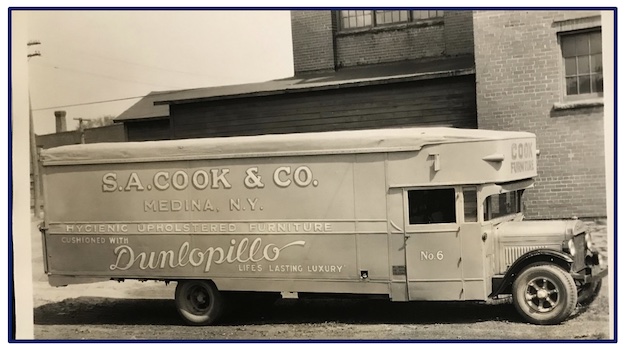
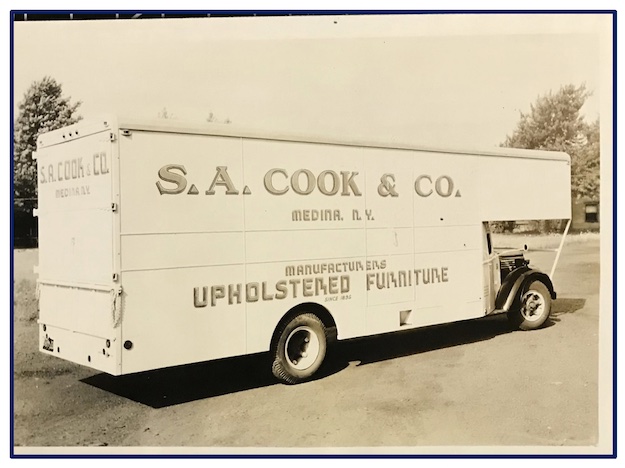
The company had its own delivery trucks boasting S.A. Cook’s products as “hygienic upholstered furniture cushioned with Dunlopillo – life’s lasting luxury.”
Later delivery truck
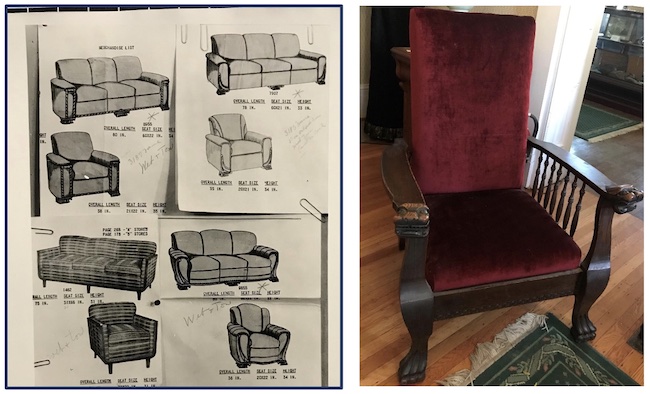
Furniture manufactured at the plant is still in use in homes across the country as it was of high quality.
The Medina Historical Society continues to receive requests each year for information about the company’s distinctive version of the Morris Chair. Patented for the company in 1901 by George A. Bowen, it had an adjustable back rest and featured carved griffin’s heads on the arms, turned spindles and claw feet.
Twenty-five employees were laid off when the S.A. Cook & Co. closed in August 1984, having been in operation for almost 90 years.
By Tom Rivers, Editor Posted 30 October 2022 at 10:14 am
ALBION – The four public libraries in Orleans County are asking county legislators to keep the libraries in the county budget and to boost the funding amount.
The libraries would like to collectively receive $1 per resident or $40,343. The budget for 2022 included $10,087 that was split up among the libraries in Albion, Holley, Lyndonville and Medina.
The county was giving $29,914 to be shared among the four libraries as recently as 2002, but that dropped to $7,480 in 2003. Since then, the amount was raised to $12,587 in 2007, $13,617 in 2010, and then was cut to $10,087 in 2011. It hasn’t changed since then.
In Genesee County, the county contribution is close to $1 per person. The county with a population of 58,388 allocated $53,680 to its public libraries in 2022. That amount was increased from $41,680 in 2021.
Directors from the four public libraries in Orleans each shared brief ways the libraries are assisting the community, outside of loaning books and videos.
Yates Community Library recently printed a 75-page driver’s manual to help a teen-ager prepare for her driver’s test. That manual is now part of the library collection, said Emily Cebula, director of library.
Kristine Mostyn, director of the Lee-Whedon Memorial Library in Medina, noted that Lee-Whedon and the other libraries also offer free use of the internet and computers. Lee-Whedon has people come in to use the internet for job interviews through Zoom video conferencing.
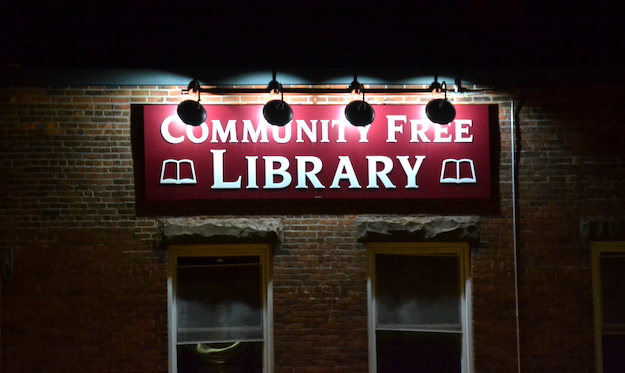
Sandra Shaw, director of Community Free Library in Holley, said the Holley staff help residents connect to local services.
“People come in and they need help and they need it now,” she said. “We help them get on with their daily lives and keep their dignity.”
At Hoag Library, director Betty Sue Miller said the staff also is trained as notaries and notarizes several items a day. The library also has classrooms for ESL. It loans out htspots for people to have internet access off site. Hoag offers 30-minute tech classes twice a day in the afternoons.
“Our libraries are constantly evolving as we hear the needs of the community,” Miller said.
Tom Bindeman, director fo the three-county Nioga Library System, said more than 200,000 items were shared last year through the inter-library loan system at Nioga.
“Our goal is to keep things moving,” he said.
Bindeman praised the staffs of the libraries in Orleans, Genesee and Niagara counties. Many operate with only a few employees who make close to minimum wage.
The public libraries have proven their dedication to their communities, especially during the Covid pandemic, Bindeman said.
“We’re proud of what we do,” he said. “We serve everybody regardless of economic backgrounds.”
This sign is on the back of Community Free Library in Holley. It was added about two years ago. All of the four libraries in Orleans County have recently completed capital projects.
Provided photo: Niagara County Farm Bureau President Kevin Bittner, left, is congratulated by NY Farm Bureau District 2 Director Pat McCormick.
LOCKPORT – Niagara County Farm Bureau held its annual meeting at the Farm and Home Center. It focused on the grassroots foundation of the organization.
In reviewing the past year, President Jeannette Miller recapped the year chronologically. She talked about the lobbying efforts, the Corn booth at County Fair, Ag Literacy month and other efforts to influence the political issues during the year.
Pat McCormick, District 2 State Board Director, spoke about the state efforts. Although the Wage Board recommendations did not go the way the members hoped (with the overtime threshold to be lowered in agriculture), he encouraged those present to keep up the efforts to explain the issue to Governor Hochul.
He focused on the success of the Taste NY event in Queens. Many political and business leaders attended this educational event. There is another event planned and he encouraged county leaders to participate in the next event. In addition, there are new programs to encourage membership in the state organization.
The evening concluded with officer elections. Those elected are President Kevin Bittner, Vice President Mark Russell, and board members Kassidy Voelpel, Jeannette Miller, Kelly Raby, Trevor Ganshaw and Max Russell.
Bittner is the orchard specialist for Bittner-Singer Orchards in Appleton. His father, Jim Bittner, is a past president of the Niagara County Farm Bureau.
When asked about his plans for the coming year, Bittner stated, “My goal is that Farm Bureau will represent all farms, large and small. Anyone who wishes to become a member please contact any current member for an application. Any member who wishes to get involved in our policy development or events please contact me or any board member.”
For more information about Niagara County Farm Bureau, its projects and events, email info@niagaracountyfarmbureau.com or call 716-735-7791.