Press Release, Erie Canalway National Heritage Corridor
Photo by Tom Rivers: Icicles are pictured hanging inside the Canal Culvert in Ridgeway on Dec. 12, 2017. The Canal Culvert is one of Orleans County’s best-known landmarks.
WATERFORD – Amateur and professional photographers are invited submit images for the 13th annual Erie Canalway Photo Contest. Entries must be postmarked by August 31.
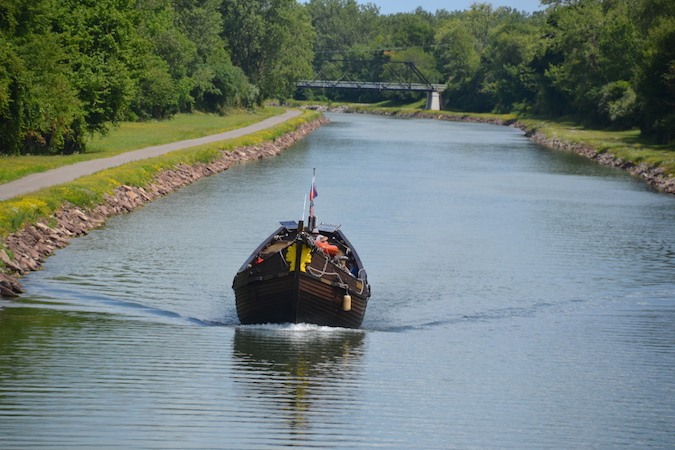
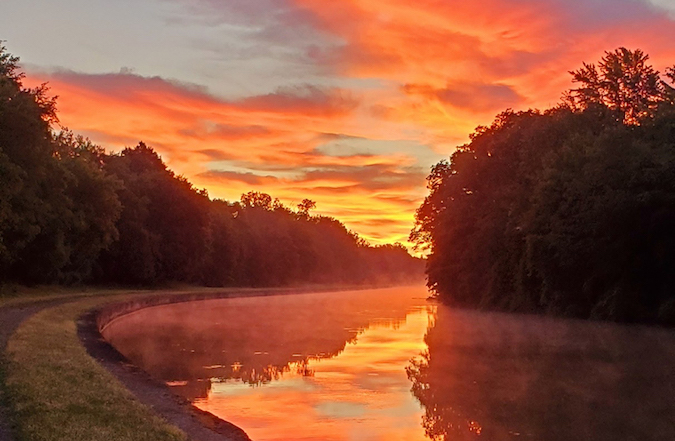
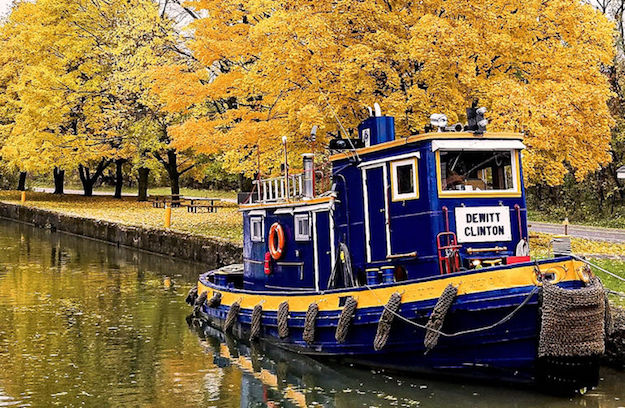
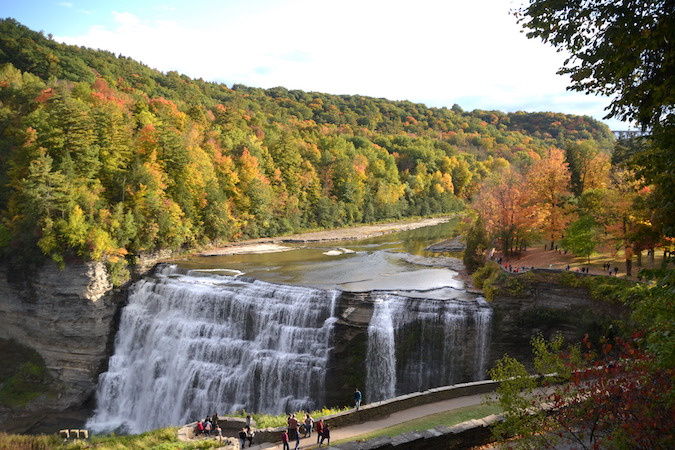
Images should convey the wealth of things to do and see along the waterway and express the unique character of the canal and canal communities. Winning photos will be featured in the 2019 Erie Canalway calendar.
Images will be judged in four contest categories: On the Water, Along the Trail, Canal Communities, and Classic Canal.
Judges will select first, second, and third place winning images in each category, as well as 12 honorable mentions.
Images must be taken within the Erie Canalway National Heritage Corridor, which spans 524 miles across the full expanse of upstate New York. It encompasses the Erie, Cayuga-Seneca, Oswego, and Champlain canals and their historic alignments, as well as more than 230 canal communities.
Download official contest rules and an entry form by clicking here.
Photo by Tom Rivers: A kayaker paddles on Lake Ontario off the shore of Barker on Saturday evening.
Press Release, U.S. Sens. Charles Schumer and Kirsten Gillibrand
WASHINGTON, DC – U.S. Senate Minority Leader Charles E. Schumer and U.S. Senator Kirsten Gillibrand announced that the Interior Appropriations bill that just passed the Senate includes $11 million in federal funding to help protect the Great Lakes from the threat of Asian carp.
The funding would be provided to the U.S. Fish and Wildlife Service’s Great Lakes Fish and Wildlife Conservation Offices and would be used to control Asian carp in the Mississippi and Ohio River Basins to prevent them from entering the Great Lakes.
“The invasive and destructive Asian carp are no friend of the Great Lakes, and we need to do all we can to keep them out and protect our wildlife and Great Lakes,” said Senator Schumer. “Asian carp create a tremendous burden on any ecosystem they invade, and I’m glad to see funding moving forward to keep our waterways safe and habitable for New York’s wildlife. I vow to keep fighting for this funding until it is signed into law, to protect the precious resources that are our Great Lakes.”
“The Great Lakes are some of New York’s most precious natural resources, and we need to do everything possible to protect them against the imminent threat of Asian carp,” said Senator Gillibrand, a member of the Environment and Public Works Committee. “I fought for this critical funding to be included in the Senate Interior Appropriations bill so that we can help keep New York’s waterways and natural habitats free from this invasive species, and I am pleased to announce that we are one step closer to getting this funding signed into law.”
The economy and the ecosystem of the entire Great Lakes region are at risk because of the imminent threat of invasive Asian carp. Current efforts to control the spread of Asian carp are located in the Chicago and Ohio River Basins, where the Mississippi River Basin links to the Great Lakes.
Asian carp are large, prolific, invasive species that can weigh up to 100 pounds and grow up to four feet long. They consume vast amounts of food, disrupting the food chain that supports native fish. This aggressive invasive species could devastate the Great Lakes ecosystems, which provide drinking water to over 30 million Americans, support a $7 billion fishing industry and a $15.5 billion boating industry, and create hundreds of thousands of jobs.
Schumer and Gillibrand helped secure the $11 million in federal funding for the Fish and Wildlife Service’s Great Lakes Fish and Wildlife Conservation Offices in the Senate’s recently passed Interior Appropriations bill. Earlier this year, Gillibrand pushed for this funding, and last month, Gillibrand also announced the reintroduction of the bipartisan Invasive Fish and Wildlife Prevention Act, legislation that would protect New York’s natural resources from invasive species by giving the United States Fish and Wildlife Service (USFWS) greater authority to regulate nonnative species and prohibit them from being imported or sold in the United States.
New York State Department of Environmental Conservation Commissioner Basil Seggos announced that sporting licenses and Deer Management Permits for the 2018-19 season are now on sale.
Licenses and permits can be purchased at any one of DEC’s license-issuing agents, by telephone (866-933-2257), or online at the DECALS website. The hunting and trapping licenses are valid from Sept. 1, 2018, through Aug. 31, 2019. (In Orleans County, most of the local town halls sell the licenses, as well as the Albion Walmart, Narby’s Superette & Tackle in Carlton and Orleans Outdoor in Albion.)
“New York’s vast landscape offers dozens of opportunities to enjoy the outdoors and participate in the proud traditions of hunting and trapping,” Commissioner Seggos said. “Governor Cuomo continues to prioritize investing in new lands and improving access for outdoor recreation. There are hundreds of thousands of acres of public land open to hunting and trapping across the state. Long seasons, liberal bag limits, and healthy wildlife populations make for great hunting and trapping experiences.”
Through the purchase of sporting licenses, arms and ammunition, and trip-related expenditures, New York’s nearly 600,000 licensed hunters contribute an estimated $1.5 billion to the state’s economy each year.
Expanded Call Center Hours
Through Oct. 1, the DEC Call Center is accessible from 8:30 a.m. to 7 p.m., Monday through Friday, and from 9 a.m. to 5 p.m. on Saturdays. Regular call center weekday hours (8:30 a.m. to 4:30 p.m.) will resume on Oct. 2.
Individuals should have the following items ready when buying a license:
• Proof of residency (e.g., driver’s license or non-driver’s ID with a valid NYS address) and;
• If purchasing by phone or internet, a valid credit card.
• If not already entered in DEC’s automated licensing system, individuals are required to provide proof of hunter or trapper education certification or a copy of a previous license for all hunting and trapping license purchases. For additional information, visit the General Sporting License Information webpage on DEC’s website.
Habitat & Access Stamps
New York’s habitat serves a vital role in maintaining healthy and sustainable fish and wildlife resources for all to enjoy. DEC encourages all outdoor enthusiasts to consider purchasing a voluntary Habitat & Access Stamp each year. Funds from the $5 Habitat & Access Stamp help fund projects aimed at conserving habitat and improving public access for fish and wildlife-related activities. This year’s promotion features a barred owl.
“Habitat & Access Stamps support important projects around the state, so we are ramping up efforts to promote their purchase and have set a target to sell 25,000 stamps for the 2018 and 2019 seasons,” Seggos said. “Please consider being a ‘Habitat Hero’ through the purchase of a Habitat & Access stamp.”
Deer Management Permits
In addition, Deer Management Permits (DMPs) are now available at all license-issuing outlets, by phone, or online through Oct. 1. DMPs, which are used to ensure proper management of the deer herd, are issued through an instant random selection process at the point of sale. The chances of obtaining a DMP remain the same throughout the entire application period; hunters do not need to rush to apply. The 2018 chances of selection for a permit in each Wildlife Management Unit are available online, through License Issuing Agents, or by calling the DMP Hotline at 1-866-472-4332. Detailed information on Deer Management Permits is available on DEC’s website.
The new Hunting & Trapping Regulations Guide provides an easy-to-read compendium of all pertinent rules and regulations and is available at all license issuing outlets and on the DEC Hunting Regulations webpage. For a list of license-issuing agents, visit DEC’s online License Center or contact the DEC Call Center at 1-866-933-2257.
Venison Donation Program
Anyone-not just hunters and anglers-can help feed the hungry by making a monetary contribution to the Venison Donation Program at any license-issuing outlet. Individuals should inform the license sales agent if interested in making a donation of $1 or more to support the program. Since 1999, these funds have been used by the Venison Donation Coalition to process more than 330 tons of highly nutritious venison, the equivalent of 2.8 million meals served. For more information about the Venison Donation Coalition program, click here.
Photo by Tom Rivers: A kayaker passes along Lake Ontario in Barker while the sun sets Saturday evening.
By Tom Rivers, Editor Posted 5 August 2018 at 12:12 pm
$8,800 in prizes up for grabs in derby, which continues until Aug. 19
The Orleans County Fishing Derby started on Saturday and several big salmon were reeled in and landed on the leaderboard.
A 26-pound, 3-ounce Chinook leads for the $4,000 grand prize. It was caught by Dane Ballard of Aberdeen Proving Grounds in Maryland.
There are four divisions in the derby – Salmon, Rainbow Trout/Steelhead, Brown Trout, and Lake Trout.
The top prizes for each division include $500 for first, followed by $300 for second, $200 for third, $100 for fourth and $50 for fifth.
No fish have been entered yet for three of the divisions.
Only salmon have fish on the leaderboard and they include 1st, 24 pounds, 13 ounces by Tom Riley of West Henrietta; 2nd, 24 pounds, 3 ounces by Gary Bloom of Albion; 3rd, 22 pounds, 10 ounces by Sheila Frank of Rochester; 4th, 22 pounds, 9 ounces by David Bonnell of Rochester; and 5th, 22 pounds, 9 ounces by Mike Schaeffer of Sligo, Pa.
Gary Bloom also is in the lead for the $200 bonus prize for biggest fish caught by an Orleans County resident.
The derby continues until Aug. 19. The Albion Rotary Club sponsors the annual event.
This photo by Dave Ellingson shows a kayak along the Erie Canal in Gasport.
WATERFORD – Amateur and professional photographers are invited submit images for the 13th annual Erie Canalway Photo Contest. Images should convey the wealth of things to do and see along the waterway and express the unique character of the canal and canal communities. Winning photos will be featured in the 2019 Erie Canalway calendar.
Images will be judged in four contest categories: On the Water, Along the Trail, Canal Communities, and Classic Canal. Judges will select first, second, and third place winning images in each category, as well as 12 honorable mentions.
• “On the Water” should show activities on the water and boats of all stripes
• “Along the Trail” could include cyclists, walkers, strollers, and activities or scenes along the Erie Canalway Trail.
• “Canal Communities” include historic downtowns, distinctive architecture, farmers markets, events, and scenes taken in canal communities.
• “Classic Canal” – Photos that could be taken only on the canal, and could include on-water activities, engineering marvels, canal structures, nature, or other scenes that show the distinctive sense of place of the Erie Canalway.
Images must be taken within the Erie Canalway National Heritage Corridor, which spans 524 miles across the full expanse of upstate New York. It encompasses the Erie, Cayuga-Seneca, Oswego, and Champlain canals and their historic alignments, as well as more than 230 canal communities.
Entries must be postmarked by August 31, 2018. For more information on the official contest rules and an entry form, click here.
Photos by Tom Rivers: Two bicyclists from York, Pa., ride on the Erie Canal Towpath in Albion last Nov. 2 when a contractor was in the area removing trees alongside the canal. The Canal Corporation said the tree stumps will be removed after the navigational season ends on Oct. 10. Besides removing the stumps, the areas where trees were removed will have grass planted.
By Tom Rivers, Editor Posted 7 June 2018 at 10:23 am
Residents share displeasure about tree-clearing
Brian Stratton, director of the Canal Corp., told the group at the Hoag Library that the tree removal was necessary to keep the canal safe.
ALBION – Canal Corp. officials agreed with local residents that the embankments where trees were cut down last fall are still an unsightly mess.
It’s going to look bad for most of the rest of 2018, Canal Corp. officials said on Wednesday during a meeting at Hoag Library.
But it will start to look better not long after when the canal’s navigational system ends on Oct. 10. The Canal Corp. is working on a contract to have the stumps and root systems removed, and also to have grass or a “grassy material” planted on the slopes, said John Callaghan, the canal’s deputy director.
The tree removal started last October when the Canal Corp. hired Mohawk Valley Materials from Utica to remove trees on 146 acres of canal-owned land from Medina to Fairport. The loss of trees upset many residents who lost privacy and felt the canal was diminished with the trees chopped down.
Bruce Schmidt of Gaines told the Canal Corp. during Wednesday’s meeting that the public and local elected officials were caught off guard by the tree clearing.
“A lot of this was a surprise to people,” Schmidt said.
He urged the Canal Corp. to share more details with the next phases of the “vegetative management plan.”
David Mellen, director of construction management for the Canal Corporation, said the Canal Corp. has held six public meetings now about the project. The Canal Corp. values the public input, he said.
David Mellen, director of construction management for the Canal Corporation, said the Canal Corp. would have been “reckless” to allow the trees along the embankment.
During Wednesday’s meeting Mellen went over why the tree cutting was necessary, especially in Orleans County where 50 acres of trees were removed. Mellen said many sections of the canal in Orleans were identified as high risk for compromised embankments due to tall trees right by the canal. Those trees have roots that burrow deep in the soil, making the canal vulnerable to leaks and potentially to catastrophic blowouts, he said.
Brian Stratton, director of the canal Corp., noted the canal was originally built about 200 years ago, from 1817 and 1825. It was last expanded in 1918. Trees in the past century have sprouted up on embankments, which makes the canal vulnerable, not only from the roots but in case a tree topples over.
“We want to make sure the canal continues to go, that it continues to be beautiful, and that it continues to be safe,” Stratton told about 60 people in a packed meeting room at the library.
This rendering from the Canal Corp. shows a compromised canal with tree roots burrowing into the soil.
This rendering shows the preferred condition of embankments without any trees.
The tree clearing made it to Spencerport until being halted in early February after a lawsuit from the towns of Brighton, Pittsford and Perinton.
The contractor was able to complete about 65-70 percent of phase 1 of the tree removal until the work was stopped, Mellen said.
The company has some cleanup work that remains in Orleans County and Brockport. It has until June 30 to finish the work. That doesn’t include stump removal and grass plantings, which are part of phase 2.
Residents asked if more trees will come in Orleans County by the canal. Mellen said all of the trees identified as high risk have been removed from the county. No more are planned to be cut down.
Bruce Schmidt of Gaines said residents and elected officials weren’t fully aware of the impact of the tree removal.
The Canal Corp. was asked about the loss of privacy and if any new screening will be added. Callaghan, the Canal Corp. deputy director, said the agency will put in smaller trees away from the embankment for screening. The Canal Corp. will meet with homeowners on a case by case basis, with input from arborists.
One canal resident in Knowlesville said her house sits below the canal and the tree clearing has left her property exposed.
“It’s just horrible coming home from work everyday and seeing my home,” she said. “It’s annihilated.”
John Callaghan, the canal’s deputy director, said embankments will look better after this navigational season. He went over some of the next steps, including stump removal and backfill of voids. There will be grading, seeding, some drainage construction, and vegetative screening. The Canal Corp. also wants to add more access points so towpath users aren’t cutting through private backyards.
Lynn Hill, a Barre town councilman, said the Canal Corp. shouldn’t have left embankments in such an unsightly condition this year. He was angry with the lack of specifics in how the Canal Corp. plans to create grassy slopes where the trees used to stand.
“The place looks like hell right now with just stumps hanging there and no vegetation,” Hill said. “There’s no going back. You’ve cut down the trees.”
Mellen said the details of the next contract are being worked out. The contract will be approved with work to start in the fall after the canal navigational season ends and water is drained from the system.
Many of the Canal Corp.’s top leaders were at the meeting in Albion. They were thanked for their presence by Albion Mayor Eileen Banker and Lynne Johnson, chairwoman of the Orleans County Legislature. They asked that the Canal Corp. consider residents’ concerns in the next phases.
Paul Hendel, a member of the Murray Town Board and chairman of the Orleans Economic Development Agency, said the canal is a critical resource for the county and effects many businesses.
Holley Mayor Brian Sorochty said the tree-clearing has made other trees vulnerable to strong winds.
Hendel told the Canal Corp. that the EDA and local communities want to be partners in realizing the potential of the canal as an economic driver.
Johnson noted the county and the Village of Medina will be developing comprehensive plans to realize the potential of the canal as a cultural, economic and tourism attraction.
Brian Sorochty, the Village of Holley mayor, said some of the canal neighbors in Holley have lost additional trees since the tree-clearing. The canal trees provided a buffer and wind break for trees by homes. Once the buffer was gone, other trees were more vulnerable. Sorochty said three of his trees have toppled from wind since the canal trees were removed, and one of his neighbors has lost several trees.
“There are ramifications and it’s not just privacy,” Sorochty said. “There is now a wind issue. It’s noticeably different and it’s forever changed.”
Callaghan said the Canal Corp. is determined to address residents’ concerns.
“We have a ‘If we broke it, we’ll fix it’ mentality,” he said. “Our goal is to make the residents more safe.”
KENT – What appears to be a Little Blue Heron is pictured at the end of Bills Road in Kent on May 2. Chris Chester took this photo and the one below of what he is certain is a Little Blue Heron, which breeds in the Gulf states and is not often seen this far north.
“By contrast we see Great Blue Herons here (over Marsh Creek) every day,” Chester said. “The bird spent the day on a low area of our property that was under about a foot of water. It left around dusk and has not returned.”
He e-mailed the Cornell Lab of Ornithology back in early May with hopes the group could confirm the identification, but has yet to hear back from Cornell.
Chester watched the heron catch large frogs. For more on the Little Blue Heron, click here.
By Tom Rivers, Editor Posted 23 May 2018 at 1:27 pm
Photos by Tom Rivers: Sixth-graders from Medina meet a merlin, a small falcon that is held by Daena Ford, president of Braddock Bay Raptor Research in Rochester.
This was one of 13 stations during Conservation Field Days at the Orleans County 4-H Fairgrounds in Knowlesville. Sixth-graders from Albion, Holley and Kendall visited the fairgrounds for Conservation Field Days on Tuesday. Today, students from Medina and Kendall are learning about earth-friendly topics. This is the 50th annual Conservation Field Days.
Daena Ford, president of Braddock Bay Raptor Research in Rochester, holds the merlin. She discussed birds of prey, their habitats and ecosystems. This is the first time Braddock Bay has been at Conservation Field Days in about a decade.
Amy Jessmer, an intern for the Orleans County Soil & Water Conservation District, shows students a model that demonstrates how water flows through a watershed. She discussed how our daily lives affect water quality and what we can do to protect our water resources.
Two marine patrol deputies for Orleans County Sheriff’s Office, Bob Barrus (center) and Bill Larkin, right, discussed boater safety. They are joined by Vern Fonda, a conservation officer for the state Department of Environmental Conservation.
Vern Fonda, the conservation officer, showed students how to toss a rescue throw bag. Fonda and marine patrol deputies discussed boater and water safety, using life jackets and the “buddy system.”
Scott Dean of the NYS Public Service Commission discusses renewable energy and ways to conserve power.
Meaghan Boice-Green of the Department of Environmental Conservation told students how critical birds and butterflies are to our ecosystem, yet they face many challenges to survive.
Other stations included Orleans County master gardeners discussing composting, Orleans County Health Department educating about rabies, and the Gregoire family in Murray highlighting hunting and trapping for wildlife management.
Students were also encouraged to turn off the computer games and play with a dog. The different sixth grade classes also competed in an eco-game show. Students also learned about climate monitoring, and there was a station about bugs, showing how some insects are beneficial and others are pests.
By Tom Rivers, Editor Posted 20 May 2018 at 12:37 pm
Photo by Tom Rivers: A boat passes by the Ingersoll Street lift bridge on Friday afternoon in Albion. Friday was opening day for the western end of the canal, including the section in Orleans County.
The Canal Corporation is waiving tolls again this year for recreational vessels as the state continues to commemorate 200 years of Erie Canal history. The Erie Canal was under construction from 1817 to 1825. This year is the canal’s 194th season.
2018 also marks the 100th anniversary of the Barge Canal, when the expansion of the Erie Canal was complete in 1918.
The standard hours of operation for the 2018 season are 7 a.m. to 5 p.m. The lift bridges in Orleans County have extended hours until 10 p.m. from May 18 to Sept. 12.
The canal’s navigation season continues until Oct. 10.
By Tom Rivers, Editor Posted 15 May 2018 at 9:40 am
Photo by Tom Rivers: It was quiet while it was raining this morning on the Erie Canal in Albion, where these vessels are tied up near the Ingersoll Street lift bridge.
The Erie Canal opens at 10 a.m. today for its 194th season.
The Canal Corporation is waiving tolls again this year for recreational vessels as the state continues to commemorate 200 years of Erie Canal history. The Erie Canal was under construction from 1817 to 1825.
The Canal Corp. also waived the tolls last year. Those tolls are normally $25 to $100 for a season pass, depending on the size of the vessel.
This year also marks the 100th anniversary of the Barge Canal, when the expansion of the Erie Canal was complete in 1918.
The standard hours of operation for the 2018 season are 7 a.m. to 5 p.m. The lift bridges in Orleans County have extended hours until 10 p.m. from May 18 to Sept. 12.
The canal’s navigation season continues until Oct. 10.
Update: The Erie Canal section in Orleans County doesn’t open until May 18.
‘The blight of plastic bags takes a devastating toll on our streets, our water and our natural resources, and we need to take action to protect our environment.’ – Governor Cuomo
Press Release, Gov. Andrew Cuomo
Governor Andrew M. Cuomo today introduced a program bill that would ban all single-use, plastic carryout bags at any point of sale in New York State. This action follows the release of the New York State Plastic Bags Task Force report in January, which outlined the environmental impact of plastic bags, single-use bag reduction measures, and proposed actions that the state could take to reduce pollution and protect New York’s natural resources, including a ban on single-use plastic bags.
“The blight of plastic bags takes a devastating toll on our streets, our water and our natural resources, and we need to take action to protect our environment,” Governor Cuomo said. “As the old proverb goes: ‘We did not inherit the earth, we are merely borrowing it from our children,’ and with this action we are helping to leave a stronger, cleaner and greener New York for all.”
As communities and states across the country continue to struggle with the ecological and financial costs associated with the use of plastic bags, New York is taking action to implement legislation that will ban plastic bags statewide. The Governor launched the New York State Plastic Bag Task Force in March 2017 to conduct a study and develop a comprehensive solution to the use and disposal of plastic bags and how best to deter their environmental impact. The Task Force is led by State Department of Environmental Conservation Commissioner Basil Seggos along with co-chairs Senator Thomas O’Mara and Assemblyman Steve Englebright.
The Task Force conducted a survey of more than a dozen municipalities in New York State that currently have plastic bag laws. The Task Force also encouraged public comment on the issue and received 558 responses between March and December 2017. The full report is available by clicking here.
Based on recommendations included in the report, the Governor is introducing a program bill that would ban the provision of single-use, plastic carryout bags at any point of sale, and would provide the Department of Environmental Conservation with exclusive jurisdiction over all matters related to plastic bags and film plastic recycling. The bill exempts garment bags, trash bags and any bags used to wrap or contain certain foods, such as fruits and sliced meats. The bill would go into effect on January 1, 2019.
In addition to the legislation, the state will undertake an education and outreach campaign to increase consumer awareness of single-use bags and their harmful impact on the environment. Education efforts will also seek to educate consumers of the impact plastic bags have on the environment and the waste stream, and promote use of reusable bags.
Plastic Bag Environmental Impacts
A ban on single-use plastic carryout bags will significantly reduce waste and environmental impacts. New York City alone estimates a savings of $12.5 million in disposal costs by reducing the number of single-use plastic bags. These costs do not include the significant cleanup costs to remove plastic through litter collection programs and beach and ocean cleanup efforts. In addition, the ban will reduce the raw materials and natural resources used to make, transport, and recycle these bags. Fewer carryout bags given away at checkout could result in decreased recycling and disposal costs for municipalities and municipal recycling facilities.
Currently, 10 cities, towns, and villages in New York have enacted plastic bag bans. One municipality has a plastic bag ban with a fee on single-use paper bags and bags that qualify as reusable, including 2.25 mil flexible plastic bags. The City of Long Beach has a single-use plastic bag fee in place and Suffolk County’s single-use plastic bag fee took effect on January 1, 2018.
The U.S. Environmental Protection Agency estimates that 80 percent of plastic pollution in the ocean originated on land, which includes plastic bags, and in New York, residents use 23 billion plastic bags annually, which contributes to pollution both on and off land. These bags do not biodegrade and they persist for years.
DEC Commissioner Basil Seggos said, “Governor Cuomo is taking real, enforceable action today to reduce the scourge of plastic bag waste blighting our communities, state lands, and waters. From Buffalo to the Adirondack Park, and from the Catskills to the Long Island Sound, plastic bag waste is degrading our natural resources and forcing municipalities to spend precious resources to address it. Today’s announcement reinforces the Governor’s standing as an innovative, forward-thinking environmental leader.”
Citizens Campaign for the Environment Executive Director Adrienne Esposito said, “Plastic pollution has become a serious threat to our lakes, rivers and marine environment as well as public health. Scientists are finding plastic pollution in shellfish and finfish, making its way to our dinner plates. Giving up plastic bags and using reusable bags is one easy, reasonable step each member of the public can take to help combat the plastic pollution epidemic. It is time for everyone to get on the plastic bag ‘ban wagon.’ We are thrilled Governor Cuomo has introduced this bill and is providing national leadership to address plastic pollution.”
Photo by Tom Rivers: The Brown Street bridge in Albion, which has been closed for about six years, is pictured on March 30.
Governor Andrew M. Cuomo today announced that seven finalists have been chosen for the $2.5 million Reimagine the Canals Competition, which seeks innovative ideas to transform the State’s Canal System.
The competition, managed by the Canal Corporation and the New York Power Authority, seeks new approaches for how to both use the canals as an engine for economic development and also to become a hub for tourism and recreation.
“This competition to bring new life into the historic Canal System is occurring in the same year as the System’s centennial, and it’s clear from the creativity in these entries that the future for the next century is very bright,” Governor Cuomo said. “With the contributions from these finalists, our canals will continue to serve a transformative role in helping the Upstate economy thrive.”
The seven finalists were drawn from a field of 145 entries from nine countries and nine states and were announced today in Syracuse during a celebration at the SUNY College of Environmental Science and Forestry. Each of the teams will receive up to $50,000 to further develop their entries for the next stage.
Gil C. Quiniones, NYPA president and CEO, which operates the state Canal System as a subsidiary, said, “The response to this competition is amazing and it is clear the judges had some tough choices to make. Picking the final winners will be just as difficult, but we are confident we’ll have some great ideas for the Canal System that can be put into action.”
Brian U. Stratton, Canal Corporation Director said, “These entries embrace the passion and pride in the Canal System that is prevalent in the 225 communities it passes through. They honor the heritage of the canals while at the same time offering bold ideas that can make the canals a vital force in the upstate economy and give people more reasons to visit.”
Final submissions will be due in early July. The winners, who will receive between $250,000 and $1.5 million to plan and implement their projects, are slated to be announced in the early fall.
The programs and initiatives are intended to promote the Canal System and its trails as a tourist destination and recreational asset for New York residents and visitors; sustainable economic development along the Canal System; the Canal System’s heritage; and the long-term financial sustainability of the Canal Corporation. Additionally, the competition sought entries on two separate tracks, one for infrastructure; the other for programs that have the potential to increase recreation use and tourism.
The finalists are:
• Go the Distance: this initiative will look to develop overnight accommodations for recreational users of the canal system. The team includes the Erie Canalway National Heritage Corridor from Waterford, NY; Gray Slate Partners from Troy, NY; 2K Design from Clifton Park, NY and Dorgan Architecture & Planning from Storrs, Conn.
• Canal Winterlocks: seeks to develop winter-time uses for the Erie Canal, potentially including skating, hockey, winter festivals and cross-country skiing. The team includes Clare Lyster Urbanism and Architecture and John Ronan Architects, both from Chicago and Urban Engineers from Philadelphia.
• Great Erie Canal Race: a multi-day race for many types of watercraft, with a component for bikers and hikers. The team, led by Parks and Trails New York, includes Joe Gustainis from Caledonia, NY and Karthik Namasivayam from Pittsford, NY, as advisors.
• Intra-Works: installations of art and sculpture to forge a cultural identity that links up the Canal System. The team includes the architecture and planning firms Collective Studio from New York City and WRT and Interface, both from Philadelphia.
• Pocket Neighborhoods: a model for canal-side neighborhoods that have the Erie Canal as the core of their identity. The team includes the Madison County Planning Department and Stream Collaborative, an architecture firm in Ithaca.
• Western New York Irrigation: this plan will build off the canal’s water infrastructure to expand its irrigation capabilities. The team includes SUNY ESF Professor Stephen Shaw, C&S Companies of Syracuse and the Cornell Cooperative Extension.
• Upstate Archipelago: this team is developing designs for resilient water landscapes that also provide public recreation space and wildlife habitat. The team includes Cornell Design, Ithaca; Cornell Cooperative Extension and H+N+S, a landscape architecture firm based in the Netherlands.
The New York State Canal System, formerly known as the Barge Canal, opened on May 15, 1918. To mark the occasion, the Canal Corporation will waive tolls for the 2018 navigation season, which begins May 15 on the eastern Erie Canal and May 18 on the rest of the 524-mile system. The original Erie Canal was completed in 1825.
Press Release, Department of Environmental Conservation
File photo: A black bear is pictured in Kendall on West Kendall Road in this photo from Aug. 11, 2014.
The New York State Department of Environmental Conservation (DEC) today issued guidance on how to prevent negative encounters with black bears. Nearly all negative bear encounters in New York are the result of hungry bears being attracted to human food sources. The simplest way to avoid a nuisance encounter is to remove potential food sources, which usually results in the bear moving on.
New York’s black bears emerge from the winter denning period and need to replenish their nutrients and body fat. To do so, they may travel long distances to preferred habitats that vary from season to season. Bears must often cross roads or pass through developed areas to find these different habitat types, and they often find human food readily accessible if homeowners do not take necessary precautions.
Not every bear that passes through a developed area is a problem bear, but readily available human food sources can quickly turn them into one. Bears can obtain all of the food they need from the forest but they are intelligent and opportunistic animals that will find and consume whatever food they can find most easily. Bird feeders, garbage cans, dumpsters, barbecue grills, unsecured out-buildings or vehicles containing food or waste all are potential attractants to bears.
Once a bear learns to obtain food from people or certain structures, it is very difficult to change the animal’s behavior. These bears are more vulnerable to motor vehicle collisions in populated areas, more likely to be illegally killed, or may become a threat to public safety.
In some cases, DEC is asked to relocate these bears. However, bear relocations are rarely effective at solving the problem and can be dangerous. Relocated bears often return to their original capture site, or may simply continue their bad habits at a new location. Additionally, if the circumstances that led to the original problem are not corrected, other bears may be attracted to the site and the human/bear conflicts will persist.
It is dangerous and illegal to intentionally feed bears. The incidental, indirect feeding of black bears, such as with bird feeders or garbage, is also unlawful after a written warning has been issued by DEC.
Occasionally, a bear becomes so habituated to human environments and conditioned to human foods that its behavior creates a clear threat to public safety and property. It is in the best interest of both bears and people for bears to get their food solely from wild sources.
To reduce the chance of negative black bear encounters around your home, DEC recommends these simple precautions:
• Never feed bears! It is illegal, dangerous and detrimental to bears.
• If you believe bears are being fed in your area, or suspect a nuisance bear situation, report it to DEC immediately.
• Take down bird feeders after April 1. Birds do not need supplemental food in the spring and summer, when natural foods are most abundant (even if you believe your birdfeeder to be inaccessible to bears, the birds will drop seed on the ground, which attracts bears to your yard).
• Clean off barbecue grills before night fall (don’t forget the grease trap), and if possible, store grills inside when not in use.
• Store garbage in a secure building or location, secure can lids with ropes/bungees/chains, never over-fill cans, and dispose of garbage as frequently as possible.
• If you live in an area where bears may occur, put garbage containers out by the curb just before the scheduled pick-up – never the night before.
• If you live in a densely populated bear area, consider using a certified bear-resistant garbage container.
• Clean garbage cans frequently with ammonia products.
• Do not burn garbage: it is illegal and can attract bears.
• Do not add meat scraps, bones or melon rinds to your compost pile.
• Feed pets indoors and store pet food indoors. If pets must be fed outside, immediately remove all uneaten food and dishes.
• It is important to appreciate and respect black bears as wild animals, from a distance.
To learn more about New York’s black bears, visit the DEC website or look for the DEC’s DVD: ‘Living with New York Black Bears’ available at most local public libraries in New York.
By Tom Rivers, Editor Posted 5 April 2018 at 3:50 pm
Photos by Tom Rivers
POINT BREEZE – The fishing community at Point Breeze welcomed more than 100,000 fish today. The Department of Environmental Conservation delivered Steelhead and Chinook salmon from the Altmar Hatchery.
The top photo shows volunteers working with the DEC to release 106,500 Chinook salmon into pens by Ernst’s Lake Breeze Marina.
There also were 21,000 steelhead released into the Oak Orchard River at the Bridges near Captain’s Cove and Narby’s Superette and Tackle.
The 106,500 Chinook salmon were released into pens, where they will spend the next 3 to 3 ½ weeks. The extra time in the pens will allow the fish to double in size and also imprint on the Oak Orchard, making it far more likely they will return to the Oak Orchard when they are mature in about 3 to 4 years.
Right now the fish are only about 2 inches long. When they are mature, they should be 25 to 30 pounds – or bigger.
The team of charter boat captains and other Point Breeze stakeholders started the pen-rearing project in 1998. Bob Songin, center, led the effort. He passed the leaderships reins about three years ago but continues to help with the pen rearing.
Since the pen rearing, charter boat captains say they noticed a big change with more fish in the Oak Orchard and in Lake Ontario near Orleans County.
“It’s made a huge difference,” said Mike Lavender, a charter boat captain locally for 25 years. “The return rate has definitely increased.”
Daniel Wik, left, and Mike Lavander, owner of Intimidator Sportfishing, move one of the pens to a different dock. The fish will be fed often while in the pens. The pens keep the fish safe from predators while the Chinook grow in the next month.
Volunteers assist the DEC in releasing the fish this afternoon.
Mary Duckworth offered to help with the fish stocking today. She and her husband enjoy fishing and they wanted to provide some assistance.
Rifles allowed for first time in 2017 for big game hunting in Orleans
File photo by Tom Rivers: These deer are pictured on Nov. 20, 2014 when they were close to the road on the west side of Route 279 in Gaines, just south of Route 104.
Hunters in Orleans County harvested 3,949 deer in 2017, which was up from 3,586 in 2016, according to the state Department of Environmental Conservation.
This past big game hunting season between November 15 and December 7 was the first time hunters could legally use rifles for deer and bear hunting, after votes of support from the County Legislature and State Legislature.
In Orleans the harvested deer breakdown by town for 2017 includes:
Albion – 311
Barre – 695
Carlton – 324
Clarendon – 425
Gaines – 271
Kendall – 203
Murray – 366
Ridgeway – 506
Shelby – 503
Yates – 345
The DEC released a report today on deer harvested in 2017. There were 203,427 deer harvested in the state last year, which is down from the 213,061 in 2016. The 203,427 includes 107,804 adult males and 15,805 male fawns, as well as 67,702 adult females and 12,116 female fawns.
The 2017 estimated deer take includes 95,623 antlerless deer and 107,804 antlered bucks, an estimated five percent fewer deer than the previous year. Statewide, this represents a 10-percent decline in antlerless harvest and a buck harvest nearly identical to 2016.
The decline in antlerless harvest occurred despite DEC issuing more antlerless permits last season. DEC wildlife biologists have noted two important and encouraging items that emerged from the 2017 deer harvest. First, with 53.3 percent of the adult buck harvest averaging 2.5 years or older, hunters took an estimated 57,494 older bucks, setting a record in total number and greatest percentage of older bucks in the harvest.
“This is great news for New York hunters,” said DEC Commissioner Basil Seggos. “Many hunters are choosing to voluntarily Let Young Bucks Go and Watch Them Grow, and all hunters are now having greater opportunity to see and take older, larger bucks.”
State-wide the most deer ever harvested in a year happened in 2002 with 308,216. There were 230,100 deer harvested n 2010, 295,859 in 2000, 190,810 in 1990, 136,255 in 1980, 65,013 in 1970 and 45,755 in 1960.