









local history

Albert Swett pushed to provide power for Orleans County in early 1900s

By Matthew Ballard, Orleans County Historian Posted 2 April 2016 at 12:00 am

Volume 2, Issue 14
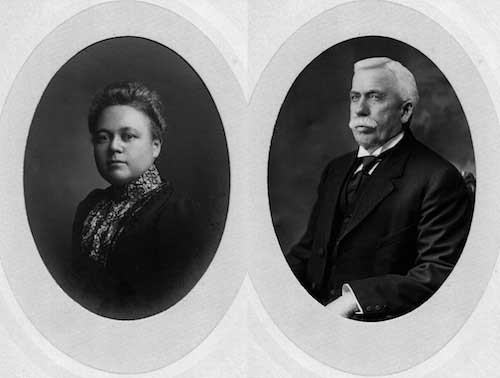
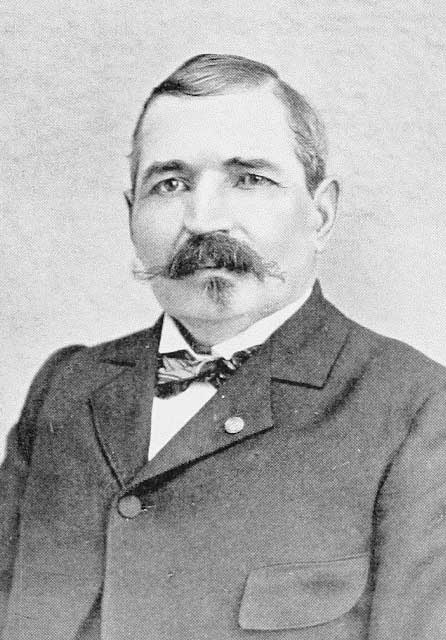
MEDINA – On May 23, 1898, the A. L. Swett Electric Light & Power Company was incorporated by Albert Swett with a capital stock of $50,000.

Swett, a prominent and respected entrepreneur in Medina, was quick to notice the local need for electricity. That need would be satisfied through a power plant constructed along the Oak Orchard Creek in the vicinity of the falls. Purchasing a parcel of land where an old mill had previously burned, Swett cleared the debris and constructed a plant to take advantage of the water power.

That plant was quickly overtaxed by the high demand for electricity and a steam plant was constructed to supplement the output of the first plant. Swett was an intelligent businessman with the foresight to purchase as much land along the creek as possible. Over the course of twenty years, he amassed a large holding of property to the north of Medina that would be used to expand his electric company.

Swett increased his capital stock to $300,000 and in 1903 started construction on a storage dam to increase the company’s electricity output. The 60-foot high dam spanned the width of the Oak Orchard Creek, and along with a 1,600 foot dike built of earth and concrete, provided for the development of a reservoir. Now known as Glenwood Lake, the nearly 50-foot deep and over one-mile long inland lake provided over 150 acres of surface water.

The construction of a second powerhouse, Station No. 2, allowed for increased electricity output from the same water source providing energy through the original power station at the falls. Swett estimated the cost of the second power station at just over $297,000 and it was believed that much of the electricity that was to be generated from that station was sold to area businessmen and residents prior to its completion. Such an extensive endeavor would cost nearly $8 million today.

The A. L. Swett Electric Light & Power Company adopted the motto, “to serve the public promptly, efficiently and at reasonable rates,” a slogan that drove the business to expand once again in 1917. At that time, Swett would begin construction on a dam at Waterport that would create another inland waterway he named Lake Alice.

A far more complex project, nearly 50 parcels of land were purchased, houses and structures moved, and roads rerouted to accommodate the higher water level. A new bridge was constructed at a cost of $70,000 and the bridge at Kenyonville was raised seven feet to adjust to the creek depth.

This image from 1903 shows the construction of the dike at Glenwood Lake; the photograph is simply marked “the Swett Power Project, Medina.” At the top of the hill a machine feeds crushed stone down a chute constructed on the embankment.

Albert Swett was actively engaged in supervising the project and suffered a broken thigh after falling from scaffolding at the worksite. He was bedridden for over a month due to the injuries.

Ambitious in his endeavors, Swett controlled the majority of water power in the vicinity of Medina. He constructed the dams at Medina and Waterport to reduce the strains forced upon the Oak Orchard Creek and area streams caused by the power plants.

In Gaines, first church west of Genesee River served many congregations

By Matthew Ballard, Orleans County Historian Posted 26 March 2016 at 12:00 am

Volume 2, Issue 13

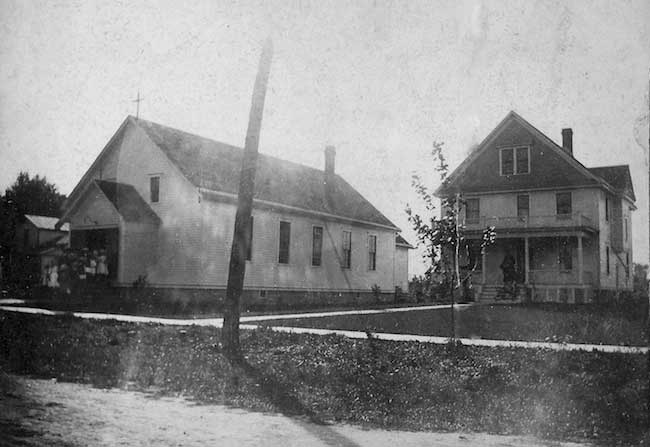
GAINES – Situated on Ridge Road in Gaines, this structure served multiple organizations during its lifetime and is regarded as the first church constructed west of the Genesee River.

As the pioneer settlers arrived in Gaines, cleared land and established farms along the historic route, they sought to establish their community with meeting halls and churches. Roughly 17 years after Elizabeth Gilbert settled her parcel along the Ridge Road near Brown Road, the Congregationalists and Baptists constructed this building to serve as a union meeting house. Each group agreed to share the edifice, holding services on alternating Sundays.

In 1834 the Congregationalists purchased a site on the north side of the Ridge, just east of the Gaines Road intersection. It was at this time that the congregation sold their interest in the building to two men, who later sold their interest to John Proctor.

The Baptists, meanwhile, remained active in the building despite losing a portion of their congregation following the establishment of the Baptist congregation at Albion in 1830. It was not long after this that 13 of the Baptists at Gaines petitioned to start a church at Carlton, an incident that would greatly weaken the original congregation.

The Baptists continued to hold services until approximately 1860 when the building was vacated, remaining inactive until a Free Methodist congregation was established at Gaines in 1868.

Just eight years after the first church in the denomination was constructed at Albion under the pastorate of Rev. Loren Stiles and nearly 10 years after the expulsion of Benjamin Titus Roberts from the Methodist Church, followers of Free Methodism in Gaines purchased the old union meeting house from the Free Congregationalists. The population of Gaines was first served by Rev. George Marcellus who not only oversaw the purchase of the building, but led the repainting of the structure and addition of stained glass windows.

The Gaines Free Methodist Church was served for a number of years by pastors from the church at Kenyonville, until that congregation disbanded. At that time, the Gaines congregation purchased a house located along a north-running lane behind the church for use as a parsonage. During the nearly 50 years that the church was active, those in attendance received the word of God from a prestigious lineage of preachers in the denomination.

Samuel K. J. Chesbrough, regarded as the co-founder of Free Methodism, served two terms as pastor of the church. The congregation was also led by Joseph Goodwin Terrill, a contemporary of John Wesley Redfield, as well as the future first president of Greenville College, Wilson T. Hogg. Alanson Kimball Bacon, a local resident who lived in the cobblestone home constructed by his father on Brown Road, stepped in to fill the vacant pulpits of the local Free Methodist churches at Albion and Gaines.

According to Helen Allen, the last service held in this building was probably July 6, 1917. Around 1921 one of the last surviving trustees of the church, Robert Woolston of Carlton, sold the building to John Bauer. The building was later converted for use as the Gaines Town Hall and Highway Department.

The Ontario House served up splendor, but no alcohol

By Matthew Ballard, Orleans County Historian Posted 19 March 2016 at 12:00 am

Volume 2, Issue 12

The stunning view provided by Lake Ontario led to the formation of hamlets and cottage communities along the lakeshore and eventually caused the establishment of numerous hotels and summer resorts in Orleans County.

The wealthiest members of society used these locations as an escape from the hustle and bustle of city life, resulting in the growth of lakefront property serving as a seasonal destination for the out-of-towners.

In 1860, land originally purchased by Asa Lee at Troutburg in Kendall was transferred to his daughter-in-law, Sarah J. Lee, who oversaw the construction of what would later become the Ontario House. This large, luxurious hotel was “first class in every respect” and catered to locals and visitors alike.

Situated on the west side of the Orleans/Monroe county line, the complex consisted of a house, dance hall, and barn. Standing just to the west of the main house, the dance hall served as a “picnic house” for excursionists who were visiting the area by way of boat.

The hall contained 13 large tables attached at one end to the wall with hinges, allowing the tables to be folded out of the way when not in use. This provided a large open floor for parties, dances, and other events. The hall had one kitchen with two large cook stoves to provide nourishment for the guests.

Nearby was a barn that housed stables for nearly 60 horses. Guests could stable their horse for $.25 per day or $.35 per day if the owner preferred to feed their horse grain in addition to hay. Two small sailboats and a number of rowboats were available for the pleasure of the visitors, allowing for short trips out onto the lake.

Mrs. Lee operated the Ontario House for nearly 27 years when she finally sold the property to William Sturges in 1887. At the time of the sale, the resort was regarded as the only successful temperance hotel in Western New York; the Ontario House remained successful despite the decision of the owner to refrain from selling alcohol. It remained a dry location even after the property changed hands.

A bowling alley was added to the property in the 1880s, at which time a guest could stay overnight at the house for $2.00 and special rates were offered for week-long stays at $5.00-$8.00 depending on the room.

As a seasonal resort, the ownership held large opening events in May to start the year and usually concluded in October with a large dance party. Hundreds of couples attended these events, paying $.25 for admission to the dance hall. The parties of course were dry events with no alcohol for guests.

In 1880, the Ontario House saw the rise of its first competitor when Charles T. Bush constructed the Bush House on the east side of the county line. This property later became known as the Cady House and still stands on that parcel as a decrepit structure along the lake.

The Ontario House continued its successful run under the ownership of Sturges until 1895 when it was transferred to Menzo Storer, then to J. Staub in 1917 before it was sold to an owner from Buffalo around 1921.

Although the buildings are no longer standing, this image taken sometime in the 1880s shows a crowd gathered along the porch of the Ontario House. The story of the Ontario House and other lakeside resorts are a testament to the splendor and beauty of Lake Ontario as a destination for residents and visitors alike.

Waterport Trestle carried railroad traffic for more than a century

By Matthew Ballard, Orleans County Historian Posted 12 March 2016 at 12:00 am


Volume 2, Issue 11

WATERPORT – Constructed in 1876, the Rome, Watertown, and Ogdensburg trestle over Oak Orchard Creek provided a crossing point for the rail system in its earliest years. This particular image shows the first trestle constructed on that site in Waterport using lightweight iron trusses and planks. As the railroad grew, a new bridge was constructed in 1892 to facilitate increased traffic.

The RW&O Railroad was first established in 1842 with the purpose of linking Watertown and Rome. As the years progressed, the rail system merged with various lines throughout New York to produce a somewhat successful system of transportation along the southern shore of Lake Ontario. Although the line was popular amongst excursionists, the railroad developed a reputation as a poorly maintained rail system, earning the eloquent nickname “Rotten Wood & Old Rusty Rails.” The railroad later earned the nickname “Hojack.”

The source of the name “Hojack” is unknown, but the most common origin story describes a farmer riding in a buckboard drawn by a stubborn, bulky mule. While crossing the tracks of the RW&O, the mule decided he would rest much to the dismay of the farmer. As a train barreled full speed towards the wagon, the farmer flew into a frenzy shouting, “Ho-Jack, Ho-Jack!” The train operators found such humor in the incident that they began calling the line the “Ho-Jack”; perhaps more folklore than truth.

Another story associated with the RW&O involved the construction of the trestle at Waterport. It is said that the first train to cross the newly constructed bridge was operated by Eunice Ross. Mrs. Ross lived near the construction site with her husband John, who was a miller at the nearby flour mill. Eunice agreed to board the construction crew in exchange for a small favor; the opportunity to pilot the train across the trestle, once completed.

On a small side-note, John and Eunice Ross cared for William Lake who was abandoned by his mother as a young child. Lake was later convicted in the heinous murder of Emma Louise Hunt in 1894.

Sunday, March 13th at 7 p.m., the county historian will provide a program for the Orleans County Genealogical Society on Zachariah Spencer and the early history of the Cobblestone Inn on Ridge Road in Ridgeway. The program at the Hoag Library in Albion is free and open to the public.

Early school superintendent advanced education system in Albion

By Matthew Ballard, Orleans County Historian Posted 5 March 2016 at 12:00 am

Volume 2, Issue 10

In the earliest years of settlement in Orleans County, the establishment of religious and educational institutions was of the upmost importance. Pioneers cleared their land of trees, constructed cabins, planted crops, and once all other necessities were met, established rural schools to educate their children.

In Albion, Caroline Phipps Achilles became a driving force behind the creation of female-only institutions for education when she constructed her seminary in 1840. It was soon after that other academies developed throughout the region including the Albion Academy and Yates Academy, which would produce highly successful and industrious graduates.

These tuition-driven institutes provided a valuable service to the community, although limited to those families who could afford it. The concept of using taxation to support the common school system allowed for the creation of the union school, providing education beyond the rural one-room schoolhouse.

Freeman Abram Greene was a product of the early academy system. Born on Sept. 23, 1844, Greene was educated in the rural school districts of Yates before attending the famed Yates Academy. It was upon the completion of his studies there that he entered the University of Rochester, graduating in 1869.

His absence from Orleans County was short-lived and he returned to Yates to teach in the same school that provided him with his outstanding education. From there he taught several years in Wilson but was called to Albion soon after. Having established quite the reputation as an educator, Greene was asked to serve as the first principal of the Albion Union Free School.

Greene remained in that capacity for approximately seven years when the school board provided him with the opportunity to serve as school superintendent. Starting in 1887 he was paid $800 annually to act in that capacity. During his tenure, the reputation of the school grew and enrollment increased.

With the loss of Albion’s earliest library in a fire around 1881, Greene worked diligently to establish a replacement. He studied the methodology and standards associated with libraries at the time and pushed for its continued growth. Later, he would approach Lillian Achilles to oversee the collection until she left that position upon the establishment of the Swan Library in 1900.

Freeman Greene’s commitment to education extended far beyond the Albion Union Free School. Working with other prominent men from Albion including Isaac Signor, Greene assisted in the creation of a university extension center, which offered advanced classes to students in his school. Signor would enlist Greene to write the history of schools in Orleans County for publication in Landmarks of Orleans County.

His second wife, Susan Price Greene, was believed to be a descendant of Quakers and was acquainted with Susan B. Anthony. During her visit to Albion in January of 1894, Anthony wrote that she immediately traveled to the home of Prof. Greene, superintendent of the school at Albion. The couple led Anthony to the courthouse where she delivered an address to a sizeable audience.

Freeman continued as the superintendent of the Union Free School until 1899 when he resigned the position due to poor health. He died at Albion on August 25, 1900.

Albion Catholics established new cemetery in 1920

By Matthew Ballard, Orleans County Historian Posted 27 February 2016 at 12:00 am

Volume 2, Issue 9

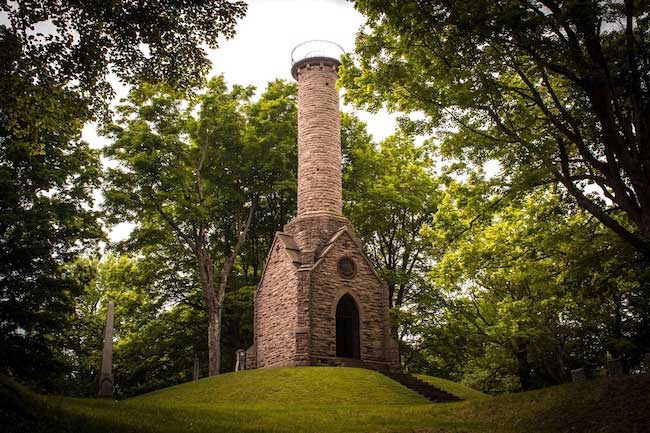
ALBION – Located just east of the Village of Albion, St. Joseph’s Cemetery was established in 1920 under the pastorate and direction of Msgr. Francis Sullivan. Notice the paving stones covering East Avenue and the extensive landscaping of the property along the road.

The center driveway runs north towards a circle containing four statues depicting the crucifixion of Christ and the chapel behind it. A larger pathway surrounded the chapel creating a section for burials within that loop.

St. Joseph’s Church celebrated its first Mass as a parish in 1852. For over twelve years prior, the Irish Catholic community relied on itinerant priests from Lockport to provide the sacraments throughout the year. This often meant that baptisms, marriages, and the sacrament of the Holy Eucharist would occur in bunches as a priest was made available by the Diocese of Buffalo.

The earliest Irish Catholics engaged in manual labor often in the sandstone quarries scattered along the Erie Canal, which led to accidental deaths and the contraction of tuberculosis. Even though the congregation established itself in the 1850s, there was still a matter of burials for parishioners. The lack of a dedicated cemetery was cause for concern among the early Catholics, but Mt. Albion was undoubtedly a sufficient alternative as there was little room for choice.

In 1873 under the direction of Rev. John Marius Castaldi the Catholics purchased a tract of land on Brown Road in the Town of Gaines for use as a parish cemetery. Upon its opening, many families elected to remove their loved ones to the newly established cemetery. Commonly referred to as “Holy Cross” or the “Old St. Joseph’s Cemetery,” the official cemetery ledger refers to the cemetery as “Holy Sepulchre” and served the congregation for nearly 50 years.



When property was purchased for the new cemetery, a new chapel was to be erected on site. Under the direction of parishioner Pasquale DiLaura, the Romanesque Revival chapel was constructed of Medina Sandstone at a cost of $10,000. The roof was covered with terra cotta tiles and the vault inside could hold approximately 15 bodies during the winter months.

The beautiful stained glass windows were manufactured by the Frohe Art Glass Company of Buffalo under the direction of Leo P. Frohe. The windows were some of the last created under his supervision before his death in 1919.

The opening of the new location provided Catholics with a cemetery along one of the main thoroughfares into Albion, rivaling the location of Mt. Albion Cemetery.

Established families were encouraged to purchase new lots in the new cemetery and provided with credits and buy-backs for unfilled lots at the old cemetery. The parish sold off adjacent land at the old location and reinterred numerous bodies between 1920 and 1925, essentially ending the sale of any new plots on Brown Road.

Families who wished for the old cemetery to serve as their final resting place were offered vacated or unfilled plots at resale.

This photograph, taken June 15, 1923, shows the cemetery at an early stage of development. Many of the gravestones shown in the image are from families who elected to have their loved ones reinterred at the new location. A large granite stone, front right, marks the gravesite of John Cunneen, local attorney and one-term New York State Attorney General.

Workers lay tracks for trolley in 1908

By Matthew Ballard, Orleans County Historian Posted 20 February 2016 at 12:00 am

B. L. & R. Railway operated in Orleans from 1905 to 1931

Volume 2, Issue 8

This image shows the construction of the Buffalo, Lockport & Rochester Railway through Medina in 1908. Looking north, workers are in the process of laying tracks on Main Street towards Commercial Street where the rail line would turn west and run to Salt Works Road.

The iconic clock tower of White’s Hotel can be seen in the background as well as a large advertisement for Daniel D. Holdredge’s crockery and undertaking business.

The earliest efforts to construct an electric interurban railway through this area started around the turn of the century. Discussion of forming a railway that ran from Batavia to Olcott through Medina were amongst the very first plans for a trolley system. However, the 1.7-mile Albion Electric Railway was the only successful line in these early years.

Chartered in 1905, the Buffalo, Lockport & Rochester Railway was a combination of the Albion & Lockport Railway, the Albion & Rochester Railway, and the Albion Electric Railway. The company was organized by Woods and Nicholls of Toronto and there was talk that the formulation of such a railway would lead to a connection between Canada and Western New York.

By Sept. 3, 1908 the section spanning from Rochester to a point west of Albion was in full operation and two months later, on Nov. 17, tracks were finished to Lockport. Based on that timeline, we can surmise that this photograph was taken sometime between Sept. 3 and Nov. 17, 1908.

With stations located at Medina, Knowlesville, Albion, Hulberton, and Holley, the trolley tracks ran down East Center Street, turned north on Main Street to Commercial Street and ran north of Medina’s residential neighborhoods.

While the company was in the initial stages of planning the railway’s route, Medina residents were vocal in their opposition to tracks running in front of their homes. Despite this opposition and the eventual rerouting of the rail line, Medina residents could enjoy a trip to Buffalo and back for $1.14 or travel to and from Rochester for $1.60.

The original operators of the rail line sold their interests in the B. L. & R. Railway to Clifford Beebe and operated under an electric railway group based out of Syracuse known as the “Beebe Syndicate.” During the era of the First World War, Beebe was experiencing financial difficulties and the company was sold to a Rochester based interest that reorganized the line as the Buffalo, Lockport & Rochester Railroad in 1919.

Despite the early successes of the B. L. & R., the advent of the Great Depression led to the eventual collapse of the railway in 1931. The tracks remained unused until they were dismantled and removed in 1936.

As an interesting sidenote, a railcar used on this trolley line and stored at Knowlesville for a number of years. The wood car number 206 was eventually relocated to the New York Museum of Transportation at Rochester in 2010 where it is awaiting evaluation for future restoration.

Slavery existed in Orleans County and NY

By Tom Rivers, Editor Posted 18 February 2016 at 12:00 am

Albion historian shares about effort to honor 50 black pioneers

Photos by Tom Rivers – In 2000, the Orleans Community Mass Choir teamed with the Albion school district and Village of Albion to put this monument at Mount Albion Cemetery for at least 50 pioneer black residents in the county.

ALBION – Nearly 200 years after slavery was banned in New York State, people may think New York was always a land of freedom for black residents. But that is far from the truth, said Neil Johnson, the Albion village historian.

“A lot of people think New York didn’t have slavery,” Johnson said Wednesday during his monthly historical lecture at Hoag Library. “New York definitely did have slavery.”

New York City was actually a center for the slave trade. It had the second biggest slave presence in the country, behind only Charleston, South Carolina. In the colonial era, 41 percent of New York City households had slaves, far more than the 6 percent in Philadelphia and 2 percent in Boston.

Slaves in New York worked as servants in households, bringing in firewood, cooking and cleaning, and removing wastes. They were instrumental in building the nation’s largest city, putting in the heavy infrastructure, and roads, docks and many buildings of the early New York.

New York didn’t ban slavery outright until 1827, 50 years after Vermont outlawed slavery.

Neil Johnson

Johnson dug through old Census records to learn about early black residents in Orleans County. The Census in 1850 began to note the race of people in the Census. Johnson researched the issue in the late 1990s as part of effort to honor early black pioneers in the county.

He was able to document about 50 residents and families. Their names are carved on a monument at Mount Albion Cemetery. That marker was installed in 2000.

He spoke about Richard Gordineer, who was listed as being born in 1798, but Johnson said that date is unclear. Gordineer lived and worked in Shelby Center, which was a bustling commercial district before the Erie Canal. When the canal was opened in 1825, “it changed everything,” Johnson said.

Medina, Albion and other canal towns emerged after 1825 and became the new focus for commerce. Gordineer took a job in Medina working on canal boats, first as a cook and then as a drywasher. Gordineer lived to be approximately 92, and died at the Alms House, the Orleans County home.

Richard Gordineer’s name and others are noted on a monument for pioneer black residents of Orleans County.

Samuel Tomkins also died at the Orleans County Home, the former “Poor House” on West County House Road. He died in 1863, and Johnson said the superintendent of the Poor House estimated Tomkins was 127 years old. He was a hard worker with a friendly disposition, according to a newspaper report that said Tomkins “trod the shores of time for over a century.”

Johnson said many freed slaves moved north from the Confederate states following the Civil War. The freed slaves found work in the north as house servants and field workers.

Although slavery ended in the United States in 1865, Johnson said people in the country remain enslaved or trapped.

“Human trafficking is still a problem,” Johnson said.

The New York Historical Society in New York City in 2005 put together an exhibit on slavery in New York. The NY Historical Society has an on-line site devoted to the issue. Click here for more information.

3 more historical markers getting makeover

By Tom Rivers, Editor Posted 17 February 2016 at 12:00 am

Provided photos

CLARENDON – Tuesday’s big snowstorm kept Melissa Ierlan homebound for most of the day. She didn’t sit idle. She used the day to paint three historic markers that sorely needed a makeover.

The top photo shows the marker by the Ashwood Wesleyan Church on Platten Road, just west of the Yates-Carlton Townline Road.

The other marker is for the Five Mile House in Barre, which was later knwon as Ball’s Tavern. The house was built in 1816 by John Huff and was an overnight stop for mail carriers between Lewiston and Canandaigua.

This photo shows the marker a few weeks ago when it was stripped of paint. Ierlan noted the misspelling of Canandaigua. This marker was originally put up in 1932 by the NYS Education Department.

Ierlan has now worked on 11 markers. She first tackled four in Clarendon that needed to be repainted. Other historians have reached out to her to work on markers in other towns.

The marker for Five Mile House was in rough shape. It needed to be rewelded. Gerry Bradt of Clarendon put the marker back together. He has rewelded two others.

After the marker is stripped of paint, Ierlan puts on a coat of blue paint. Then she adds the yellow for the letters and the outer border.

This marker is for Elisha Wright. It also needed to be rewelded.

Ierlan said the three markers will be reinstalled in the spring. She is willing to work on other ones in the community. Ierlan works as the Clarendon code enforcement officer and town historian. She said people can reach out to her on her phone at Town Hall, (585) 638-6371, ext. 104.

An eccentric sheriff was a skilled astronomer

By Matthew Ballard, Orleans County Historian Posted 13 February 2016 at 12:00 am

Volume 2, Issue 7

This picture, taken sometime around 1920, shows Weston Wetherbee standing with his homemade telescope behind his home on Ingersoll Street in Albion. Also pictured is Wilbur Phillips (left) and John Gilmore (center).

Weston Wetherbee was born January 24, 1857 at Barre, to Weston and Mary Ann Wetherbee. In his earliest years, Weston was employed as a carpenter and became proficient in the construction of windmills. During the later portion of the 19th century, Wetherbee continued his work as a windmill salesman and mechanic.

It was during this period of time that he served as a Justice of the Peace and Barre Town Supervisor. During his time in Barre politics he served as Chairman of the County Board of Supervisors. He was elected to the position of Orleans County Sheriff in 1904, a position which he held for three terms. It was around this time that Weston and his wife, Julia Goff, moved to the Village of Albion to their home on Ingersoll Street.

Wetherbee was particularly fond of astronomy, a hobby that he was heavily engaged in. Starting in 1897 he became a frequent contributor to the magazine Popular Astronomy where he took an initial interest in fireballs. The following year, Weston began charting Leonid meteors eventually leading to his efforts in 1905 to chart the path of August’s Perseid meteors with assistance from his wife.

To accomplish these feats of amateur astronomy, Wetherbee relied on his 8.5 inch reflecting telescope manufactured by Brashear. It was later in his career that he constructed a custom telescope using a 5 inch refracting lens, which he placed in a homemade observatory in his back yard. The small shed was constructed so that a rope could retract the ceiling, giving the telescope full range of view across the horizon.

When the Society for Practical Astronomy was formed, Wetherbee volunteered to lead the section dedicated to comets. It was this interest that led him to independently discover two comets previously unnamed. Unfortunately, before he could receive proper credit, other astronomers had submitted notice of the discoveries and received the recognition.

Weston Wetherbee was a rather eccentric individual at times. After the passing of his faithful horse, he dug a grave and held a funeral in honor of the animal. Delivering a beautiful oration on behalf of his dearly departed friend, he concluded the service by covering the grave with flowers. Whether he carried through with purchasing a monument for the horse, no one knows. He was also known locally for fitting light trucks with tables, folding chairs, cots, and other devices for camping trips.

Gaines officially turns 200 on Feb. 14

By Tom Rivers, Editor Posted 10 February 2016 at 12:00 am

GAINES – The Town of Gaines has long marked the year 1809 as the birth of the town. That’s when several pioneer settlers started to arrive, making a new home in what was then a wilderness.

The town marked its centennial in 1909, its 150th anniversary in 1959 and a bicentennial in 2009.

However, Town Historian Al Capurso said the town didn’t officially exist until Feb. 14, 1816. That’s when the State Legislature recognized the Town of Gaines.

The first official Town Board meeting was soon after the state’s move to recognize Gaines. Capurso shared the tidbits with the Town Board on Tuesday. He noted that this Valentine’s Day will mark the town’s 200th official birthday.

Capurso shared other news with the Town Board. He is part of a committee working on the new Orleans County Heritage Festival the second weekend in September. Capurso said the event, which includes assistance from Genesee Community College, will highlight transportation, architecture, historic gems and historic cemeteries in the county.

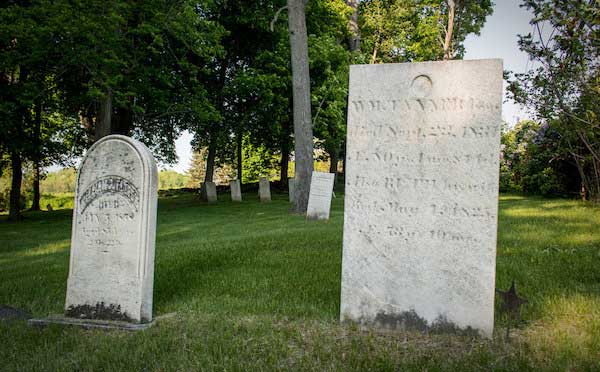
He would like the Gaines Cemetery on Ridge Road, behind the Gaines Congregational Church, to be included on the cemetery tour. Capurso said that is the first cemetery in the county and includes two Revolutionary War soldiers.

At least one new historical marker will go up in Orleans County this year, with the Orleans County Department of History and the Orleans County Historical Association splitting the estimated $1,200 cost, Capurso said. He expects historians will vie for sites for the marker around the county. He would like one on Route 279, just south of Route 104 in honor of James Mather, one of the early Gaines settlers.

Capurso also has been leading the effort to preserve a former cobblestone schoolhouse on Gaines Basin Road, just north of the Erie Canal. Capurso said a variance has been approved to allow the site as a meeting house for the Historical Association. Attorneys are working on getting the title for the property for the Historical Association.

In other action at Tuesday’s Town Board meeting:

The board discussed options for water accessibility for employees in the building. The Town Hall only has sinks in the two bathrooms. There isn’t a utility sink.

Town Supervisor Carol Culhane said that makes it difficult to fill a coffee pot or wash a dish.

“I think it’s unreasonable that we have something like this,” Culhane said. “We wash a dish in the bathroom sink because there is no sink.”

She thought water from the Culligan company, which would include 5-gallon jugs of water and a water cooler, would solve the problem temporarily. Culligan would charge $6.25 a month for the cooler, plus $7.99 per jug.

Town Councilman Richard DeCarlo wants to explore running a waterline in the building and creating a utility sink.

The board will look at options for either bottled water, Culligan or a waterline.

Ultimately the Town Hall needs some renovations for security and handicapped accessibility. Those changes could include a sink for the employees, Culhane said.

“But that’s down the road,” she said.

The board approved spending $2,709 to Star Electric of Pavilion to add phones and upgrade the phone system for the Town Hall, where the phones haven’t been updated in more than a decade.

Albion attorney left legacy of service to community

By Matthew Ballard, Orleans County Historian Posted 6 February 2016 at 12:00 am

Volume 2, Issue 6

ALBION – I received a few calls and inquiries about Thomas A. Kirby following the recent news article highlighting newly established scholarships through the Albion Central School District – who was he and why a scholarship in his name?

Albion Council #1330 Knights of Columbus developed an annual memorial award for a deserving graduating senior who showed commitment and service to the community. This image shows Thomas A. Kirby as a young man, a freshly minted lawyer eager to establish a local partnership in Albion. The photograph is paired in the collection with that of Thomas L. Hughes.

Thomas Kirby was born on March 22, 1869 in Albion to John and Catherine Hayes Kirby. As a young man, he was no stranger to patriotic duty and service to the community.

Undoubtedly a young Thomas would have heard the stories told by his father, who served with the 8th New York Cavalry during the Civil War, was taken prisoner at Gettysburg, and sent to Andersonville Prison Camp. He received his earliest education in the common schools of Albion and took an interest in law at a young age, studying with John Cunneen who would later serve one term as New York State Attorney General.

A flourishing partnership developed between Kirby and Thomas L. Hughes and the two practiced law together until Hughes decided to move to New York City. The relocation forced Kirby to practice on his own, maintaining an office on East Bank Street.

As an Irish Catholic, Kirby was dedicated to the church committee serving as a trustee of St. Joseph’s Church for a number of years. He was active in the local branch of the Catholic Mutual Benefit Association in its earliest years during the 1880s, an organization largely responsible for supporting working Catholic men with life insurance during times of economic hardship, personal injury, and death.

For reasons unknown, the C.M.B.A. branch eventually developed into the Knights of Columbus Albion Council #1330 which focused its efforts on similar endeavors. The respected community member was selected as the organization’s first Grand Knight (president) when the council formed in 1908.

As a prominent member of the Republican Party and members of the New York State Bar Association, Kirby was elected for one term as Orleans County District Attorney from 1899-1901. During the famed trial of Charles Stielow, Kirby assisted the District Attorney with the prosecution of Stielow for the murder of Charles Phelps of Shelby, a role that created a heavy criticism of local officials involved in the case.

Kirby was instrumental in establishing the Albion Chapter of the American Red Cross during the First World War, acting as the organization’s first Vice Chairman. He was the attorney for the Village of Albion and President of the Board of Education at the time of his death on Jan. 29, 1922.

As an exceptional trial lawyer, Kirby developed a reputation throughout Orleans County and across Western New York as an outstanding and prominent orator. In Carl Carmer’s book, “Dark Trees to the Wind” published in 1949, Carmer recalls a Fourth of July celebration in Albion where “the Town’s lawyer-orator, corpulent and elegant in his best blue suit and white waistcoat, stood on the platform and with calculated deliberation began his patriotic oration. Twenty minutes later his rich deep voice was pouring out his devotion to his country and his flag with all the poetry and rhetoric born in his Irish soul. His audience was spellbound” It is without a doubt that Carmer was writing of Thomas Kirby.

His obituary concluded, “Thomas A. Kirby always stood for the right as he saw it and was fearless in his denunciation of wrongFaithful in every trust reposed in him” The Knights of Columbus chose to honor a man who was well respected within their organization and a man who was held in high regard throughout the community for his commitment to service and patriotism.

American Legion, Holley church will remember 4 chaplains who died in WWII

By Tom Rivers, Editor Posted 3 February 2016 at 12:00 am

Provided photos – Joe Willis (center), pastor of the First Baptist Church, is presented a certificate of appreciation last February by Larry Montello (left), commander of the American Legion in Orleans County, and Steve Goodrich, a past county commander.

HOLLEY – Veterans and church members will gather at the First Baptist Church in Holley on Sunday to remember four chaplains who gave up their lives to save civilian and military personnel as the SS Dorchester sank on Feb. 3, 1943.

The four chaplains gave up their life jackets when they were none left for others on the ship. The chaplains sang hymns and prayed together as the ship sank.

Larry Montello, the commander of the American Legion in Orleans County, wants to keep the story alive and remind the community – 73 years later – of the sacrifice by Methodist minister the Reverend George L. Fox, Reform Rabbi Alexander D. Goode (Ph.D.), Roman Catholic priest the Reverend John P. Washington, and Reformed Church in America minister the Reverend Clark V. Poling. All of the chaplains attained the rank of first lieutenant.

“This is history we shouldn’t forget,” Montello said. “They laid down their life for others.”

The service will include reading the biographies of each of the chaplain, lighting candles, placing wreaths, and playing taps.

The memorial service for the four chaplains will be part of the regular 9:30 a.m. service at church on Geddes Street. The Honor Guard will be there at 9 a.m. The service is open to the community and will include refreshments after the service.

The Legion has been doing the memorial service for the chaplains for about seven years, and tries to have it in a different church in the county every year. However, the Legion is back at First Baptist in Holley because Montello said the church was so welcoming last year with a big turnout.

Despite scandal, man who bought Pullman furniture business became prominent Albion leader

By Matthew Ballard, Orleans County Historian Posted 30 January 2016 at 12:00 am


Volume 2, Issue 5

ALBION – George W. Ough, pronounced “Uff”, was born on Feb. 12, 1827 at Cherry Valley, NY. As a child, he worked on the family farm in Otsego County until he reached the age of 14, when he moved north to Fort Plain, New York to work as a store clerk.

Following a short stay in Lockport, Ough later moved to Albion where he operated a crockery store, which he later sold to purchase the furniture business formerly owned by George M. Pullman. Ough’s eldest daughter, Jennie, later married Cassius M. C. Reynolds who would eventually take over the business located in the Ough Block on North Main Street.

By the late 1890s, Ough had the distinction of being one of the longest tenured members of the Albion Board of Education, of which he was a founding member. After he was elected to his first term as President of the Village of Albion, he resigned his position on the Board of Education. Following his second term as Village President, he moved into a position as assessor for Albion.

His time in office was brief, remaining in the position for two terms. Ough was active in numerous local organizations serving as a member of the Swan Library Association and Chief Engineer of Albion’s Fire Department. Following years of public service, he retired to a large farm located in Kent, one that was regarded as one of the best orchards in the Western New York fruit belt. He was also active in horse racing, quite frequently leasing the race track at the county fairgrounds.

After a contested horse race in 1900, Fred Parker of Elba and the National Trotting Association brought a suit against Ough and his bay gelding named Doctor H. Parker claimed that Ough purchased the respected racehorse Tally-Ho from Michigan and changed its name to disguise the horse’s race times. The Trotting Association determined that Doctor H was in fact Tally-Ho and that Ough’s winnings, totaling over $200, should be forfeited. In addition to this forfeiture, Ough was suspended until he paid for an official change of name.

Ough’s unscrupulous practice with horseracing was not his first questionable scandal. In the mid-1880s papers across New York ran front-page news about an absolute divorce suit filed against Annie Ough by her husband. Wed in 1875, George had his eyes set on Annie Cummings, a youthful and wealthy widow from Shelby.

The honeymoon phase was short-lived and issues began to surface in the relationship. Annie stated that George demanded immediate control over the wealth from her previous marriage. When she refused, she claimed that he forced her and their daughter Georgia out of the home. Naturally, George asserted that this was untrue and that his wife was adulterous in their marriage.

When news broke that Ough named several prominent men from Albion and Medina as co-respondents in the suit (men he claimed his wife had extramarital affairs with), the story spread like wildfire and “scandal-mongers” throughout the county took to spreading gossip about the couple. Among those named in the suit were the prominent entrepreneur and land owner, Charles H. Moore of Albion, proprietor of the Albion House, Marvin Warner, and the prominent and well-respected Medina attorney, Stanley Filkins.

The case was one of the first for the newly seated Judge Lambert. Represented by Hon. John Hull White, president of the Albion Board of Education, the case was delayed on numerous occasions until the judge finally issued a nonsuit, which Ough quickly appealed. Annie Ough was assisted in her defense by Stanley Filkins, the same man named by Ough in the original suit. The accusations were so damaging that Filkins’ own wife filed for divorce shortly after the case hit the papers.

Despite this scandalous dispute, Ough was regarded as one of Albion’s most prominent and well-respected citizens.

Mural in hospital highlights local history

By Tom Rivers, Editor Posted 25 January 2016 at 12:00 am

Photos by Tom Rivers

MEDINA – Stacey Kirby created a mural on the second floor of Medina Memorial Hospital about three years ago. The mural’s dominant image highlights the Erie Canal, which runs through Orleans County.

The mural also includes paintings of the Orleans County Courthouse in Albion, an iconic structure built in 1858.

Kirby, an Albion native, also painted the former site of the hospital. Before the hospital was built in 1925 on Ohio Street, the hospital used the former home of local industrialist A.L. Swett at northwest corner of Eagle and Prospect streets. The hospital operated out of that location from 1910 to 1925.

The mural was unveiled to public in March 2011. I was at the hospital on Tuesday and thought the mural worked wonders in dressing up this hallway.