









local history

Pioneer physician was respected educator and politician

By Matthew Ballard, Orleans County Historian Posted 21 May 2016 at 12:00 am

Volume 2, Issue 21
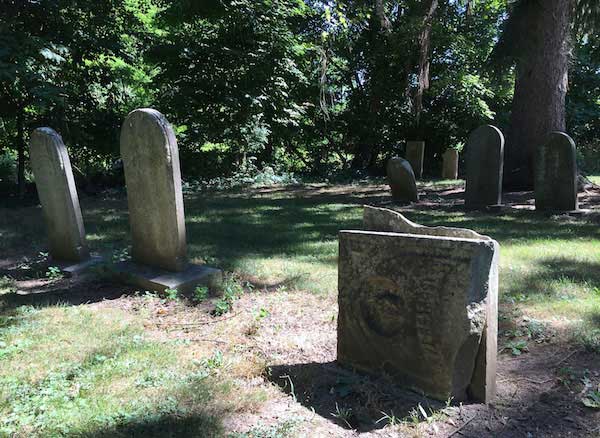
ALBION – This photograph shows the gravesite of Dr. Lemuel Covell Paine as it appears today. A pioneer physician and Albion businessman, Paine was born November 8, 1787 in Vermont, the son of Dr. Ichabod Sparrow and Mary Dixon Paine. After the death of his father in 1807, arrangements were made for Lemuel to live with his uncle Eli Pierson and study medicine under the direction of Dr. Asa Stower at Queensbury, NY.

As he progressed in his studies, Paine found himself teaching in various one-room schoolhouses to raise the funds to support his education under Stower. Upon the completion of his term under the tutelage of the physician, Lemuel was subjected to the examination put forth by the Censors of the Medical Society of Washington County, which he passed with relative ease.

Over the next two decades Paine travelled westward across New York, establishing himself in Clyde, New York for a period of time where he served as a mentor and instructor for several prospective physicians. Upon his eventual arrival in Albion, Paine was a well-respected and seasoned veteran in the medical field during a time when so many doctors were self-taught.

Nearly 50 years of age at the time of his arrival in 1836, Paine established a partnership with Dr. Orson Nichoson under the name Nichoson & Paine; the firm specialized in the sale of drugs, compounds, and books. Dr. Paine was a pious man, so it was no surprise that he served as a deacon of the First Baptist Church in Albion and an early trustee of the Rochester Theological Seminary (Colgate Rochester Crozier Divinity School). His commitment to education was apparent through his appointment as a trustee of the Phipps Union Seminary, the Albion Academy, and the University of Rochester.

His role not only as a respected physician but a successful businessman placed him at the top of the list for political races and appointments. Prior to his arrival in Albion, Paine had served as Postmaster in Fulton County and his political affiliation as a Whig would earn him similar positions in Orleans County. A brief term as Orleans County Treasurer was followed by an appointment as one of three commissioners overseeing the administration of Mt. Albion Cemetery.

Unlike the long lineage of physicians that preceded Lemuel, his sons chose a slightly different career path. With guidance received from their father, Lemuel C. Jr, Cyrus, and James Paine formed a drug company in Rochester known at the Paine Drug Company. The business became a top-tier drug manufacturer in the region and left the oldest brother with an estimate $890,000 estate upon his death in 1899; valued at $24 million today.

Dr. Paine died at Albion on January 3, 1873; it’s safe to assume that his sons were responsible for the erection of this beautiful granite monument located in the eastern section of the cemetery that overlooks the original main entrance (now the east gate).

DAR donates to students’ Civil War project at Mount Albion

Staff Reports Posted 20 May 2016 at 12:00 am

Provided photo

ALBION – Orleans Chapter Daughters of the American Revolution (DAR) Regent Patrice Birner presents Albion Middle School seventh grade Service Learning students and History Club officers Annalise Steier and Mason Day with a check for $250 for costs related to their Civil War project honoring soldiers from Orleans County.

“We are proud to support the Albion Middle School seventh grade Service Learning project with a donation of $250,” Birner said, “as the students’ work exemplifies the organization’s objectives of preserving history, furthering education and promoting patriotism through volunteer service.”

The students will culminate the year’s work with a dedication ceremony on Thursday, May 26, at Mount Albion Cemetery at 10 a.m. at the Civil War section (west gate). Community members, veterans and parents are welcome.

The donated funds from the DAR will go toward the purchase of a bronze plaque mounted on Medina Sandstone, a granite planter urn (pictured), and a Sugar Maple tree.

Col. Achilles was key to rejuvenating seminary in Albion

By Matthew Ballard, Orleans County Historian Posted 14 May 2016 at 12:00 am


Volume 2, Issue 20

This image of Lt. Col. Henry Ludwig Achilles shows him garbed in his Union officer’s uniform taken sometime around 1862 at the studio of George Hopkins in Albion.

A New Hampshire native, Achilles established himself in Rochester as a young entrepreneur and man of religious conviction. As an established tinsmith, he was responsible for starting one of the first foundries in Rochester where he engaged in the manufacturing and sale of sheet metal and tin. His early successes in business allowed him to contribute to the purchase of property for the construction of the First Baptist Church of Rochester of which he was a superintendent in the early 1830s.

When the First Baptist Church split into two congregations due to the overwhelming growth of the group, he assisted in establishing the Second Baptist Church in Rochester and was selected as one of its first trustees. As a respected gentleman in the city, he served a short term as town clerk of Brighton and local fire inspector.

After the death of his second wife, Samantha Howe, Henry was married to Caroline Phipps of Albion in 1839. Up until that time, Caroline had worked carefully to establish herself as an exceptional educator and was responsible for operating the Phipps Union Seminary with her sisters.

Shortly after their marriage the newlyweds moved to Boston where they lived for nearly ten years, leaving Caroline’s sister Sophronia to care for the seminary.

In 1848 the seminary finally passed through the hands of the Phipps family when it was sold to Rev. Frederick Janes. Almost immediately after the sale was finalized, enrollment dropped from 100 students to less than 40. A frustrated board was poised to force Janes from his position and pleaded for Henry and Caroline to return.

With great reluctance, the couple retook control of the seminary in 1849 and made quick work of restoring the institution’s reputation. The following year was marked by a spike in enrollment, which led to the construction of a wood-frame addition on the north end of the building.

During his time as head of the institution, Henry was active in local affairs. When Lincoln called for 75,000 volunteers to enter military service on behalf of the Union Army on April 15, 1861, Achilles and other men initiated a gathering at the Court House on April 18th. The group immediately took to organizing two companies of men, the first placed under the charge of David Hardie and the second under the charge of Henry Achilles, Jr. When the ladies of Albion had prepared a donation of two beautiful flags, Henry Achilles Sr. was asked to make the presentation to both units, the second under the command of his son.

Achilles enlisted in the service himself on January 6, 1862 and was placed with the 105th New York Infantry as a lieutenant-colonel. Just as David Hardie would do, Henry resigned his position in April of 1862 and returned to Albion to encourage other young men to join the Union cause.

Following the war, Henry and Caroline again decided to transfer the care of the seminary to a stranger, selling the building to Rev. G. A. Starkweather in July of 1866 for $20,000; totaling just over $325,000 today. Unfortunately the school suffered a similar fate as the first sale and the reputation of the institution was again ruined by its new owner.

Again the board pleaded for Henry to retake control of the seminary, to which he utterly refused. It was thanks to the encouragement of his wife that the seminary was yet again brought under the control of the Achilles family and provided an opportunity to thrive.

Henry died in 1881 from an abscess and was interred with his first two wives at Mt. Hope Cemetery in Rochester; Caroline was buried with her family at Mt. Albion.

Marker for Sanford Church, high-ranking state official from Albion, gets facelift

By Tom Rivers, Editor Posted 10 May 2016 at 12:00 am

Photos by Tom Rivers

ALBION – A historical marker for Sanford Church was given a fresh coat of paint by Melissa Ierlan of Clarendon. She put the redone marker back up April 27 with help from Craig Lane. Ierlan has now repainted 15 of the markers in Orleans County.

This marker sits in the lawn at Church’s former home in Albion along Ingersoll Street, near the intersection with East State Street. The house is now a funeral home for Merrill-Grinnell Funeral Homes.

This marker initially went up in 1935 for Sanford E. Church. He was a prominent force in New York politics about 150 years ago.

In 1841, the son of Albion farmer was elected to the State Assembly at age 26. He did it as a Democrat in an overwhelmingly Whig district. In 1845, he was appointed district attorney of Orleans County, one of the original “Barnburners” of the Democratic Party. He joined the Free Soil Party and spoke at Free Soil Rallies across the country, arguing against the expansion of slavery into the states that were newly forming in the West, according to a biography of Church by Kristin A. Mattiske, written for the Historical Society of New York Courts. (Click here for more information.)

When the Free Soil Party dissolved upon losing the presidential bid in the 1852 election, Church rejoined the Democrats. During the Civil War, Church spoke of states’ rights and maintaining a solid Union. He actively sought volunteers to fight to save the union and when the Orleans County war committee was formed in summer 1862, he was elected chairman.

Politically, Church was elected in 1850 as the state’s lieutenant governor, and was re-elected to the position in 1852. He served as state comptroller from 1857 to 1859 and was a delegate to the Democratic National Conventions of 1844, 1860, 1864, and 1868.

At the convention in 1868, the New York State delegation chose him as its nominee for the United States presidency. Horatio Seymour, the NY governor, ultimately was backed to run against Ulysses Grant, losing to the Civil War hero. Church was frequently mentioned as a potential presidential candidate or NY governor. He didn’t have the personal funds for a major campaign, and didn’t want to cozy up to the Democratic machine, Mattiske wrote.

In 1870, Church was nominated for Chief Judge of the Court of Appeals. He served in the role for 10 years, the second-longest tenure in the court’s history. He and Noah Davis, Jr., a former law partner of his from Albion, would bring down the New York City Tammany Hall ringmaster William M. “Boss” Tweed. Judge Davis presided over Tweed’s trials on charges of conspiracy, perjury, and larceny. On appeal to the Court of Appeals, Chief Judge Church upheld the conviction.

Church died at age 66 on May 14, 1880. An estimated 6,000 people gathered in Albion for Church’s wake and funeral. Church is buried at Mount Albion Cemetery.

“An elaborate marble canopy supported by red granite pillars – a baldacchino – covers his tomb,” Mattiske writes. “In Medieval times, baldacchinos of silk and gold thread were held over honored persons and sacred objects.”

Today, the great-great-great grandson of Judge Church, Sanford A. Church, runs a law office on East Bank Street in Albion and serves as the public defender in Orleans County.

Another historical marker will be rededicated on Saturday in Barre. Town officials will have a ceremony at 2 p.m. at  Elisha Wright’s home at 5544 Eagle Harbor Rd., just south of West Barre. A reception will follow the ceremony at Mulberry Park in West Barre, across the road from the United Methodist Church.

Ierlan also repainted that sign, which also needed to be rewelded.

County has built four jails on Courthouse Square in past 180 years

By Matthew Ballard, Orleans County Historian Posted 7 May 2016 at 12:00 am

Old Albion Jail

Volume 2, Issue 19

Nearly 180 years ago, the first jail in Orleans County was constructed at Court House Square of hewn timbers. Prior to the completion of that building, jail cells in the basement of the first court house were used to hold prisoners. During the county’s infancy, criminals were sent to Batavia for confinement.

This image shows the second jail, constructed of stone, as it would have appeared in 1885. Looking south on Platt Street, we see Sheriff Sullivan E. Howard of Holley seated in the front lawn of the jail.

The wood structure to the right of the jail provided housing for the sheriff and his family. To the immediate right of the sheriff’s home and just out of view sits the court house. We can assume that the woman seated in the hammock to the left of Sheriff Howard is his wife Phina Cole Howard, their son William Howard leaning against the tree and their daughter Bessie Howard is likely one of the two young women seated in the front windows.

After this building, a third jail was constructed of Medina Sandstone before the current standing structure was built in the 1970s. During the earliest years of the penal system in Orleans County, the wife of the sheriff would cook meals for inmates and assist with the upkeep of the jail. Offenders from all municipalities would find themselves at Albion for a wide range of crimes from public intoxication to first degree murder.

Weekly police blotters appeared in the local papers, providing a look into the wrongdoings of the past:

March 10, 1880 – an attempt to blow up the jail was aborted, the fourth attempt in recent memory to break out of the jail.

June 15, 1880 – local burglar Charles Amos digs himself out of the county jail but fails to make it beyond the yard; he is immediately recaptured.

July 18, 1882 – Frank Gaskill, 14 years old of Albion, is sentenced to 10 days in jail for drunkenness.

January 12, 1883 – while locked up in county jail, Patrick O’Reilly declares he is one of the murderers of Lord Frederick Cavendish of Dublin, Ireland. The sheriff determines he is a liar, seeking free passage back home to Ireland.

November 11, 1886 – James Morgan, 22 years old of Laurel Hill, is caught breaking streetlight globes in Medina and sentenced to 15 days in jail.

December 9, 1886 – Mrs. Robert Mortimer, of Medina, is arrested and fined for chastising a female teacher at the Central school in Medina. In an attempt to avoid a jail sentence, she attempts suicide by overdosing on laudanum, but is unsuccessful.

August 1, 1889 – Mary Winchester, 34 years old of Shelby, is sentenced to 90 days in jail for using indecent language and insulting a woman at Medina.

First Fridays art shows will shift to Cobblestone Museum this year

By Tom Rivers, Editor Posted 5 May 2016 at 12:00 am

Taylor Daughton

Photos by Tom Rivers

GAINES – Taylor Daughton, director of the Cobblestone Society & Museum, is pictured in the Proctor Room at the Cobblestone Universalist Church, the site of a reception on Friday for an art show.

The free event will also be a chance for the public to meet Daughton, who was hired in February to serve as the museum’s director.

The show is part of First Fridays, which for the previous seven years was organized by Kim Martillotta Muscarella at her home at 229 North Main St. Muscarella is continuing to run the events, which this year will shift to the Cobblestone Museum. There will be new art shows each month until the museum closes for the year in October.

Tugboat painting by Tony Barry

Tony Barry, a Holley artist, painted a tugboat on the Erie Canal. The art show on Friday also features artists Tom Zangerle, Pat Greene, Kim Martillotta Muscarella, Connie Mosher and Suzanne Wells.

The reception on Friday will be free from 6 to 8:30 p.m. at the museum, 14389 Ridge Road. The museum also opens for the season on Sunday, Mother’s Day, although the buildings will be available for tour on Friday for an admission price.

John Proctor memorial plaque

The Proctor Room is named for John Proctor, a prominent pioneer on Ridge Road in Gaines.

The Cobblestone Museum is the only National Historic Landmark in Orleans County. For more on the museum, click here.

GCC announces first Heritage Festival in Orleans County

Posted 3 May 2016 at 12:00 am
cannons at Mount Albion Cemetery

File photo by Tom Rivers – The Civil War section at Mount Albion Cemetery is pictured last October when the leaves were changing color. A Heritage Festival planned for Sept. 9-11 will highlight some of the county’s historic assets, including cemeteries.

Press Release, GCC

ALBION – People who live in Orleans County know that it is a special place and they work hard to preserve their precious heritage. They enjoy a wealth of extraordinary assets from historic buildings with magnificent architecture to the Erie Canal that did so much to create the town and villages along its banks.

Even the stone in the ground – Medina sandstone, and the soil sustaining the farms – the muck lands, are appreciated. Beginning in September 2016, a county-wide festival will celebrate these many cherished treasures.

Organizers are proud to announce the first Orleans County Heritage Festival, Sept. 9-11: a weekend dedicated to spotlighting the many historic assets of Orleans County. For this year’s festival, four themes will be highlighted – Agriculture, Transportation, Historic Cemeteries and Historic Gems.

Now in development, a high quality brochure will highlight all the participating museums, places and organizations. A passport system will encourage participants to visit six historic sites over the course of the weekend and prizes will be awarded for those who complete the task.

In addition to the many historic sites in Orleans County, Genesee Community College will participate in the festival as headquarters for the passport system and with special events. The Medina Campus Center will host a timeline festival featuring re-enactors from various American wars – from the French and Indian War down to 20th century wars. Artisans demonstrating period crafts and special music will contribute to the sensation as visitors walk through time.

The Albion Campus Center will host a program on “Death Ways” through the years featuring talks on Victorian mourning art and the famous murders that occurred in Orleans County.

Many other exciting details of the 2016 Orleans County Heritage Festival will be shared in the coming weeks, but planners are asking everyone to mark their calendars now – September 9-11, 2016. Make plans to join the fun and explore the many historic assets Orleans County has to offer!

For more information or to be involved as a volunteer, please contact:

Derek Maxfield, associate professor of History at GCC
ddmaxfield@genesee.edu, 585-343-0055 ext. 6288.

Jim Simon, associate dean at the Medina and Albion Campus Centers,
jsimon@genesee.edu,call 585-589-4936.

Civil War vet in Albion gets headstone 101 years after death

By Tom Rivers, Editor Posted 1 May 2016 at 12:00 am
John Frost grave marker

Photos by Tom Rivers – A new headstone was unveiled on Saturday for John Frost, a principal musician (chief bugler) for the 33rd New York Infantry and also the 3rd Brigade, 2nd Division of 6th Corps. Frost was buried in St. Joseph’s Cemetery on Brown Road in 1915.

ALBION – A Civil War veteran who raised five children in Orleans County and sold coal for a living was buried in the older St. Joseph’s Cemetery on Brown Road in 1915, more than a century ago.

Last year, the Holy Family Parish was going through records at the cemetery and realized that John Frost never had a headstone. County Historian Matt Ballard, a member of the parish and also the Knights of Columbus, shared the story with Tim Archer, a service learning teacher at Albion Central School. Archer looks for community projects where 140 seventh graders can learn local history and also address a need.

The students wanted Frost to have a headstone. They worked with the Veterans Service Agency in Orleans and Niagara counties to secure a headstone for Frost. The marble stone was unveiled on Saturday during a service at the cemetery.

Archer said the government officials in the Washington, D.C. Monuments Office moved quickly to process and approve the request before the school year ended. He thanked Tony Navarra from the Holy Family Parish for setting the stone in the historic cemetery.
Leeanna Montanarella
Seventh-grader Leeanna Montanarella shares John Frost’s biography. Frost was born in England on June 22, 1836. At age 13 he left for the United States with his father John and brother Edward on the Northumberland. They arrived in New York City on April 18, 1850 and moved to South Barre. In 1860, Frost was working as a farmer. He enlisted in the Union Army in his mid-20s and served three years.

Frost had the rank of musician, which was just below corporal and just above private. In the Civil War, musicians were relied upon to entertain troops, position troops in battle and stir them on to victory.

Frost, according to the 1880 Census, was married to Margaret Cusack and had five children, ages 14, 11, 9, 6 and 4.

Bryne Dysard

Bryne Dysard, an Albion seventh grader, reads Abraham Lincoln’s second inaugural address – “With malice towards none, with charity for all” – from March 4, 1865.

John Frost grave marker unveiling

Students Kyle Lonnen and Noah Rowlett unveil the headstone while teacher Tim Archer watches at St. Joseph’s Cemetery.

Bob Ballard and Casimer Pruski

Knights of Columbus members Bob Ballard, left, and Casimer Pruski, both past grand knights, present a grave marker, noting that Frost served in the Civil War for the Union, at his grave during Saturday’s ceremony.

Union Veteran grave marker

This grave marker was given by the K of C to recognize Frost’s service for the Union.

Matt Ballard

Matt Ballard, a member of the Knights of Columbus and the county historian, thanked Albion students for working to recognize John Frost. “It is a great honor and privilege to congratulate Mr. Archer and his students on a job well done, their noble task is appreciated by all who cherish the liberties provided by the sacrifices of those who passed before us.”

Ballard said Frost had “quietly passed into the annals of history, forgotten for decades” until Albion students pushed to have him recognized.

“The commitment of our youth to the cause of historic preservation fuels the fire and the desire to share that history with the greater community,” Ballard said.

Seventh graders playing taps for John Frost

Three seventh graders play Taps, including, from left: Kailey Merrill, Lauren Wehling and Ashley Ames.

Tim Archer and seventh graders with John Frost grave marker

Tim Archer and the seventh graders are pictured with the new headstone for John Frost.

Albion was focus of big moonshine raid in 1927

By Matthew Ballard, Orleans County Historian Posted 30 April 2016 at 12:00 am

Volume 2, Issue 18

Taken on October 13, 1927, these five men headed one of the largest raids on an illegal liquor manufacturing operation in Orleans County. Pictured from left to right are NYS Trooper J. P. Fisher, Undersheriff Lawrence Higley, Sheriff Ross Hollenbeck, Deputy Matthew McGlen, and NYS Trooper B. L. DeBrine; the plate on the motorcycle shows that the men were stationed at the Troop A barracks in Batavia.

Just after midnight on the 13th of October, police surrounded the abandoned canning factory once owned by Thomas Page at the corner of King Street and West Avenue. Upon entering the building they located one the largest alcohol stills ever seen in the area, allowing for the manufacture of over 5,000 gallons of moonshine liquor. Also seized was a truck carrying 205 gallons of alcohol stored in 5 gallon cans, which was to be shipped to Rochester that night.

Giuseppe Gagliano, Tony Gagliano, Joseph Mineo, James Mineo, and Joseph Lomeo all of Utica were taken into custody and arraigned in front of U.S. Commissioner Cyrus Phillips at Rochester. The men refused to provide any information about the illegal operation but claimed that they were hired by Charles Day of Rochester, a man they had never met before, to operate the still. All five were released from custody on $10,000 bail each.

Federal officers estimated the seizure of equipment in excess of $50,000 and the total value of the liquor and raw materials at nearly $200,000, roughly $3.5 million today.

Of course, it was only a matter of time before the abandoned canning factory became the central location for another large distilling operation when federal officers in cooperation with local police raided the site in October of 1930. At that point, the still inside was capable of manufacturing over 1,000 gallons of alcohol each day and multiple storage vats were discovered alongside the 5,000 gallon still. Moonshiners were shipping the alcohol by truck to Buffalo where it was loaded on railcars and distributed throughout the region.

Lawrence Higley would later serve as Orleans County Sheriff and Matthew McGlen eventually found himself working for the federal government as a U.S. Customs and Border Agent. Naturally, this raid was quite the notch in their belts.

5 are honored for efforts to preserve and promote local heritage

By Tom Rivers, Editor Posted 30 April 2016 at 12:00 am
Five People named Heritage Heroes

Photos by Tom Rivers – Five Orleans County residents were honored on Friday for their efforts to preserve Orleans County history. The group includes, from left: Melissa Ierlan, Delia Robinson, Peg Wiley, Al Capurso and Tim Archer.

ALBION – Three people were recognized as Heritage Heroes on Friday for efforts to preserve and promote local history. In addition, two other Orleans County residents were given special awards for their heritage efforts.

Genesee Community College recognized the third class of Heritage heroes on Friday during an awards reception at GCC in Albion. The college first recognized Heritage Heroes in 2014 as part of GCC’s Civil War Encampment. The 150th anniversary of the Civil War has passed and GCC no longer hosts the encampment.


But GCC plans to continue to recognize Heritage Heroes, said Jim Simon, GCC dean of the campus centers in Albion and Medina, and Derek Maxfield, GCC history professor. They also announced plans for a new Orleans County Heritage Festival on Sept. 9-11 featuring historic sites and attractions around the county.

Simon and Maxfield both said the county is fortunate to have many energetic citizens working to preserve historic sites and share stories of pioneer residents and others from many generations ago.

Derek Maxfield speaks at Heritage Heroes reception

Derek Maxfield, a history professor at Genesee Community College, speaks during the Heritage Heroes awards celebration on Friday at GCC in Albion. Maxfield serves on the selection committee. He announced plans for a new Orleans County Heritage Festival this year from Sept. 9-11.

The Heritage Heroes recognized for 2016 include:

Al Capurso is a retired case manager for the Department of Social Services, Probation and Mental Health. He worked there for 24 years. He also owned the Bait Barn shop by his home on Route 279.

Since retiring he has tackled many local projects, including new historical markers at the Courthouse Square for the first pioneer settler and also one by a cobblestone schoolhouse on Gaines Basin Road. Capurso has led efforts to save that cobblestone building, with volunteers repairing windows and paying to have a new roof put on the site, which could become a meeting house and building used to display historic artifacts.

Capurso also gained government approvals to have a local stream named Gilbert Creek in honor of pioneer settler Elizabeth Gilbert. Capurso said many community members have stepped forward to help preserve the former schoolhouse.

Peg Wiley and her husband Richard moved to Point Breeze in 2002 to run their business, Wiley’s Riverside Marina. Mrs. Wiley soon became involved in community projects, including leading the effort to build a replica of the Oak Orchard Lighthouse that was toppled in 1916 during a wind storm.

Wiley helped raise $300,000 for the new lighthouse, which was completed in 2010 and now serves as an iconic symbol for the county featured in tourism guides. The lighthouse also includes a small museum telling the history of the original lighthouse.

The project helped inspire other community fund-raising efforts for a new public library in Albion, a new Education Center at the 4-H Fairgrounds and the new Hospice residence in Albion.

“The lighthouse was built by the community,” Wiley said at the awards program. “The community became empowered. They believed they could do it.”

Wiley said many people helped with the project, including the late Cheryl Staines, who served as treasurer of the project. Staines died on Friday after battling cancer.

“We couldn’t have done it without her,” Wiley said.

Tim Archer is the service learning teacher at Albion, working with seventh graders. He has led them on several historic preservation efforts in Albion and beyond.

They have cleaned up the Prisoner of War Camp from World War II in Hamlin, and are working to have a historic marker at Hillside Cemetery in Holley for Charles Herbert Taylor, the only known resident of the county killed in the battle of Gettysburg.

Archer and Albion students cleaned up the cemetery at the former County Alms House on County House Road in Albion, resetting stones, clearing brush, researching the names of residents and erecting a memorial in their honor.

Archer said he has 140 students each year to work on projects. The students are determined and feel pride in the efforts.

“They need to take ownership of their community,” he said.

Bill Lattin gives Heritage Hero award to Melissa Ierlan

Bill Lattin, retired Orleans County historian, presents the first C.W. “Bill” Lattin Award for Excellence in Municipal History to Melissa Ierlan, the Clarendon town historian.

The Heritage Heroes program this year included two new awards to recognize municipal historians, who were excluded from previous Heritage Hero recognition. Maxfield said the Heritage Hero Committee wanted to recognize municipal historians, who he said are “unsung heroes,” often working long hours for little pay.

The committee created the C.W. “Bill” Lattin Award for Excellence in Municipal History in honor of Lattin, the county’s historian for nearly four decades. He also led the Cobblestone Society Museum for about 40 years.

Melissa Ierlan is first recipient. She works as Clarendon’s historian and code enforcement officer. She also is active in the Clarendon Historical Society and has spearheaded efforts to save the chapel at Hillside Cemetery.

Ierlan has also repainted 15 historic markers in the county (including one in Elba for the mucklands). She scrapes the paint off the markers and meticulously repaints them, projects that take several days. She has volunteers who help re-weld some of the markers.

Lattin said Ierlan has a can-do attitude. He compared her to former Olympic gymnast Mary Lou Retton.

“Melissa is supercharged,” Lattin said. “She sees things to do and does them.”

The Committee also created the Robert E. Waters Award for Lifetime Achievement in honor of the late Waters, a newspaper publisher who was active in many community causes. Waters was in the inaugural Heritage Heroes class.

Delia Robinson is the first recipient of the award. She served as a Gaines town historian for more than three decades, writing books on cobblestone buildings, Gaines history and contributions of women to the county’s history.

Robinson was influential in many historical markers being placed in the county, noting efforts by women. She continues to give monthly historical talks at Hoag Library.

“You never know all of the history,” Robinson said. “History is never done. There’s always something to find out.”

Heritage Heroes recognized for important preservation efforts

Posted 18 April 2016 at 12:00 am

File photos by Tom Rivers  – Dee Robinson, a historian, shares a lecture in February 2015 at the Hoag Library on early black history in Orleans County. The program was part of a Black History Month celebration. Robinson is being recognized for lifetime achievement in her role as historian.

Press Release, GCC

Now in its third year, the Orleans County Heritage Heroes Awards were created in 2014 as a way to recognize the efforts of those who give their time, hard work, and often money to preserve and protect local heritage. Often unnoticed, the efforts of those honored help to ensure that the history of Orleans County will be passed to the next generation.

The 2016 class of Heritage Heroes will be recognized in a ceremony at Genesee Community College in Albion on Friday, April 29, at 7 p.m. Jim Simon, associate dean of Orleans County Campus Centers, expressed his wish that many from the community would attend the ceremony to help celebrate.

“Those chosen as Heritage Heroes are special people,” according to Simon. “They give freely of their time and work tirelessly to preserve the many historic assets of Orleans County. We hope that their neighbors and friends will turn out for the ceremony to show their appreciation for all that these honorees have done.”

This year’s Heritage Heroes are:

Tim Archer – A distinguished teacher at Albion Middle School, Archer was the 2009-2010 “Educator of the Year.” Working with retired Orleans County Historian Bill Lattin, Archer and his students took on the task of revitalizing the long neglected County Alms House Cemetery in Albion. After cleaning up the cemetery and resetting toppled and buried stones, students researched the names of nearly 160 residents buried there.

Provided photo

This photo from May 2015 shows Albion seventh grade service learning students helping to clear brush at the old CCC/POW Camp at Hamlin Beach State Park. WWII prisoners of war were housed here in the 1940s. Pictured, from left, are Kolin Vangorder, Conner Hollenbeck, camp expert Ed Evans, Patrick Ricker, teacher Tim Archer, Cody Wilson, and Brooklynn Reed. It’s one of many service learning projects led by Archer that highlight local history.

More recently, Archer and his students sought to honor the only known resident of Orleans County to be killed at the Battle of Gettysburg during the Civil War. Buried in Hillside Cemetery in Holley, Charles Herbert Taylor fought for the 140th New York Volunteer Infantry. Believing that Taylor’s resting place should be highlighted, Archer applied to the William G. Pomeroy Foundation for a grant to erect a historic marker.

Margaret Wiley – During a violent storm in 1916, the Oak Orchard Lighthouse was destroyed. But thanks to the dedication and perseverance of the Oak Orchard Lighthouse Committee, led by Peg Wiley, the historic structure has been rebuilt and once again stands as a beacon over the Ontario shore.

This photo of the Oak Orchard Lighthouse was taken in May 2015. Construction of the lighthouse was completed in 2010. It is a replica of one from 1876. That lighthouse toppled over in a windstorm in 1916.

The Oak Orchard Lighthouse is one of the landmarks at Point Breeze. Completed in 2010 – almost a hundred years after its demise – the Lighthouse features a museum and a recently added Children’s Peace Garden. As the impetus behind this amazing effort, Peg helped to raise over $300,000 to make her dream a reality.

Since its opening, the Oak Orchard Lighthouse museum has become one of the jewels in the Great Lakes Seaway Trail, welcoming visitors by tens of thousands from all over the world and all fifty states.

Al Capurso – Presently the Town of Gaines historian, Al is being honored for his many contributions prior to the appointment. One such effort was the naming of a small creek after pioneer Elizabeth Gilbert.

In early 2013, Al and his son Kenny noticed a creek along Brown Road in Gaines. They followed its path across Ridge Road to Carlton. It flows 6.5 miles northeast and connects with Marsh Creek about 2.4 miles south of Lake Ontario. After research showed that the stream was unnamed, Al lobbied to name it after a plucky early pioneer who was the first to settle on Ridge Road in Orleans County in 1807. After approval from the Federal Bureau of Geographic Names, Al hosted a dedication ceremony and even made the sign marking Gilbert Creek.

Al Capurso is pictured with a new historical marker that was unveiled Oct. 17 by a former one-room schoolhouse on Gaines Basin Road, just north of the Erie Canal. The schoolhouse was built in 1832 and is one of the oldest cobblestone buildings in the area.

More recently, Al has led a determined effort to save the cobblestone schoolhouse on Gaines Basin Road. The schoolhouse for District No. 2 was built in 1832 and served as a school until 1944.

It fell into disrepair and had long faded from public memory until Al took a hand in the matter and gathered a sympathetic crew who have cleaned, painted and repaired the centuries old structure. To ensure that the building is not forgotten again, Al worked to erect a historic marker on the site.

In addition to the three Heritage Heroes to be honored on April 29th, two special awards will be bestowed:

The Robert E. Waters Award for Lifetime Achievement will be awarded to retired Town of Gaines historian Delia Robinson. An authority on cobblestone construction, Robinson is the author of Cobblestone Buildings of Orleans County and served as the resource librarian at the Cobblestone Society and Museum.

She is also author of Historical Amnesia, highlighting the contributions of many women in shaping Orleans County and was instrumental in having many historical markers put up in Orleans County that note contributions from women. She continues to give monthly historical lectures at Hoag Library called “Tea with Dee.”

Over the years, Dee has generously given of her time to speak to local groups, advocate for historic projects, and provide research support for others seeking to know more about their family tree.

The award in named for late Robert Waters, long-time publisher of the The Journal-Register in Medina. He was a champion of many local projects, including the saving of the Medina Armory. He was influential in the Medina Sandstone Society and was a Heritage Hero in 2014.

The C.W. “Bill” Lattin Award for Excellence in Municipal History will be awarded to Melissa Ierlan, Town of Clarendon Historian and President of the Clarendon Historical Society.

Melissa Ierlan, the Clarendon town historian and president of the Historical Society, unveils a historical marker on Sept. 21, 2014 for Hillside Cemetery, which in 2013 was named to National Register of Historic Places.

A historian not afraid to get her hands dirty, Melissa has put in many hours and lots of elbow grease to restore faded historical markers from throughout the area. Dismounting the signs, she has stripped them and meticulously repainted the signs the iconic blue and gold before replacing them.

Ierlan has also been instrumental in the effort to restore the beautiful red sandstone, gothic revival chapel at Hillside Cemetery in Holley. Designed by Rochester architect Addison Forbes, the Medina sandstone chapel was built in 1894. Due in part to her efforts, a grant of $126,210 was recently secured from New York State for the restoration fund.

Those selected as Heritage Heroes could be of any age but had to be living residents of Orleans County. No Posthumous nominations were accepted. History professionals and GCC employees were also not eligible for the award, nor were those serving on the award selection committees. The selection committees were made up of staff and students of Genesee Community College, community members and history professionals.

The award ceremony on April 29th at GCC in Albion is open to the public, but seating is limited. A reception will follow the ceremony featuring light refreshments. For more information on the awards or the ceremony, contact Jim Simon at jsimon@genesee.edu or Prof. Derek Maxfield at ddmaxfield@genesee.edu or by calling the Albion Campus Center at 585-589-4936.

First librarian transformed Swan more than 100 years ago

By Matthew Ballard, Orleans County Historian Posted 16 April 2016 at 12:00 am

Volume 2, Issue 16

ALBION – As the American Library Association closes 2016’s National Library Week, we take a look back at this interior image of the Swan Library taken in 1900.

This year’s theme for library week was “Libraries Transform,” meaning libraries transform the lives of those who use them and transform the communities they serve. Of course, this also means libraries physically transform how they serve their communities.

This image shows the north room of the library known as the reading room, one of the few public spaces in the original building. We see a sign atop one of the tables in the rear of the room that says “HUSH,” the library’s original reference section with two shelves in the back, and numerous resources set out on the tables. Miss Lillian Achilles sits at the front desk, situated to look over the reading room, and the antiquated card catalog positioned near the librarian.

The Swan Library was established by the will of prominent businessman William Gere Swan upon his death in 1896. It was the executors of his will, Emma his wife and Isaac Signor who were responsible for carrying out Swan’s wishes. After the organization received its charter signed December 21, 1899 by Melvil Dewey (then director of the NYS Library), J. Mills Platt of Rochester was hired to develop plans for the conversion of the Burrows mansions to a functioning library.

The reading room stretched the length of the north half of the first floor, a desk was positioned to overlook this room and a window installed to receive and distribute books to patrons from the front foyer. A “Trustees Room” was positioned in the southeast corner of the building, providing the governing body a location to meet and the basement was affixed with a kitchen and dining room for events.

Shortly after renovations were completed, Lillian Achilles was hired as the Swan Library’s first librarian at an annual salary of $600. Although the trustees had consulted with her about the proposed layout of the building’s interior, she found numerous shortcomings that needed to be addressed immediately. Less than 25% of the total floor space was allocated for books and no space was set aside for processing and cataloging new materials.

Achilles designated a room as an office for this task and spent nearly three months cataloging the 4,900 books from the Albion Free Town Library and Albion Public Library as well as the 700 books purchased specifically for the new building. Without the luxuries of a typewriter, she spent countless hours handwriting all of the cards, which she finally finished on March 17, 1900; it would be another year before the card catalog was completed.

Now supported by taxes, the library’s original trustees felt that the library should be predominantly supported by Swan’s endowment. This led to severe budget limitations and restricted Miss Achilles’ abilities to purchase new books. The problem became substantially worse in 1907 when the Village of Albion withdrew their financial support. Along with several local drug stores, the library established rental collections to supplement income and provide continued access to information – support was eventually restored.

Despite these limitations, the library quickly became a cultural center for the community. It served the local schools as a supplement to small classroom collections, provided “quiet” games for children to play, established a boys club in 1901, and became a repository for historical artifacts – a true transformation from the traditional view of the public library’s role.

Any librarian will tell you that Miss Achilles was a saint for handwriting the library’s first card catalog!

Gillibrand pushes for elevated historic status for Barge Canal

Posted 15 April 2016 at 12:00 am

File photo Tom Rivers – This tugboat in Albion stands out in the fog, with the Main Street lift bridge in back, in this photo from May 31, 2015.

Press Release, U.S. Sen. Kirsten Gillibrand

WASHINGTON, D.C. – U.S. Senator Kirsten Gillibrand today wrote to the National Park Service urging for the New York State Barge Canal to be designated as a National Historic Landmark.

The NYS Barge Canal extends through Albany, Syracuse, Rochester and Buffalo and includes the Erie Canal, the Oswego Canal, the Cayuga-Seneca Canal, and the Champlain Canal, stretching 525 miles across New York State. This designation would provide additional economic development and tourism promotion opportunities.

“The New York State Barge Canal shaped the course of settlement in the Northeast, Midwest, and Great Plains, and established New York City as the nation’s premiere seaport and commercial center,” said Senator Gillibrand. “For over a century, New York’s canal system has played an influential role in the economy and development of the region and our country. This designation would be another national highlight of New York’s rich history and strengthens our commitment to preserving our landmarks.”

In this photo from the Orleans County History Department, crews work on the retaining walls at the Canal Basin in Medina on April 3, 1914. It was part of the Barge Canal expansion about a century ago.

The National Park Service in October 2014 announced the Barge Canal was on the National Register of Historic Places. Gillibrand now is pushing for a higher designation.

The Erie Canal opened in 1825. The Barge Canal represents the widening of the canal between 1905 and 1918. Many of the bridges, guard gates, waste weir systems and other canal infrastructure remain in use today.
Gillibrand, in her letter to the National Park Service, highlighted that during the 1850s the canal carried 33,000 shipments and by 1882, carried over $120 million dollars in cargo. Today, the canal is used for recreational purposes, contributing to New York’s tourism economy.

The full text of Senator Gillibrand’s letter to the National Park Service Director is included below.

Mr. Jonathan B. Jarvis
Director
National Park Service
1849 C Street NW
Washington, DC 20240

Dear Director Jarvis,

I write in support of the nomination of the New York State (NYS) Barge Canal to be designated as a National Historic Landmark (NHL). Listing as a National Historic Landmark would be a logical step in appropriately honoring the nationally-significant role that New York’s canal system has played in our country. Furthermore, NHL designation would be timely and appropriate, helping to raise the waterway’s stature and creating additional economic development and tourism promotion opportunities.

The NYS Barge Canal system is composed of the Erie Canal, the Oswego Canal, the Cayuga-Seneca Canal, and the Champlain Canal, and stretches 525 miles through New York State. New York State’s Erie Canal has been in continuous operation since 1825 and has played a pivotal role in the growth and development of not only New York State but the country.

It facilitated and shaped the course of settlement in the Northeast, Midwest and Great Plains, and established New York City as the nation’s premiere seaport and commercial center. The Erie Canal alone originally stretched 363 miles from Albany, New York to Buffalo, New York. During its peak in 1855, the canal system carried 33,000 shipments and by 1882 the canal had carried over $120 million dollars in cargo. Today the canal is used almost entirely for recreation, open for walking, jogging, biking and cross-country skiing, contributing to New York and the nation’s tourism economy.

As we approach the Barge Canal’s Centennial year in 2018, as well as the observance of the Erie Canal’s Bicentennial period between 2017 and 2025, NHL designation would help attract national and international attention during this important period of reflection and celebration.

Further, through the efforts of the NYS Canal Corporation and the Erie Canalway National Heritage Corridor, the World Canals Conference will be held in Syracuse in September 2017. This international event provides another opportunity to celebrate and promote the national significance of New York State’s Barge Canal system, which is about to embark on its 192nd year of continuous operation.

I ask that you please give the New York State Barge Canal’s application your full consideration.

Sincerely,

Kirsten Gillibrand
United States Senator

Here comes the sun

By Tom Rivers, Editor Posted 14 April 2016 at 12:00 am

Photos by Tom Rivers

ALBION – The sun sets Wednesday in this photo of a line of trees in a field along Gaines Basin Road, just south of the Erie Canal (across from PAWS Animal Shelter).

The temperatures will be on the rise the next few days and the sun will be out after the recent cold spell with snow. Today is forecast for a high of 52, followed by a high of 57 on Friday, 61 on Saturday and 68 on Sunday, according to the National Weather Service. All four days are forecast to be sunny.

This is the swing next to the former cobblestone schoolhouse on Gaines Basin Road during last night’s sunset.

The former cobblestone schoolhouse was built in 1832, making it one of the oldest cobblestone buildings in the area. The building has been the focus of preservation efforts beginning last year after being largely abandoned since 1944. Last year it got a new roof. Boards were removed from windows and sashes restored. Junk was cleared out.

Members of the Orleans County Historical Association also put up a historical marker for the school. The marker notes that Caroline Phipps taught at the school. She went on to be a distinguished educator and ran the Phipps Union Seminary in Albion from 1837 to 1875. That spot later became the County Clerk’s Building.

The sun reflects in the windows of the former schoolhouse. The Orleans County Historical Association this year plans repairs to the floor, and the building will be rewired and ceiling and walls plastered. Some missing sections of cobblestones will be replaced with appropriate soft lime mortar.

The Historical Association wants to use the building as a meeting house and display area.

Kuck led efforts to establish church at West Carlton

By Matthew Ballard, Orleans County Historian Posted 9 April 2016 at 12:00 am

Volume 2, Issue 15

KUCKVILLE – Taken around the turn of the century, this image shows the West Carlton Methodist Episcopal Church more commonly referred to as the Kuckville Methodist Church. The Greek Revival building was constructed in 1835 near the mouth of Johnson’s Creek thanks in part to the diligence and hard work of George Kuck.

A native of England and resident of Canada, Kuck arrived at Carlton in 1815 having absconded to the region from York, Upper Canada (now Ontario). He was issued a commission as an Ensign with the 3rd Regiment of York Militia in 1812 and later attained the rank of Lieutenant. When his step-father, Matthias Brown, was accused of high treason for deserting the 3rd York, Kuck was forced to leave Canada with fears that he may be implicated in Brown’s case.

Kuck was industrious, an intelligent man who made quick work of establishing a grist mill at Johnson’s Creek and opened the first store north of Ridge Road in 1816 to serve the infant settlement. Soon after, he established a warehouse near the lakeshore that would help drive other businesses to spring up in the region. Under the administration of President Van Buren, he was appointed to the position of Postmaster, a position he kept for nearly 30 years.

A man with no particular religious background, Kuck became a Christian in the Methodist Episcopal tradition in March of 1821 and several months later led efforts to institute one of the first religious societies north of the Ridge Road in Orleans County. The group was popular among the local settlers and met with great success.

According to his biography in the Pioneer History of Orleans County, Kuck was “among the first and foremost in all matters of reform and advancement, active in the cause of temperance, morality and religion” It is no surprise that he was first issued written permission to “improve his talents in exhortation” by Elder Philo Woodworth in 1829. Kuck was later granted permission to preach on August 31, 1833 by Elder Micah Seager of the Ridgeway Circuit, providing the opportunity to expound to the local population.

The following year a meeting was held and votes cast to form an organized group called the First Society of the Methodist Episcopal Church in the town of Carlton. The group elected five trustees including John Cash Fuller, Jerry Clarke, Wilson Hunt, Gilman Greely, and of course, George Kuck. The church edifice was constructed the following year on land donated by Kuck and contained a beautiful gallery with closed pews as was the tradition of that time.

Kuck was later ordained as a deacon by Bishop Elijah Hedding on Sept. 24, 1837 and made a church elder by Bishop Thomas Morris on Sept. 16, 1849 when the Genesee Conference held their annual convention at Albion. The population was devout but struggled to add to their numbers while old age drained their ranks. Nearly six years after becoming an elder, Rev. Kuck was rewarded for his piety when the Bible Society of Carlton, to which he was president, was made an auxiliary of the American Bible Society.

The Department of History holds several original documents relating to Kuck’s religious endeavors in West Carlton, including a journal that chronicles the subjects of his various sermons during the mid-19th century. Nearly 171 years ago on April 13, 1845, Kuck delivered a sermon on John 4:24, “God is spirit, and his worshipers must worship in the Spirit and in truth.”

The Methodist Church at Kuckville remained a staple for the local community until July 27, 1986 when the congregation held their final service in the building, almost 30 years ago.