









local history

Albion Rotarian starred in Womanless Wedding for fund-raiser

By Matthew Ballard, Orleans County Historian Posted 9 July 2016 at 9:00 am


Volume 2, Issue 28

Over 100 years ago, “Womanless Weddings” were commonplace throughout the United States. Dating back into the 19th century, faux nuptials were held in the South as a means for raising money for charities, churches, and community organizations. As interest in their inherent humor began to rise, the events spread like a wildfire across the entire country.

The Womanless Wedding was an opportunity for men to dress up as women, don some makeup, and over exaggerate femininity. These gentlemen would kiss members of the crowd (men and women alike), flash their garters, adjust whatever they may have rigged up for breasts, and act in a generally “naughty” manner all for a few laughs.

Naturally, these became popular events as community members had no qualms about paying a little money to see their neighbors dressed as women. Publishers eventually developed scripts for such programs and each event became a true dramatic performance. One such set of lines from a 1936 program closes with the minister introducing the newlyweds:

Minister: “Then, in the name of I-wouldn’t-‘a’-thought-it, I pronounce you man and…Two dollars and seventy-five cents, please?”
Groom: “What’s the seventy-five cents for? You promised to splice us for two dollars.”
Minister: “That’s for having to look at the bride all during the ceremony…”

This image shows Eugene W. “Bud” Wilcox, Jr. dressed as Theda Bara for a Womanless Wedding hosted by the Albion Rotary Club for the benefit of the Crippled Children Fund. Quite the saucy personality, Bara was an early silent film actress who became well known as one of the earliest sex symbols in U.S. cinema.

Wilcox was born on February 20, 1891 to Eugene and Alice Wilcox, growing up on West Park Street in Albion. Following graduation from the Albion High School, Wilcox enrolled at Lehigh University where he became a prominent athlete while studying business and participating as a member of the Psi Upsilon fraternity.

After he completed his degree in 1915, “Bud” enlisted with the U.S. Navy during the First World War and was stationed in New Orleans as a Chief Storekeeper. Five days after the conclusion of the war, he was commissioned as an Ensign and remained in the U.S. Naval Reserves until the end of 1919. Upon his return to Albion he worked as a clerk in his father’s hardware store located at 98 Main Street, eventually taking ownership of the business. The building and hardware store still exist today, now as Family Hardware owned by Fred Miller.

Wilcox was a charter member of Albion’s Rotary Club, an active member of the Presbyterian Church, and a member of the Elks and Renovation Lodges of Albion.

Hall of Fame Santa was friend to many, including Big Bird

Staff Reports Posted 9 July 2016 at 12:00 am

Provided photos

ALBION – Debbie Mirrione of Batavia sent in these photos of her grandfather, George Cond of Holley. Cond was a Santa at Christmas Park in Albion, hand-picked to play the role by Charles Howard, who developed Christmas Park and also a Santa Claus School.

The late Mr. Cond is being inducted in the International Santa Claus Hall of Fame on Sunday during a Santa Claus convention in Branson, Missouri (click here for more on the convention). The convention was in Albion last year.

The top photo shows Cond with Big Bird in Garden Plaza, Parmer, N.J.

In this photo, Cond (Santa) is pictured with Mrs. Claus (Cond’s wife, Elaine).

Cond was born in 1925 and lived until 1996.  The Holley resident in the mid-1950s enrolled in the Charles W. Howard Santa Claus School in Albion.

Cond was so good at portraying Santa that Charles Howard embraced Cond as the Santa at Christmas Park in Albion, Howard’s entertainment venue at Route 31 on Phipps Road. Howard was inducted in the Santa Hall of Fame in 2010, a member of the inaugural class.

Cond is pictured with some of the key ladies at Christmas Park, including front row, from left: Elaine Cond, Santa, and Ruth Hayward. Back row: Elizabeth Babcock, Mae Wolfe, Margaret Alloway, and Sophie Bischer. Babcock made many of the Santa suits that were sold at Christmas Park.

For more on Cond from the Santa Hall of Fame, click here.

Carlton native earned fame for physique, larger-than-life personality

By Matthew Ballard, Orleans County Historian Posted 2 July 2016 at 12:00 am

Volume 2, Issue 27

Orleans County boasts a long an impressive lineage of entrepreneurs, inventors, and local celebrities so it should be no surprise that this week’s column features yet another area native who developed an illustrious career for himself.

The child of John Babbage and Fanny Wescott, Edward Frederick Babbage was born along the Oak Orchard River in Carlton around 1841. His mother was an English immigrant arriving in the United States in 1837 and marrying her husband the following year.

After spending their earliest years in Orleans County, the Babbage family relocated to Rochester where the father worked as a fruit peddler. It is said that Edward was always on the “large” side, being exceptionally big at the age of six and weighing in at 200 pounds at the age of 14. His interests were varied, so much of his early working career was spent experimenting in various vocations; first as a hotel porter, then as a hotel manager, a traveling salesman, museum manager, and eventually a glassblower.

At the conclusion of the Civil War, Babbage was enlisted as the road agent for a minstrel troupe operated by veterans of the 15th Engineer Corps. After a three-year stint with the troupe, his services were sought by the well-known minstrel troupe operated by “Happy Cal” Wagner. As the story goes, Wagner was unaware of Edward’s initials sent the letter addressed to “Phat Boy” Babbage; from that point forward, the name stuck like glue.

“Phat Boy” Babbage became a celebrity thanks to his large size, amiable personality, striking looks, and sense of humor. During his years as a road agent, he claimed to have visited every city and town that boasted more than 5,000 inhabitants. He became a popular public spectacle and a larger-than-life personality, which conveniently matched his physical stature. As a result, newspapers remarked “he was the fattest of the fat” and “was as broad as he was wide”

Babbage’s rise to fame occurred during the time in which the country’s wealthiest and most famous capitalists were scarfing up land throughout the St. Lawrence River region. Venturing northward, Babbage was enlisted by the steamboat operators of the Thousand Islands to act as a tour guide for the region. He often sat aboard the bow of the boats equipped with his signature felt hat and diamond lapel pin, sharing colorful stories of the area’s rich and famous inhabitants.

“Phat Boy” was an astute guide and spent much of his time brushing up on the history of the region, authoring several books which are still viewable today. Babbage’s book entitled “The Phat Boy’s 15 Years on the St. Lawrence River” highlights his career on the river as well as stories of celebrities he met along the way including President Ulysses S. Grant and George M. Pullman.

Humorous anecdotes fill the pages often discouraging readers from attaining a mass equivalent to his own, remarking that such extreme weights were far from enjoyable. Pushing 330 pounds by 1890, Babbage’s wife had died several years prior largely due to her excessive weight and his own twin brother, Dr. Edwin F. Babbage lagged behind at a mere 300 pounds.

On June 23, 1891, Babbage felt ill and meandered up the stairs of the Marsden House at Alexandria Bay. Whistling his usual joyful melody as he ascended, he collapsed at the head of the stairs and died at the age of 51; 340 pounds his final weight.

Return to top

GCC, volunteers working on Heritage Festival Sept. 9-11 in Orleans County

Staff Reports Posted 30 June 2016 at 12:00 am

File photos by Tom Rivers – David Kreutz, an Abraham Lincoln presenter from Depew, shows over-sized pennies to people at the Civil War encampment in Medina in April 2013. GCC is no longer hosting the Civil War encampment, but is taking the lead in organizing the first Orleans County Heritage Festival.

MEDINA – Plans for a county-wide celebration of Orleans County history and heritage are progressing for the first annual Orleans County Heritage Festival September 9-11.

Over the course of the weekend participants will be invited to grab the free “heritage passport” at any participating organization and visit a minimum of six historic sites. The passport can then be redeemed for an attractive collectable pin and their names will be entered in a drawing for prizes.

Meant to shine a spotlight on the fantastic historic assets of Orleans County, visitors to the heritage festival will have many choices available to them. Encompassing four main themes: Agriculture, Transportation, Historic Cemeteries and Historic gems, visitors might visit a family farm, walk along the Eric Canal, go on a ghost walk or visit the historic district of Medina or Albion.

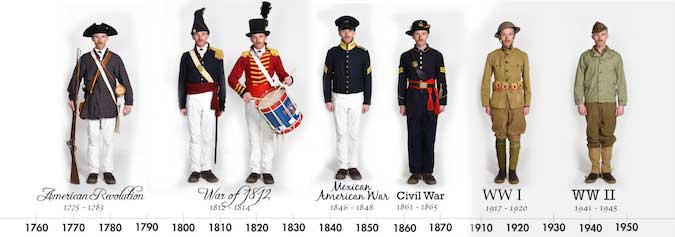
In addition, Genesee Community College is participating in the Heritage Festival with its own contributions located at GCC’s two Orleans County campuses. The Medina Campus Center invites visitors to “Epochs in Orleans” – a timeline festival on Saturday, Sept. 10 from 9 a.m. – 4 p.m., featuring re-enactors and impressionists from all eras of history, from the French and Indian War to World War II and beyond.

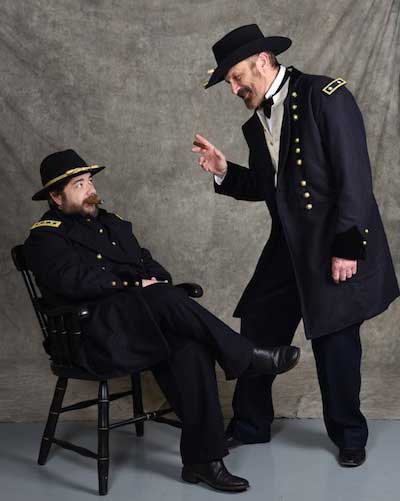
Folks might encounter President James and Dolly Madison, Abraham Lincoln and other historic personalities. There will be artisan demonstrations, antique autos, Civil War firing demonstrations and much more. Organizers believe that visitors will feel like they are walking through time.

GCC hosted a Civil War Encampment in Medina for three years. This photo shows re-enactors mounting a charge during a mock battle in April 2015. Some re-enactors may be back for a heritage Festival this September.

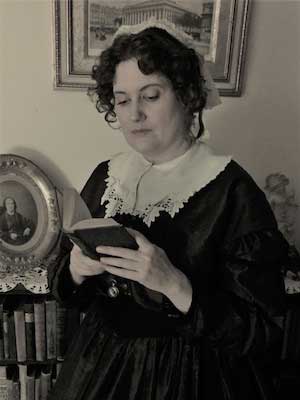
Meanwhile, GCC’s Albion Campus Center will focus on “Death, Mourning and Justice in Orleans County History” also on Saturday, Sept. 10 from 9 a.m. to 2 p.m., featuring a recreated Victorian wake in the family parlor.

The exhibit will be accompanied by two public lectures. The first of these will focus on famous crimes and murders with Orleans County District Attorney Joseph Cardone at 10 a.m. Retired Orleans County historian Bill Lattin will give a talk on Victorian hair jewelry at 12 p.m.

The overall event is free and open to the public, however contributions to GCC’s Veteran’s Scholarship Fund will be encouraged. To keep tabs on the newest developments for the heritage festival, click here, or check the festival’s Facebook page by clicking here.

You can also contact Derek Maxfield, GCC associate professor of history at ddmaxfield@genesee.edu or Jim Simon, GCC associate dean of the Orleans County Campus Centers, at jsimon@genesee.edu.

Hall of Fame Santa was proud to serve at Christmas Park in Albion

By Tom Rivers, Editor Posted 30 June 2016 at 12:00 am

Photo courtesy of Fred Cond  – This photo from the late 1950s shows Santa Claus portrayed by the George Cond of Holley with his three sons, Fred Cond, bottom; George Cond III, middle; and Roger Boyce, top.

ALBION – George Cond delighted in making children happy, spending the Christmas holiday season portraying Santa Claus.

“He really liked kids,” his son Fred Cond said. “He prided himself on being Santa Claus.”

The Holley resident in the mid-1950s enrolled in the Charles W. Howard Santa Claus School in Albion. At the time, Cond was working three jobs, but he gave up two of the part-time positions to become Santa. (He quit his job as a cook at a restaurant and a position at Sears, but continued to work as a setup man for the punch press machines at Delco in Rochester.)

Cond was so good at portraying Santa that Charles Howard embraced Cond as the Santa at Christmas Park in Albion, Howard’s entertainment venue at Route 31 on Phipps Road. Christmas Park included a Santa School, toy shop, reindeer, train, motorized swans and other activities.

Charles Howard is pictured as Santa in this program promoting the Santa Claus School, which he started in 1937 in Albion.

Howard is one of the most respected Santas in the world by the men who portray Santa today, even 50 years after Howard’s death. His Santa Claus School was moved from Albion after Howard died in 1966, but the school continues today in Midland, Mich., and still bears Howard’s name.

George Cond also is held in high regard by the Santa community. Next week, Cond will be inducted into the International Santa Claus Hall of Fame during the Santa Convention in Branson, Missouri.

“A student of Howard’s Santa Claus School, Cond assumed the role of Santa at Christmas Park in late 1950s and continued until the close of the park in 1966,” according to the Hall of Fame. “With Howard busy as the Executive Director and away on business during the Christmas Season, Cond handled most of the day-to-day Santa appearances throughout the park. He appeared in and around the Western New York State region on behalf of Christmas Park.”

Fred Cond keeps one of his father’s business cards, noting his service as Santa Claus.

Cond worked as the Santa at Christmas Park for about a decade and many of the photos from that time, showing kids with a Santa at Christmas Park, actually are more likely to show Cond as Santa than Howard. Fred can tell the photos of his father.

George Cond injured his right hand and two of his fingers seemed to be permanently “frozen” in a bent position. Many of the photos from Christmas Park show a Santa waving, with middle and ring fingers in that bent position. That’s a giveaway that Cond is wearing the red suit, not Howard.

Cond wasn’t the only family member to work for Howard at Christmas Park. Cond’s wife Elaine also worked there and Fred would help as an elf.

Fred, now 63, remembers when as a boy he was asked to bring lunch to Santa. Fred carried the meal over to Santa, who was on break. Fred discovered his father in the Santa suit without the beard and wig. It was the first time Fred realized his father portrayed Santa.

“My father told me that Santa can’t be there all the time,” Fred recalled at his home in Brockport. “He said, ‘I’m helping Santa out. I’m helping him take some of the orders.'”

Fred Cond holds his father’s Santa suit, which was originally worn by Charles Howard. The suit, No. 191, bears Howard’s initials. Fred now wears the suit when he portrays Santa. (All of the suits made at Christmas Park were individually numbered.)

When Howard died, the fate of Christmas Park was uncertain. George Cond wanted to buy it and keep it viable for years. But he was outbid by an out-of-town buyer. Christmas Park didn’t last long without Howard.

Fred Cond wishes Christmas Park could have continued.

“If it was still around today, it would be bigger than Darien,” Cond said. “Charlie Howard was a very clever man.”

After Christmas Park closed, Cond continued to portray Santa for local families, schools, churches, and other venues. He was the Santa for Kodak.

He was asked to follow Howard as the Santa in the annual Macy’s Thanksgiving parade, but Cond declined out of respect for Howard.

“In his mind, Charles Howard was always Santa Claus,” Fred Cond said.

His father died in 1996. He was an active Santa until the late 1980s. The Santa Claus Hall of Fame induction is a pleasant surprise for his family, Fred Cond said.

The Santa suit used by George Cond was originally Charles Howard’s suit. It bears Howard’s initials. The wing and beard are made of yak hair.

Fred Cond continues the Santa legacy in the family. Fred first portrayed Santa as an 18-year-old at the former Ames in Albion. He continues to be Santa every Christmas season, mostly wearing the suit for friend and family.

His wife Debbie said Fred is changed every year when he brings out the Santa suit.

“Once he puts on that suit, the Christmas spirit invades him,” Debbie said.

Fred said Howard’s family has asked if he would be willing to give up the suit, but Cond said it is too important to him and the Cond family.

“There are very few things I have of my dad,” Fred said. “This was part of my life, growing up with my dad. He was a big part of Christmas Park. He was hand-picked by Charles Howard to play Santa, and my dad did it because of his love for the kids.”

This document shows Cond’s enrollment papers for the Charles Howard Santa Claus School in Albion in October 1958.

Charles Howard signed the enrollment papers for Cond in red ink.

Each student at the school received a red folder from the “Santa Claus School” in Albion, NY. Fred Cond has many of his father’s papers from when he attended the school.

Burrows Concert Hall once home to Baptist Church in Albion

By Matthew Ballard, Orleans County Historian Posted 26 June 2016 at 12:00 am


Volume 2, Issue 26

ALBION – Over two hundred years ago as the pioneer settlers first established themselves in the wilderness that was once Genesee County, education and religion became fundamental pieces in daily life.

It’s no surprise that the first church constructed in this region was situated along the heavily traveled Ridge Road in the town of Gaines. A partnership between Baptists and Congregationalists led to the erection of a church edifice to the west of the old Gaines Road.

Upon the opening of the Erie Canal, traffic, industry, and eventually wealth transitioned southward into the Village of Albion and of course so did the demand for schools and churches.

The Baptists, once practicing their faith in their shared sanctuary at Gaines, pushed to split the congregation in order to establish themselves within the village. With pressure from many prominent citizens, the First Baptist Church of Albion was organized on April 17, 1830 at the Court House; Phineas Briggs and Barnuel Farr were selected as deacons.

After the succession of Rev. Hervey Blood to the pastorate of the congregation at Gaines, the Rev. Arab Irons was petitioned to serve in Albion as the first pastor of the newly formed congregation. With no place to meet, the churchgoers worshiped in the Court House for nearly two years before the group was able to purchase a parcel of land on North Main Street from Sydney Barrell at a cost of $400.

In 1832, the beautiful edifice pictured here was built adjacent to the Burrows Mansion (the old Swan Library) at a cost of $7,000. Constructed in the Federal style, the building is representative of an iconic architectural style that places emphasis on balance, symmetry, and elegance. For nearly 28 years the structure served the faithful worshippers until the congregation outgrew its physical space.

Under the pastorate of Rev. Almond C. Barrell the congregation purchased a lot on the corner of Liberty and West Park Street from the Presbyterian Church and erected a new building at the cost of $22,107 in 1860; approximately $588,000 today.

Upon relocation of the congregation, the old church was transferred to Roswell S. Burrows who used the space as a concert hall. The building continued to serve in that capacity until it was left vacant and razed in the early 1890s.

The “Concert Hall Lot,” as it was called, remained under the ownership of the Burrows Estate until the remaining real property was liquidated in 1906. The Albion Lodge Independent Order of Odd Fellows purchased the lot and constructed a meeting house, which remains today with some additions and modifications added over the last 109 years.

Return to top

Town of Gaines marks 200 years of mail

Posted 18 June 2016 at 12:00 am


By Al Capurso
Town of Gaines Historian

Volume 2, Issue 25

When you pick up your mail in the next few days, you might want to remember that it was 200 years ago this July 1st that a pioneer settler on the Ridge Road in Gaines became the first postmaster in Orleans County. William Jenks Babbitt ran that post office out of his log cabin home starting in 1816.

Born in Providence, Rhode Island on September 15, 1786, he learned the trade of blacksmith in his father’s shop. In 1810, Babbitt came to the unbroken wilderness of “the Genesee Country” and began clearing land and building his log cabin near the corner of Crandall Road and Route 104.

After the dangers of the War of 1812 subsided, he moved his wife and children to what was to become Gaines and became the area’s first blacksmith. He also established the first brickyard in the town, supplying the bricks for many early buildings we still see standing today. He was appointed Justice of the Peace in 1815 and served in this capacity for 23 years. His “Marriage Day Book” with its first entry of June 2, 1815 is in the possession of the Town of Gaines Historian. It can be seen in the display case at the town hall next to his original daguerreotype portrait you see here.
In 1816, Wm. Babbitt was successful in getting the Ridge Road declared “The Post Road” by New York State, and his application as first postmaster of Gaines was granted; an office he held for five years. Babbitt was also working hard to get the town of Gaines organized. It was his suggestion that General Edmund Pendleton Gaines, hero of the War of 1812, be honored with its naming.

His 1816 Valentines Day gift to his wife Eunice was the announcement that Gaines was set off from Ridgeway and contained most of the present day Carlton and Barre. In 1831 he became Town of Gaines Supervisor and soon after represented this area in the New York State Assembly.

Perhaps the most enduring legacy of William Babbitt was the construction of Gaines District #5 Cobblestone Schoolhouse on the Ridge Road just east of Childs. It was built in 1849 and the work was superintended by Babbitt. It is most unusual in that it has a sloping floor and its facade of lake washed cobblestones are set on a hewn wooden framework, rather than a rubble stone wall.

Further, Mr. Babbitt gave the school district a gift of the bell pictured above, costing $20 in 1849. The building was used as a schoolhouse until 1952. Currently, plans are underway to restore the bell to working order, so once again visitors to the Cobblestone Museum in Childs, Town of Gaines, will be delighted by the chiming of Babbitt’s bell.

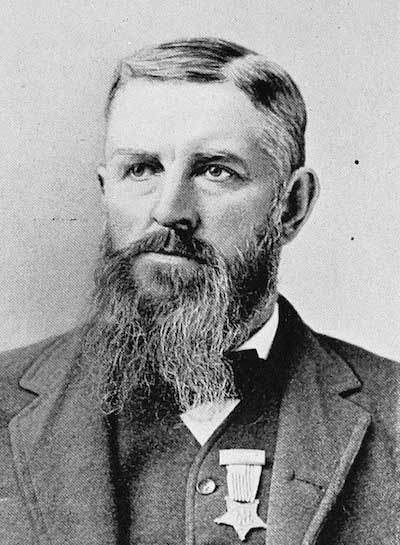
One last note about the photo of Mr. Babbitt with a stern look on his face: The story handed down is that his wife had arranged for this sitting, but Mr. Babbitt was upset since he was still in his work clothes. The photographer painted in the suit and collar we see here. Mr. Babbitt was a remarkable man and those of us in Gaines and Orleans County are indebted to his industry and vision.

Return to top

GO-Art! gallery in Batavia features photos of opera house in Albion

By Tom Rivers, Editor Posted 16 June 2016 at 12:00 am

Photo by Walter Jakubowski – This and other photos of the Pratt Opera House in Albion are featured in an exhibit at the Genesee-Orleans Regional Arts Council in Batavia. There is an opening reception today from 5 to 8 p.m. at the gallery, 201 East Main St., Batavia.

BATAVIA – An Albion photographer has documented the restoration efforts at the Pratt Opera House, a transformation that shows the floor of historic site covered with pigeon droppings and bird carcasses to a space that has been cleaned, sanded and refurbished.

The Genesee-Orleans Regional Arts Council is displaying photographs of the work at Pratt Opera House, an exhibit that opened June 7 and continues until Aug. 30. There is an opening reception today from 5 to 8 p.m. at the GO Art! gallery in Batavia from 5 to 8 p.m. The gallery is located at 201 East Main St.

One of Jakubowski’s photos shows a ticket from a performance at the Pratt Theatre.

Walter Jakubowski of Albion photographed much of the restorative work at the opera house from 2013 to 2015, highlighting the efforts by the building’s owners, Michael Bonafede and his wife Judith Koehler.
The exhibit also includes old seating charts and some historic photos of the Pratt, where construction on the third floor building started in 1890.

The opera house seated 400 and hosted numerous plays, theater events and other live performances. By World War II, the opera house was largely dormant and its chairs removed so the steel could be salvaged during the scrap metal drives.

The opera house would spend about 70 years pretty much out of the public eye. The site was falling in disrepair when Bonafede and Koehler purchased it in 2005. The couple was on the tour with former Congressman John LaFalce and former Albion Mayor Ed Salvatore. The mayor asked the Bonafede family to take on the project, seeing a restored opera house as a major draw for Albion.

The family has done extensive work on the opera house and the entire building. The opera house has more work to be done.

Photo by Tom Rivers – Walter Jakubowski is pictured in May 2015 when he was setting up his exhibit on the Pratt Opera House at the Salih Studio in Albion.

“My goal artistically was to produce images which evoke the spirit of what once was a lively cultural landmark of a small Historic community along the Erie Canal,” Jakubowski said in an artist statement. “Within this space of grandeur, remembrances of spirited times past await in repose with perhaps a hope of a future awakening.”

Jakubowski wanted to document the efforts by Bonafede and Koehler, and also highlight an important building in Albion’s history. Jakubowski said generations of people have been driving by the building without seeing or appreciating the opera house. He wanted them to get a glimpse of the grandeur.

“I think a lot of people aren’t aware of what’s up there,” he told the Orleans Hub last year. “It’s tucked up on the third floor and people don’t see it or think about it.”

Myron Holley, namesake of canal village, is focus of historical program on Wednesday

Staff Reports Posted 14 June 2016 at 12:00 am

CLARENDON – The Clarendon Historical Society is hosting a program on Wednesday about a prominent canal builder and abolitionist.

Myron Holley was so esteemed that the the community of Saltport decided to change its name to Holley to honor him.

Richard O. Reisem wrote a book about Holley’s namesake called “Myron Holley: Canal Builder/Abolitionist/Unsung Hero.”  Reisem will talk about Holley’s life during a presentation at 7 p.m. on Wednesday at the Clarendon Historical Society. The society is located at 16426 Fourth Section Rd., at the intersection of Route 31A and Church Street in Clarendon.

Reisem tells Myron Holley’s story in the context of the momentous historical events and movements that shaped his life, including the War of 1812, the building of the Erie Canal, and the struggle to abolish slavery.

Holley was a visionary who had a profound influence, changing the course of history in New York State and indeed the nation. Among Holley’s many achievements, he served as the Superintendent of Construction of the Erie Canal and founded the first Horticultural Society in Western New York, the First Unitarian Church in Rochester, and the anti-slavery Liberty Party.

Reisem explains how more than any other individual, Myron Holley enabled the monumental engineering feat of building the Erie Canal to be the success that dramatically changed American History.

Reisem is a graduate of Iowa State University where he studied architecture and journalism. During his 31-year career at Eastman Kodak, he was speech writer for six of the company’s CEOs. He also produced Kodak annual meetings, financial analysts’ presentations, photographic trade show events, new product announcements, and traveling multimedia programs. He was the author of a series of books on color photography.

He has written 15 books since his retirement in 1986. Reisem is an honorary trustee of the Landmark Society of Western New York, vice-president of the Friends of Mount Hope Cemetery, and a former trustee of the Rochester Historical Society. For 16 years, he served on the Rochester Preservation Board, and was chair for four years.

After death of Notre Dame fan, family built mausoleum at St. Joseph’s

By Matthew Ballard, Orleans County Historian Posted 12 June 2016 at 12:00 am

Volume 2, Issue 24

Taken in May of 1942, this image shows men erecting the Dowd-Kellogg mausoleum at St. Joseph’s Cemetery in Albion. William E. Karns of Albion was commissioned to build the first and only mausoleum at that that cemetery using 35 tons of granite shipped in from Barre, Vermont.

The structure stands 10 feet high, is 12 feet 7 inches long, and 7 feet 6 inches wide with a crypt built from Pennsylvania Black Ribbon slate finished with a bronze door with plate glass. A crane was used to lift the large blocks of stone into place, the man standing in front of the mausoleum was responsible for mixing the mortar that locked the stone into place.

Charles Dowd was the first interment made in the newly completed crypt after his death in November of the previous year. An ardent fan of the Notre Dame Fighting Irish, a 76-year-old Dowd found himself tied to the radio in his home on West Bank Street listening to the Notre Dame-Navy football game on November 8, 1941. Dowd suffered a massive heart attack as a result of the 20-13 victory over the “Middies”; far too exciting for an old gentleman’s frail heart.

Before his death, Dowd operated a newsroom and tobacco shop at 13 E. Bank Street (occupied by the Golden Comb today) in Albion with his brother George. Upon his death, he left an estate valued at $10,000 to which he gave $100 each to St. Joseph’s Church and St. Mary’s Church in Albion, depositing the remainder in a bank account for his sister. Upon her death, the money was to pay for the upkeep of St. Joseph’s Cemetery on Brown Road in Gaines.

The newsroom transitioned to his brother-in-law, Charles Kellogg, who had started his career in Dowd’s newsroom. Kellogg was lucky to have survived into adulthood, having receive a near fatal gunshot wound as a young boy; a group of young lads led by a young son of Joseph Dibley were playing with a loaded revolver when it accidentally discharged, shooting Kellogg in the groin.

The newsroom operated by Kellogg was later sold to Newell Maxon of Medina and eventually was transferred to Carl Fischer and relocated to North Main Street (Fischer’s Newsroom).

Kellogg had his fair share of “toys” and frequently raced novelty automobiles at the Orleans County Fairgrounds. He was cited by local authorities on several occasions for driving his boat up and down the Canal at excessive speeds, once to the point where Canal employees threatened to remove the vessel from the water should he not abide by the laws.

Charles Kellogg and his wife, Mary Dowd Kellogg, are also entombed in the mausoleum.

Many from Company F in Medina served and made ultimate sacrifice

By Matthew Ballard, Orleans County Historian Posted 4 June 2016 at 12:00 am

Volume 2, Issue 23

Memorial Day was a weekend for self-reflection for many Americans, while others find enjoyment in spending time with family, vacations, and cook-outs.

One noticeable presence during this past holiday weekend was the outcry of citizens asking for the greater community to remember the true meaning of the day; an opportunity to honor those men and women who gave everything for our country. Winston Churchill’s famous quote, “Never in the field of human conflict was so much owed by so many to so few,” stands as a statement that every American should memorize.

One thing that Orleans County does not lack is the appreciation and support of our veterans and members of the U.S. Armed Forces. In October of 2008, the Company F Memorial Committee dedicated a monument to the memory of those men who served out of Medina’s Armory with the 3rd N.Y. National Guard and the 108th U.S. Infantry. The beautiful sandstone memorial contains five bronze tablets which include the names of men who served during the Spanish-American War, Mexican Border Incursion, World War One, World War Two, as well as the names of men who served during the Cold War.

Despite its focus on Company F, the monument stands as a testament to all men who served from Orleans County spanning over two centuries of conflicts. Those names listed with special designations recall the sacrifices of those who went above and beyond the call of duty. Men like Luke Gaffey who served during the First World War.

Awarded the Distinguished Service Cross for actions on September 28, 1918, Gaffey left the cover of shelter to rescue wounded soldiers from machine gun and artillery fire. The following day, he continued an advance on enemy positions with an automatic rifle after his entire squad was killed or wounded; he received a
bronze oak leaf cluster for his bravery.

Other men such as Archie Case, Raymond Reed, and Mahlon Ward were awarded the Distinguished Service Cross when they unselfishly left the protection of shelter during an artillery barrage on September 29, 1918 to bandage wounded soldiers and pull them back to safety.

Of course, most Medina residents are familiar with the story of Lt. John Butts who sacrificed his own life to protect the lives of his fellow soldiers on June 23, 1944. With a complete disregard for his own safety, “and seeing his platoon waver and start to fall back,” Butts urged his men uphill against a stubbornly defended area.

Capt. Lloyd Tallent of Texarkana, Texas recalled the efforts of Butts that day stating that after Butts was wounded by machine gun fire, “he knew he was dying because of his severe stomach wound dragged himself over the fire swept ground towards the enemy. All the enemy were watching him.” Wounded twice, first on June 14th of 1944 then on June 16th, his determination to remain with his men and refusal to seek treatment for wounds combined with the sacrifices made on June 23 earned him the Congressional Medal of Honor in August of 1945, which was awarded posthumously. His body was finally brought home in 1948.

The Company F Memorial Committee continues to seek support in the completion of their project. Although the beautiful sandstone memorial stands at the Medina Armory site, it represents one phase of a two phase process. The crowning achievement is a bronze statue of a Company F soldier, which will rest upon the monument tribute to all who served and as a lasting reminder of those who never came home.

Those who are interested in learning more about the project or to donate, please visit
www.companyfmemorial.com. The Cobblestone Museum is sponsoring a speaker series every Friday at 7 p.m. in July, starting July 8th with a program on Orleans County and the First World War; more information is available at www.cobblestonemuseum.org.

Many from Orleans County served and died in Civil War

By Matthew Ballard, Orleans County Historian Posted 28 May 2016 at 12:00 am

Soldiers & Sailors Monument

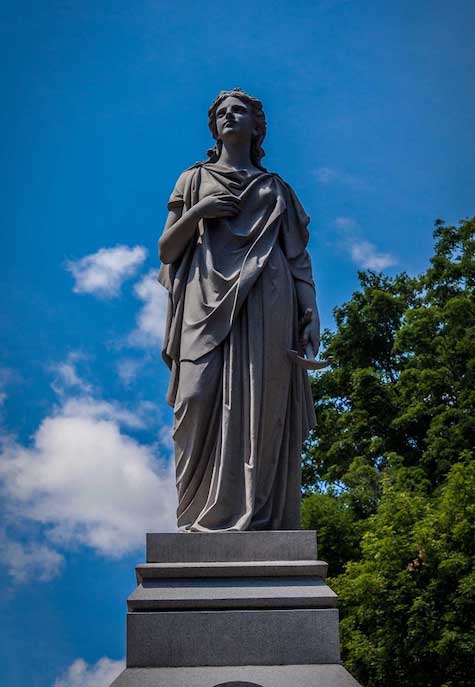
Photo by Matthew Ballard – The Soldiers & Sailors Monument, dedicated 140 years ago in the spring of 1876, contains the names of 466 soldiers and sailors etched on marble tablets; those men who gave their lives for the preservation of the Union buried both at home and on the battlefield. The monument stands as a testament to the beauty of our native Medina Sandstone and the pride and community commitment to honoring our veterans.


Volume 2, Issue 22

ALBION – The 7th grade class of students from Albion Middle School dedicated a beautiful granite urn, sugar maple tree, and bronze plaque affixed to a slab of pink Medina Sandstone on May 26.

The task undertaken by Tim Archer should be applauded and imitated by teachers throughout the region as a heartfelt effort to educate students about the importance of becoming noble citizens.

Over 140 students stood on the very ground once selected by David Hardie and other area municipal supervisors for use as a lot for veteran burials. Just two years later, the men of Curtis Post Grand Army of the Republic dedicated a flag pole and M1841 6-pounder bronze howitzer cannon to the memory of their fallen comrades. Those same men committed themselves to ensuring that all indigent soldiers who found themselves interred within potter’s field be removed to this newly consecrated lot.

In conjunction with the ceremonies held on May 26th and Memorial Day, it may be fitting to share a few brief notes of interest pertaining to Civil War veterans from Orleans County.

Thousands of men would enter into service with the Union Army, some would never return, yet many would return with permanent physical and mental scars from the horrors of battle.

Pvt. Ross Brown, 18th U.S. Colored Troops – born a slave in North Carolina, Brown escaped as a stowaway aboard a ship traveling for New Orleans. Making his way inland, he enlisted with the Union Army in 1864 and moved to Albion in 1890. He was affectionately known locally as “Uncle Ross.”

Maj. Thomas Bell, 8th N.Y. Cavalry – developing a fondness early on in life for theater, Bell allegedly spent two years with Edwin Booth’s company in Alabama before engaging in the foundry business at Albion. After the war, he introduced an article into U.S. law giving veterans preference in civil service appointments.

Dr. Arthur K. St. Clair, 5th Michigan Cavalry – graduating at the head of his class from the College of Physicians and Surgeons of New York City, Dr. St. Clair was regarded as an outstanding field surgeon having participated in at least 14 battles. When Gen. Wadsworth was killed at The Wilderness, St. Clair volunteered with a party of men to retrieve the body from the Confederate line.

Pvt. Herbert Taylor, 140th N.Y. Infantry – Clarendon native Herbert Taylor was with his regiment at Gettysburg on July 2, 1863 and repulsed the attack on Little Round Top. Making the ultimate sacrifice, he is believed to be the only Orleans County native to have died at Gettysburg.

Pvt. Isaac Hawkins, 54th Massachusetts Infantry – Medina resident Isaac Hawkins enlisted with the all African-American regiment once headed by Col. Robert Gould Shaw and made famous by the 1989 film “Glory.” Hawkins was captured at the Battle of Olustee in Florida, spending over a year at Andersonville Prison Camp and on one such occasion allegedly received 250 lashes as punishment for an unknown reason.

Col. Fazilo A. Harrington, 27th Illinois Infantry – a native of Medina, Harrington entered West Point Military Academy in 1850 before resigning his position in favor of a career in civil engineering. Answering the call of Gov. Yates of Illinois, he was placed in command of the 27th Illinois Infantry. Harrington was struck in the face by an artillery shell at the Battle of Stones River, killing him instantly. A Confederate private attempting to steal the colonel’s boots was given quite the scare when he looked up to see Harrington’s eyes wide open, as if to stare at him.

Maj. Angelo Paldi, 1st Michigan Cavalry – a native of Italy, Paldi was a respected painter and solider who allegedly served with the French Army in Algeria and Spain before immigrating to America. Serving under Gen. George Custer for a short period of time, it was Paldi’s suggestion to form a regiment of Hussars, or heavy cavalry, modeled after the regiments of Europe. After the war he moved to Albion, his body is interred at St. Joseph’s Cemetery in Albion.

Gravestone coming for Medina man killed in World War I

By Tom Rivers, Editor Posted 28 May 2016 at 12:00 am

Photo by Tom Rivers – Debbie Morse is pictured near a spot at Boxwood Cemetery where a gravestone will soon be installed for her great-uncle, Jay David Hebner, who was killed in World War I.

MEDINA – Debbie Morse remembers her late father, Don Cook, mentioning one of his uncles had been killed in World War I.

Cook was a prominent local photographer who served in World War II. He died in 2004. Morse recently reflected on her father’s uncle. She didn’t know much about Jay David Hebner. But she has been researching him.

Hebner grew up in Medina and lived at 920 Gwinn St. He was born in Le Roy and enlisted in Company F, the 74th Infantry of the New York Guard that trained out of the Armory in Medina. Hebner enlisted on Dec. 4, 1917, and was discharged on April 26, 1918. Morse isn’t sure why he was discharged, but she found documents showing he joined the Army on April 3, 1918. The Army private was killed in France on Sept. 17, 1918, at age 22. He was hit by a shell.

Hebner is buried at Saint Mihiel American Cemetery in France, one of 4,153 American soldiers in the cemetery. Hebner doesn’t show up in Company F records. His service isn’t noted on the Company F Monument outside the Armory, the Pearl Street building that is now the YMCA.

Provided photos – Jay David Hebner, a Medina native, was killed in France in 1918, serving in the U.S. Army during World War I.

Morse and her husband Jim have paid for a gravestone for Hebner which should be installed soon in Boxwood Cemetery. The stone will be next to the Hebners and Cooks. (Don Cook’s father Irving Cook married Etta Hebner.)

“It’s about bringing honor to him,” Mrs. Morse said Friday at her home on Erie Street. “There’s nothing about him in the village.”

Morse thinks Hebner’s parents may not have had the money to bring the soldier home to be buried in Medina or to buy him a gravestone.

“It was important to me to leave behind a reminder of that sacrifice, one that has gone unnoticed all these years,” Morse said.

Morse, who works as a kitchen designer for Barden Homes, said other researchers helped her locate Hebner’s military records, and also find a picture of him.

“My wish is that from this day forward he will have the respect and remembrance he deserves each and every Memorial Day along with the countless others who gave so much for our country,” she said. “After all he has been waiting almost 100 years.”

A record shows Hebner started at Company F in medina on Dec. 4, 1917 and was discharged on April 26, 1918.

This gravestone will soon be installed to recognize Jay David Hebner’s service to his country.

Albion students unveil marker at Civil War section of Mount Albion

By Tom Rivers, Editor Posted 26 May 2016 at 12:00 am

ALBION – Marines Pvt. Trey Liberatore and Sgt. Derek Yertich raise the American flag today during a ceremony at Mount Albion Cemetery, where a new memorial plaque was unveiled in honor of the Civil War soldiers from the county.

The two Marines stand at attention while the flag is raised.

The seventh-grade class and many community members and veterans attended today’s dedication ceremony.

Abby Allen sings the National Anthem during today’s program.

Today culminated several months of effort for the seventh grade “Service Learning” classes that are led by teacher Tim Archer.

Students in the fall catalogued the burial locations for more than 250 Civil War veterans buried at Mount Albion. That includes 72 on the east side, 137 on the west side, and 41 at the Civil War section. About 160 of those veterans had rusty, old cast iron Grand Army of the Republic (GAR) markers that needed repainting.

The GAR marker for Christopher Drake was repainted, along with about 160 others that were rusty.

These students – Bailey Blanchard in front, Josh DePoty and Alexa Grandy –  read the names of 47 Civil War veterans whose names weren’t included on the marble slabs inside the tower at Mount Albion when the tower was built in 1876.

The tower was dedicated on the country’s 100th anniversary and includes the names of 466 Orleans County residents who died in the Civil War. Seventh-graders researched the names of Orleans residents who died in the war, teaming with archivists and historians in the research.

These Orleans County residents died in the war but their names aren’t in the monument: Miles Ameden, James Bayn, Jonas Bayne, Lyman Blanchard, Henry Burbank, Martin Burnett, James Caldwell, Jefferson Chapman, Oliver Clark, James Collins, William Crann, Dolly Denison, Edmund Everett, George Everett, Edmund Furndon, James Hammon, Henry Harden, Willis Herman, Edwin Holsenberg, Alexander Hosbury, Charles Hulbert, S. Hunnant, John Hurburger, Jenkins Irving, Lawrence Keegan, Ira Kelsey, Frederick Kruse, George Lytle, John McPherson, Thomas Morrison, William Mulligan, Ethan Murin, Alfred Parkinson, Monroe Peaslee, George Washington Pier, Abial Randall, Elisha Sanderson, John Simmons, Arrill Snyder, George Stanton, Charles Starks, George Sutton, Lewis Teyrrell, William Trow, Nathan Venton, George Woodhull, Gilbert Woodhull.

Orleans County Historian Matthew Ballard, who helped students with some of the research on the Civil War soldiers, speaks about the creation of the 50-square-foot lot at Mount Albion for veterans at the site of today’s ceremony. The spot was picked for veterans back in 1883.

Ballard thanked seventh-graders for their “noble deed” in remembering and honoring veterans.

About 200 people attended today’s ceremony including the Honor Guard from the American Legion.

Seventh-grader Emily Mergler, wearing period dress for the ceremony, said women also made many sacrifices during the Civil War, keeping houses, farms and businesses running while caring for children while their husbands were at war or killed in battle. Tim Archer, the Service Learning teacher, is in back.

Seventh-grader Infinity Bell talks about some of the Civil War soliders from the community.

Seventh-grader Quinn McCue highlights some of the class’s efforts this year. She said the group isn’t done. It will unveil a historical marker in September at Hillside Cemetery in Clarendon for Herbert Charles Taylor, the only Orleans County resident believed to have been killed in the Battle of Gettysburg.

Student Rocco Auricchio reads a poem, “Our Soldier Dead,” by Joel B. Swett.

Seventh-grader Eli Pask notes the sesquicentennial of the surrender at the Appomattox Court House. The 150th anniversary was in April 2015.

The new bronze plaque for Orleans County Civil War soldiers was unveiled today. The plaque is on a 6-foot-long piece of Medina sandstone donated by Fred Pilon. The stone was saved when an Albion street was torn up about a decade ago.

Seventh-grader Jakob Talbot unveiled the new marker. Students also planted a sugar maple tree by the Civil War section and placed an urn by the cannon.

Members of the American Legion Honor Guard do a gun salute after the marker was unveiled.

These students – Ashley Ames, Logan Conlon, Sierra Kast, Kailey Merrill and Lauren Wehling – play Taps at the service today.

Tim Archer listens to his students during today’s program. Archer thanked many of the local historians and Mount Albion staff for help with the Civil War research and recognition efforts this year.

He said he and the students enjoyed spending so much time in the historic cemetery.

“This cemetery is really a treasure that we have right here in our community,” Archer said.

Return to top

Sandstone Society recognizes Medina students for historical excellence

Posted 23 May 2016 at 12:00 am

Provided photos – The Medina Sandstone Society has recognized the first group of students to be named to the John Ryan School of Historical Excellence. They include, from left: Zachary Harris, Alyssa Shortridge, Allison Bensley, Amanda Lunden, Caitlyn Davies, Gregory Husung and Tyler Waldriff. 

Press Release, Medina Central School

MEDINA – Seven students from Medina High School are the first class to belong to the John Ryan School of Historical Excellence that was started by the Medina Sandstone Society this year.

Allison Bensley, Caitlyn Davies, Zachary Harris, Gregory Husung, Amanda Lunden, Alyssa Shortridge and Tyler Waldriff are honor level students who are being recognized by Sandstone Society.  The goal of the John Ryan School is to instill in the minds of Medina’s youth a heightened pride in the local community and encourage an understanding of their hometown history and heritage.

John Ryan was a pioneer stonemason who traveled hundreds of miles on foot and spent the rest of his life as a builder and quarry operator, using world-famous Medina sandstone. Ryan opened the first commercial sandstone quarry in Medina. The Sandstone Society started the school to encourage the students to become future leaders of Medina.

At a recent ceremony, students saw their names unveiled on a plaque at the High School.

Allison Bensley also received a $500 scholarship from the Sandstone Society.  She is pictured with Jim Hancock, president of the group and chairman of the selection committee.