By Tom Rivers, Editor Posted 22 December 2020 at 1:07 pm
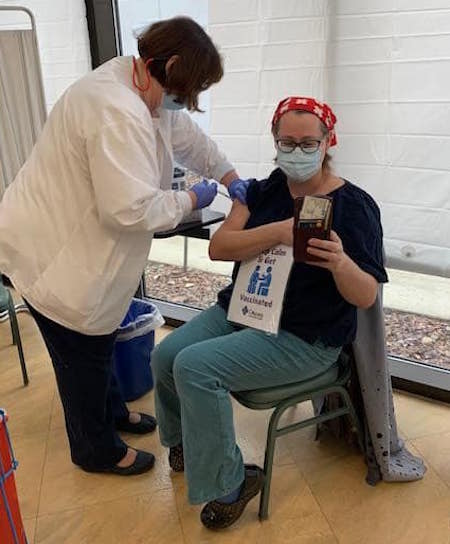
Provided photos from Orleans Community Health
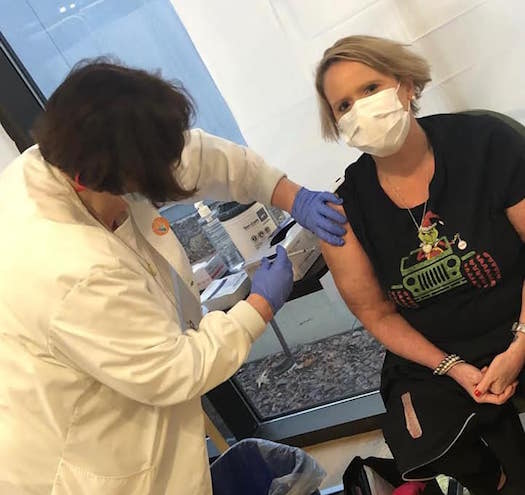
MEDINA – Leighann VanAuker, director of the emergency department at Medina Memorial Hospital, was among 46 employees at Orleans Community Health to receive the Covid-19 vaccine this morning.
Mary Williams, the director of HR for Orleans Community Health, administered the vaccine shots.
The OCH employees traveled to Unity Health in Rochester to receive the vaccinations.
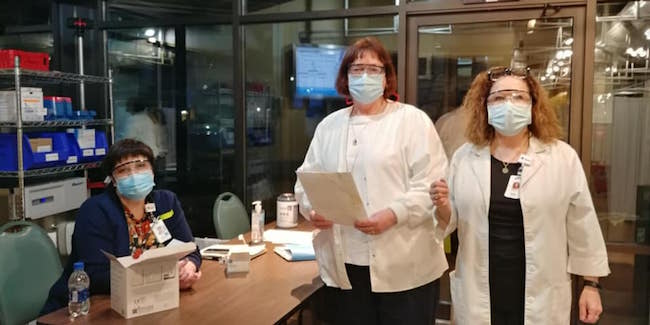
This group received the vaccinations and includes from left: Kate Brauen, director of pharmacy; Mary Williams, director of HR; and Rebecca Mannella, director of human resources education.
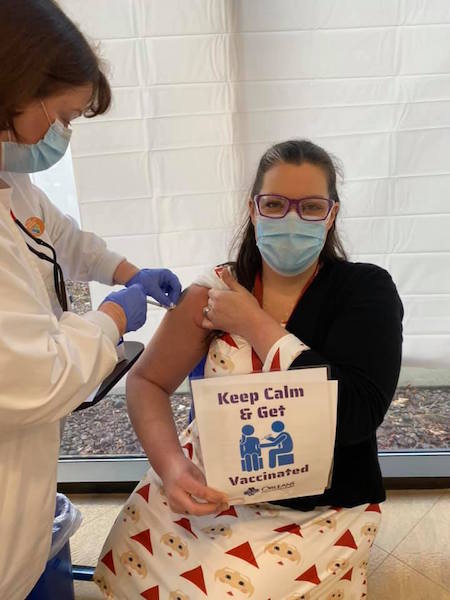
Jessica Capurso, director of marketing, outreach and health education for OCH, receives her vaccine.
“The clinic went well this morning,” Capurso said. “No adverse effects. The employees were very excited that this happened.”
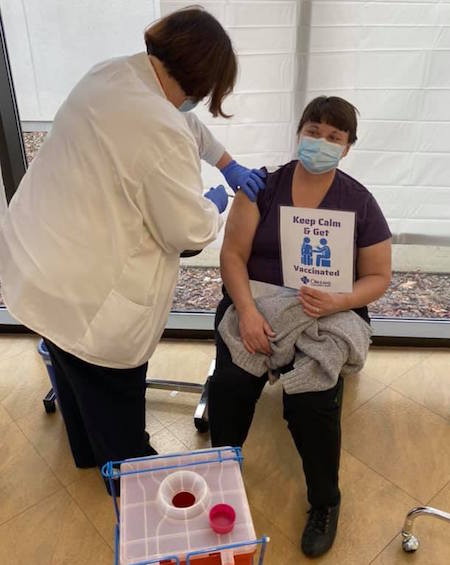
Elizabeth Wagner, who works with physicians as the medical staff coordinator, gets her shot of the Pfizer Covid-19 vaccine.
Dr. Christine Cameron, family medical doctor, also was among the first at OCH for the vaccine.
By Tom Rivers, Editor Posted 22 December 2020 at 12:37 pm
Photos by Tom Rivers
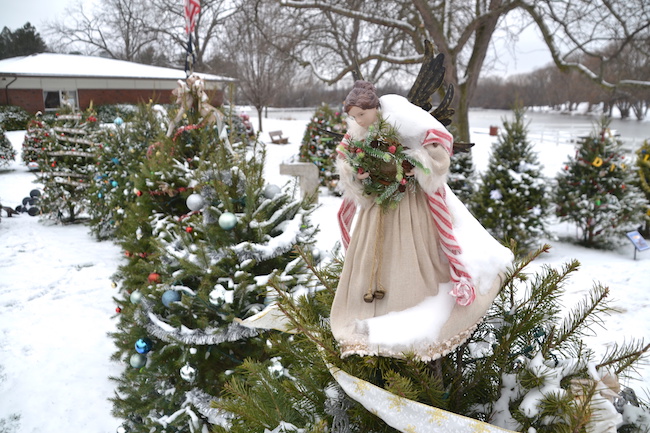
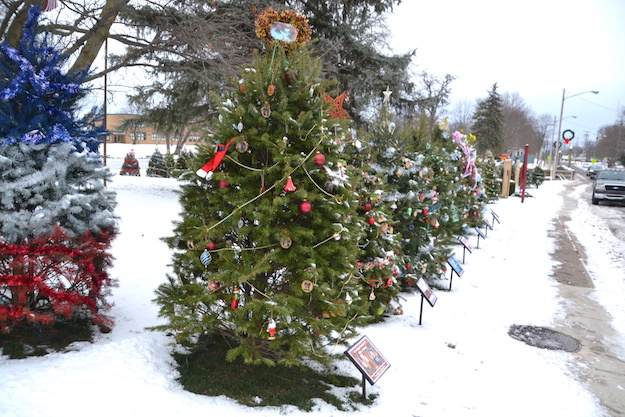
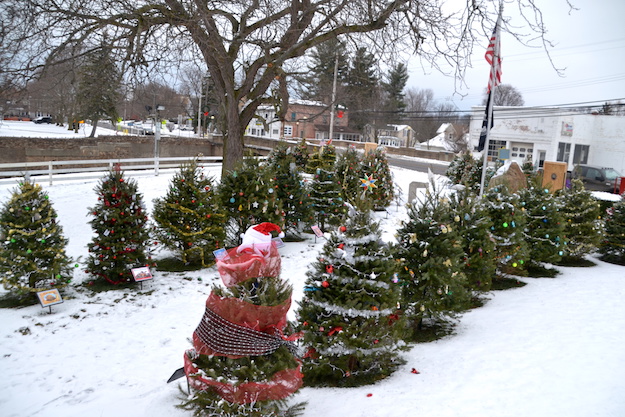
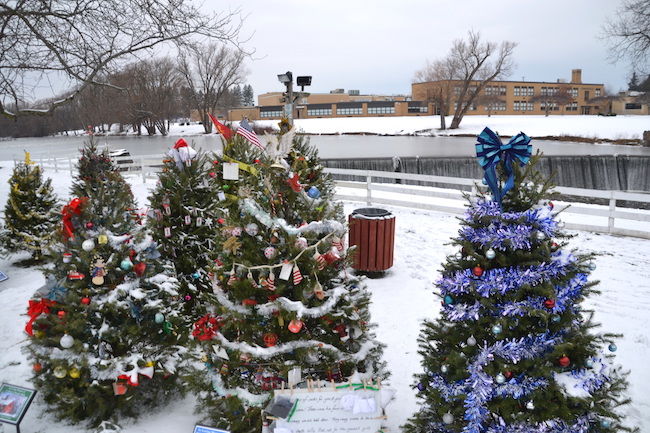
LYNDONVILLE – There are 79 Christmas trees decorated at Veterans Park in Lyndonville in the annual display for the holidays. That is the most since Lyndonville started festive tradition in 2013 with 26 trees. The effort has grown each year since then.
In the top photo, the tree with an angel on top was decorated by the Duncanson family in memory of Megan Dix.
The trees are dedicated by community organizations and families. The tree at the corner in this photo is in memory of Alan J. Goda.
The trees were available for $30 each, and then needed to be decorated. Lyndonville turned on electricity to light the trees on Dec. 5. They will stay lighted up through Jan. 1
This year there wasn’t a festival or big bash when the lights are turned on for the first time for the collection of trees, like there has been in years past, due to Covid-19 concerns.
People are welcome to stop by and see the trees and get their photo taken with the Santa cutout.
By Tom Rivers, Editor Posted 22 December 2020 at 11:15 am
Genesee, Orleans and Wyoming all have their most Covid cases during pandemic
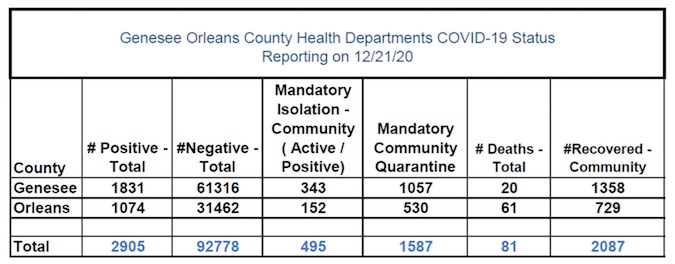
(Editor’s Note on Dec. 23 at 5:48 p.m: The Genesee & Orleans County Health Departments said they made a mistake with the 343 active cases for Genesee County. That number should have been 247. With that correction, the active cases for the three counties would be 538, which is still the most during the pandemic.)
The three local rural counties of Orleans, Genesee and Wyoming set a new record high on Monday for active cases of Covid-19 with 634 combined in the three counties.
They passed 600 active cases for the first time. On Friday, they hit 500 cases for the first time with 527.
Genesee County accounts for more than half of the cases with 343, followed by Orleans at 152 and Wyoming at 139.
Those caseloads are all the most for each of the counties during the Covid-19 pandemic.
Genesee’s previous high was 269 active cases on Dec. 7. Orleans was at 151 on Dec. 18 and Wyoming’s high was 123 on Dec. 10.
The three counties, which have a combined population of about 140,000, also have 2,071 people under mandatory quarantine for being close contacts to people with Covid. That includes 1,057 in Genesee, 530 in Orleans and 484 in Wyoming.
An active case is someone who has tested positive but hasn’t been cleared from mandatory isolation. If people test positive for Covid, they must be in mandatory isolation for at least 10 days. They are cleared after they have been fever free the last 3 days with symptom improvement. Sadly, if people die after contracting Covid, that also is no longer an active case.
Public health officials and leaders of the County Legislatures in Orleans and Genesee have pleaded with residents to take precautions against spreading Covid.
They are urging people to wear masks, adhere to social distancing and limit social gatherings. State officials say 74 percent of the recent Covid spread is from private social gatherings and households.
By Tom Rivers, Editor Posted 22 December 2020 at 10:33 am
Steve Hawley
State Assemblyman Steve Hawley (R-Batavia) has been reappointed deputy minority leader of the Republican conference in the State Assembly.
Hawley also will be serving on the committees for Agriculture, Insurance, Rules, Veterans’ Affairs and Ways and Means.
“I am honored to have been chosen once again to serve our conference as deputy minority leader, and look forward to continuing to use my role in our conference to give a voice to the people of the 139th Assembly District, as well as working people and families from all walks of life throughout our state,” Hawley said in a statement today.
The 139th Assembly District includes all of Genesee, most of Orleans and part of western Monroe counties.
Hawley, owner of an insurance business in Batavia, has been in the Assembly since winning a special election on February 28, 2006.
The Republicans in the Assembly re-elected Will Barclay of Pulaski as the minority leader .
“The members of the Assembly Minority Conference will continue to fight for policies to ensure the health and safety of our communities is maintained, to protect taxpayer dollars, preserve the resources for our schools and provide assistance to the small businesses on which we all rely,” Barclay said in a statement. “I look forward to a productive 2021 session, and working collaboratively with Speaker Heastie and his conference to develop solutions to some of the most important challenges our state has ever faced.”
WASHINGTON, D.C. – Following Senate passage of a $900 billion coronavirus relief package and omnibus, U.S. Senator Kirsten Gillibrand, released the following statement:
“While I am disappointed that Senator McConnell continues to oppose funding for state and local governments, I voted for the $900 billion aid package and omnibus in order to get urgent relief to New York families.
“This bill has many important provisions that will help families and small businesses, including enhanced unemployment benefits, direct payments, small business aid, SNAP benefits, and funding for vaccine distribution, hospitals and schools. More aid will be needed to help families make it through this crisis and I will be working hard with the incoming Biden administration to deliver it.”
With a bipartisan spending and Covid relief deal just reached, U.S. Senator Charles Schumer detailed its pending impact on Upstate New York as more than $50 billion dollars.
The deal includes direct stimulus checks, extending enhanced unemployment insurance, and secures another round of forgivable PPP for small businesses, restaurants and nonprofits across the state. As part of the deal, more than $13 billion flows directly to New York State government via education funding, vaccine distribution, Covid health funding, emergency assistance for renters and more.
“Today’s deal marks $50 billion-plus for New York workers, families, renters, communities, healthcare organizations and New York government —the things the federal government must immediately fund to get us through this pandemic,” Schumer said on Monday. “This marks the second biggest relief bill in the nation’s history—second to the CARES Act—and it delivers aid that is urgently needed by the unemployed, by renters at risk of losing their homes, by small business owners throughout New York that are worried about going out of business, by people seeking vaccination, by schools that spent money to keep kids safe, by families struggling to make ends meet and so much more. Clearly, there is more to be done –this is not a stimulus this is an emergency survival bill, and we will fight for more relief under President Biden, because this crisis is not over.”
The details and the impact on New York appear in the breakdown below. These numbers are tentative.
Direct aid to governments in New York State
$5.8 billion – Education Stabilization Fund
$4 billion – Elementary and Secondary School Emergency Relief Fund, provides relief to K-12 public schools across the State of New York.
$1.4 billion – Higher Education Emergency Relief Fund, directs funds to New York’s university system, like SUNY and CUNY.
$313 million – Governor’s Emergency Education Relief Fund, the governor can use these funds at his discretion to support the state’s K-12 education and higher education needs related to Covid-19. (This includes a set aside that will be prioritized to private schools serving low-income students who have been affected by the Covid-19 pandemic.)
$200 million – Emergency Transit Relief will support county bus services and upstate transit agencies.
$426 million – Critical aid to the New York State Department of Transportation (NYSDOT) to backstop declining revenues and support construction jobs.
$105.5 million – Relief for New York airports to continue operating safely during the pandemic. Upstate airports will receive: $6.4M for the Hudson Valley, $6.5M for the Capital Region, $6.9M for Central New York, $4.8M for the Finger Lakes, $7.6M for Western New York, and $4.1M for the Southern Tier.
Covid Health & Relief
$1.6 billion – Vaccine, Testing, and Tracing, and Flexible Local Health Funding. $810M for NYS and $810M for NYC
$135M for NYC for vaccine distribution
$135M for NYS for vaccine distribution
$675M for NYC testing, tracing, isolation support and COVID mitigation
$675M for NYS testing, tracing, isolation support and COVID mitigation
Rent & Eviction Relief
$1.3 Billion – Emergency Rental Assistance funding. This is a historic and unprecedented federal emergency rental and utility assistance program. It will assist multiple New York government entities and by extension help provide critical aid to keep thousands of New Yorkers safely in their homes.
The CDC federal eviction moratorium will also be extended until January 31, 2021, and can be extended further by the next administration.
Emergency Childcare Grants
$465 Million – Child Care Development Block Grants (CCDBG) – These funds ensure that the child care sector will continue to assist essential workers and working families, and to support child care providers in meeting their increased operation costs during the pandemic.
FEMA Disaster Relief Fund
$1 Billion – FEMA estimates that in Fiscal Year 2021 New York will receive about $1 billion in FEMA aid for COVID-19 alone. Schumer just negotiated an increase of these funds in this Disaster Relief Fund (DRF) account
Direct Checks, Enhanced Unemployment and FEMA Funerals
Over $6.5 Billion for NY in Enhanced Unemployment Compensation – This bill provides billions in additional federal relief for struggling New Yorkers by extending the historic unemployment insurance reforms established in the CARES Act through March 14, 2021.
Importantly, it reinstates the critical lifeline of the enhanced unemployment assistance, providing an additional $300 per week on top of all state and federal unemployment benefits. The bill also extends the Pandemic Unemployment Assistance program, which provides unemployment benefits to the self-employed, freelancers, gig workers, part-time workers and other New Yorkers in non-traditional employment, and increases the number of weeks of PUA benefits an individual can claim from 39 to 50.
Provides 24 additional weeks of federally-funded unemployment insurance benefits to New Yorkers who have exhausted their regular state benefits.
Continues the full federal financing of state Shared Work programs, allowing thousands of New York employers to keep their valued employees on payroll during this downturn.
Delivers a federally-funded $100 per week additional “mixed-earner” benefit to New Yorkers who have a combination of traditional (W-2) and independent employment (1099) income and are disqualified from receiving PUA because they are still eligible for regular state benefits.
$9 Billion for New Yorkers – Direct cash payments to New Yorkers, including $600 for individuals making up to $75,000, $1,200 for couples making less than $150,000, and an additional $600 per child. This amounts to $2,400 for a family of (4).
$260 Million – FEMA’s funeral assistance – financial aid to those who have lost a loved one among the over 35,000 deaths in New York caused by COVID – which comes at no cost to the state. This historic use of FEMA’s funeral assistance program ensures those grappling with unspeakable loss are not also saddled with the financial burden of exorbitant funeral costs.
Relief for New York Small Businesses, Families, Live Venues, Cultural Institutions and other entities
Over $20 Billion forNew York – Small Business Administration Paycheck Protection Program (PPP) to provide a second round of forgivable loans to New York small businesses, including restaurants, nonprofits and grant assistance to very small, underserved businesses and live venues, independent movie theaters, and cultural institutions, as well as:
New dedicated set-aside for PPP lending through Community Development Financial Institutions, Minority Depository Institutions, and other community lenders to reach minority-owned and other underserved small businesses and nonprofits.
New dedicated set-aside for very small businesses to gain greater access to PPP.
New larger forgivable loans for the restaurant and hospitality industries and the ability to use funds for PPE, outdoor dining enhancements, and more.
“Save Our Stages” ($15B Nationally)
Dedicated relief for Broadway, comedy halls, music venues, other live entertainment, independent movie theaters, and cultural institutions—New York is positioned to get a large share of the $15 billion.
Housing cooperatives, tourism organizations, and local newspaper, TV and radio stations made eligible for PPP.
$10,000 SBA grants will be available for very small and underserved businesses in low-income communities.
Provides $3.5 billion to resume debt relief payments of principal and interest (P&I) on small business loans guaranteed by the SBA under the 7(a), 504 and microloan programs.
Includes $2 billion to enhance SBA’s core programs, including 7(a), Community Advantage, 504, and the Microloan program, by making them more affordable and useful to small businesses.
SBA Microloan Program is funded at $57 million to provide technical assistance and leverage about $64 million in microloans for minority-owned and other underserved small businesses.
The bill also extends and expands the refundable Employee Retention Tax Credit. The extension of this tax credit, through July 1, 2021, will help keep thousands of additional New Yorkers on payroll and small and mid-size employers all across New York afloat.
$15 billion to renew the CARES Act Airline Payroll Support Program which will save thousands of New York airline jobs by keeping workers on payroll without furloughs or reducing pay rates and benefits until March 31, 2021 New York will receive sizable share of these funds.
$1 billion in CARES ACT Contractor Payroll Support Program will help thousands of New York’s aviation industry contractor workers keep their paychecks.
Connecting More NY Families to Broadband
$7 billion – Emergency Benefit for Broadband Service to provide free or low-cost broadband service to low-income families or those who have been recently laid off or furloughed due to the Covid-19 pandemic. New York will receive sizable share of these funds.
NY Hospitals & Health Centers
$1 billion to New York in support and relief for hospitals, mental health, community health centers and providers
New York Nutrition Assistance
$13 billion nationally in Nutrition Assistance (NY will get a sizable share), which includes:
A 15% increase in SNAP benefits from January 2021 through June 30, 2021 to support the nearly 2.8 million New Yorkers who receive benefits
Increased access to nutrition benefits by waiving college student work requirements
Provides $5 million to add additional retailers to online SNAP, including for farmers markets and direct to consumer sales
Additional funding for the Emergency Food Assistance Program (TEFAP) to fund the continued work of New York’s food banks
Funding for senior nutrition through the Commodity Supplemental Food Program (CSFP) and Meals on Wheels program
Includes critical improvements to the Pandemic-EBT (P-EBT) program, which provides additional nutrition benefits for families with children who are eligible for free school lunches to help cover the cost of meals children would have otherwise received at school
Allocates $4.6 billion nationally to expand P-EBT by extending the program to help cover cost of meals for kids enrolled in childcare programs
Nutrition assistance grants for Puerto Rico, American Samoa, and the Commonwealth of the Northern Mariana Islands
Funds to support the food supply chain through food purchases, donations to food banks, and support for local food systems
New York Agricultural Assistance
$13 billion nationally in Agricultural Assistance (NY will get a sizable share), which includes:
$400 million set aside to support dairy product donations to encourage donations of dairy products and minimize food waste
$473 million for the Dairy Margin Coverage Program to assist small and mid-sized dairies that have grown over the last seven years by establishing supplemental margin coverage based on the difference between 2019 actual production and Dairy Margin Coverage production history
$325 million set aside for specialty crops, including $225 million for supplemental payments to producers of specialty crops for losses in 2019 and $100 million for Specialty Crop Block Grants (SCBG) to support investments in specialty crop marketing, increasing training, and research investments
$100 million for the Local Agriculture Market Program (LAMP), which supports the development and expansion of local food businesses and markets, and helps increase consumer access to locally and regionally produced agricultural products
$28 million in state block grants to support farmer and rancher stress management and mental health
New York Fisheries Assistance
$300 million available nationally for assistance to fisheries participants to help mitigate coronavirus-related economic impacts
$30 million set aside for Tribal fisheries of federally recognized Tribes and Alaska Native groups
$15 million set aside for fishery participants in states bordering the Great Lakes
WASHINGTON D.C. – Congressman Chris Jacobs (NY-27) helped pass a targeted, bipartisan Covid-19 relief package today in the House of Representatives.
“After months of deliberation, countless calls for targeted aid from my Republican colleagues and me, and hours of hard work, we have finally passed a bipartisan Covid-19 relief package through the House of Representatives,” Jacobs said. “This relief has been long overdue, and I am disappointed in the last-minute, rushed process that got us here. But I am glad this necessary aid is finally making its way to the people of NY-27.”
“Notably, this relief includes key provisions I strongly advocated for the past few months, including more small business relief through the successful Paycheck Protection Program (PPP) and tax-deductibility for PPP loan-covered expenses. For months, $138 billion in appropriated funding has sat waiting to be used. Now, that money and more will be available to millions of small businesses and employees. This aid comes at a critical time when New York small businesses are facing new restrictions and arbitrary shutdowns,” Jacobs said. “We are also tackling key priorities like funding for the safe reopening of our schools, direct assistance to families in need, supporting farmers, and ensuring Americans receive safe and effective Covid-19 vaccines.”
The bipartisan Covid-19 Package includes important the priorities:
$284 billion to extend the Paycheck Protection Program and allow for both first and second-time borrowers to receive loans.
$15 billion in aid for entertainment venues, movie theaters, zoos, and museums.
Makes Paycheck Protection Program loan-covered expenses tax deductible.
$48 billion for the purchase and distribution of vaccines and state testing assistance.
$600 stimulus checks for both adults and dependents.
$300 per week in supplemental unemployment benefits.
$92 billion to support the safe re-opening and operating of universities, schools, and childcare centers.
$7 billion for high-speed internet development, including $300 million in rural broadband funding.
$13 billion in funding to support American farmers, including funding for the Coronavirus Food Assistance Program.
“Finally, although regrettably not included in this package – I remain committed to fighting for aid for local governments,” Jacobs said. “There is still work left to do in the new Congress, but this legislation is a major step toward supporting the American people and bipartisan cooperation.”
By Tom Rivers, Editor Posted 21 December 2020 at 10:21 pm
Community Energy says construction of 200-megawatt Orleans Solar could start in 2022, be complete in 2023
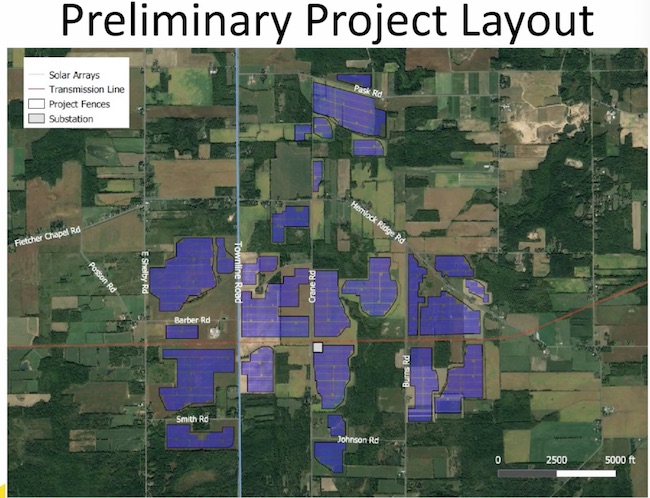
This is the proposed layout for Orleans Solar in Barre and Shelby.
BARRE – A company wants to build Orleans Solar, a 200-megawatt solar energy project in the towns of Barre and Shelby.
Community Energy went over the project in an online forum this evening. The project would cover 1,300 acres, with about 75 percent in Barre and 25 percent in Shelby.
Community Energy expects it will complete the permitting process by the second quarter in 2022, with construction to commence in the third quarter of 2022. Interconnection to the grid would be complete in the third quarter 2023, with construction done the fourth quarter that year.
That was the timeframe presented by Joe Green, director of development for the company based near Philadelphia, Pa.
The layout of the project would be from east of East Shelby Road in Shelby, past Burns Road in Barre. The solar project is in a sparsely populated part of the two towns near the Iroquois National Wildlife Refuge. A main transmission line from National Grid runs through the project. Community Energy won’t need any battery storage facilities for the project, with the power going right into the grid, Green said.
Most of the land is currently used for corn and soybean farming. Community Energy is working with 10 landowners on the project.
Community Energy did the first and only large-scale solar project so far to make it through the Article 10 siting process for renewable energy in New York. Mohawk Solar in Montgomery County is a 95-megawatt project, less than half of what is proposed with Orleans Solar.
With Mohawk Solar, Community Energy is paying the taxing jurisdictions $300,000 annually, with 2 percent increases. That is $3,333 per megawatt the first year.
If Community Energy reaches a PILOT for payments to taxing jurisdictions at the same $3,333 level, the total revenue paid to the taxing jurisdictions would be about $667,000.
Green said the company wants to work on the PILOT agreement with the local government leaders in 2021. “We haven’t had those discussions yet,” he said about the PILOT.
The project should have 5-6 full-time equivalent employees. Construction is expected to be between $200 million to $250 million, Green said, with 170 construction workers on site for about six months.
The state is moving to a new siting process for large-scale renewable energy, from Article 10 to 94-C. James Muscato, an attorney assisting the company with the siting process, said 94-C should allow projects around the state to be sited “in a more uniform fashion.”
Community Energy needs to work with several state agencies and the host municipalities as part of the review.
“The project must be designed to avoid or minimize, to the maximum extent practicable, potentially significant adverse environmental impacts,” Muscato said.
The company needs to provide $200,000 in intervenor funds – $1,000 per megawatt – for the municipalities and community organizations to hire experts to review the application.
Community Energy is working to delineate wetlands and streams. The company will establish boundaries of all wetlands and streams on lands with the project, and will need to minimize impacts or avoid those areas.
It is also doing its avian studies in consultation with US Fish and Wildlife Service, NY Natural Heritage Program and the state Department of Environmental Conservation. The company has done multiple habitat evaluations and has identified northern harriers, short-eared owls and upland sandpipers.
The company will also be providing visual impact studies as part of the project with simulations throughout the 2-mile visual study area.
By Tom Rivers, Editor Posted 21 December 2020 at 8:22 pm
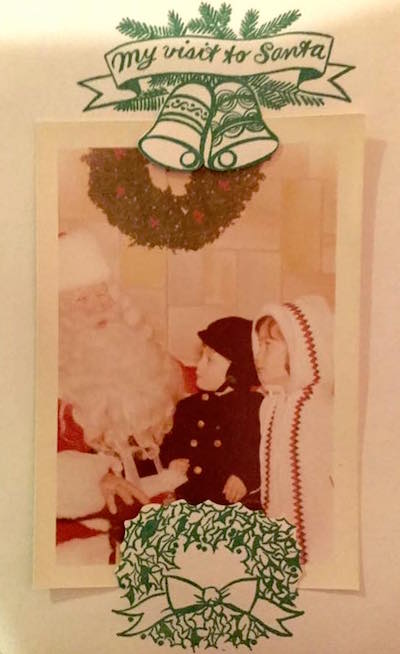
Courtesy of Jan Downey: Jan Downey of Albion shared this photo of herself and her brother, David Taylor, when they visited Howard as Santa at Christmas Park. Downey estimated the photo is from 1956 when she was 5. Many local residents still have strong memories of Howard and Christmas Park.
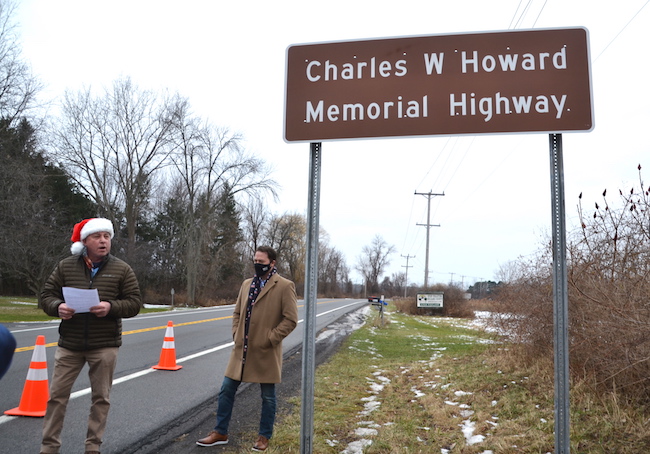
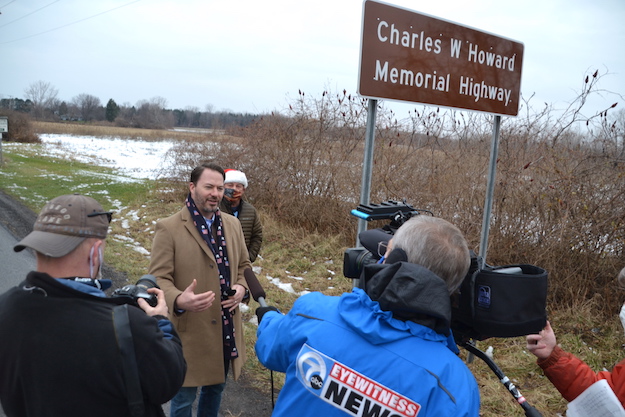
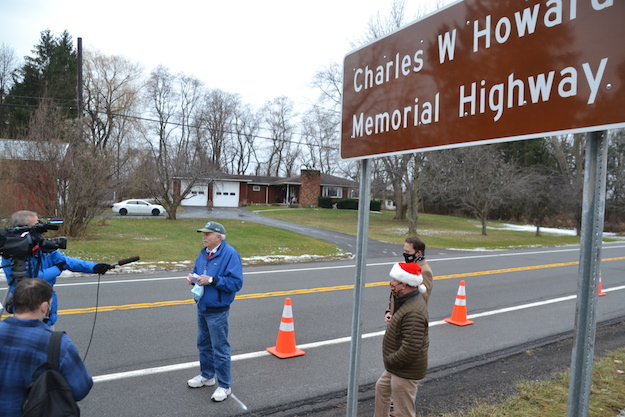
ALBION – A sign proclaiming Route 31 in Albion as the “Charles W. Howard Memorial Highway” was dedicated today by two state legislators and other community members.
Howard started the world’s first Santa School and ran it from 1937 until his death in 1966. He also was the Santa in the Macy’s Thanksgiving Day Parade for 18 years.
He remains a revered figure among people who portray Santa Claus. The school he started continues in his name in Midland, Mich. Howard, who is known in the Santa community as “The Dean of Santa Clauses,” in 2010 was a charter inductee in the International Santa Claus Hall of Fame. (Click here for more information on the Hall of Fame.
The State Department of Transportation erected the sign on Route 31 near the Transit Road intersection, which is the eastern end of the town. Another sign is expected to go up on the western end near Wood Road.
The Albion Betterment Committee worked about two years to secure the approval. They sent letters to local government leaders – The Village Board, the Town Board and Orleans County Legislature. They all endorsed naming the section in honor of Howard, who also was a farmer, toymaker, and operated Christmas Park on Route 31 near Phipps Road.
The Albion Betterment Committee has worked in recent years to raise Howard’s profile locally and to help celebrate his legacy. The ABC put a sign on Route 98, south of the village, declaring Albion as the hometown of the Santa School founder. The ABC also has “Believe” signs in the community and is raising funds for a statue of hometown in downtown Albion. They group has raised $60,000 so far for the statue and plans to seek proposals for the project soon, said Joe Gehl, one of the ABC’s directors. He expects the project will be near $100,000.
Other groups have joined the effort to celebrate Howard. The Albion Rotary Club organized an effort to have a mural in Waterman Park that shows Santa in a sleigh over Courthouse Square. A new mural about Albion as home to the Santa School was completed this fall on the northside of the Lake Country Pennysaver.
A group of students in Rich Gannon’s AP US History class also had an interpretive panel made in Mount Albion Cemetery near Howard’s grave that celebrates his life.
The Betterment Committee sees Howard as a local man who did a lot of good for the community, a selfless person focused on others. Howard was known for setting high standards for Santa in how to act with children and how to look. He also designed and sold Santa suits.
Howard’s granddaughter, Jane Holland, was unable to attend today’s dedication. She sent a letter of appreciation that was read by Gehl.
“Grandpa was a humble man of little means but a big heart and a giving, caring soul,” Holland wrote. “To see him honored on this trail to and from the town the family still today cherishes and welcomes its comfort when we visit is a great privilege.”
State Sen. Rob Ortt said Charles W. Howard was a farmer in Albion who made a local and national impact, serving as the Macy’s Day Thanksgiving Santa for 18 years and shaping the look and actions of Santas all over the country and even the world. Ortt and Hawley both thanked the DOT for getting the sign up on short notice before Christmas. The State Legislature and Gov. Cuomo both approved naming the section of the road in honor of Howard.
Joe Gehl, one of the directors of the Albion Betterment Committee, is interviewed by Ed Reilly of WGRZ (Channel 7 in Buffalo) in front of the sign, which was erected on 31 near Transit Road. That is the eastern end of the Town of Albion. Another sign is expected to be installed near Wood Road, on the western end of the town.
By Tom Rivers, Editor Posted 21 December 2020 at 6:03 pm
Both counties also report new deaths from Covid; Orleans passes 1,000 Covid cases since March
The neighboring counties of Genesee and Orleans combined have 235 more confirmed cases on Covid-19 since Friday, the Genesee and Orleans County Health Departments reported in a news briefing this evening.
In Orleans County, there are 76 new positive cases of Covid-19 for a total of 1,074 positive cases since March.
The new positive cases reside in all 10 towns in the county: Albion, Barre, Carlton, Clarendon, Gaines, Kendall, Murray, Ridgeway, Shelby and Yates. (Of the new cases, 1 is a resident of Orchard Rehabilitation and Nursing Center in Medina and 2 are inmates at the Orleans Correctional Facility in Albion.)
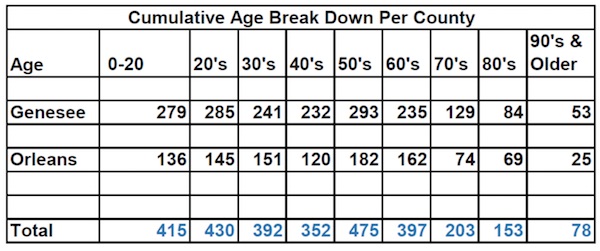
The individuals are in the age groups of 0-19, 20s, 30s, 40s, 50s, 60s and 70s.
Of the new cases, 8 of the individuals were on mandatory quarantine prior to testing positive.
Orleans is reporting 72 of the previous positive individuals have recovered and been removed from the isolation list.
The county has six residents due hospitalized due to Covid, up from two on Friday.
The G-O Health Departments also reported a resident has died due to Covid. The person was a community member over age 65. This is the 61st resident to die from Covid since March.
In Genesee County, there are 159 new positive cases of Covid-19 for a total of 1,831 since March.
The new positive cases reside in Alabama, Alexander, Batavia, Bergen, Byron,
Corfu, Darien, Elba, LeRoy, Oakfield, Pavilion and Stafford. (Of the new cases 28 are residents at New York State Veterans Home in Batavia and 2 are residents at the LeRoy Village Green.)
The individuals are in the age groups of 0-19, 20s, 30s, 40s, 50s, 60s, 70s, 80s and 90s.
Genesee is reporting 112 of the previous positive individuals have recovered and been removed from the isolation list.
The county is reporting 14 residents are hospitalized, which is down from 29 on Friday.
A resident of the Batavia VA Medical Center also has died due to complications from Covid. The individual was over 65. This is the 20th resident of Genesee County to pass away from county since March.
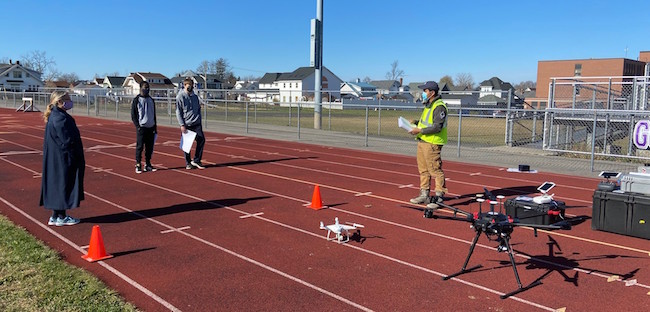
MIDDLEPORT – GHD employee Micah Santos (far right), contracted by FMC Middleport, offers instruction on a drone flight demonstration to Michelle Parker (far left), Royalton-Hartland High School technology teacher, and students (from center left to right) Tyrek Wright and Christopher McCullum, as part of FMC’s effort to better acquaint interested Roy-Hart teachers and students with this evolving technology.
Micah is a technologist and lead remote pilot for the GHD Aerial and Ground Intelligence Team. Drones are being used increasingly for commercial and consumer purposes, especially aerial photography. Parker currently teaches a technology class at the high school and will be teaching a class section on drones in the upcoming school year.
Press Release, NYS Correctional Officers and Police Benevolent Association
ALBANY — The New York State Correctional Officers and Police Benevolent Association, Inc. (NYSCOPBA) today criticized Governor Cuomo’s decision to close more prisons as a part of his Executive Budget plan for fiscal year 2020-2021.
The announcement to close Gowanda Correctional Facility, Watertown Correctional Facility and the Annex at Clinton Correctional Facility will impact more than 900 NYSCOPBA positions, disrupt the family lives of thousands and devastate communities.
“Announcing closures just days before Christmas is not only highly inconsiderate but it also demonstrates a lack of respect for the hardworking men and women of NYSCOPBA and their families,” said Michael B. Powers, President of NYSCOPBA. “Can Governor Cuomo look our members in the face and say that, despite prison violence at near record levels, closing prisons is what’s best and will produce a safer environment?”
Despite having authority to close more state prisons, NYSCOPBA has urged the Governor and the Legislature to halt any closure plans until violence escalation within the prison system is first addressed.
“Even in the face of the pandemic that greatly restricted inmate movement, New York did not see a reduction in prison violence during 2020,” Powers said. “And despite limited visitations during the pandemic, illegal contraband remains a significant problem in correctional facilities. Calling for additional closures will only serve to condense the prison population within a decreasing number of facilities, further jeopardizing the safety of NYSCOPBA members and the inmate population as a whole.”
The Union, which represents correctional officers and sergeants working inside New York’s prisons, has for years been calling on the State Legislature and the Governor to refrain from prison closures before an adequate assessment of safety within the prison system occurs. That has yet to happen, according to NYSCOPBA.
Likewise, the economic impact of this news cannot be understated. Upstate communities that maintain prisons rely heavily on revenue generated from those employed in such facilities.
“Upstate communities were struggling even before the onset of COVID-19. Removing hundreds of jobs within these localities will be a crippling financial blow,” Powers said. “And to deliver this news just days before Christmas is flat out wrong. We’ll continue to fight for our members and the communities where they live.”
NYSCOPBA is also calling on the State Legislature and the Governor to enact safety reforms to the prison system that recognize the dangers that the men and women who are on the front line face every day, regardless of the existence of a pandemic.
According to Powers, the State needs to reinstitute a secure vendor package program, enact statutory measures requiring the removal of double bunks in the medium dormitory settings, and provide a more robust officer to inmate ratio, among other initiatives.
NYS Senate Republican leader Rob Ortt issued this statement: “Today’s announcement by Governor Cuomo that three upstate correctional facilities will close is not only untimely but demonstrates an ill-will toward hard-working Upstate New Yorkers.It is no secret that Albany has buckled under the pressures of pro-criminal special interest groups, but to make this announcement the week of Christmas is distasteful.
“The closure of these three corrections facilities will make our state less safe and devastate the communities where these facilities are located. I urge Governor Cuomo to stand up for Upstate communities and the men and women who serve them by immediately reversing this decision.
“We thank the brave men and women who showed up every day to ensure the protection of New York’s residents – you deserve better.”
The Covid Rent Relief Program has reopened for application with expanded eligibility criteria in an effort to serve New Yorkers who may have not had the opportunity to initially apply and to serve those who may have been previously ineligible due to the program’s restrictive criteria set by the Legislature.
The application period will remain open through February 1, 2021. Previous applicants do not need to reapply to be considered. HCR will re-evaluate all applications that were denied according to the new criteria and issue revised determination letters to applicants.
Applications for the program and additional information is available here.
The Program’s eligibility has been changed to no longer require households to have been considered “rent burdened” prior to the pandemic in order to qualify. Rent burden is defined as paying more than 30 percent of monthly gross income towards rent.
To qualify for this one-time subsidy, low-income renters impacted by the pandemic must meet all of the following criteria:
Must be a renter and have a primary residence in New York State;
Applicants must have lost income during the period of April 1, 2020 to July 31, 2020;
Before March 7, 2020, household income must have been at or below 80 percent of the Area • Median Income, adjusted for household size; and
Households must be “rent burdened” during the months they are applying for assistance between April 1, 2020 to July 31, 2020.
For the purposes of assessing applicant income, cash benefits and unemployment benefits are both included in the calculation.
The subsidy for eligible applicants will be calculated as: the difference between the household’s rent burden on March 1, 2020 and the household’s rent burden during the months of April, May, June and July of 2020. For applicants who were not considered rent burdened on March 1, 2020, the subsidy will be calculated to bring them to the 30 percent rent burden threshold.
The Program’s online application is available in both English and Spanish. Over the next week, HCR will provide translated applications in six foreign languages – Spanish, Chinese, Russian, Haitian-Creole, Korean, and Bengali. We are working with local Not-For-Profit organizations to ensure New Yorkers receive the assistance they need to apply.
Throughout the application period, residents who need help or have questions about their application can contact HCR’s COVID Rent Relief Program Call Center for assistance at 1-833-499-0318 or covidrentrelief@hcr.ny.gov. Call Center representatives are available Monday-Friday 8:30 a.m. until 5 p.m.
HCR will also allow applicants who are unable or uncomfortable applying online to do so over the phone rather than by mail. More information on this assistance and expanded language support on the hotline will be available on HCR’s website in the coming days.
By Ginny Kropf, correspondent Posted 21 December 2020 at 12:10 pm
MEDINA – Medina’s Parade of Lights Committee has announced the winners of its first Village of Lights contest.
The idea for a home lighting contest was born in the summer when the Parade of Lights Committee was brainstorming about whether they could have the Parade of Lights, when someone asked, “What about a village of lights,” said Pat Payne, a member of the Parade of Lights Committee.
They decided to advertise the contest and put up posters around town.
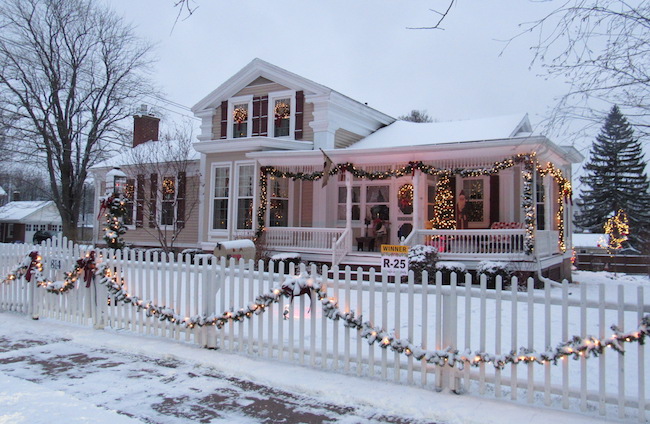
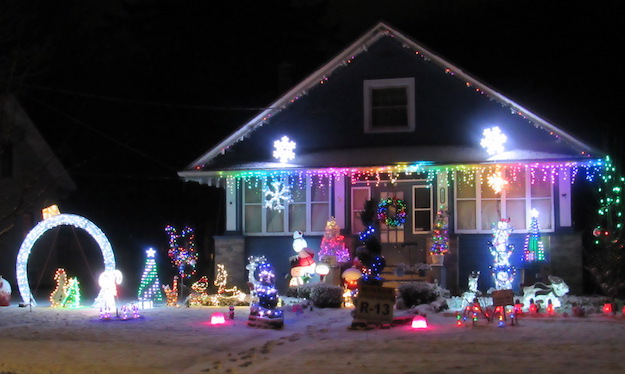
The home of Gianna and Jody Sargent at 1009 West Center St. was named winner of the Christmas Spirit – Traditional category in the Village of Lights contest.
All entries had to be within the village limits, and organizers hoped for a dozen entrants.
“We were hoping for two entrants in each of the six resident categories,” Payne said. “Imagine how thrilled we were to have 22 homes enter.”
They also created categories for businesses.
Each entrant was given a number and signs with their number were placed in their yards, so judges would not know who they were judging. Last weekend, six anonymous judges drove throughout the town viewing the displays, and then met in a Zoom conference to share their decisions.
“They came to some really nice decisions,” Payne said. “We are very, very pleased with the results.”
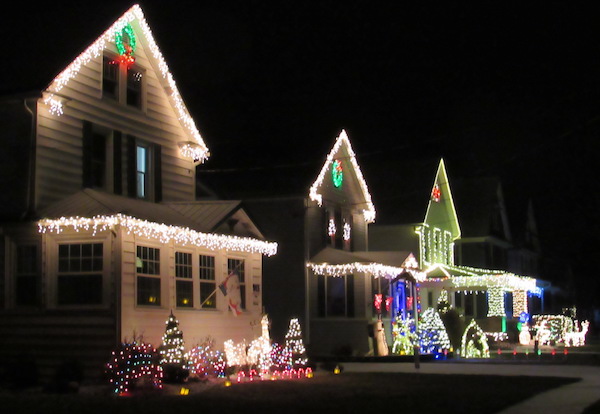
Erika Payne of 152 State Street won “Most Whimsical” for the Christmas decorations at her home in the Village of Lights contest.
Erika Payne, whose home at 152 State St. was named “Most Whimsical,” said her family has been decorating their home for Christmas on and off for years. Her grandparents, the Palones, started it when they were younger and many of the decorations belonged to them, including the big bow on the roof, the Noel posts on the porch and a Santa and snowman. Her grandfather hasn’t put up Christmas decorations since her grandma died 10 years ago, but this year he chipped in and helped with the cost.
Payne said her kids help every year and now her grandkids are joining in, although they are only 3 and 4 years old.
“This is something to do as a family, and it’s exciting to see the cars going by and taking pictures,” Payne said. “My daughter tested positive for Covid-19 10 days ago, and with everything else going on the world now we needed something cheerful to do.”
She said they were hoping they’d win something in the contest, and were thrilled to learn they were considered “Most Whimsical.”
Joe and Julie Granchelli’s home at 121 Zacher Drive won the “Christmas Spirit” category for their Christmas decorations.
Jeff and Jamie Wagner of 814 Gwinn St. were named Grand Champion. They had already put their decorations up when the contest was announced, and they decided they might as well enter it, Jeff said.
They first got the idea to decorate for Christmas a long time ago after they had visited the historic town of Mumford, with all its old houses. At first they just decorated the fence, and then one year kids stole all the decorations during the night.
“We discontinued it, but last year I retired so we decided to try it again,” Jeff said.
The Wagner’s home was built by Medina’s sleigh maker Ed Davis, and the Wagners have one of his sleighs.
“Restoring it is my project next year,” Jeff said.
Jeff said it takes them about 40 hours over four or five days to put up all their decorations.
“I enjoy every minute of it,” he said. “We’re excited to have won. It’s very cool, and it’s nice to be acknowledged. I’m also very happy Gwinn Street did so well, with so many homes decorated. I would love to see the contest keep growing.”
Jeff is so happy with the event he is considering volunteering to help with it next year.
These three neighbors on Gwinn Street won the category “Most Visible from Space” for their Christmas decorations in the Village of Lights contest in Medina, sponsored by the Parade of Lights Committee. The homes, from left, belong to N. Dieter, J. Dieter and J. Sherman.
John Sherman, Nick Dieter and his dad John Dieter, who are all neighbors on Gwinn Street, didn’t intend to enter the lighting contest together, but when it was suggested they consider entering as one, they agreed. Their decision earned them the “Probably Visible from Space” prize.
Sherman and his wife Marguerite have been decorating for quite a few years.
“There really isn’t a competition among us,” Sherman said. “We’re all good friends just trying to keep it festive for everybody. We’ll probably take our prize money and get a big pizza together.”
Sherman said he usually tries to pick up a few more decorations each year after Christmas, but this year the shelves are already pretty much cleaned out.
He starts putting up his decorations before Thanksgiving while the weather is still nice, and it takes him a couple of weekends. He said he was glad he had them up during the Parade of Lights, because so many cars were lined up on his street and this gave them something to see. He will begin taking them down after the first of the year.
Cindy Watson’s home at 935 Gwinn St. was chosen winner of the “Best Use of Lights” category in the Village of Lights contest.
Signs identifying all the entrants have been placed in the yards and will remain there until the New Year. A map of all the entries can be found at www.christmasinmedina.com.
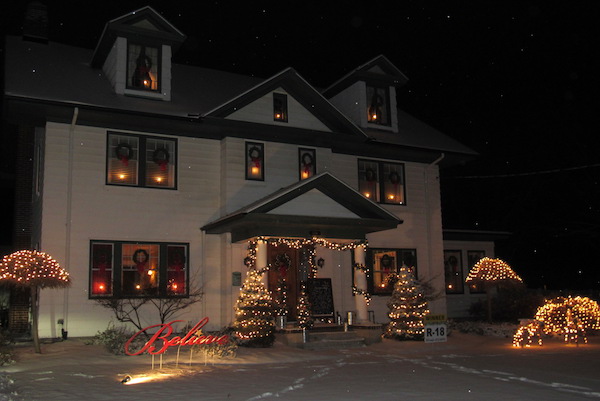
Residential winners were Gianna and Jody Sargent, 1009 West Center St., Christmas Spirit – Traditional; Joe and Julie Granchelli, 121 Zacher Dr., Christmas Spirit – Innovative; Erika Payne, 152 State St., Most Whimsical; Cindy Watson, 935 Gwinn St., Best Use of Lights; N. Dieter, J. Dieter and J. Sherman, 913, 915 and 917 Gwinn St., Probably Visible from Space; and Jeff and Jamie Wagner, Grand Champion.
Business winners were Della’s Chocolates, 512 Main St., and ATB Staffing, 534 Main St., Christmas Spirit; and Herbalty Cottage, 415 Main St., Community Spirit.
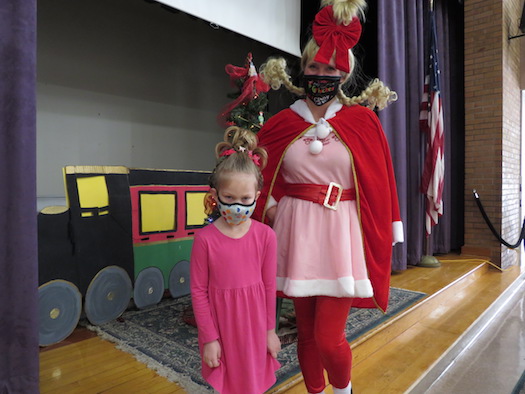
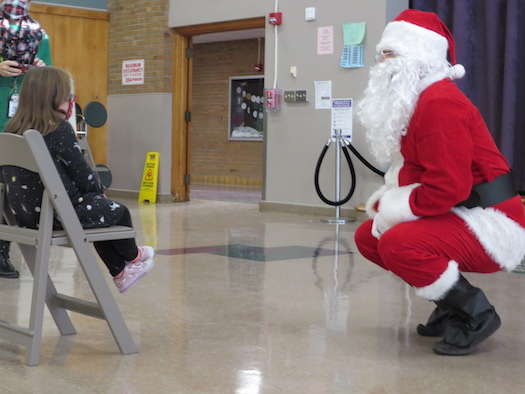
Photos courtesy of Albion Central School: The Grinch, Santa Claus and Cindy Lou Who visited students at the Ronald L. Sodoma Elementary School in Albion last week.
Press Release, Albion Central School
ALBION – Students in Albion’s Ronald L. Sodoma Elementary were in for a holiday surprise last week as Santa Claus, Cindy Lou Who and the Grinch all made an appearance.
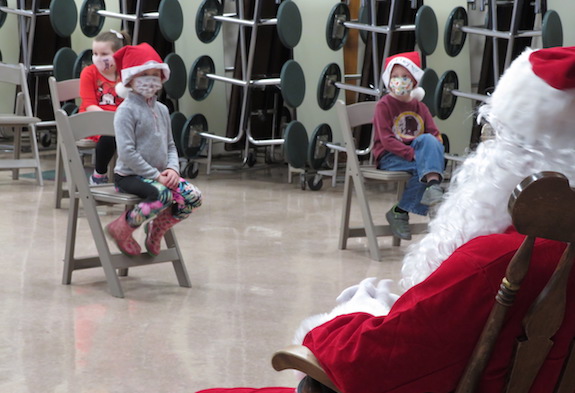
Santa Claus paid a special visit to students in grades PreK through first, reading his favorite story, “‘Twas the Night before Christmas.” Spaced 6 feet apart and wearing masks, the students and Cindy Lou Who sat and listened to the story and answered questions about Santa’s reindeer.
Cindy Lou Who was a friendly greeter throughout the day at the school.
It turned into an action-packed event as students soon spotted the Grinch’s arrival and warned Santa as the Grinch stole a present from under the tree. Cindy Lou jumped to the rescue, quickly chasing down the Grinch. She soon returned, bringing the Grinch and present back to the students and Santa – saving the day.
After the reading, Santa asked every student what he or she wanted for Christmas this year, with answers ranging from Barbie Dream Houses to toy combines to Play Station Fives and Nintendo Switches.
While the older students weren’t visited by Santa, many of them met Cindy Lou and the Grinch in the hallway throughout the day, getting in on the holiday fun.
Santa chats with students and reads the story, “‘Twas the Night before Christmas.”
As for next week, students throughout the district will join in the festivities with holiday-themed crafts and activities in the days leading up to Winter Break.
We would like to thank the Albion Elementary Parent Teachers Association and the staff who helped to make these visits possible, bringing some holiday magic into the building in a fun and safe way.
Santa shows some nimbleness in greeting these kids at eye level.
Many of the students wore Santa hats in meeting the jolly old elf.