By Tom Rivers, Editor Posted 16 January 2022 at 9:24 am
Orleans County is joining 10 other counties in the Finger Lakes in asking Gov. Kathy Hochul to reconsider a vaccine booster requirement for healthcare workers.
Gov. Kathy Hochul
Hochul announced on Jan. 7 that healthcare workers would be required to get the booster within two weeks of being eligible.
County leaders wrote in a Jan. 12 letter to Hochul that their healthcare systems are already short-staffed and overwhelmed, and the booster mandate will further strain the hospital workforce.
“Our hospital systems are facing severe staffing shortages coupled with increasing patient loads caused by the Omicron surge,” according to the letter from county officials in Orleans, Genesee, Wyoming, Steuben, Livingston, Schuyler, Yates, Seneca, Ontario, Wayne and Monroe. “We have significant concerns that if even a handful of healthcare workers are dismissed for their refusal to receive the booster within the designated timeframe, it could exacerbate an already tenuous situation.”
The counties tell Hochul that each county “fully supports the value of vaccinations and has worked tirelessly to administer vaccinations to our citizens.”
The coalition of counties asked Hochul to offer a test-out option on a temporary basis for vaccinated healthcare workers who don’t have the booster in the timeframe put forth by the governor. That option could just be “until the Omicron wave subsides and the hospital capacity crisis abates,” according to the letter from the counties.
“Our concerns are the potential negative impacts to an already beleaguered healthcare workforce at a time when our communities can least afford it,” the letter concludes.
‘Corduroy’ and ‘Plank’ roads, and ‘Path Setters’ were thoroughfares through community, including the swamp
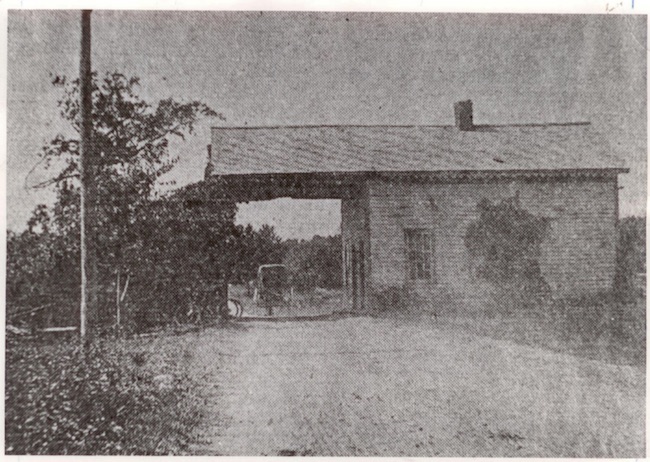
This photo taken in 1898 shows the toll house which stood near the Edwin McKnight farm between Medina and Shelby. H. Justin Roberts recalled riding through this toll gate as a young boy, in a lumber wagon, with his aunt and uncle.
By Catherine Cooper, Orleans County Historian
Illuminating Orleans – Vol. 2, No. 3
The diary of Hosea Ballou presented in the previous two columns have led to some questions.
A reader inquires if the diarist, Hosea Ballou, was related to Major Sullivan Ballou, of the 2nd Rhode Island Infantry whose poignant last letter to his wife featured prominently on The Civil War, a PBS series produced by Ken Burns. Major Ballou was killed at the Battle of Bull Run in 1861.
Sullivan and Hosea Ballou were both fifth generation descendants of James Ballou, son of Maturin Ballou (1627 – 1661), an Englishman of French descent, who was an early settler of Rhode Island. He had six children, three of whom lived to have families of their own. A family genealogy published in 1888 contains a remarkable listing of over 8,000 descendants.
In his 1851 diary, Hosea Ballou mentioned working on the roads in the Town of Carlton in the spring – this topic has also generated some discussion.
Prior to centralized government and mechanization, towns were responsible for roads. A road tax was assessed, eligible males were required provide labor or pay the tax. In addition to local labor, locally available materials: wood, stone, and later, quarried stone, were used.
H. Justin Roberts (1893-1991), a Shelby farmer, provided a very clear explanation of that system in an Oral History interview conducted by Anna Roberts Bundsuch in 1989:
“A farmer with a small farm in each town was appointed road commissioner. In addition to the road commissioner, there were path masters scattered throughout the town. Each farmer wanted to be path master because he could get the road improved past his farm. My father tried it for one year. The road past our house got a new topping.”
He explained that the road commissioner was salaried, but the path masters were not. The road commissioner would travel around the town in his horse and buggy to check the condition of the roads. Farmers would spend four or five days each year working on the roads, generally in the spring after the crops had been sown.
“There was no department – there was just the commissioner who worked with the path masters. When a road needed repair, the farmers along the road worked their highway taxes. They didn’t have anything to use but gravel. A farmer would be assessed so much money for road work. He’d take a dump wagon and haul for so many days to pay his taxes. A man who didn’t have horses would do the shoveling and use a pick. The gravel had to be shoveled onto the wagons.
Two or three big farms in a town, their assessment would be quite high, and they would put two teams and two wagons on.
The dump trucks were an ingenious affair. The bottom was made up of 4 x 4’s, there were side boards and end boards. The wagon would be filled up with gravel and then there would be a man on the road to assist in the unloading. He’d grab a crowbar and lift up the first 4 x 4; then as the wagon moved along, the gravel would fall out.
There were two gravel pits in the Town of Shelby. The town would pay the owner of the pit a little something for the gravel.”
He continued and explained the term “corduroy road”:
“I used to hear my father tell this story. In the early days, the road south of Medina was impassible through the swamp. So, they cut trees along the right of way: cut logs and laid them side by side all the way through. You bumped over each log and that is why they called it a corduroy road.”
Many of the early roads were called Plank Road, for example the Alabama Plank Road which led to the Sour Springs Hotel. Medina’s Main Street was originally referred to as Plank Road.
Mr. Roberts also described winter road work:
“In the winter, sleighs were used, but wherever snowbanks crossed the road, the snow was shoveled by hand. Mostly the farmers took care of their own roads. Farmers had 50 gallon kettles to heat water and maybe to boil beans to feed the hogs. They’d put a chain around one of those kettles and hitch it behind the bobsleigh and get a big heavy man to ride in the kettle. They’d drag that down one side of the road and the other side coming back to make a track.”
Since bone-chilling temperatures are forecast, another Oral History account from the Orleans County History Dept. Collection may be of interest. In an interview with Clifford Wise in 1969, Mrs. Minnie Allis described how one kept warm when traveling on a sleigh or cutter in winter:
“They had soap stones and these big buffalo robes to put on your lap; they had heavy underwear and top buttoned shoes and they put overshoes on and bundled your head up; fur mittens; they used to carry ear muffs to put your hands in.”
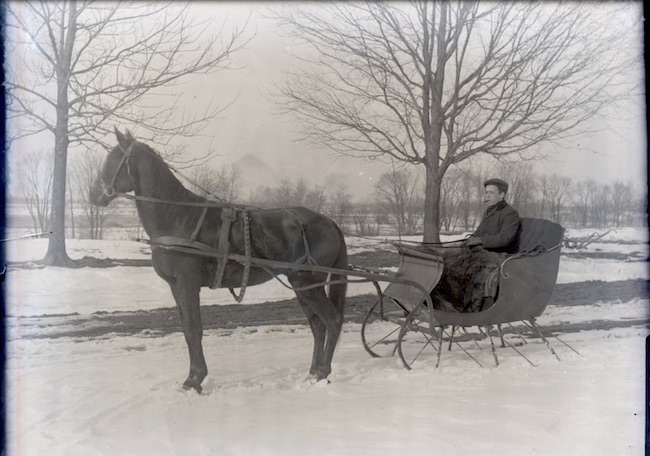
Burt Dunlap of Shelby, in a cutter, c1908. From the Scott Dunlap Collection, Medina Historical Society
By Tom Rivers, Editor Posted 15 January 2022 at 12:04 pm
Governor Kathy Hochul on Friday nine testing sites will open on SUNY and community college campuses across New York State, including close by to Orleans County at Niagara County Community College and Monroe Community College.
“Through our winter surge plan we are building on our ongoing efforts to make testing more widely available, and that includes utilizing our SUNY campus facilities that are equipped to distribute more tests to New Yorkers,” Hochul said. “Expanded access to testing will ensure those who are positive with the virus can isolate to limit spread and keep others in their communities well. Get tested and stay home if you are sick – we are not powerless.”
The site at NCCC opens on Jan. 18 and will be open from 8:30 a.m. to 4 p.m. from Monday through Friday at Building G, 3111 Saunders Settlement Road in Sanborn.
The site at MCC starts on Jan. 20 and will be open from 8:30 a.m. to 4 p.m. Monday through Friday at Gillman Lounge, Building 3, Rm. 114, 1000 East Henrietta Road, Parking Lot N in Rochester.
Other colleges that will start as community Covid testing sites next week include Rockland Community College, SUNY Sullivan, Alfred State, Empire State College in Saratoga Springs, Finger Lakes Community College, SUNY Ulster, and SUNY Downstate Health Sciences University.
By Tom Rivers, Editor Posted 15 January 2022 at 10:13 am
The Genesee and Orleans County Health Departments are committed to helping people get vaccinated, including those who are homebound and cannot easily leave their residences.
The G-O Health Departments have vaccinated 35 homebound residents in Orleans and 50 in Genesee so far. The Health Department will bring the Covid vaccine to homebound residents as staff are able to schedule giving the shots, said paul pettit, public health director for the two counties.
Homebound residents can call either Orleans and Genesee to set an appointment, and they can pick from any of the vaccines – Moderna, Pfizer or Johnson & Johnson.
To be put on the homebound vaccine list, call the Health Department in Orleans at (585) 589-3278 and in Genesee at (585) 344-2580 ext. 5555.
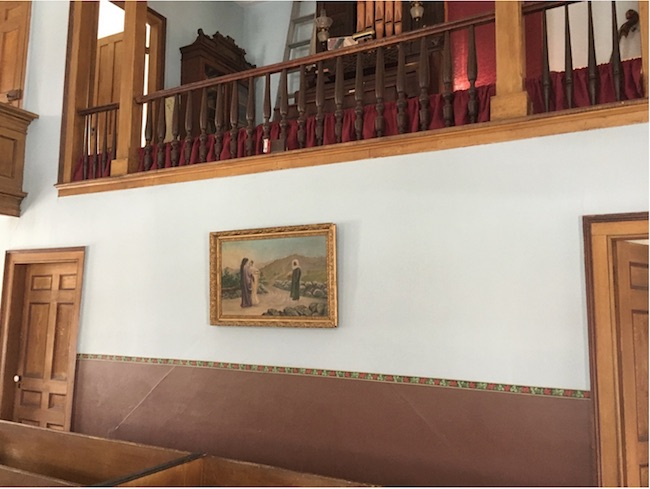
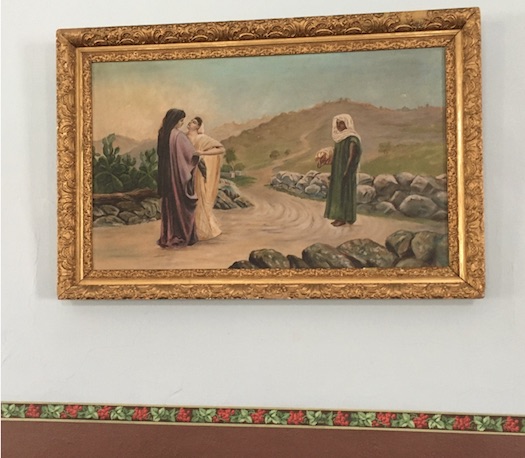
GAINES – For a number of years this oil painting on canvas, measuring 22 by 36 inches, in its original frame, has hung in the back of the Cobblestone Church under the organ loft. It is correctly entitled, “The Parting of Ruth and Naomi,” and was undoubtedly done by a “Sunday Painter,” around 1890.
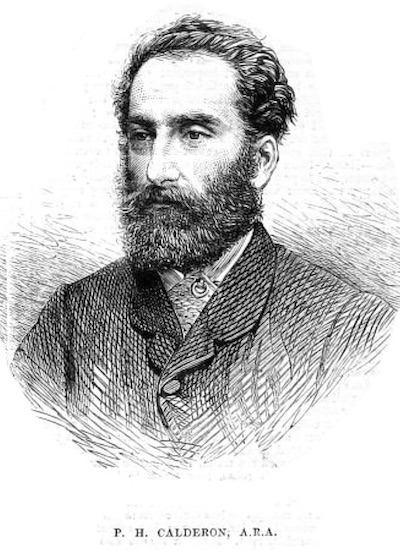
It is, of course, a copy of a famous painting from the late 19th century by Philip Hermogenes Calderon (1833-1898) who began his training in painting in London in 1850 and also studied in Paris in 1851, inspired by the Pre-Raphaelites. Throughout his career, his subjects were often historical, biblical or literary in theme.
This is a close-up picture of the painting in the Cobblestone Church.
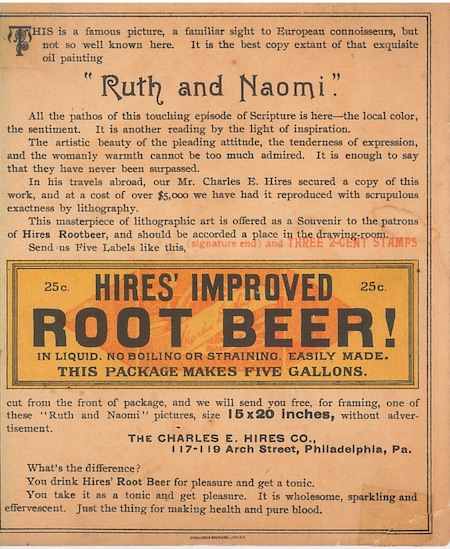
We may ask, “How did this painting become so famous and popular back in the day?” Perhaps that question is answered by the accompanying chromo advertising card measuring 5×6 inches. The front shown here is what our Sunday Painter copied.
But it is the obverse side (back) that tells the story. Yes it was Charles E. Hires of Root Beer fame who truly brought this image into public recognition at the time. Every reproduction that Hires had printed carried the biblical quote from Ruth 1:16 (Old Testament):
“And Ruth said, Intreat me not to leave thee, or to return from following after thee: for whither thou goest, I will go; and where thou lodgest, I will lodge: thy people shall be my people, and thy God my God…”
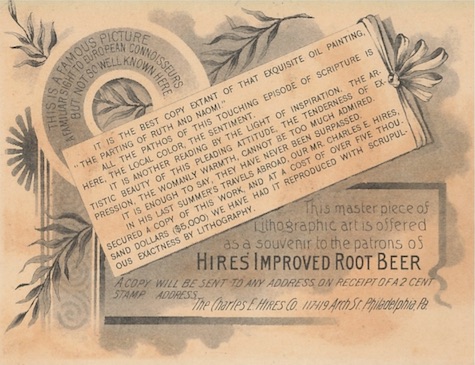
Shown above is a second chromo lithographic advertising card. In fine print, at the lower left on the front of the card, it states: J. Ottmann Lith. Co. NY.” The earlier card shows “Donaldson Brothers Lith. NY.” The color scheme varies quite differently between the two printers. We also note that the obverse side of the second example, while carrying the same information as the first, is in its own format. We believe the colors in our first two examples are more true to the original painting by Calderon.
The framed print shown here is one of those 15×20 inch souvenirs. “Donaldson Brothers, NY” were the printers. Framing of this piece appears to be original from the 1890s. Credit on the print is: “Published and copyrighted by Charles E. Hires Company.” You may wonder, “Why does this picture hang in the Cobblestone Church?”
It was just fifty years ago that Bill Lattin, the first director of the Cobblestone Museum, made an inquiry. He noticed regularly placed nails in the church walls centered between windows and doorways. He asked Homer Brown, then in his eighties, “Why are those nails there?” Homer’s answer was, “There were pictures there.”
Now it seems Homer had attended the church as a child, prior to the Universalist Church being built at Albion in 1894. Those missing pictures and other furnishings were sold at an auction in 1934. Consequently, over the years, to make the interior of the Cobblestone Church more authentic in appearance, prints and this painting of appropriate subject matter for a Universalist Church have been acquired by the Cobblestone Museum.
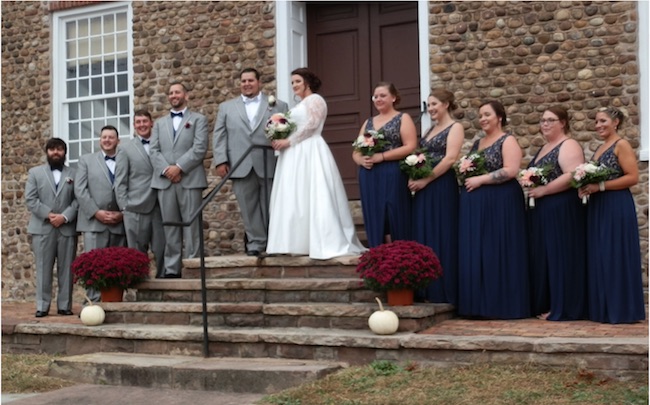
The biblical quote on the print of Ruth and Naomi is sometimes used as a reading during wedding ceremonies. Therefore, our Sunday Painter’s work fits well for the Cobblestone Church which is often the scene for weddings, as shown above.
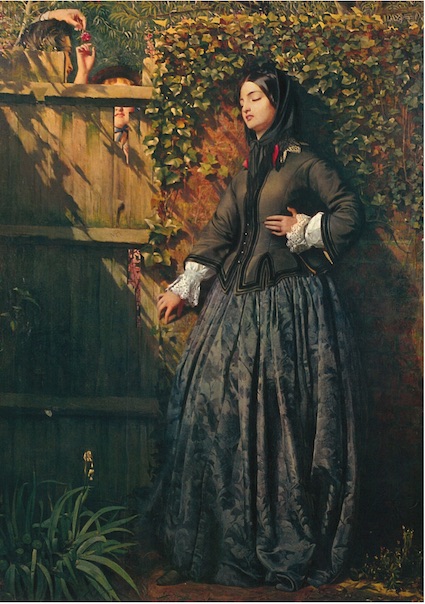
We include here a copy of one of Calderon’s most noteworthy and well-known paintings. It was completed in 1856 and is entitled, “Broken Vows.” It appears the beautiful young woman behind a fence, shown wearing a wedding band, overhears a tryst between her mate and another woman. We see obvious tension in the genre story. Likewise, in our painting of Ruth and Naomi, we also see some tension between them. Another similarity with these paintings is Calderon’s desire to show women wearing rich, silky clothing. “Broken Vows” is in the extensive art collection of the Tate Gallery in London.
The theme of Ruth and Naomi was a very popular subject matter, especially during the second half of the 19th century. We show a couple examples below From Bill Lattin’s antique collection.
This 10” tall pitcher with a salt glaze and pewter cover perhaps dates to the 1860s. It depicts Ruth clinging to Naomi while Orpah rests on the ground. The pitcher is marked on the bottom: “Naomi and her Daughters-in-Law.”
In this beautiful Parian-ware rendition we see Naomi, Ruth and Orpah. On the base it is entitled, “Naomi and Her Daughters-in-Law.” This figurine measures 13” tall and was published circa 1860. It is not uncommon in antiquing today to find images of just Ruth alone. This particular piece of statuary would have been a focal point in someone’s parlor 150 years ago.
Let us end with a more updated story concerning our subject. We are all familiar with the well-known celebrity, Oprah Winfrey. Allegedly, Oprah’s name was supposed to be Orpah, after the daughter-in-law of the biblical Ruth, but her doctor mixed up the letters and spelled the name Oprah when filling out her birth certificate. It was never corrected, so Oprah it is!
By Ginny Kropf, correspondent Posted 14 January 2022 at 7:00 pm
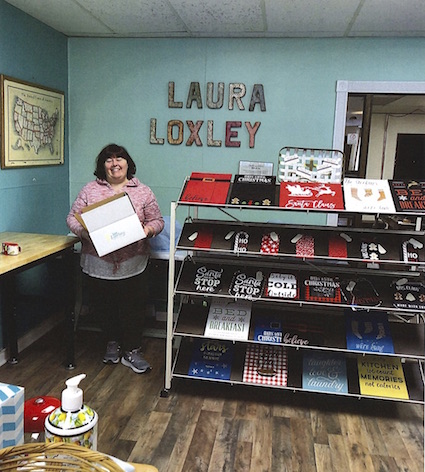
Provided photos: Laura Kemler stands in her store at 45 North Main St., Albion, Laura Loxley Vintage Inspired Goods. Her business was boosted by a $20,000 grant through the Microenterprise Assistance Program.
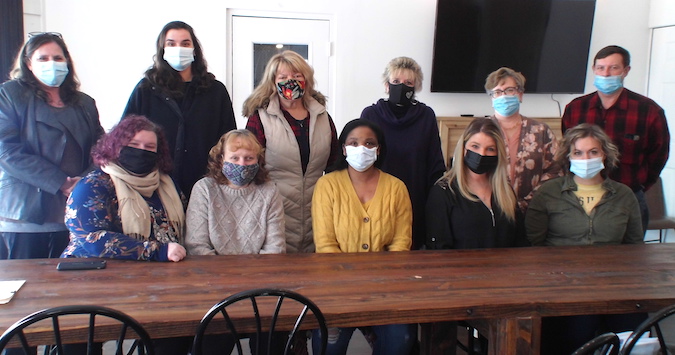
ALBION – Nine graduates of the Microenterprise Assistance Program, who received special grants of $10,000 to $20,000, celebrated at lunch Tuesday at The Lockstone in Albion.
Lockstone’s owner, Natasha Wasuck, was one of the graduates and grant recipients. She said buying the site of The Lockstone, a former automotive and carpet store, has proven to be quite a venture.
Wasuck, who is also a realtor, took the MAP class in 2019 because she wanted to educate herself in all aspects of business, she said. Her business is a wedding and event venue, with an ice cream parlor during the summer.
Her $12,000 grant enabled her to buy a bar cooler and furniture for her wedding venue. She called the MAP an asset to the community.
“A lot of small businesses which might have struggled have been able to start up, because of MAP,” she said.
Margie Steffen, who owns Studio 11 Hair Salon at 11 East Bank St., Albion, has been in business for 22 years, but still found she learned how to better her busienss in taking the MAP class.
“I had also taken it eight years ago and took it again in April last year, because I still thought I could benefit from it,” she said. “I wanted to refresh my business skills and find out if there were any new opportunities available. I learned having a business plan is essential.”
One of those opportunities available to graduates was applying for the state GOSC/OCR grant. Steffen received $15,000, which enabled her to give her shop a facelift and buy new barbering and spa equipment.
John Woodams, who owns a hops farm with his wife Kim in Kendall, attended the MAP class in 2021. With their $15,000 grant, they were able to buy 2,500 more hops plants, bringing their total to 8,000.
John said the class was a big help to them.
“Learning how to develop a business plan was the most beneficial,” Kim said.
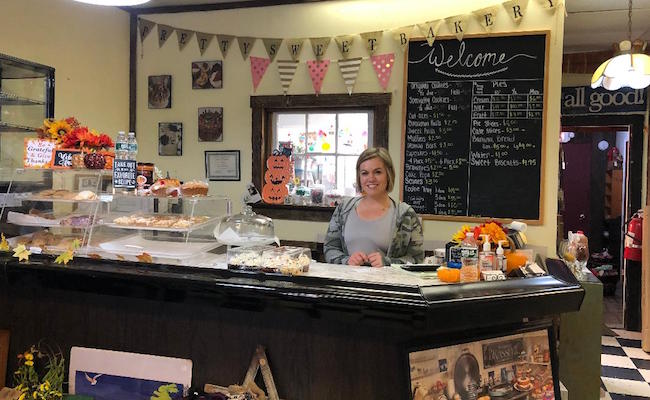
Sarah Ebbs has been baking with her grandmother and mother since she was 13, so having her own bakery is a dream come true. Her mom Pam Jenks first started the bakery and it really took off after they opened Pretty Sweet Bakery in 2019 at 117 North Main St.
Ebbs took the MAP spring class in 2021. With her $15,000 grant she was able to revamp the bakery, purchase new equipment and inventory and create seating options for customers. She said the MAP and grant availability were great opportunities for a new business.
Sarah Ebbs, one of the graduates of the Microenterprise Assistance Program, has been approved for a state grant to expand her business, Pretty Sweet Bakery, at 117 North Main St., Albion.
Nickie Poler Girardo is a mixologist who runs a mobile bar tending service. She will create a personalized menu for any event, including weddings, holiday parties, private gatherings or corporate events. She will create signature cocktails, and brings staff and all supplies with her.
“I take the guesswork out of bar service for an event,” she said.
Her $15,000 grant enabled her to purchase a new enclosed trailer, new equipment, beverage refrigerators and a generator for the trailer.
Jenna Chevier of Kendall Road, Holley, has put her knowledge of event planning and digital marketing to work to form her business, Eventageous Media Marketing.
“I wanted to take the things I enjoy most and do them for other people,” she said.
She has taken some courses, but most of what she knows she learned from experience, including website design. In event planning, she caters small to medium size weddings and entertainment conventions.
With her $12,000 grant, she was able to buy equipment to facilitate her marketing for small businesses.
Jackie Chinn took two things she is passionate about and turned them into her business, Lyric and Lizzy Boutique, located at 335 North Main St., Medina. Her store sells clothing for children from infant to size 12 and treats, toys and accessories for dogs and cats
She recently added a new feature, Lincoln Bear and Buddy, where children 3 and older can made their own bear in the store. She has also introduced a Book and Bear concept for parents or grandparents who want a unique gift for their child. It includes a book, tee shirt, craft, stickers and a toy.
Chinn took the MAP class in 2019, before opening her business in 2020. Her $15,000 grant enabled her to buy new merchandise and shelving for her store.
Lynn Palmer’s $15,000 grant enabled her to increase her inventory and purchase new shelving for her store, Upscale Overstock, at 50 North Main St., Albion. At the recent MAP graduation, she shared her story of rising from poverty to becoming a self-sufficient, successful businesswoman.
The last recipient, and one of the most successful MAP graduates, is Laura Kemler, who owns Laura Loxley Vintage Inspired Goods at 45 North Main St., Albion.
She produces unique handmade and hand dyed fabric goods. A $20,000 grant enabled her to purchase inventory and equipment. She has returned several times to talk to MAP graduates about what the program has done for her.
Two Microenterprise Assistance Program classes are held annually. The next one is scheduled April 5 to June 14 at the Arnold Gregory Building. Anyone wishing to enroll may contact coordinator Diane Blanchard at (585) 589-7060.
By Tom Rivers, Editor Posted 14 January 2022 at 12:41 pm
More spread of Covid after restrictions lifted in 2021, students return to in-person school
Chart information courtesy of Genesee & Orleans County Health Departments
The number of Covid cases was far more locally in 2021 than in 2020 despite Covid vaccinations that covered about 60 percent of the population in Genesee and Orleans counties.
In Orleans there were nearly four times as many cases and Genesee more than tripled the number of cases in 2021 compared to 2020, when Covid emerged and prompted then Gov. Andrew Cuomo and public health officials closed schools, restricted businesses and public gatherings.
In Orleans, the number of Covid cases increased from 1,376 in 2020 to 5,142 last year. In Genesee, the cases were up from 2,449 to 7,538.
The number of Covid-related deaths was down in Orleans from 62 in 2020 to 41 in 2021. However, in Genesee the number of Covid-related deaths was up from 29 in 2020 to 129 in 2021, according to data from the Genesee and Orleans County Health Departments.
The Covid cases have steadily been on the rise since the summer.
Genesee-Orleans health officials say the communities have yet to reach herd immunity in vaccinations. The percent of people vaccinated locally is behind the rate in the region and state.
The effectiveness of the vaccines also wanes in time, and about 30 percent of the Covid infections later after Aug. 1 were “breakthrough cases” among those vaccinated many months earlier. That has prompted public health officials to urge people to get the Covid booster shot. Those vaccinated, even several months ago, also are less likely to get seriously sick and be hospitalized than those who aren’t vaccinated, Paul Pettit, public health director in the two counties, said to local reporters on Thursday.
In 2021, things have returned somewhat to “normal” with local schools back to in-person learning every day without remote learning or a hybrid schedule. Businesses were also able to operate at full in-person capacity and community events and festivals were back.
New variants – Delta and Omicron – have also emerged and proven very contagious.
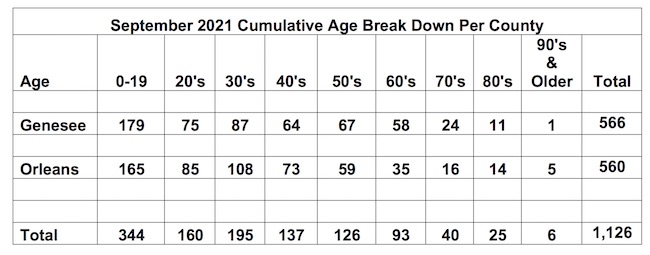
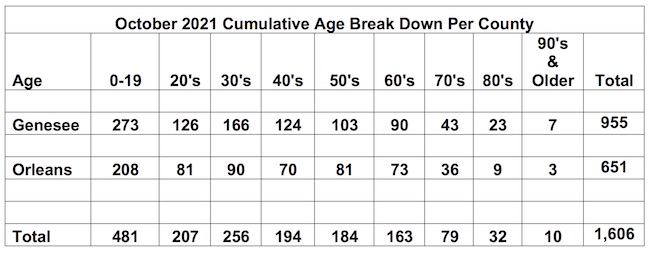
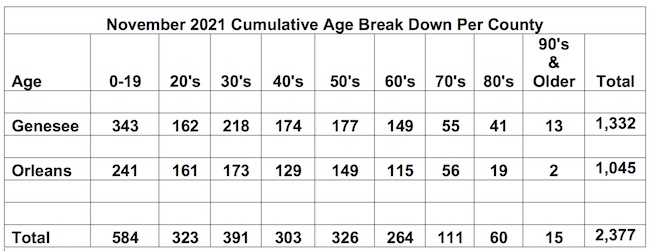
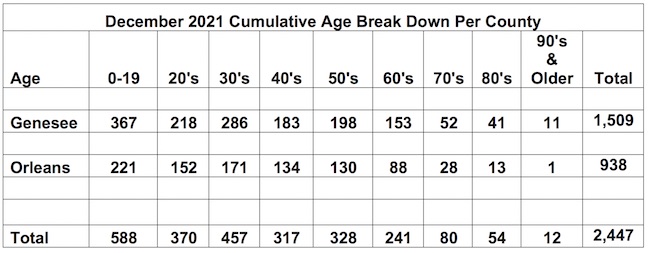
The following charts show the cases broken down per age group. Children and younger adults have accounted for most of the new cases since September.
Covid cases have been surging dramatically in the two local counties so far in 2022, following the indoor gatherings over the holidays and spread of the highly contagious Omicron variant.
Genesee had 1,509 new cases in December, which was by far the most it had during the pandemic – until this month. The county already reported 2,118 cases during the first 10 days of January.
Orleans had 1,045 cases in November, the most during the pandemic for Orleans, and followed that with 938 in December. The county already has 1,125 in the first 10 days of January.
By Tom Rivers, Editor Posted 14 January 2022 at 9:47 am
BASOM — A company in Niagara County announced it is giving a $10,000 grant to the Friends of the Iroquois National Wildlife Refuge to expand a trail near the refuge’s visitor center and to make the trail more handicapped accessible.
Bob Confer, president of Confer Plastics in North Tonawanda, said the company wants to assist a great team of volunteers at the refuge who are committed to making the site inclusive for outdoor adventures for everybody. He cited the example of the boardwalk at Swallow Hallow.
The $10,000 grant will help the Friends of the Refuge in a project that includes an expanded trail, interpretive signage, trail markers, ADA-compliant benches and other ways to make the trail more handicap-accessible.
“We look at this as a wise investment in a great natural public asset, an investment that will help everyone enjoy the outdoors and savor our natural world,” Confer said in announcing the grant. “We are thankful for the good people of the (Friends of the Refuge) and what they do, and we appreciate being able to help them advance their goals of making the Iroquois National Wildlife Refuge a world-class destination.”
By Tom Rivers, Editor Posted 14 January 2022 at 8:48 am
The National Weather Service has issued a wind chill advisory for Orleans County and Western New York from 6 p.m. today until 1 p.m. on Saturday, and then a winter storm watch from 6 p.m. Sunday through 6 p.m. on Monday.
Very cold wind chills are expected, as low as 20 below zero. Today has started with a high of 28 but is forecast to fall to 2 degrees overnight.
Saturday will be a high of 10 and will drop to 1 degree overnight, the National Weather Service said.
Sunday is forecast to be sunny with a high of 24, before the snow starts on Sunday night with 9 inches or more of snow possible through Monday.
“Travel could be very difficult to impossible,” the Weather Service said. “The hazardous conditions could impact the morning or evening commute. The cold wind chills could cause frostbite on exposed skin in as little as 30 minutes.”
By Ginny Kropf, correspondent Posted 14 January 2022 at 8:13 am
Photo courtesy of Scott Robinson: From left, Doctors of Pharmacy Tom Guzzino, Kate Brauen (director of pharmacy) and Faust Novello (board certified pharmacotherapy specialist) are shown at work in the pharmacy at Medina Memorial Hospital. Thursday was National Pharmaceutical Day.
MEDINA – In conjunction with National Pharmaceutical Day on Jan. 12, Orleans Community Health is recognizing pharmacists within Medina Memorial Hospital.
According to Scott Robinson, director of Marketing, Communications and Outreach, this is a time to showcase the impact pharmacists have on the public’s health and wellbeing.
“Our department team truly loves the work we do,” said Kate Brauen, Doctor of Pharmacy and director of pharmacy at Orleans Community Health. “Health care is a challenging and dynamic field. Pharmacy does more than just giving out medications. We monitor, educate and recommend drug treatments. We take our jobs very seriously and try to maintain a sense of humor every day.”
The 12-person internal pharmacy team at Orleans Community Health resides throughout Western New York, and their service to the community spans decades. The current team includes individuals who have held positions at Orleans Community Health from six months to nearly 40 years, Robinson said.
“We want our patients and the community to be healthy and successful when they leave our care,” Brauen said. “Pharmacists are one of the most trusted health care providers and I want people to know they can access their pharmacist and obtain great advice very easily. During the pandemic, the pharmacy team has sought out access to various therapies for Covid, including antivirals, vaccinations and antibody therapy. We have tried to educate ourselves so we can be a source of credible information to our colleagues and the community.”
A continual goal of Orleans Community Health is to help develop individuals in their career. Brauen is a preceptor for UB and St. John Fisher College Pharmacy programs, in addition to being a preceptor for a UB/Middleport Family Health Center Pharmacy Residency Program.
The Orleans Community Health pharmacy has two outpatient pharmacists in this program who round on TCU patients twice a week. These individuals work as outpatient pharmacists and collaborate with the hospital to help provide better care in the transition home from the hospital.
In addition to Brauen, the pharmacy team at Orleans Community Health includes Tom Guzzino, doctor of pharmacy; Faust Novello, doctor of pharmacy/board certified pharmacotherapy specialist; Paul Torreano, RPH; Fran Mosher, RPH; Rich Avalos, doctor of pharmacy; John Arley Wyman, doctor of pharmacy; Casey Kern, doctor of pharmacy; and Dawn Smith, Evelyn Osborne, Kara Shamblin and Amy Schultz, pharmacy technicians.
Brauen has been employed at Orleans Community Health’s pharmacy for 20 years, Torreano for 37 years, and Smith for 23 years.
By Tom Rivers, Editor Posted 14 January 2022 at 6:30 am
Provided photos
ALBION – The Town of Albion has a new loader and a state grant for $180,000 covered most of the cost for the $215,000 piece of equipment.
Pictured from left include Wayne Downs, Albion highway department employee; Michael Neidert, Albion highway superintendent; Joe Navarra, Albion highway department employee; State Sen. Rob Ortt; Town Supervisor Dick Remley; Terry Wilbert, Albion town councilman; and Scott Fisher, sale representative with George & Swede Sales & Services in Pavilion.
State Sen. Rob Ortt sits behind the wheel of the loader. Ortt secured a $180,000 State and Municipal Facilities (SAM) grant for the Hyundai wheel loader. It includes a general purpose bucket, clam bucket, forks, snow pusher and extendable boom all designed as quick attach attachments. It was purchased at George and Swede in Pavilion. After a trade the total cost was $187,600, Neidert said.
By Tom Rivers, Editor Posted 13 January 2022 at 8:25 pm
Congressman Chris Jacobs, R-Orchard Park, has issued a statement in support of the Supreme Court decision today, blocking President Joe Biden’s vaccine and testing requirement aimed at businesses with over 100 employees.
“Today, the Supreme Court affirmed what I and my Republican colleagues have been saying for weeks: this vaccine mandate is unconstitutional and the President vastly overstepped his authority in trying to enforce it,” Jacobs said. “While I am vaccinated, that is a decision that should only be made between an individual and their physician.
“President Biden – or any government official – should have no role in that private medical decision, and they certainly should not coerce people to get vaccinated out of a fear of termination or retaliation,” Jacobs said. “The President must rescind this and his other mandates, and work instead to support small businesses and our economic recovery – not create more problems with his divisive and unconstitutional policies.”
The Supreme Court decided that a vaccine mandate for certain health care workers to go into effect nationwide.
Biden issued a statement that criticized the ruling against a vaccine mandate for employees at larger businesses, but he praised the decision on health care workers.
“I am disappointed that the Supreme Court has chosen to block common-sense life-saving requirements for employees at large businesses that were grounded squarely in both science and the law,” Biden said. “It is now up to States and individual employers to determine whether to make their workplaces as safe as possible for employees, and whether their businesses will be safe for consumers during this pandemic by requiring employees to take the simple and effective step of getting vaccinated.”
Press Release, State Senate Republican Leader Rob Ortt’s Office
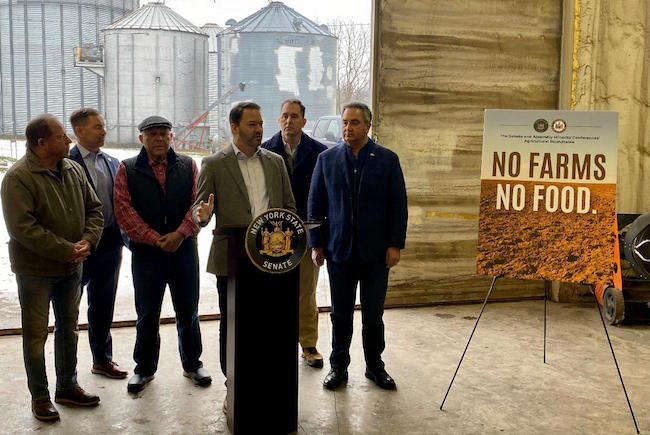
MEDINA – Senate Republican Leader Rob Ortt, along with Senators George Borrello, Ed Rath, and Assembly Members Angelo Morinello, Stephen Hawley, and Mike Norris today urged the Farm Laborers Wage Board to vote against the reduction of the overtime threshold below the current 60 hours established in the Farm Laborer Fair Labor Practices Act (FLFLPA) of 2019.
“The farming industry is vastly different from other work industries,” Ortt said. “Late last year, I and members of my conference sent a letter to the Farm Laborers Wage Board urging board members to vote against the reduction of the overtime threshold. Farmers here have advocated their concerns loud and clear: lowering the overtime threshold will jeopardize their livelihoods.”
This month, the New York State Farm Labor Wage Board will revisit the threshold set in 2019 and make a determination on whether to lower the threshold to 40 hours. Ortt said 96 percent of farms in New York State, most of which are family-owned, are unable to cover the costs of paying time and a half; a threshold reduction would result in less hours for employees to work and smaller paychecks. With farms being local economic engines, this Albany mandate would have devastating effects on communities across New York State.
In a letter sent by members of the Senate Republican Conference, legislators cited a recent study conducted at Cornell University. The study found that if the overtime threshold was lowered to 40 hours, two-thirds of our dairy farmers would have a negative impact on their operations, including leaving the industry or investing out of state, and half of fruit and vegetable farmers indicated they would decrease their operations or exit the industry.
“Despite all the obstacles that New York State has put in their paths, every farmer I know is dedicated to their work, to their farm and employees, and to producing high-quality products,” said State Sen. George Borrello, Ranking Member of the Senate Agriculture Committee. “As difficult as it has been for most to implement the new requirements of the Farm Labor Law, they’ve done what they always do in hard times: sacrifice more, work harder and adapt. However, if the overtime threshold were lowered to 40 hours, this already-strained industry would reach the breaking point, as a recent study by Cornell affirmed. With their ‘extra’ already depleted by burdensome and costly policies, even the most resilient of these New Yorkers would be forced to relinquish labor-intensive dairy or crops operations, relocate to other states or abandon agriculture entirely. I urge the members of the Wage Board to listen to researchers as well as those on the front lines, including farm workers, and reject any overtime changes. The future of farming and food security in our state hangs in the balance.”
“I have spoken with and toured numerous farms, farmers and farm workers do not want this change to be made,” said State Sen. Ed Rath. “They have made it very clear that this would not only negatively impact the farmers but the farm workers as well. Our agriculture industry is already struggling, these overtime changes would only exacerbate the issue. I am hopeful that the voices of the farmers and workers will be heard in Albany and this disastrous change will be stopped.”
“The farmers I have met have great respect for the people who they employ,” said State Sen. Patrick Gallivan. “Like all small businesses, they value their employees’ commitment, work ethic, and the partnership it takes to get the job done. Reducing the overtime threshold will have a devastating impact on the industry and does not accurately reflect the needs of farm workers or the needs of our farm families. Many family farms are already struggling economically. We need to support them and the entire agriculture industry which is so vital to New York’s economy.”
“During a time of tremendous economic uncertainty and runaway inflation, the last thing the wage board should be doing is entertaining a proposal that would jeopardize the economic engines of our rural communities and the breadbaskets of our state,” said Assemblyman Steve Hawley. “Our farms simply cannot afford to absorb the projected 42% labor cost increase that would come with the lowering of the threshold and, beyond that, running a farm on a 40-hour a week schedule all year is simply impractical, if not impossible. A sudden and unforeseen severe weather development could mean a farmer’s crops, putting their livelihood on the line, and that’s a part of farming you simply can’t schedule into a 40-hour work week.”
“I voted against this matter when it came up in the Assembly because the negative impact it would have on our farms was clear,” said Assemblyman Mike Norris. “Farms across the state have been besieged by rising costs, including energy prices, various taxes, and rising labor costs as well as the addition of costly mandates from the state leading many farms, particularly small, family-run farms to close, consolidate or downsize operations. Now, with unprecedented inflation families are truly struggling to put food on the table and lowering the overtime threshold will only exacerbate and compound these rising costs and make it harder on families and businesses to stay afloat. We have people who want to work, are willing to work and there’s work to be done. This is not the time to limit hard work, entrepreneurial spirit and ingenuity by putting farmers and farm workers alike out of business.”
“We must recognize the difficulties that our farmers already face during the growing season,” said Assemblyman Angelo Morinello. “Crop harvests are mainly determined by weather, and it is usually a small window to get the product to market. Lowering the overtime threshold will just add another obstacle for farmers who already run on very thin profit margins. This will create a negative impact on the market and on small businesses in our state. We must not forget, if you ate today, thank a farmer.”
By Tom Rivers, Editor Posted 13 January 2022 at 1:17 pm
ALBION – The Covid testing at GCC’s Albion campus has added rapid tests today, with results expected in about an hour.
The state is paying BioReference Laboratories to run the testing site, which is free to the community, including people outside Orleans County. The site opened on Dec. 29 and is expected to continue for about four more weeks.
It is open at 456 West Ave. on Monday through Saturday from 10 a.m. to 7 p.m.
So far before today, the tests at the site have been PCR only with the results sometimes not coming back for several days.
The site offers tests by appointment, as well as walk-ins. Click here for more information about making an appointment.
Paul Pettit, the public health director for Genesee and Orleans counties, urged the community to use the site in Albion, which came from a push from local officials.
He said he is hopeful there will also be a state testing site soon in Genesee County. Genesee officials have made a formal request to the state for a testing site, Pettit said.
The state also opened a mass testing site today at Brockport State College. The Brockport community testing site is at Mortimer Hall on Holley Street. It runs until Jan. 25, Monday through Friday. It will be open from 8:30 a.m. to 4 p.m. Appointments can be scheduled online – click here.