By Tom Rivers, Editor Posted 28 August 2024 at 9:52 pm
ALBION – Village Trustee Greg Bennett wants to see the school zone, where the speed limit is reduced to 15 or 20 miles per hour, be extended from East Avenue down McKinstry south to at least the railroad tracks.
Bennett lives close by on Chamberlain Street. He sees how McKinstry is a popular spot for kids walking to school in the morning and back to home in the afternoon.
The school zone is currently on East Avenue with a 20 mph maximum. Bennett wants that slower speed limit on McKinstry, too.
He said many drivers bypass East Avenue in the morning and afternoon to avoid the slower speed limit on East Avenue. That puts more vehicles on McKinstry, when kids are on foot.
Police Chief David Mogle said a school zone may have to be on the road right in front of the school. He said more research is needed.
It’s possible the village could just post a slower speed limit on McKinstry if it can’t be designated a school zone.
Fire Chief Jeremy Graham said more pedestrians have been hit on McKinstry than East Avenue in recent years.
The board plans to discuss the issue in more detail at the next board meeting on Sept.11.
By Tom Rivers, Editor Posted 28 August 2024 at 9:29 pm
ALBION – There is no one in the position of crossing guard with the new school year a week away.
The Village Board cut the position as part of the 2024-25 budget that was approved on April 25. However, Trustee Greg Bennett said that school district wasn’t notified about that until after the fact. Bennett was elected on March 19 and started April 1. However, he said he wasn’t aware the crossing guard was to be eliminated in the budget.
“It was a surprise to me and it was a surprise to them (the school district),” Bennett said during this evening’s Village Board meeting.
The village has borne the expense of the position, about $5,000 a year. The school district believes it is not allowed to legally pay for the position and it has to fall on the village.
Deputy Mayor Joyce Riley said the village can’t afford the expense and the school district should pay for the crossing guard who is at the intersection of Route 31 and McKinstry Street from 7 to 8 a.m., and 2 to 3 p.m. on school days.
Bennett said he is concerned the school year could begin without a person helping to stop traffic when kids need to cross the street.
“It’s a pivotal position in our school and community,” Bennett said. “We’re trying to find a resolution.”
The Albion Police Department has agreed to fill in the role to start the year, although the APD could be called away from the scene on other calls.
Bennett said a back-up plan needs to be in place, perhaps with the school resource officer stepping in if Albion police officers need to respond to another emergency or law enforcement call. The SRO is a deputy with the Orleans County Sheriff’s Office.
Bennett said the village should have let the school know the crossing guard was in danger of being cut during the budget process, not after it was finalized.
Riley said the school district hasn’t been great at communication either with the village. She said the district didn’t let village officials know it was soliciting proposals from other law enforcement agencies when it switched from the APD to the Sheriff’s Office to start the school year in 2022.
Bennett and village attorney John Gavenda said there may be language in the law to allow the school district to pay for the position. Gavenda said it is “confusing” and may only allow for an “add-on” or a secondary crossing guard. More research is needed, he and Bennett said.
Bennett also suggested that the village and district look at splitting the costs of the position.
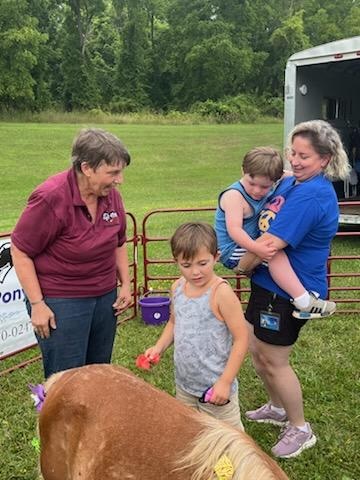
Provided photo: Lisa Smith shows Benny Butcher of Newfane, being help by Michelle Kulbago and Isaiah Grose of Albion how to put bows in the pony’s mane and tail.
MEDINA – Orleans/Niagara BOCES Coordinator Michelle Kulbago and her extended school year staff were thrilled when Lisa Smith of Thera-Pony brought her beloved pets to the Orleans Learning Center for the day.
Lisa Smith says she first got interested in working with ponies for therapeutic benefits when she used to work for Equistar. She just loved how these interactions between humans and ponies brought so many benefits to their cognitive, emotional, social and behavioral skills.
“I decided to start Thera-Pony Inc. because it allows kids to get up close and personal with them,” she said. “I love seeing children interact with them and it helps a lot of them to come out of their shell.”
Smith brings brushes and bows for the students to put in the ponies’ manes and tails.
“I really enjoy seeing the kids smiling and interacting with the ponies,” she said. “Many of them have never engaged with pets before and it was great to see them walk up to them, pet them and give them treats. My ponies just love all the attention!”
Kulbago says she wants to thank Smith for spending the day with the students and giving them such an exciting opportunity.
“I have to also thank my kindergarten teacher Melanie Noel, teacher aide Hailey Wilkins and counselor Amanda LaBernardo who gave a lot of energy and care to the youngsters and helped to make this visit run so smoothly,” Kulbago said.
By Tom Rivers, Editor Posted 28 August 2024 at 8:39 am
MEDINA – The Medina Village Board on Monday gave its blessing for upcoming community events, including today’s classic car cruise-in on Main Street.
The board, however, said it should have been notified sooner about the car show today on Main Street, and the plan to charge car owners $10 to be in the show. That show has always been free to display a car.
Village staff need to set up a stage for Elvis impersonator Terry Buchwald, and also close off a section of the street to traffic.
Mayor Marguerite Sherman said there have been some “newbie mistakes” by organizers Rollin Hellner and Tom Snyder with giving notice and getting approvals from the village. However, she said she appreciates their efforts in organizing the car shows this summer.
She said she was concerned about the $10 charge that was announced about a week ago. Hellner and Snyder said the show will include official judges for the first time and trophies for the top cars.
But Sherman worries the $10 fee may “sour” some of the car owners.
The board approved the car show, but board members said they would like to see how the $10 fee is used to cover expenses for the super cruise.
Trustee Mark Prawel opposed the show saying appropriate notifications haven’t been made to village department heads.
The board also approved the Sept. 28 Ale in Autumn beer-tasting event where up to 800 tickets will be sold with tastings at 24 stops. The event is organized by the Medina Area Partnership.
Check-in will be at the Senior Center at 615 West Ave. with staggered start times at 1, 2 and 3 p.m.
Police Chief Todd Draper said there haven’t been issues with the event in the past. The attendees are well behaved with no rowdiness, he said.
The board also approved use of village streets for the Hometown Wellness 5K on Oct. 19 to benefit the Knights-Kaderli Memorial Fund, which supports people with cancer in Orleans County.
Hometown Wellness is organizing the event for the second year. The debut event in 2023 had 81 participants. The course includes the canal towpath, State Street Park and some village streets. The police department will assist with traffic control during the race that starts at 9 a.m.
Chief Draper said there are at least three 5Ks in the village each year. He would like to see organizers of the events add more signs that say “Race in Progress” and “Runners Ahead” to alert drivers that runners and walkers are out.
By Tom Rivers, Editor Posted 27 August 2024 at 9:48 pm
ALBION – The final event in an 11-concert summer series won’t happen on Wednesday because the band Soul Street has Covid. The concert won’t be rescheduled.
The series began on June 5 with the band, Carlton Station. All of the concerts have been at Bullard, with food vendors and alcoholic beverages available.
John Grillo, the village’s recreation director, said the series has been a big success, and he is open to suggestions to make the series better next year. Comments can directed to the Facebook page for the Village of Albion Summer Concert Series.
Last year, some of the concerts were held on a closed-off section of Main Street due to the lift bridge being under construction. Concerts also were held by the canal park near the fire hall last year, as well as some of the events at Bullard Park.
Grillo and the village recreation committee this year decided to have all of the concerts at the Bullard, with the musicians playing from the amphitheater stage.
Funding administered by GO Art! helped pay for the concerts this summer, as well as sponsorship from Bidleman Ford.
By Tom Rivers, Editor Posted 27 August 2024 at 11:04 am
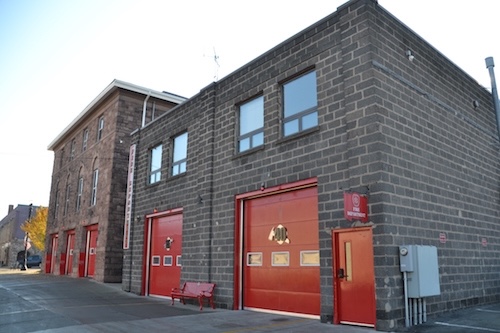
File photo by Tom Rivers: The current fire hall is too small for a bigger ladder truck that is expected to arrive in December 2025. Currently there is only two inches of clearance from the top of the truck to get in and out of the bay in the fire hall.
MEDINA – The Village of Medina is accepting proposals from engineering firms to design a one-bay addition to the fire hall.
Those proposals are due by Sept. 12. The village will hire an engineering firm to prepare the bid specifications for the addition, which is needed to accommodate a larger ladder truck due to arrive in December 2025.
Village officials were looking at a two-bay addition and upgrades to the existing fire hall, but scaled that project back when estimates topped $6 million.
Medina Mayor Marguerite Sherman said an engineering report, detailing the one-bay addition, is needed to help the village pursue grant funding to help pay for the new space. She is hopeful for state and federal assistance with the building addition.
The board needs to find an affordable solution because the new truck will be delivered in about 16 months.
“We’re going for a bare-bones building for something to put this truck in,” she said during Monday’s board meeting.
The new ladder truck will have a clearance of 13 feet. The current fire hall only has room for up to 10 feet, 6 inches in height.
The village will be replacing a ladder truck that is 29 years old with a height of 10 feet, 4 inches. The new bay in the addition is expected to be 14 feet high.
The village received some good news with the fire truck. Medina was looking at a 6.5 percent financing rate for the $1.7 million truck from the U.S. Department of Agriculture. But Village Clerk-Treasurer Jada Burgess said that rate has come down to 4 percent, which would save the village significantly in interest. The final rate won’t be known until it’s time for the village to take out the financing.
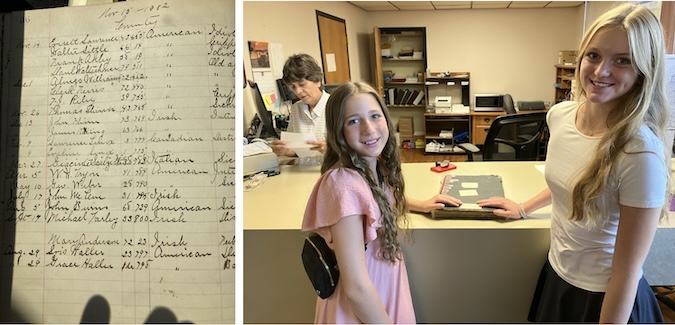
ALBION – Two students from Albion Middle School used part of their summer vacation to research a former Civil War soldier believed to be buried in Orleans County.
Eighth-graders Kendall Peruzzini and Mary McCormick spent time with both Albion Town Clerk Sarah Basinait and County Historian Catherine Cooper, scouring century-old records in hopes of proving the soldier’s burial site – an unmarked grave at the former Alms House Cemetery on West County House Road.
Eventually, they and their classmates will apply for a headstone from the National Cemetery Administration and hope to hear back soon. In 2011, Service Learning students joined the county in cleaning up the long-forgotten cemetery out of respect for those buried under the simple, sandstone markers etched only with a number. About 75 stones exist and the vast majority of the approximate 200 burials there have no headstone.
Once school begins, their fellow social studies classmates will join in the service learning effort.
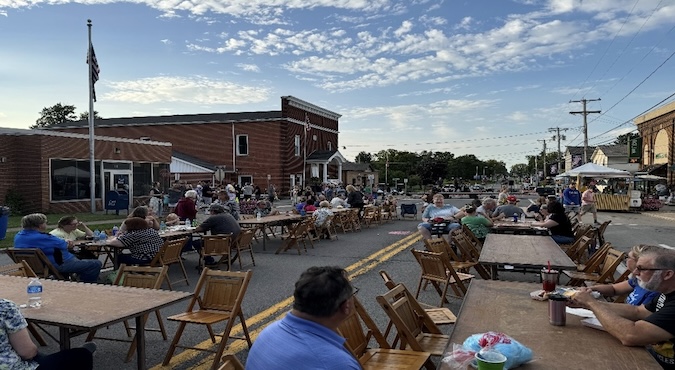
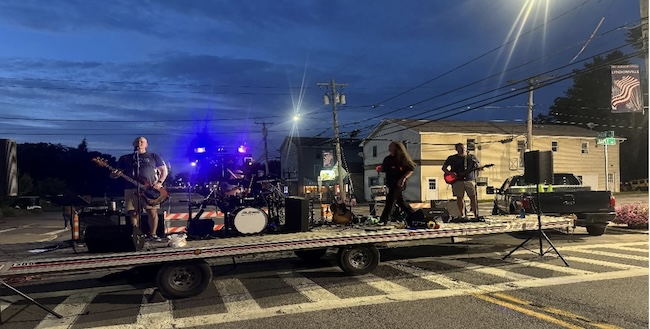
LYNDONVILLE – The Town of Yates, the Village of Lyndonville, and the Lyndonville Lions Club joined forces to host the third annual Summer Street Dance on Friday, August 23. The community responded by showing up in large numbers to celebrate the waning days of the summer and to welcome the coming fall season.
Several food trucks and vendors were on hand to mark this event and the Lyndonville Lions held a recruitment drive along with a hot dog and hamburger stand supplying food and beverages to the festival goers. The American Legion gave out flower arrangements with all of the free-will donations going to support local veterans.
The Town of Yates had many activities planned for children who attended the evening event. Rock painting and chalk street art drawing kept kids busy all evening. Various inflatable bounce houses were available to children of all ages during the event for those who wanted to expend a little more energy.
The musical band, The Guzinyas, supported the event bringing their local talents together to perform their catalog of rock and roll songs. The crowd joined in with festival-goers dancing in the street to their favorite songs.
The grass roots effort by the Town of Yates is seen as a successful “End-to-Summer Event” over the last few years. Town of Yates board member Sue Hrovat has led this event for the town.
“The Town Board has been happy with the results of the last few years, and would like to offer more fun things for people to do at the street dance,” she said.
Looking ahead, the Town Board is in preliminary discussions with the Lyndonville Lions Club to be co-sponsors and to expand on this event. The Lions have discussed the possible addition of several venues with Hrovat, including adding local winery tasting booths, a summer chicken barbeque sale and expanding the musical performances. There has also been some groundswell support for the possibility of an end-of-summer fireworks display to cap off the evening events.
The Lyndonville Lions Club sees this as a great collaborative effort to support the community.
The Town of Yates would like to thank all those who made the street dance possible, and they hope that all have a safe and happy end to the summer season as we all look forward to fall and mother nature’s artistic splendor with her fall foliage.
By Tom Rivers, Editor Posted 27 August 2024 at 8:18 am
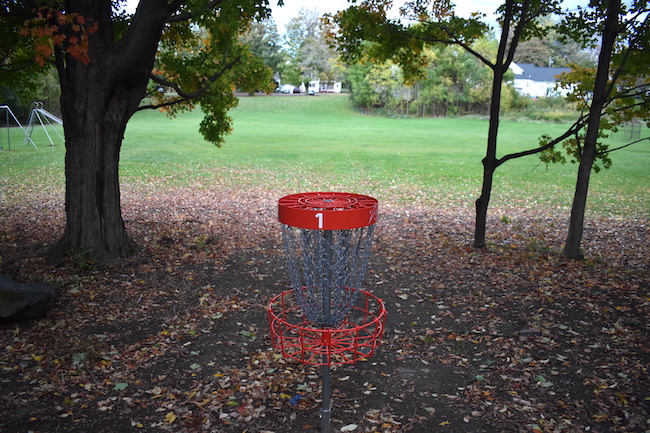
MEDINA – The disc golf course in Medina has an official name: Medina Red Horse Disc Golf Course at Gulf Street Park.
The nine-hole course was developed by the village and Orleans County YMCA last year. The course opened in October and most of the course is in a wooded area at Gulf Street Park.
Some of the more devoted players suggested the name, Red Horse Disc Golf Course. Their design for promoting the site includes a cutout of a red horse, the school district’s Medina Mustang. Gulf Street Park also has red clay in some areas and the course players wanted to highlight that red.
Just last month, 175 rounds by 42 players were registered through a QR code. Other players also are likely using the site without registering, Mayor Marguerite Sherman said.
Some community members wanted Gulf Street Park to be added to the official name, and the Village Board agreed to that suggestion on Monday.
The course is considered challenging by players. The basket for Hole 8 is only a few feet from the water of Glenwood Lake.
Signs will soon be added at the tee boxes to note the distance to the basket, and the par level.
Medina worked with the Orleans County YMCA to develop the course in a project funded by a grant from the Ralph C. Wilson, Jr. Foundation. Albion did a similar project at Bullard Park.
The Ralph C. Wilson, Jr. Foundation gave the YMCA $20,000 to $24,000 to develop the projects with tee boxes, signs and baskets that are mounted in small concrete foundations – 8 inches wide by 20 inches deep.
Medina’s DPW used a skid steer with a forestry head to carve a path in the woods, mulching brush and small trees.
Volunteers are expected to install the signs on the course, and add small arrows on some trees to help direct people to the next hole.
By Tom Rivers, Editor Posted 27 August 2024 at 7:30 am
Photo by Tom Rivers
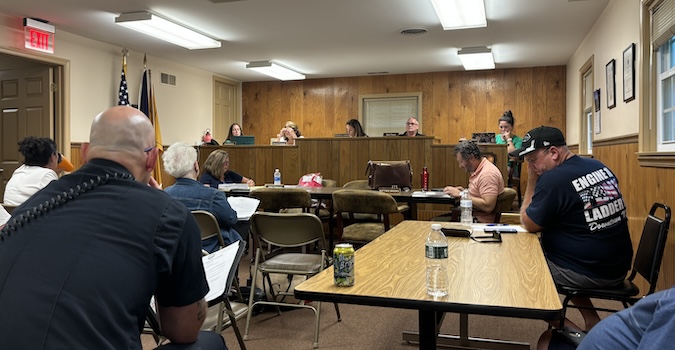
MEDINA – The Medina Village Board meets on Monday in the Ridgeway Town Hall. From left the board members include Jess Marciano, Debbie Padoleski, Mayor Marguerite Sherman, Mark Prawel and Diana Baker. Near them in front are Village Clerk-Treasurer Jada Burgess and attorney Matt Brooks. Jason Watts, the DPW superintendent, is at right and Police Chief Todd Draper has his back to camera.
The board has shifted the meeting locations from the Senior Center at 615 West Ave. to the Ridgeway Town Hall at 410 West Ave. The board had its first meeting at the town hall on Aug. 12. Ridgeway is making the town hall available at no charge to the Village Board.
Mayor Marguerite Sherman said the town hall has a better sound system for the public to hear the board members and the meeting space doesn’t have to be set up with tables and chairs, and then torn down the following morning.
At the Senior Center, DPW staff had to set up the tables and chairs before the meeting and then be there the following morning to put things back.
The senior center is a bigger space, and Sherman said many people who attended the meetings said it was difficult to hear the board members and other speakers.
The Village Board also recently changed the start times from 7 p.m. to 6 p.m.
By Tom Rivers, Editor Posted 26 August 2024 at 9:35 pm
MEDINA – Firefighters from five companies and departments in western Orleans County will team on Saturday in an annual boot drive to raise money for the Make-a-Wish Foundation.
From 9 a.m. to noon firefighters from Shelby, East Shelby, Medina, Ridgeway and Lyndonville will be out collecting money for Make-A-Wish.
They will be near the intersections at Route 63 and Maple Ridge Road, Route 104 and South Lyndonville Road, and Main Street and Center Street.
The firefighters have raised about $8,000 in the recent boot drives for Make-A-Wish.
By Tom Rivers, Editor Posted 26 August 2024 at 3:04 pm
Jim Bensley took on all kinds of tasks for the county, including marina manager and coordinator of household hazardous waste
Photos by Tom Rivers: Jim Bensley, director of the Orleans County Department of Planning and Development, speaks at a public hearing in November 2018 about the Western Orleans Comprehensive Plan. In back is Ed Houseknecht, the Shelby town supervisor at the time. Bensley worked with local municipalities on plans that are guides for future zoning and community priorities. The Western Orleans Comprehensive Plan includes the villages of Medina and Lyndonville, and the towns of Shelby, Ridgeway and Yates.
MEDINA – Many of the local officials in Orleans County, including village and town governments, are mourning the loss of Jim Bensley, who served as the county’s senior planner.
Bensley passed away at age 65 on Aug. 14, only a few days after coordinating another household hazardous waste collection day in the county. Bensley was at the Highway Department in Albion on West Academy Street for many hours on Aug. 10, helping people at the check-in while about 500 residents disposed of old car batteries, propane tanks, oils, solvents and other chemicals, as well as more than 1,000 tires.
Bensley took on that job, as well as the county marina manager for a few years, in addition to his primary job as the director of the Department of Planning and Development for the county.
In that role provided guidance for other county employees as well as the towns and villages as they updated zoning, developed comprehensive plans for the future, and reviewed site plans, requests for zoning variances and many other issues.
“This is a tremendous loss for the county,” said Dawn Borchert, the county’s tourism director. “He had such an institutional knowledge of the community. He knew every little town and corner in the county.”
Jim Bensley carries an old propane tank that was dropped off during the household hazardous waste collection event in August 2021. Bensley won the respect of his co-workers and staff for taking on any job, big and small.
Bensley started with the county in 1989 as a planner and was promoted to senior planner in 1996. He has served as the director of Planning & Development since January 2015.
Former County legislator Ken DeRoller has worked with Bensley since the 1980s, back when DeRoller was chairman of the Town of Kendall Planning Board. Bensley was a valuable resource for DeRoller later when he was a board member for the Orleans Economic Development Agency and a county legislator.
“Jim always had the best interest of land use policies and promoting proper use, plus programs to enhance the quality of life in Orleans County,” DeRoller said.
Bensley worked with the municipalities to develop land use policies along the Lake Ontario waterfront and the Erie Canal corridor.
“These programs enhanced the enjoyment and protection of over 75 miles of Shoreline,” DeRoller said.
DeRoller pushed the Planning and Development Department to take on more work, with the waterfront development plans, a study of the Lake Ontario State Parkway, managing the household hazardous waste collection and other projects.
Bensley didn’t shy away from the work, even as he juggled a part-time job for nearly 30 years as a professor in the urban and regional planning program at Buffalo State College. In 2018 he was honored with the SUNY Chancellor’s Award for Excellence in Adjunct Teaching.
“He had this passion to keep moving forward and he had a love for Orleans County,” DeRoller said. “He had a strong internal drive, and wanted to move the county forward on land use.”
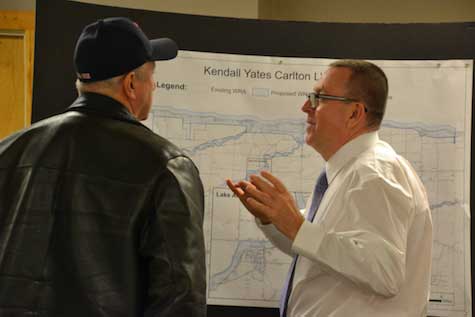
Jim Bensley (right), discusses the waterfront in Orleans with John Riggi, a Yates town councilman during a meeting in Carlton in April 2018. The towns of Carlton, Kendall and Yates as well as the Village of Lyndonville held a public meeting to discuss a waterfront development plan.
Bensley could bring consensus in meetings that were often contentious, with strong opinions from stakeholders, DeRoller said.
He was Orleans County representative for Genesee/Finger Lakes Regional Planning Council and also the county’s commissioner on the board for the Rochester Genesee Regional Transportation Authority.
Many of the planning professionals in the region have been taught by him at Buffalo State, and he was the boss to others at the Orleans County Department of Planning and Development.
Sarah Gatti was his student at Buff State and then worked as a planner in Orleans County from 2015 to 2019. She now is a principal planner in Erie County for the Department of Environment and Planning.
She recently nominated Bensley for Michael J. Krasner Professional Planner Award, given by the Upstate Chapter of the American Planning Association. Gatti found out last week Bensley will receive the honor which goes to “an individual for sustained contribution to the profession through distinguished practice, teaching, or writing.” It will be presented to Bensley’s family in October during a ceremony in Ithaca.
“I wanted to nominate Jim because he deserved it,” Gatti said. “He was supremely knowledgeable, and he was very passionate. He treated people with kindness as a boss. He was very supportive. There is a web of planners in the region who have been benefitted from his knowledge and mentorship.”
Calling hours will for Bensley will be Wednesday from 4 to 7 p.m. at Cooper Funeral Home, 215 W. Center St., Medina. His Mass of Christian Burial will be celebrated on Thursday, Aug. 29 at 10 a.m. at Holy Trinity Parish, St. Mary’s Church, 211 Eagle St., Medina.