By Tom Rivers, Editor Posted 8 December 2017 at 12:18 pm
Photos by Tom Rivers
ALBION – The Erie Canal is pictured today in Albion with the Gaines Basin Road bridge in the background.
The canal is typically drained this time of year. The State Canal Corporation emptied the canal last month but it has been refilled so the Canal Corporation can inspect culverts, said Steven Gosset.
The canal will be dewatered again shortly, Gosset said.
A Canada goose is pictured today in Albion by the canal.
Event will observe 500th anniversary of Protestant Reformation
MEDINA – Trinity Lutheran Church is hosting a free Christmas concert at 7 p.m. today in observance of the 500th anniversary of the Protestant Reformation.
Tim Smith
The concert features organist Tim Smith and soprano Christina Taylor. The program, “Bach to Christmas,” will feature the music of J.S. Bach. The church is located at 1212 West Ave.
This will be Smith’s third year performing at Trinity Lutheran, and the second for Taylor.
Tim Smith will play on a 29-rank Holtkamp pipe organ, which was installed in the church in 2015. Smith and his company, Chesapeake Organ Service, installed the organ after it was moved from Christ Episcopal Cathedral of Cincinnati.
Christina Taylor
That church donated the Holtkamp pipe organ to Trinity in 2014. Chesapeake Organ Service was hired to clean, rewire, and reinstall the organ at Trinity. The organ replaces one from 1925 with eight ranks or eight sets of pipes and two manuals or keyboards. Trinity’s new organ has three keyboards.
Smith holds degrees in organ performance from Wheaton College, Northwestern University and The Boston Conservancy. He has performed throughout the United States and his recordings have been rebroadcast on Pipedreams (American Public Media).
Christina Taylor is a graduate of the Fredonia School of Music. She has performed with professional ensembles in New York City and Washington DC, and is principal soprano at Trinity Memorial Church in Binghamton, NY.
By Tom Rivers, Editor Posted 7 December 2017 at 5:41 pm
Photo by Tom Rivers: The United Way of Orleans County has a new director, Kaitlyn Delamarter, center. She is pictured with the new president of the board of directors, Jackie Gardner, and Jason Smith, vice president of the board.
ALBION – The United Way of Orleans County has welcomed a new director, Kaitlyn Delamarter. She started the job this week after working the past two years as an executive assistant with the Orleans Community Health Foundation.
Delamarter, 25, of Albion has a degree in graphic design from Bryant & Stratton in Henrietta. She also worked a year at CRFS, where the United Way has its office at 231 East Ave.
Delamarter said she will focus on marketing and getting the word out in the community about the United Way, and its fundraising efforts on behalf of 16 agencies in the county. Those agencies run programs that serve youth, senior citizens, people with disabilities and people in crisis.
In September the United Way kicked off a $190,000 campaign. Delamarter welcomes the chance to give workplace presentations about the campaign.
“I definitely have a passion for the community,” she said. “Once I was thrown into the non-profit world, I fell in love.”
Delamarter said the United Way is an effective way to direct funds to many agencies serving Orleans County residents.
She is the lone employee for the United Way in Orleans. In addition to the campaign, she will plan other fundraising events, including a golf tournament. The United Way also volunteers once a month at the community kitchen at Christ Church in Albion.
Delamarter welcomes donations to the United Way and also volunteers who want to help at the community kitchen or with United Way events. For more information, click here.
In addition to a new director, the United Way board of directors met this morning and picked a new president and vice president for the board. Jackie Gardner, a vice president at CRFS, is the new president. She was the vice president of the board. She succeeds Dave Cook.
Jason Smith, the superintendent of Lyndonville Central School, is the new board vice president.
Assemblyman Steve Hawley (R-Batavia) announced today that the 2017 Charitable Gaming Act has been delivered to Gov. Cuomo for his approval or veto. The bipartisan measure, ushered through the Legislature this spring, provides a host of benefits to charitable organizations and non-profits that hold raffles and fundraisers across the state.
Hawley has been fighting for this bill to become law ever since the cancellation of the Stafford Fire Department’s classic car raffle.
“Gov. Cuomo now has the unilateral power to do what is right for the tens of thousands of churches, fire departments, non-profits and charitable organizations that raise money to support themselves or help the less fortunate throughout our state,” Hawley said.
The governor and Legislature earlier this year approved some updates to the state’s gaming laws, including expanding the definition of an “authorized organization” to include volunteer ambulance workers and organizations that have been in existence for one year, allowing television and internet advertising of raffles and allowing personal checks to be acceptable payments for games of chance.
Hawley said the legislation earlier this year didn’t go far enough. The latest proposal would allow groups to accept credit and debit cards as a form of payment for raffles, resulting in higher revenues raised for the organizations.
Hawley thanked Sen. Patrick Gallivan (R-Elma), Sen. Rob Ortt (R-North Tonawanda) and Sen. Michael Ranzenhofer (R-Amherst) for pushing the bill in the Senate and Assemblyman Robin Schimminger (D-Buffalo) for introducing the legislation in the Assembly.
Hawley urged residents to call on Gov. Cuomo to sign the Charitable Gaming Act into law by calling the governor’s office at 518-474-8390 or writing:
By Tom Rivers, Editor Posted 7 December 2017 at 9:46 am
Provided photos
HOLLEY – Holley Central School organized a free Day of Shopping for community members. Students were led by school social workers Kelly Bates and Stacey Braley and counselor Wanda Farrell. They organized the effort which included new and gently used donations.
The following businesses also donated money to us to help make the day successful: Christopher Mitchell Funeral Homes, Clarendon Lions Club, Holley Rotary Club, Crosby’s, Dr. Daniel Schiavone and The Whole Approach. Through this event more than 250 kids are helped.
Members of the Holley Rotary Interact Club unload the donations.
Families come to the school and each child in the household can receive the following: one toy, one stocking stuffer, one stuffed animal, one game, one movie and one book.
“The Holley community is so generous in always donating to this event,” said Samantha Zelent, a school social worker.
By Kristina Gabalski, Correspondent Posted 7 December 2017 at 9:21 am
Photos by Kristina Gabalski
KENDALL – The Kendall community held its annual holiday tree and gazebo lighting Wednesday evening. Residents gathered at the gazebo to listen to holiday music and sing carols. Activities were held earlier at the Kendall Elementary School with the annual Dinner with Santa and book sale.
Following the tree and gazebo lighting, hot cocoa and cookies were served at the Kendall Fire Hall.
Kendall Elementary students play holiday carols following the lighting of the tree.
Kendall Supervisor Tony Cammarata welcomes Santa, Mrs. Claus and the elves to the Gazebo. Children were able to visit Santa at the fire hall following the outdoor festivities.
By Tom Rivers, Editor Posted 6 December 2017 at 10:40 pm
Photos by Tom Rivers
ALBION – Santa paid a visit at Hoag Library today and met Kayla Ray of Albion. Santa has a whirlwind schedule this month and was happy to meet many youngsters at the library and hear their wishes for Christmas.
Before taking the wishes, Santa led the kids in some stretching. He also sang with the kids.
There were many eager volunteers to ring Santa’s bell while he led in singing, “Jingle Bells.”
Santa also read, “The Night Before Christmas.”
The room was full of children and parents, and they were attentive while Santa read the Christmas classic.
James Lopez, 4, of Waterport shares a Christmas wish with Santa.
By Tom Rivers, Editor Posted 6 December 2017 at 5:13 pm
Orleans County is just about at the state average for women in elected county positions. In Orleans, three of the 15 elected officials in county positions are women or 20 percent.
State-wide there are currently 245 women in elected county offices out of 1,187 outside New York City or 20.6 percent of the total, according to the New York Association of Counties.
Kim DeFrank
The November election boosted the number of women in elected county positions to 257 or 21.7 percent, beginning on Jan. 1.
The three women in Orleans who were elected to county positions in November include Kim DeFrank as county treasurer, Karen Lake-Maynard as county clerk, and Lynne Johnson as one of the seven county legislators.
In 2017, NYSAC launched the Women’s Leadership Council for women elected to county office.
“The Women’s Leadership Council is focused on providing training, resources, and recruitment,” said NYSAC President MaryEllen Odell, Putnam County Executive. “We welcome the newly-elected women in counties throughout New York. We encourage them to take advantage of the support provided by the Women’s Leadership Council and of the many resources available through NYSAC.”
Nassau County elected its first female County Executive. In St. Lawrence and Columbia counties, women were elected to the position of county coroner. In Tompkins County, the legislature will have as many women on the board as men for the first time in its 200-year history. And throughout New York State, women were elected county legislators, town supervisors, county clerks, and county district attorneys. In all, 62 women were elected to county positions in New York State this past November, NYSAC said.
Photo by Tom Rivers: Susan Heard was honored in October by the Orleans County Republican Party, including Chairman Ed Morgan, left. Heard is retiring as Orleans County treasurer after 24 years. She is the longest-serving woman in an elected position in Orleans County.
“Across the country, women claimed victory in elections at all levels of government – many of them first-time candidates,” said Stephen Acquario, executive director of NYSAC. “The same was true in counties throughout New York State.”
In Orleans County, the elected county positions include seven county legislators, the county judge, the sheriff, district attorney, three coroners, treasurer and county clerk.
Of those 15 positions, three are currently held by women – Susan Heard as county treasurer. Heard is retiring from that position after 24 years. She was elected Gaines Town Clerk and starts the new job on Jan. 1. Heard’s deputy in the treasurer’s office, Kim DeFrank, ran for treasurer and was elected without opposition.
NYSAC wants to see more women pursuing public offices.
“The increase in the number of women running for and being elected to public office is historic,” Acquario said. “We are excited to see more women leading New York’s counties, and we are committed to supporting our newly elected members as they learn the workings of public office and the issues impacting our counties.”
Provided photos: The top three finalists with their posters, from left: Karlee Rounds, Aasiya Huzair and Amanda Garza.
Press Release, Lyndonville Central School
LYNDONVILLE – Karlee Rounds, an eighth-grade student at Lyndonville, has taken the first step to becoming an internationally recognized artist by winning a local competition sponsored by the Lyndonville Lions Club.
In total, 48 eighth-graders participated in the contest. The entries were narrowed down by Amanda LeClair, art teacher, and then by Leo Club officers. The final six posters were ranked by Lions Club members. Certificates were presented to the top three poster creators, along with an honorable mention.
Amanda Garza placed second in the Lyndonville competition with Aasiya Huzair placing third. Julianna Scribner was recognized with honorable mention.
Karlee Rounds’ winning poster: “Peace and Love Have No Borders.”
Rounds’ poster, “Peace and Love Have No Borders,” was among more than 450,000 entries submitted worldwide in the annual Lions International Peace Poster Contest. Lions Clubs International is sponsoring the program to emphasize the importance of world peace to young people everywhere.
Rounds’ poster was sent on to the District Governor in November.
View past international grand prize winners at www.lionsclubs.org. Lions Clubs International is the world’s largest service club organization with more than 1.35 million members in 210 countries and geographical areas around the world. Since 1917, Lions clubs have aided the blind and visually impaired and made a strong commitment to community service and serving youth throughout the world.
Governor Andrew M. Cuomo today outlined 10 key reasons, both resulting from and in addition to the unacceptable elimination of state and local tax deductibility, why the GOP tax plan will deliver an economic death blow to New York and the nation.
Additionally, the Governor is calling on the New York Congressional delegation, including the four representatives who voted for the tax bill in the House of Representatives, to vote against the future reconciliation bill due to its devastating impact on New York.
“The GOP tax plan, if passed through the conference committee, will be an economic dagger at the heart of New York and our nation – crippling our economy, exploding the federal deficit, increasing healthcare costs for millions and widening the gap between the richest and poorest Americans,” Governor Cuomo said. “Congress must come together to do the right thing, do their jobs and put the American people first by stopping this devastating bill from robbing middle- and working-class New Yorkers of their hard earned dollars. I call on New York’s Congressional delegation to stand with their constituents and vote against the final reconciliation bill.”
To urge members of Congress against voting for the final reconciliation bill, call the House of Representatives switchboard at (202) 224-3121.
The GOP tax plan will:
1. Raise income taxes: These changes will increase federal income taxes for 2.4 million New York tax filers by an average of $3,200.
2. Effectively raise property taxes: 725,000 New York households pay property taxes exceeding the proposed $10,000 cap on deductions. Effectively, the property tax bill for these homeowners will increase by an average of $2,750.
3. Cut taxes on corporations by $1.5 trillion without requirements for job or wage growth: Instead of prioritizing people, the bill gives a 40 percent tax cut to the biggest companies in the world. Many corporations will simply use that cut to add to their savings; others will share the savings with wealthy stockholders; some will invest in automation technology to put even more Americans out of work. Worse, while hardworking New Yorkers will lose or have capped the ability to deduct state and local taxes from their federal income calculations, corporations would still be able to claim state and local taxes as a regular business expense.
4. Reduce the value of millions of middle class homes: According to Moody’s Analytics, the tax changes could initially cut home values by 10 percent in more expensive markets such as in New York and by 3 percent to 5 percent across the United States, diminishing the value of the largest investment, their home, held by many New York families.
5. Limit the ability to deduct interest on millions of home mortgages: The House bill will limit the ability to deduct mortgage interest to loans up to $500,000 instead of the current $1 million limit for couples filing jointly. This will impact 20 percent of homes in New York, lowering their value if they were put on the market, according to analysis by the National Association of Home Builders. Homes will be more expensive to buy and worth less when sold, devastating the housing market.
6. Raise health care costs: The GOP tax plan will undermine the Affordable Care Act, significantly raise health care costs, and potentially decimate Medicaid funding by eliminating the individual mandate.
7. Raise costs for students: The bills will discourage participation in postsecondary education by making college more expensive and undermining the financial stability of colleges and universities. The education provisions will increase taxes by over $64 billion over the next 10 years, nationally. More than 800,000 New York college students will lose the student loan deduction, and graduate student instructors and research assistants will be taxed on income they never even see.
8. Raise costs for teachers: The House tax bill targets our teachers by eliminating the teacher spending deduction for out-of-pocket classroom expenses. This will raise taxes for 290,000 New York teachers by an average of $260.
9. Eliminate key deductions and credits, including alimony paid by divorcees; moving expenses, except for those in the military; commuters who travel back and forth to work on bicycles; and renewable and electric vehicles.
10. Explode the federal deficit: The Senate bill will increase the nation’s deficit by more than $1.4 trillion over the next decade, according to the Congressional Budget Office. The House plan will cost about $1.7 trillion over 10 years.
By Tom Rivers, Editor Posted 6 December 2017 at 11:17 am
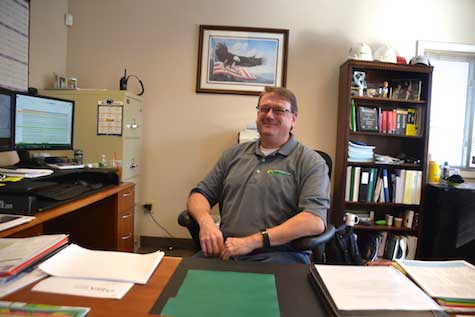
MEDINA – Tim Winters, 48, is chief executive officer of Western New York Energy, a company that celebrated its 10th anniversary of production last week.
Winters joined the in September 2007, soon before it opened and began turning corn into ethanol. WNY Energy initially planned to use 20 million bushels of corn annually to produce 50 million gallons of ethanol.
The output proved a conservative number because the company is on pace to produce 62 million gallons this year. All of the ethanol is blended and used in the Rochester and Buffalo markets.
The facility also produces high-protein distiller’s grains for livestock and the CO2 is captured and used for food and soda industries. The company pays more than $1 million in taxes locally each year.
John Sawyer and his son Mike were influential in getting the plant built. John was the company’s first CEO and president. He died from leukemia at age 72 on Oct. 13, 2013. Mike followed his father as the company’s CEO and president. Mike died while hiking in the Adirondacks at age 43 due a medical condition on Aug. 18, 2016.
Tim Winters said the two Sawyers were critical in getting the plant built and in its success. Winters was interviewed on Friday at his office at WNY Energy, which is located at the corner of Bates Road and Maple Ridge Road.
A banner at the entrance of the plant notes that WNY Energy has produced more than 500 million gallons of ethanol in the past decade.
Question: What did you do at the start your career?
Answer: I was in the family business for several years and then had a couple different jobs. Then I moved out West for six years and worked for a large grain company in Oklahoma.
Question: Was that where you were right before Western New York Energy?
Answer: Yes.
Question: What did they do to lure you back home?
Answer: I was actually here getting remarried and was nosing around the company. The company I was with was talking with companies about building ethanol plants and grain elevators in Oklahoma. While I was back here I wondered what this new plant was all about. I ended up meeting Mike (Sawyer) and emailing Mike. He asked me what is it I do and I told him I was a controller. He said he was looking for a controller. It just kind of happened very quickly from there.
Question: What does a controller do?
Answer: A lot of everything. In a normal capacity it’s just accounting functions. But for us here at this company it’s a lot of dealing with some of the marketing, operational and working with the plant, helping to analyze data. I also do a fair amount of the IT. I have some grain experience so I was involved in that.
We’re a large company but it is small enough where I had the title of controller, but it was always whatever needed to be done.
A truck with grain from H & E Farms in Albion is unloaded last Friday at the ethanol plant.
Question: When you guys started I think you were taking in 20 million bushels to make 50 million gallons of ethanol. I thought the output ended up being more.
Answer: It was 50 million as the original name plate, that’s what the plant was designed for. We started running pretty much over that within months when we started.
Question: Was that because it was a conservative number?
Answer: They design these to be able to run a little bit harder. We were able to gain efficiencies and learn more about the plant to get more gallons out. It’s been pretty much a continuous trajectory up since then. Currently today we are running about 62 million gallons with a potential to run even higher.
Question: With 20 million bushels?
Answer: Yes. Twenty million is what we’ll grind this year. It will probably be 21 million next year. When we started we were probably grinding 17 to 18 million.
Question: That’s significant because I know one of the criticisms I’ve heard about ethanol is the amount of energy to produce it. You’ve made gains getting more out of the corn. It looks like you’re about 3 gallons for every bushel of corn.
Answer: A lot in the industry when it was started was about 2.7 to 2.75. Our average over the years I would say has been 2.9-plus. Every year you try to close in on that magic 3 number.
Question: Has it happened for you?
Answer: Not yet, but with the technology each year we’re getting a little bit closer.
Question: I wonder what could clinch it for you to hit the 3 level?
Answer: It doesn’t sound like a lot to go from 2.9 to a 3, but that’s actually a lot. For every hundredth that you get it’s a big step. It takes quite a bit to gain those little bits. When you think about it, take that .01 and multiply it by 20 million bushels. That’s a lot of gallons.
Question: (During the interview several trucks stop at the weigh station outside by Winters’ office) Is this a normal occurrence for you, having all of these trucks here?
Answer: Generally on average we take 75 a day.
Question: And that is throughout the year?
Answer: Yes. We have times in the year where there are more. It could be a hundred or more. We have unloaded as many as 200 corn trucks in a day in the past. Sometimes, it’s 40-50 a day. It really depends on how much is bought and the time of the year.
Question: In terms of the impact for the local farmers, they used to have to drive much farther, to Dunkirk perhaps to the Purina plant.
Answer: Or Arcade or Batavia.
Tim Winters keeps an eye on market prices at his office.
Question: When you’re driving farther, it can gobble up your day just with the added time.
Answer: Yes. An hour-and-a-half to 2-hour drive is not uncommon at all each way.
Question: With the local growers, including some in Medina, it must be awesome having you here so close by. And you can see all of the new grain bins that have been put up in the last 10 years, including the new one by Western New York Energy. (The WNY Energy bin can hold 800,000 bushels and was built about two years ago.) What was the reason for the new grain bin you added?
Answer: One of the big reasons we decided to do it was because as we continue to produce more, we needed to have more days of run time available. What if you got into a winter storm in the middle of January? With only a million bushels of storage, that was only around 15 to 17 days for us. That was kind of uncomfortable. So a larger capacity gives us that insurance if we have bad weather and at the same time gives us more options throughout the year. We can buy more during harvest than we could before.
Question: I think 50 people work here.
Answer: It’s 51 today. That includes Shelby Transportation.
Question: With that, you guys go get the corn? How does that work?
Answer: Yes. We get the corn and we also haul out some of the distiller’s. We do some other hauling as well.
Question: When you consider the distiller’s and the CO2, is there any waste here?
Answer: No. When we’re done there is nothing left of the corn kernel. We use every piece of it. We talked earlier about the gripe about using more energy than you’re making, but in reality in the most recent analysis it’s at least 2 to 1, sometimes 2 ½ to 1. For every energy unit we’re using, we’re creating that much more than what a gas refinery or oil refinery would be. They’re energy deficits.
The point I’m making is gaining all of those efficiencies and using all of your byproducts, you don’t have anything to burn off or waste to dispose of.
Question: I think there were more criticisms of the ethanol industry 15-20 years ago, but you don’t hear that much these days. Do you think ethanol has proven itself?
Answer: One of the great things about being in this industry is we are young, we are really just in the first 10 to 15 years of taking off. With the technology every day there is something new coming out. It’s really exciting to see what is could be coming down the pike.
Distiller’s grains are a byproduct of the ethanol process and are used to feed livestock including many cows in Western New York.
Question: I know some plants have doubled in size after they opened. Is that something that might happen here?
Answer: It’s something that we have considered, but it’s quite an investment. When you look at building capacity on that large of a scale, the cost per gallon is quite a bit higher than when we originally built the plant. It’s something you have to take a much harder look at because your payback is going to be much longer. We’ve chosen to take a more phased in approach. We built a new fermenter, we built some cooling capacity. We’ll continue to look at some of those projects maybe just building up in phases, rather than in one big lump sum. Not to say that could never happen, but right now the phased in approach is the best investment strategy for Western New York Energy.
Question: What kind of ripple effect do you think this plant has had on the farming community?
Answer: From what I remember, growing up in the family feed and grain business, yes it has had an impact. This area has always grown a lot of grain. Anybody who has lived here more than 20-30 years remembers that. There used to be a lot of government storage. There used to be a lot of excess storage and prices that the farmers received were very poor. I remember years that corn was maybe $1.50, $1.25 a bushel. Over the years that got tough for a family farm to stay in operation.
After we started – within months of after we started – farm families that I’ve known for all of my life, it wasn’t uncommon for some of them to come up to me in the grocery store and say, “Tim, we are so glad you and the plant are here because we were getting ready to sell the farm.”
Just look at the farms that have built bins, that have trucks. They are doing better to be able to make investments in new technologies and equipment. But farming is still farming. There are good years and there are bad years, but hopefully overall the averages are better than what it was.
Question: Not only are you here and the corn price is up, but the yields are also up. It seems like a good time to be a local corn grower.
Answer: Right now, if I put my farmer hat on, the price is not great. The Chicago Board of Trade today is trading around $3.50 (per bushel). That’s not great but it could be a lot worse.
There are farms out in the Midwest that are getting below $3 cash price.
Question: I thought you paid a little more than going rate?
Answer: There are a lot of factors that go into it. The term you’re looking for is basis. That’s the price, plus or minus whatever the Board is trading at. That really depends on the season and a lot of other market conditions. Sometimes it’s over. We have been under at times. But generally we’ve been paying over.
Question: Don’t you test the corn and based on the quality that affects the price?
Answer: Yes, there are several different quality factors that we evaluate for. For instance, if it is too high in moisture there is a small discount and a dockage that goes along with it. If there is too much foreign material, beeswings or weed seeds – things like that that aren’t corn – there are discounts for that. It’s all about quality, just like anything else.
Question: If it’s wetter than you want do you then have to dry it?
Answer: We don’t have a dryer. All we have are fans. We can take slightly wetter than we’re used to. But we can’t take 18 percent or even 17 percent (moisture). What ends up happening is if you take that wetter grain and put it in the middle somewhere, concrete or the bin, it will eventually rot. To store it for any amount of time it has to be 15.5 percent or below, preferably.
John Sawyer, right, and his son Mike Sawyer were the driving force in establishing Western New York Energy and the construction of the $90 million ethanol plant.
Question: The only sad part about this is that John and Mike Sawyer aren’t here today.
Answer: I agree.
Question: But they certainly brought an asset into the community. I like that the shareholders are local people. The plant has helped to bring some money into the community. If the farmers make money they often put it back in the community, including helping to fund the Extension Education Center and the new library in Albion.
Answer: Correct. That is one of things that drew me here. I didn’t know John or Mike before I came here. I checked them out and I’m sure they checked me out. I heard nothing but good.
When you heard John talk about where did this come from, it all came from his desire to help out farmers. This is what developed. It does allow us to provide not only 50 good-paying jobs for employees, but it allows us to do good things for the community – the Parade of Lights for example. As a Medina native, I’m very proud to do that. As you know, you’ve been in the area long enough, we’ve had a lot of things taken away over the years. It’s nice to bring something back for a change.
By Kristina Gabalski, Correspondent Posted 6 December 2017 at 7:43 am
Photos by Kristina Gabalski: Joan Navarra-Mrzywka receives the Friend of Master Gardeners Award from Ed Neal, president of the Extension board of directors. Navarra-Mrzywka has helped the past several years at the annual Master Gardeners Holiday Wreath making workshop, providing materials and tools for participants. “Joan has helped the workshop grow to become a favorite of the community and a holiday tradition,” said Kim Hazel, Master Gardener and OCCCE Sr. Ag/Hort. Administrative Assistant. Navarra-Mrzywka has also provided ideas, assistance and donations for other Master Gardener projects including the annual Mothers’ Day tea cup garden class.
KNOWLESVILLE – Orleans County Cornell Cooperative Extension Board of Directors were joined by OCCCE staff, program participants, volunteers, community partners and friends at The Black North Inn Tuesday evening for the 2017 annual meeting.
The dinner meeting included a review of the 2017 Annual Report, election of the 2017 Board of Directors and presentation of special awards.
Robert Batt, Extension executive director, discussed 2017 highlights which included 422 youth, ages 5-19, enrolled in 4-H; 89 4-H leaders and volunteers; 73 4-H participants in public presentations; and more than 3,000 exhibits at the Orleans County 4-H Fair. Over 26,000 people attended the week-long 4-H Fair in July.
Batt also noted the Ag in the Classroom program which brought science, STEM, and agriculture education programs to three school districts in Orleans County.
Fifty-five adults and 47 youth participated in the Expanded Food and Nutrition Education Program through workshops supported by the EFNEF educator, and 75 participants took park in Master Food Preserver Workshops.
“Master Food Preservers sold out both their workshop series,” Batt said.
Orleans County Master Gardeners had an “extraordinary year,” Batt said. Their list of programming included Spring Into Gardening Education Day, a Rain Barrel workshop with the Orleans County Soil and Water Conservation District, the Medina Summer Enrichment Program, and the first-ever Garden Party at the gardens of the Riley Family in Albion.
Friend of Extension
Anne Preston was honored with the Friend of Extension Award. Batt said Preston has volunteered extensively for 4-H programs, “and done so much more … Anne has always been willing to help out,” he said, especially with making phone calls to remind volunteers of upcoming committee meetings.
Preston, who was not able to attend Tuesday’s meeting, has also given generous donations to both the 4-H program and 4-H Fair, Batt said.
4-H leaders recognized
Janet Klossner
Janet Klossner and Marsha Cook received recognition for 4 years as leaders; Erik and Marlene Seielstad, six years; Barb Kurzowski, 19 years; Bill Gerling, 27 years; Sarah Johnson, 29 years; and Pauline Lanning, 51 years.
Neil and Joanne Johnson received diamond clovers for reaching their 40-year benchmark as 4-H Leaders.
Bill Gerling
4-H Horse Program Wranglers Club leader Janet Klossner received the Outstanding 4-H Leader Award.
Bill Gerling accepted the Friend of 4-H Award for H.H. Dobbins, Inc. Missy Call, 4-H Youth Program Coordinator, said Dobbins has donated fresh fruit for the annual pie baking workshops in the Trolley Building prior to Fair.
The donations have helped the Leaders Association overcome the challenges of no longer being able to serve fruit pies made at home in the Leader’s Pie Stand during Fair due to Health Department regulations. Dobbins has also provided additional donations to OCCCE including the Ag in the Classroom program, Call said.
Retiring Board of Directors members recognized
Board Vice President Erin Anheier, Vincent Flow and Peter Toenniessen are retiring, and Ed Neal is retiring as president of the Board of Directors.
Kevin Bedard, Natalie Bokman Seal, Amanda Pollard and Marlene Seielstad were elected to the Board of Directors.
By Tom Rivers, Editor Posted 5 December 2017 at 8:40 pm
ALBION – The 8th annual Nicholas Kovaleski Hometown Christmas returns Saturday for three shows by members of the Albion community. There will be singing, dancing and even comedy.
The show honors the memory of Nicholas Kovaleski, who the inspired the Albion community with his valiant fight against leukemia. He died at age 15 on June 29, 2011. He was a popular student at Albion, excelling at football, swimming and tennis.
There have been seven Hometown Christmas events and they have raised $18,000 towards scholarships given annually to graduating high school seniors who “Live with Purpose.”
Nick’s sister Michayla is among the dancers in Saturday’s shows. Nick’s younger brother Matt normally plays the drums for the Albion band and in the pit orchestra for school musicals. On Saturday he will make his debut as a soloist in singing.
Other community members will perform, including High School Chorus Director Gary Simboli. Two of his students, Riley Seielstad and Kate Krieger, will sing solos.
The Boy Scouts will perform three humorous skits. Jim Salmon, Doug Bower and Jim Babcock also will perform a skit, “Grandma Got Run Over by Reindeer.”
Altogether, there will be about 60 people on stage during the program.
“We just want people to come and have a good time,” said Amy Sidari, event organizer and owner of Gotta Dance by Miss Amy. “I’m humbled by the community with their support and love.”
The shows are at noon, 3 p.m. and 6:30 p.m. at the Holy Family Parish Lyceum, 106 S. Main St. Coffee and desserts are served and there is a basket auction. There will likely be about 50 baskets up for bid, including jerseys from Buffalo Bills greats Jim Kelly and Andre Reed, who are both in the Pro Football Hall of Fame. There also is a 43-inch television in the auction.
For information about tickets, call Gotta Dance at (585) 354-2320.
Saturday is also the Hometown Holidays event in downtown Albion with events from 10 a.m. to 4 p.m. Click here for more information.