













Orleans County

Courthouse dome will be lit blue and yellow in support of Ukraine

By Tom Rivers, Editor Posted 15 March 2022 at 1:58 pm

ALBION – The courthouse dome on East State Street will be lighted up in blue and yellow beginning this evening in a show of support for the Ukrainian people who have been under attack since Russia invaded the country on Feb. 24.

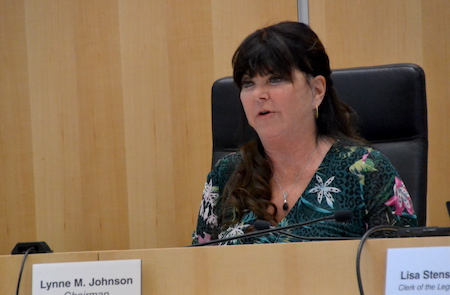
“Around the world everyone is finding ways to show their solidarity with Ukrainians during this time of crisis. Orleans County stands with them,” said Orleans County Legislature Chairwoman Lynne Johnson.

The courthouse dome will remain lit for the foreseeable future in blue and yellow, the colors of Ukraine.

United Way leader sees local organization being force for good for years to come

By Ginny Kropf, correspondent Posted 14 March 2022 at 11:08 am

Agency has secured about $1 million in grants, foundation funding for community

MEDINA – Despite the recent pandemic, during which fundraisers and workplace campaigns were curtailed, United Way of Orleans County has made strides toward meeting the needs of the community. They have continued to raise giving each of the last three years.

And yet, much more remains to be done, and to that end executive director Dean Bellack has embarked on an ambitious program to ensure the agency’s sustainability far into the future.

This began two years ago with his vision to look outside Orleans County for funding. Currently, United Way of Orleans County provides funding to ARC of Genesee/Orleans (Camp Rainbow and Meals on Wheels), Community Action of Orleans and Genesee, Genesee Council on Alcoholism and Substance Abuse (GCASA), Genesee-Orleans Ministry of Concern, Supportive Care/Hospice, Orleans County Adult Learning Services (OCALS), Orleans Recovery-Hope Begins Here; Orleans County YMCA; P.Raising Kids Daycare, Project Stork, Care Net and VIA WNY 211. However, since United Way funding is so limited, there is not enough to fund these and other organizations adequately.

Bellack has outlined his quest for moving United Way forward with two documents – one of which is an Impact Report and will be hand delivered to 100 community leaders, and the other a mailing of 1,000 newsletters to residents of Orleans County.

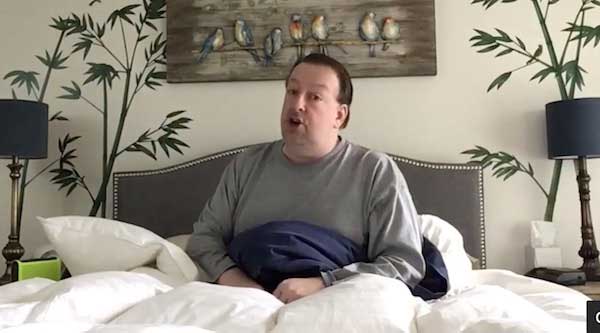
Dean Bellack

These mailings detail the founding of the Community Chest in 1964, which eventually evolved into United Way of Orleans County. They describe current activities and how Bellack reached out to foundations in Buffalo and Rochester, which resulted in an initial awarding of $144,000 for community agencies.

Subsequent multi-year grant requests were funded, resulting in a $450,000 grant to hire grant writer Matt Holland and fundraiser/event planner Nyla Gaylord, and $364,000 to promote digital literacy in collaboration with Cornell Cooperative Extension. As a result of funding coming to Orleans County through the CARES Act, United Way is currently developing a program to deploy free internet equipment to more than 900 low- to moderate-income households. These are all programs and services that would not have come to Orleans County without the United Way.

The 100 letters introduce the United Way Impact Report to community leaders, asking them to read it, absorb it and truly think what Orleans County would be like with no United Way.

If there were no United Way, Bellack said programs would be forced to cut back on services; some organizations would go out of business; Orleans County would no longer have a free grant writer or digital literacy initiative; our United Way would no longer be an advocate fighting to bring in funding and services that will help improve the health, education and financial stability of every person in the community; United Way would not be there to serve as a trusted conduit for funding from major foundations; Orleans County would no longer have a central point of contact and vehicle for fostering community collaboration to address pressing needs.

The pandemic taught that the United Way plays a critical role in bringing resources to the community and that there are resources and partnerships outside of the county that are willing to help, Bellack said.

Recipients of the 1,000 newsletters will also read about the different ways to give to United Way. Bellack shared a question asked by board member and retired judge Jim Punch.

Why should I give to the United Way?

Bellack’s answer was “Because United Way is all-encompassing. Every penny donated to United Way stays in Orleans County unless the donor designates otherwise. You get the personal satisfaction of knowing you are giving to the only charity which impacts the whole community by funding a network of partner agencies. Local funding produces results. Nobody does it better or more cost effectively.”

He is referring to the fact that based on last year’s income, including grants, administrative costs of United Way of Orleans County were less than seven percent. That means 93 cents of every $1 donated to the agency went to direct services.

“We have five staff members at the cost of one and a half,” he said.

Bellack volunteers his time, while event coordinator/fundraiser Nyla Gaylord and grant writer Matt Holland are paid from a grant, as is digital divide coordinator Katie Leach at Cornell Cooperative Extension. The other position is part-time bookkeeper Dawn Winkler. To further cut costs, United Way has moved its office into space next to Dunkin’ Donuts in Medina, donated by local car dealer George Bidleman.

The 1,000 newsletters share how several community leaders have attested to the help United Way has given them.

“As in all grant writing, it takes patience and perseverance,” said Kathie Valley with P.Raising Kids, a child care center in Medina. “United Way, Dean, Nyla and Matt have stayed by our side in this long journey and blessed us profoundly.”

“Matt Holland has been a huge asset to us on the initial phases of a community project,” said Marc Shurtz, CEO of Orleans Community Health. “His involvement further shows the strong relationship Orleans Community Health has with United Way.”

Lynne Johnson, chairwoman of the Orleans County Legislature, said across this county, United Way is stepping up and helping bridge the digital divide.

“They are our trusted partners on the ground, focusing on education, income and health,” she said. “We are stronger together.”

Roosevelt Bouie, a Kendall resident and Hall of Fame basketball player for Syracuse University, said he is excited to work with the United Way team to see his dream of rebuilding the basketball courts at Bullard Park in Albion.

“With their help, we are pulling together many different people and resources so that it is now a community project,” Bouie said.

United Way sets $250,000 fundraising goal for annual campaign

Bellack stressed how important it is to be effective in our fundraising and to have widespread community support. United Way’s campaign goal for 2022 is $250,000.

“We can’t have the impact we need to have until we have resources comparable to urban United Ways,” Bellack said.

He referenced United Way of Erie County and Buffalo, whose per capita revenue is $24.12, compared to Orleans County, where it is $3.62. Clearly, he said the United Way of Orleans County is underfunded.

The United Way board is playing an active role in developing new community-wide fundraising events. In September, the Orleans County Legislature has announced it will proclaim September as “United Way Month” in Orleans County.

Last year, Mark’s Pizzeria in Medina designated a week in September in which they donated $2.00 for every pizza sold to United Way. That resulted in a check for $2,890, and Bellack will be asking other businesses to follow suit during United Way Month. Following United Way Month, United Way will sponsor its annual gala in October.

Another way United Way annually connects with the community is the Day of Caring, scheduled this year on April 22.

“It is the largest day of service in Orleans County and the perfect opportunity to help a non-profit in need of a few extra hands,” Bellack said.

Day of Caring promotes the spirit of volunteerism, increases awareness of local human service organizations, and demonstrates how people working together for the common good can accomplish great things.

A major fundraiser for United Way is the annual golf outing, this year taking place June 3 at Shelridge Country Club in Medina.

Bellack’s final project is the establishment of an endowment fund that will generate revenue to support United Way operations and new programs in perpetuity. Local contributions to the endowment are critical to helping leverage major donations from area foundations, Bellack said. He said a major foundation, when asked to contribute $1 million to the United Way endowment did not say “no.”

“They said, ‘Go back to Orleans County and see what funds you can raise there, and then come back to us,’” Bellack said. “Clearly, community support is critical to the long-term survival of United Way and the key to leveraging financial support from outside the county.”

There are many ways to make a legacy gift to United Way. It can be as simple as designating United Way as beneficiary to an investment, insurance policy or bank account. Bellack urges everyone to remembering United Way in their will or to consider establishing a named fund to honor a loved one or support a specific service area. Major donors are encouraged to offer a challenge grant to a foundation.

“Together we can make a lasting difference in our community that will endure beyond our lifetime,” Bellack said. “This is what motivates me to work so hard to ensure the long-term sustainability of United Way.”

Bellack feels a great sense of urgency in establishing the endowment, he said.

“The generation I come from – the Baby Boomers – is retiring and many want to leave an enduring legacy to the community,” he said. “United Way is how we can all make a lasting difference in our community.”

Convenient ways to donate to United Way of Orleans County, besides a credit card, include Cash App, Text to Give and Venmo. Those who wish to write a check may make it payable to United Way of Orleans County, P.O. Box 188, Medina, NY, 14103

“The United Way is now playing a major role as a change agent in Orleans County,” Bellack said. “Our work is advancing ‘change thinking’ – a new understanding of what is possible if we work together. We are uniting non-profit organizations, county government, local business, and service groups around the shared goal of making Orleans County a great place to live, work and learn for all residents.

Bellack’s invitation is, “Join us.”

Local United Way makes fund-raising appeal to help Ukrainian people

By Ginny Kropf, correspondent Posted 14 March 2022 at 8:22 am

In the middle of fundraising efforts to benefit its 2022 campaign and promote new projects, United Way of Orleans County is shifting some of its focus to helping the war-stricken people of Ukraine.

“Today we do recognize our concern is broader than our county’s borders,” said Dean Bellack, director of United Way of Orleans County.

Bellack has announced United Way Worldwide, of which the local United Way is part of, has launched a global relief fund for the people of Ukraine. The money raised will provide refugees with food, shelter, medicine, transportation, hygiene kits and critical childcare supplies for infants, such as formula and diapers.

Some two million people have fled Ukraine, and experts predict four to seven million will be forced to leave before the war is over. United Way is stepping up to support those displaced by the violence by providing life-saving relief.

Through the end of May, anyone who makes a donation to United Way of Orleans County, can designate to have 20 percent of every dollar sent to the United Way Worldwide Ukrainian Relief Fund. That fund is guaranteeing 95 percent of money donated will go toward helping the refugees.

Bellack also stressed while United Way has always guaranteed that 100 percent of donations stay in Orleans County, it is proper for the agency to recognize the needs of the Ukrainian people at this time. He noted the remaining 80 percent of donations during this time period will still stay in Orleans County.

“This is the right thing to do,” Bellack said. “This is a way to make one gift count twice.”

There are several ways to give to the United Way. Donors can go to the United Way website or on their internet device and choose Cash App, Venmo or Text to Give. They still have the option to use a credit card or send a check to United Way of Orleans County, P.O. Box 188, Medina.

Community college costs drop nearly $400K for county in 2021

By Tom Rivers, Editor Posted 11 March 2022 at 3:20 pm

Orleans won’t ask towns to chip in after expenses fall below $2,050,000

Photo by Tom Rivers: Genesee Community College is shown at the main campus in Batavia in this photo from Feb. 13, 2018.

ALBION – The Orleans County Legislature put towns on notice for 2021 that the county wouldn’t keep absorbing the full costs for climbing community college charge-backs.

The Legislature in October 2020 voted to cap the county’s share of the charge-backs to $2,050,000. Anything beyond that would be passed to the towns in the county.

The county started the new policy in 2021 but the towns won’t be getting a bill from the county to help with community college expenses. That’s because the cost dropped nearly$400,000.

In 2020, the county was billed $2,214,515 for charge-backs to the home county of a community college student.

In 2021, the cost decreased to $1,839,535, a drop of $374,980.

Community colleges were supposed to be funded with the state paying a third, the student paying a third, and the local town/county covering the other third.

But the state has pulled back on its contribution, putting more pressure on students and local municipalities, Lynne Johnson, the County Legislature chairwoman, said when the county capped its contribution at $2,050,000 on Oct. 27, 2020.

The charge-backs to the county topped $2,050,000 in other recent years. It was $2,086,538 in 2018 and $2,188,769 in 2019, County Treasurer Kim DeFrank said.

She said there was a decline in community college enrollment by county residents last year, resulting in less expense to the county.

If the cost goes over $2,050,000 in 2022, the town share will be based on credit hours of residents in those towns.

Most community college students from Orleans go to Genesee Community College. But Orleans County has paid towards local students who attend other community colleges in the state, and some are far more costly than GCC, including the Fashion Institute of Technology in New York City.

Safe Harbor program Lilypad plans workshops on Tuesdays from March 22 to April 26

By Tom Rivers, Editor Posted 9 March 2022 at 2:08 pm

ALBION – A series of six workshops will start on Tuesdays beginning March 22 with a goal of instilling positive life skills to promote healthy relationships in a safe environment.

It’s part of a program called Lilypad being offered by the Orleans County Department of Social Services.

Lilypad is designed to reach children and older teens (12 to 18) who have been trafficked, sexually exploited, or who are at risk of victimization and to meet identified service needs of these youth, said Cyndi Stumer, deputy social services commissioner for the county.

Each week there will be a different presenter to educate adolescents and parents on sex trafficking and sexual exploitation.

DSS encourages anyone with an adolescent in the county to sign their teen up and encourage them to share with their friends. All adolescents must have a permission slip on file to attend. Anyone interested should contact Sharon Nenni at 585-589-3136 or sharon.nenni@orleanscountyny.gov for a required permission slip.

The workshops will be at Hoag Library, 134 S. Main St. in Albion from 4 to 6 p.m. on March 22, March 29, April 5, April 12, April 19 and April 26.

Warning: Home assessments likely to jump with real estate boom

By Tom Rivers, Editor Posted 25 February 2022 at 1:27 pm

CARLTON – The real estate boom in Orleans, with median sale prices up 16.7 percent in 2021 from the previous year and 25.8 percent in two years, will likely lead to much higher property assessments for homeowners as part of a re-valuation this year.

That was the message from Dawn Allen, the Orleans County director of the Real Property Tax Services Department.

Allen has worked in the field for 30 years and has never seen real estate go so quickly, and often well above the asking price, as in the past two years. That includes properties in the village, where values had largely stagnated the past 20 years. But lately they have been selling fast and well above their assessed values.

“It is nothing to see a house assessed for $60,000 and go for $120,000, $130,000, even $140,000,” she said. “We’re getting above the asking price. People are outbidding each other.”

The median sale price in Orleans County is up 68.5 percent over four years – jumping from $81,000 in 2017 to $136,500 in 2021. Allen shared data from the Greater Rochester Association of Realtors.

Allen spoke on Tuesday to village, town and county officials during a meeting of the Orleans County Association of Municipalities at the Black North Inn. She told the officials they may get some pushback from property owners when the assessments go out from March through May, and show sizable increases.

If assessments jump significantly that doesn’t mean the total tax bills will see a big hike. The tax rates should then go down because there is larger tax base.

The municipalities still need to push to stay under a 2 percent tax cap and that is determined by the size of the tax levy, what the town, village, county or school district collects in taxes. A much larger tax base should result in lower tax rates. Ultimately most property owners should only see slight increases in their tax bills if their municipalities stay under the tax cap.

But Allen still warned the local officials that property owners may be shocked when they see their assessments with much higher values.

Seven of the 10 towns in the county will be doing property re-vals for the first time in three years. Barre does a re-val every year. Murray and Yates won’t be doing one this year but equalization rates will help adjust for the higher real estate values in those towns, Allen said.

Allen attributed the higher values in the county to a lack of housing inventory. When houses become available, they are in demand, especially with more people working from home due to the Covid-19 pandemic.

While housing values are way up, Allen said commercial real estate is holding steady with a small increase in value.

The Greater Rochester Association of Realtors shows big increases in real estate sales through its 12-county region. The median sale price in 2021 was up by the following in each county: Monroe, 11.8%; Ontario, 10.8%; Livingston, 9.6%; Wayne, 15.8%; Genesee, 15.4%; Orleans, 16.7%; Wyoming, 14.2%; Yates, 22.3%; Allegany, 11.9%; Steuben, 18.8%; Seneca, 6.2%; and Cayuga, 17.1%.

The association said a strong seller’s market in 2020 continued and even was stronger in 2021.

“Fervent buyer demand, driven by pandemic-induced changes to housing needs and preferences, reached extraordinary levels in 2021, the association stated in an annual report.

The organization said inventory of available homes was down 23.3 percent last year, which helped push up prices.

Weather Service honors Orleans for being ‘Storm Ready’

Photos by Tom Rivers: Dale Banker, center, the Orleans County emergency management coordinator, receives a StormReady designation from Judy Levan, Meteorologist in Charge of the Buffalo Branch of the National Weather Service, and Michael J. Fries, Warming Coordination Meteorologist for the NWS in Buffalo. The award was presented during Wednesday’s Orleans County Legislature meeting.

By Tom Rivers, Editor Posted 25 February 2022 at 9:09 am

ALBION – The National Weather Service has recognized Orleans Couty with a “StormReady” designation for the county’s hazardous weather plan and other protocols to inform the public of dangerous weather conditions.

Judy Levan, Meteorologist in Charge of the Buffalo Branch of the National Weather Service, presented a certificate of recognition to Dale Banker, the county’s emergency management coordinator. She praised Banker and his staff “for the tremendous effort he has exhibited to accomplish the goals set forth in this program.”

To be recognized as a Storm Ready county, a community must meet the following requirements:

  • Establish a 24-hour warning point and emergency operations center
  • Have multiple ways to receive severe weather forecasts and warnings and to alert the public
  • Create a system that monitors local weather conditions
  • Promote the importance of public readiness through community seminars and education
  • Develop a formal hazardous weather plan, which includes training severe weather spotters and holding emergency exercises

Judy Levan, Meteorologist in Charge of the Buffalo Branch of the National Weather Service, tells county legislators the county’s Emergency Management Office has a solid plan in place in case of weather emergencies.

Orleans County not only meets the criteria for the StormReady designation, “but has substantially exceeded them in many categories,” Levan said.

The StormReady program is designed to strengthen the relationship between emergency managers at the county level and the National Weather Service. Levan said the program makes sure all aspects of communication, warning reception and response are as efficient as possible and backups are in place in case one or more systems fail.

Banker said the county and NWS have provided weather radios to the five school districts in the county, as well as two for county officials to make sure weather alerts are received.

Orleans achieved the StormReady designation on Nov. 19 and it’s good for four years until Nov. 19, 2025. The Weather Service encourages the county to renew the recognition.

The county can use the StormReady logo in official letterheads, brochures and other documents.

If the county participates in the National Flood Insurance Program it may now be eligible for 25 additional Flood Insurance Service Organization community rating system points.

“We do not look forward to another natural disaster,” Levan said. “However, if and when another one does occur, you can be confident that officials in the county have improved their communication and safety skills needed to save lives and property.”

Orleans opposes legislation that would change makeup of OTB board

By Tom Rivers, Editor Posted 24 February 2022 at 3:28 pm

Each of 15 counties and cities of Rochester and Buffalo currently has own rep but that would change under proposal

File photo by Tom Rivers – Batavia Downs on Park Road in Batavia was a big factor in WROTB distributing nearly $5 million in earnings to its member municipalities in 2021.

ALBION – The Orleans County Legislature is opposing legislation in the State Senate that would change the makeup of the 17-member board of directors for Western Regional Off-Track Betting Corp.

Currently, each of the 15 counties plus the cities of Rochester and Buffalo have a member of the board and their votes carry the same weight, regardless of the population of their county or city.

State Sen. Tim Kennedy, a Democrat from Buffalo, has proposed making the board seats be based on population. Erie County, the most populous of the 15 counties, would get four seats on the board. Orleans, Wyoming and Monroe would share three directors, under Kennedy’s proposal.

Chautauqua, Cayuga, Genesee, Livingston, Schuyler and Seneca would share one member, with Niagara getting its own director. There would be one director for the counties of Oswego, Cattaraugus and Wayne; one each for the cities of Buffalo and Rochester; and a member to be appointed by the governor, another by the State Senate leader and one by the Assembly speaker.

Kennedy has also proposed capping the allowance of promotional items for certain members of the corporation to not receive a gift of any kind valued at an amount greater than $15. Kennedy also wants to prohibit take-home vehicles for OTB staff.

“Through this legislation, we’re holding members accountable, revising outdated policy, and creating fairer representation on the OTB board moving forward,” Kennedy said in a press release last month. “Taxpayers deserve better, and we intend to ensure they receive that.”

Orleans County is currently represented on the board by Ed Morgan, the former County Republican Party chairman who started as a county legislator last month. Morgan abstained from the Legislature’s vote on Wednesday when it approved a resolution in opposition to changing the structure of the board.

“This legislation will in fact have the opposite effect of the stated intention in the bill, as it will decimate the balanced representation formula determined previously by both the state legislature and governor as equitable and impartial, with a clear and explicit intent of providing each municipality that comprises the corporation an equal voice in WROTB matters,” the resolution states.

WROTB has distributed $236 million to the 15 counties and cities of Rochester and Buffalo since WROTB formed in 1974 with Orleans receiving $2.5 million.

The organization has shifted its operations away from OTB parlors to the gaming center in Batavia. The organization now only runs 11 OTB parlors, and 27 E-Z Bets at other businesses such as bowling alleys and bars.

Batavia Downs – the race track, gaming center, restaurant and hotel – is WROTB’s big money maker. It is the main reason WROTB was able to distribute $4,906,280 in earnings from 2021, the largest earnings in the organization’s history. The total shared from WROTB was $5,793,184 with surcharges on betting at horse racing boosted the number in addition to the earnings.

“The performance and accomplishments of the current WROTB Board and leadership cannot be discounted when considering this drastic and overreaching legislation,” the resolution states, and lists achievements including: the acquisition of an 84-room hotel on the grounds of Batavia Downs and countless fundraising events for charitable organizations.

The current board has a Republican majority and Kennedy’s proposal would likely tip it to Democratic Party favor.

The Orleans County Legislature urged the State Senate and Gov. Kathy Hochul to not support Kennedy’s proposal “as it will cause irreparable harm to Orleans County, its interests in WROTB, the economic interests of Orleans County, and the taxpayers of this county.”

Task force meets and starts discussion on solving EMS challenges in Orleans

Photos by Tom Rivers: Matt Jackson (left), Medina fire chief, speaks during the first meeting last week for a task force looking for solutions to EMS challenges in Orleans County. Medina has the lone paid fire department in the county and provides ambulance services to the western end of the county, as well as mutual aid outside its core service area. Jackson said Medina loses some staff members to higher-paying positions in suburban departments. He is joined up front by Justin Niederhofer, the EMS coordinator in the county and deputy emergency management coordinator; and Dale Banker, the emergency management coordinator.

By Tom Rivers, Editor Posted 23 February 2022 at 3:10 pm

ALBION – A task force of about 30 local officials, fire department representatives and ambulance service providers met for the first time last week to discuss challenges to the local EMS system which often faces drop calls, slower response times, financial challenges and a shortage of manpower.

“We’re coming into this with an open mind,” Justin Niederhofer, the EMS coordinator for the county, told about 30 local officials, fire department representatives and ambulance providers during a meeting last week at the Orleans County legislative chambers. “We don’t know what the solution is.”

Orleans County Legislator Skip Draper, head of the county’s Public Safety Committee, convened the task force and urged the group to push for solutions.

He urged the group to put the past behind them, especially with dropped calls, and forge solutions for the future. A dropped call is a request for service but the agency can’t get there and the call is sent to another responding agency.

The task force members will need to decide what is an acceptable response time for an ambulance in their community, and work towards that goal. Niederhofer said it is “unrealistic to think 100 percent of the calls 100 percent of time.”

There are four ambulance providers serving the county – Medina Fire Department, COVA, Monroe Ambulance and the Kendall Fire Department – and all operate differently.

All four have seen their response times increase from 2018 to 2021.

  • COVA’s average response increased from 6:52 for 2,010 calls in 2018 to 8:10 for 2,214 calls in 2021. Dropped calls increased from 53 to 125 during that time period.
  • Kendall averaged a 9:19 response for 113 calls in 2018. That was up to 10:47 for 201 calls last year. Dropped calls up from 16 to 71 during those years.
  • Medina had a 6:34 average response time for 2,333 EMS calls in 2018, which increased to 7:22 for 2,311 calls in 2021. Dropped calls up from 7 in 2018 to 21 last year.
  • Monroe Ambulance had a 12:13 average response time for 726 calls in Orleans County in 2018. That was up to 16:09 for 950 calls in 2021. Monroe’s drop calls in Orleans increased from 19 in 2018 to 79 in 2021.

Medina Fire Department serves the west end of the county – Shelby, Ridgeway, Medina, Lyndonville and Yates – and provides the service with the only paid career fire department in the county.

Dale Banker, the county’s emergency management coordinator, said more calls are going to mutual aid, which further strains the system and often results in a slower response.

The department has 21 paid firefighters who respond to fire and EMS calls. Fire Chief Matt Jackson said the department loses valued members to suburban departments that pay about $20,000 more annually.

Medina took over as the primary ambulance provider in 2007 for the western end of Orleans County. Rural Metro had the contract before that.

Medina responded to 2,616 total calls in 2021 with two-thirds of those EMS calls. Medina FD is increasingly being asked to provide mutual aid outside its primary service area, going into central Orleans, eastern Niagara and even Genesee County as many areas have manpower shortages.

Jackson said Medina will only take those calls if it has another available crew to respond to an emergency in Medina and western Orleans.

The Kendall Fire Department is the last volunteer fire department running an ambulance in Orleans County. Clarendon, Holley, Carlton, Albion and Shelby have all disbanded their ambulances.

Kendall has seven emergency medical technicians right now, with another in training, said Shelby Willis, EMS captain for the Kendall Fire Department.

“We have every intention of keeping up with our ambulance but staffing is the main problem right now,” Willis said.

Shelby Willis, EMS captain for the Kendall Fire Department, said the volunteer group isn’t able to bill for its services and relies on fundraisers.

The training requirements to be an EMT and paramedic have gone up, and ambulances have to drive farther, often into Rochester and Buffalo and then wait longer for hospitals to accept the patients. The whole process makes it much more demanding of time from the volunteer staff.

“We’re volunteers and we can’t make every call,” Willis said. “The transports are farther. Sometimes it takes 2 to 3 hours. We’re giving up a lot of time.”

Kendall is talking with the Murray Fire District about crew sharing, with the possibility of having an ambulance stationed in Murray with Murray firefighters helping to staff it.

Kendall, because it is a volunteer ambulance, can’t bill for its services. It relies on donations and fundraisers.

Monroe Ambulance responds to about 35,000 calls in Monroe County, eastern Orleans and Wyoming County.

John Williams is Deputy Chief at Monroe Ambulance. Hospitals are pulling many paramedics away with higher pay and an easier workload, he said.

The company is down 37 percent of its paramedics in the past two years. Many have left Monroe to work in hospitals where they are paid $35 an hour to do blood draws, said John Williams, deputy chief at Monroe Ambulance.

Monroe has launched an in-house EMT academy and has stepped up recruiting efforts at local high schools. It also is taking with Monroe Community College about a program to train paramedics.

Monroe Ambulance also is offering signing bonuses and boosting pay. Right now the average wage is $17.52 an hour for an EMT and about $25 for a paramedic.

Monroe has been hurt by people not paying their ambulance bills, and what is often a two-hour wait at hospitals to drop off a patient. That ties up the crew and leads to dropped calls for other emergencies, Williams said.

Monroe doesn’t keep an ambulance stationed in Orleans.

“The economics are not feasible for us to dedicate an ambulance to Orleans County,” he said.

Central Orleans Volunteer Ambulance is a non-profit organization based in Albion. The organization has struggled financially due to low Medicaid/Medicare reimbursement rates, patients who keep their insurance checks instead of directing them to COVA, and a lack of any tax support, said Wade Schwab, a paramedic and past president for COVA.

“It’s been a heckuva struggle,” Schwab said. “The biggest challenge is financial.”

Wade Schwab, a paramedic at COVA and past president, said the organization faces financial challenges. He advocates for assessing each household in central Orleans – Barre, Albion, Gaines and Carlton – $25 a year to keep COVA viable.

He said there is about $90,000 owed COVA in 2021 from unpaid bills. Turning unpaid bills into collections often “gets you nowhere.”

The longer wait times at hospitals also occupy an ambulance crew for more time, making them unavailable for other calls.

COVA has meet with local government leaders from the four central Orleans towns of Barre, Albion, Gaines and Carlton as well as the Village of Albion to dicuss an ambulance taxing district. None have moved to help COVA with the financial challenges, Schwab said.

COVA has suggested a $25 fee for each of the 7,793 households in central Orleans, which would raise $193,675.

With that funding, COVA could increase staff and put more ambulances in service, Schwab said.

Right now, state law limits an ambulance taxing district to a single town. COVA would like a multi-town taxing district for the four towns, or each town could perhaps create their own taxing district for an ambulance service. Schwab said COVA officials have met with state legislators to help with the issue, as well as to have insurance checks sent directly to COVA, but haven’t had much followup.

Schwab said the EMS staff should be paid more, given the training and responsibility. Right now, he said, Wegmans and Tim Hortons can offer similar pay for far less stress.

Some counties facing an EMS crisis have created county crews to supplement the local ambulance providers. Niederhofer and Dale Banker, the emergency management coordinator, said they would bring in officials from other counties who have tried that to hear how that has been working.

Schwab interjected that the county would be better served to assist its existing ambulance providers rather than create a new entity.

He said the county already has a great foundation for responding to EMS calls.

Justin Niederhofer, the county’s EMS coordinator and deputy emergency management coordinator, said the local EMS system has experienced more dropped calls and slower response times in the past year.

“We have hard-working professionals in the Medina Fire Department, Monroe Ambulance, COVA and Kendall, we just need a little help, Schwab said.

County Legislator Skip Draper convened the meeting as head of the County’s Public Safety Committee. He hears throughout the state that emergency services are collapsing.

The task force needs to offer solutions for the immediate problem and also look to future challenges. He said Medina FD is currently considered a model, but even that department is being in many directions and its future success is not a guarantee.

“Even though it’s working in some areas it’s still fragile,” Draper said about the EMS system.

The task force will next meet March 16 and will return with a survey about acceptable response times for different severities of emergency, whether advanced life support with paramedic level of care or basic life support at EMT level of care.

Jack Welch, the county chief administrative officer, said the local town and village leaders need to be part of solving the problem.

“We need buy-in from the municipalities,” Welch said. “What is acceptable service? We need to agree what the problem is.”

County Legislature to oppose lowering 60-hour overtime threshold in agriculture

By Tom Rivers, Editor Posted 22 February 2022 at 9:50 pm

‘It would be devastating if it goes through (and is approved by state)’ – Legislator Bill Eick, retired dairy farmer

ALBION – The Orleans County Legislature plans to go on the record Wednesday, opposing a push to lower the overtime threshold in agriculture from 60 hours a week to 40.

That change would be particularly difficult for farmers in Orleans County who need workers for intensive hand labor with fruit, vegetable and dairy operations.

Local farms would likely have to curtail overtime to keep labor costs down. That would result in smaller paychecks for workers. Many of the workers would likely go to other states where their work weeks wouldn’t stop at 40 hours, said County Legislator Bill Eick of Shelby, who is a retired dairy farmer.

“These workers will go somewhere else where they can get the hours they want to work,” Eick said this evening during a meeting of Orleans county, village and town officials at the Black North Inn.

A three-person Farm Labor Wage Board voted on Jan. 28  to gradually reduce the overtime threshold in agriculture from 60 hours a week to 40 hours. The reduction in the OT threshold would be phased in from Jan. 1, 2024 to Jan. 1, 2032.

Many on the agriculture community, including New York Farm Bureau, are pleading with Gov. Kathy Hochul to reject the Wage Board’s decision.

“It would be devastating if it goes through,” Eick said.

Lyndonville Mayor John Belson also said he is concerned for wineries, which are growing in the region since the Niagara Wine Trail was established about 20 years ago. Three from Orleans are on that trail.

“It will crush the wineries,” Belson said.

Eick said many other counties around the state have officially opposed lowering the overtime threshold in agriculture. Genesee County voted last week on the measure, stating it was “emphatically” opposed to lowering the threshold.

The Orleans County Legislature, in a draft of the resolution, say farmers face many problems outside their control including climate change, land management policies, foreign market competition, livestock and crop diseases, natural disasters and cost increases of feed, fuel, equipment and labor costs.

“Farmers cannot pass on these increased costs as they operate in a commodities market where prices are set according to global demand,” the resolution states. “Many farmers in agriculture rely on migratory workers during the short growing season in Western New York, as they have a limited window to get the work done.”

County leaders urge Leadership Orleans class to get involved in local government

By Tom Rivers, Editor Posted 21 February 2022 at 9:32 am

‘Our county is worth saving and we’ll need people like you to make it happen.’

Photos by Tom Rivers: Ken DeRoller, a former Orleans County legislator, speaks to the Leadership Orleans class on Thursday in the Orleans County legislative chambers. DeRoller graduated with the 2020 class and was named the group’s alumnus of the year in 2021.

ALBION – The 26 members of the new class of Leadership Orleans were encouraged to get involved in local government by serving on Planning and Zoning Boards, and then looking to be elected officials at the town, village and county levels.

“We need you to run for office,” Lynne Johnson, Orleans County Legislature chairwoman, told the Leadership Orleans class last week. “We need you on village, town and county offices.”

Johnson spoke to the leadership Orleans class last week. She has been as county legislator for 14 years, and the leader of the Legislature for more than four years.

Orleans County Legislature Chair Lynne Johnson and Lyndonville Mayor John Belson discussed their roles as local government leaders. State mandates drive many of the local tax dollars, they said.

She was a member of the Lyndonville Board of Education when she was asked by former State Assemblyman Charlie Nesbitt to pursue the Legislature with the retirement of former Legislator Jack Beedon.

Johnson spoke to the Leadership Orleans class last Thursday during a focus on Legislative Affairs. Several local officials spoke with the class, and the group toured the Orleans County Office Building, and then broke up into smaller groups and visited the Orleans County Public Safety Building, Village of Albion Sewer Treatment Plant, Village of Albion Water Treatment Plant, Orleans County Department of Public Works, Orleans County Emergency Management Office, and Orleans County Clerk’s Building, Real Property Tax Services, and Treasurer’s Office.

Ken DeRoller, a retired county legislator, gave the opening presentation. DeRoller graduated with the 2020 Leadership Orleans class.

He talked about the importance of “being in the room” with other officials and decision makers, and advocating for the county.

He said connecting with other officials at the local, state and federal levels has paid off for the county in recent years with seven canal bridges overhauled, more of the Lake Ontario State Parkway getting repaved, $17 million in projects along the Lake Ontario shoreline including rebuilt roads, erosion protection, a new boat launch, an expanded Yates town park and more public sewers in Kendall and Hamlin.

DeRoller said the officials also need to do their homework and lay the foundation for projects. He is excited about the possibilities with new waterfront plans along the lakeshore and also the Erie Canal.

Barre Town Supervisor Sean Pogue said the town supervisor position is demanding, with many phone calls during the day and frequent meetings during the month.

“Participate, be a little aggressive and get in the room,” DeRoller told the class. “Our county is worth saving and we’ll need people like you to make it happen.”

DeRoller, during his eight years as a legislator, also said he was proud of the county’s success in collecting more recyclables and electronic waste, and collecting more unused medications through drug take-back days. He also cited the transformation of the long vacant former Holley High School into the village offices and 41 senior apartments, a $17 million project.

DeRoller said he is concerned for the county as the population declines, especially with a student enrollment that has been cut in half in the past 20 years.

“How do we entice the next generation to stay in Orleans County, to live, work and play here?” DeRoller asked.

He said more housing options are needed for residents and families. He also wants to see the waterfront – Lake Ontario and Erie Canal – better utilized for business and recreation.

Besides DeRoller and Johnson, other local government panelists included Sean Pogue, Barre town supervisor; John Belson, Lyndonville mayor (and former Yates town supervisor); John Papponetti, Orleans County commissioner of public works;  Jack Welch, county chief administrative officer; Joe Cardone, district attorney, and Charlie Nesbitt, retired state assemblyman.

Belson, the Lyndonville mayor, shared with the Leadership Orleans class that running a local government is challenging, especially when public infrastructure needs to be fixed or replaced. A repair to the Lyndonville dam topped $100,000. The village is facing a $1 million upgrade to its sewer plant in response to mandate from the state. Lyndonville has about 800 residents – not many people to spread out the costs.

“The biggest struggles are how to buy a new pickup truck, keep the residents happy and keep up the quality of life,” Belson said.

Sean Pogue said the role of Barre town supervisor has been very time consuming in recent years with two major energy projects – one with wind turbines and the other with solar panels.

The projects will drastically reduce the town tax burden for property owners, possibly wiping out the town tax bill, Pogue said.

Much of the review process and approvals are out of the town’s control, with a state siting board determining the final say in the project, he said.

The local officials can’t let a big project totally consume their efforts. Pogue said there are still budgets to put together and other initiatives in town. Barre, for example, is talking about a new water tower in the Pine Hill area to boost supply and water pressure in that part of the town.

Pogue said he networks with other local officials, delegates rather than micro-manages, and tries to pump up the town employees with praise.

“This is a part-time job but really it’s full-time,” he said. “It’s a lot of time on the phone, in meetings and the office.”

The Leadership Orleans Class for 2022 is pictured in the stairwell at the Orleans County Office Building on Thursday. The class heard from local government leaders and toured local municipal operations.

The class includes:

  • Jennifer Ashbery, High School Principal, Albion Central School District
  • Miranda Bennett, Bookkeeper, Town of Shelby
  • Dawn Borchert, Tourism Director, County of Orleans
  • Gloria Brent, President/Owner, MDS Consultants
  • Gabe Bruning, Owner, Mountain Mule Ciderhouse
  • Christopher Cappetta, CFO, Garden Trends, Inc., DBA Harris Seeds
  • Katrina Chaffee, Director of Community Services, Community Action of Orleans & Genesee
  • Michele Chatfield, Quality Supervisor, Baxter Healthcare
  • Faye Conley, Event Manager, Maison Albion
  • Jim Doyle, Guitar & Mandolin Teacher, Jim’s Guitar Studio
  • Tim Elliott, Axe Manager, 810 Meadworks
  • Mindy Frasier, Operations Manager, Claims Recovery Financial Services (CRFS)
  • Becki Gibson, Senior Client Relations Manager, Claims Recovery Financial Services (CRFS)
  • Nicole Helsdon, Practice Manager, Orleans Community Health
  • Jennifer Hill-Young, President, Art Hill Excavating
  • Matt Holland, Grant Writer, United Way of Orleans County
  • Susan Howard, First District Attorney, County of Orleans
  • Benjamin Jones, Assistant Winemaker, Leonard Oakes Estate Winery
  • Katie Leach, Digital Literacy Program Coordinator, Orleans County Cornell Cooperative Extension
  • Patricia Neuman, Administrative Assistant, Millennium Roads, LLC
  • Jerry Pasnik, S.E. Manager, Arc GLOW
  • Marlene Seielstad, Associate Broker, Snell Realtors
  • Cyndi Stumer, Deputy Commissioner of Social Services, County of Orleans
  • Wayne Wadhams, Board Member, Orleans/Niagara BOCES and Albion Central School
  • Dave Warren, Board Member, Kendall Central School District
  • Natasha Wasuck, Owner, The Lockstone

Nominations sought to recognize outstanding youth

By Tom Rivers, Editor Posted 18 February 2022 at 3:22 pm

2 adults also will be honored for service to children

The Orleans County Youth Board wants to honor local youths for their community service and adults for their work on behalf of children in Orleans County.

The Youth Board for the past 40 years has recognized youth, usually about 20 each year for their outstanding community service or if they have taken on an extraordinary role in their family. The nominees must reside in Orleans County and be at least 14 years old and under 21.

Academic or athletic achievement will not be considered in the selection of award recipients.

In addition to the youth awards, at least two adults will be honored for their service to young people.

The Helen R. Brinsmaid Memorial Youth Worker Award recognizes a youth-serving professional whose work surpasses normal expectations. Last year’s winner was Vickie Scroger, the manager of food service at Holley Central School where she makes sure the students have delicious, balanced meals for breakfast, lunch and after-school snacks.

The Eileen Heye Adult Volunteer Recognition Award is given to an adult who provides service as a volunteer to Orleans County youth. Jason Requa of Kendall was the winner last year. He has been a youth coach and mentor.

Click here to be directed to the Orleans County Youth Bureau website where there are nomination forms. The nominations are due by April 1.

For information contact the Youth Bureau at 585-344-3960 or youthbureau@co.genesee.ny.us.

Orleans County sales tax revenue jumps $2.4 million in 2021

By Tom Rivers, Editor Posted 17 February 2022 at 6:17 pm

In past 2 years sales tax revenue up $4.1 million in Orleans or by 23.2 percent

Photo by Tom Rivers: Gas was selling for $3.77 a gallon for regular unleaded and $4.19 for diesel at the Crosby’s on Route 31 in Albion on Wednesday. Higher gas prices and inflationary increases helped push up sales tax revenues in the county in 2021, according to report from the state comptroller.

ALBION – Sales tax revenue took another big jump in 2021, increasing by $2.4 million or 12.7 percent from $19.4 million in 2020 to $21.8 million last year.

Over two years the sales tax revenue is up 23.2 percent from $17.7 million in 2019 to $21.8 in 2021.

This is the 4 percent local share of the sales tax and doesn’t include the state’s 4 percent share.

The local sales tax is mostly used to fund county government. The county shares $1,366,671 with the 10 towns and four villages. They have been frozen at that level since 2001.

State-wide the sales tax revenue for local governments increased 19.1 percent in 2021, after a year when they dropped by 10 percent due to restrictions in the Covid-19 pandemic, when many businesses were closed.

“The pandemic substantially changed consumer spending for goods and services and from brick and mortar to online,” State Comptroller Tom DiNapoli stated in a sales tax report. “While local sales tax collections were robust in 2021 as the economy rebounded from the pandemic, some of that growth is attributed to inflation, which was the highest it has been in over 30 years. If inflation remains high, consumer spending on many taxable goods could decrease due to the rising cost of basic staples.”

Here is a breakdown of the sales tax revenue changes from 2020 to 2021 among some nearby counties:

Finger Lakes counties

  • Orleans, up 12.7 percent from $19.4 million to $21.8 million
  • Genesee, up 19.9 percent from $41.4 million to $49.7 million
  • Livingston, up 16.2 percent from $36.3 million to $42.2 million
  • Monroe, up 17.4 percent from $511.2 million to $599.9 million
  • Ontario, up 21.5 percent from $86.0 million to $104.5 million
  • Seneca, up 20.2 percent from $25.7 million to $30.8 million
  • Wayne, up 13.1 percent from $52.4 million to $59.2 million
  • Wyoming, up 13.3 percent from $20.0 million to $22.7 million
  • Yates, up 22.8 percent from $14.7 million to $18.0 million

Western New York counties

  • Allegany, up 15.8 percent from $23.6 million to $27.3 million
  • Cattaraugus, up 16.9 percent from $41.0 million to $47.9 million
  • Chautauqua, up 18.4 percent from $72.2 million to $85.5 million
  • Erie, up 16.4 percent from $814.6 million to $948.1 million
  • Niagara, up 17.1 percent from $129.1 million to $151.2 million

FEMA makes emergency food and shelter funds available in Orleans County

By Ginny Kropf, correspondent Posted 9 February 2022 at 9:29 am

Photo by Ginny Kropf: Michelle Figueroa is chair of Orleans County’s Emergency Food and Shelter program board, funded by FEMA. She is shown here at her desk at Community Action, where she is the emergency services case worker.

ALBION – Organizations which provide emergency assistance to low-income or homeless individuals need to apply for funds from the Emergency Food and Shelter National Board Program by Feb. 25 or attend the board meeting at 10 a.m. that day at Community Action.

This program, funded by FEMA, provides money to each county in the nation, but comes with strict responsibilities and requirements, according to Michelle Figueroa, who has been chair of the local board which oversees this program since 2016.

EFSP was authorized by a federal act of 1987 to aid people with non-disaster related emergencies and can be used for a broad range of services. Monies allocated to each county are determined by the unemployment rate and the poverty level of that county. A county has to have at least 300 unemployed. This year, Orleans County will receive $58,916 Figueroa said.

To receive these funds, each county is required to convene a local board which must include the highest ranking individual in that county. In Orleans County, that is County Legislature Chairwoman Lynne Johnson. The rest of the board is made up of members from the American Red Cross, Catholic Charities USA, domestic violence support, Salvation Army and United Way. These members, in addition to Figueroa and Johnson, include Ronnie Barhite, Ann Vail, Dean Bellack, Nyla Gaylord, Kelly Kiebala, Margie Aldaco, Ken Turner, Skip Helfrich, Katrina Chaffee, Jayleen Carney, Bruce Schmidt and Carol Whalin. This committee meets semi-annually, as required.

The main purpose of this notice is to inform local organizations they must apply to the local board to receive funds, Figueroa said. Local organizations which applied in the past and/or have received funds from this program include the American Red Cross, Housing Development Council, Lyndonville-Yates Food Pantry, St. Vincent de Paul, United Way, Ministry of Concern, Community Action, Rural Opportunity, the Medina Emergency Food Pantry, Faith Bible Baptist Church, Meals on Wheels, Independent Living and Calvary Tabernacle Food Pantry.

“We have to let the community know there are funds available to provide food, temporary lodging, utility assistance, transportation costs, minor equipment repairs and efforts in an emergency to comply with building codes for people with disabilities,” Figueroa said.

Orleans County has been receiving funds from this Emergency Food and Shelter program since 2013. Figueroa again stresses that any faith-based organization which helps low income individuals or the homeless and wishes to apply for funding from the EFSP must contact her at 589-5605 by Feb. 25 so the board can compile and file its report to the Federal board by March 11. Anyone may also call her at that number for more information.

State approves $1 million in upgrades to railroad that passes through Orleans

Photo by Tom Rivers: A Genesee Valley Transportation train travels through Albion in this photo from March. Some Albion students were doing a cleanup day near the railroad tracks.

Staff Reports Posted 4 February 2022 at 1:14 pm

Gov. Kathy Hochul announced $76.4 million in funding for 38 projects to renew and modernize New York’s freight rail infrastructure, including $985,000 to the Falls Road Railroad Company.

Genesee Valley Transportation in Batavia owns Falls Road, a railroad that runs from Lockport to Brockport, and includes about 25 miles in Orleans County.

The funding for Falls Road will go toward safety and service reliability enhancements, including the replacement of the rail bridge deck over the Erie Canal and ties along the mainline.

The $76.4 million announced by Hochul’s office on Thursday are 100 percent state-funded grants. They complement the more than $100 million annually in private infrastructure investments made in New York by the freight rail industry.

Strategic investments in freight rail improvements are essential for maintaining and enhancing market access for manufacturing and agricultural businesses across the State, including Alcoa in the North Country Region, Corning in the Southern Tier Region, and Lackawanna Products in the Western New York Region, Hochul said.

“The infrastructure projects funded with these grants will further fuel our economic comeback with new construction jobs, while making regional economies more competitive in the long term and enhancing the movement of commodities in an environmentally sustainable way,” the governor said in a news release. “As New York leads the nation in its efforts to combat climate change, we will continue to prioritize funding for initiatives that promote economic growth in a responsible manner while mitigating threats to our environment.”

The Passenger and Freight Rail Assistance Program, administered by the New York State Department of Transportation, supports investments that enhance the safe movement of freight goods, improves service reliability to retain and grow manufacturing jobs, and supports economic development, especially upstate, Hochul said.