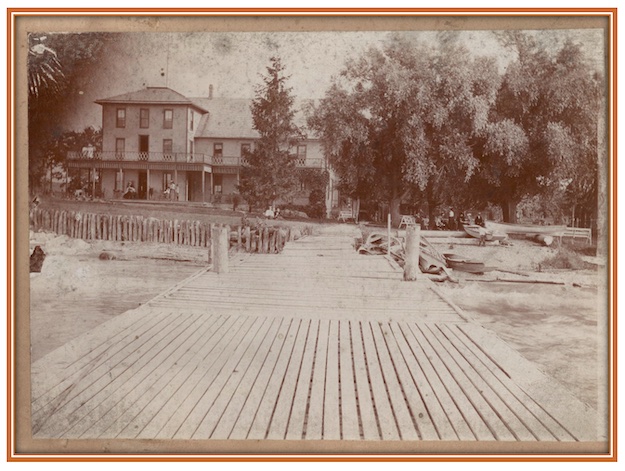
Troutburg’s popular Ontario House Hotel is shown in the late 1800s.
By Catherine Cooper, Orleans County Historian
Illuminating Orleans – Vol. 2, No. 23
KENDALL – The cooling breezes off Lake Ontario are refreshing on hot summer days. In the years after the Civil War, shoreline resorts sprang up to accommodate the “summer people.” Constricted by layers of clothing and lacking air conditioning, it is not surprising that city and suburban residents sought relief from the heat.
Troutburg, on the eastern end of the Town of Kendall, was a popular destination for several decades after the Civil War. Named for its once abundant trout supply, this hamlet which straddles the Orleans/Monroe County line was the site of a fishing station in the 1840s, with a pier for fishing boats. Trout and sturgeon were packed in ice and shipped to New York City. Hiram Redmond ran a fishing station and built a hotel for fishermen.
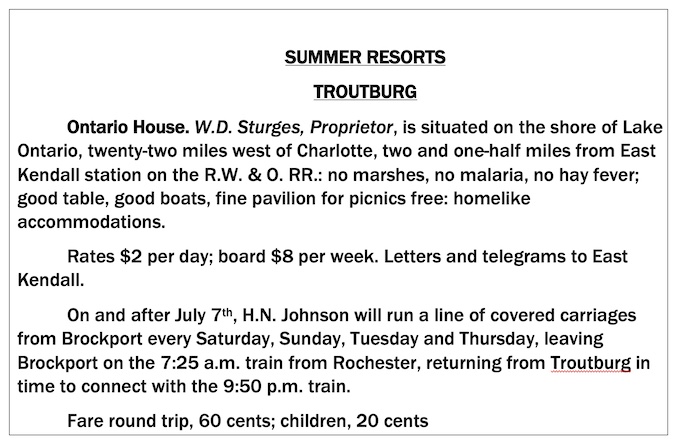
Mrs. Sara J. Lee developed the first resort area in Troutburg in the 1860s. Originally known as The Lee House or “Mrs. Lee’s Hotel” and later, the Ontario House, it comprised a large house, picnic grounds and a stable large enough for sixty horses. The following notice published in the Saturday, July 7, 1888, Rochester Democrat and Chronicle described its attractions:
The Ontario House was destroyed by fire in November 1890. A much larger hotel of the same name, which included a dance pavilion, was ready to welcome guests by June 1891.
Crowds flocked to the area. The Cady House on the east side of County Line Road also catered to guests. Summer cottages were built in the vicinity. The Democrat and Chronicle of August 13, 1898, reported that the season at Troutburg was unusually lively. All the hotels and a score of the cottages were occupied, and the population had swelled to 2,000.
Troutburg guests were hearty eaters. In September 1895, members of the Ontario Gun Club attended a clam bake at the Ontario House, following a day of contests. Though the crowd was smaller than anticipated, they nevertheless consumed ten bushels of clams, ten bushels of corn, sweet potatoes, chicken and blue-fish “which were cooked in the big box with steam from a ten-horsepower threshing engine.” (D&C, 9/20/1895)
Dance parties were popular in the 1920s but the effects of the Depression led to a decline in business. The Ontario House was again destroyed by fire on May 4, 1943, and the location of so much jollity is now well underwater due to lakeshore erosion.
The former Ontario House Hotel in Troutburg. The structure was ruined by fire.
ALBION – Local history matters. Many major international events may seem on the surface to have little connection to our rural communities but when the evidence is explored it becomes clear that many impactful individuals have called Orleans County home.
One such individual was Charles Moore Burrows Jr., an Albion veteran who helped shift momentum in the favor of the Allied Powers against Germany at the end of the First World War.
Charles Burrows Jr. was born on July 10th, 1895 in Albion; son of Dr. Charles Burrows Sr. and Florence Merrick. Charles and his family resided in the Village of Albion at what was “126 Main Street” at the time, which is the plot of land immediately north of the Episcopal Church on South Main Street. Charles attended Albion High School and graduated in 1915 as captain of the varsity football team and vice president of Albion High’s Student Congress.
Burrows Jr. remained in Albion for two years post-graduation before enlisting in the 106th Field Artillery Regiment of the New York Guard in July of 1917. About a week after Charles enlisted, the 106th Regiment was federalized into the United States Army with orders to report to Camp Wadsworth in Spartanburg, South Carolina.
Provided photo of Charles Burrows Jr.’s grave at Mount Albion Cemetery.
After reporting in September of 1917, Burrows and the rest of the 106th Regiment practiced drills, marches, horse care and operating their artillery. After months of training in the Blue Ridge Mountains, Burrows was rewarded with a promotion to the rank of corporal and rumors began swirling throughout the 106th that they would be deployed to France in the near future.
These rumors became reality and in June of 1918, the 106th Regiment arrived in Western France with orders to remain in Bordeaux until further notice, hundreds of miles from front lines in Eastern France. Corporal Burrows remained busy that summer as he attended the Saumur Artillery School where he studied military tactics, mathematics, engineering, and the French language.
This summer vacation ended abruptly on September 7th as the 106th Regiment moved under orders from Bordeaux to the town of Bar-de-Luc, where they were stationed temporarily before moving to the front lines at Verdun, France, on the Meuse river, home of arguably the bloodiest battle of the First World War where there were hundreds of thousands of casualties resulting from trench-based warfare.
From September 23rd-25th, Cpl. Burrows and the 106th Regiment faced scattered enemy artillery fire as they established a position on a knoll near the hamlet of Chattancourt, overlooking the Meuse River in preparation to support an impending French offensive into German-held territory.
Early in the morning of September 26th, 1918, Cpl. Burrows and the 106th Regiment fired about 2,500 rounds from their position at their German targets. It is reported that the objective of the 106th Regiment during this engagement was to fire far behind enemy lines, targeting strategic German positions such as ammunition stockpiles, supply hubs and communication infrastructure. This offensive proved to be a major success with French infantry forces using the support to drive back the German army, helping shift momentum toward the Allied forces late in the war.
After this major engagement at Verdun, Cpl. Burrows and the 106th Regiment provided artillery support in several other skirmishes along the Western Front, helping liberate towns such as Reville, Eraye and Crepion, remaining in pursuit of the waning German military until their surrender on November 11th, 1918. After Germany’s surrender the 106th Regiment remained in France until March of 1919, drilling and tying up loose ends before they were sent back to the United States. A few years following his service Charles Burrows was promoted to 2nd Lieutenant in the Army Field Artillery Reserves due to his graduation from training at the Saumur Artillery School while deployed in France.
Upon returning to civilian life in the United States Charles Burrows Jr. remained in Albion for a few years before moving around the Northeast United States while he worked as a traffic engineer for the American Telephone & Telegraph Company, where he remained until his retirement in 1960. Charles passed away in 1967 in Plainfield, New Jersey where he resided, leaving behind a widow and extended family. Charles is buried at Mount Albion Cemetery, where his grave can be found at 1596 Park.
Individuals such as Charles Burrows Jr. have proven over time that Orleans County has had a sizable impact on major historical events far beyond our small communities.
All resources used to create this article can be found at the Orleans County Department of History.
(Editor’s Note: Eric Neace is a 2017 graduate of Lyndonville High School. He attended SUNY Cortland and is graduate student in History and Social Studies Education at Brockport.)
MURRAY – June 10, 1933. A quiet Saturday night on Route 104 in rural Sandy Creek, in the Town of Murray.
Francis McAllister and his friend John W. Irvine Jr. sat inside McAllister’s gas station, chatting. Shortly after 11 p.m., a car traveling east pulled in and stopped. There were four occupants, two men in front, two girls in the back.
McAllister filled the tank with seven gallons of gas as requested and walked to the driver’s window for payment. Unbeknownst to him, the occupants had already bilked two gas station owners of payment for gas and cigarettes that evening on their joy ride in a car which they had stolen in Niagara Falls. The driver started to drive off as McAllister approached but he jumped on the running board and hung on. A shot rang out and McAllister fell to the road with a bullet in his lung.
John Irvine, seeing his stricken friend, gave pursuit, leaped onto the rear of the departing automobile and hung on precariously.
“McAllister was one of the best friends I had and I wanted to do something to catch the person who had shot him.”
He hoped to be able to signal a passing motorist for assistance. But the occupants of the car became aware of his presence. Three shots were fired through the rear window, the third hit him in the shoulder and he fell off.
Alfred J. Hackett, who was traveling toward Rochester came upon Irvine who told him about his injured friend. They went back to the gas station and brought McAllister to Arnold Gregory Hospital in Albion, where he died shortly after admission.
McAllister was survived by his wife, Helen and six children: John (9), Lorraine (8), Francis (7), Robert (5), Helen (3) and Mary (2). He was buried at Holy Cross Cemetery in Holley.
Just fourteen years previously, on Sunday, June 1, 1919, six members of McAllister’s family had been killed in a horrendous automobile accident. They were returning to their Holley home from their farm on Ridge Road when they were struck by a high-speed B.L. & R. interurban car on the Fancher-Brockville railroad crossing. All of the occupants of the car were killed: McAllister’s parents, John (48) and Jennie (44), siblings: Vincent (15), Mary (13) and Sullivan (8) and his paternal aunt, Letitia Irwin (44).
An inquiry determined that the motorman of the trolley car was not at fault for the accident. Francis McAllister (21) and his brother John (18), who had both been in Buffalo that evening, were the only remaining members of the family.
Following the Sandy Creek shooting, police immediately mounted a determined search for the four occupants of the car. It was soon located in a garage in Niagara Falls. On June 28th Officer John Hagerman arrested the two girls Dolores Jean Klodiziek (18) and Sophie Czernowinski (17) in Niagara Falls. Based on information given by Klodiziek, the two men, Lorne Lally (18) and Angelo Presicci (21), were arrested on June 29th, also in Niagara Falls. The four were brought to Albion on June 30th, accompanied by Lieut. John Dietz and Officer John Hagerman and a police motorcycle escort.
They were arraigned before Willis Brightly, Justice of the Peace for the Town of Murray and were held at the Albion jail under the supervision of Sheriff Sydney Treble. Though court would not resume until early November, District Attorney William Munson chose not to summon a special grand jury or a special term of county court for the case, citing the expense to the county. Much to their dismay, the two girls were also held thorough the summer, as material witnesses. Judge Harcourt had set their bail at $10,000.
Lally, who had previously served time at the Elmira Reformatory for stealing an automobile in Niagara Falls, was charged with first degree murder for the fatal shooting of Francis McAllister. The trial was held before Supreme Court Justice Thomas H. Noonan in Albion on November 1, 1933. Since it was the first first-degree murder in Albion since the Stielow case in 1915, it attracted a large audience. Lally was represented by Milton J. Whedon and Russell Scharping of Medina. William Munson was District Attorney.
When questioned, Lally admitted to carrying the .32 caliber revolver with which McAllister was fatally wounded and Irvine injured but he denied that the shooting was premeditated.
“I shot without thinking much about it and I meant to hit him in the arm, though I couldn’t see him very good.”
When questioned about shooting Irvine, Lally said:
“I didn’t want to be caught in a stolen car and that was why I shot him.”
The jury found in favor of the lesser charge of second-degree murder, which spared him a possible death sentence.
When sentencing on November 4, 1933, Judge Noonan told Lally that he seemed to be a boy who had done little with the opportunities that had been given him. The judge imposed a sentence of not less than 20 years to life for the murder and 10 years additional for the use of the pistol. Lally was taken to Attica Prison.
The trial of Angelo Presicci on the charge of first-degree assault of John Irvine was held in Albion on November 14, 1933, before County Judge Bertram E. Harcourt. Testimony introduced by District Attorney William Munson charged that Presicci slowed the car so that Lally could get a better aim at Irvine. Presicci was represented by DeSilver and Edna Drew of Buffalo. He was found guilty and sentenced to 4 to 8 years at Attica Prison.
Orleans County supervisors had offered a reward of $500 for information leading to the arrests. This was divided between Officer George Hagerman of Niagara Falls who arrested the two girls on June 28th and Lieut. John J. Dietz, also of Niagara Falls who assisted. Dolores Jean Klodiziek was also included in the reward as she provided Hagerman with the information which led to the apprehension of Lally and Presicci.
Following Lally’s sentencing, his mother was heard to question the release of the two girls, saying “Are they going to be turned loose to ruin some other mother’s son?”
Information sourced from the Rochester Democrat & Chronicle and the Buffalo Evening News, 1933, www.newspapers.com.
Photograph by Bill Monacelli – Birds Eye-Snider staff and their families attend their final service at Christ Episcopal Church in Albion, June 1962. Front row, left to right: Eileen Oldershaw, Anne Oldershaw, Rev. Jack Hillary Smith (seated), Marc Withiam, (seated), Marcia Jane Withiam, Audrey Byrne and Alan Byrne. Second row: Peter Oldershaw, Marion Oldershaw, Mrs. Alfred Frane, Sydney Blake, Marilyn Withiam, Charles Withiam, Barbara Byrne and Charles Byrne. Rear: Martha Blake and Mrs. Sydney Blake.
By Catherine Cooper, Orleans County Historian
Illuminating Orleans, Vol. 2, No. 20
ALBION – The photograph above chronicles a significant event in Albion’s economic and social history 60 years ago: the impending closure of the Birds Eye-Snider Laboratories and the departure of the staff of 40 food researchers and their families who were transferred to the General Foods Laboratories at Tarrytown, New York.
The photograph was recently shared with the Orleans County Dept. of History by Eileen Oldershaw McKelvey, the young lady on the left.
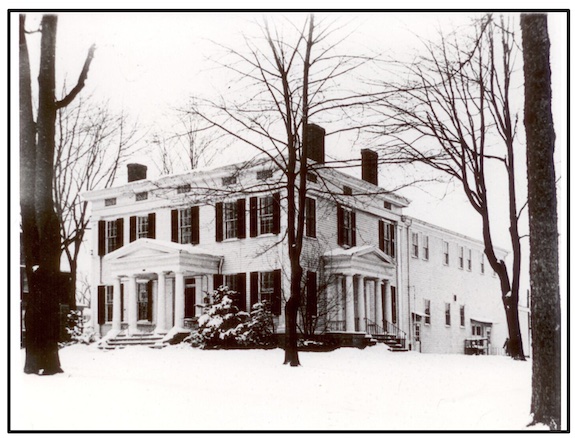
Birds Eye-Snider’s main research laboratory was located in Albion from 1942 to 1962. It was housed in this striking Greek Revival home on South Main Street, Albion built c. 1840 by Zephaniah Clark.
The house was converted and expanded to include two analytic laboratories, a test kitchen, a pilot plant, a soils laboratory and a comprehensive research library. Staff included food technologists, chemists, horticulturalists, bacteriologists, engineers and laboratory technicians.
The research focused on improving the quality of frozen foods and optimizing efficient production methods. Albion staff developed many of the Birds Eye frozen foods products sold nationally and internationally.
In 1960, the laboratory processed and tested seventeen varieties of new frozen baby food lines. The in-house pilot plant, which was an exact duplicate of a regular plant, was used in product development and testing.
New varieties of plants were developed in the two large greenhouses built behind the home. Seed stocks were tested and evaluated at the 106-acre experimental farm on County Line Road. Soils from supplier farms were tested in the soils laboratory.
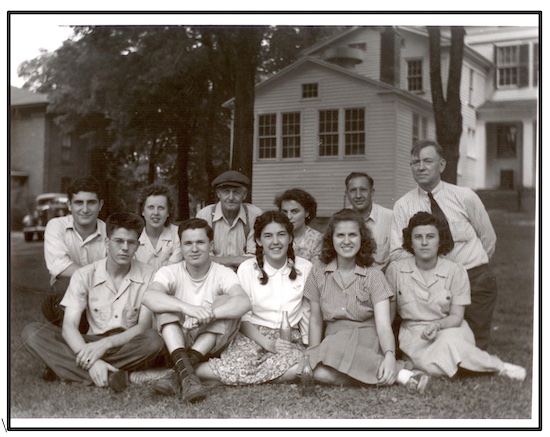
Staff of Birds Eye Snider Laboratory, Summer 1943 – Front row, from left: Jack Wenrich, Sy Pomper, Ruth Adamy, Fern Chase and Jessie Nenni. Back row: Hunter Cohen, Helen Collins, Bill Lee, Helen DiJuilio, W. Enzie and John Swenholt.
The announcement of the closure in November 1961 came as a surprise to the staff, by all accounts. It was also a blow to the community and the county. Payroll at the facility was significant – $400,000 annually (currently $3.8 million). The staff owned homes in the area, their children were enrolled in schools. Many of the staff and their spouses were involved in the community – the Village Board, School Board, Red Cross, Hospital Twig Association, etc.
Local investors formed the Albion Laboratories to continue horticultural research but that closed in 1965. The home was demolished in the 1970s to make way for a Rite-Aid pharmacy building.
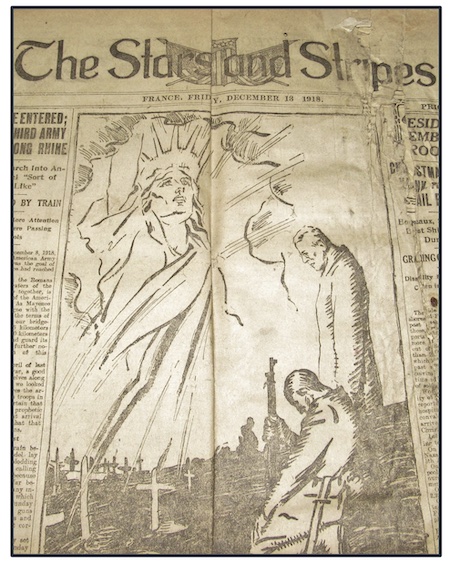
The Stars and Stripes, Friday, December 18, 1918: “It is our duty to make good what they offered, their lives, their blood to obtain.”
Eight young men from Orleans County were killed in a five-hour span on the fields of France on September 29, 1918. Twenty were injured. Two other young men had been killed on the previous day.
The men were members of the Second Battalion, 107th and 108th Infantry which was under the command of Major John Thompson of Medina. It included Company F. Medina, Company E of Niagara Falls and Jamestown, and Companies G and H of Rochester. They were part of the Allied final assault on the infamous Hindenburg Line, a German built defensive position on the Western front.
Australian, American, British and French soldiers participated in the marathon attack and successfully breached the line on Sept. 29.
Major Thompson described the action of that day in an article published in the Rochester Democrat and Chronicle, 25 November 1918:
“At 5:50 o’clock on Sunday morning, September 29th, the barrage from our guns was started. That was our signal to go ahead. Our 846 men almost as a unit went over the top with a dash and a song….From the moment the advance began until we stopped, three miles ahead, at 11:00, our men were in a hail of bullets and a cloud of blinding smoke. The barrage laid down by the enemy tore up the ground around the men and the noise was deafening.
The Second Battalion enjoys the distinction of being the only one which pierced the line at that dangerous and effective point.”
Five of the Second Battalion’s casualties on September 29, 1918, were from Medina:
Cpl. James P. Clark, aged 19. He was posthumously awarded the Distinguished Service Cross. Butts-Clark American Legion Post #204 was named in his honor.
Cpl. William J. Collins, aged 20.
Mechanic Walter Lindke, aged 26,
Pvt. Cecil Green, aged 21.
Pvt. Albert E. Coon, aged 19.
Two of the casualties were from Albion:
Sgt. James A. Sheret, aged 24. He was posthumously awarded the Distinguished Service Cross.
Pvt. Egbert Sheret, aged 22.
One of the deceased was from Kent, NY
Pvt. A H. Wilson, aged 19.
Pvt. F.J. Bloom and Pvt. Walter Gaylord aged 19, both of Medina, were killed on September 28.
Thirteen soldiers from Medina were injured in action on September 29:
Martin McKernan, M.D. Barrus, John S. Green, William F. Smith, W.F. Tripp. C.F. Fenton, Michael Smith, James G. Eddy, J.D. Clark, H.A. Durnell, Seth F. Clark, Fred Alloway and M.C. Ward.
Eight soldiers from Albion were injured:
L.W. Sanford, Carl Long, E.L. Wilson. Andrew E. Sheret, E.D. McGaffick, F.D. Depzynski, L.G. Williams and B.A. Perry.
In addition to Cpl. Clark and Sgt. Sheret, William F. Smith and Mahlon C. Ward of Medina, and Raymond F. Reed of Waterport were recommended for bravery.
Though faced with insurmountable odds, these men fought with distinction and were instrumental in breaching the last and strongest of the German army’s defense system.
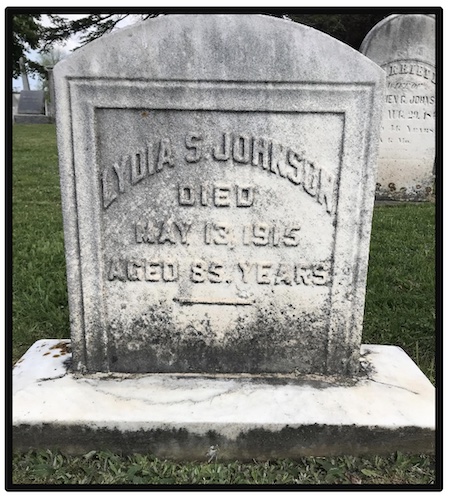
The headstone for “Aunt Selina” as she was known is in Lynhaven Cemetery in Lyndonville.
LYNDONVILLE – Lydia Selina Johnson of Lyndonville was the only nurse from Orleans County to serve in the U.S. Civil War. She was born on April 31, 1830, the daughter of Stephen Burr Johnson and Maria (Gilbert), the youngest of five children.
The following is an excerpt from a reading given by Selina Johnson at the Literary & Historical Society of Lyndonville, Feb. 22, 1898. Full text on file at the Orleans County Historian’s Office.
“Let me relate to you an incident that I witnessed in the Old Warehouse Hotel, in Georgetown, in the Fall of ’62, just after the second Bull Run Battle: there had been a soldier boy who had just passed his eighteenth birthday, by the name of Shepherd from Marble Head, Mass. brought in there after having lain in the battle field eight days.
“The surgeons, upon examining the wound, found that the leg was so badly shattered that it would have to be taken off at the knee. He stood the amputation well, but it was only a short time after, before it was discovered that tetanus had set in, and in about two days, the flesh had drawn back, so that the end of the bone protruded nearly an inch.
“It was decided that his only chance of life was to have the bone cut off so the flesh could be brought up and cover the end of it. They tried it, but it was not of any use…He was a terrible sufferer the last few days he lived. The only way he could get any relief from the fearful pain was for someone to clasp around the leg with both hands, as near where it was cut off as they could and while clasping tight, press the flesh down over the end of the bone. It was very hard work, so we nurses took turns.”
With the advent of the war, reformer Dorothea Dix had been assigned to organize a female volunteer nurse corps. The requirements were strict. Candidates were to be matronly persons of experience, good conduct, or superior education and serious disposition, who displayed habits of neatness, order, sobriety, and industry.
These criteria were designed to minimize potential problems or complaints as female nurses were not welcomed by the male medical establishment at first. Compensation for nurses was 40 cents a day and a three-month minimum period of service was required. As the war progressed, the nurses proved invaluable as caretakers in a sea of carnage, providing nurturing comfort and assurance to injured and dying soldiers, as well as medical care.
Selina had acquired nursing experience working with her brother Dr. Nathan Porter Johnson. She served under Dorothea Dix from September 1862 to July 1865. She contracted typhoid in March 1863 and came home to recuperate but returned to Washington in the fall of 1864. She worked in Georgetown, Washington D.C., Alexandria, Chesapeake, and Old Point Comfort, Virginia.
The disorganization during the early months of the war has been chronicled. Selina’s first experiences of those early months echoes those accounts. She described this to her audience in Lyndonville on that February evening in 1898:
“The Government was not prepared for such manslaughter. Hotels, schoolhouses, churches, and private homes were commandeered for hospital use. The Capitol building was full and there were 500 in the Patent Office Building. In the winter of 62 and 63, there were no less than 12,000 sick and wounded soldiers in the District of Columbia. If you counted those in and around Alexandria, you would have to multiply that number by two. Our Government was without the means to do with and they were ignorant of the needs of so many. They had to learn by experience. We lacked help and almost everything else but bread. Long weary tramps going from one Sanitary Commission house to another, sometimes getting the desired articles and at others, going home empty handed.”
The situation improved as time went by:
“During the winter of ’64 and ’65, I was in the Chesapeake Hospital, Fortress Monroe. At the time, everything was running like clockwork. Order had been brought out of chaos. There was plenty of everything and if we wanted anything, we knew where to get it.”
Selina’s account of her experiences is detailed and forthright. She describes the sufferings of the patients and the privations of the hospital conditions. Simple things made such a difference – wooden stools to sit on, tinware with handles for cooking. A dying soldier expressed a desire for new milk before it got cold with some bread in it, like his mother would give him. A kind lady who kept a cow brought him fresh milk morning and evening for the remaining week that he lived. This is but one of her graphic descriptions.
Following the Civil War, deceased soldiers’ widows, dependent fathers, and brothers were eligible for pensions. The Grand Army of the Republic, a veterans’ organization, waged a long campaign for the Dependents’ Pension Bill, which was approved in 1890. This expanded pension eligibility to include disabled veterans who had served for ninety days, or widows whose husbands had served for ninety days, regardless of whether the disability or death were service connected. Funding for the expanded benefits accounted for roughly 40% of the federal budget at that time.
However, nurses who had served in the Civil War were not automatically entitled to any post war service benefit and had to wage a long campaign until the Army Nurses Pension Act was finally passed in 1892. This entitled women who served as nurses in the Union Army to a pension of $12 per month, provided they had worked at least six months and had been hired by someone authorized by the War Department to engage nurses. This was a departure from previous legislation as it was not tied in with a woman’s marital status, but rather, was a recognition of her contribution. It afforded a welcome degree of financial independence to many women.
Selina returned to Lyndonville after the war. She did not marry, she worked at her brother’s office, lived with her widowed mother until her mother’s death and subsequently lived alone. She was able to enjoy her nurses’ pension for twenty-three years. According to her obituary printed in the Lyndonville Enterprise of May 20, 1915, she was the primary founder of the Literary and Historical Society of Lyndonville and was a member of the Methodist Episcopal Church. She died at the age of 85 at the home of her niece, Mrs. Bessie Johnson, on North Main Street, Lyndonville. The Sons of the Veterans conducted military honors at her graveside in Lynhaven Cemetery.
Photo by Fred Holt of Albion – Lettuce is harvested on the mucklands in the 1930s.
By Catherine Cooper, Orleans County Historian
Illuminating Orleans – Vol. 2, No. 17
BARRE – The newly drained Tonawanda mucklands in southern Orleans County proved to be very productive.
In 1936, the Calarco brothers set a record for raising lettuce: 108,000 heads from three acres. In March of 1977, The Journal-Register noted that crops growing in the rich soil brought in about $7 million a year.
Mother Nature was not always kind. A windstorm in June 1926 and a hailstorm in July 1947 were but two of several weather-related setbacks experienced. Flooding was a recurrent problem.
Heavy rains in September of 1977 (7.28 inches, three times more than the monthly average of 2.37 inches) caused massive crop destruction. As a result of lobbying efforts, the Oak Orchard Small Watershed Protection District was formed whereby the Federal Government assumed all construction costs for a flood protection plan, while owners were responsible for maintenance and replacement costs. The project began in 1982. Erosion has continued to be a problem; some estimates indicate that a third of the original area has been lost.
Though many of the tasks associated with the large-scale crop production on the mucklands were mechanized, some, such as weeding, thinning, and harvesting still required labor intensive manual labor. Those who “worked on the muck” remember their experiences vividly. It was hard work. Hard on the knees, the back, the hands and the hours were long.
Ciel White of Medina recounted her experiences in an oral history interview conducted in 1982. Her mother and many other women “the wives of Italian and Polish families” worked on the muck in the early years.
Born in 1911, Ciel was only 7 when she started to accompany her mother to work during the summer and on Saturdays throughout the school year. Farmers provided transportation. In the spring, they worked on weeding the onions and carrots to help the crops thrive because “the weeds grew as fast as whatever was planted.” Hand weeding was necessary because the young plants were delicate. Lettuce was thinned after it reached a certain height.
Ciel recalled: “When you were weeding, you got paid by the day… which was from 7:00 a.m. to 5:00 p.m. The women got $1.50 a day, but the kids only got $1.00.
You would have an hour for lunch, you would bring your own. There was a well which they had dug so you could get water. There would be a pail there and a dipper, and everyone helped themselves. And a privy.”
When they were harvesting onions:
“Each person would take two rows, the rows were about a quarter of a mile long, and there would be two people. We would grab the tops of the onions, pull them out and put them in a single row between us, so that they could dry out. Once the managers determined the onions were ready, we would go back with a crate, two people would work with the one crate and we would get 10 cents per crate.”
Ciel often worked with her cousin, Pauline Cichocki:
“After we had filled a hundred crates, we would call it a day, which was $5 for each of us. Then we’d goof off for a little bit or help our parents so that they could earn some more money (depending on how we felt).
This was also true of the carrots which was the last crop that we finished on the muck in the fall. Sometimes we couldn’t go out early because there would be frost on the tops, then as it began to warm up, they thawed out a little bit. You really got wet, because it was late in the season, and you got heavy dews as well as frost. You wore gloves, because not only had you to pull the carrots out of the ground, but you had to wring the tops off them and put them in the crate, 10 cents a crate also.”
Their work clothing was practical:
“We wore bloomers, very full pant-like affairs that came down to the knees, with elastic, and a middy blouse and a sweater. And I can remember the black-ribbed stockings and laced shoes, they were high-topped shoes, ankle supporting. You had to put pads on your knee, or they would be raw. The women would make the pads that they would put in their stockings – several layers of flannel or soft material which acted as a cushion, so that the wood and muck wouldn’t go through and ruin your knees.
In the summertime, when it was unbearably hot with the sun reflecting off that black dirt, we used to wear wide- brimmed hats. When the wind would blow, it was terrible, the dust would get in your eyes.”
Nevertheless, she recalled that morale was good, the women would sing as they worked, Polish hymns and songs. They were working for extra money for their families. Ciel’s father worked for Wm. J. Gallagher and her mother put their muckland earnings in the family “kitty.” They had bought a home, 574 East Ave. in Medina, and were determined to pay off the mortgage.
Writing from Virginia recently, Jack Capurso, formerly of Albion, recalled working on the mucklands as a teenager for three summers, 1956-58.
“As I pulled weeds out of the onions, I remember marveling that most of what we would call dirt was actually small pieces of decayed wood mixed in with soil.
The work was physically demanding, ten hours a day, six days a week at the rate of 50 cents an hour ($5.14 approx., per inflation calculator). However, after three summers I had saved almost $1,000 ($10,300 in current value) towards my first year at Geneseo.
I remember vividly 26 July 1956, the day the Andrea Doria sank in The Atlantic. We watched film of the sinking while we were having lunch. I did my best to explain to the workers what was happening but at that time my Spanish was terrible, and their English was worse. I still remember the Puerto Rican workers and wonder what happened to them.
When I come to Albion this summer to visit relatives and friends, I am going to try to find my way back to the muck. I know the memories will return, and I will smile.”
Two books on local agriculture are available at the NIOGA libraries:
• Farm Hands: Hard Work and Hard Lessons from Western New York Fields by Tom Rivers, 2010
• Mom & Pop Farming in Orleans County, New York by Canham & Canham, 2016
BARRE – The top photograph is not from an Antarctic expedition! The image from a glass negative shows a dredge excavating a main ditch on the swamp in 1913 for the Western New York Farms Company. Drainage was the first step in the formation of the mucklands.
“Wall Street goes a-Farming” was the title of an article in Popular Science Monthly, Spring 1917 which described the gigantic Oak Orchard Farm:
“an admirable example of what a great farm can be when conducted under the precise and systematic management of ‘Big Business.’”
A mere four years prior, the “great farm” was an overgrown swampy marsh, reclaimed by an ambitious drainage project. The “Wall Street” reference in the article’s title was to the Western New York Farms Company, with an address at 49 Wall Street, New York, NY which had been incorporated on March 9, 1911. The directors were Andrew A. Smith, 40 South Washington Square, NY; H.R. Tobey, 109 West 45th St., NY; and Morris K. Parker, New Cannan, Conn.
By 1913, the Farms Company had acquired large tracts of land in Barre and Clarendon.
The initial impetus for draining the swamp was health, not agriculture. Malaria had long been associated with swampy land. Drainage of the swamp for health reasons was first recommended by the State Supreme Court in 1903. In 1904, Commissioners Avery Danolds of Shelby, John Crowley of Medina and Joseph W. Holmes of Batavia recommended draining almost 25,000 acres of swamp. They estimated the cost of surveys and preliminary work at $5,000. This would be assessed to the six towns involved, the costs to be reimbursed by the property owners.
This proposal languished but was presented again in 1910, as a “public necessity” according to the Medina Daily Journal, August 15, 1910. Meanwhile, the agricultural value of the drained land attracted attention when several experts attested to its fertility and potential. Plans were finalized in 1910 when it was agreed that the project should continue and be paid for by the owners of the land which benefited by it. The work began in 1913.
There had been some local resistance to the project. A letter from a Clarendon Taxpayer published in the Democrat and Chronicle and the Orleans Republican on January 12, 1912, outlined many concerns regarding this “scheme of public exploitation for private gain…under the guise of public health.” The Clarendon Taxpayer asked:
• Who would be responsible for maintaining the ditch?
• What effect the massive drainage would have on the remaining timber?
• What effect would the winds and the absence of moisture have on the climate, the orchards, and the crops of those who lived north and east of the area?
• What effect would the drainage have on wells? If residents had to drill deeper, they ran the risk of encountering sulphur or salt which would render the well unusable?
The project proceeded on a large scale. It comprised some 9,000 acres in the Orleans County towns of Barre and Clarendon, as well as in Elba and Byron in Genesee County. In 1913, workmen operating huge dredging machines dug 21 miles of main canals and 20 miles of laterals located about 2,000 feet apart. To accommodate the runoff, a channel through the Oak Orchard Creek was enlarged and straightened. Sixty Adirondack lumberjacks felled timber. Underbrush was burned. Crews operating plows, harrows, cultivators, and seeders prepared the soil. The first crop of vegetables was harvested in 1915.
All of this activity was overseen by the Western New York Farms Company’s Double O Ranch, a large facility in Elba, which had its own machine and maintenance shops, evaporator, cannery, and accommodation for workers, some four thousand in all.
The Farms Co. began leasing sections of land to growers in 1916 at the rate of $50 per acre for the first year. This included assistance and machinery. Subsequently, the rent was $35 an acre but no assistance was provided. It also offered land for sale, in 5 acre lots, at $300 per acre. The terms were one quarter to be paid in cash and the remainder in four equal annual installments.
The company sold its holdings in 1927, at $573.50 per muck acre, with an annual maintenance fee of $10 per acre. Priority was given to existing tenants and mortgages were available at 6%.
The Western New York Farms Company “Wall Street” approach to agriculture introduced agribusiness methods to Orleans County – mechanization, large scale production, scientific approach, efficient management. Muck landowners formed the Genesee-Orleans Vegetable Growers Co-op Association in 1921. This group assisted with marketing, encouraged development, and espoused advocacy. The “Wall Street” legacy continued.
LYNDONVILLE – We continue our exploration of the history of the Town of Yates in anticipation of the upcoming Bicentennial celebrations.
Charles R. Burnette, a Civil War veteran, and experienced printer from Ulster County, considered that the Town of Yates would provide a suitable market for his newspaper and printing business.
The first issue of the Lyndonville Enterprise, a weekly newspaper, consisted of four pages, was published on September 5, 1907, in the upper floor of a rented building on the corner of Riverside Street and Main Street. Just eight months later, a disastrous fire on May 18, 1908, caused by a gasoline explosion in the basement, destroyed the building and printing equipment. Mr. Burnette and his wife, who were at work in the building at the time, narrowly escaped with their lives.
Undaunted, the Burnettes continued, and printed from temporary locations until they established a permanent location on Riverside Street. Charles Burnette passed away in 1922, his wife Susan continued the Enterprise with the assistance of Mr. Leonard Reingruber. Joseph Giampapa, who came to Lyndonville from Passaic, N.J. operated the paper for fifteen years and it ceased publication in 1962.
The Lyndonville Enterprise, which was the official town and village paper, provides a historical record of a rural community in an era of change, with a wealth of information for local and social historians as well as for genealogists. The newspaper was the “social medium” of its time, its focus on local news assured its popularity. The tone was straightforward and civil: political and religious controversies were avoided, improvements were encouraged.
The Orleans County Historian’s Dept. has access to several issues of the paper, including the April 5, 1923, issue, almost one hundred years ago. Local news was strategically featured on the front and back pages of this eight-page issue. Subscription rates were: $2 for 12 months, $1 for 6 months and 50 cents per issue. The masthead also noted that the population of Orleans County was 33,341, and the population of Lyndonville and Yates was 1,040.
The Village – Vicinity – Variety section was the focus of the front page. Items of interest from the April 5, 1923, edition include:
• The bill for closing the season on black, grey and fox squirrels was passed and signed by Gov. Smith on March 12.
• Orleans County supervisors have purchased two stone quarries, one in Murray and the other near Knowlesville, from which to take stone for constructing county highways.
• Lyndonville Fire Company elected the following officers: Edward Barry, President; John Peters, Jr., Secretary-Treasurer; Frank Conley, Chief Engineer; Edward Barry, foreman of the Hose Company; E.M. Hill, foreman of the Hook and Ladder Company; Neil Toms, foreman of the chemicals.
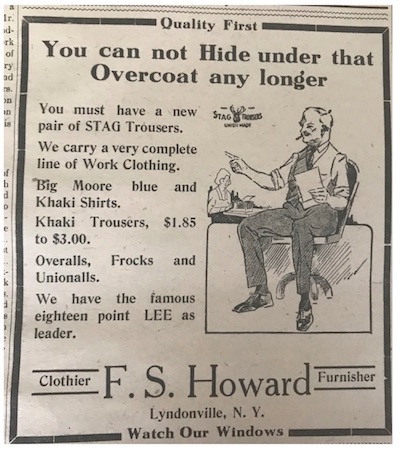
This advertisement was included in April 5, 1923 edition of the Lyndonville Enterprise.
• The wedding of Miss Hester Ives to Frank Hill of Albion took place at the home of the bride’s parents at high noon, March 31, Rev. H.G. Stacey officiating. Prenuptial events included a variety shower, a crystal shower, a kitchen shower, and a grocery shower.
• The dates for the Lyndonville Redpath Chautauqua are June 18-23
• The Lyndonville Grange plans to discuss “Apples” at their April 7 meeting.
• A long Personal Pointers column detailed the main social news of the day: who visited whom, who came home for Easter, who was sick, who was recovering.
• Church Notes listed dates and times of services for the forthcoming Sunday, as well as sermon and discussion topics:
“The Christian Motive in Recreation” – Topic of discussion for the Epworth League of the Methodist Episcopal Church meeting.
“Our Unfinished Knowledge” – Topic of the morning worship service at the Presbyterian Church
“Post-Easter Beatitudes of Faith” – Yates Baptist Church Sunday sermon topic.
A report of a meeting of the Woman’s Foreign Missionary Society of the Methodist Church, noted that Miss Grace Leslie of Albion, who was scheduled to sail to China in August, gave an interesting talk and was given a reception and shower.
A side column dealt with Special Notices which were also local.
Items Wanted: Home sewing, 25 Plymouth Rock hens.
For Sale: Goose eggs and Toulouse ganders, a few cords hard slab wood, a one-horse spring wagon and heavy single harness, a good 8-year-old cow due in April, my house and lot at Yates Center.
Wanted: Men, both American and foreign, for steady work, nine to ten hours during the day, twelve hours at night at The Carborundum Company, Niagara Falls.
Milk: Customers, please take notice: Starting Sunday April 1, your milk will be delivered earlier. Put the bottles out the night before. Cows tested and free from tuberculosis. Price: quarts 10 cents, pint: 6 cents.
• The last page of the Enterprise included reports of social happenings from the rural areas had submitted by correspondents. Items of note included:
West Lyndonville: Floyd Amos has moved on to Frank Wards’ s farm at Oak-Orchard-on-the Ridge.
George Dunham and family have moved onto the Mrs. Flower farm on the Lyndonville Road.
Mr. and Mrs. Fred Manley and family have moved onto the Frank Waring farm and Herbert Rouse has moved onto Frank Lott’s farm.
• The inside pages, 2-7 contained a variety of articles pertaining to national and state issues, including:
A summary of the week’s operations on the New York Stock Market, an article on Army Air Services Forest Patrol and its role in fire prevention, an article on the negative reaction to steam power and railways in the early 1600’s in England: A meeting of ministers in Manchester denounced the railway as being contrary to the law of God and predicted that it would prevent cows from grazing, hens from laying and cause pregnant women to have premature births, horses would be useless, hay and oats unsaleable, country inns would be ruined, boilers would burst and blow passengers sky high.
• There were many local advertisements as well as several from Rochester businesses. A serialized fiction offering, in this instance: Val of Paradise, provided some light entertainment to round out the fare.
By Ginny Kropf, correspondent Posted 28 March 2022 at 10:06 am
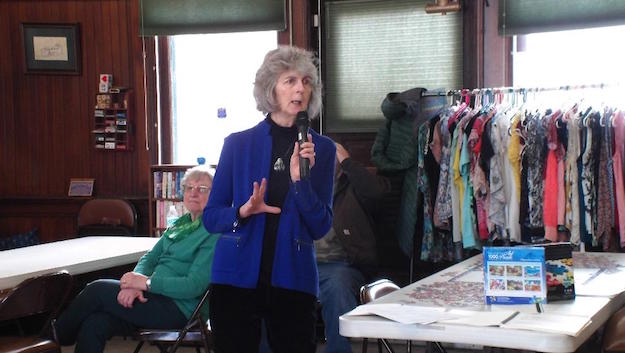
Photo by Ginny Kropf: Catherine Cooper, Orleans County historian, talks about the history department and vintage cookbooks at the March meeting of the Senior Citizens of Western Orleans.
MEDINA – Senior Citizens of Western Orleans welcomed Catherine Cooper to their March dinner meeting to talk about the Orleans County historian’s job and share some of her vintage cookbooks.
Cooper retired in June 2020 as director of Lee-Whedon Memorial Library and accepted the position as Orleans County historian in September 2020.
She explained the first historian appointed was Arden McAllister, a Medina teacher, in 1938. Bill Lattin held the position for 35 years until he retired in 2013 and then was succeeded by Matthew Ballard he served in the position for more than five years.
As historian, Cooper said she is spending time sorting and refiling records to make them accessible.
“People come in looking for houses, genealogy, sandstone quarries and, always in December, information about Charlie Howard,” Cooper said. “You don’t need to know everything. You just need to know where to find it.”
Other things people ask for are old maps, minutes of the Pioneer History Association, early newspapers and photographs, Cooper said.
It can be a challenge when someone wants a photo from 1840 or a birth certificate from 1820. They didn’t take photos back then or have birth certificates.
Great sources of information are books by Medina’s Ed Grinnell and Ridgeway historian Richard Dennis. Cooper also talked about the Medina Historical Society at 406 West Ave. It was founded 50 years ago by the late Ceil White as a place to collect and preserve the history of Medina.
“There is so much material there,” Cooper said. “This includes information about the barracks by Fisher Price for World War II prisoners, H.J. Heinz Company, spinning wheels and more.”
The Medina Historical Society puts on informative programs, Cooper said. A recent one was on letters from the Civil War. Some were brought in and one person had a correspondence from Jack Benny a family member had received.
“Documenting change in an area over time – that’s local history,” Cooper said. “We are tribal. We need to know where we came from. When we are together, we talk about our families and what they did. We need to pass on those stories.”
One thing she urged was for people to label photographs.
Cooper also brought a collection of old cookbooks, some from the Historical Society and other belonging to her.
“You will find inspiration in those cookbooks gathered over the years,” she said. “They are a great resource. You can learn so much from the ads. In the 1950s and 1960s people canned and preserved food.”
Some of Cooper’s cookbooks were from Oak Orchard Elementary School, the Mustang Marching Band, St. Mary’s Mother’s Club and senior citizens.
Finally Cooper handed out copies of five self-guided walking tours of Medina developed by Todd Bensley. She urged seniors to get up, get out and see Medina’s history.



















 ALBION – Local history matters. Many major international events may seem on the surface to have little connection to our rural communities but when the evidence is explored it becomes clear that many impactful individuals have called Orleans County home.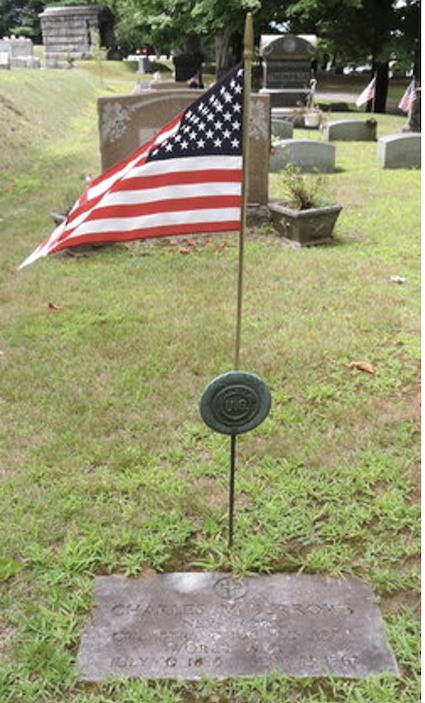
 MURRAY – June 10, 1933. A quiet Saturday night on Route 104 in rural Sandy Creek, in the Town of Murray.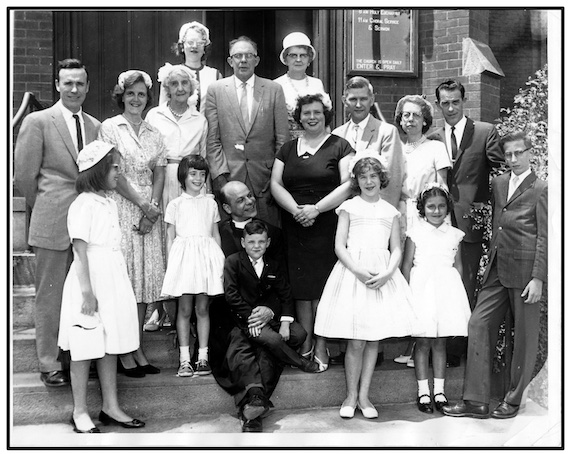
 Selina had acquired nursing experience working with her brother Dr. Nathan Porter Johnson. She served under Dorothea Dix from September 1862 to July 1865. She contracted typhoid in March 1863 and came home to recuperate but returned to Washington in the fall of 1864. She worked in Georgetown, Washington D.C., Alexandria, Chesapeake, and Old Point Comfort, Virginia.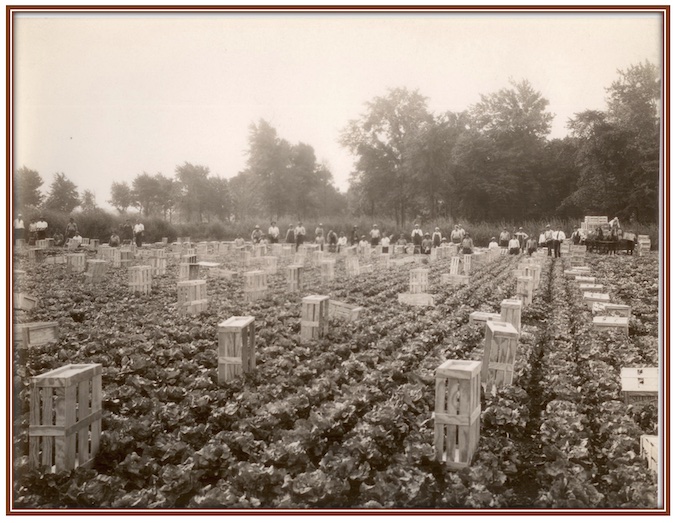
 BARRE – The newly drained Tonawanda mucklands in southern Orleans County proved to be very productive.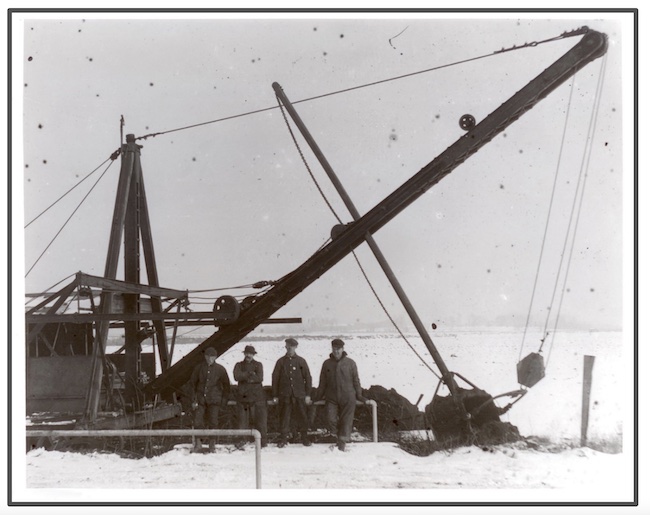
 BARRE – The top photograph is not from an Antarctic expedition! The image from a glass negative shows a dredge excavating a main ditch on the swamp in 1913 for the Western New York Farms Company. Drainage was the first step in the formation of the mucklands.
 LYNDONVILLE – We continue our exploration of the history of the Town of Yates in anticipation of the upcoming Bicentennial celebrations.