









local history

Medina company made clocks a century ago before moving to Brockport

By Matthew Ballard, Orleans County Historian Posted 21 November 2015 at 12:00 am


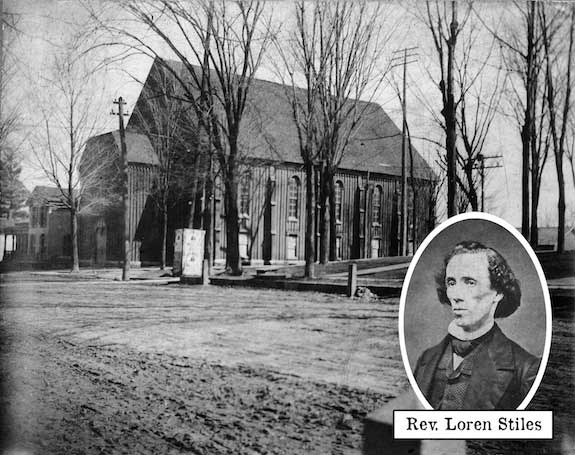
MEDINA – Taken in early 1912, this image shows the construction of the new Monitor Clock Works factory in Medina. At that time the business was located on Rock Avenue, which was later renamed to Glenwood Avenue. The company began advertising their plans to construct this new 30,000-square-foot facility in early December of 1911.

The history of the Monitor Clock Works dates back to Daniel Azro Ashley Buck, a native of Vermont who spent time as a jeweler and watchmaker in Massachusetts, then in Connecticut. It was in this area that he patented the long spring Waterbury Watch in the 1880s. Buck became well known for manufacturing small, mechanical items and received numerous patents during the 1880s and 1890s.

Buck received patents for watch parts, portable clocks, musical toys, kaleidoscopes, coin operating vending machines, and even an 1887 camera. It was the completion of the world’s smallest steam engine that earned him greater notoriety; a 150 piece engine that was built atop a gold coin. After his arrival in Medina, he became the president of the Medina Manufacturing Company, a position he held until his death on April 6, 1904.

In that year, the company became The Monitor Company and began the production of clocks and engaged in the made-to-order woodworking business. It was in 1907 that the company transitioned into the Monitor Clock Works. It is cited that the failure of the National Bank in Medina indirectly led to the eventual sale of the company to B. A. Chubbuck.

It was in October of 1913 that the Daily Journal published an article stating, “the goblins have secured one of our factories, for the Monitor Clock Works has decided to move its entire plant to Brockport” Chubbuck, along with Brockport native Frank LeVan, decided to move the company to Brockport with plans to expand their operations.

It was during this time that the company continued to engage in the manufacture of mantel and tall clocks in the Mission style for sale in Chicago and New York City, as well as through mail-order catalogs.

So it was only a short period of time after constructing this new building, located in the vicinity of the A. L. Swett Iron Works that the company removed to Brockport, effectively becoming the Brockport Clock Works. On December 18, 1913, the Brockport Republic so proudly boasted, “we consider the recent removal of the Monitor Clock Works to this place as one of our most fortunate acquisitions”

Unfortunately for the company, talk of bankruptcy began to surface as early as 1916 as Syracuse companies began to call in unpaid loans. The company involuntarily filed for bankruptcy in 1918.

This building, still in construction, was later used as a storehouse by the Swett Iron Works. In 1914 it was deemed a dangerous fire hazard and relocated 100 feet south of this location.

Fall splendor at Mount Albion

By Tom Rivers, Editor Posted 17 November 2015 at 12:00 am

Photos by Tom Rivers

ALBION – An annual rite of passage for Orleans County residents should include a visit to Mount Albion Cemetery, especially the Civil War Memorial tower, every fall.

I went to see the tower on Nov. 7. It was a crisp autumn day. I hadn’t been up the 68-foot-high tower in a  couple years.

I was happy to see the spiral staircase is freshly painted. Last time I climbed all of the steps, there was lots of graffiti. This was taken from the top of the tower, which was built in 1876, on the 100th anniversary of the founding of the country.

I’m a little uncomfortable up high, but here is a view looking down from the tower. There are nice sandstone steps leading to the tower.

The tower provides views of scenic Albion, including the Orleans County Courthouse.

These iron gates lead into the tower, which is a memorial to about 500 Orleans County residents who died in the Civil War. Their names are etched in marble slabs inside the tower.

The cemetery on Route 31 is included on the National Register of Historic Places. There are many historic features of Mount Albion, including this hitching post that was used to tie up horses.

The cemetery, with its winding paths, is a popular spot for joggers and walkers.

Syracuse awards degree to Lyndonville native who received Medal of Honor in WWII

By Tom Rivers, Editor Posted 16 November 2015 at 12:00 am

(Includes reporting from Syracuse University)

After war, Forrest Vosler attended classes at Syracuse

Provided photos, Syracuse University – Technical Sergeant Forrest Lee Vosler was born on July 29, 1923, in Lyndonville. He was presented the Medal of Honor on Aug. 31, 1944 in a ceremony in the Oval Office with President Franklin Delano Roosevelt.

SYRACUSE – A Lyndonville native who was awarded the Medal of Honor for his valor in World War II has another accomplishment: a college degree.

Forrest Vosler was posthumously awarded the degree during a ceremony at Syracuse University on Friday. Vosler attended classes at Syracuse following the war.

Vosler, a technical sergeant and U.S. Army Air Force radio operator, sustained serious injuries to his eyes, legs, and arms when the plane he was in was shot down and crashed in the North Sea.

Vosler was unable to complete his baccalaureate degree due to his combat injuries. He persisted for 17 years, dropping in and out of school, trying to earn the degree he dearly wanted, said Ray Toenniessen, an Albion native who is managing director of Development and External Relations for the Institute for Veterans and Military Families at Syracuse University.

“Despite being named the Army Air Force’s ‘Greatest Hero’ of World War II, Vosler’s combat injuries to his eyes made it difficult for him to study,” Toenniessen said. “He had trouble reading because he could only see shapes and shades, and required additional surgeries.”

Vosler died on Feb. 17, 1992 with his dream of a college degree not fulfilled. On Friday he joined Syracuse University’s Class of 2015.

Syracuse University Chancellor Kent Syverud presents a diploma to Steve Vosler, son of Forrest Vosler, during a special Degree Conferral Ceremony on Friday. Dr. Karin Ruhlandt (left), dean of the College of Arts and Sciences; and Dr. Mike Haynie, Vice Chancellor for Veteran and Military Affairs also were part of the ceremony.

A committee through the Institute for Veterans and Military Families reviewed Vosler’s transcript and military service. The committee recommended the university award him an Associate of Arts Degree in Liberal Arts. On Friday, Chancellor Kent Syverud presented the degree to Vosler’s son, Steve Vosler.

Forrest Vosler also was recognized as this week’s “Hometown Hero” for Syracuse University and Steve and his wife Karen were recognized on the field at the football game.

Vosler was born on July 29, 1923, in Lyndonville. After graduating from Livonia High School, he enlisted in the Army Air Force where he became a radio operator. Vosler was assigned to the 358th Bombardment Squadron, 303rd Bombardment Group, 8th Air Force, in England. He was a crewmember of a B-17 Flying Fortress called the “Jersey Bounce, Jr.”

Provided photo – This World War II Memorial in Washington, D.C. includes the name of Lyndonville native, Forrest L. Vosler, a technical sergeant who is buried in Arlington National Cemetery.

President Franklin Delano Roosevelt awarded the Medal of Honor to Vosler in the Oval Office on August 31, 1944, for his actions over Bremen, Germany.

Vosler was hit twice by 20 mm shrapnel after taking the place of one of the plane’s gunners. Despite many injuries to his legs, arms and eyes, he managed to tend to the wounded tail gunner, repair the damaged radio equipment, and send a distress signal before the aircraft crashed into the North Sea, Syracuse University said.

Vosler was discharged from the Army Air Force following numerous surgeries and extended stays in nine hospitals. He matriculated at Syracuse University in the spring of 1945. While at Syracuse, he met and married his wife, Virginia Slacka Kappa Delta and a Liberal Arts graduate of the Class of 1945. They raised four children in Central New York: two sonsStephen and Jeffrey, and two daughters Sondra Fields-England and Susan Snow Bass.

Steve and Karen Vosler, center, were recognized during Saturday’s football game in Syracuse.

Orleans County pilot was favored wingman of WWII fighter ace

By Matthew Ballard, Orleans County Historian Posted 14 November 2015 at 12:00 am

GAINES – This image, courtesy of the American Air Museum in Britain, shows Capt. Eugene E. Barnum of Gaines discussing the actions of his latest mission at Halesworth Airfield in Suffolk, England.

The exact date of the image is unknown, but was passed for publication on November 26, 1943. Standing left to right is Lt. Col. Francis “Gabby” Gabreski, Lt. Eugene Barnum, and Lt. Frank Klibbe. Gabreski was shot down over Germany on July 20, 1944 and spent five days imprisoned in Stalag Luft I near Barth, Germany. Klibbe died on January 27, 1944 during a flight test when the engine of his P-47D failed.

Barnum, a native of Gaines, was placed with the 61st Fighter Squadron of the 56th Fighter Group stationed in Britain. While flying with the 56th Fighter Group, Barnum became the preferred wingman of “Gabby” Gabreski until Dec. 2, 1944.

It was during a “Ramrod Mission” (short range attack on ground targets) that Capt. Barnum was charged with sweeping the airspace in advance of U.S. bombers heading towards Cologne and Frankfurt in Germany. While engaged with the enemy, Barnum’s plane collided with Lt. Wyman Baker, sending both planes to the ground over Dorf-Gull, Germany. Both men perished in the crash.

Barnum was awarded the Distinguished Flying Cross with Oak Leaf Cluster for his actions during several missions in the summer of 1944. He was credited with two confirmed kills and was responsible for confirming the 27th kill of Capt. Robert Johnson, the World War II ace that surpassed Eddie Rickenbacker’s World War I total of 26.”P.T.” or “Pete,” as he was often called, was the second son of Eugene and Florence Barnum to sacrifice his life in service with the U.S. Armed Forces.

In July of 1944, Lt. William Barnum was killed while serving with the 9th U.S. Army Infantry during the Allied breakout from Normandy. While the Allies prepared to sail across the English Channel, William tried one last time to visit his brother at Halesworth Airfield. Unfortunately, Eugene was on a mission and did not learn of the visit until after William’s death on July 16th.

The deaths of both Barnum boys was a devastating loss to the family back home and was felt by community members throughout Orleans County. Eugene and William were laid to rest in the American Cemetery in Margraten, Netherlands – cenotaphs are arranged in the family lot at Mt. Albion Cemetery, representing the final resting places of the two brothers.

With the passing of Veterans Day, we hope that no one ever experiences such a loss, but thank all servicemen and women who have the courage to serve our nation.

Medina man had several innovations a century ago with farm gates

By Matthew Ballard, Orleans County Historian Posted 7 November 2015 at 12:00 am

MEDINA – Clarendon can stake her claim to Joseph Glidden, a one-time resident of the town who is credited with perfecting barbed wire – made quite a bit of money from it, too! Medina can stake her claim to Orrin J. Wyman, a man who set out to build a better farm gate.

Pictured on the far right is Orrin Wyman standing alongside his patented “O.K. Farm Gate.” Filing the patent on July 17, 1911, the patent was provided nearly five months later on Dec. 12, 1911. This patent states that Wyman’s “novel” farm gate was newly designed and was “bracedto prevent sagging of the outer or free end of the gate.”

This was not Wyman’s first patent, nor his first attempt to redesign the all-important device essential for farms throughout Orleans County and the United States. Orrin received his first patent on Feb. 20, 1906, when he and several other men perfected a “Barrel-heading Press;” yet another important implement for our region.

This device was used to evenly press the head of a barrel down, holding it in place while the head was secured. A rather simple gadget but one designed to make shipping fruits easier and more convenient.

After this, Wyman spent the next five years perfecting his farm gate design, receiving patents in 1907 and 1908 before creating a system that prevented lateral farm gates from catching on “snow, garbage, or other obstructions” located along the ground. This patent was granted on April 6, 1909 and paved the way for the O.K. Farm Gate seen in this image.

Orrin Wyman died on October 14, 1913 in Shelby having little time to amass any potential wealth from his invention. I would suspect that such an invention would have proved useful to Orrin’s brother-in-law, Dr. Robert Flowers, who established himself as a veterinarian in Denison, Texas.

Building was office for lawyer who may have changed Newport to Albion

By Matthew Ballard, Orleans County Historian Posted 31 October 2015 at 12:00 am

By Matthew Ballard, Orleans County Historian

ALBION – This image shows Mrs. Jennie McGuire Leonard standing in front of her millinery located on North Main Street in Albion. The beautiful building constructed of brick was designed in the Federal style, often referred to as the Classical Revival style.

This type of architecture pre-dates the Greek Revival style that is often seen throughout Orleans County and structures of this type would have appeared as late as 1840.

Prior to serving as a place of business for Mrs. Leonard, the building acted as the law office of the Hon. Gideon Hard. Born April 29, 1797 to Philo Hard and Currence Hawley, Gideon was one of 15 children who descended from prominent lineage in Arlington, VT. Although his maternal great uncle, Seth Warner, was a respected captain with the Green Mountain Boys during the American Revolution, his father’s family were hardened Loyalists.

Attending Union College in Schenectady, Hard graduated in 1822 and immediately began the study of law. After his admittance to the bar in 1825 he traveled to Orleans County where he would establish himself as an attorney prior to moving his wife to the area the following year.

Although lost within our local history books, Gideon Hard should be regarded as one of our more notable founders. Hard became Orleans County Treasurer in 1827 and was said to have motioned to change the name of the village from Newport to Albion.

It was in 1833 that Hard was elected to the United States House of Representative for the 23rd Congress running on the Anti-Masonic ticket and serving as the 1st representative from the newly established 33rd District. He was again elected to the 24th Congress, this time running on the Anti-Jackson ticket.

Hard’s days as a politician were far from over and within five years of ending his career as a U.S. Representative, he was elected to the New York Senate, the last from the 1st District Class 3. After his term concluded in 1847 he was appointed to the position of Canal Appraiser in 1849 and later served as First Judge and Surrogate for Orleans County.

The late 1850s proved difficult for the Hard family. Gideon suffered from personal illness, making his engagement in political and community fairs extremely difficult.

Around 1861, Gideon’s wife Adeline became gravely ill and suffered for nearly three years before she passed. Her illness and subsequent death caused great grief within the family and Gideon was destined to live out the remainder of his life with his children and later his sister before his own passing on April 27, 1885 at Albion.

Lattin releases new book on Halloween pictures and pranks

By Tom Rivers, Editor Posted 31 October 2015 at 12:00 am

Photos by Tom Rivers
ALBION – Bill Lattin signs a copy of his new book, “Halloween Pictures and Pranks,” for Albion resident Kim Pritt during a book launch party and photo exhibit this evening at the Pullman Memorial Universalist Church.

Lattin retired last Dec. 31 as Orleans County historian. He has been working on the book about Halloween, and includes submitted photos and essays of recollections and pranks from local residents.

Lattin also shares some personal photos, including one of him dressed as Tootsie for Halloween. He also divulges some of his own tricks during Halloween.

Lattin and organizers of the event at Pullman encouraged people to attend in costume, and Melissa Ierlan, the Clarendon town historian, dressed as a historical marker, noting that Lattin had written another book about local history.

The book launch party included a presentation by Joe Struble, retired archivist from the George Eastman House. He shared some historic photos about Halloween from the Eastman House collection.

The book is available for $10. It can be purchased from Bindings Bookstore and the Pullman church in Albion. Proceeds from sales of the book go the Pullman Memorial Repair and Restoration Building Fund.

A grant from the Genesee-Orleans Regional Arts Council and additional support from businesses and sponsors helped make the book possible.

One of the images in the book shows this group at a Halloween party in 1943. Front row: Cary Lattin (standing), John Larwood, Avis Lattin, Robert Brown, Katherine Church, Fred Miller, William Phillips. Seated on floor: Ward Wilson. 2nd row: Jean Jackson, Geraldine Larwood, Doris Phillips, Dorothy Miller, Agnes Wilson, Angie Brown, Grace Phillips. 3rd row: Albert Mason, Ruth Mason, Marcus Phillips, John Jackson, Sanford B. Church.

Hillside Cemetery chapel will host historical lecture

Staff Reports Posted 30 October 2015 at 12:00 am

HOLLEY – Genesee Community College history professor Derek Maxfield will bring to an end the month-long series of events on “Hillside Heritage” with a lecture on Monday at Hillside Cemetery in Holley.

Maxfield will discuss “Victorian Death and the Civil War.” The events at the cemetery, including three public lectures and a very successful ghost walk, are part of an initiative to bring more attention to the plight of the Gothic Revival chapel at the cemetery, which was completed in 1894.

Derek Maxfield

Efforts are underway to raise funds to restore the beautiful Medina sandstone building designed by Rochester architect Addison Forbes. The chapel and cemetery are included on the National Register of Historic Places.

The lecture on Monday will combine two of Maxfield’s research interests in one talk – Victorian culture and the Civil War. By 1861, Victorian culture with its many social rules dominated American society and set the standards of conduct for the ladies and gentlemen of the era.

These same social mores played an important role in bringing about the great war between the states. But the war far exceeded what the Victorians or anyone else expected bringing a cataclysm of suffering and death that would change values and culture profoundly.

The Monday lecture will begin at 7 p.m. in the chapel at Hillside Cemetery. In keeping with the season, the lecture will be delivered without the aid of any technology and the chapel will be lit with only oil lamps and candles – producing an appropriately spooky effect. While the lecture is free, donations to the chapel restoration fund will be gladly accepted.

Bronze statue sought for monument by Medina Armory

By Tom Rivers, Editor Posted 27 October 2015 at 12:00 am

Rendering courtesy of Company F Memorial Committee – A fund-raising effort has started for a bronze statue of a soldier about 7 feet tall that would be on top of an existing stone base that is 6 feet, 10 inches in height.

MEDINA – In October 2008, a stone monument was dedicated with plaques listing soldiers who trained at the Medina Armory and fought wars on behalf of the United States.

Now, seven years later the Company F Memorial Committee wants to put a finishing touch on the monument: a bronze statue of a soldier with a rifle over his shoulder.

The statue would be almost 7 feet high. That project, plus replacing a vandalized plaque and making name changes and additions on others, would cost about $90,000, said Bill Menz, chairman of committee.

The new fund-raising campaign would also pay for a flag pole about 30 feet high for the American flag. Right now it shares a pole with a Prisoner of War/Missing in Action flag.

Menz would like to have the project complete next year.

“This is the history of Orleans County,” said Menz, who led the efforts for the Company F Monument’s first phase. “We’re trying to wake up the historic spirit of the community.”

The Medina Armory opened in 1901 for Company F, which formed in 1891. It trained at a different location prior to the Armory. In 1977, the National Guard left the Medina Armory, a site on Pearl Street. The site has been used as a YMCA for more than three decades.

Courtesy Medina Sandstone Society – Company F prepares to leave Medina Oct. 24, 1940 for training at Fort McClellan and active duty in WWII. Saturday was the 75th anniversary of their departure.

Menz was one of the soldiers to train in the Armory. That was for 18 months when he was in the National Guard in the 1950s. He served on active duty in Greenland. He attained the rank of a corporal E-4.

The monument includes 550 names of local soldiers who fought in wars on behalf of the United States. The soldiers enlisted and trained at the Medina Armory for conflicts from 1898 to 1945 including the Spanish-American War, Mexican-American, World War I and World War II.

In 2006, a group of Medina veterans, their family members and representatives from the Medina Sandstone Society embarked on a project to provide a permanent tribute to the 550 soldiers from Orleans County and the surrounding area who joined Company F.

Photo by Tom Rivers – Bill Menz is pushing to have a statue and another flag pole by the monument next to the Medina Armory.

After two years of planning, fund-raising and building the monument, it was dedicated on Oct. 14, 2008.

The Company F Memorial Committee is working with the Orleans County Joint Veterans Council and Lincoln Post No. 1483 VFW for the additions to the monument, including the statue.

Any donations for the statue can be mailed to Company F Monument, P.O. Box 522, Medina NY, 14103. For more information, click here.

Narby’s in Carlton was once a hotel

By Matthew Ballard, Orleans County Historian Posted 24 October 2015 at 12:00 am

CARLTON – This image shows the old “Two Bridges Hotel” located in Carlton near the Oak Orchard River and Marsh Creek. Residents of the area may recognize this building as it stands today as “Narby’s Superette and Tackle.”

The hotel area of the structure was located on the west end. Two doors are located on the front end of the building, one marked “Bar Room” and the other marked “Hotel Entrance.” A sign outside of the main doorway shows that oysters were being offered in the dining room.

Along the west side of the building, “Two Bridges Hotel” is painted between the windows on the second floor and the name of the hotel is again depicted at the peak of the building on the front side. The two bridges that gave the area its name are shown; the covered bridge spanning the Oak Orchard River and the bridge crossing Marsh Creek.

Located on the east end was the general store and postmaster’s office. Prior to the advent of rural delivery, Carlton’s post office was located at this site. Further to the east was a stable for horses. These two pieces were later removed.

The earliest hotel on this site was a brick structure built prior to 1870. When that building burned, this structure replaced it. The hotel had a long list of proprietors starting with R. R. Tenant in its earliest years and later falling under the ownership of Whaley & Palmer, Wyland & King, George Gunther, George Root, Ashley Blake, Philip Podgers, Charles Conley, and Benjamin Bamber.

The store also had a lengthy list of owners who often doubled as postmaster during their tenure. Benjamin Fowler, who was likely the owner of the store when this photo was taken, and James Waldron were two of the earlier proprietors of the business before Ben Bamber took control.

The hotel was the center of community events during its heyday. Proprietors frequently held parties for New Year’s Eve, Washington’s Birthday, Independence Day, and other patriotic celebrations. The store was one of the few local spots where residents could purchase dry goods and other necessities such as medicines.

In 1937, the area ceased to exist as “Two Bridges” when the name was inadvertently changed to “The Bridges” with the addition of the Rt. 18 span over the Oak Orchard River. I suppose with the removal of the Oak Orchard River Road Bridge, we can once again call the area “Two Bridges.”

World War II vet and granddaughter will be on Honor Flight this weekend

Posted 23 October 2015 at 12:00 am

Richard “Dick” Heard is pictured in his pilot’s uniform when he enlisted during World War II.

Editor’s Note: Michelle Restivo of Albion is joining her grandfather, Richard “Dick” Heard, on the Honor Flight this weekend from Rochester to Washington, D.C. They leave Saturday morning. Heard, 91, is a life-long Albion resident who lives in his childhood home. Restivo is a kindergarten teacher in Batavia. She will share some of her experiences with the Honor Flight on the Orleans Hub.)

By Michelle Restivo

“Ask not what your country can do for you, ask what you can do for your country.”

The first time I heard JFK’s quote from his inaugural address I was in a middle school social studies class, too busy making eyes at some cute boy across the room to really understand its significance. Admittedly, I’ve never really thought about the quote since. Until today.

This morning, as I scurried around my house making preparations for what is sure to be one of the most impactful weekends of my life, I happened to glance out the dining room window and see this:

A few years ago my husband (who is much cuter than that boy in social studies class, by the way) installed this light/flagpole in our yard. I’m not an overly outward patriotic person, but I’ve enjoyed the aesthetic touch it has added to our home.

Today, when I saw this familiar view, I decided to stop and give it more than just my usual fleeting look. Seeing the flag today, really looking at it, I immediately thought of, “what you can do for your country”. Specifically, what my grandpa, Richard (Dick) Heard, had done for my country. Because tomorrow, I’m accompanying him on Misson 45 of the Rochester Honor Flight for Veterans.

If you’ve never heard of the Honor Flight Organization, here is a brief overview. There are hubs of HFO in many cities throughout the country, and their goal is to fly every US veteran to Washington DC, to tour “their” memorials. After a simple application process, vets are assigned a fly date and a guardian for the trip.

Guardians are volunteers within the organization, or family members of the traveling Veteran. There is paperwork to fill out and a couple of phone interviews for medical and service history. Flight and tour arrangements are made by the organization, and an action packed itinerary is provided.

All of this is free of charge to the vet. Guardians pay a nominal fee to attend. Most, if not all, members of the HFO are volunteers and many are US veterans themselves. The trip appears to run like a well-oiled machine, right down to a welcome home party when arriving back at the originating airport.

I learned about HFO one day a couple of years ago, when I was gleefully shopping at Greece Ridge Mall. There was a table set up with veterans passing out hats to their military brothers and sisters. I wandered over to see if I could make a donation in my grandpa’s honor, and take a hat to him. Being that he is a connoisseur of hats and a US veteran, I knew he would just love this one.

The men behind the table wouldn’t accept my donation, and said they were there that day to spread awareness of the Honor Flight Organization. So, in addition to the snazzy hat, I also left with a brochure about HFO, but didn’t really think much of it. My grandpa has always downplayed his time in the service, so I didn’t really think he would be interested in the program. Downplayed his service?! I know, it’s ludicrous.

But whenever I or my kids have asked him about it, he has poo-pooed it, saying he never left the States. He further says that he didn’t endure what so many other guys did overseas, and that they are the real heroes.

Richard Heard, 91, heads to Washington, D.C. this weekend on the Honor Flight.

Grandpa Dick enlisted in the service in December of 1942, during WWII. He entered pilot training and completed flight school. However, by the time he finished, there were no open spots left for pilots. He was moved to radar mechanic and attended radio school. In February of 1943, he was called to active service from reserve status. He was stationed in no less than six states throughout his time serving, sometimes returning to a state more than once.

Grandpa tells stories of freezing in Oklahoma, and of “blowing off time” after night shifts in Boca Raton, Florida. When troops were sent over to Europe to replace those who had been fighting for some time, Grandpa had acquired too much time enlisted and therefore was not allowed to be deployed. Instead, they sent him back to Texas to be a B29 mechanic. Grandpa returned home from his service in February, 1946.

We’ve just recently convinced my grandpa that his time in the service, albeit stateside, was honorable. He’s started using the VA for his medical needs, among other things.

Last February, I decided maybe I could bring up the idea to him about applying for a spot on an Honor Flight. I still had that brochure from the mall and I looked up additional information online. I was so thrilled when Grandpa expressed interest and even agreed to apply. And now, tomorrow, his time has come!

I asked Grandpa if he’d ever been to Washington, DC before, and he says he was there once, just passing through. I am so excited to be able to travel with him and see his reaction to the many military memorials in our nation’s capital. I’m especially stoked to visit the World War II memorial with him – the memorial that was erected in his honor. I’m sure it will incite feelings and create memories like no other I’ve ever experienced.

I’ve recently discovered that I have a similar sense of awe and wonder for the elderly, as I do for young children. Perhaps in another life, I would have been a social worker for seniors, instead of the kindergarten teacher I am today. I’m looking forward to spending the weekend with so many people from an older generation.

Joining us on the Honor Flight are 53 other US veterans, including 13 other WWII veterans, and one amazing vet who served in WWII, the Korean War and Vietnam. I can’t wait to hear my grandpa share stories of the “old days” with these men and women.

I know I might hear some war stories mixed in as well, and that scares me a little. I can’t imagine life during wartime. I’m afraid I might hear of people who didn’t return home from the war. Of people who went missing, were imprisoned, were injured or lost their lives. I’m afraid I’ll be forced to face the fact that I have taken for granted that flag that flies in my yard, by seeing these people who served to protect that flag and our country; all that it was and would be.

My grandpa spent almost 4 years away from his family, putting his life on hold, during a tumultuous time in history. He didn’t ask what his country could do for him; he asked what he could do for his country.

What can I do for my country? What can my kids do? Tomorrow, I can pay tribute to and honor those who fought for my freedom. I can actually thank some of them, in person. My kids can take time and learn about the history of our great country, really learn about it, not just sit through a social studies class or two, barely conscious.

They can seek out older generations to talk to about their experiences during different times in their lives, and gain an understanding of what it means to have the freedom that they do today, as American citizens.

I now know what I can do for my country, and it may not seem like much. But it’s something, and a start. The view outside of my dining room window is the same every day, but after tomorrow, it will mean something completely different. For that and so much more, I’m thankful.

For more information about HFO, click here. The public is invited to attend the Welcome Home Celebration for Honor Flight Mission 45 on Sunday, Oct. 25 at the Greater Rochester International Airport.

Southwest Flight #2840 arrives at approximately 11:20 a.m. The celebration emcee is Adam Chodak, WROC-TV 8 news anchor, and the keynote speaker is Brian Mitchell, Commander, Monroe County American Legion. Color guard is the ROTC Cadets, and music will be provided by Prime Time Brass. The Patriot Guard Riders will also be in attendance.

Good time for a fall stroll

By Tom Rivers, Editor Posted 22 October 2015 at 12:00 am

Photos by Tom Rivers

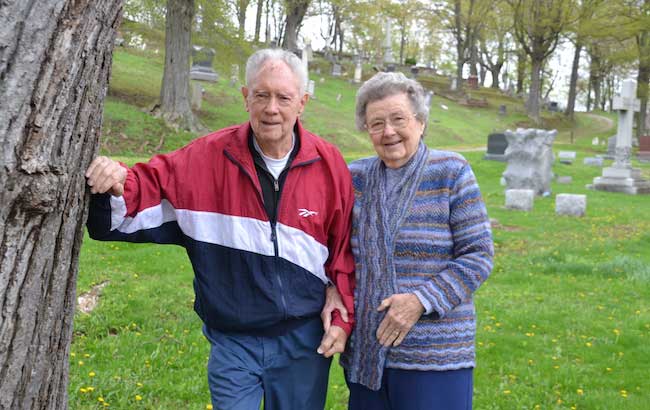
ALBION – Two people were out walking today at Mount Albion Cemetery. Many of the leaves have changed colors and come down, but there is still a lot of green on the trees.

The leaves on the trees by the Civil War section have turned yellow, orange and red. It is a moving sight, with the flags on the graves of the Civil War soldiers.

Here is another look at the Civil War section, backed up a little bit to show the flag pole.

Mount Albion is on the National Register of Historic Places. It has many ornamental graves and statues.

This is looking at the same statue, this time with the focus on the leaves in front.

Horse-drawn bus once served the Albion area

By Matthew Ballard, Orleans County Historian Posted 18 October 2015 at 12:00 am

ALBION – This image likely taken in the 1890s shows the horse-drawn bus that was responsible for transporting patrons of the Orleans House around Albion. Most commonly the bus was used to carry passengers from the railroad station at Clinton Street to the hotel on East Bank Street.

After the turn of the century, the proprietor of the Orleans House experimented with the method of transportation by offering rides to Point Breeze during the day. The image was probably taken in the vicinity of Platt and East Bank Streets and depicts a time in Albion’s history when dirt streets were the norm.

The Orleans House was a popular meeting space for many prominent groups in Orleans County including the Orleans County Bar Association, which adopted their bylaws and constitution at the site on September 13, 1877. The 151st New York Infantry and the 17th New York Light Independent Artillery frequently held reunions at the hotel.

The drivers of this bus seem to have experienced a number of misfortunes, as a quick scan of the local papers reveals a team of horses that were frequently skittish.

On one such occasion on March 15, 1895 while passing over the canal, the horses were frightened by a steam shovel causing the team to “take off,” damaging the carriage. On a similar occasion, a frightened team pulled the bus into the canal.

A closer look at the bus reveals a decorative paint job and two oil lanterns centered at the front of the carriage for driving at night. An animal-skin blanket is draped over the seat, likely to make the hard, bumpy ride a little more comfortable.

Old cobblestone schoolhouse has new purpose and historical marker

By Tom Rivers, Editor Posted 17 October 2015 at 12:00 am

Photos by Tom Rivers

GAINES – Al Capurso is pictured with a new historical marker that was unveiled today by the former one-room schoolhouse on Gaines Basin Road, just north of the Erie Canal. The schoolhouse was built in 1832 and is one of the oldest cobblestone buildings in the area.

It has been largely abandoned since decentralization in 1944. The marker also notes that Caroline Phipps taught at the school. She went on to be a distinguished educator and ran the Phipps Union Seminary in Albion from 1837 to 1875. That spot later became the County Clerks Building.

A swing is pictured next to the former schoolhouse.

The restoration project has been backed by the Orleans County Historical Association and includes a new roof on the building and new windows, as well as the historical marker.

Here is how the building looked last winter.

Here is how the historical site looks today.

Gary Kent led the efforts to trim some of the branches that were hanging across the building. Those branches needed to be removed for the roof work, which was completed by Young Enterprises. Mike Tower fixed the rafters.

Bill Lattin worked on the window sashes, Bob Albanese helped clean up the grounds, and many volunteers pitched in to remove junk from inside the building.

Bob Barrett of Clarendon restored the teacher’s desk and chair that remained inside the school. He even reconstructed the drawers in the desk.

Capurso, who is now the Gaines town historian, would like the site to become a meeting house and museum.

He said that Gaines once had 12 one-room schoolhouses. They were roughly located 1.5 miles apart to make access easier by the students in attendance.

The windows used to be boarded up, but now plenty of light can get inside the old schoolhouse.

Next year, Capurso said he would like to see work on the ceiling, walls and floor. He is pleased with the progress so far, and thanked the community for its support.

Today’s program included remarks from Capurso; Bill Lattin, who is retired as county historian; Matt Ballard, the current county historian; Dee Robinson, former Gaines town historian for more than 30 years; Town Supervisor Carol Culhane; and Ted Swiercznski, who attended the school and has been active in local politics for several decades. Another former student of the school, Angelina Daniels, also attended today’s celebration.

Original canal loop, only section west of Rochester, is easy to miss in Holley

By Tom Rivers, Editor Posted 14 October 2015 at 12:00 am

Photos by Tom Rivers
HOLLEY – A small sign on a tree in a ditch in Holley notes that this was part of the original Erie Canal loop that meandered to the Public Square area of Holley.

The state veered the canal from a relatively straight line in 1823 due to the high banks and engineering challenge in dealing with Sandy Creek.

This map in the Holley Post Office shows how the Erie Canal used to loop about 2,000 feet towards the Public Square.

There was an unusually deep ravine formed by the east branch of Sandy Creek, which presented a difficult engineering problem for builders of the original Erie Canal in the early 1820s, according to display on the north side of the canal by the Holley lift bridge. The State Canal Corp. put up that display about “The Holley Loop.”

This historical marker is next to the railroad depot used by the Murray-Holley Historical Society near Save-A-Lot. The original canal went near the depot and Public Square and some stone and remnants are still visible in the community.

Rather than try to build the canal on the ravine, engineers opted to take a sharp turn near the current lift bridge and cross over a relatively narrow section of the creek.

“The sharp curve required boaters to slow down, which made a promising location for canal-oriented businesses,” according to the state display. “The Village of Holley grew at this bend in the canal.”

The village created a canal park about 15 years ago and the path follows close to where the canal loop passed through nearly 200 years ago.

The canal was widened throughout the 363-mile-long system from 1905 to 1918 and much of the original canal was replaced by the wider and deeper canal.

But in Holley, some of the original remained because it wasn’t touched as part of the Barge Canal widening in the early 1900s.

Another map, this one displayed in the office of Dr. Dan Schiavone, shows the Holley Loop. It linked back to the canal just west of Bennetts Corners Road.

The state in 1854-61, decided the original loop needed to be straightened out in Holley to create a shorter, more navigable waterway. A new section of the canal was built over a very high and long embankment.

“Because state law did not allow canal sections to be abandoned in villages or cities, the old loop was still used for several decades to serve local businesses,” according to the state display about the Holley Loop. “Canal traffic no longer stopped in the village, however, and eventually the loop was drained and eliminated. Traces of the original canal can still be seen east of the Public Square.”

This culvert from the old canal can be seen from Route 31, a few houses east of Glenside Automotive.

I wrote about trying to find the original canal in Holley last week while on a nature walk on the Holley trail system off the canal.

I couldn’t find any signs pointing to the old canal, and wasn’t sure if I was seeing any remnants from the original canal.

Three people offered to show it to me on Tuesday. I was joined by Holley dentist Dan Schiavone, Erin Anheier from the Clarendon Historical Society, and Mark Scarborough, who lives on Bennetts Corners Road where the former trolley passed by his home until the trolly closed in the 1930s.

This trail runs from off Route 31, west of Bennetts Corners Road to the canal. The canal once ran along side this path. However, Mark Scarborough said this was a companion to the original canal, which is more to the left with lots of stone and other remnants from the original.

Scarborough says invasive plants, including Wild Rose, have proliferated in the old canal bed.

Holley’s trail system doesn’t have any wayfinding signs that would point to the original canal. The only sign is the small one nailed to a tree.

So, I wonder if the old canal bed is a big deal, or maybe a really big deal? Should it be cleared out and perhaps made into a walking trail that could be explored? Would people come check out the only original canal bed west of Rochester on the canal system?

I would encourage the village and canal to at least have signs pointing to the canal bed, and interpretive panels that talk about the “Holley Loop” and this bit of Holley and canal history. There could be interpretive panels on the trail near the canal and also in the Public Square. That wouldn’t cost too much. (The state information display is on the north side of the canal away from the gazebo and the canal park. I doubt many people look at it.)

The village created this trail system in 2000 and used sandstone to line one side. The stone isn’t from the original canal project, but the path follows close to the Holley Loop.

Holley named the canal trail in honor of Andrew Cuomo, who was the HUD secretary at the time and directed some federal funds to the village for the project.

The historical marker is close to the start of the trail.