

















Tiny ‘PowerHouse’ shows ways to conserve energy, reduce costs
Photos by Tom Rivers
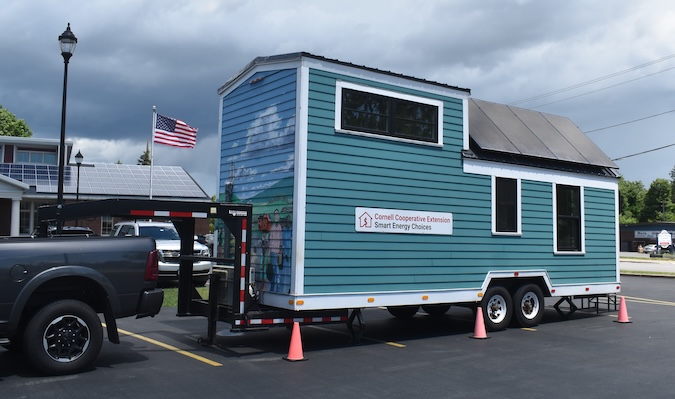
ALBION – The Tiny “PowerHouse” visited Albion on Thursday. It was stationed in the parking lot of Hoag Library. The PowerHouse is on an 11-day tour of the Rochester region.
The 250-square-foot house was built in 2020 by the Cornell Cooperative extension in Tompkins County.
The house has many exhibits and demonstrations that show the best ways to conserve energy within a house.
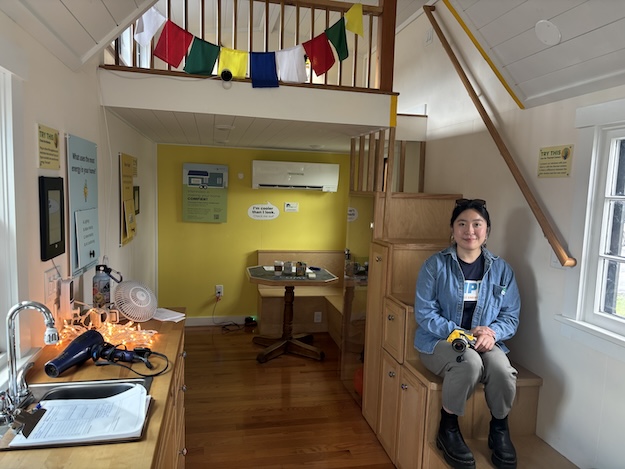
Emily Hung, a residential energy advisor for Climate Solutions Accelerator of the Genesee-Finger Lakes Region, answered questions from the public about the PowerHouse and led demonstrations.
Hung said a properly insulated house is one of the best ways to conserve energy. Changing to LED bulbs is another easy way to reduce electric usage.
She said there are many programs to help residents implement energy-savings projects through NYSERDA (New York State Energy Research and Development Authority).
“You can save money and be more comfortable in your home,” she said.
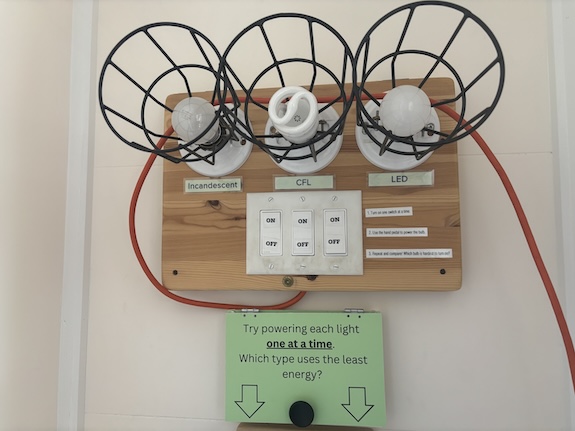
In this demonstration, people used a hand pedal to see how much energy it takes to turn on a light bulb and keep it lighted up. The LED took far less energy while the incandescent took the most electricity.
Another display showed the wattage to power a hair dryer at abut 240 watts. That compared to a string of lights that used 41 watts of electricity.
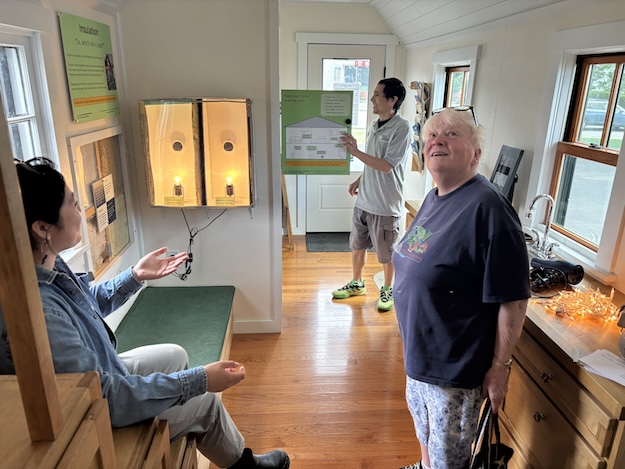
Grace Kent of Albion checks out the Tiny PowerHouse. Emily Hung is at left and in back is Brady Fergusson, director of public engagement for Climate Solutions Accelerator.
Green Orleans, a local group focused on preserving the environment and sustainable living, invited Climate Solutions Accelerator to bring the Tiny PowerHouse to Albion.
Climate Solutions Accelerator is bringing the home to communities in the region, offering a free, hands-on opportunity to learn how energy works inside the home and explore practical ways to save energy, improve comfort, reduce waste, and prepare for cleaner energy choices.
Exhibit topics include air leaks, insulation, renewable heating and cooling, solar energy, lighting, windows, appliances, Do-It-Yourself projects, and indoor air quality.
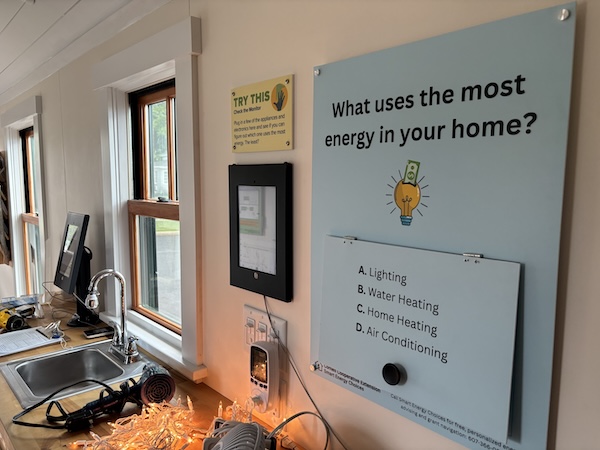
This display asks what takes the most electricity at a house.
Home heating makes up 51 percent of home energy use, with water heating at 19 percent, air conditioning at 5 percent, refrigeration at 3 percent, and other demands at 22 percent.
To see the schedule of the Tiny PowerHouse tour in Rochester, click here.