By Tom Rivers, Editor Posted 3 June 2024 at 10:24 am
Photos by Tom Rivers
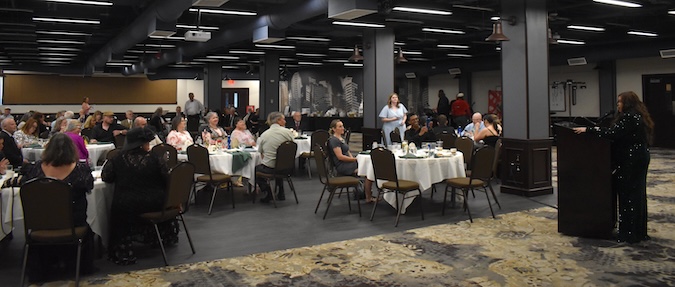
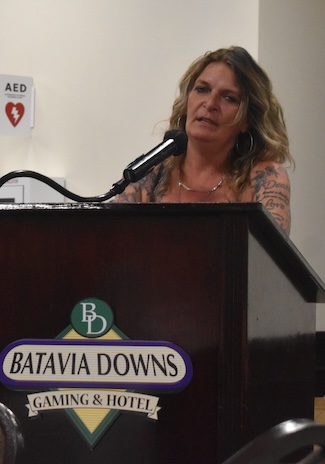
BATAVIA – Jami Allport, executive director of the Genesee-Orleans Ministry of Concern, speaks to about 130 people on Saturday night during a black tie gala for “The Agency of Last Resort.”
The Ministry of Concern started a gala benefit in 2019 to raise funds for the agency and expand its base of supporters.
The Ministry of Concern has expanded its services for people in need, including reaching out to those who are homeless or in danger of becoming homeless.
GOMOC in late March moved into its new offices in the First Presbyterian Church of Albion after 15 years at the Albion Visitor’s Center on the third floor at 121 North Main St.
The Buffalo party band, Captain Tom and the Hooligans, provided high-energy music for the evening. Trevor Jennings, an Albion, is drummer for the band that plays polka, Celtic folk, folk rock and other genres.
These interns, Micky Stowell (left) and Abigail Kinkaid, pull the tickets and announce the winners for about 25 items and baskets up for auction. Jami Allport and her husband Geno are at right.
Chris Forrester was one of the keynote speakers at the event.
One of the keynote speakers during the gala, Chris Forrester, shared how GOMOC was critical in getting her through a rough patch.
“They helped hold me together,” Forrester said, noting former director Nyla Gaylord and board member Sister Delores O’Dowd. “They didn’t judge me.”
Forrester said she was living by the canal bank when GOMOC helped her secure housing, set goals and get back on track.
She is now an active volunteer with GOMOC, and makes it a personal mission to help the local homeless population.
She will drive at night looking for people who are homeless, especially during the cold weather months, and will try to connect them to the warming center or other housing.
Jami Allport, the executive director, said GOMOC assists people in unexpected emergencies, and helps people in other crises, including mental health, domestic violence and addiction.
“We are here to fight alongside people,” Allport said. “Remember, they are people.”
By Tom Rivers, Editor Posted 3 June 2024 at 9:19 am
Photos by Tom Rivers
ALBION – Sarah Thom, a member of Albion’s Class of 2024, reads 1 John 3: 1-2 during a baccalaureate service on Sunday evening at the First Baptist Church of Albion.
About 30 seniors attended the service, which is optional. There were 11 local clergy members who participated in the baccalaureate which is organized by the Albion Ministerium. About 180 people attended.
The Rev. Jason Tarnowski, pastor of Community of Hope (Albion Free Methodist Church), gives a prayer of blessing for the graduates.
He asked the students to face the crowd and for family and friends to stretch out a hand to show their support.
In his prayer, Tarnowski asked God “to love, guide and protect these graduates in everything they do. Please watch over them as they move on to new adventures.”
The Rev. Susan Boring, pastor of the Eagle Harbor United Methodist Church, stands with graduates, including Liana Flugel, as they lit candles. The students were told God’s light and love with be with them at all times, even in dark places. Graduates were also offered a cross necklace.
The Rev. Susan Thaine, pastor of the First Presbyterian Church, gives a blessing to Auston Johnson.
Jason Anstey performed a trumpet solo, “The Church’s One Foundation.”
Father Mark Noonan, pastor of a family of Catholic parishes including in Albion, gave the keynote address. He said choosing positive words and encouragement builds strong and confident people.
He told the graduates that no matter what happens in their lives Jesus, the Good Shepherd, will always love them.
“Every one of you is a beloved child of God,” Noonan said. “That defines you more than anything else.”
Press Release, Steve Goodrich, commander of Houseman-Tanner Post
LYNDONVILLE – Flag Day June 14th, 1777 is the day the Second Continental Congress adopted the Stars & Stripes as our official national ensign.
This day is set aside to honor the flag and to officially retire those flags that have become faded, worn and unserviceable from usage.
The Houseman-Tanner Post 1603 of the American Legion will be hosting a retirement ceremony on June 14 at 5 p.m. at Lynhaven Cemetery in Lyndonville. Anyone who has an unserviceable flag (including Military Service or foreign national flags) in need of dignified disposal, may bring them to this ceremony. Anyone interested in seeing this ceremony is asked to meet by the flagpole and cannon in Lynhaven Cemetery on June 14.
If there are any questions you may contact the post at americanlegion1603@gmail.com or myself directly at sjgoodri6511@gmail.com or my cell at 585-765-5049 by voicemail during day or directly anytime between 5:30 to 9 p.m.
Photo and information courtesy of Medina Mustang Band Boosters: Medina’s marching band took first place in the parade competition at Sherburne on Saturday.
The Medina Mustang Marching Band traveled to Sherburne in Chenango County to participate in the 75th annual pageant of bands. This is the oldest pageant of bands in NYS.
Thirty-three bands performed in competition in the parade. There were other competitions including jazz, concert, saxophone quartet and drumline. Medina earned several awards as follows:
Wind Ensemble: 2nd place
Middle School Jazz Band: 1st place tying with Fonda-Fultonville
Jazz Band AA: 2nd place
Middle School Small Ensemble (flutes): 2nd place
High School Small Ensemble (saxophones): 1st place
Parade AA: 1st place
Cadence AA (drumline): 1st place
Parade Color Guard AA: 1st place
Drum Major (entire parade): Medina
Color Guard (best overall): Medina
Color Guard: Medina
Outstanding Director Award: Medina
Overall Class AA (best in class): Medina
Grand Champion: Medina
The 2023-2024 band season will come to a close with the band banquet June 3.
By Tom Rivers, Editor Posted 2 June 2024 at 2:07 pm
Howard wants people to decide issue in referendum
Photos by Tom Rivers: John Sansone, a candidate for Orleans County district attorney, passes out candy during a parade in Carlton on Saturday.
John Sansone, an assistant district attorney, is breaking from DA Joe Cardone in a high-profile issue in Orleans County.
Cardone has been pushing in recent years for a district court that would serve multiple towns. Cardone would like to see a county-wide district court that would handle most of the cases at the town court level.
“The current district attorney is a person I respect very much,” Sansone said. “I know that we disagree on this issue. We have different points of view based upon our sincere beliefs. I am happy the will of voters will decide this issue.”
Cardone said state aid should cover most of the cost of a district court. The county provides the facility and the state is expected to cover the salaries for judges, clerks and security. Cardone said having the cases be handled by a full-time court would move matters more expeditiously through the courts system. He said it would be a savings for the District Attorney’s Office, Public Defender and law enforcement by having a centralized court, rather than a patchwork of 10 town courts.
But Sansone sees a lot of negatives with the proposal.
“In addition to the potential financial burden on taxpayers, the creation of a district court eliminates local town oversight of its residents to their detriment,” Sansone said in a news release. “The current system of criminal justice ensures the vast majority of cases begin in a person’s residential locality.”
Sansone faces a June 25 Republican primary against Susan Howard for Orleans County district attorney. Cardone isn’t seeking re-election after 32 years as the county’s top prosecutor.
Sansone joins a chorus of opposition to the district court, which includes the Orleans County Magistrates Association and some of the town boards. The local town justices and many of the board members say the current system is closer to the people, operates at a low cost and the state funding in uncertain, and could ultimately lead to a higher local expense.
“Our current court system has some very important elements to safeguard fairness and one of them is that all issues are local in their nature,” Sansone said. “Our county is not like many in our state. We are a county of many differences based on where you live and what you do and I believe that for the justice system to work best, knowing, recognizing and protecting that localness is very important. Town courts do that, and I believe the structure should remain the same to the benefit of all.”
Howard was one of 13 on the District Court Committee. Three of the members – Albion Town Justice Joe Fuller, Carlton Town Justice Kevin Hurley and former Barre Town Justice Richard Decarlo – cast votes dissenting from the recommendations of the committee. Dean Puleo, a layer who works with village and town courts for the 8th Judicial District, abstained from an opinion on the report, and so did Sheriff Chris Bourke.
Howard is listed as accepting the report recommendations. Others who cast affirmative votes include DA Joe Cardone, Public Defender Joanne Best, Legislature Chairwoman Lynne Johnson, Legislator Skip Draper, Legislator John Fitzak, Susan Howard, former Gaines Town Justice Bruce Schmidt, and County Chief Administrative Officer Jack Welch.
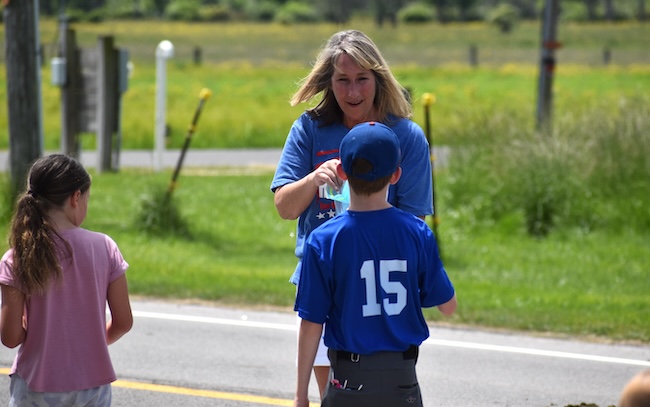
Susan Howard passes out candy during Carlton’s parade.
Howard said she ultimately wants to have the issue go to a public vote where the community decides the issue.
“I don’t oppose it, but I’m not pushing for it either,” she said.
Howard believes a district court will eventually be mandated by the state and required for the county.
“It’s coming,” she said. “We know it will be shoved down our throat.”
She said the county could get ahead of a state mandate and try to implement a district court, or it could wait until there is a state decree in the future.
“I’m leaving it up to the people to decide,” she said. “I will implement whatever they decide.”
Howard, the first assistant DA, said she wanted to be an active member on the District Court Committee.
“I try to keep myself educated and informed because I feel that’s my job,” she said.
There will be a second public hearing this Tuesday at 7 p.m. on the district court. The hearing is in the second-floor legislative chambers of the Orleans County Office Building at 14016 Route 31 West, Albion.
Sansone says the county report doesn’t take the full costs of a new court into account.
“I know that the idea of a district court has been described as a cost saving measure, however, I have not seen studies of substance to substantiate that contention,” he said. “Many financial aspects related to the creation of district court are speculative and fail to account for costs such as improving the current condition of buildings to required state standards for courtrooms and costs related to transporting defendants from the jail for court appearances, to name a few.”
Sansone said the state funding isn’t guaranteed. He said there is no evidence the state will force counties to implement district courts.
“Quite to the contrary, only two downstate counties have created district courts in the 1970s,” he said. “None of the remaining 60 counties have implemented a plan for a district court in over 40 years.”
If the state mandates a district court in the future, Sansone said the county should respond then.
“At that time, issues will be clearer, such as what the state will require for courtrooms, staffing, salaries, etc., and most important, who will be paying for what,” Sansone said. “In my opinion, there is absolutely no benefit to create something of this magnitude now only to have to change to satisfy New York State later on. Proceeding under that reasoning doesn’t make sense.”
By Tom Rivers, Editor Posted 2 June 2024 at 8:24 am
Albion village sets June 10, June 17 informational meetings about fire district
Photo by Tom Rivers: The Albion Fire Department ladder truck is from 1997 and the fire department would like to replace it soon. A new truck could top $2 million.
ALBION – Petitions have been turned in to try to force a public vote on whether a new Albion Joint Fire District should be created serving the towns of Albion and Gaines.
On Thursday, petitions were turned in to the Gaines town clerk signed by 107 people, to the Albion town clerk signed by 95 people and to the Albion village clerk signed by 259 people. Thursday was the deadline to turn in the petitions.
The town boards for the two towns plus the Albion Village Board on April 30 voted to create a joint fire district. The new district would move the fire department out of the village budget and into its own taxing jurisdiction with elected commissioners.
The two towns currently pay a fire contract to the village for fire protection. With the current budget of about $350,000 the village pays $113,456 (32 percent), the Town of Gaines contributes $120,422 (35 percent) and the Town of Albion pays $116,122 (33 percent).
Some community members want more information about the fire district, including a budget breakdown. During a public hearing on April 24 at the Albion High School LGI, residents were told the fire district budget would likely be $750,000 to $850,000 a year, well above the current $350,000 for the fire department. That $350,000 has left the fire department without a reserve fund for a new ladder truck at an estimated $2.2 million and another fire engine at about $1.1 million. Those trucks will be needed in the near future to replace aging apparatus, deputy fire chief John Papponetti said.
Laura Bentley supports a referendum on the issue. Bentley, owner of Bentley Brothers, lives in Carlton but owns property in Albion and Gaines. She didn’t collect petitions but helped with the process.
“I support a fire district,” she said on Saturday. “It needs to happen. But they need to share more information. During the public hearing, they didn’t respond to questions.”
Bentley said a big jump in the fire department budget will be hard on local taxpayers who are seeing many cost increases in taxes and other expenses.
The two towns require signatures from at least 5 percent of the registered voters in the last gubernatorial election or about 100 people. But the village requires signatures from at least 20 percent of the registered voters or about 650 people.
Bentley said the group seeking a referendum believes it met the threshold to force a public vote in the two towns. It didn’t get enough at the village level. However it is a moot point because village residents are also in either one of the two towns and it doesn’t make sense to also have a referendum at the village level when they are voting at the towns.
Gaines and Albion town officials are expected to review the petitions and meet to set a date for the referendum, which is 60 to 90 days from when the petitions are turned in.
If a vote is set for Albion and Gaines, this would be the second referendum forced by the public on an issue in Orleans County this year. Yates is having a public vote on June 20 on whether the town can spend $700,000 in grant funds to acquire 153.3 acres from NYS Electric and Gas to expand the Yates Town Park on Lake Ontario.
Albion Village Board urges support for fire district
The Albion Village Board issued a press release announcing there will be informational meetings about the fire district at 6 p.m. on June 10 and June 17 at Hoag Library.
“The intent is not to point fingers, but to provide facts about what the next steps should be,” The Village Board states in the press release. “In an effort of continued transparency, our goal is to address any remaining questions.”
The Village Board states the fire department needs a bigger budget. The board stated the following problems with the current situation and the reasons for its support of the fire district:
• When most of us took office, there were no reserves to offset larger capital projects or equipment purchases. The Albion Fire Department was forced to operate “paycheck by paycheck” with no savings for future expenses, planned or unplanned.
• The current fire department budget was not funded at proper levels to meet operational needs, and the village was not able to increase funds without significantly increasing the village tax rate. This resulted in a situation where needed improvements to facilities and equipment had to be delayed, “the can was kicked down the road.”
• The fire contract money from the Town of Albion and Town of Gaines, along with supplemental funds from the village, is keeping the fire department afloat but is not meeting current or future needs.
• We are faced with having to replace two aging apparatus (vintage 1992 & 1997). While evaluating this situation, the chief officers of the fire department proposed to the village replacing three apparatus with only two to “right size the fleet.” The Board agreed because long term, this would be a cost-saving move for the taxpayers. NFPA (National Fire Protection Association) Standards recommend that apparatus that are more than 25 years old be retired from the vehicle fleet.
• The Village of Albion does not have the ability to take on the debt for the replacement of fire apparatus, or any other necessary improvements, without significant increases in the village tax rate.
• Providing fire protection is not an optional service. It must be provided by law. Providing inferior fire protection not only puts our volunteer firefighters at risk, but it is also a letdown to those that expect a high-quality life and property saving service.
• Providing inferior fire protection lowers the community’s Insurance Services Office (ISO) rating and would likely increase the insurance premium of every homeowner and may even cause an insurer to deny you coverage in some circumstances. ISO ratings reflect an area’s preparedness to prevent and extinguish fires, such as the number of firefighters, training, apparatus maintenance and reliability, water supply, emergency communication system, and fire safety education and prevention.
Benefits of forming a Joint Fire District for the Town Albion and Town of Gaines:
• The district offers a way to right the mismanagement of past fire protection service and spread the cost of this necessary service evenly across a larger tax base.
• Every registered voter in the Joint Fire District has a say and has the ability to run for commissioner.
• Every registered voter has the ability to vote for commissioners, bonding referendums, creation of reserve accounts, etc. that affect the operation of the fire district. You eliminate “taxation without representation.”
• Your tax bill will have a separate line item with the Fire District Tax. You will have peace of mind that your fire tax dollars are being spent on fire protection.
What happens if the Joint Fire District is not approved:
• If the Joint Fire District is not approved, the Village of Albion will be forced to raise village taxes about $5 per $1,000 of assessed value (a 25 percent increase in village taxes). In addition, once the fire protection contracts with the towns expire at the end of 2026, the village will be forced to negotiate higher-rate contracts with the towns to properly fund and operate the fire department. The towns will then need to increase taxes to pay the higher rates.
Let me start once again by saying thank you to all who have contacted me regarding my last few articles. I appreciated that you shared some of your own stories with me and I hope to hear more as time goes on.
Today I want to talk about thin places. Thin places are considered to be those geographical locations where the distance between heaven and earth collapses and the divine is more readily felt. In the Celtic tradition it is thought that they can relax us and transform us or, more accurately, unmask us. For some it is a place in their home, for others the altar, and for some a special place of spiritual significance. One of those places for me is The Abbey of the Genesee.
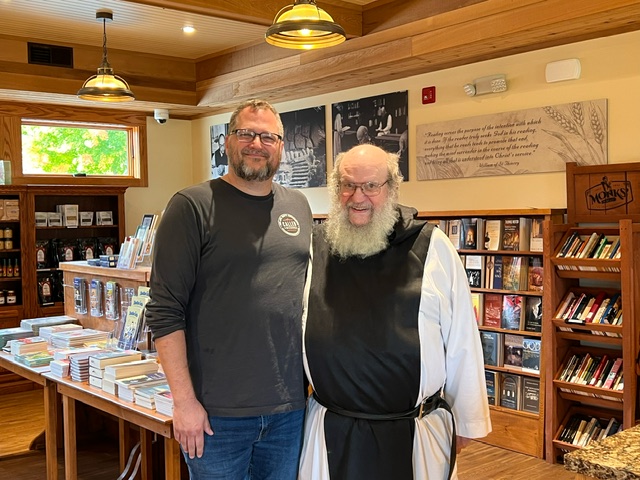
For those who are unfamiliar with it it is a small Benedictine Monastery in Piffard, about an hour south of here just outside of Geneseo. And yes, it’s where they make Monk’s Bread! It is a place where silence, solitude, and hospitality are held in high regard and where you can retreat to connect with God outside of the chaos of this noisy, busy world that we live in.
I first encountered The Abbey back in 2012 while taking a sabbatical following my parents’ passing.It provided me with a place to rest, reflect, and reaffirm my call to ministry. Much like Elijah in 1 Kings 19, it was my broom tree and mountain cave all rolled into one and, whenever I go back to visit, I feel a closeness with the Lord simply because of the healing that I received while I was there.
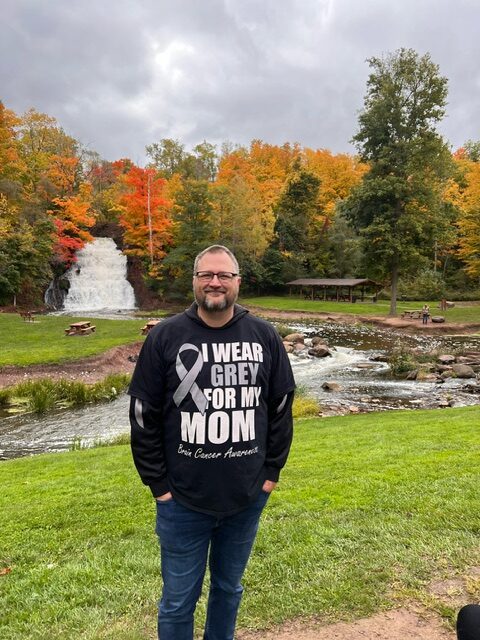
Since then, I have discovered other thin places closer to home such as Holley Falls. Having spent a significant amount of time there in prayer and study during the pandemic, as well as participating in The Walk to Remember in honor of my mother,I have found it to be a great place to visit in between ministry visits, if even for a few minutes, in order to pause, breathe, and get recentered.
So where is your thin place? Where do you go where you sense God speaking louder and clearer than other places? Let me know… See you in two weeks!
By Tom Rivers, Editor Posted 1 June 2024 at 4:06 pm
Photos by Tom Rivers
Kim Remley, left, and her sister Anne Beaty toss candy to kids along Route 98 during a parade in Carlton today.
The two were part of a float for Oak Orchard on the Lake. They are in a truck owned by Gary Wilson. His wife, Susie Wilson, and Km’s husband, Richard Remley, were also in the float.
Carlton last year had a bicentennial parade and festival and enjoyed it so much the town is looking to make it an annual event.
These families enjoy bounce houses and a saw dust pile at the town park.
Coupe de Ville was the first band to play under a big tent behind the Carlton Rec Hall. The Stony Creek Band takes the stage at 5 p.m.
Holley also celebrated with its annual June Fest today. The events began at 9 a.m. with the return of the Jim Ferris Memorial 5K. About 100 runners take off at the start of the race. They are headed down North Main Street and would soon go over the Erie Canal. Lucas Lyons of Rochester, no. 157, was the first overall finisher in 20:57.
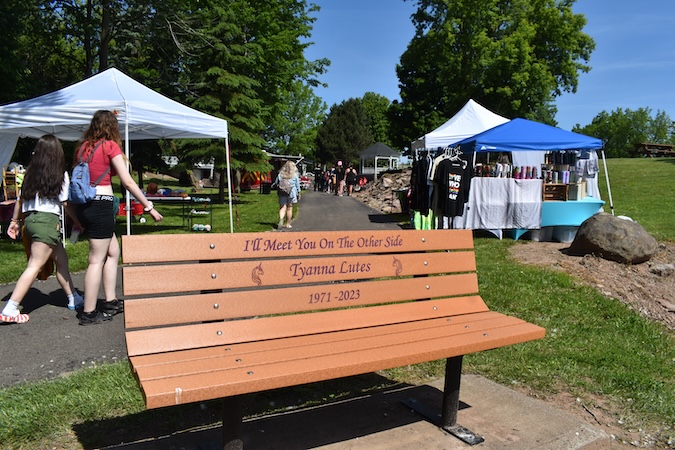
This bench – “I’ll Meet You On The Other Side” – was dedicated today in memory of Tyanna Lutes. There were 49 different food, craft and other vendors for the festival.
George Johnson of Holley was the lone entrant in the regatta on the Erie Canal where people needed to make a vessel from cardboard and duct tape. Johnson was able to turn boxes from the Dollar General into a boat he called “Ship Happens.” He used four rolls of duct tape to hold it together. He was able to paddle across the canal and back in just over 2 minutes. He urges more people to try next year.
“It just takes gumption,” he said.
Orleans Hub should have more photos from the festivals later tonight or tomorrow.
By Ginny Kropf, correspondent Posted 1 June 2024 at 2:43 pm
Photo by Ginny Kropf: Georgia Thomas, left, and Cindy Robinson, both members of Friends of Boxwood Cemetery, hold a sign promoting the second annual Tea Time at Boxwood June 8.
MEDINA – Having tea in a cemetery may sound unusual, but in olden times it was a normal thing to do.
On June 8, the Friends of Boxwood Cemetery will sponsor the second annual Tea Time at Boxwood, a fundraiser to benefit efforts to maintain the cemetery. The event will run from 2 to 4 p.m.
“Everybody last year seemed to enjoy themselves immensely,” said Georgia Thomas, who is helping organize the event. “They loved having tea and going through the cemetery. Years ago people literally brought picnic baskets on Decoration Day (now Memorial Day) to have a picnic with their deceased loved ones. Victorians would gather in cemeteries as they would in parks to socialize and picnic.”
It was a perfect setting for parasols and fancy hats, which prompted the Friends of Boxwood last year to have a tea.
Cindy Robinson described it as a high tea with more substantial foods. This year’s event will be low tea with more finger foods.
The tea will include hot tea and iced tea. New this year will be a table decorating contest.
“Last year, a guest brought their own bistro table and chairs, nicely decorated with Victorian accents,” Robinson said.
Winner of the contest will receive a $25 gift certificate to the English Rose Tea Shoppe. In addition, there will be little drawings throughout the event. Attendees will each receive an entry for the drawings with each ticket purchased. Anyone who joins Friends of Boxwood before the event will receive five additional entries.
Another feature will be a presentation by Mary Lewis, owner of Creekside Floral, who will discuss the proper plants for a cemetery.
The day will conclude with a historic tour of the renovation chapel with historian Todd Bensley, said Friends of Boxwood president Rob Klino.
Klino also reminds the public about future events at Boxwood Cemetery. These include “Bigger, Better, Brighter Boxwood at Night” on Oct. 5; and a tombstone cleaning event in August.
“It’s about creating awareness of Boxwood Cemetery,” Klino said. “People go through there to kayak on Glenwood Lake, and they come there to walk. It’s becoming a destination. “We are trying to undo the neglect of many years.”
Thomas described Boxwood Cemetery as “a parklike setting built in the late 1800s.”
Tickets for Tea Time at Boxwood are $20 for Friends of Boxwood members or $25 for non-members. They are available at English Rose Tea Shoppe, 527 Main St.
By Ginny Kropf, correspondent Posted 1 June 2024 at 11:20 am
Photo by Ginny Kropf: Medina’s Visitors’ Center has opened for the season in Rotary Park. Cheryl Broughton, left, a four-year volunteer and member of Medina’s Tourism Committee, stands with first-time volunteers Amanda Pollard, Lynn Mietz and Barb Gorham.
MEDINA – When the calendar hits June 1, volunteers hit the Visitors’ Center in Rotary Park.
The Medina Tourism Committee, chaired by Jim Hancock, has announced opening of the Visitors’ Center for the summer, with a handful of new volunteers.
This will be the 16th year for the Visitors’ Center, which has seen a steady growth in visitors and the destinations from which they come.
Hancock explained the Visitors’ Center first began in the offices of United Way and the American Red Cross on Main Street. They next moved to City Hall for a number of years before moving to the building in Rotary Park.
Last year saw 434 visitors from 34 states and five foreign countries stop at the Visitors’ Center.
This year, they welcome three new volunteers – Amanda Pollard of Medina, Lynn Mietz of West Shelby and Cheryl Broughton of Medina.
Pollard recently retired from Bank of Castile and was looking for a volunteer opportunity.
“I love Medina,” she said. “I was born and raised here.”
Gorham is starting her fourth year as a volunteer. She looks forward to meeting new people and telling them what Medina has to offer. When she was still working, she volunteered on Saturday mornings, but now that she’s retired, she is happy to be manning the center on week days.
“I was surprised to meet people from all around the world, many who came on the canal or biked here,” Gorham said. “People ask where there’s a good place to eat or stay, or they want to know about Medina Sandstone and the Erie Canal.”
Gorham taught foreign language, which makes it easy for her to talk to foreigners about Medina’s architecture and all that’s going on here.
“I moved here in 1989 for my job teaching at Roy-Hart, and I’m really proud of this place,” Gorham said.
Broughton was originally from Niagara Falls and has a daughter who moved here 24 years ago. She would come and visit her. So when her husband died, Broughton sold her house in 2022 and moved here.
The Visitors’ Center is open from 10 a.m. to 4 p.m. Monday through Saturday. Anyone who would like to volunteer may contact Hancock at (585) 590-1248.
Being in Rotary Park is a great location for the Visitors’ Center, Hancock said.
Mietz said he lived in Akron and his parents always came to Medina for a fish fry. He remembers when G.C. Murphy was on Main Street and he once met Dan Spaghett there.
By Ginny Kropf, correspondent Posted 1 June 2024 at 8:08 am
MEDINA – Friday night cruise-ins in Medina have a new look this year.
After decades of taking place in the canal basin under the organization of David Green of East Shelby, Green retired last year and his role was assumed by Rollin Hellner and Tom Snyder.
Hellner and Snyder have affected some changes in the event, namely, moving it to the parking lot of the Senior Center. Snyder explained the reason was lack of insurance coverage, which is required by the village, if they stayed in the canal basin.
“It would have cost us $400 a night for insurance at the canal basin,” Snyder said. “Here at the Senior Center, we are covered by the Walsh Hotel’s insurance.”
People check out the vehicles which were from many eras. There was also a hearse and an original Indy 500 pace car.
Hellner purchased the Walsh Hotel, which is across the road from the Senior Center, last year.
While the Senior Center location cannot accommodate as many cars, remarks from most cruisers were favorable. One car owner did say it was too crowded and didn’t offer near as much room for cars as the canal basin. Only 56 vehicles were displayed, while on most Friday nights in the canal basin, cars and trucks numbered between 80 and 100.
Timothy Caldwell of Medina, who brought his 2019 Corvette convertible, said it was nice there and he liked being able to get food from the Walsh across the street.
Photos by Ginny Kropf: Larry Albanese of Albion stands next to his 1922 Ford Model T, which he brought to Medina’s cruise-in for the first time Friday night.
Larry Albanese of Albion had never been to a Friday night cruise-in in Medina before, he said. A founding member of the Oak Orchard Lighthouse, Albanese has always volunteered at the lighthouse on Friday nights, he said. He got a friend to stand in for him so he could show his 1922 Ford Model T.
Dan Marek of Albion said he has been coming to the cruise-ins in Medina for years, and thinks the new location will be fun.
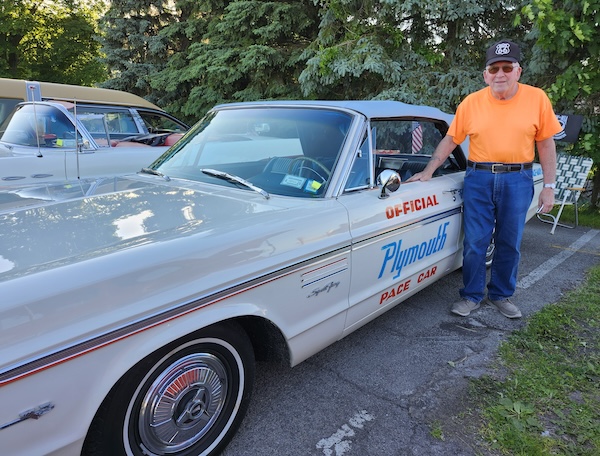
Peter Castricone of Medina recently purchased a new vintage automobile – a 1965 Plymouth pace car. He said only 32 were made and his was number one.
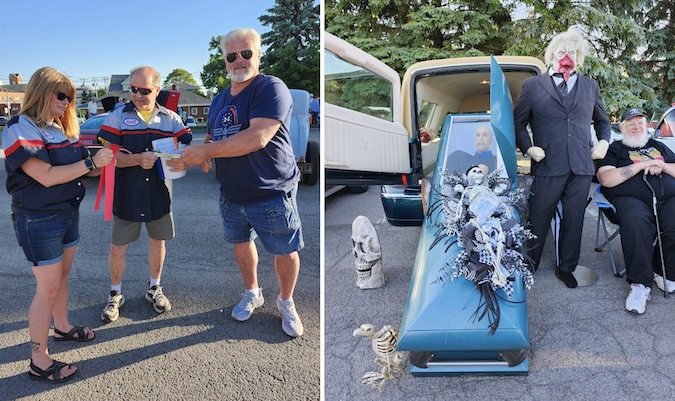
(Left) Tom Snyder and Kelly Fisk sell raffle tickets to Dan Marek of Albion, left, during the Medina’s Friday night cruise-in, which this year has moved from the canal basin to the Medina Senior Center, where 56 cars showed up. (Right) Steven Miller of South Buffalo sits next to his 2004 Lincoln hearse and a mannikin of the Grim Reaper. He hopes to come back next week and bring members of their Hearse Club.
Buffalo DJ Hank Nevins had provided music for the cruise-ins for most of their years, until his retirement last year. New entertainer this year is Medina disc jockey JT Thomas.
The summer cruise-ins will end as usual in August with a Super Cruise on Main Street, featuring Terry Buchwald as Elvis.
Peter Castricone of Medina proudly shows off his newly acquired 1965 Plymouth pace car at Medina’s first cruise-in Friday night.
By Ginny Kropf, correspondent Posted 31 May 2024 at 9:46 pm
Julie Woodworth from Lyndonville among the leaders of the trip, first since 2015 for college
Provided photo: (Left) Students and professors from SUNY Niagara pose in the Piazza del Duomo in Florence, Italy, during a recent trip to Europe. (Right) SUNY Niagara students and professors also visited the historic Jesuitenkirche St. Franz Xavar Church in Lucerne, Switzerland.
SANBORN – Two local professors from SUNY Niagara recently took 11 students on a study abroad trip spanning four countries. (Niagara County Community College recently changed its name to SUNY Niagara.)
Professors Bridget Beilein of Wilson and Julie Woodworth of Lyndonville led the trip May 14-23 to Germany, Austria, Italy and Switzerland. Beilein teaches Spanish and French and Woodworth is a professor of nursing. Also accompanying them was Jordan Lindsay, a technical assistant at the college.
“The last study abroad was in 2015, so we have revived it with this trip,” Woodworth said. “We have another planned to Amsterdam and France in May 2025.”
Areas visited included Dachau Concentration Camp Memorial Site in Munich, Murano and Burano Islands where they learned about glass blowing; historic guided tours of St. Marcos Square in Venice and Milano, Italy; the funicular ride at Lake Como with amazing views of the city; stops to view the Lion Monument, Kapelibrucke and Jesuitankirche St. Franz Xaver Church in Lucerne; concluding with a visit to Rigi Mountain in the Swiss Apls and a Lindt chocolate museum tour.
Food delicacies enjoyed included pork schnitzel, apfelstrudel, sausages, pretzels in Germany and Austria, pizza, pasta and gelato from Italy and cheese fondue and chocolate from Switzerland.
One student said, “The study abroadship impacted me by giving me a more open-minded view of the world.”
A student named Angela said her favorite part was the Alps in Switzerland at the top of Rigi Mountain.
“It was just amazing,” she said. “I can’t wait to go next year to Paris and Amsterdam with the school.”
“Germany is a beautiful country and was a real surprise,” Woodworth said. “Visiting Dachau was a real eye-opening experience for all of us. We were able to see that there were hundreds of concentration camps where Jewish people were tortured and killed after enduring horrible encampment conditions. The Germans are committed to remembering this terrible past and never forgetting this tragic regime of a leader with a specific agenda to create a superior race and eradicate all others. This is a concerted effort to never repeat that history. The experience was life-changing for us all.”
By Tom Rivers, Editor Posted 31 May 2024 at 5:34 pm
Photos by Tom Rivers
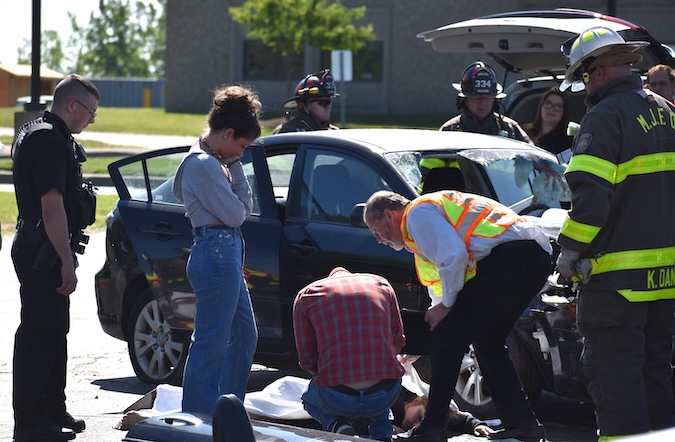
HOLLEY – Sierra Apicella and her brother Xander are asked to look into a body bag where their younger sister Jasmine was pretending to be dead. Jasmine had makeup on her face to look like blood.
Chief County Coroner Scott Schmidt is at right. Holley police officer A.J. Fisher is at left.
Holley first responders staged a driving while intoxicated accident in front of the junior-senior high school. There were six students who were in the accident. Five had injuries and Jasmine was pronounced dead at the scene.
Sierra Apicella, 22, is overcome with emotion after seeing her sister lying motionless and pretending to be fatally injured in a car accident. Her brother, 25, also said it was difficult to see their younger sister in such a state.
“It was shocking,” Sierra said after the simulation. “It was a lot more than we thought.”
Lance Babcock has a neck brace as he led to an ambulance. About 75 Holley students watched from bleachers in the parking lot.
Holley did the simulation this morning. The junior-senior prom is tonight at the Ridgemont Country Club in Rochester.
Students were strongly encouraged not to drink and drive, and to be careful in the upcoming season of graduation parties. That includes any distracted driving, including texting and being overly tired.
Holley and Clarendon firefighters take the windshield out of a vehicle to try to extricate two students inside.
Gallo’s Performance Auto Parts donated an Infinity and Mazda to simulate the crash. The Village of Holley DPW brought a loader over this morning to smash up the vehicles to make them look like there had been an accident.
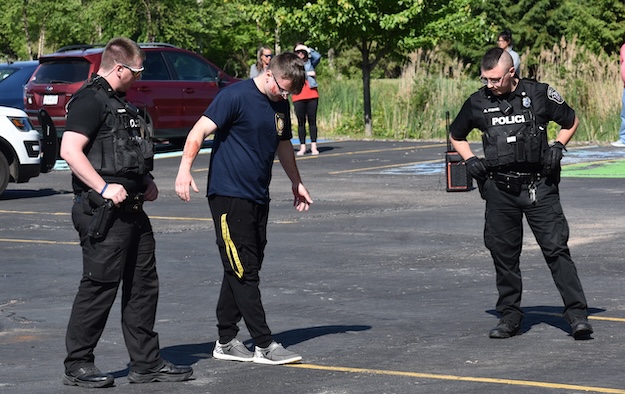
Holley police officers have Noah St. John do a field sobriety test to see if he can walk in a straight line. The Holley officers Jacob Buzard is at left and AJ Fisher is at right.
St. John said he considered it an honor to be part of the simulation, showing the serious consequences that can occur from drunk driving.
Lorenzo Zaragoza is taken by stretcher to a Monroe Ambulance to be transported.
Before going outside to see the simulation, Holley students saw a video that showed where some of the students pretended to be at a party, drinking alcohol. One student tried to stop them from getting in a car and driving.
The video then went to black, and then there was a 911 call about a two-vehicle accident in Murray with serious injuries.
Murray Fire Chief Rick Cary told students to show respect and look out for each other. Cary said car accidents with teen-agers are very difficult for the volunteer firefighters, who often have children of their own. He said the accidents are often avoidable.
“Guys, it’s up to you,” Cary told the students.
Holley has doing the simulation around prom and graduation season nearly every year for about 25 years, Cary said.
There also was a court proceeding in the school auditorium where St. John was arraigned on charges of felony aggravated vehicular homicide and driving while intoxicated, facing likely imprisonment when he is sentenced.
Orleans County District Attorney Joe Cardone acted as the judge with assistant district attorney Susan Howard, left, the prosecutor and Elizabeth Ogden, an assistant district attorney who served as public defender. Holley police officer A.J. Fisher is at right.






























 By Randy LeBaron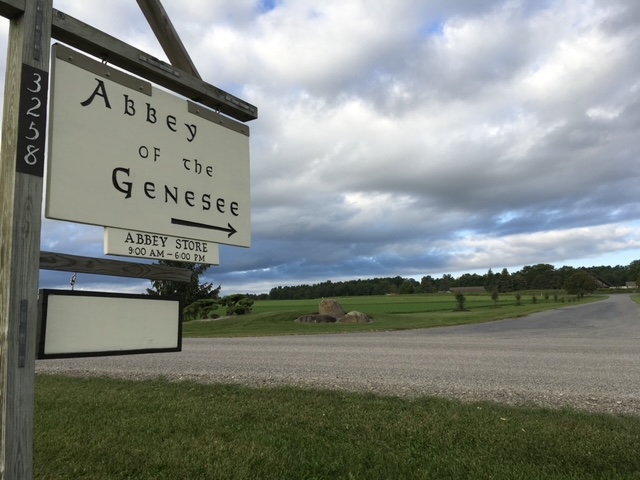
 Since then, I have discovered other thin places closer to home such as Holley Falls. Having spent a significant amount of time there in prayer and study during the pandemic, as well as participating in The Walk to Remember in honor of my mother,