









Orleans County

In state of the county address, Albany faulted for driving up costs for residents, local governments

By Tom Rivers, Editor Posted 2 May 2026 at 12:32 pm

Leg leader says state policies play big role on local spending
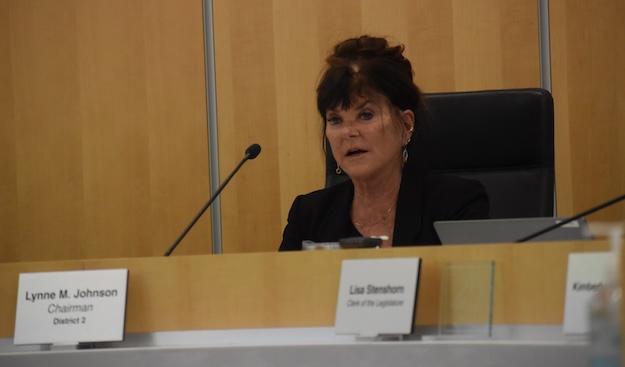
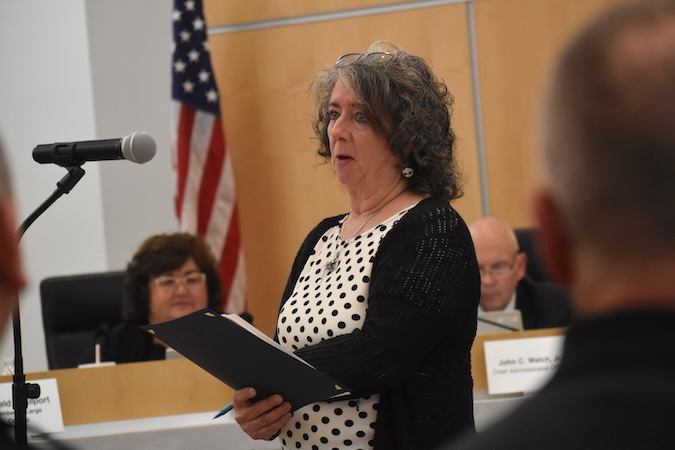
Photo by Tom Rivers: Orleans County Legislature Chairwoman Lynne Johnson gives her “state of the county” address on Tuesday at the legislative chambers in the County Office Building.

ALBION – The leader of the Orleans County Legislature said state policies are straining the county budget and local pocketbooks.

Lyne Johnson, the chairwoman of the County Legislature, said the impact of state mandated programs continues to increase as a percentage of the county property tax.

County officials in the past spoke about the “9 for 90” mandated programs, how nine directives from the state would consume about 90 percent of the property tax. Johnson said those days feel nostalgic because the mandated programs now are 115 percent of the property tax. (The county can offset some of that and provide non-mandated programs with the local sales tax revenues).

“Our government must do what working families do every day – live within a tight budget and make tough choices,” Johnson said in a “state of the county” address. “We must continually finds ways to do more with less. We must forgo some things we really need until we are in a better fiscal position, and we have to be creative and aggressive in our search for solutions.”

State policies have driven up costs for housing and energy. Residents also face climbing  expenses for childcare, groceries and filling their gas tank, Johnson said.

“New York has long been recognized as one of the least affordable states in the nation, but it feels like it has gotten much worse,” Johnson said. “The cost of living continues to rise faster than wages, leaving families squeezed from every direction.”

She faulted the state’s climate initiatives, in particular, for being “poorly designed” and ignoring the reality of the harsh Western New York winters. Johnson said the state rushed to close coal power plants, and has turned to thousands of acres of “unreliable solar panels on once pristine farmland.” Solar hasn’t made up for the loss of the coal plants, forcing NY to turn to other states for some power “at a premium cost.”

“This is just one of a hundred policies that simply ignore common sense,” she said.

Johnson said she will remain optimistic about Orleans County, and the resilience of its residents and the local leaders. She noted the County Legislature will continue to stay under the state-imposed property tax cap of about 2 percent.

“It’s no secret that this body will not vote to exceed the property tax cap because that just worsens the cost of the affordability crisis on our taxpayers,” she said.

She highlighted partnerships with neighboring counties, including the shared Genesee and Orleans County Health Department (GO Health) and the Niagara-Orleans Regional Alliance.

“Intermunicipal cooperation and the sharing of resources will always be an important focus for us,” she said.

The Legislature leader said county officials have pursued state and federal funding “at every turn possible, pounding the pavement in Washington and Albany to lobby for our needs.”

That paid off with $2 million from the federal government to help pay for a new Emergency Management Office operations center and $2 million for upgrades to the Public Safety Building.

The county is seeking $1.65 million through Congresswoman Claudia Tenney’s office to renovate the former GCC building in Albion, which is currently used by Probation. The county would like to bring the Office for the Aging to the site as well.

Johnson cited other new initiatives to assist residents:

  • Department of Social Services launching an AI-powered virtual phone assistant to help residents
  • An annual paint recycling program with the next one is from 9 a.m. to 1 p.m. on May 30 at the GCC campus in Medina.
  • Emergency services citizen preparedness training
  • Safe Harbor program to keep kids safe from online predators
County leaders across NYS ask for federal delay on SNAP cost shift

Posted 30 April 2026 at 4:15 pm

Orleans County faces $252,000 financial hit from change

Press Release, New York State Association of Counties

ALBANY – The New York State Association of Counties (NYSAC), joined by county leaders from across the state and representatives from the anti-hunger community, today called on Congress to delay implementation of a major federal cost shift to the Supplemental Nutrition Assistance Program (SNAP), warning it will strain local budgets and threaten food access for millions of New Yorkers.

The call came during a virtual press conference featuring NYSAC Executive Director Stephen J. Acquario, NYSAC President and Oswego County Administrator Philip Church, Onondaga County Executive and New York State County Executives’ Association President Ryan McMahon, and leaders from the Regional Food Bank and Island Harvest.

The appeal follows changes enacted in the federal One Big Beautiful Bill Act (OBBBA), which reduces the federal share of SNAP administrative funding from 50 percent to 25 percent beginning October 1, 2026. In New York, where counties administer the program, this change is expected to impose at least $168 million in new annual costs for counties and New York City. (Editor’s Note: The impact to Orleans County would be $252,000 annually.)

County leaders are urging Congress to delay the cost shift to allow time for states and local governments to prepare for the significant operational and fiscal impacts.

“New York is unique in the nation in that counties are charged with delivering SNAP benefits to nearly 3 million New Yorkers, and this abrupt federal cost shift threatens our ability to do that effectively,” Acquario said. “We are asking Congress for a reasonable, bipartisan solution—a two-year delay—so counties can plan, build capacity, and continue serving residents without disruption.”

Acquario noted that the urgency of the issue is underscored by recent experience. During the federal government shutdown late last year, disruptions to SNAP benefits led to immediate spikes in demand at food banks across the state, highlighting the program’s critical role in preventing hunger and stabilizing communities.

Philip Church, NYSAC President and Oswego County Administrator, emphasized the fiscal pressure counties are already facing and the limited options available to absorb new costs.

“After decades of partnership, this sudden shift in federal responsibility places millions of dollars in new requirements on local governments,” said Church. “Counties are already dealing with rising costs in Medicaid, retirement benefits, and other state mandates. Without relief, we are left with two unacceptable choices: raise property taxes or cut essential public services.”

Onondaga County Executive Ryan McMahon highlighted both the human and economic stakes of the proposed changes.

Leaders from New York’s food banks echoed these concerns, noting that any disruption to SNAP will increase demand on already strained emergency food systems.

Susan Lintner, Chief of Advocacy and Engagement, Regional Food Bank said, “For every meal provided by food banks and our partner food pantries, soup kitchens and shelters, SNAP provides nine; the charitable food system is not designed to meet that need. SNAP remains the our nation’s most critical program to addressing food insecurity. In order to ensure seamless continuity of these essential benefits, our county leaders deserve the opportunity to plan, prepare and budget to ensure that our neighbors continue to access, while also being fiscally responsible to taxpayers. All New Yorkers deserve the confidence of knowing they have access to their next meal.”

Counties stressed that the request for a delay is a practical, time-limited solution that would allow for proper planning, staffing, and system upgrades needed to implement the changes effectively.

In addition to the federal delay, county leaders urged the State of New York to include funding in the enacted state budget to cover the full cost of the shift if it proceeds as scheduled—protecting counties, New York City, and the 2.7 million New Yorkers who depend on SNAP.

County sales tax revenues off to strong start in first quarter of 2026

By Tom Rivers, Editor Posted 30 April 2026 at 1:42 pm

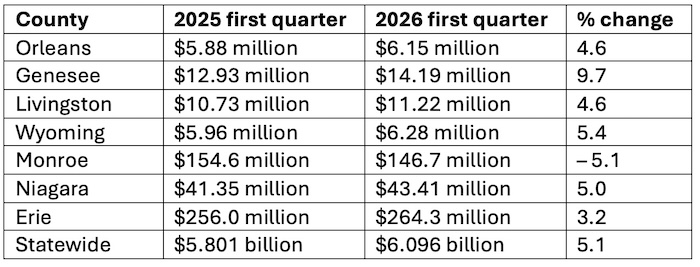
Chart information from State Comptroller’s Office. The state-wide number represents the amount for local governments – counties and cities.

ALBION – Orleans County’s sales tax revenues are up 4.6 percent in the first quarter of 2026, an increase of nearly $300,000 from $5.88 million to $6.15 million, according to the State Comptroller’s Office.

Orleans is coming off a big sales tax year in 2025 when revenues jumped 9.3 percent or nearly $2.2 million from $23.42 million in 2024 to $25.59 million in 2025.

The revenue helps the county offset increases and helps hold down property taxes at the county level. The County legislature also shares $1,366,671 with the 10 towns and four villages, a level that has been unchanged since 2001. The towns and villages collectively receive about 5 percent of the total.

State-wide the local government sales tax collections are up 5.1 percent from $5.8 billion to 6.1 billion. Ulster County in seeing the biggest increase at 10.7 percent, followed by Genesee County at 9.7 percent.

“Local sales tax collections experienced a substantial increase in the first quarter compared to last year, but growth varied significantly by region,” said Tom DiNapoli, the state comptroller. “An economic slowdown due to geopolitical conflicts and federal actions could affect future tax collections, and local governments must be cautious in estimating this revenue.”

The comptroller said inflation was 2.4 percent in both January and February this year before increasing to 3.3 percent in March.

“In addition, gas prices spiked nationwide this past March due to the conflict between the United States and Iran,” the report from the comptroller stated. “Large fluctuations can influence local sales tax collections, even though motor fuels sales taxes comprise a small percentage of total collections.”

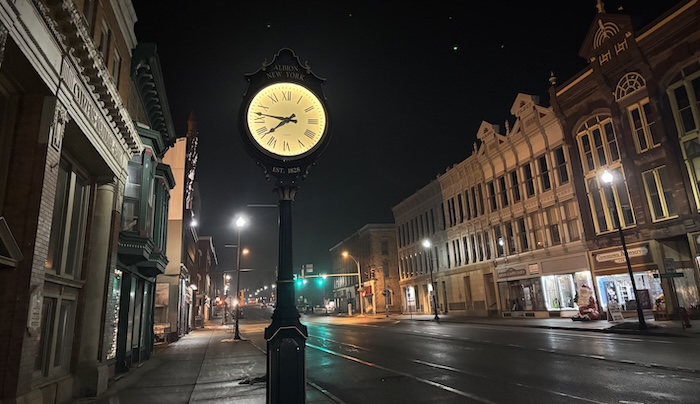
Photo by Tom Rivers: Main Street in downtown Albion is shown in this photo from early March.

Officials asked if interest in county providing code enforcement for towns, villages

By Tom Rivers, Editor Posted 30 April 2026 at 9:59 am

County-wide system would have full-time staff, more consistency

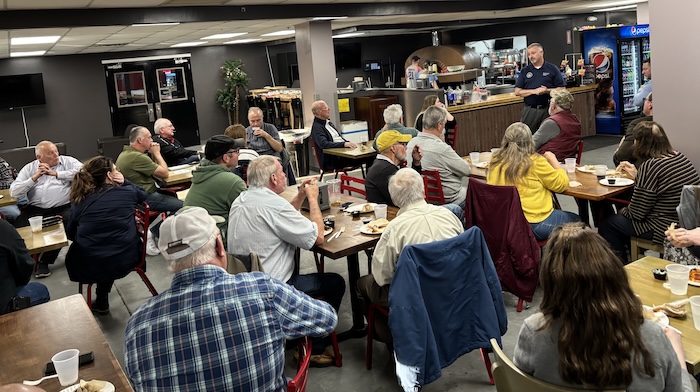
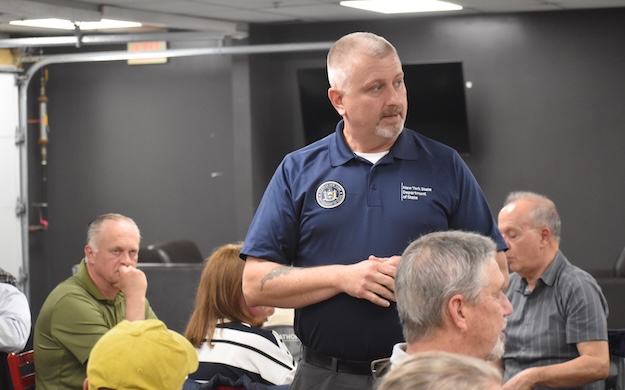
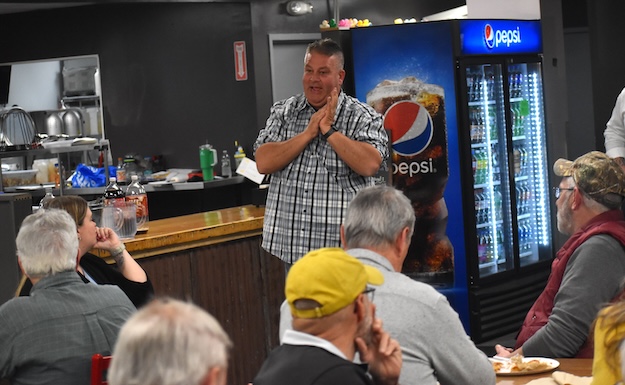
Photos by Tom Rivers: The Orleans County Association of Municipalities met Tuesday evening at Dubby’s Tailgate to discuss code enforcement in the county and whether there would be interest from the towns and villages for the county to do some of the code enforcement work. Chad Haviland, assistant director for Oversight for the New York State Department of State, Division of Building Standards and Codes, spoke to the group. Haviland said some counties do code enforcement, and that has resulted in more consistency in how the job is done in those communities.

ALBION – Do the towns and villages in Orleans County have the best system for providing code enforcement in the community right now, or could the service be improved with the county helping with property maintenance and fire inspections, incident responses and other duties that can arise 24-7?

Most of the municipalities have part-time code officers. A shift to full-time officers at the county should improve accessibility and consistency in how the job is done, local officials were told during a meeting Tuesday. About 50 people attended the Orleans County Association of Municipalities meeting at Dubby’s Tailgate.

The county Department of Planning and Development has put together a survey about the issue and is seeking input from the code officers, town and village board members, and zoning and planning board members about the current code enforcement needs and challenges, and whether there is interest in exploring whether the county should provide code enforcement.

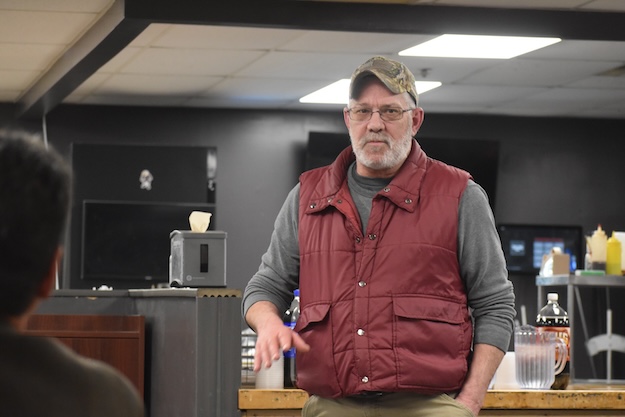
Dwayne Tinkous, code enforcement officer for the town of Carlton, said the part-time job is demanding, requiring full-time effort. Last year he handled 120 permits in Carlton. He said a shift to the county in doing the job may result in a loss of the “personal touch” where the town code enforcement knows the people and their circumstances.

Being a code enforcement officer is “one of the most thankless jobs out there,” said Dwayne Tinkous, the Carlton code officer. He brings a “personal touch” and has been able to resolve issues with property maintenance and permits, without ever going to court in his three years on the job.

“I try to make it personal,” he said. “You can put out fires before they start.”

If the code officer wasn’t from the town, Tinkous fears they wouldn’t be as personable and would be quick to cite people for a violation.

The position is part-time, but he said it is full-time hours in Carlton. Last year he handled 120 permits.

Tinkous said the local code officers could use more help in doing all facets of the job, but he isn’t sure having the county involved in the best approach.

“Just the lakeshore alone is impossible to deal with,” Tinkous said about the many permits and projects on that coveted property.

The local code officers do work together and cover for one another if someone is out of town, Tinkous said.

Chad Haviland, assistant director for Oversight for the New York State Department of State, said there are a lot of requirements on code enforcement officers for training that can make it difficult for rural areas to have enough certified people in the positions.

Chad Haviland, assistant director for Oversight for the New York State Department of State, said some parts of the state have a shortage of code officers, and he worries the situation will get worse. He supports full-time code officers at the county level, who would do work in the towns and villages.

The municipalities could contract with the county, perhaps being billed by permit, population or parcel.

County Legislator John Fitzak said the informal survey among the local officials is to gauge if there is interest in doing a more formal study on the pros and cons of countywide code enforcement, how it would be funded and what services provided. If the municipalities are happy with the current system, Fitzak said there is no reason to make a change.

Genesee County is currently doing a study for county-wide code and zoning enforcement for 20 municipalities, trying to bring more consistency for residents, businesses and property owners.

Tim McMurray, the Albion mayor, speaks at Tuesday’s meeting about code enforcement in the community. He said one option could be the county handling fire inspections do let code officers focus on other parts of the job.

Lyndonville Mayor John Belson said the issue has been discussed in Orleans County before. Belson, the former Yates town supervisor, was part of a group from Orleans that visited Wyoming County to see how it handled county-wide code enforcement.

He recalled there were four full-time officers and each hand a county car and a secretary and needed offices. They were provided health insurance and retirement benefits.

“It was a phenomenal amount of money,” Belson said.

Barre Town Supervisor Steve Coville said he isn’t in favor of making a change from the town’s part-time codes officer unless he can see a benefit to Barre in reduced cost and improved service. He would like to see all the code officers in the county get together and make suggestions first before getting into a survey.

Paul Hennekey, the Kendall code officer, noted many of the code officers “are beyond retirement age.”

Haviland, the Department of State official, said code enforcement is a critical position that can lead to fewer fires and building collapses. He previously worked as a senior code officer in the town of Seneca.

“It’s about safety and who’s going to be living there next,” he said.

Corey Winters, director of Planning and Development for Orleans County, said the county will wait to see the results of the initial survey before deciding whether to pursue a bigger study on the issue.

Chris Kinter, the code officer for the village and town of Albion, said code officers need the support of their town and village boards, as well as municipal attorneys to do the job effectively.

Holli Nenni, retiring DSS commissioner, praised for 38-year career

By Tom Rivers, Editor Posted 29 April 2026 at 3:03 pm

Photo by Tom Rivers: Holli Nenni accepts a “Special Recognition” award on Tuesday from the Orleans County Legislature in appreciation for a 38 ½ year career with the Department of Social Services.

ALBION – When Mary Grace “Holli” Nenni started as a caseworker for Orleans County 38 ½ years ago, the Department of Social Services didn’t have cell phones or the internet.

Nenni used a Dictaphone to record notes from client visits.

When she started her career, she never imagined she would be ending it as the commissioner of the DSS, overseeing 70 employees.

Nenni will be retiring on May 22. She started in 1987 as a caseworker and then was promoted to a senior position in 1992. She became coordinator of Child Enforcement Unit in 2000, then director of temporary assistance in 2006. She was promoted to deputy commissioner of social services in 2010 with a final appointment as DSS commissioner in 2021.

“Your dedication and expertise have benefitted our county tremendously,” the County Legislature declared in an award presented to Nenni on Tuesday.

Legislators praised Nenni for her “commendable service and dedication to the Orleans County Department of Social Services.”

Nenni worked with three DSS commissioners before becoming one herself.

“Each step of my journey came with its own challenges, but also a lot of growth,” Nenni said during the Legislature meeting. “While I’m looking forward to forgetting a lot of the past 38 years, one thing I won’t forget is the co-workers who show up every day ready to help others. Each of them helped me along in my journey.”

The DSS divisions include temporary assistance, child & family services, domestic violence services, and the child support and enforcement unit.

DSS partners with many local agencies and county departments – UConnectCare, Mental Health, Job Development and others – to help people overcome barriers and become self sufficient, Nenni said.

In recent years, DSS has faced a rising caseload of people without housing. Before the Covid pandemic in 2020, DSS usually was working with less than 20 people to find housing.

“We were in the teens, and now we’re in the low 70s,” Nenni said. “We have been over 100.”

A former youth that Nenni assisted as a caseworker spoke at Tuesday’s Legislature meeting and thanked Nenni for helping guide him through a rough period of his childhood. Tim McMurray is now the Albion mayor. He said Nenni was able to connect him with a supportive family, and that made a huge difference in his life.

The Legislature named Nenni’s successor during the Tuesday meeting. Shirley Mazourek, a licensed clinical social worker and mental health professional, will be the next commissioner.

Motorcycle safety ride will start and stop in Medina on Sunday

By Tom Rivers, Editor Posted 29 April 2026 at 11:41 am

Photo by Tom Rivers

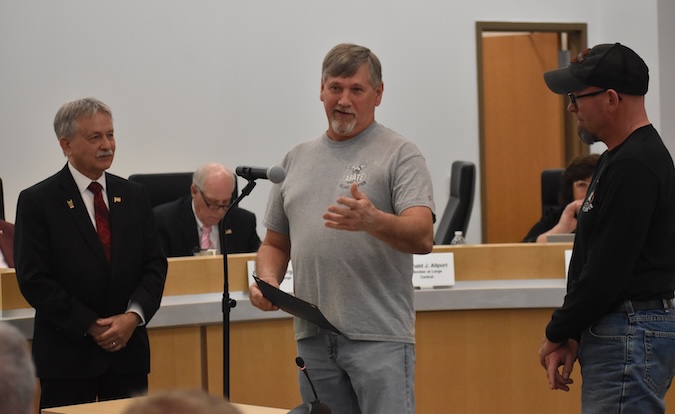
ALBION – Don Sloper, center, president of the Orleans County chapter of American Bikers Aimed Toward Education (ABATE) accepted a proclamation from County legislator Don Allport on Tuesday that declared May as “Motorcycle Safety and Awareness Month in Orleans County.” Sloper was joined in legislative chambers by Steve Rosenberg, vice president of ABATE.

The organization usually has a motorcycle safety and awareness rally at the Orleans County Courthouse the first Sunday in May, and then heads out on a 50-mile ride in the county, ending at the VFW in Medina.

ABATE will instead be starting its ride at the VFW in Medina on Sunday with riders to assemble at 1 p.m. and speakers at 2 p.m. The motorcyclists will then embark on a 50-mile ride around the county.

The county is requiring proof of insurance by organizations to hold events at the courthouse property. Sloper said ABATE didn’t want to spend the money for the insurance and instead will start at the VFW.

ABATE has about 80 members in Orleans County. Motorcyclists want the public to know they are back on the roadways. The motorcyclists urge drivers to “look twice” and use extra caution when making a left turn or pulling out onto the roadway.

Ryan Woolston named new IT director for Orleans County

By Tom Rivers, Editor Posted 29 April 2026 at 8:26 am

Ryan Woolston

ALBION – The Orleans County legislature appointed Ryan Woolston on Tuesday to be the new director of information technology services for the county government.

Woolston, a Carlton resident, has worked in the IT department for 20 years, starting as a computer specialist. He has been the deputy director the past four months.

Woolston oversees a department of nine employees. IT supports every county department with a focus on keeping their computers and technology running smoothly so employees can focus on serving the public.

When Woolston started, Information Technology was based at Central Hall, the former’s treasurer’s building, on East Park Street. The department moved to the county administration building on Route 31 as part of a $10 million addition in June 2019.

The Legislature on Tuesday also approved spending $191,812 to purchase 125 new computers from Dell marketing in Pittsburgh, Pa. Woolston said the county tries to replace computers every five years. The 125 is part of about 500 used by county employees.

County accepts bids for nearly $5 million for new Emergency Management Office

By Tom Rivers, Editor Posted 28 April 2026 at 9:36 pm

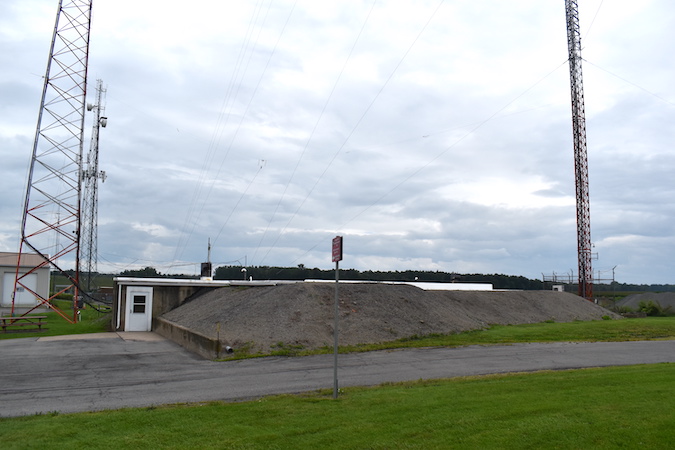
File photo by Tom Rivers: The current emergency management office was built as an early 1960s bomb shelter. It has a leaking roof and a shortage of space.

ALBION – The Orleans County Legislature approved about $5 million in construction bids today for a new Emergency Management Office.

The new building will be one-story and 7,700 square feet. It was downsized from a proposal for a 17,000-square-foot building. Initially county officials sought a new building that was 11,000 square feet for offices and classrooms, and another 5,600 square feet for equipment storage. That complex would have topped $12 million.

The county has been awarded a $2 million federal grant secured by U.S. Sen. Kirsten Gillibrand and Congresswoman Claudia Tenney. The county may be able to pay off the remaining amount from its existing funds, or it may need to borrow some money to complete the project, said County Chief Administrative Officer Jack Welch.

The construction bids approved today include $3,931,000 for general construction by the Watson Construction Group Inc. of Albion; $360,000 for plumbing/fire protection by McGrain Mechanical of Rochester; and $547,500 to McGrain Mechanical of Rochester for HVAC.

The new building will be west of the current structure that is about 3,000 square feet. Most of the current EMO building is underground and is prone to flooding after heavy rains. It isn’t handicapped accessible and is tight on space.

County officials eventually want to have that building demolished but that isn’t part of the construction bids approved today.

The new building will include offices for the EMO’s three full-time staff, a classroom for training for firefighters and other first responders, and space to have the backup 911 dispatch system.

The county also is looking to take down two radio towers – one is 485 feet tall and the other is 225 feet – and replace them with one tower. Welch said it will be at county cost to remove the towers and but there should be state funding to help put up the new tower in a project separate from the new building.

Construction is anticipated to start on the new building in July.

Orleans, Niagara reps advocate for dredging of recreational harbors on Lake Ontario

Posted 27 April 2026 at 9:45 pm

Provided photo and press release, Orleans County Legislature

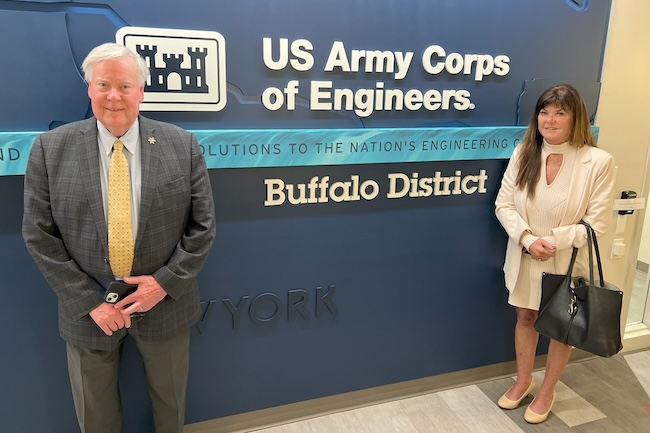
BUFFALO – Orleans County Legislature Chairman Lynne Johnson and Niagara County Legislator Dave Godfrey took part last week in the Great Lakes Shallow Harbor Draft Stakeholders meeting led by the U.S. Army Corps of Engineers.

The legislators continue to advocate for dredging of our recreational harbors along the shore of Lake Ontario to ensure they remain open to boaters. These recreational harbors are a significant economic driver for the communities along the lake.




Editor’s Note: The Oak Orchard Harbor was dredged in 2025, 2021 and 2014.

A total of approximately 15,000 cubic yards of material from Oak Orchard was dredged last year.

Dredging of the harbors ensures accessible depths for vessels traveling the Great Lakes and enables recreational boating which supports business revenue and labor income to the transportation sector combined.

Oak Orchard Harbor is a shallow-draft harbor. Recreational boating facilitated by the harbor supports $6.8 million in business revenue, 94 direct, indirect, and induced jobs, and $6 million in labor income to the nation, the Army Corps of Engineers stated in a press release last year.

Eagle Harbor Road reopens after repairs from flooding on April 1

By Tom Rivers, Editor Posted 24 April 2026 at 3:42 pm

Photos by Tom Rivers

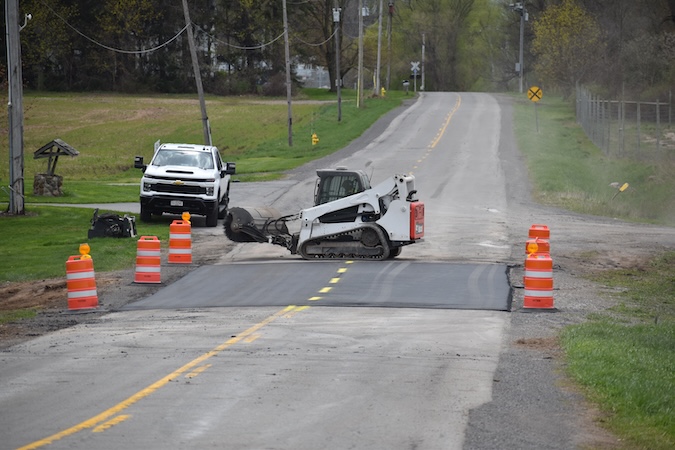
ALBION – A section of Eagle Harbor Road reopened to traffic this afternoon following repairs to the road from flooding on April 1.

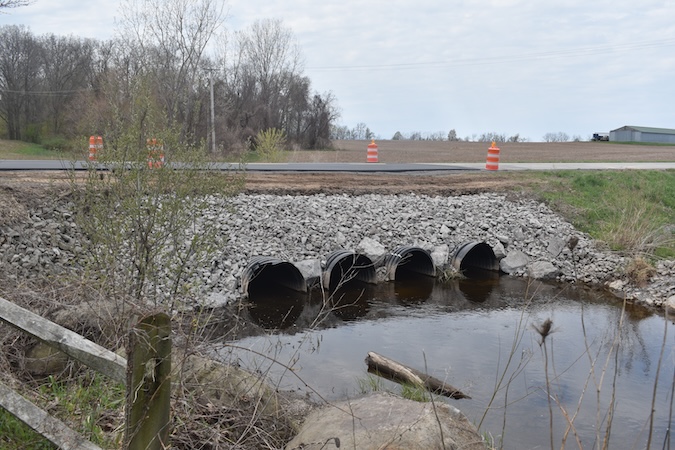
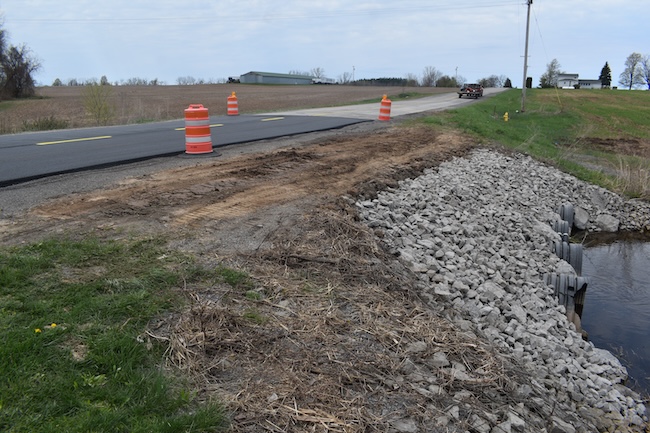
The top photo shows the Orleans County Highway Department using a Bobcat with a power broom to remove dirt and dust on a section of the road that was repaved.

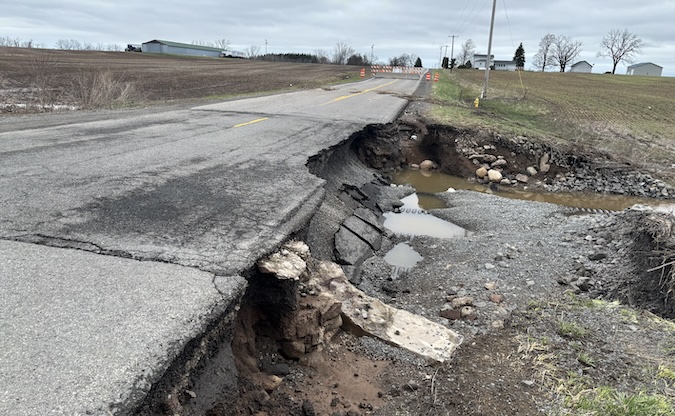
A big rainstorm on April 1 flooding across the road and took out a chunk of it on the east side.

The Orleans County DPW put in about 120 tons of crusher-run stone to shore up the shoulder and part of the road support that had washed out. The DPW then added heavier stone and riprap to hold the gravel in place.

Keeler Construction put new pavement on top of the road. The repairs cost about $20,000, Lane said.

The four culvert pipes carry water from Otter Creek underneath the road. There used to be a ridge here more than 30 years ago, said Craig lane, the DPW superintendent for the county.

The bridge had a span of about 24 feet. It was replaced with culvert pipes. Those pipes don’t handle the water as well with a big rainstorm, and the culvert pipes sometimes get clogged with debris, impeding the water flow, Lane said this afternoon.

He said he will be seeking state and federal funds through the Genesee Transportation Council to turn this spot back to a bridge in the future.

Here is how the rebuilt road and culvert looks this afternoon, not long before the road reopened to traffic.

Soon after the April 1 flooding, which Lane called a once-in-a-decade-storm, the Orleans County DPW also reset drainage pipes that were exposed and knocked out of place on Culvert Road in Ridgeway near the Canal Culvert. The DPW also cleared debris out of the Culvert tunnel.

The DPW workers also fixed a driveway on Orleans-Monroe Countyline Road, adding stone that had been washed out near the road.

Justin Niederhofer, the county’s emergency management director, said it looks like the county may be eligible for federal reimbursement from the storm damages. Many counties were affected by the storm and there is a threshold statewide for the counties to receive aid. The state is going through that process now to see if there will be FEMA aid for the counties, Niederhofer said.