





















Ortt, NYS Senate Republicans say ‘green energy’ mandates driving up electric costs
Democrats asked to repeal legislation that GOP says could increase gas prices by $2 a gallon
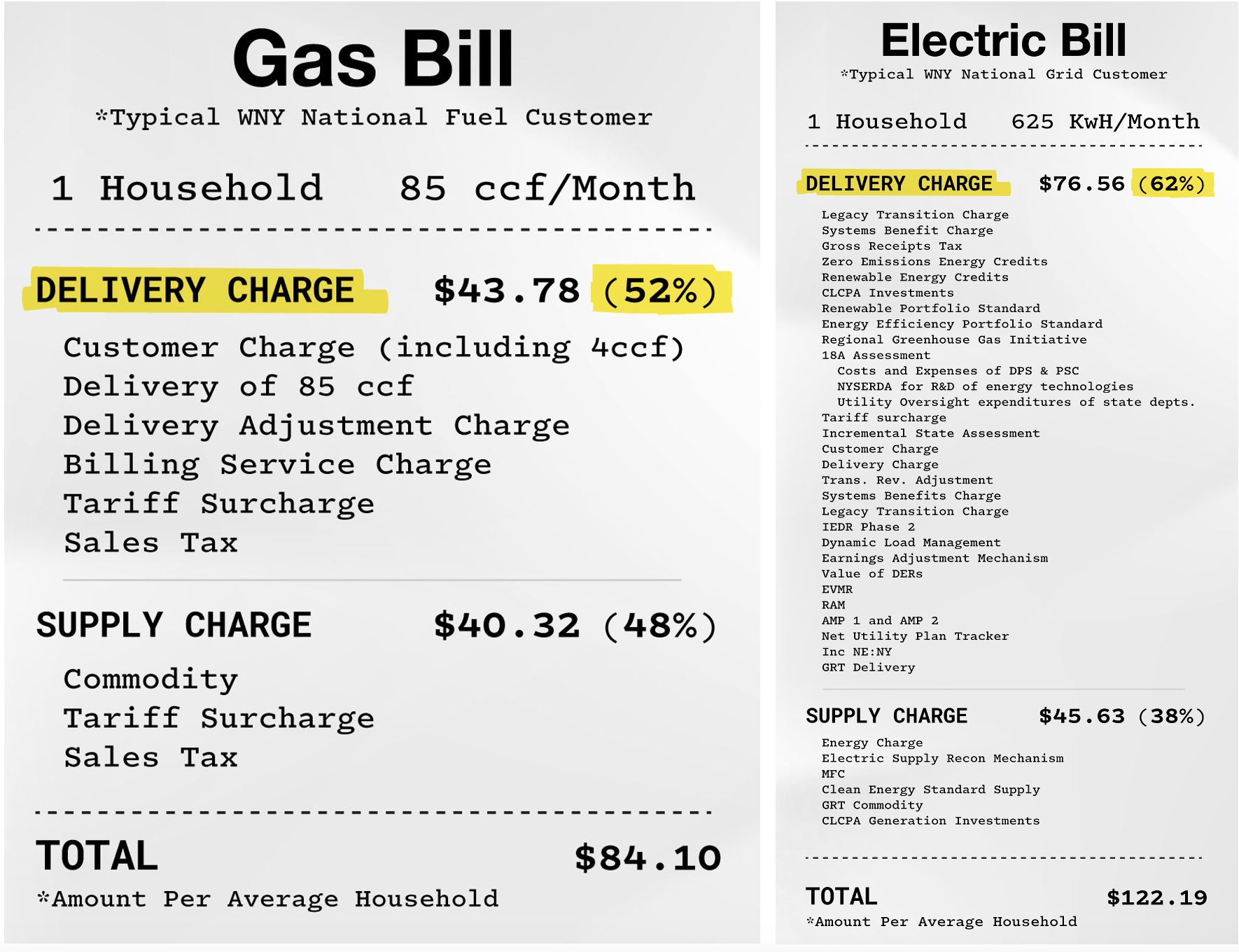
These receipts were created and shared by the New York State Republican Conference.
Press Release, State Senate Republican Leader Rob Ortt
ALBANY – State Senate Republican Leader Rob Ortt and members of the Senate Republican Conference on Wednesday highlighted an explosive new memo from the New York State Energy Research and Development Authority (NYSERDA) regarding the shockingly high costs of New York’s so-called “green energy” mandates on New Yorkers.
They also called on Democrats to repeal the statute requiring the state to implement a Cap-and-Invest program, a program the state now acknowledges could increase gasoline prices by as much as $2.23 per gallon and raise annual utility bills by up to $4,100 for upstate residents and $2,300 for residents in New York City.
Since Democrats passed the Climate Leadership and Community Protection Act (CLCPA) in 2019, Republicans have demanded answers about its cost, expressed concerns about its mandates and questioned if its goals were realistic or achievable.
Last week, it was disclosed that NYSERDA has issued findings that fundamentally agree with much of what Republicans have been saying for the past 7 years – that the Democrat’s Climate Law is unaffordable and failing to meet its own benchmarks.
“This conference has called for transparency and accounting of the true costs of the CLCPA for years. Now, thanks to a memo from NYSERDA, we finally know what we’ve been saying all along – New Yorkers simply cannot afford the Democrats’ green energy mandates,” said Rob Ortt, the Senate Republican leader.
Cap and Invest is part of the Democrats’ CLCPA, a scam known for its so-called “green” mandates on ratepayers. Democrats’ ideological approach to energy issues in this state has caused the highest utility bills New Yorkers have ever seen. Republicans in both the Senate and Assembly are taking action now to provide relief by pushing to scrap the most damaging parts of the CLCPA, especially Cap and Invest.
Governor Hochul’s New York State Energy Research and Development Authority released a memo outlining “likely costs of CLCPA compliance.” In the memo it reads, “The primary driver of these projected cost increases is the Cap-and-Invest program — “the greenhouse gas accounting approach incorporated in statute and regulation, in combination with current emission reduction targets, mean that current law attributes higher emissions to New York than other leading jurisdictions do for the same activity.”
According to NYSERDA Memo, absent changes, within five years:
- Gasoline prices could increase by $2.23 per gallon — on top of whatever market prices are at that time. At today’s prices, that would mean roughly $5.25 per gallon.
- Natural gas costs could increase by $16.96 per MMBtu.
- Upstate households using oil or natural gas could see energy costs increase by more than $4,100 per year.
- New York City households using natural gas could see annual gross costs rise by approximately $2,300.
- Utility costs for small and medium commercial businesses increase by up to 45% – these costs would be passed down to consumers
- Costs for operating a delivery truck would increase by over 60%.
In addition to the disastrous Cap and Invest program, the Senate Republican Conference has unanimously opposed other new energy costs and mandates within the CLCPA that have increased costs and decreased choices being forced under an extreme climate agenda that is unaffordable, unrealistic, and unattainable.
“They continue to champion policies that they unequivocally know are driving up costs and making life less affordable,” Ortt said. “You can’t just say affordability and wish it into existence when your policies are going to add $4,100 to people’s bills and drive gas costs up to $5 or more at the pump. Democrats want to be California-we are on our way. New Yorkers need to understand-to get different policies they need different policy makers.”