
















Officials asked if interest in county providing code enforcement for towns, villages
County-wide system would have full-time staff, more consistency
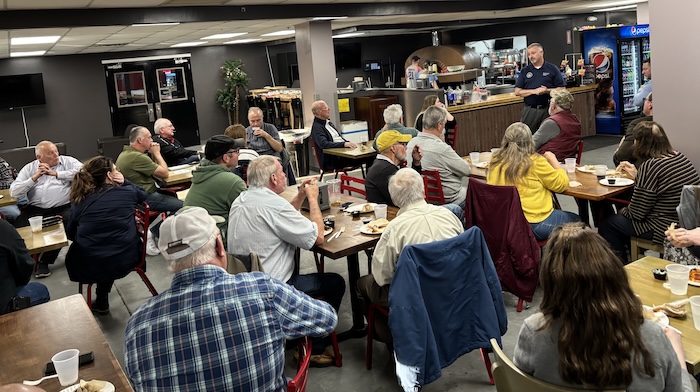
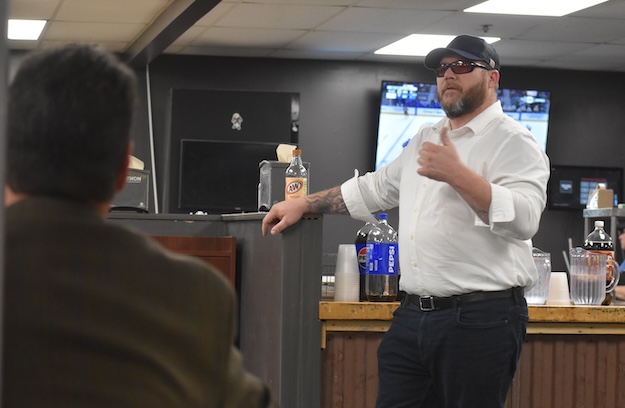
Photos by Tom Rivers: The Orleans County Association of Municipalities met Tuesday evening at Dubby’s Tailgate to discuss code enforcement in the county and whether there would be interest from the towns and villages for the county to do some of the code enforcement work. Chad Haviland, assistant director for Oversight for the New York State Department of State, Division of Building Standards and Codes, spoke to the group. Haviland said some counties do code enforcement, and that has resulted in more consistency in how the job is done in those communities.
ALBION – Do the towns and villages in Orleans County have the best system for providing code enforcement in the community right now, or could the service be improved with the county helping with property maintenance and fire inspections, incident responses and other duties that can arise 24-7?
Most of the municipalities have part-time code officers. A shift to full-time officers at the county should improve accessibility and consistency in how the job is done, local officials were told during a meeting Tuesday. About 50 people attended the Orleans County Association of Municipalities meeting at Dubby’s Tailgate.
The county Department of Planning and Development has put together a survey about the issue and is seeking input from the code officers, town and village board members, and zoning and planning board members about the current code enforcement needs and challenges, and whether there is interest in exploring whether the county should provide code enforcement.
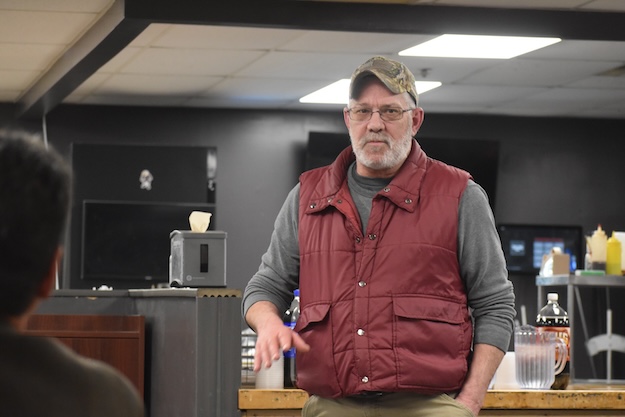
Dwayne Tinkous, code enforcement officer for the town of Carlton, said the part-time job is demanding, requiring full-time effort. Last year he handled 120 permits in Carlton. He said a shift to the county in doing the job may result in a loss of the “personal touch” where the town code enforcement knows the people and their circumstances.
Being a code enforcement officer is “one of the most thankless jobs out there,” said Dwayne Tinkous, the Carlton code officer. He brings a “personal touch” and has been able to resolve issues with property maintenance and permits, without ever going to court in his three years on the job.
“I try to make it personal,” he said. “You can put out fires before they start.”
If the code officer wasn’t from the town, Tinkous fears they wouldn’t be as personable and would be quick to cite people for a violation.
The position is part-time, but he said it is full-time hours in Carlton. Last year he handled 120 permits.
Tinkous said the local code officers could use more help in doing all facets of the job, but he isn’t sure having the county involved in the best approach.
“Just the lakeshore alone is impossible to deal with,” Tinkous said about the many permits and projects on that coveted property.
The local code officers do work together and cover for one another if someone is out of town, Tinkous said.
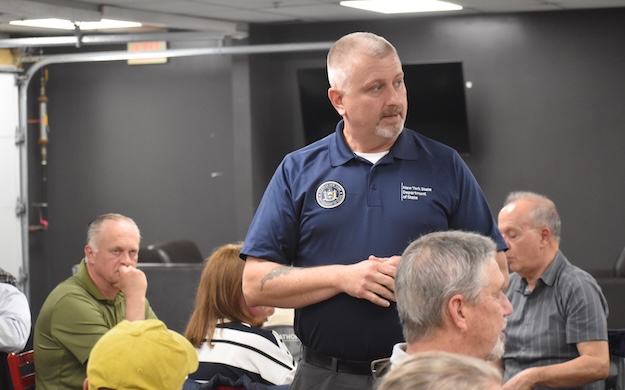
Chad Haviland, assistant director for Oversight for the New York State Department of State, said there are a lot of requirements on code enforcement officers for training that can make it difficult for rural areas to have enough certified people in the positions.
Chad Haviland, assistant director for Oversight for the New York State Department of State, said some parts of the state have a shortage of code officers, and he worries the situation will get worse. He supports full-time code officers at the county level, who would do work in the towns and villages.
The municipalities could contract with the county, perhaps being billed by permit, population or parcel.
County Legislator John Fitzak said the informal survey among the local officials is to gauge if there is interest in doing a more formal study on the pros and cons of countywide code enforcement, how it would be funded and what services provided. If the municipalities are happy with the current system, Fitzak said there is no reason to make a change.
Genesee County is currently doing a study for county-wide code and zoning enforcement for 20 municipalities, trying to bring more consistency for residents, businesses and property owners.
Tim McMurray, the Albion mayor, speaks at Tuesday’s meeting about code enforcement in the community. He said one option could be the county handling fire inspections do let code officers focus on other parts of the job.
Lyndonville Mayor John Belson said the issue has been discussed in Orleans County before. Belson, the former Yates town supervisor, was part of a group from Orleans that visited Wyoming County to see how it handled county-wide code enforcement.
He recalled there were four full-time officers and each hand a county car and a secretary and needed offices. They were provided health insurance and retirement benefits.
“It was a phenomenal amount of money,” Belson said.
Barre Town Supervisor Steve Coville said he isn’t in favor of making a change from the town’s part-time codes officer unless he can see a benefit to Barre in reduced cost and improved service. He would like to see all the code officers in the county get together and make suggestions first before getting into a survey.
Paul Hennekey, the Kendall code officer, noted many of the code officers “are beyond retirement age.”
Haviland, the Department of State official, said code enforcement is a critical position that can lead to fewer fires and building collapses. He previously worked as a senior code officer in the town of Seneca.
“It’s about safety and who’s going to be living there next,” he said.
Corey Winters, director of Planning and Development for Orleans County, said the county will wait to see the results of the initial survey before deciding whether to pursue a bigger study on the issue.
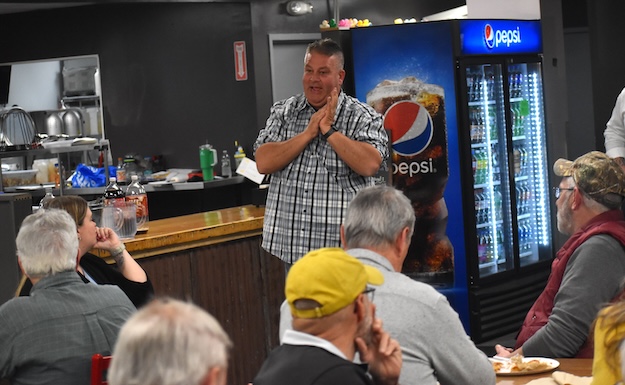
Chris Kinter, the code officer for the village and town of Albion, said code officers need the support of their town and village boards, as well as municipal attorneys to do the job effectively.