By Tom Rivers, Editor Posted 2 April 2026 at 2:29 pm
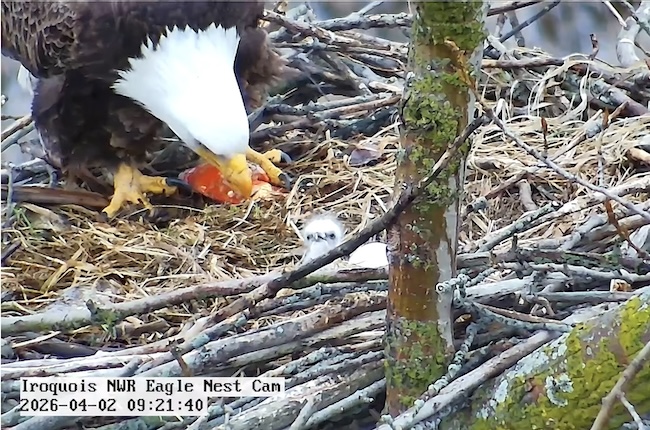
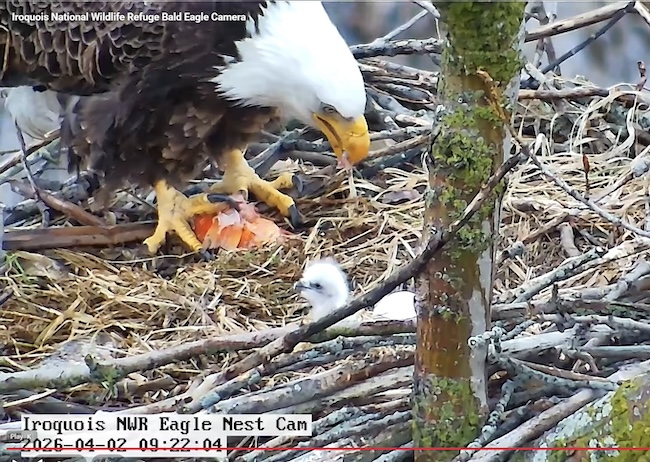
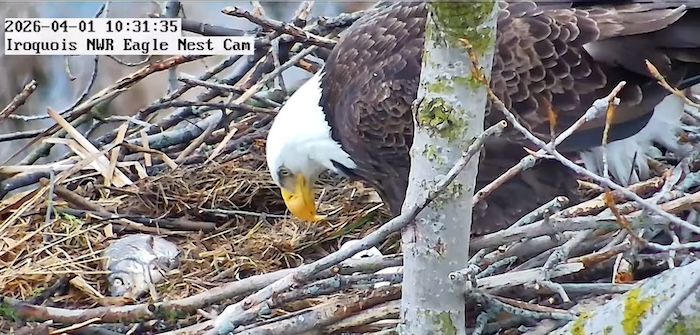
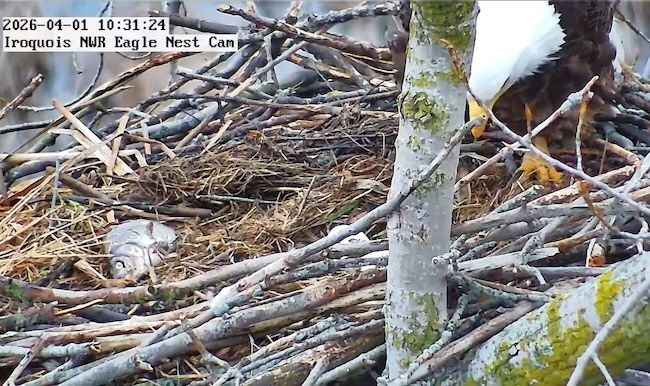
BASOM – These still photos from this morning show an eaglet making its debut in a bald eagle nest. Yesterday the eagle cam showed three eggs in the nest.
The eaglet was first seen on camera at 6:45 a.m. today, said Dick Moss, president of the Friends of the Iroquois National Wildlife Refuge.
The Friends have an eagle cam on the nest where people can check in for a livestream. There are two other eggs in the nest.
The first egg was laid at 5:06 p.m. February 20; the second at 5 p.m. February 23; and the third at 2:34 p.m. February 27.
Eagle eggs typically take 35 days or so of incubation before hatching.
Photos and press release from Friends of Iroquois National Wildlife Refuge
BASOM – A crack in the shell of a bald eagle egg was spotted and confirmed late Wednesday morning in Basom at the Iroquois National Wildlife Refuge.
The eagle parents and their nest have been the focus of a livestream run by the Friends of INWR.
There are three eggs in the nest. The first egg was laid at 5:06 p.m. February 20; the second at 5 p.m. February 23; and the third at 2:34 p.m. February 27.
Presuming the oldest egg is the one that cracked first, it took its time. Eagle eggs typically take 35 days or so of incubation before hatching.
To follow along with the eagle adventures, you can find a link to the livestream at FINWR.org.
By Tom Rivers, Editor Posted 24 March 2026 at 11:38 am
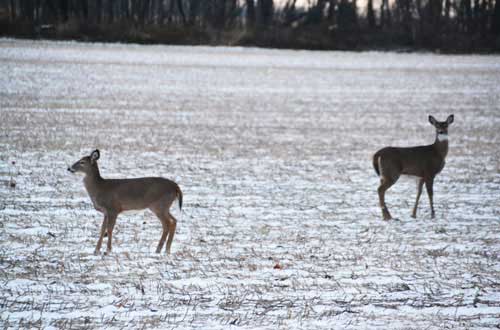
File photo by Tom Rivers: These deer are pictured on Nov. 20, 2014 when they were close to the road on the west side of Route 279 in Gaines, just south of Route 104.
The NYS Department of Environmental Conservation is reporting 2025 was the safest in New York’s recorded history with seven hunting-related shooting incidents.
Those incidents include five which were self-inflicted and two involved more than one person. One incident involved an unlicensed individual who was hunting illegally, the DEC said. There were no hunting-related shooting fatalities.
“The historic low number of incidents observed in 2025 demonstrates that hunting is safe and is getting safer thanks to the efforts of DEC’s Hunter Education Program, volunteer instructors, and the vigilance of New York’s hunters,” said DEC Commissioner Amanda Lefton. “In addition to being safe, hunting is ecologically important, helping manage wildlife populations, promoting conservation-related behaviors, and providing a local, affordable food source. I am proud of our team’s efforts to grow New York’s hunting community.”
Hunting remains one of the most popular forms of wildlife-related recreation in the state with nearly 600,000 New Yorkers participating annually, helping achieve state wildlife management objectives and safely enjoying time outdoors, the DEC said.
The DEC reported these hunting-related shooting incidents:
Small Game Hunting:
Jan. 3 in Ulster County – While rabbit hunting, a 60-year-old hunter slipped and unintentionally discharged a round of birdshot into their left forearm.
May 13 in Orange County – While turkey hunting, the 64-year-old shooter fired one round, striking the victim approximately 40 yards away with multiple pellets. The victim sustained injuries to their right eye, left ring finger and left shoulder. (The shooter was not legally hunting, and had no hunting license, but injured a legal hunter during an open hunting season.)
Sept. 27 in Livingston County – During squirrel hunting, the 28-year-old hunter was shot with one round of pellets, causing superficial penetrative injuries on the front of their body from chin to abdomen.
Big Game Hunting:
Oct. 30 in Erie County – A 59-year-old hunter sustained a self-inflicted crossbow injury to the left foot while afield hunting deer.
Nov. 15 in Sullivan County – While exiting the woods after deer hunting, a 46-year-old hunter’s holstered handgun discharged one round into the upper thigh.
Nov. 19 in Chautauqua County – While pulling a loaded firearm from a vehicle, the 14-year-old hunter unintentionally discharged one round, which entered and exited their mid-torso.
Nov. 21 in Delaware County – While tracking a deer, the 68-year-old hunter tried to remove a handgun from its holster and accidentally discharged a round into their left calf.
The seven incidents in 2025 follows 11 in 2024, and 12 in 2023. In 2020, there were 22 incidents. The 10-year average shows 12.7 incidents a year, according to the DEC.
There were no fatal incidents last year. There was one in 2024 and two in 2023.
State-wide there was 4 percent increase, with none taken in Orleans County
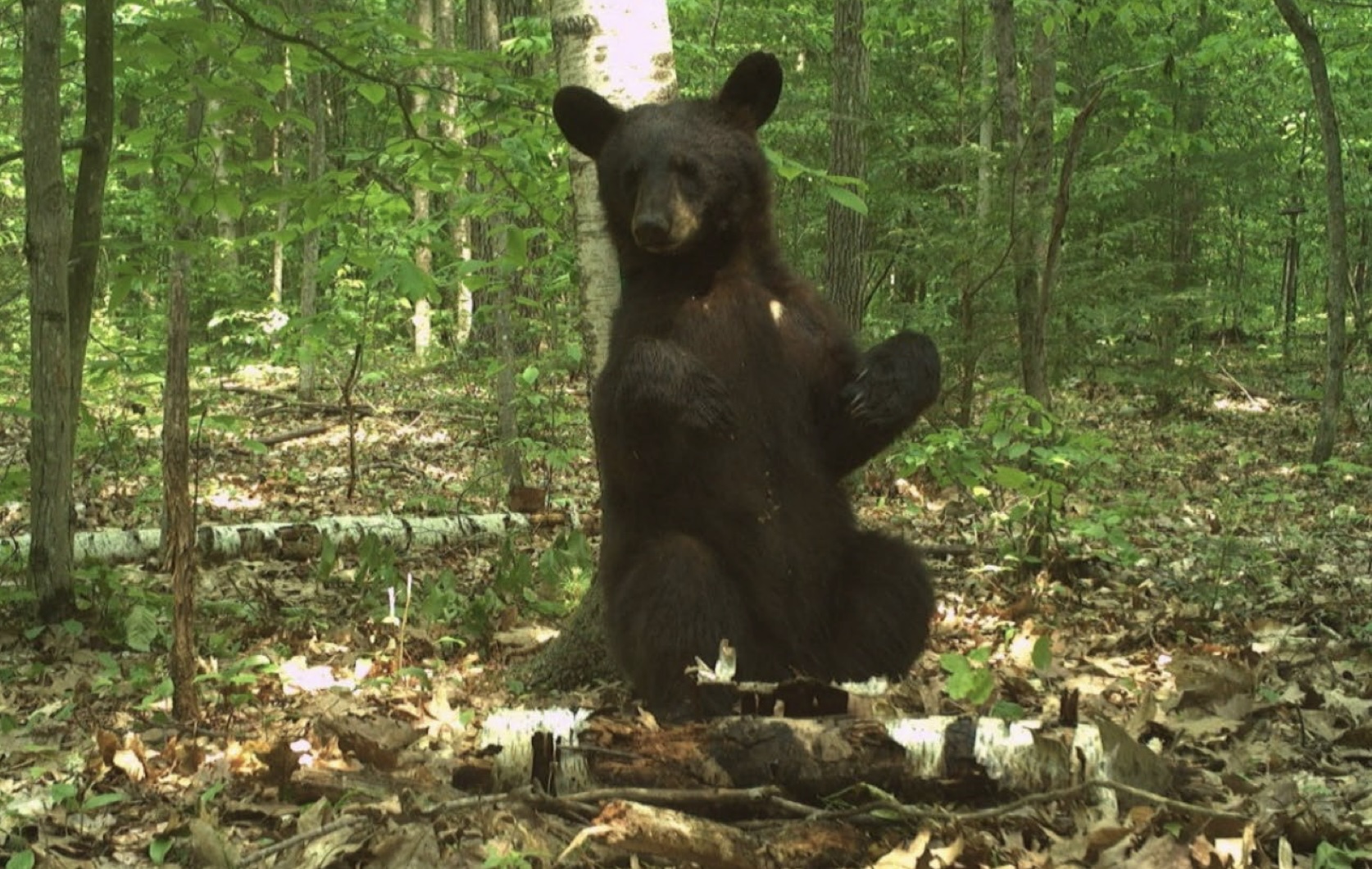
Photo from DEC: A bear marks a tree in Steuben County. This image was captured through Snapshot NY, a project launched in 2025 to monitor NY wildlife through remote cameras operated by DEC and citizen scientists.
Press Release, NYS Department of Environmental Conservation
New York State Department of Environmental Conservation (DEC) Commissioner Amanda Lefton today announced that hunters harvested an estimated 1,759 black bears during the 2025-26 hunting seasons, with none reported in Orleans County.
According to DEC’s tracking of the annual bear harvest since 1955 (PDF), the 2025 statewide bear harvest was second only to the 2003 season and Southern Zone estimates set a new harvest record.
“The recovery and growth of New York’s bear population is testament to DEC’s vigilant wildlife management efforts,” said Commissioner Lefton. “New York’s big game management plans help maintain populations at levels that are acceptable for local communities and provide sustainable hunting opportunities.”
Statewide, hunters harvested approximately 4% more bears than the 2024 season and 18% above the 10-year average. The Southern Zone take included an estimated 1,202 bears taken, including the 10 heaviest bears recorded for the year. The Northern Zone harvest estimate of 557 bears was slightly lower than 2024, but still above the 10-year average.
The record-setting bear season in the Southern Zone is the culmination of a long-term pattern DEC documented in New York’s bear populations. In the 1950s, bears only occupied the most remote and mountainous regions of New York, such as the Adirondack, Catskill, and Allegheny mountains. Over the past 70 years, bears gradually expanded their range in the State, and DEC began opening new areas for bear hunting.
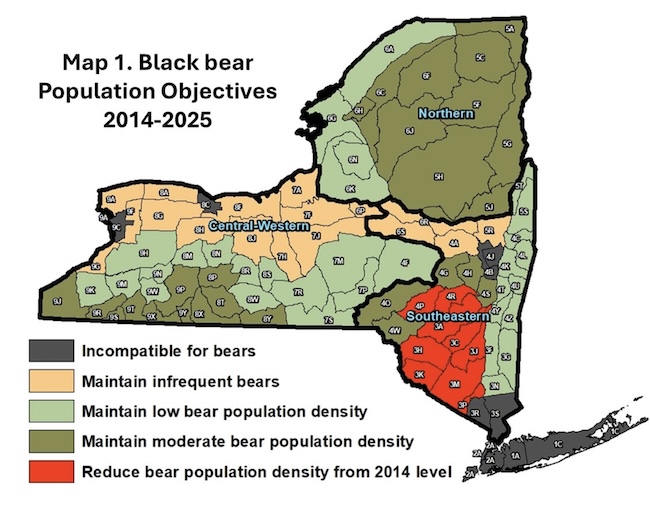
Map from NYS Department of Environmental Conservation
Bears now occupy most areas of the state except Long Island and New York City, and all areas of the state are open to bear hunting except Long Island and areas closed to big game hunting. The expansion of bear range was particularly notable in the Southern Zone. The Southern Zone bear harvest exceeded the Northern Zone for the first time in 1998 and accounted for most of New York’s bear harvest for the past 20 years.
While bear populations and hunting opportunities increased in the Southern Zone, the Northern Zone remains a traditional destination for many New York bear hunters. Northern Zone bears typically grow slower in the wilderness ecosystems of the Adirondacks but tend to survive to older ages than their Southern Zone counterparts. All but one of the oldest bears on DEC record were taken in the Northern Zone.
Notable Numbers from the 2025 Bear Season:
74: The number of Wildlife Management Units (WMUs), out of 88 open to bear hunting, with reported 2025 bear harvests.
562 pounds: The dressed weight of the heaviest 2025 reported bear, harvested in the town of Olive, Ulster County, WMU 3C.
668: The number of harvested bears from which DEC received pre-molar teeth to determine the bear’s age in 2025.
26 years: The age of the oldest bear harvested in 2024 (the most recent year for which age data are available). The bear was harvested in the town Mooers, Clinton County, WMU 5A.
21: Bears harvested per 100 square miles in WMU 3C, the highest harvest density of any WMU for the 2025 seasons.
Black bear harvest data are gathered from two main sources: harvest reports required of all successful bear hunters, and the physical examination of bears by DEC staff, cooperating taxidermists, and meat processors.
Harvest estimates are made by cross-referencing these two data sources and determining the rate at which hunters report their bear harvests in each zone. In fall 2026, DEC will send a commemorative 2025 Black Bear Management Cooperator Patch and a letter confirming each bear’s age to all hunters who reported their bear harvest and submitted a tooth for age analysis.
For more information, click here to see the DEC’s black bear harvest report.
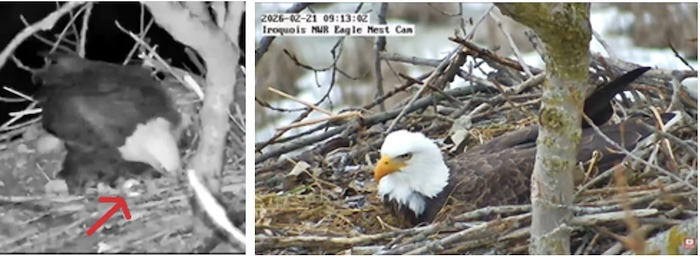
Photos courtesy of Pixcams.com: (Left) The red arrow points to the egg that was spotted overnight. (Right) Mother Eagle incubates the egg.
Press Release, Friends of Iroquois National Wildlife Refuge
BASOM – An egg has been sighted in one of the bald eagle nests at Iroquois National Wildlife Refuge.
The Friends of Iroquois NWR observers whose camera is trained on the nest believe the female bald eagle laid her first egg at 5:05 p.m. Friday, Feb. 20. That belief was based on behavioral cues like fluffing of feathers, standing up and sitting down, and reaching under to rotate the egg.
At 1 a.m. Saturday, observers caught sight of the egg as the eagle parents switched places. Eagles typically lay 2-3 eggs and incubate them for about a month before hatching, so the Friends expect at least one more egg.
“Just because eggs are laid is no guarantee of hatching,” said Friends President Richard Moss of Medina. “Nature can be merciless, and all kinds of bad things can happen to prevent hatching. But this is definitely an exciting development.”
This year is the 250th anniversary of the United States, and the bald eagle has been seen as a symbol of the country for much of that time.
Moss wanted to send out thanks to Bill Powers and Pixcams Inc., out of Export, PA. Pixcams helped the Friends group set up the camera and has continued to provide logistical support. Moss also wanted to thank the Friends members who are moderating the eagle camera chat.
A link to the eagle nest camera is available at the Friends website, FINWR.org. Watching it should be very interesting for the next few months, Moss said.
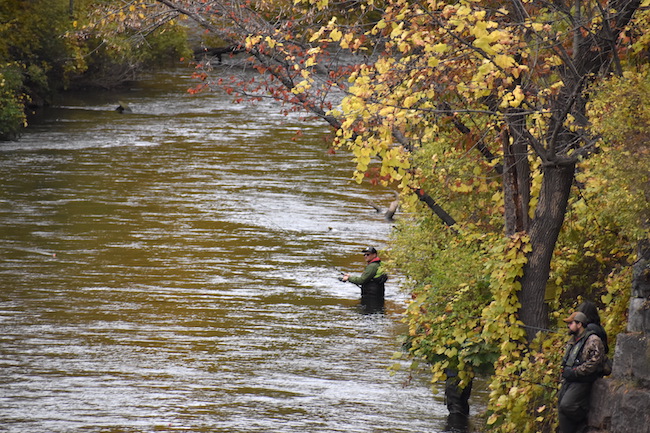
Photo by Tom Rivers: Anglers try to catch salmon and trout in the Oak Orchard River in Carlton on Oct. 20, 2023.
Press Release, NYS Department of Environmental Conservation
Governor Kathy Hochul and the New York State Department of Environmental Conservation today announced the 2026 dates for Free Fishing Days in New York.
The requirement for a freshwater fishing license is waived during the following six days in 2026: February 14–15, June 27–28, September 26 (National Hunting and Fishing Day) and November 11 (Veterans Day).
“Free Fishing Days provide the perfect opportunity for residents and visitors to affordably explore, unplug, and get outside,” Governor Hochul said. “New York State’s waters offer some of the best fishing opportunities in the nation, hosting memorable fishing experiences that increase tourism and benefit the economy. In addition to the many health benefits associated with recreating outdoors, fishing can provide more opportunities to connect with family and friends, something that seems harder and harder to do with increasing demands on time in today’s world.”
DEC’s Free Fishing Days program began in 1991 to give New Yorkers who might not fish a chance to try the rewarding sport of freshwater fishing at no cost, introduce people to a new hobby, and encourage people to support conservation by purchasing a New York State Fishing License.
Free Fishing Day participants are reminded that although the requirement for a freshwater fishing license is waived during free fishing days, all other fishing regulations remain in effect. Outside of free fishing days, anglers over the age of 16 must have a valid fishing license. For more information on purchasing a license visit DEC’s website.
A year ago, volunteers identified 12,000 birds in annual count
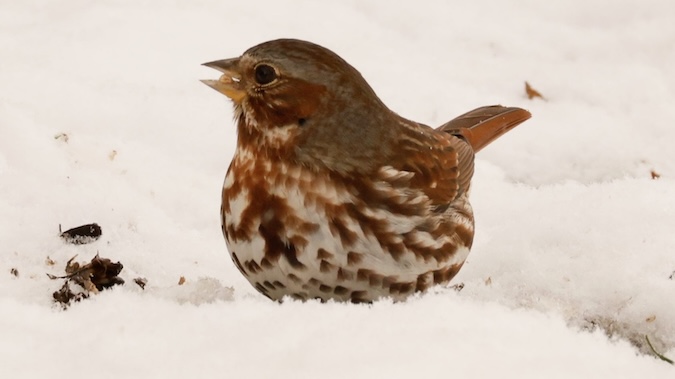
Photos courtesy of Celeste Morien: A fox sparrow is shown in this photo. Volunteers will be out for the annual Oak Orchard Christmas Bird Count on Monday. Last year, 41 counters found 70 species and just over 12,000 individual birds.
By Celeste Morien, count compiler for Oak Orchard Swamp Christmas Bird Count
BASOM – It’s nearly time for the Oak Orchard Christmas Bird Count! The count began in December 1968. The National Audubon Society has been sponsoring Christmas Bird Counts since their inception.
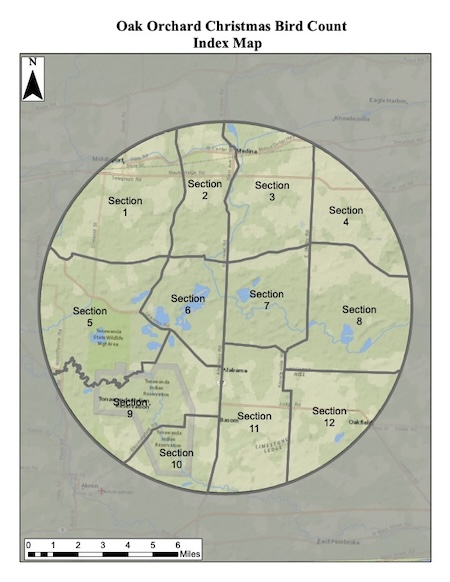
This map shows the area where volunteers will be out counting birds on Dec. 29.
Count compilers Celeste Morien and Brandon Connare would like the public to be alert for participants with spotting scopes and binoculars in on Dec. 29. We will be searching for birds inside the map circle from dawn to dusk.
Filling bird feeders now and keeping them stocked ahead of the count helps fulfill the count objective of counting all wild birds seen and heard within the circle.
The Oak Orchard count circle is centered on Iroquois National Wildlife Refuge at the Orleans and Genesee County line on Route 63. Count volunteers follow routes staying inside the designated 15-mile diameter circle. The day’s total is not just a species tally; individual birds are counted, giving an indication of the total number of birds per species in the circle that day.
If you are at home on count day within the circle, you may report the birds that visit your feeders. To do so, please contact celeste.morien@gmail.com.
According to the Audubon website, “Prior to the turn of the 20th century, hunters engaged in a holiday tradition known as the Christmas ‘Side Hunt.’ They would choose sides and go afield with their guns—whoever brought in the biggest pile of feathered (and furred) quarry won.”
Conservation was in its beginning stages in that era, and many observers and scientists were becoming concerned about declining bird populations. Beginning on Christmas Day 1900, ornithologist Frank M. Chapman, an early officer in the then-nascent Audubon Society, proposed a new holiday tradition—a “Christmas Bird Census” that would count birds during the holidays rather than hunt them.
So began the Christmas Bird Count. Thanks to the inspiration of Chapman and the enthusiasm of 27 dedicated birders, 25 Christmas Bird Counts were held that day. The locations ranged from Toronto, Ontario to Pacific Grove, California.
From December 14 through January 5 each year tens of thousands of volunteers throughout North America, Latin America, the Caribbean and Pacific Islands brave snow, wind, or rain, and take part in the effort. Audubon and other organizations use data collected in this long-running wildlife census to assess the health of bird populations, and to help guide conservation action.
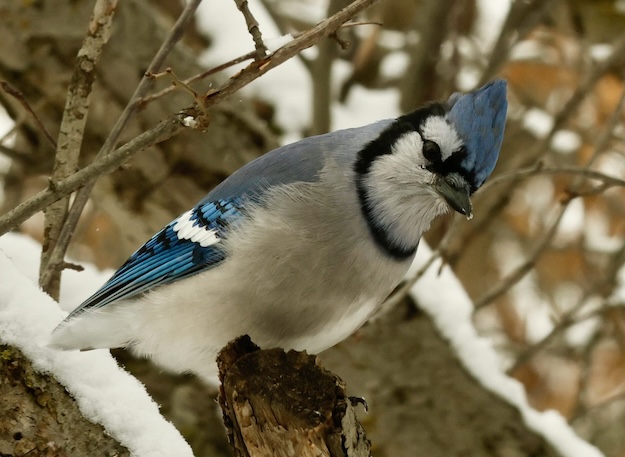
A blue jay is shown in this photo. Last year there were 283 identified during the annual bird count.
The data collected by citizen scientists allows researchers, conservation biologists, wildlife agencies and other interested individuals to study the long-term health and status of bird populations across North America. When combined with other surveys such as the Breeding Bird Survey, we are provided with a picture of how the continent’s bird populations have changed over the past 125 years.
The long term perspective is vital for conservationists. It informs strategies to protect birds and their habitat, and helps identify environmental issues with implications for people as well.
Please consider donating to the Christmas Count here since the Audubon Society no longer collects fees from each participant. www.audubon.org/GiveCBC
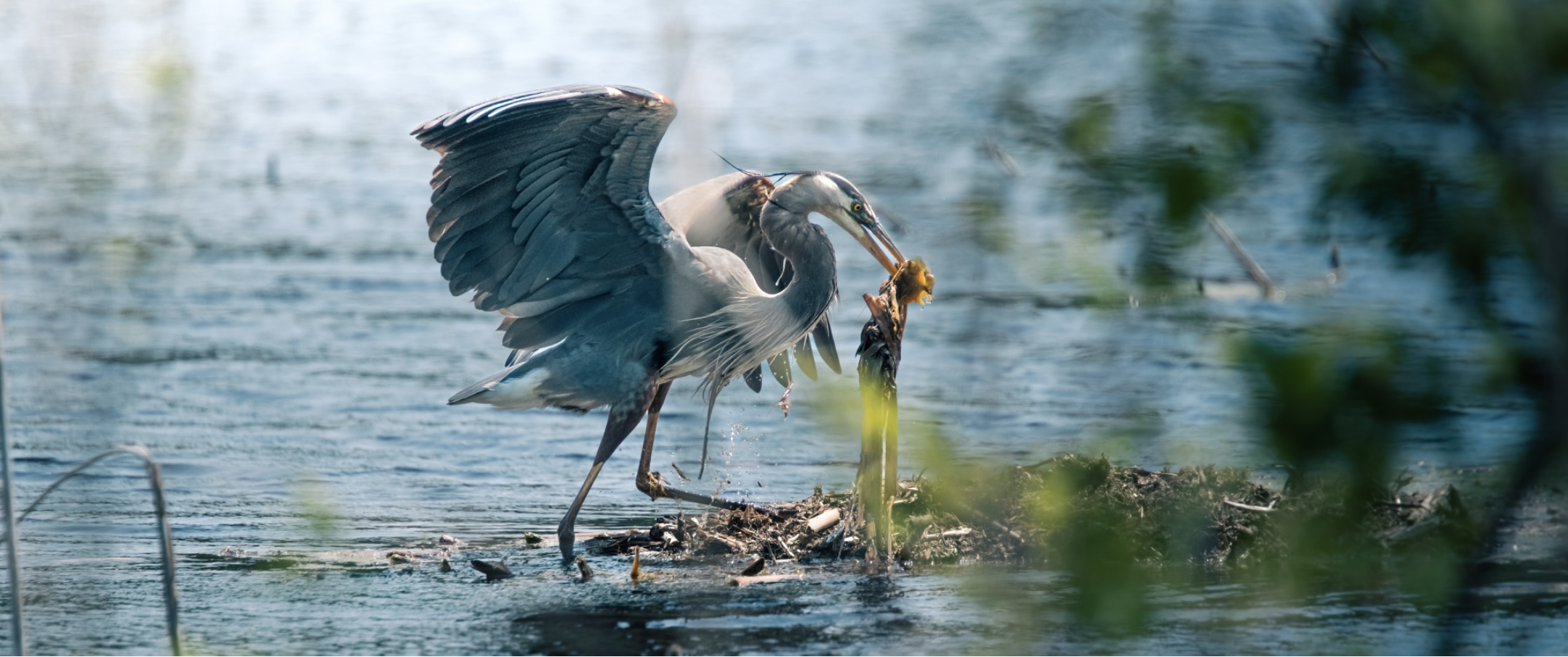
Sam Ramos of East Amherst took this photo of heron that won the $100 first prize in the birds category.
Press Release, Friends of Iroquois National Wildlife Refuge
MEDINA – The winners of the 2024-25 photo contest held by Friends of Iroquois National Wildlife Refuge were announced Saturday at the nonprofit group’s annual meeting at Lee-Whedon Memorial Library.
First, second and third place were chosen in three categories: birds, other wildlife, and landscape. Three professional photographers judged the photos: Max Schulte of WXXI in Rochester, Tina MacIntyre-Yee of USA Today Co., and Matt Wittmeyer of Matt Wittmeyer Photography in Rochester.
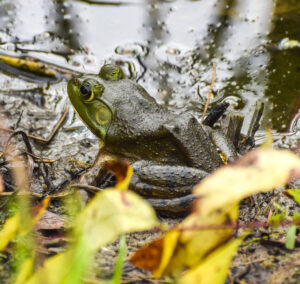
Tina Wescott of Clarence won first place in the “Other Wildlife” category for her photo of a frog.
Winning first place in the birds category and garnering the most support from the judges in the contest was a photo of a heron by Sam Ramos of East Amherst, who won a $100 prize. Second place and a $50 check went to Derick Dietrich of Newfane for a photo of a Sandhill crane; and third and a $25 check went to Jay Terkel of Corfu for his photo of a heron.
The winning entry in the other wildlife category went to Tina Wescott of Clarence for her photo of a frog, which gained the second-highest level of support among the judges. Second place went to Jessica Waite of Oakfield for her photo of a bee; and third to Sandy Geschwender for her photo of a butterfly.
Rudy Edlund of Lockport won first place in the landscape category for his dramatic photo of storm clouds over the refuge. Second place went to Kathy Robinson of Le Roy for a photo of Oak Orchard River; and third to Gary Robinson of Le Roy for a photo of trees mirrored in water.
Photos for next year’s contest can be taken anywhere from August of this year through Sept. 1 of 2026.
“Thank you to all those who participated in this year’s contest. Photography is one of the many ways people enjoy using the refuge, and there are so many opportunities there,” said Richard Moss of Medina, president of Friends of Iroquois NWR. “If you are a photographer who uses the refuge on a regular basis, please consider participating in the 2025-26 version of the contest.”
FINWR, which works to support and enhance the Iroquois National Wildlife Refuge, is a 501(3)c corporation and is celebrating its 25th year.
By Tom Rivers, Editor Posted 26 October 2025 at 8:14 pm
Orleans County and Greater Niagara Region in peak foliage conditions
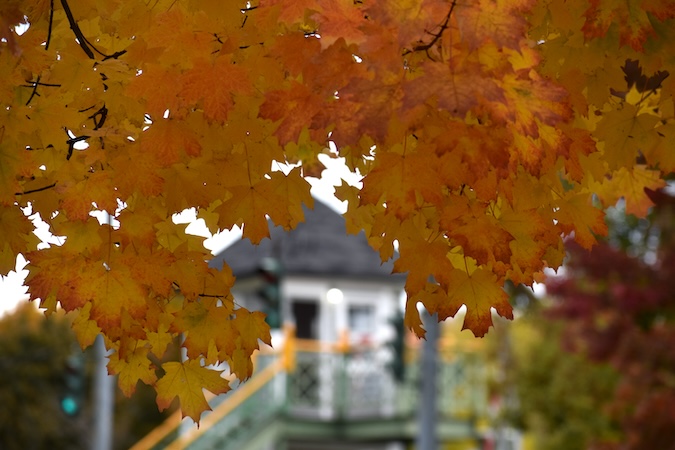
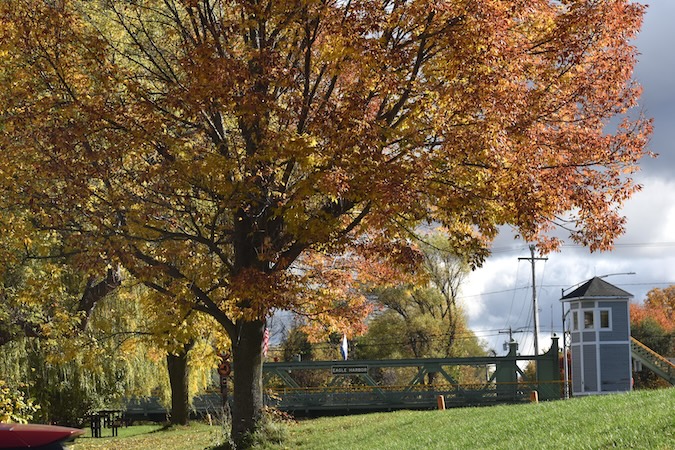
Photos by Tom Rivers: This tree has a full canopy of colorful leaves in Holley on Saturday. The East Avenue lift bridge is in the background.
The area may be in its peak for fall foliage, or slightly into “past peak.”
There are still lots of colorful leaves on the trees, but it may not last much longer.
I Love NY put Orleans County and the Greater Niagara region at peak conditions on Wednesday. Most other parts of the state – Chautauqua-Allegheny, Catskills, Central NY, 1,000 Islands and the Adirondacks – were deemed past peak.
This photo from today shows colorful leaves along the Erie Canal in Eagle Harbor with the lift bridge in the background.
Replica of Seneca Chief completes bicentennial voyage on canal, reaching NYC
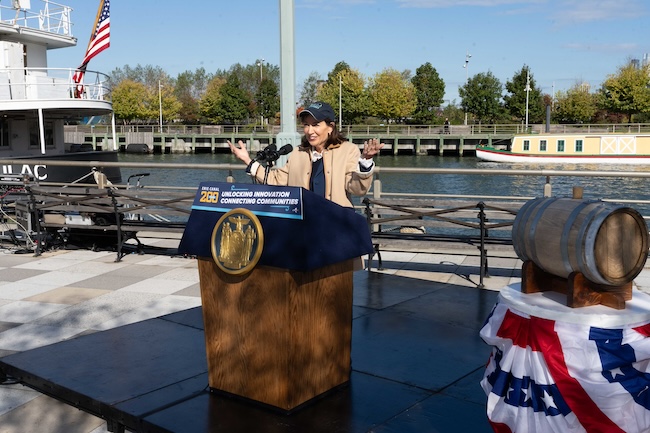
Photos by Don Pollard/ Office of Governor Kathy Hochul – Governor Hochul today marked the 200th anniversary of the opening of the original Erie Canal in New York City with the arrival of the Buffalo Maritime Center’s Erie Canal Boat Seneca Chief. Hochul is speaking at Pier 26 at Hudson River Park in New York City
Press Release, Gov. Kathy Hochul’s Office
New York City – Governor Kathy Hochul today marked the 200th anniversary of the opening of the original Erie Canal in New York City with the arrival of the Buffalo Maritime Center’s Erie Canal Boat Seneca Chief.
The boat is a replica of the original vessel Governor DeWitt Clinton traveled on from Buffalo to New York City in 1825. The current voyage began Sept. 24 in Buffalo. The Seneca Chief made 28 stops along the Erie Canal and Hudson River before ending its journey at Pier 26 at Hudson River Park in New York City.
Buffalo Maritime Center Founder John Montague said, “From the outset of this project, our aim was to commemorate the Erie Canal and raise awareness of its profound impact on American history. By building and voyaging across New York State with our authentic replica canal boat, we have succeeded beyond our dreams. At the same time, we’ve succeeded in reconnecting communities and individuals around our shared canal history and heritage. We have been amazed to discover on our voyage the public’s interest and commitment in shaping the canal’s future.”
Gov. Hochul congratulates Roger Allen, Master Boatbuilder of the Seneca Chief replica, for the successful 33-day trip, retracing the route of the original Seneca Chief that brought Gov. DeWitt Clinton on the freshly built Erie Canal. Brian Stratton, the state’s canal commissioner, is in back.
Today’s Erie Canal is now part of the 524-mile New York State Canal system managed by the New York Power Authority (NYPA) and New York State Canal Corporation. As the Erie Canal enters its third century of operation, it has primarily become a recreational and cultural destination, with a focus on arts and culture, sustainability, and accessibility, while still moving cargo too large for other means of transportation.
“For two centuries, the Erie Canal has been a symbol of ingenuity and perseverance, shaping the economic and social landscape of New York and the United States,” Governor Hochul said. “As a Buffalo native, I have logged hundreds of hours on the canals and know first-hand of the impact and beauty. As we celebrate this incredible bicentennial milestone, we look forward to the Canal’s third century of operation and are committed to ensuring a resilient and accessible Canal system for all New Yorkers for centuries to come.”
The Governor was introduced at today’s event by DeWitt Clinton’s 15-year-old great-great-great-great-great-grandson, DeWitt Silber.
The Erie Canal has been a cornerstone in the development of New York State as we know it, and the nation. It has served as a vital connector for commerce, linking the Atlantic Ocean to the Great Lakes, and facilitating the movement of goods and people. Over the years, the Canal has played significant roles in major historical movements, including the Underground Railroad, Women’s Right to Vote, the expansion of religions, fostering communities and driving progress.
Through their More Voices initiative, NYPA and the Canal Corporation are working to share a more comprehensive narrative of the Erie Canal’s history. Topics include the stories of underrepresented communities including those of African Americans, women, immigrants, and the Haudenosaunee Confederacy.
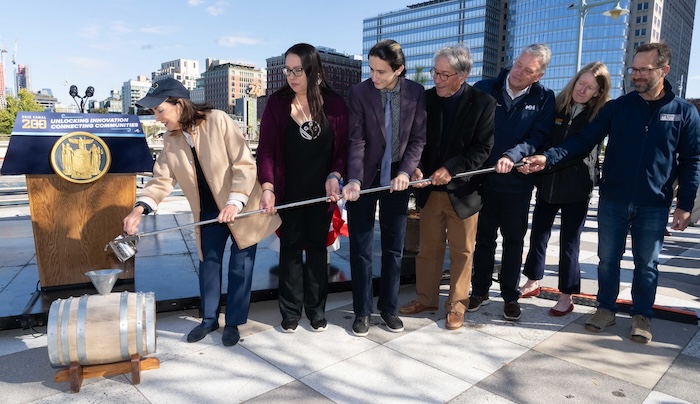
Gov. Hochul pours water into a barrel in a ceremony that was done at each stop the Seneca Chief made along the canal as part of a 33-day trip to New York City. The “Gathering of the Waters” differed from the original “Wedding of the Waters” when Gov. DeWitt Clinton poured water from Lake Erie into New York Harbor in 1825, following the maiden journey along the completed canal.
To acknowledge the displacement of indigenous people during the building of the Canal, an Eastern White Pine Tree was planted at each stop of the current Seneca Chief voyage that represents the strength of the Haudenosaunee people, as well as a promise for a sustainable future for the Erie Canal. In Haudenosaunee culture, the White Pine also holds significance as the Tree of Peace.
New York State Canal Corporation Director and Erie Canal Bicentennial Commission Co-Chair Brian U. Stratton said, “The Erie Canal has been a testament to human ingenuity and the power of connectivity. As we look ahead, we are dedicated to enhancing its accessibility and resilience, ensuring it remains a vital resource for generations to come.”
Since taking office, Governor Hochul has emphasized the state’s continuing commitment to the long-term viability of the canal system, designating $50 million in each of the past two state budgets to rehabilitate reservoir dams, improve earthen embankment dams, and repair aging water control structures, many of which predate Clinton’s inaugural Erie Canal voyage. The funds are in addition to NYPA’s annual investment for canal system maintenance and operations.
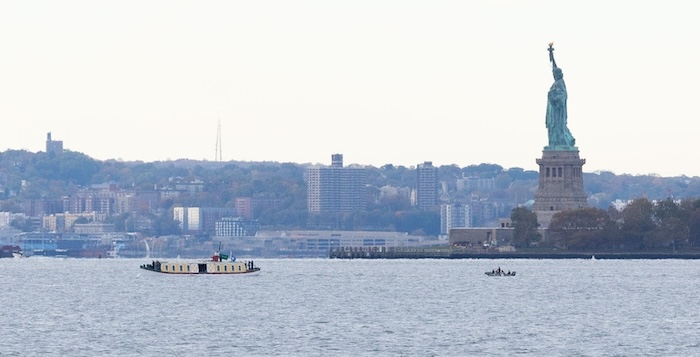
Photo courtesy of NYS Canal Corp. – The replica of Seneca Chief passes by the Statue of Liberty on Liberty Island.
As the Erie Canal’s third century of operation begins, the New York State Canal Corporation is gearing up to carry out the recently published Canal Recreationway 2050 Plan. Created with input from hundreds of stakeholders throughout the canal corridor, it is structured around seven guiding principles that together form a comprehensive vision for the 524-mile Canal system of waterways, trails and parks. The guiding principles include cultural heritage, accessibility, economic impact, ecological benefit, and environmental resiliency.
Most recently, the Canal Corporation began identifying property along the Erie Canal where pollinator meadows can be created. This endeavor not only aims to reduce maintenance needs, but also aims to enhance biodiversity, support vital ecosystems, and ensure the Canal’s ecological health for the next century. This sustainable approach honors the Canal system’s rich history while fostering environmental stewardship and resilience, contributing to a greener, more vibrant future for generations to come. 16 acres have been identified to date, with hundreds more to come.
The New York State Canal system endeavors to become a worldwide destination for accessible recreation through On the Canals, as well as NYPA and Canal Corporation’s On the Canals Accessibility Education Program. Now in its sixth year, On the Canals provides free programming across the Canal system through local providers to get people recreating on the water and the Canalway Trails.
With its relatively calm waters and level trail surfaces, it is an ideal location for people of all abilities to recreate. The On the Canals Accessibility Education Program, now in its second year, works with participating businesses to ensure they are receiving the correct tools and knowledge they need to guarantee that their facilities and programming are fully accessible for all who seek to enjoy recreation along the Canal system.