









health & wellness

What you may not know about Community Health Centers

Posted 26 July 2022 at 2:00 pm

By Mary Ann Pettibon, CEO, Oak Orchard Health

What better time than during National Health Center Week (August 7-13) to take the time to tell you more about Oak Orchard Health so you can make the best health choices for yourself and your loved ones.

Why should you get your health care from a community health center like Oak Orchard Health? There are many reasons, but here are three to think about:

1. We are here for you.

Oak Orchard Health has been a trusted provider for decades starting in 1973. We serve local families and farm workers. We have twelve locations that are conveniently located in your communities to serve you and your needs.

We just opened a health center in Medina New York and will soon be opening a dental center in Albion later this year.

We support the community’s needs when needed. During the pandemic, we provided over 30,000 COVID-19 tests in our parking lots and have been giving out over 7500 vaccines since they first became available. Currently, we have added COVID-19 vaccine events for children ages 6 months through 5 years.

We provide care to everyone, from all walks of life whether you have insurance or not. If you do not have insurance, we offer a sliding fee scale to make our services more affordable. Also, we can help you apply for health insurance, we know it can be challenging and we have specialists on staff who can assist.

2. Quality care.
We are often asked: “Do you have real doctors caring for patients?” Of course, we do! In fact, Dr. Danielle Renodin-Mead is a pediatrician and our Chief Medical Officer. As a mother of four, she understands the challenges as well as the joyous moments associated with raising a family. She is also co-founder of the new Mommy and Me program with Robin Govanlu, Director of Behavioral Health. This program helps new moms with postpartum depression and links them to the support services that can help.

Need dental services? Our Chief Dental Officer is Dr. Rachel Nozzi who has been with us since 2015. She is a Rochester native and provides dental care at several of our health centers. We also have many dental hygienists on staff. We pride ourselves on giving dental care to all ages including young children who should see the dentist starting at age 1.

We are culturally aware and work hard to meet the unique needs of everyone who lives and works in our community. Our providers understand the health and safety needs of our patients.

3. Many health services to choose from.

We understand that it is often difficult to get healthcare while you work and care for your loved ones. At Oak Orchard Health we treat the entire family, of all ages from birth. We have primary care, pediatrics, dental, behavioral health, and vision care. This comprehensive care helps us meet most of our patient’s needs. As one of our patients, you are part of a care team. Complete care takes a team effort and therefore coordination. Our Care Teams coordinate care across our health center and the health system, from specialty care to hospitals to home health care and community services.

OOH is part of a larger network.
As a Federally Qualified Health Center (FQHC), Oak Orchard Health is part of a larger primary care network. There are 1,400 FQHCs in the United States with 17,900 locations serving 1 in 11 people (according to HRSA). In the last 12 months at OOH, we served 30,000 people including over 9,600 children from birth to age 18, 6,000 over age 60, and 1,200 agricultural workers and their dependents.

Is everyone without insurance? No. 53% of our patients are enrolled in Medicaid and Medicare. We accept Aetna, BlueCross BlueShield of Western New York, MVP, Excellus, Fidelis, and many more that are listed on our website.

We give back to our community.
Oak Orchard Health contributes to the economies of Monroe, Orleans, Genesee, Steuben, and Wyoming Counties. We hire people from these communities as well. As of this year, we have over three hundred employees, both full- and part-time. So, if you want to support a non-profit organization that supports you and your community, become a patient, and stay healthy.

Covid cases hold steady in Genesee, Orleans but 3 more deaths in past week from virus

By Tom Rivers, Editor Posted 20 July 2022 at 4:02 pm

The number of confirmed Covid cases in Genesee and Orleans counties is holding steady, with 86 confirmed cases in the two counties from July 13 to July 19, compared to 81 the previous seven days.

In Orleans, the Covid cases increased from 28 to 36, while in Genesee they decreased from 53 to 50.

However, there have been three more confirmed Covid-related deaths. The two in Genesee bring the total to 195 since the start of the Covid pandemic in March 2020. The additional Covid death in Orleans puts the county at 120 Covid-related deaths during the pandemic, according to data from the Genesee and Orleans County Health Departments.

In New York State, the seven-day positivity rate, ending on Monday, was at 8.93 percent statewide. Orleans and Genesee counties are in the nine-county Finger Lakes Region, where the seven-day positivity rate is at 6.87 percent. The rate is the highest in Western New York at 10.39 percent and the lowest in the Southern Tier at 6.64 percent.

NY implements 988 suicide and crisis lifeline in all 62 counties

Posted 15 July 2022 at 9:45 am

Press Release, Gov. Kathy Hochul’s Office

Governor Kathy Hochul announced the successful implementation of 988 in New York State as the new three-digit number to call or text to be connected to the National Suicide Prevention Lifeline.
All 62 counties in New York State will be covered for the launch of the new 988 Lifeline, which will ensure that anyone with a New York area code contacting 988 will be connected to one of New York’s 988 crisis centers.

“Connecting people who are experiencing a mental health crisis or considering suicide to trained counselors can significantly help them through difficulties that seem insurmountable, and the National Suicide Prevention Lifeline provides hope and support to those who need it most,” Hochul said. “By implementing 988, we are providing these individuals, as well as their families and friends, an easy-to-remember number that will give them access to the services they need.”

The FY 2023 Enacted Budget included $35 million to significantly expand 988 crisis call center capacity throughout New York State. This funding will increase to $60 million on a full annual basis starting in FY 2024.

OMH has also allocated one-time funding of $10 million in federal supplemental Community Mental Health Services Block Grant resources to the 988 crisis call centers, allowing them to expand statewide capacity and infrastructure. New York State also received a $7.2 million federal grant from the Substance Abuse and Mental Health Services Administration (SAMHSA) to aid in the rollout of the new 988 Lifeline.

Calling 988 provides a direct connection to compassionate, accessible care and support for anyone experiencing mental health or substance abuse related distress. A chat feature will also be available through the Lifeline’s website (988lifeline.org).

The 988 Suicide and Crisis Lifeline will be able to:

  • Connect people experiencing a mental health or substance use crisis to a trained counselor who can address their immediate needs and help connect them to ongoing care.
  • Reduce health care spending with more cost-effective early intervention.
  • Reduce use of law enforcement, public health, and other safety resources.
  • Meet the growing need for crisis intervention.
  • Help end stigma toward those seeking or accessing mental healthcare.

The new 988 Lifeline will also help achieve another one of Governor Hochul’s goals – removing obstacles to healthcare and reducing disparities in access, quality, and treatment outcomes for historically marginalized, underserved and unserved populations. This includes people of color, members of the LGBTQ community, older adults, rural New Yorkers, veterans, immigrants, people with disabilities and people who have limited English proficiency.

There are currently 13 operating 988 crisis contact centers in New York State and two in the development stage.

988 History

The Federal Communications Commission (FCC) designated 988 as the new three-digit number for the National Suicide Prevention Lifeline, and the National Suicide Hotline Designation Act was signed into law in October 2020, with the requirement for phone service providers to transition to 988 as the National Suicide Prevention Lifeline by July 16, 2022.

Since then, New York has been working with a large coalition of diverse community stakeholders to plan for the implementation of 988 in the State. The Statewide coalition members represent New York’s diverse population and includes individuals with lived experience, advocates, law enforcement, representatives from state agencies, counties, 911 representatives, emergency services, and more. All have contributed their expertise and commitment to the implementation of 988, and their ongoing collaboration and dedication to this groundbreaking work will benefit all New Yorkers.

About the Lifeline

The National Suicide Prevention Lifeline was originally funded by the federal Substance Abuse and Mental Health Services Administration (SAMHSA) and has been administered by Vibrant Emotional Health since it began in 2005. It has served as an invaluable resource, helping thousands of people overcome suicidal crisis or mental health-related distress every day. With the transition to 988, these life-saving services will be even easier to reach.

Numerous studies have shown that the Lifeline works—most callers are significantly more likely to feel less depressed, less suicidal, less overwhelmed, and more hopeful after speaking to a Lifeline crisis counselor.

Statistics on New York/National 988 Call Volume

Between 2005 and 2020, the National Suicide Prevention Lifeline received a total of 20,478,698 calls.

In 2019, the NSPL received 137,481 calls originating from New York, a 73 percent increase since 2016. In 2020, NYS received 142,827 calls, a 13 percent increase in just one year. New York’s robust investments and advanced planning will ensure that calls originating from New York are answered by a local 988 crisis contact center and that we are prepared for the significant increase in call volume that is expected over the next five years.

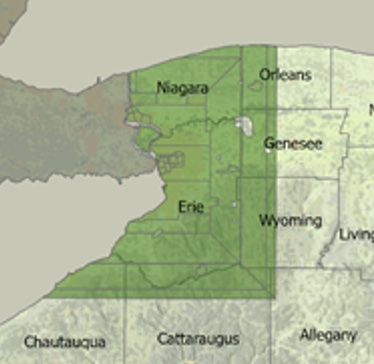
Western Orleans will be included aerial and hand distribution of oral rabies vaccine

Posted 14 July 2022 at 6:18 pm

Press Release, Genesee and Orleans County Health Departments

New York will once again be taking part in a nationally coordinated effort to halt the spread of raccoon rabies in 16 states.

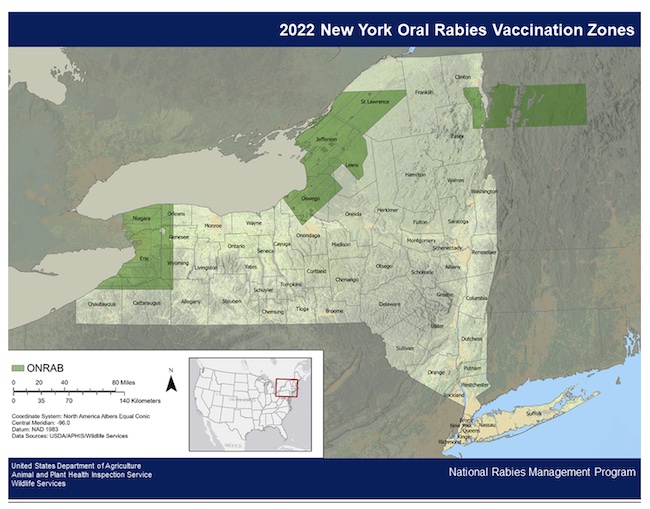
Ongoing field evaluation of a new oral rabies vaccine (ORV) called ONRAB will occur in Clinton, Essex counties in the Empire State as part of an evaluation that also includes parts of northern Vermont and New Hampshire.

Additionally, evaluations will also occur in Allegany, Cattaraugus, Chautauqua, Erie, Genesee, Jefferson, Lewis, Niagara, Oneida, Onondaga, Orleans, Oswego, St. Lawrence, and Wyoming counties.

These sites were selected in part because of ongoing collaborations with Quebec and Ontario, Canada in the fight against rabies to protect human and animal health and reduce significant cost associated with living with rabies across broad geographic areas.  Aerial and hand distribution of baits will take place in New York from July 26 – August 19, 2022.

Rabies is a serious public health concern because if left untreated it is generally fatal. Costs associated with detection, prevention and control of rabies conservatively exceed $500 million annually.
According to the Centers for Disease Control and Prevention, greater than 90 percent of reported rabies cases in the United States are in wildlife. The cooperative USDA, APHIS, Wildlife Services National Rabies Management Program (NRMP) was established in 1997 to prevent the further spread of wildlife rabies in the United States by containing and eventually eliminating the virus in terrestrial mammals.

The majority of the NRMP efforts are focused on controlling raccoon rabies, which continues to account for most of the reported wildlife rabies cases in the U.S.  Raccoon rabies occurs in all states east of the established ORV zone that extends from Maine to northeastern Ohio to central Alabama.  Continued access to oral vaccine and bait options that are effective in all target wildlife species remains critical to long-term success.

During 2011, the NRMP worked with other Federal, State and local partners to conduct the first raccoon ORV field trial in the U.S. in over 20 years. This field trial was designed to test the safety and immunogenicity (provoke an immune response in the body of a human or other animal) of the oral human adenovirus-rabies glycoprotein recombinant vaccine ONRAB (Artemis Technologies Inc., an indirect, wholly-owned subsidiary of Ceva Sante Animale S.A., Guelph, Ontario, Canada), which has been successfully integrated into comprehensive rabies control programs that resulted in elimination of raccoon rabies from Canada.

Encouraging results from the U.S. trial in West Virginia represented a major milestone that led to expanded evaluations in 4 additional states (NH, NY, OH, and VT) in 2012-2021 and expansion into 2 new states (PA and TN) last year.

Data from these evaluations could lead to licensing of this vaccine for broader, more aggressive management of raccoon rabies by the NRMP and partners, with the goal of eliminating the variant of the rabies virus that cycle in raccoons.

The ONRAB bait consists of a polyvinyl chloride (PVC) blister pack, containing the vaccine. To make the baits attractive, the blister packs are coated with a sweet attractant that includes vegetable-based fats, wax, icing sugar, vegetable oil, artificial marshmallow flavor, and dark-green food-grade dye.

Humans and pets cannot get rabies from contact with the bait. However, people who encounter baits directly are asked to leave the bait undisturbed.

Should contact with bait occur, immediately rinse the contact area with warm water and soap and contact your local health department at 585-344-2580 ext. 5555 for Genesee County or 585-589-3278 for Orleans County.

Please do not attempt to remove a bait from your dog’s mouth. The bait will not harm the dog.  If you have additional questions related to the field evaluation in New York, please contact the Wildlife Services office in Rensselaer, NY at (518) 477-4837.

Covid cases see an uptick locally in past week

By Tom Rivers, Editor Posted 13 July 2022 at 6:47 pm

The Genesee and Orleans County Health Departments reported an increase in confirmed Covid cases in the past week.

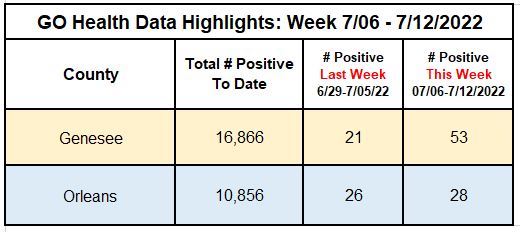
In Orleans, the cases totaled 28 from July 6-12, up from 26 the previous seven days. Genesee more than doubled, going from 21 to 58.

Genesee County reported a Covid-related death in the past week and now has had 193 residents pass away from Covid since the pandemic started in march 2020. Orleans remains at 119 Covid-related deaths.

Statewide the 7-day positivity rate for Covid tests is at 9.21 percent, ending on Tuesday. Orleans County is in the nine-county Finger Lakes Region which has a positivity rate of 6.51 percent. That is almost the lowest rate in the state. Only the Southern Tier at 6.36 percent is lower. Long Island is the highest at 10.53 percent.

“We continue to respond to new variants as part of our ongoing efforts to protect New Yorkers against Covid-19,” Governor Kathy Hochul said in a statement today. “New Yorkers should get vaccinated and get the boosters doses for which they’re eligible. Parents and guardians should talk to pediatricians about getting our youngest New Yorkers vaccinated, too, now that they are able. Get tested if you feel ill and if you do test positive, talk to your doctor about possible treatments.”

Kiwanis donates to Oak Orchard’s Mommy and Me program

Posted 12 July 2022 at 3:49 pm

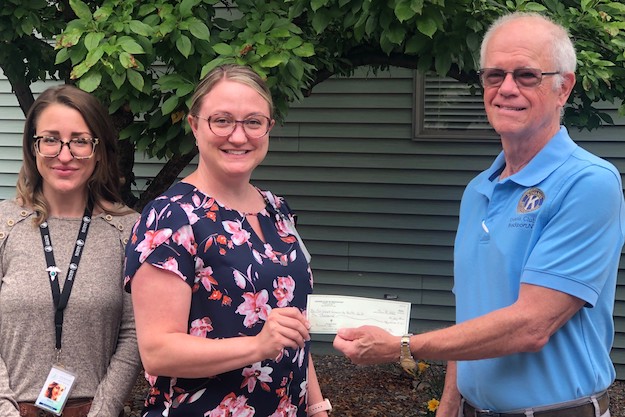
Provided photo: Pictured from left include Robin Govanlu, LMHC, LAC, LPC, director of Behavioral Health; Danielle Renodin-Mead, pediatrician and chief medical dfficer; and Peter Head, president of the Kiwanis Club of Brockport.

Press Release, Oak Orchard Health

BROCKPORT – Peter Head, president of the Kiwanis Club of Brockport, visited Oak Orchard Health to make a $1,000 donation to the new Mommy and Me program.

This program is designed to support mothers/primary caregivers and babies together in achieving optimal maternal and child health. The data shows that 1 in 7 women experience postpartum depression or anxiety, according to Postpartum Support International.

“The Kiwanis Club of Brockport looks for opportunities to help families in our community. The Mommy and Me Program addresses a critical need in our area.  Our Club has always had a close relationship with Oak Orchard Health. We believe our missions are similar – supporting children and keeping everyone healthy,” said Peter Head, President of Kiwanis in Brockport.

The local program is co-founded by Dr. Danielle Renodin-Mead, pediatrician and chief medical officer; and Robin Govanlu, LMHC, LAC, LPC, director of Behavioral Health.

The Mommy and Me Program is an extremely innovative approach to improve child health outcomes in our region, and not only that but to also improve maternal health outcomes, with special attention to mental health in the postpartum period.

All Mom/Primary caregivers and babies of Oak Orchard Health are automatically enrolled in the program, from birth up to 5 years of age! In addition, some of the benefits of the program include enrollment in the WIC program and access to the Diaper Bank.

“As of the beginning of this year, 65 families were added to the WIC program who otherwise would not have had any way to get that service,” Dr. Renodin-Mead said.

Oak Orchard care managers are assigned to each mother to be evaluated for postpartum depression and anxiety, and then they are referred to one of our behavioral health counselors specializing in perinatal mental health.

“Mom’s mental health is so important to the whole family and we’re taking care of it in the early stages. Parents are very grateful for this service,” Govanlu said.

About Oak Orchard Health

Originally founded in 1973, Oak Orchard has grown from a migrant health project into an integrated health center with multiple locations providing health care services for everyone located in the communities we serve. Currently serving over 30,000 patients at twelve locations, Oak Orchard Health is a recognized patient-centered medical home and 501(c) nonprofit Federally Qualified Health Center located in the towns of Albion, Alexander, Batavia, Brockport, Corfu, Hornell, Lyndonville and Warsaw.

Covid levels remain low in Genesee and Orleans, according to CDC

By Tom Rivers, Editor Posted 9 July 2022 at 10:47 am

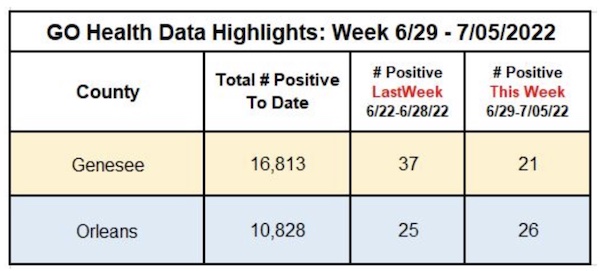
Chart courtesy of the Genesee & Orleans County Health Departments

The local community levels for Covid-19 remain low, according to the federal Centers for Disease Control and Prevention.

Orleans and Genesee are both at low levels. That is determined by hospital beds being used, hospital admissions, and the total number of new Covid-19 cases in an area.

In Genesee, the confirmed Covid cases dropped from 37 from June 22-28 to 21 from June 29 to July 5. In Orleans, the cases went up slightly from 25 to 26.

State-wide the 7-day positivity for Covid tests was at 9.20 percent on Friday. About a week earlier, the 7-day rate was 5.91 percent. Orleans is the nine-county Finger Lakes Region where the positivity rate is at 5.79 percent. Long Island has the highest rate at 10.58 percent and Central New York is the lowest at 5.64 percent.

“As we continue to monitor the numbers, I encourage all New Yorkers to keep using the tools we know that work to protect against and treat Covid-19,” Governor Hochul said in a statement on Friday. “Stay up to date on your vaccine and booster doses. If you’re a parent or guardian, talk to your pediatrician about getting your children vaccinated. Stay home if you feel sick and if you do test positive, talk to your doctor about the best treatment options for you.”

Orleans Community Health sees many highlights for first half of 2022

By Ginny Kropf, correspondent Posted 3 July 2022 at 8:15 am

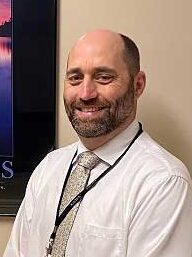
Mark Shurtz

MEDINA – The first half of 2022 has been full of achievements for Orleans Community Health and moments where rising to the occasion was needed, according to Marc Shurtz, chief executive officer at the hospital.

While the last couple of years have provided challenges for everyone, healthcare professionals have been at the forefront.

“Thanks to the dedicated team I have the privilege of working with on a daily basis, we believe our best days are still to come,” Shurtz said. “During a recent meeting I challenged some of our team to look back to the moments that truly make us who we are – a community health and wellness provider and resource.”

Below is the list they came up with which Shurtz said they feel encapsulates the true meaning of who they are.

In January they announced the opening of Orleans Community Health Surgery Clinic, located in Medina Memorial Hospital. The move not only brought the practice which Dr. Misiti built into the hospital, but also brought other surgeons and support staff to the community.

In March, they announced with Rochester Regional Hospital that they were partnering to bring the Sands-Constellation Heart Institute cardiology clinic to Medina Memorial Hospital. This provided a service that was needed in the community.

As a provider of healthcare services to the larger community, is always seeking new ways to get information out to a larger number of individuals. In April they launched the “Community Health Resource” column in an area paper. From misconceptions around popular dieting to women’s health, this column allows professionals from Medina’s team to provide health and wellness tips to the community. Even more exciting, according to Shurtz, is the fact that this concept will be expanding to other publications in the near future.

In May, the hospital’s chief nursing officer Kimberly Gray was named a finalist for the Community Nursing Award. She was listed among 14 others in all of Western New York.

As a community healthcare system, the entire Medina team prioritizes ways they can give back to the community. In May, tragedy struck neighboring Buffalo and on the following Monday, the conversation about doing something quickly gained traction throughout each of Orleans Community Health’s facilities. Internally, funds were donated, while donation drives were organized at each facility. After a month, multiple carloads of food and supplies were donation to FeedMore WNY.

In recent months, the wound care clinic doubled the hours in which services are provided, furthering their ability to provide care right in the community’s back yard.

An unfortunate theme for many industries has been the challenges presented by Covid-19. Staffing shortages have been a constant discussion, healthcare being one of the most publicized. That said, staffing at Orleans Community Health is stronger now than it was just prior to March 2020. Shurtz said they are excited and proud of the team that continues to be built at each of their facilities.

In conclusion, Shurtz said the next six months will include more engagement through events, an increased focus on sharing information about the hospital’s services and constantly providing health and wellness tips to the larger community.

Schumer says ‘critical access status’ for Medina hospital will result in $1.6 million

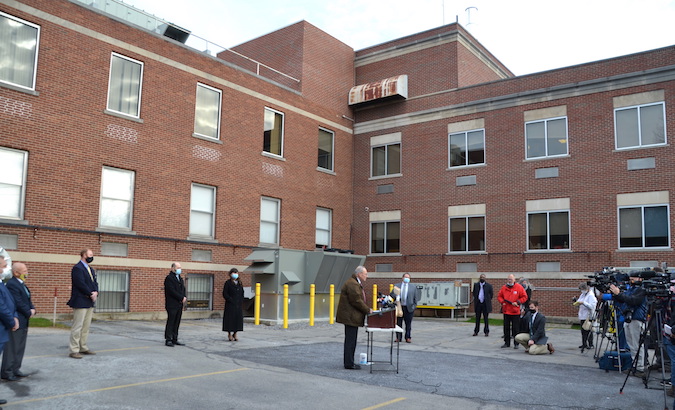
File photo by Tom Rivers: U.S. Sen. Charles Schumer speaks to reporters at a news conference on Nov. 19, 2020 outside Medina Memorial Hospital. That conference was about his push for increased Covid testing in Orleans County and other rural areas.

Posted 2 July 2022 at 10:17 am

Press Release, U.S. Senate Majority Leader Charles Schumer

U.S. Senate Majority Leader Charles E. Schumer announced that the Centers for Medicare and Medicaid Services (CMS) has heeded his call and proposed to reverse its previous rules change for the eligibility criteria for rural hospitals that put many Upstate New York hospitals at risk of losing their Critical Access Hospital (CAH) status.

Editor’s Note: That status will result in $1.6 million annually for Medina Memorial Hospital (Orleans Community Health), according to Schumer’s office.

The CAH program allows smaller rural providers, like those in the North Country and Southern Tier, with the designation to receive greater federal reimbursements for care to keep these otherwise financially vulnerable rural hospitals in the communities that need them most. Schumer explained that in 2015 the CMS issued a new policy change without going through the proper notice and rulemaking required by law that would enact more restrictive eligibility definitions for the CAH program, costing these rural hospitals millions.

Schumer immediately began leading the fight to maintain CAH status for Upstate’s rural hospitals, sending multiple letters highlighting the issue and the impact it would have on rural residents, and personally called HHS Secretary Xavier Becerra to fix this bureaucratic mistake that could cost thousands of rural family’s critical healthcare services.

Thanks to Schumer’s advocacy, CMS has now proposed to reverse this disastrous policy and clarify the language that would have caused New York’s CAH’s to lose their status, saving hospitals millions and allowing them to maintain their presence in rural communities.

“I promised our rural hospitals that I would not stop fighting until these rules changes were fixed and their Critical Access Hospital designation was ensured,” said Senator Schumer. “Now I am proud to announce that rural communities from the North Country to the Southern Tier can breathe a sigh of relief as these essential healthcare providers will continues to receive the millions in federal reimbursements they need and deserve to keep saving lives.”

Schumer explained that the Critical Access Hospital (CAH) designation was created by the Balanced Budget Act of 1997 to give small rural healthcare providers greater financial reimbursement for servicing Medicare and Medicaid patients, as well as provide other resources, in order to keep vulnerable rural hospitals financially stable.

One factor for CAH eligibility requires that a hospital be a certain distance from another hospital by either a primary or secondary road and provide around-the-clock emergency services. Previously, CMS regulations stated that a CAH hospital must be at least 35 miles from the nearest hospital by “primary road,” defined as any road in an interstate system or a US-numbered highway, or at least 15 miles in areas with mountainous terrain or only “secondary roads.” defined to include single lane state routes.

In 2015, however, CMS issued a memo that changed the definition of primary road to include any road that is in the National Highway System, which would include single lane NYS routes. This significant expansion to language and more restrictive definition of “primary road” if enforced would have led to dozens of CAHs in multiple states, including at least nine in New York, to lose their CAH status and hundreds of millions of dollars of needed funding to keep them in business serving rural patients.

Specifically, if this change were to have been fully enacted and enforced, it would cost Upstate New York hospitals over $35 million a year.

Some of the impacted New York hospitals would have included: Carthage Area Hospital, $9.7 million; Community Memorial Hospital, $4.1 million; Ellenville Regional Hospital, $4.7 million; Gouverneur Hospital, $3.3 million; Lewis County General Hospital, $5.3 million; Margaretville Hospital, $2.4 million; O’Connor Hospital, $3 million; Medina Memorial, $1.6 million; and Soldiers and Sailors Memorial Hospital, $1.4 million.

Covid cases see an increase in Genesee, Orleans

By Tom Rivers, Editor Posted 1 July 2022 at 7:59 am

2 counties still ranked low at community level for Covid by CDC

The local confirmed Covid cases is trending up after weeks of steady declines.

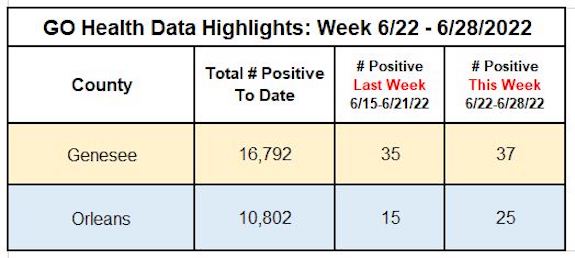
The Genesee and Orleans County Health Departments reported 25 Covid cases in Orleans from June 22-28, up from 15 the previous seven days. Genesee is up from 35 to 37 during that time frame.

Both counties continued to be ranked by the CDC as low for community levels. That is determined determined by hospital beds being used, hospital admissions, and the total number of new Covid-19 cases in an area.

The state’s seven-day average for positive Covid tests is at 5.91 percent, ending on June 29. A week earlier, the seven-day positivity was 4.68 percent statewide.

Orleans County is included int he nine-you the Finger Lakes region which has a seven-day positivity of 6.23 percent. Long Island has the highest positivity at 8.17 percent and the Southern Tier has the lowest at 4.54 percent.

“As we continue to monitor the current numbers, I encourage all New Yorkers to keep using the tools we know that work to protect against Covid-19,” said Gov. Kathy Hochul said. “Stay up to date on your vaccine and booster doses. Parents and guardians, now is a great time to consult with your child’s pediatrician about getting them vaccinated. Test if you have symptoms, and if you’re positive stay home and talk to you doctor about treatment.”