






















Bird count will be Monday for Oak Orchard Swamp
A year ago, volunteers identified 12,000 birds in annual count
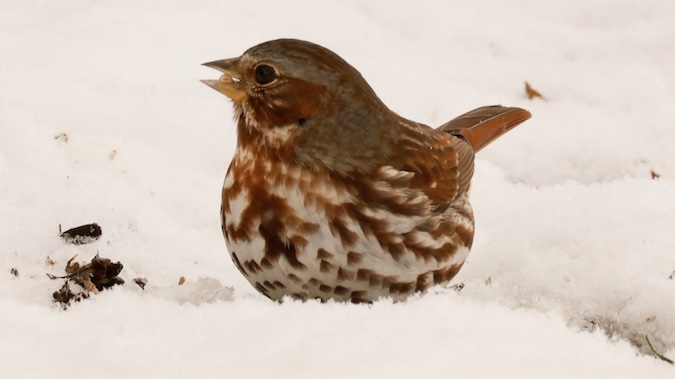
Photos courtesy of Celeste Morien: A fox sparrow is shown in this photo. Volunteers will be out for the annual Oak Orchard Christmas Bird Count on Monday. Last year, 41 counters found 70 species and just over 12,000 individual birds.
By Celeste Morien, count compiler for Oak Orchard Swamp Christmas Bird Count
BASOM – It’s nearly time for the Oak Orchard Christmas Bird Count! The count began in December 1968. The National Audubon Society has been sponsoring Christmas Bird Counts since their inception.
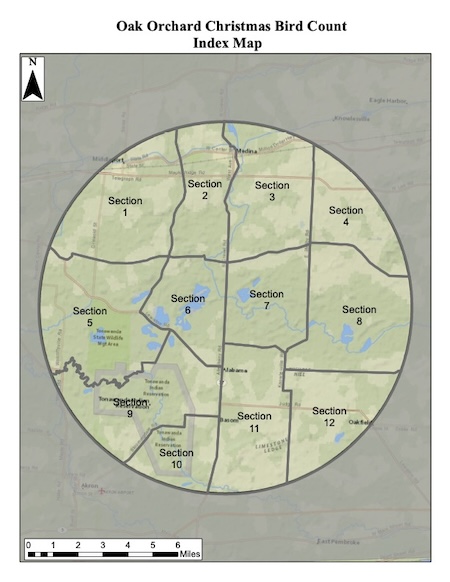
This map shows the area where volunteers will be out counting birds on Dec. 29.
Count compilers Celeste Morien and Brandon Connare would like the public to be alert for participants with spotting scopes and binoculars in on Dec. 29. We will be searching for birds inside the map circle from dawn to dusk.
Filling bird feeders now and keeping them stocked ahead of the count helps fulfill the count objective of counting all wild birds seen and heard within the circle.
The Oak Orchard count circle is centered on Iroquois National Wildlife Refuge at the Orleans and Genesee County line on Route 63. Count volunteers follow routes staying inside the designated 15-mile diameter circle. The day’s total is not just a species tally; individual birds are counted, giving an indication of the total number of birds per species in the circle that day.
If you are at home on count day within the circle, you may report the birds that visit your feeders. To do so, please contact celeste.morien@gmail.com.
According to the Audubon website, “Prior to the turn of the 20th century, hunters engaged in a holiday tradition known as the Christmas ‘Side Hunt.’ They would choose sides and go afield with their guns—whoever brought in the biggest pile of feathered (and furred) quarry won.”
Conservation was in its beginning stages in that era, and many observers and scientists were becoming concerned about declining bird populations. Beginning on Christmas Day 1900, ornithologist Frank M. Chapman, an early officer in the then-nascent Audubon Society, proposed a new holiday tradition—a “Christmas Bird Census” that would count birds during the holidays rather than hunt them.
So began the Christmas Bird Count. Thanks to the inspiration of Chapman and the enthusiasm of 27 dedicated birders, 25 Christmas Bird Counts were held that day. The locations ranged from Toronto, Ontario to Pacific Grove, California.
From December 14 through January 5 each year tens of thousands of volunteers throughout North America, Latin America, the Caribbean and Pacific Islands brave snow, wind, or rain, and take part in the effort. Audubon and other organizations use data collected in this long-running wildlife census to assess the health of bird populations, and to help guide conservation action.
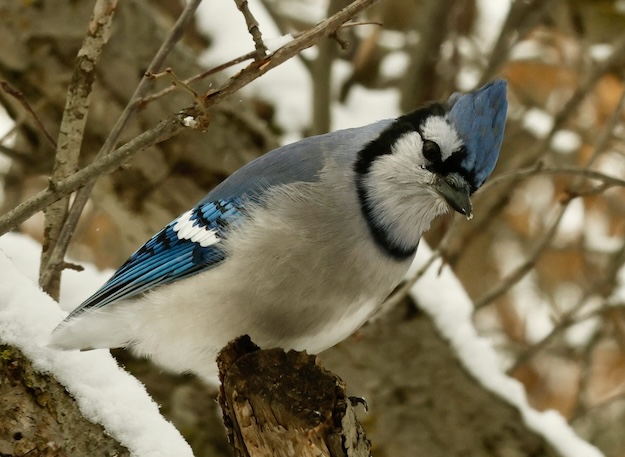
A blue jay is shown in this photo. Last year there were 283 identified during the annual bird count.
The data collected by citizen scientists allows researchers, conservation biologists, wildlife agencies and other interested individuals to study the long-term health and status of bird populations across North America. When combined with other surveys such as the Breeding Bird Survey, we are provided with a picture of how the continent’s bird populations have changed over the past 125 years.
The long term perspective is vital for conservationists. It informs strategies to protect birds and their habitat, and helps identify environmental issues with implications for people as well.
Please consider donating to the Christmas Count here since the Audubon Society no longer collects fees from each participant. www.audubon.org/GiveCBC
For past results of any Christmas Bird Count, the National Audubon Society website is an excellent resource. www.audubon.org/conservation/science/christmas-bird-count
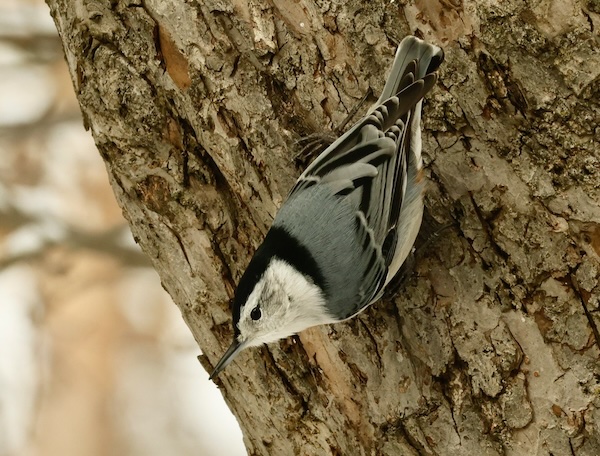
Volunteers counted 89 white-breasted nuthatch during last year’s count.