


















Albion axes Historic Preservation Commission with duties likely shifting to codes, Planning Board
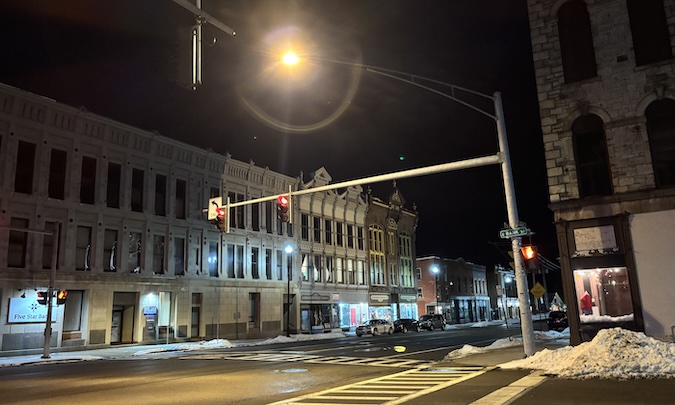
Photo by Tom Rivers: Main Street on Albion at the East Bank Street intersection is shown on Wednesday evening.
ALBION – The Albion Historic Preservation Commission is no longer an entity where building owners need to get “certificates of appropriateness” for signs, exterior renovations, structural work or demolition of a building in the historic downtown district.
The Albion Village Board on Wednesday voted to do away with the commission which has struggled in recent years to get a quorum. The group has seven members and needs at least four to have a meeting.
The lack of a quorum has slowed approvals for projects in the downtown, code enforcement officer Chris Kinter said. He told the Village Board he has two applications that have been waiting on the commission.
Although the HPC has been disbanded, the duties of the group will be passed to either the code enforcement officer or the Planning Board. That will be determined by the Village Board.
“Don’t just throw it away,” Planning Board Chairwoman Karen Conn told the Village Board. “We should preserve what we have.”
The HPC’s most recent members included Ian Mowatt, Mary Anne Braunbach, Linda Smith and Courtney Henderson. None of them spoke against doing away with the HPC at Wednesday’s public hearing.
Trustee Joyce Riley said Albion can discuss the preservation standards if the village moves to update its comprehensive plan.
Trustee Tim McMurray said the code for the downtown standards should be revamped. He said there are some inconsistencies. He noted projecting signs are allowed in one part of the code but not in another.
Any changes in the code would need to have another public hearing for the community to have a chance to comment.
The village code notes Albion “has many significant historic, architectural and cultural resources which constitute its heritage.” The village has sought to “protect and enhance the landmarks and historic districts which represent distinctive elements of Albion’s historic, architectural, and cultural heritage.”
The code states certificates of appropriateness will be needed for alteration, demolition or new construction affecting landmarks or historic districts.
“No person shall carry out any exterior alteration, restoration, reconstruction, demolition, new construction, or moving of a landmark or property within an historic district, nor shall any person make any material change in the appearance of such property, its light fixtures, freestanding lights, signs, sidewalks, fences, stairs, outbuildings, walls, driveways or alleys, paving or any other exterior element which affects the appearance and cohesiveness of the landmark or historic district without first obtaining a certificate of appropriateness from the Historic Preservation Commission,” the code states.