
















Cobblestone Museum showcases old-time skills at annual open house
Photos by Tom Rivers
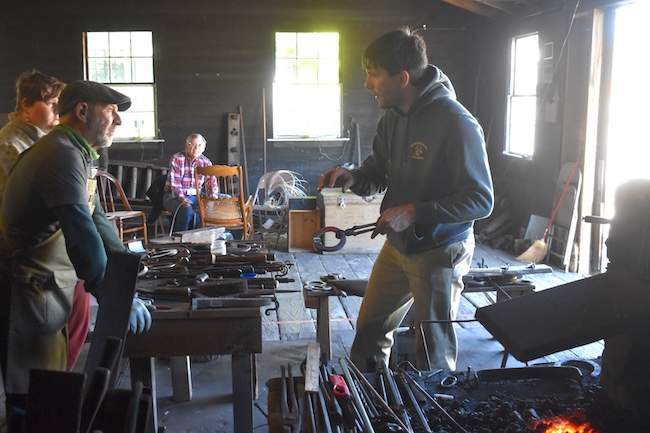
GAINES – Connor Miller, right, and George Borrelli, left, both did blacksmith demonstrations on Saturday at Vagg’s Blacksmith Shop at the Cobblestone Museum.
They were among several skilled artisans showcasing trades that were popular and critical to the community in the 1800s.
This blacksmith shop was built in 1922 after a fire in 1921 destroyed the original blacksmith shop from 1842. Joseph Vagg operated the shop until 1956.
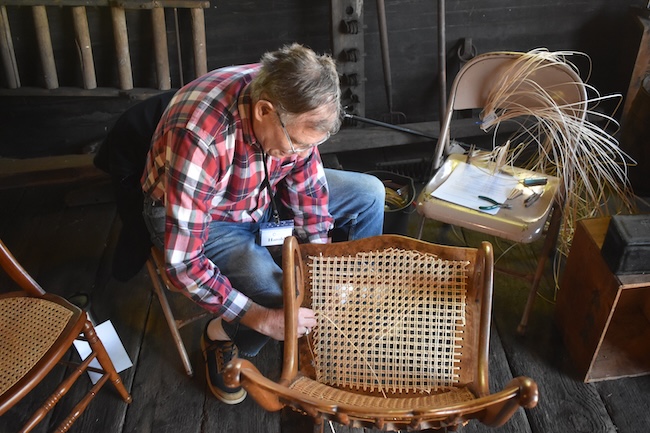
Harold Clark of Rochester was inside the blacksmith shop on a chilly day doing chair caning. Clark has been a chair caner for about 35 years. He was featured at the Cobblestone Museum on Saturday for the fourth time during the annual open house in the fall.
“I enjoy the geometric pattern and watching it develop,” he said. “I enjoy restoring old furniture and keeping it in use.”
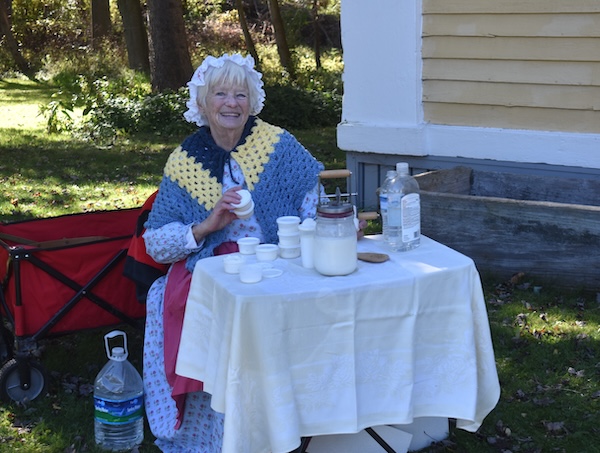
Georgia Thomas was outside Farmer’s Hall doing butter churning demonstrations. The process took about 20 to 25 minutes to turn heavy cream into butter.
“You shake it until your arms fall off,” Thomas said about the butter churning process.
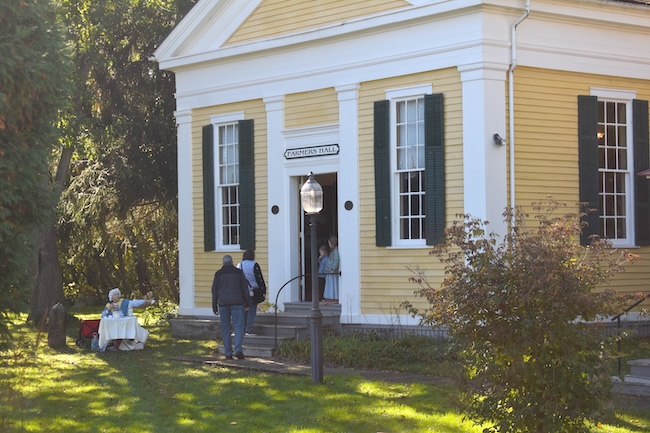
Farmer’s Hall was originally constructed in 1855 in Kendall as a church. He later became the Kendall Town Hall. In 1978, the building was given to the Cobblestone Museum. The structure was deconstructed and then rebuilt on the museum grounds. It now serves as an exhibition hall for 19th and early 20th century farming implements.
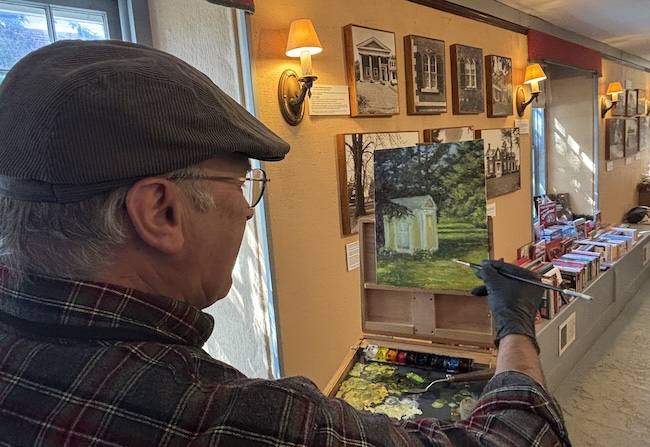
Tom Zangerle makes an oil painting of the five-seat outhouse next to Farmer’s Hall. This Greek Revival outhouse originally was at a farm in Ridgeway on Culvert Road. That cobblestone farm was owned by Roy Goheen, who was the grandfather of Tom’s wife, Mary Zangerle.
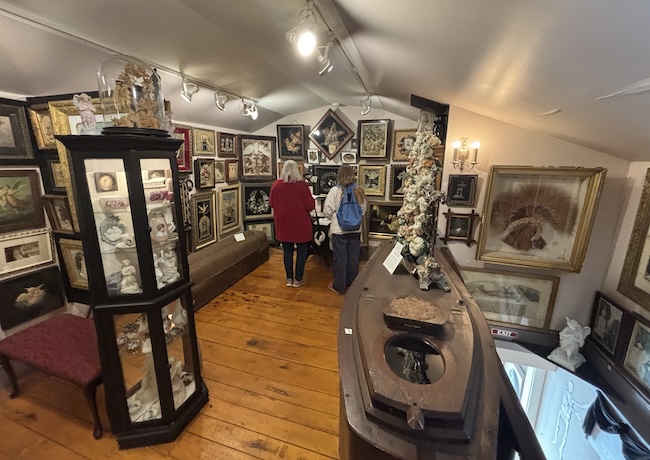
The museum complex was open for tours on Saturday, including a display of more than 200 Victorian mourning art objects compiled by retired museum director Bill Lattin. This exhibit in the museum’s upper gallery takes a look at the various objects found in American art pertaining to death and loss.
Lattin said he first became interested in mourning art when he was in college during the mid-1960s. A college professor who taught photography had a collection of antique post mortem pictures from the 19th century and Lattin found them fascinating.
The first piece he purchased was a death mask of Dr. Roswell Park, who was the attending physician when President William McKinley was assassinated. An antique dealer in Brockport sold it to Lattin for $5.
The Victorians tried to make death a beautiful thing, as portrayed by the flowers and ornate decorations of many of the items, Lattin said.
Many in his collection are one-of-a-kind memorials made by hand. Others include manufactured knick-knacks and many memorial prints, as well as art made from hair in shadowboxes. One shadowbox holds a stuffed dove, crucifix and wax flowers.