
















Long-awaited digitized Irish census great resource in search for ancestors
More than 5,000 residents in Orleans have Irish descent
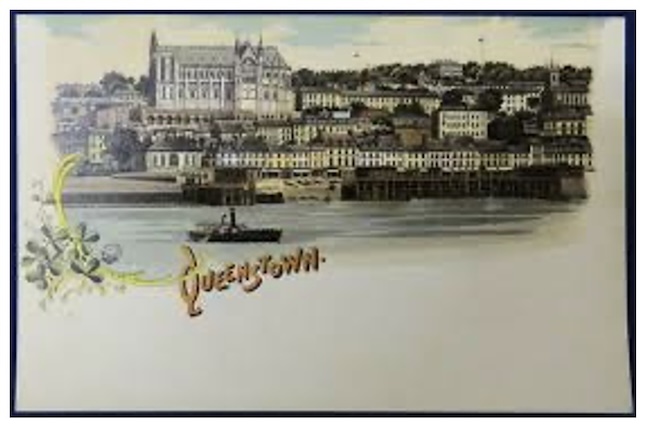
A postcard view of the port of Queenstown, later Cobh (cove), on the south coast of Ireland, the disembarkation point for many emigrants to the US from 1815 through the early 1930s.
By Catherine Cooper, Orleans County Historian
“Illuminating Orleans” – Volume 6, No. 10
 At one minute past midnight on April 18, 2026, the long-awaited digitized version of the 1926 Irish Census was made available by the National Archives of Ireland, to the delight of family researchers and genealogists worldwide.
One hundred years prior, on the night of April 18, 1926, householders in each home in the 26 counties of Ireland filled out a detailed census form. These handwritten forms are now available for view. In combination, they provide a detailed view of life at the time.
Orleans County is within the 8th percentile of New York State counties for Irish population density, with 5,369 residents or 13.5% of the total county population of Irish descent, according to the Census Bureau’s American Community Survey data, so the availability of this census will be of interest.
The 1926 Census is significant because it was the first census conducted by the newly established Irish Free State. A prior census had been conducted in 1911 by the British government. There had been great upheaval in the intervening years – World War I, the Irish War of Independence, the Irish Civil War.
Though we now take it for granted, digital access to census records is phenomenal and nothing short of miraculous to those of us who served time in those ante-diluvian pre-computer days.
The online version of the 1926 Irish Census comes complete with “bells and whistles.” The forms recorded twenty-one pieces of information: name, age, occupation, religion, housing, ability to speak or read Irish. One can search by last name, first name, town, townland or electoral division.
If you click on “View Household Record,” you will see details of all of those who resided in that house on the night of April 18, 1926.
Click on “Household Form A1” to view an original view of the form, complete with the signature of the head of the household.
The data provided is linked to the 1924 Ordnance Survey map. Just toggle to “View Map” to zoom in and see with increasing detail the counties, townlands, and even outlines of fields.
You can see how many O’ Brien’s there were in Cork (5,537), or how many men in the country were named Patrick (182,070), whether your Aunt Julia was older or younger than your Aunt Molly, or find out that your cousin Bud’s name was actually Kevin, or view the residents of a street or village.
If your ancestors left Ireland in the 1920s (as many of those who fought on the side of the Anti-Treaty during the Civil War were obliged to do, finding themselves boycotted from employment), then you will see your family members, grandparents, siblings and cousins listed.
If your ancestors left Ireland prior to the 1920s, chances are, you will still find relatives. If you only know a family name and a county, you can view the occurrences of that surname on the map.
Dive in, search “1926 Irish census”. Have fun!