
















Hearing on incentives for massive data center at STAMP shows strong opposition for project
Some favor Stream US Data Centers for construction jobs, hundreds of millions in new municipal revenue
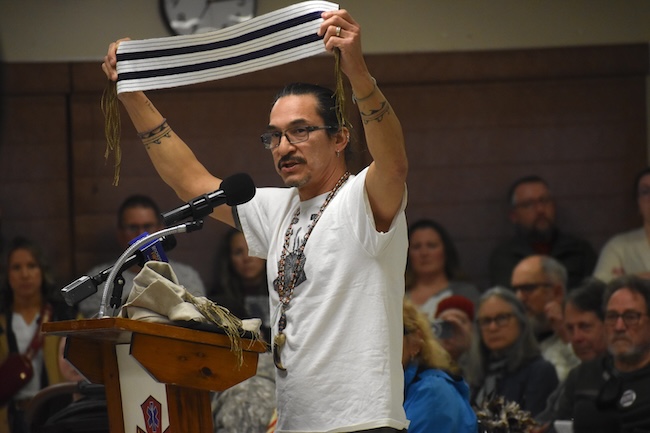
Photos by Tom Rivers: Chief Scott Logan, chief for the Bear Clan of the Tonawanda Seneca Nation, said the data center and development at STAMP are a threat to Tonawanda culture and so much wildlife. He spoke during a public hearing on Thursday at the Alabama fire hall about $1.4 billion in incentives for the data center. He is holding the “two row wampum belt” that he said symbolizes peace between the United States and six nations of the Haudenosaunee. The belt shows how two different culture should be living as neighbors, with the Haudenosaunee not facing the potential loss of its traditions.
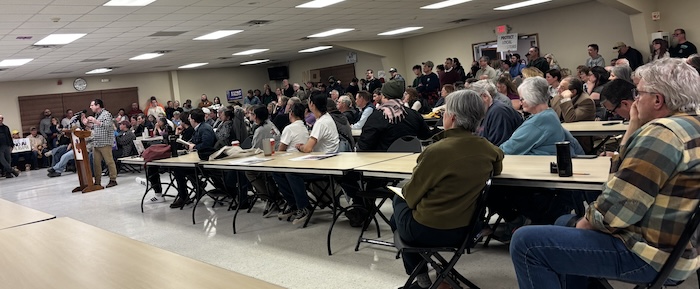
ALABAMA – More than 300 people packed the Alabama fire hall on Thursday night for a public hearing on incentives for a massive data center at the STAMP site.
Stream US Data Centers is seeking $1.43 billion in sales tax exemptions – $715,944,000 locally and $715,944,000 to the state. Stream also is seeking an exemption on the 1.0 percent mortgage tax, which totals over $31 million with $15,613,500 each locally and to the state.
That project, at nearly $20 billion, would pump out about $700 million in municipal revenues over the next 30 years.
Building the data center is expected to employ 1,200 construction workers over the next five years, with 125 employees then working at the site.
The data center, however, isn’t a good fit for such a rural area next to a wildlife refuge and the Tonawanda Seneca Nation, many of the speakers said at the public hearing.
It will displace wildlife, disrupt the Native American culture and traditions, and could harm the Oak Orchard Creek through water discharges. The Oak Orchard is a popular fishing draw for Orleans County, where fishermen generate $28 million in economic activity annually in the county, according to a DEC study.
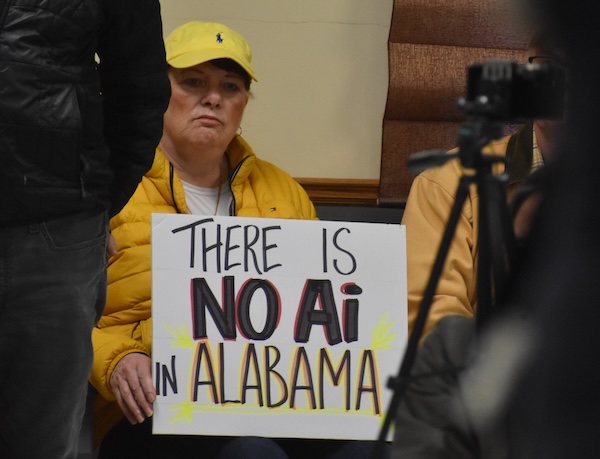
This person holds a sign opposing the data center. There has been a bigger need for the data center complexes with the surge in artificial intelligence.
Scott Logan, chief for the Bear Clan of the Tonawanda Seneca Nation, said the large industrial development doesn’t belong in such a rural area.
“You’re not thinking about humanity,” he said.
He said the local economic development officials need to look long-term and at future generations with such a change to the land.
“This data center is causing our community stress and it will cause us health problems,” he said. “I realize it’s bringing jobs for the construction companies coming here, but a majority of them don’t live here.”
Chief Logan is concerned about the 24-7 noise from the site. The decibel levels of 45 and 65 could have a negative impact on nearby residents and wildlife.
“You don’t know what it will do to the deer and the plants,” he said.
Chief Logan called the tax incentives “gross” and not needed by the billion-dollar companies involved with the project. The users of the data center have not been identified, and that rankled several of the speakers who said those identities should be disclosed.
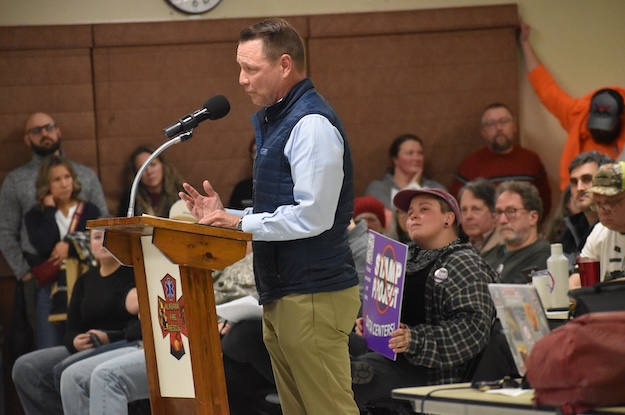
Matt Hurlbutt, president and CEO of Greater Rochester Enterprise, said the data center fits with the “tech hub” and innovation goals for the region, state and country. He said local colleges and universities provide a pipeline of trained people that could work at the site in the future. He was loudly booed by the crowd when he was one of the few to speak in support of the project.
The Genesee County Economic Development Center listed these future payments by Stream:
$285.8 million in new revenues to municipalities and schools
- STREAM US Data Centers has agreed to pay $7 million in base annual PILOT/Host payments to Genesee County, the Town of Alabama and the Oakfield-Alabama School District. PILOT/Host Payments would increase by a fixed 2% annually. This would total more than $283.9 million in new revenue over 30 years.
- The Town of Alabama would also receive a one-time $1.9 million payment through the terms of the Incentive Zoning Agreement.
$270 Million in new sales tax revenue to Genesee County
- STREAM US Data Center’s electrical usage is estimated to generate $9 million annually in sales tax revenue to Genesee County which totals $270 million over 30 years. Of this, 14 percent would be distributed by Genesee County to the City of Batavia over 30 years.
- STREAM US Data Centers will not apply for a Hydropower allocation or National Grid discounted rate programs.
$268 Million to complete electrical infrastructure
- STREAM US Data Centers would invest $268 million in total to complete electrical infrastructure at STAMP.
$146 million in new funding for economic development projects
- The GCEDC would reinvest the project fees generated by STREAM US Data Centers to support projects to further grow Genesee County’s tax base, workforce development initiatives and careers in the community.
$5 million in new revenues to Town of Alabama Fire District
- Stream US Data Centers will pay an estimated $170,579 in annual fire district fees. This totals more than $5 million in funding over 30 years.
Kacey Stewart of Elba, program director for health, wellness and climate at Daemen University and research assistant professor in environment and sustainability at the University at Buffalo, said the large project would disrupt the ability of wildlife to get from one location to the next and for plants to easily spread.
“This will fragment four wildlife management areas,” he said. “It will disrupt their ability to move.”
The Iroquois National Wildlife Refuge also is an economic asset to the community, drawing 80,000 visitors annually, he said. Stewart also noted the $28 million impact from fishing for Orleans County.
He worries what happens at the end of the data center’s useful life. How will the complex be handled then? he asked.
“Western New York is full of the scars of industries,” he said.
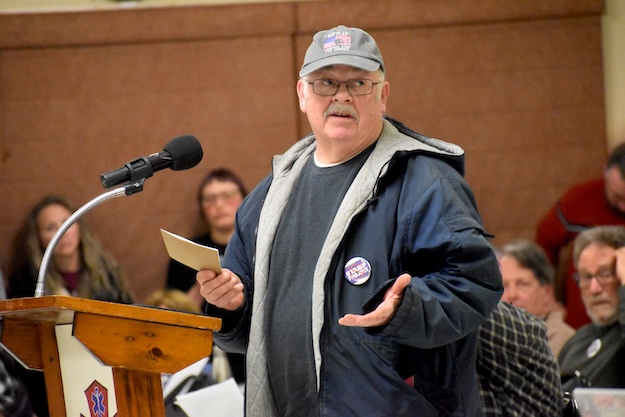
Jim Joyner, a Town of Alabama resident, said there are other less intrusive projects that could go at STAMP instead of the large data center. He said the local municipal and economic development officials seem to be pushing the project too fast on the community. He favors a three-year moratorium on new data centers. That moratorium has been proposed in the State Legislature.
“Let’s wait the three years and really study this,” he said.

Laborers’ Local 435 in Rochester had a sign outside the Alabama fire hall in support of the project. It would employ about 1,200 construction workers over five years – at a payroll of $505 million.
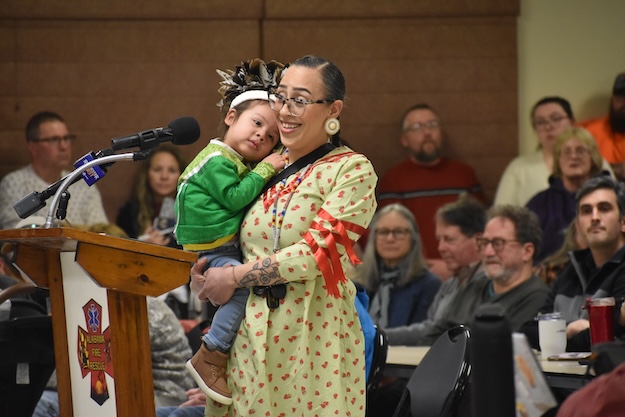
Valerie Parker-Campbell, a Tonawanda Seneca woman, said STAMP jeopardizes sacred medicines and practices of the community. She is holding her 1-year-old son. She said she worries if he will be able to hunt, collect medicinal plants, and safely swim in a watering hole in the future.
“Our children are the gatekeepers of this land,” she said. “You’re not guaranteeing their future. We should be looking out for seven generations.”
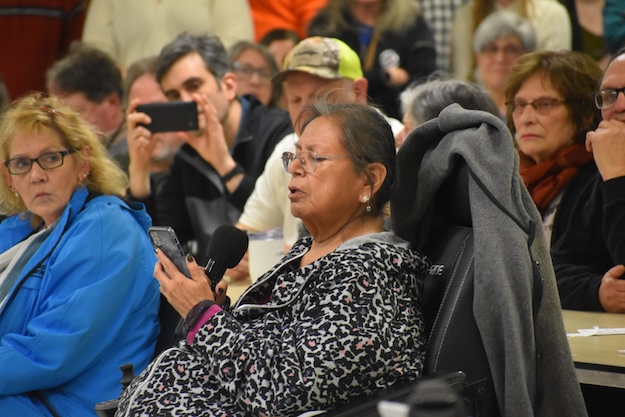
Melissa Smith, a member of the Tonawanda Seneca Nation, said the large-industrial development of the data center so close to the Native Americans feels like racism.
She said the “projected monster” of the data center has brought the Tonawanda Seneca community together as well as their many allies.
“We’re all committed to stopping this environmental catastrophe,” she said. “I oppose everything about this project.”
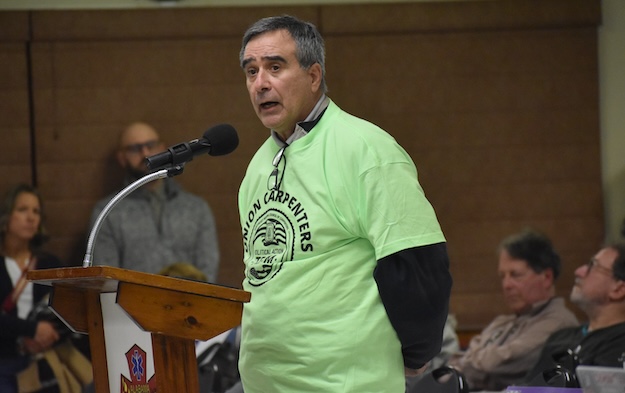
Tom Iorizzo of Batavia, a representative for Carpenters Union Local 277, said he strongly supports the data center development. It will be a five-year prevailing wage construction project that would make a big difference for the union workers, he said.
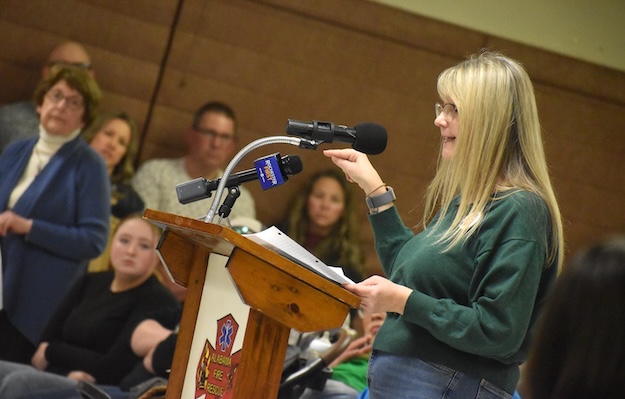
Jennifer Durham lives 3 miles from STAMP. She said she can hear trains a night, 12 miles away in Corfu. She said the data center will bring constant, disruptive noise.
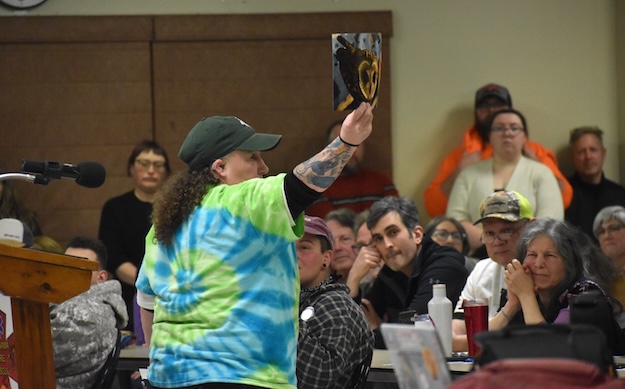
Evelyn Wackett, a certified wildlife rehabber from Buffalo, holds a picture of a short-eared owl. She said the data center with its noise and 65-foot-high walls will affect local birds. The noise will reduce the number of eggs many will lay, and those eggs wont be as viable, she said.
“We need to advocate fiercely for these creatures that can’t speak for themselves,” she said.
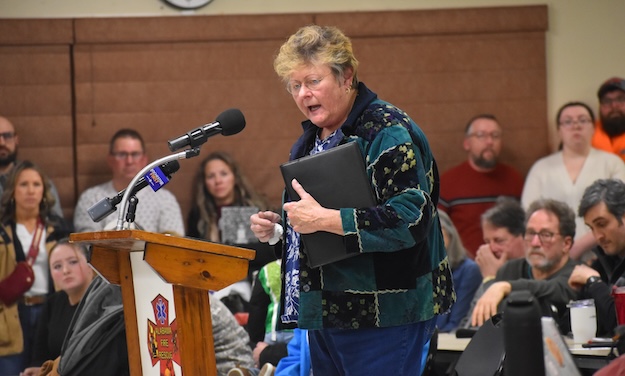
Mary Jo McConnell of Elba said the community should look into legal action “to stop this crap.” She said the data center “would be detrimental to the Tonawanda Seneca Nation, wildlife and our little piece of Heaven.”
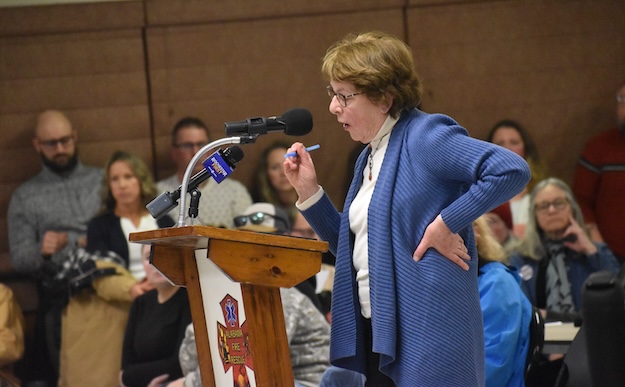
Diane Ciurczak of Buffalo, vice chair of the Sierra Club Niagara Group, said the tax incentives are the largest of any data center in the United States. A full environmental impact study should be presented before the incentives are approved.
“There are many unanswered questions,” she said. “We don’t know how this behemoth will be constructed.”
She worries about the “noise pollution,” traffic, horizontal drilling across streams, diesel generators, nearly 200 chillers on the roofs and giving one location so much electricity – 500 megawatts.
“This beautiful place shouldn’t be a state sacrifice area,” she said.